Emerging Paradigms in Pharmaceutical Research – serie
Visar alla böcker i serien Emerging Paradigms in Pharmaceutical Research. Handla med fri frakt och snabb leverans.
2 produkter
2 produkter
Inbunden, Engelska, 2026
1 841 kr
Skickas inom 5-8 vardagar
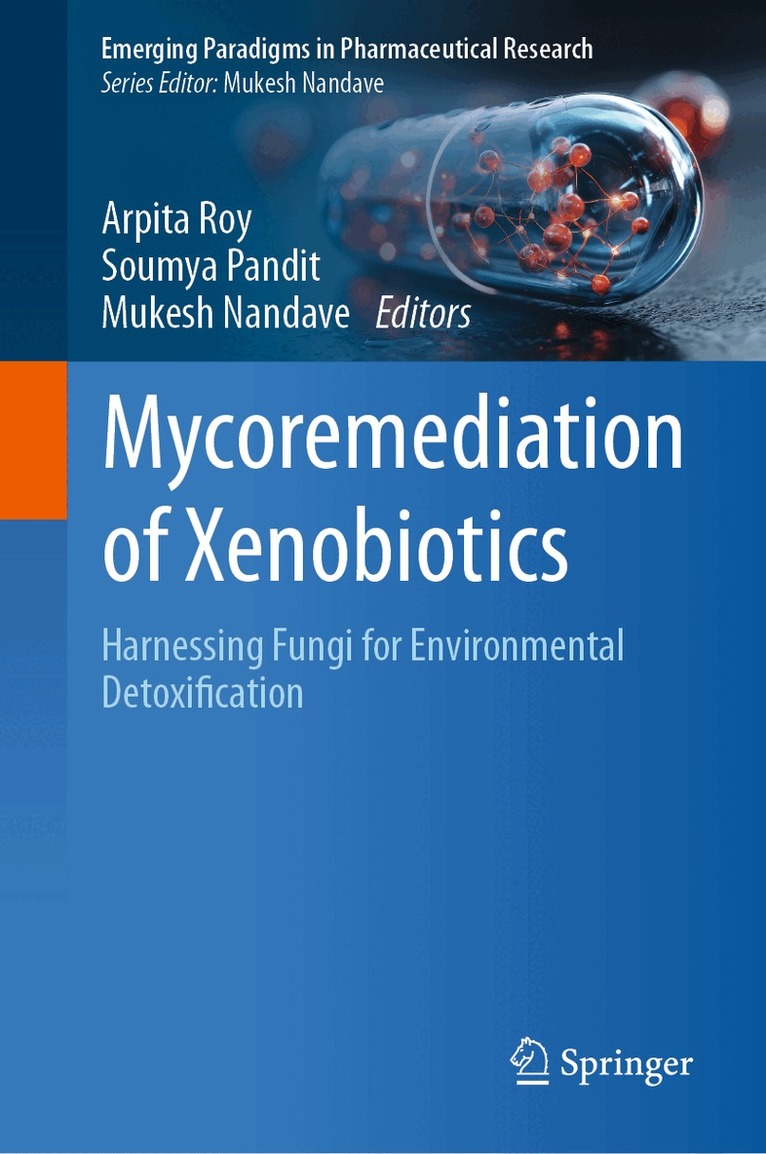
This book presents a scientific exploration into the use of fungal enzymes to degrade persistent environmental pollutants. It combines foundational theory, emerging research, and real-world case studies to showcase fungi’s role in mitigating chemical contamination.The book begins by outlining the global threat posed by xenobiotics—synthetic compounds like pesticides, pharmaceuticals, and industrial chemicals—and the limitations of conventional remediation strategies. Early chapters delve into the biology of fungi, highlighting their powerful enzymatic systems such as laccases and peroxidases. These systems underpin the mycoremediation process, offering eco-friendly alternatives for detoxifying harmful pollutants.Subsequent chapters explore fungal degradation mechanisms, including enzymatic pathways, metabolic routes, and genomic insights. Readers will find extensive coverage of bioreactor design, large-scale applications, and case studies across various environmental settings. The book also addresses the technological, regulatory, and economic challenges of implementing mycoremediation, concluding with future prospects in synthetic biology, CRISPR-engineered fungi, and policy development.This comprehensive resource is tailored for a diverse audience including environmental scientists, microbiologists, biotechnologists, engineers, policymakers, and advanced students. Whether for academic research, policy formulation, or field application, this book serves as an essential reference for those seeking sustainable solutions to the growing threat of xenobiotic contamination through fungal biotechnology.
Inbunden, Engelska, 2026
1 849 kr
Skickas inom 10-15 vardagar
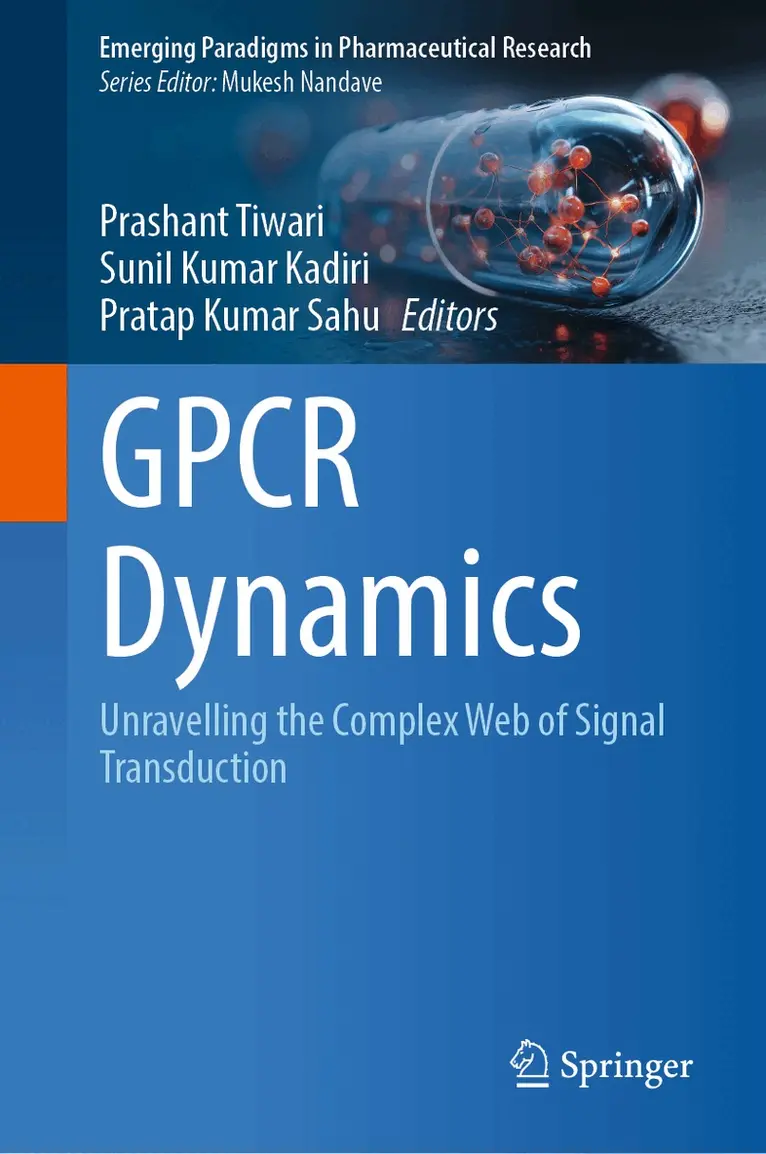
This book offers a detailed exploration of G-protein-coupled receptors (GPCRs), key membrane proteins that mediate cellular responses to diverse signals. It covers GPCR activation, regulation, structural advances, technological innovations, and drug discovery, emphasizing their crucial roles in physiology and therapy. By integrating molecular insights with clinical applications, the book bridges basic science and translational research in GPCR biology.GPCRs function as vital cellular communication hubs by activating guanine nucleotide-binding proteins (G proteins) to transduce extracellular signals into intricate intracellular pathways. These signaling cascades regulate processes such as cell growth, gene expression, and intercellular communication, crucial for maintaining cellular homeostasis. Disruptions in GPCR signaling are linked to diverse pathologies, making them prime targets for therapeutic intervention.The book begins with GPCR structure and activation mechanisms, followed by signaling networks and receptor regulation. It then covers breakthroughs in structural biology and cutting-edge research technologies. Drug discovery strategies, including allosterism and biased signaling, are explored next. Systems biology and molecular pathologies provide deeper insights into GPCR functions and diseases. The final chapters focus on cellular toxicity, preclinical to clinical drug development, and future research challenges.This resource is designed for researchers and scientists in molecular pharmacology, cell biology, and drug discovery, as well as graduate and postgraduate students. Pharmaceutical industry professionals, educators, trainees, and healthcare professionals engaged in GPCR-targeted therapies will also find this book an essential guide to the latest advances and clinical applications.