Essex Studies in Contemporary Critical Theory – Serie
Visar alla böcker i serien Essex Studies in Contemporary Critical Theory. Handla med fri frakt och snabb leverans.
4 produkter
4 produkter
1 209 kr
Skickas inom 10-15 vardagar
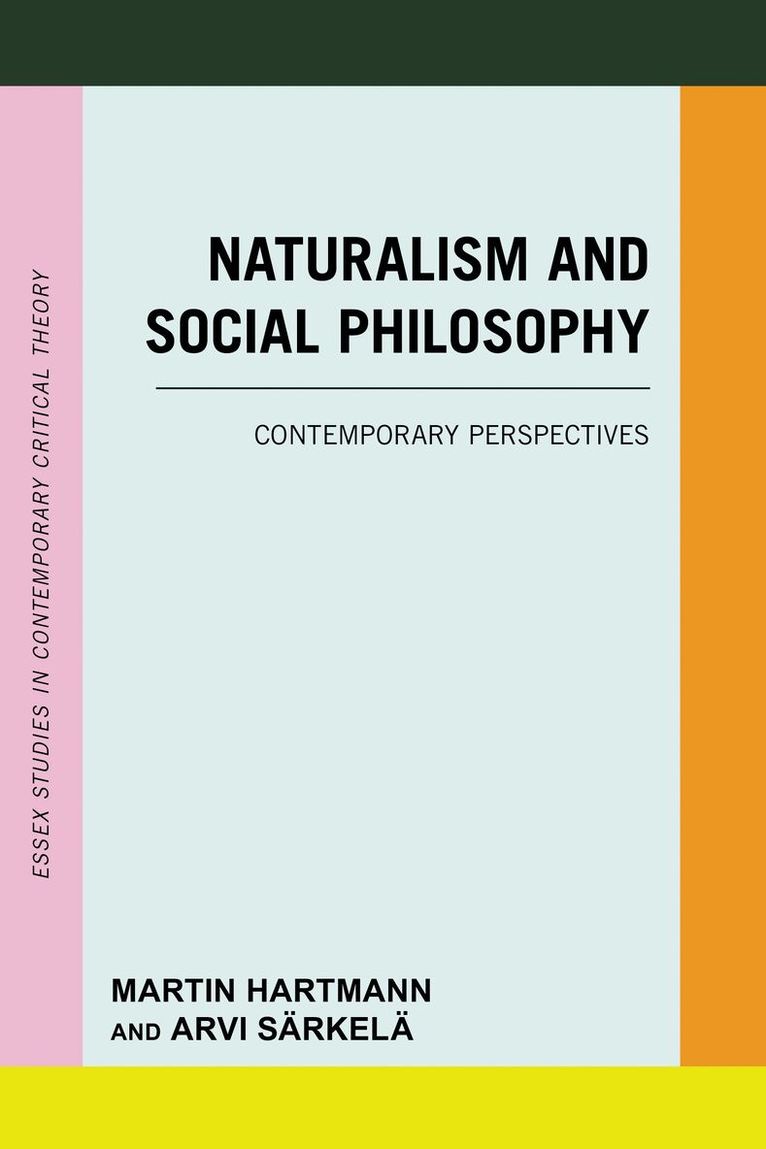
Can societies fall ill? Can institutions die, or social practices degenerate? Must social norms be embodied? To what extent is social action habitual? Is social life part of nature or does it transcend it? This book explores the meaning and many facets of naturalism in social philosophy. It investigates the consequences of concepts such as 'second nature' and 'forms of life' for social philosophy. It analyses the ways in which social action, gender, work and morality are embodied. It surveys the conceptions of nature at play in social criticism. It provides students and experts of social philosophy with both an overview and critical analyses of the many facets of naturalism in social philosophy from Hegel to contemporary critical theory.Contributors: Louis Carré, Fabian Freyenhagen, Martin Hartmann, Axel Honneth, Thomas Khurana, Steven Levine, Sabina Lovibond, Arvi Särkelä, Barbara Stiegler, Mariana Teixeira, Italo Testa
408 kr
Skickas inom 10-15 vardagar
Can societies fall ill? Can institutions die, or social practices degenerate? Must social norms be embodied? To what extent is social action habitual? Is social life part of nature or does it transcend it? This book explores the meaning and many facets of naturalism in social philosophy. It investigates the consequences of concepts such as 'second nature' and 'forms of life' for social philosophy. It analyses the ways in which social action, gender, work and morality are embodied. It surveys the conceptions of nature at play in social criticism. It provides students and experts of social philosophy with both an overview and critical analyses of the many facets of naturalism in social philosophy from Hegel to contemporary critical theory.Contributors: Louis Carré, Fabian Freyenhagen, Martin Hartmann, Axel Honneth, Thomas Khurana, Steven Levine, Sabina Lovibond, Arvi Särkelä, Barbara Stiegler, Mariana Teixeira, Italo Testa
461 kr
Skickas inom 10-15 vardagar
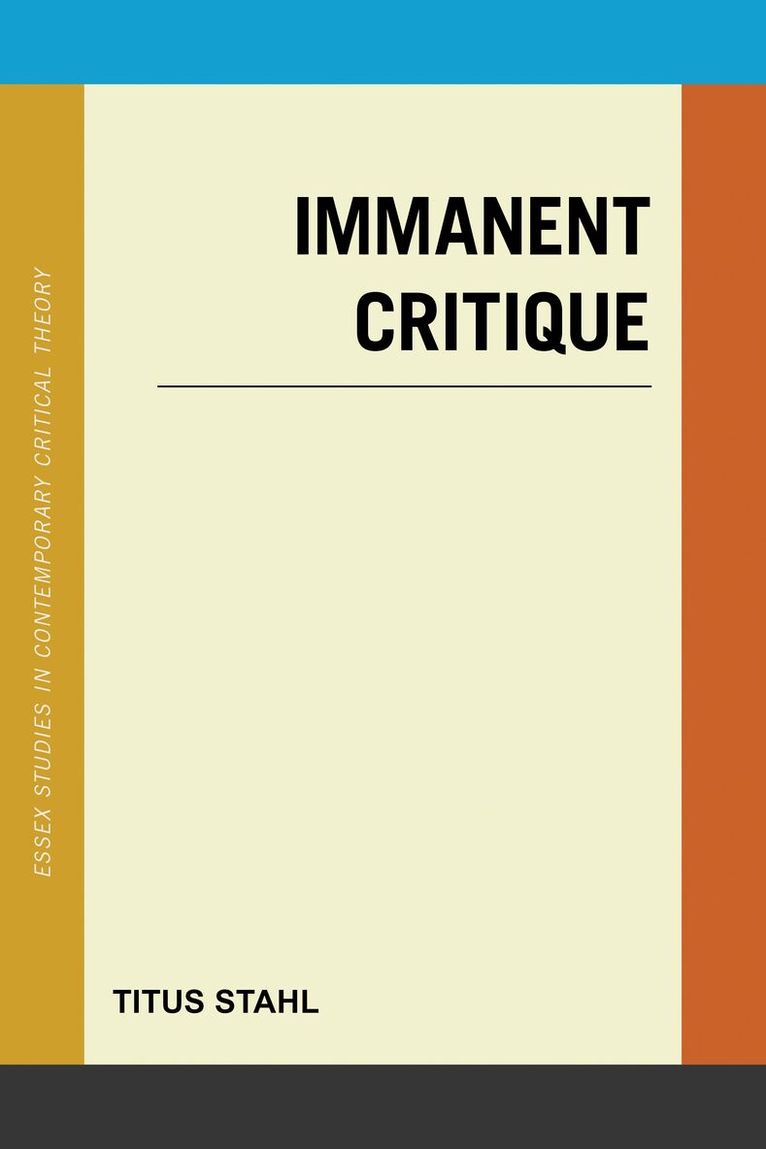
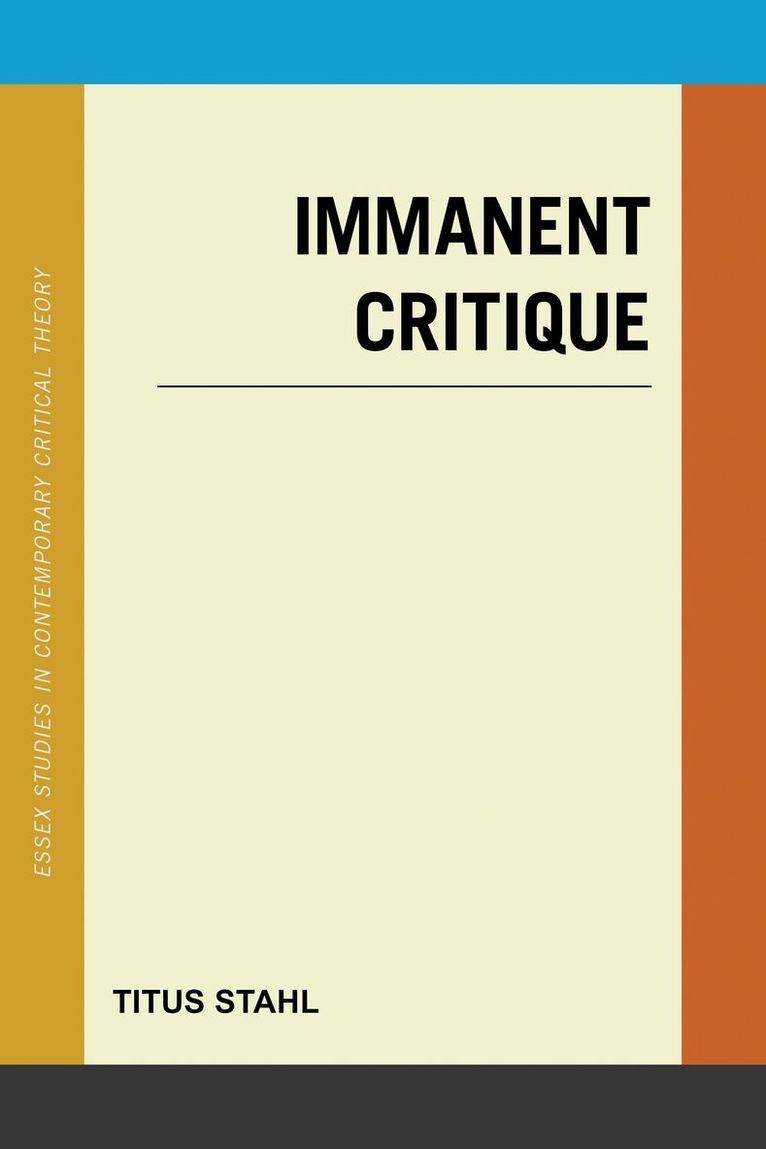
When we criticize social institutions and practices, what kinds of reasons can we offer for such criticism? Political philosophers often assume that we must rely on universal moral principles that are not necessarily connected to the particular social practices of our communities. Traditionally, continental critical theory has rejected this claim through its endorsement of the method of immanent critique. Immanent critique is a critique of social practices that draws on norms already present within these practices to demand social change, rather than merely conservatively reproducing them. Titus Stahl defends the claim that such a critique is not only possible, but also has politically powerful potential. Taking up recent developments in analytic enquiry into collective intentionality theory and in the philosophy of language, he argues that all social practices rest on structures of mutual recognition between persons that allow social theorists to reconstruct hidden norms present within these practices. Starting from a comprehensive critique of contemporary critical theory, Immanent Critique also spells out the consequences of this line of thought for the practice of social critique, for the social sciences and for political philosophy.The translation of this work was funded by Geisteswissenschaften International – Translation Funding for Humanities and Social Sciences from Germany, a joint initiative of the Fritz Thyssen Foundation, the German Federal Foreign Office, the collecting society VG WORT and the Börsenverein des Deutschen Buchhandels (German Publisher & Booksellers Association)
1 276 kr
Skickas inom 10-15 vardagar
When we criticize social institutions and practices, what kinds of reasons can we offer for such criticism? Political philosophers often assume that we must rely on universal moral principles that are not necessarily connected to the particular social practices of our communities. Traditionally, continental critical theory has rejected this claim through its endorsement of the method of immanent critique. Immanent critique is a critique of social practices that draws on norms already present within these practices to demand social change, rather than merely conservatively reproducing them. Titus Stahl defends the claim that such a critique is not only possible, but also has politically powerful potential. Taking up recent developments in analytic enquiry into collective intentionality theory and in the philosophy of language, he argues that all social practices rest on structures of mutual recognition between persons that allow social theorists to reconstruct hidden norms present within these practices. Starting from a comprehensive critique of contemporary critical theory, Immanent Critique also spells out the consequences of this line of thought for the practice of social critique, for the social sciences and for political philosophy.The translation of this work was funded by Geisteswissenschaften International – Translation Funding for Humanities and Social Sciences from Germany, a joint initiative of the Fritz Thyssen Foundation, the German Federal Foreign Office, the collecting society VG WORT and the Börsenverein des Deutschen Buchhandels (German Publisher & Booksellers Association)