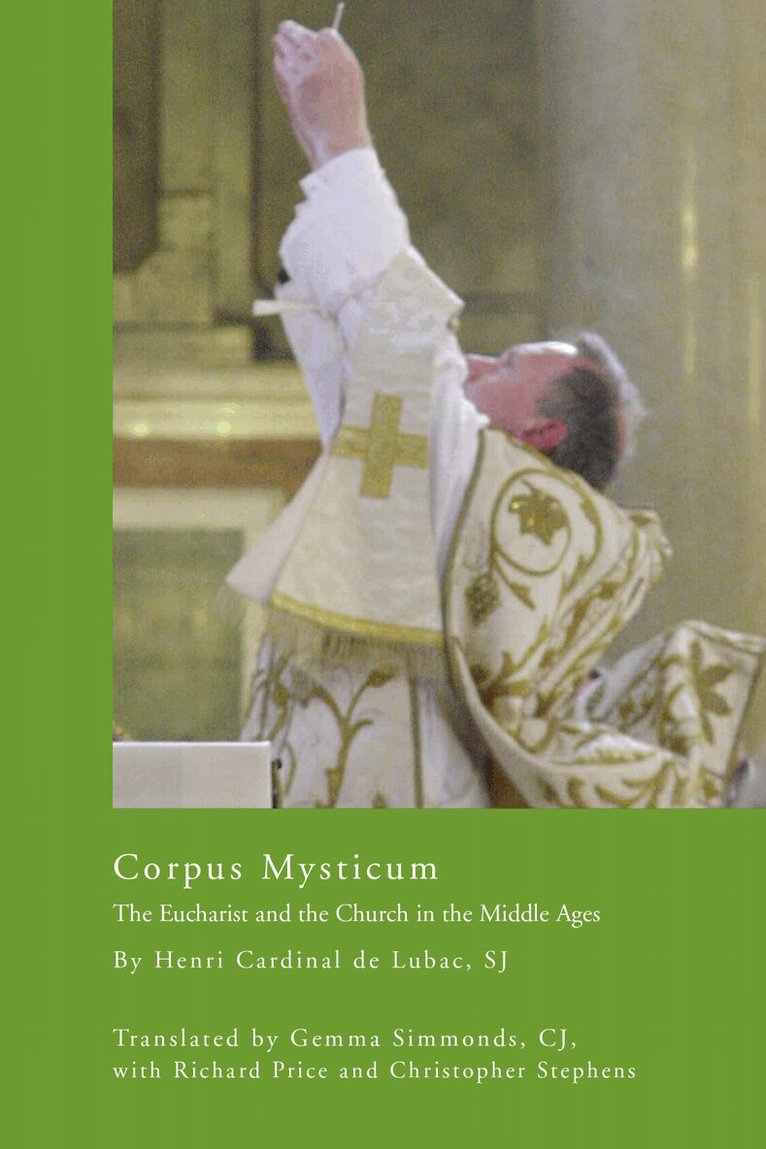
One of the major figures of twentieth-century Catholic theology, Henri Cardinal de Lubac was known for his attention to the doctrine of the church and its life within the contemporary world. In Corpus Mysticum de Lubacinvestigates a particular understanding of the relation of the church to the eucharist. He sets out the nature of the church as communion, a doctrine that influenced the thinking of the Second Vatican Council. With the publication of Corpus Mysticum, this important text of contemporary Catholic ecclesiology and sacramental theology is available for the first time in an English translation. Its publication fills a significant gap in the range of de Lubac's works available to English-speaking scholars. It will be an important resource in the widespread and ongoing ecumenical discussions among Catholic, Protestant, and Orthodox theologians.
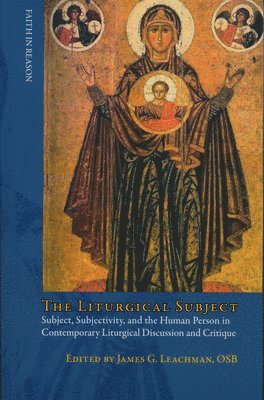
The Liturgical Subject brings together in one volume a wide and sometimes divergent range of understandings of the liturgy. Written primarily by Roman Catholics, with one important ecumenical contribution, the publication of these essays at this moment is particularly apt. They reflect the widespread reassessment of various aspects of especially the post-Conciliar period of liturgical reform. At the same time the collection indicates how liturgical study is called to account by, and is itself able to question, the philosophical aspects of its work. This is an area of enquiry as yet in its infancy, whose contours are nevertheless already discernible in the papers gathered here. This volume is a landmark for research of this kind, pointing toward further ecumenical dialogue and contributing to more fundamental studies of liturgy.
One of the major figures of twentieth-century Catholic theology, Henri Cardinal de Lubac was known for his attention to the doctrine of the church and its life within the contemporary world. In Corpus Mysticum de Lubacinvestigates a particular understanding of the relation of the church to the eucharist. He sets out the nature of the church as communion, a doctrine that influenced the thinking of the Second Vatican Council. With the publication of Corpus Mysticum, this important text of contemporary Catholic ecclesiology and sacramental theology is available for the first time in an English translation. Its publication fills a significant gap in the range of de Lubac's works available to English-speaking scholars. It will be an important resource in the widespread and ongoing ecumenical discussions among Catholic, Protestant, and Orthodox theologians.
The Liturgical Subject brings together in one volume a wide and sometimes divergent range of understandings of the liturgy. Written primarily by Roman Catholics, with one important ecumenical contribution, the publication of these essays at this moment is particularly apt. They reflect the widespread reassessment of various aspects of especially the post-Conciliar period of liturgical reform. At the same time the collection indicates how liturgical study is called to account by, and is itself able to question, the philosophical aspects of its work. This is an area of enquiry as yet in its infancy, whose contours are nevertheless already discernible in the papers gathered here. This volume is a landmark for research of this kind, pointing toward further ecumenical dialogue and contributing to more fundamental studies of liturgy.