Fish Physiology – Serie
2 113 kr
Skickas
1 227 kr
Skickas inom 7-10 vardagar
The Physiology of Tropical Fishes is the 21st volume of the well-known Fish Physiology series and consists of 12 chapters. The purpose of the book is to consolidate and integrate what is known about tropical fishes (marine and freshwater species). The twelve chapters focus on the physiological adaptations acquired during the evolutionary process to cope with warm and shallow hypoxic waters from tropical and neotropical hydrographic basins as well as with the intertidal and coral reef habitats which occur in abundance in tropical seas. The special characteristics of tropical fish fauna will be issued in order to explain the tropical fish radiation, which gave rise to such extreme fish diversity.
This present volume, is a voyage through the tropical region reviewing the fish diversity of the main tropical freshwater sheds, including the major tropical rivers and lakes, the major dams, and marine environments.
State-of-the-art information on tropical fish physiology Written by specialists working in the Tropics Offers a diverse depiction of the various tropical fishes and the environment where they inhabit 12 innovative chapters covering a concise view of growth rate, biological rhythms, feeding plasticity, cardio-respiratory design and function, diversity of structure, and much more1 113 kr
Skickas inom 7-10 vardagar
Volume 22 of the Fish Physiology Series is entirely devoted to fishes of high latitudes (Arctic and Antarctic). Three central themes comprise the book: the uniqueness of the physiology of fishes that live in cold polar environments, a comparative analysis of physiological patterns exemplified by fishes that live poles apart and, how fishes differ from fishes living in more temperate and tropical habitats.
Fish Physiology: The Physiology of Polar Fishes highlights the physiological adaptations that evolved to allow certain fish to exploit the frigid, yet productive, Arctic and Antarctic Oceans. The reader will explore what is known, as well as what remains undiscovered, concerning the fish indigenous to both polar regions. This will be of great interest to physiologists, ichthyologists, and comparative biologists researching low temperature biology, fishery scientists, faculty, graduate students.
Offers an comparative analysis of the arctic and antarctic polar marine environments Authors answer the question: What is special about the physiology of fish from the stenothermal Arctic and Antarctic environments? Includes nine descriptive chapters, 40 tables and over 80 figures1 227 kr
Skickas inom 7-10 vardagar
1 556 kr
Skickas inom 7-10 vardagar
1 178 kr
Skickas inom 7-10 vardagar
1 081 kr
Skickas inom 7-10 vardagar
1 081 kr
Skickas inom 7-10 vardagar
Periods of environmental hypoxia (Low Oxygen Availability) are extremely common in aquatic systems due to both natural causes such as diurnal oscillations in algal respiration, seasonal flooding, stratification, under ice cover in lakes, and isolation of densely vegetated water bodies, as well as more recent anthropogenic causes (e.g. eutrophication). In view of this, it is perhaps not surprising that among all vertebrates, fish boast the largest number of hypoxia tolerant species; hypoxia has clearly played an important role in shaping the evolution of many unique adaptive strategies. These unique adaptive strategies either allow fish to maintain function at low oxygen levels, thus extending hypoxia tolerance limits, or permit them to defend against the metabolic consequences of oxygen levels that fall below a threshold where metabolic functions cannot be maintained.
The aim of this volume is two-fold. First, this book will review and synthesize the adaptive behavioural, morphological, physiological, biochemical, and molecular strategies used by fish to survive hypoxia exposure and place them within an environmental and ecological context. Second, through the development of a synthesis chapter this book will serve as the cornerstone for directing future research into the effects of hypoxia exposures on fish physiology and biochemistry.
The only single volume available to provide an in-depth discussion of the adaptations and responses of fish to environmental hypoxia Reviews and synthesizes the adaptive behavioural, morphological, physiological, biochemical, and molecular strategies used by fish to survive hypoxia exposure Includes discussion of the evolutionary and ecological consequences of hypoxia exposure in fish1 044 kr
Skickas inom 7-10 vardagar
The Multifunctional Gut of Fish provides a comprehensive synthesis and an integrative overview of the range of gut functions and their implications for organismal physiology. The highly diversified anatomy and functions of the gut, including nutrient uptake, immune barrier function, salt and water homeostasis and respiration, as well as neuroendocrine actions and control are covered in detail by leading authors. In addition, this volume explores the pronounced implications of gut function for whole animal integrative physiology and compensatory demands for non-gastrointestinal organs. As the first comprehensive reference to discuss the diverse morphological and functional adaptations of the gut, this volume provides an excellent resource for comparative physiologists, aquaculturists and biomedical researchers employing fish as model organisms for mammalian physiology.
Includes chapters dedicated to anatomical and functional features of the gastro-intestinal tract of fish as well as integrative aspects of gut organ function Includes in depth coverage of recently recognized implications of feeding on salt homeostasis and acid-base balance Provides syntheses of implications of gut function for homeostasis Essential text for those interested in the wide diversity of functions performed by the gut1 178 kr
Skickas inom 7-10 vardagar
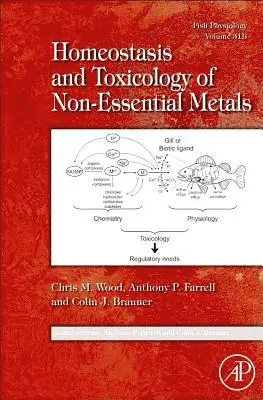
Fish Physiology: Homeostasis and Toxicology of Non-Essential Metals
1 117 kr
Skickas inom 7-10 vardagar
Homeostasis and Toxicology of Non-Essential Metals synthesizes the explosion of new information on the molecular, cellular, and organismal handling of metals in fish in the past 15 years. These elements are no longer viewed by fish physiologists as "heavy metals" that kill fish by suffocation, but rather as interesting moieties that enter and leave fish by specific pathways, which are subject to physiological regulation. The metals featured in this volume are those about which there has been most public and scientific concern, and therefore are those most widely studied by fish researchers. Metals such as Ag, Al, Cd, Pb, Hg, As, Sr, and U have no known nutritive function in fish at present, but are toxic at fairly low levels.
The companion volume, Homeostasis and Toxicology of Essential Metals, Volume 31A, covers metals that are either proven to be or are strongly suspected to be essential in trace amounts, yet are toxic in higher doses. Metals such as Cu, Zn, Fe, Ni, Co, Se, Mo and Cr. In addition, three chapters in Volumes 31A and 31B on Basic Principles (Chapter 1, 31A), Field Studies and Ecological Integration (Chapter 9, 31A) and Modeling the Physiology and Toxicology of Metals (Chapter 9, 31B) act as integrative summaries and make these two volumes a vital set for readers.
All major essential metals of interest are covered in metal-specific chapters Each metal-specific chapter is written by fish physiologists/toxicologists who are recognized authorities for that metal A common format is featured throughout this two volume editionFish Physiology: Homeostasis and Toxicology of Essential Metals
983 kr
Skickas inom 7-10 vardagar
Homeostasis and Toxicology of Essential Metals synthesizes the explosion of new information on the molecular, cellular, and organismal handling of metals in fish in the past 15 years. These elements are no longer viewed by fish physiologists as "heavy metals" that kill fish by suffocation, but rather as interesting moieties that enter and leave fish by specific pathways, which are subject to physiological regulation. The metals featured in this volume are those about which there has been most public and scientific concern, and therefore are those most widely studied by fish researchers. Metals such as Cu, Zn, Fe, Ni, Co, Se, Mo and Cr are either proven to be or are strongly suspected to be essential in trace amounts, yet are toxic in higher doses.
The companion volume, Homeostasis and Toxicology of Non-Essential Metals, Volume 31B, covers metals that have no known nutritive function in fish at present, but which are toxic at fairly low levels, such as Ag, Al, Cd, Pb, Hg, As, Sr, and U. In addition, three chapters in Volumes 31A and 31B on Basic Principles (Chapter 1, 31A), Field Studies and Ecological Integration (Chapter 9, 31A) and Modeling the Physiology and Toxicology of Metals (Chapter 9, 31B) act as integrative summaries and make these two volumes a vital set for readers.
All major essential metals of interest are covered in metal-specific chapters Each metal-specific chapter is written by fish physiologists/toxicologists who are recognized authorities for that metal A common format is featured throughout this two volume edition1 370 kr
Skickas inom 7-10 vardagar
Fish Physiology: Organic Chemical Toxicology of Fishes
1 080 kr
Skickas inom 7-10 vardagar
Fish Physiology: Organic Chemical Toxicology of Fishes discusses the different types of organic chemical contaminants and their respective toxic effects in fish. The book also covers the detection of dissolved organic compounds and methods to assess organic toxicity. Substances addressed in this book include organometallics, hydrocarbons, endocrine disrupting compounds (EDCs), insecticides, herbicides, and pharmaceuticals.
Fish are exposed to an ever-increasing array of organic chemicals that find their way into rivers and oceans. Some of these compounds are no longer being produced but nonetheless persist within the environment (persistent organic pollutants, or POPs). The exposure of fish to toxic organic compounds has potential impact on human, fish, and ecosystem health. Yet the regulations that govern environmental water quality vary worldwide, and compliance is never complete. This book provides a crucial resource on these issues for researchers in zoology, fish physiology, and related fields; applied researchers in environmental monitoring, conservation biology, and toxicology; and university-level students and instructors in these areas.
Organized by type of toxic organic chemicals Includes metals, POPs, EDCs, herbicides, insecticides, and pharmaceuticals Measures toxicity in a variety of ways aside from lethality Probes the toxic effects of compound mixtures as well as single pollutants1 020 kr
Skickas inom 7-10 vardagar
Fish Physiology: Physiology of Elasmobranch Fishes, Volume 34B is a useful reference for fish physiologists, biologists, ecologists, and conservation biologists. Following an increase in research on elasmobranchs due to the plight of sharks in today's oceans, this volume compares elasmobranchs to other groups of fish, highlights areas of interest for future research, and offers perspective on future problems. Covering measurements and lab-and-field based studies of large pelagic sharks, this volume is a natural addition to the renowned Fish Physiology series.
Provides needed comprehensive content on the physiology of elasmobranchs Offers a systems approach between structure and interaction with the environment and internal physiology Contains contributions by leading experts in their respective fields, under the guidance of internationally recognized and highly respected editors Highlights areas of interest for future research, including perspective on future problemsPhysiology of Elasmobranch Fishes: Structure and Interaction with Environment
1 080 kr
Skickas inom 7-10 vardagar
Fish Physiology: Physiology of Elasmobranch Fishes, Volume 34A is a useful reference for fish physiologists, biologists, ecologists, and conservation biologists. Following an increase in research on elasmobranchs due to the plight of sharks in today's oceans, this volume compares elasmobranchs to other groups of fish, highlights areas of interest for future research, and offers perspective on future problems. Covering measurements and lab-and-field based studies of large pelagic sharks, this volume is a natural addition to the renowned Fish Physiology series.
Provides needed comprehensive content on the physiology of elasmobranchs Offers a systems approach between structure and interaction with the environment and internal physiology Contains contributions by leading experts in their respective fields, under the guidance of internationally recognized and highly respected editors Highlights areas of interest for future research, including perspective on future problems1 154 kr
Skickas inom 7-10 vardagar
Biology of Stress in Fish: Fish Physiology provides a general understanding on the topic of stress biology, including most of the recent advances in the field. The book starts with a general discussion of stress, providing answers to issues such as its definition, the nature of the physiological stress response, and the factors that affect the stress response.
It also considers the biotic and abiotic factors that cause variation in the stress response, how the stress response is generated and controlled, its effect on physiological and organismic function and performance, and applied assessment of stress, animal welfare, and stress as related to model species.
Provides the definitive reference on stress in fish as written by world-renowned experts in the field Includes the most recent advances and up-to-date thinking about the causes of stress in fish, their implications, and how to minimize the negative effects Considers the biotic and abiotic factors that cause variation in the stress response1 331 kr
Skickas inom 7-10 vardagar
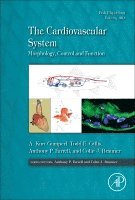
The Cardiovascular System: Design, Control and Function, Volume 36A, a two- volume set, not only provides comprehensive coverage of the current knowledge in this very active and growing field of research, but also highlights the diversity in cardiovascular morphology and function and the anatomical and physiological plasticity shown by fish taxa that are faced with various abiotic and biotic challenges. Updated topics in this important work include chapters on Heart Morphology and Anatomy, Cardiomyocyte Morphology and Physiology, Electrical Excitability of the Fish Heart, Cardiac Energy Metabolism, Heart Physiology and Function, Hormonal and Intrinsic Biochemical Control of Cardiac Function, and Vascular Anatomy and Morphology.
In addition, chapters integrate molecular and cellular data with the growing body of knowledge on heart and in vivo cardiovascular function, and as a result, provide insights into some of the most important questions that still need to be answered.
Presents a comprehensive overview of cardiovascular structure and function in fish Covers topics in a way that is ideal for researchers in fish physiology and for audiences within the fields of comparative morphology, histology, aquaculture and ecophysiology Provide insights into some of the most important questions that still need to be answeredThe Cardiovascular System
Development, Plasticity and Physiological Responses
1 293 kr
Skickas inom 7-10 vardagar
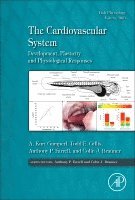
The Cardiovascular System: Phenotypic and Physiological Responses, Volume 37, part of a two-volume set, provides comprehensive coverage of the current state of knowledge in this very active and growing field of research, also highlighting the tremendous diversity in cardiovascular morphology and function among the various fish taxa and the anatomical and physiological plasticity shown by this system when faced with various abiotic and biotic challenges. Specific chapters in this updated book include Research Technologies/Methodology for Studying Fish Cardiovascular Function, Cardiovascular Development in Embryonic and Larval Fishes, Cardiovascular Responses to Limiting Oxygen Levels, and Temperature and the Cardiovascular System.
The book's chapters integrate molecular and cellular data with the growing body of knowledge on heart and in vivo cardiovascular function, and as a result, provide insights into some of the most interesting, and important, questions that still need to be answered in this field.
Presents a comprehensive overview of cardiovascular structure and function in fish Provides a valuable resource for researchers in fish physiology and audiences within the fields of comparative morphology and histology, aquaculture and ecophysiology Highlights the tremendous diversity in cardiovascular morphology and function among the various fish taxa1 308 kr
Skickas inom 7-10 vardagar
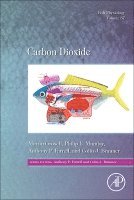
Carbon Dioxide, Volume 37 in the Fish Physiology series highlights new advances in the field, with this new volume presenting interesting chapters on a variety of topics, including Historic, current-day and future CO2 environments and their dynamics in marine and freshwater ecosystems, CO2 sensing, Acid-base physiology and CO2 homeostasis: regulation and compensation, CO2 and calcification processes in fish, The physiology of behavioral impacts of high CO2, Effects of high CO2 on metabolic rates, aerobic scope and swimming performance, Internal spatial and temporal CO2 effects: feeding and alkaline tide, O2 in aquaculture: CO2 dynamics and fish health, and much more.
Provides the authority and expertise of leading contributors from an international board of authors Presents the latest release in the Fish Physiology series Updated release includes the latest information on Carbon Dioxide1 347 kr
Skickas inom 7-10 vardagar
1 463 kr
Skickas inom 7-10 vardagar
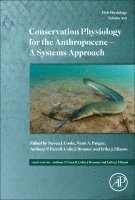
Conservation Physiology for the Anthropocene: A Systems Approach, Volume 39A in the Fish Physiology series, is a comprehensive synthesis on the physiology of fish in the Anthropocene. This volume closes the knowledge gap by considering the many ways in which different physiological systems (e.g., sensory physiology, endocrine, cardio-respiratory, bioenergetics, water and ionic balance and homeostasis, locomotion/biomechanics, gene function) and physiological diversity are relevant to management and conservation. As the world is changing, with a dire need to identify solutions to the many environmental problems facing wild fish populations, this book comprehensively covers conservation physiology and its future techniques.
Conservation physiology reveals the many ways in which environmental change and human activities can negatively influence wild fish populations. These tactics inform new management and conservation activities and help create the necessary conditions for fish to thrive.
Presents authoritative contributions from an international board of authors, each with extensive expertise in the conservation physiology of fish Provides the most up-to-date information on the ways in which different physiological systems are relevant to the management and conservation of fish and fisheries Identifies how anthropogenic stressors perturb physiological systems Explores how different physiological systems can be exploited to solve conservation problems1 293 kr
Skickas inom 7-10 vardagar
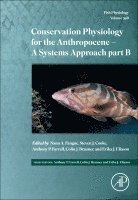
Conservation Physiology for the Anthropocene - A Systems Approach, Volume 39B in the Fish Physiology series, is a comprehensive synthesis related to the physiology of fish in the Anthropocene. This volume helps solve knowledge gaps by considering the many ways in which different physiological systems (e.g., sensory physiology, endocrine, cardio-respiratory, bioenergetics, water and ionic balance and homeostasis, locomotion/biomechanics, gene function) and physiological diversity are relevant to the management and conservation of fish and fisheries. Chapters in this release include Using physiology for recovering imperiled species - the Delta smelt, Conservation hatcheries - the Sturgeon story, Aquatic pollutants and stressors, and more.
Other sections discuss Fisheries interactions in a multi-stressor world, Environmental change in riverine systems - Amazon basin stressors, Environmental change in lakes and wetlands - East African basin stressors, Coral reef fish in a multi-stressor world, Polar fish in a multi-stressor world, Physiology informs fisheries restoration and habitat management, A physiological perspective on fish passage and entrainment, Invasive species control and management - the sea lamprey story, and On the conservation physiology of fishes for tomorrow.
Includes authoritative contributions from an international board of authors, each with extensive expertise in the conservation physiology of fish Provides the most up-to-date information on the ways in which different physiological systems are relevant to the management and conservation of fish and fisheries Presents the latest release in the Fish Physiology series Identifies how anthropogenic stressors perturb physiological systems Explores how different physiological systems can be exploited to solve conservation problemsThe 50th Anniversary Issue of Fish Physiology
Physiological Applications
1 293 kr
Skickas inom 7-10 vardagar
The 50th Anniversary Issue of Fish Physiology
Physiological Systems and Development
1 293 kr
Skickas inom 7-10 vardagar
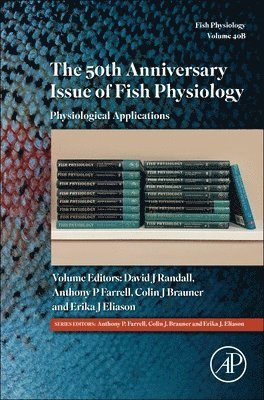
The series "Fish Physiology" recently celebrated its 50th Anniversary. In total, the editors of the series have produced a total of 47 books (several volumes have two books) that contain almost 500 chapters since the inaugural volume published in 1969. The content of the "Fish Physiology" volumes has evolved over time. The initial volumes were devoted to understanding the basic mechanisms and principles of fish physiology, with a focus on a few model species and some application to natural environmental conditions. Then, as the field better understood mechanisms, the approach was broadened to not only delve deeper into system physiology (e.g., chapters in early volumes were expanded to become books), but interspecific differences in physiology were explored, permitting a more evolutionary framework. Finally, as interspecific physiological mechanisms were further resolved, it became possible to discuss physiology in light of a changing world. Thus, physiology can now inform on conservation, sustainability and management, as exemplified with the most recent volumes. This anniversary issue celebrates the series by highlighting some of the very important early work in the field that was published in the Series. In particular, we wished to (re)introduce new researchers to this research that has stood the test of time and that shaped the field. Each re-published chapter is preceded by a short review written by experts in the field to provide an overview/introduction of each selected chapter, discuss what is particularly noteworthy or important in the particular chapter, and discuss why in their opinion this chapter has become a classic in its own right and how it has inspired the field of fish physiology today?
Reviews written by experts in the field of some of the early influential chapters from the series "Fish Physiology" Highlights how some of this early work in the series "Fish Physiology" has stood the test of time and shaped the field today Reintroduces some of the early influential work in the series "Fish Physiology" to new researchers in the field1 331 kr
Skickas inom 7-10 vardagar
Integrative Fish Biomechanics, Volume 41, the latest release in the Fish Physiology series, highlights new advances in the field, with this volume presenting insightful chapters written by leading experts. Covering a wide range of topics, this edition explores the intricate hydrodynamics and biomechanics of fish feeding, swimming, and terrestrial locomotion. It delves into the structural and functional properties of fish tissues, providing a deeper understanding of their mechanical adaptations.Other chapters examine the sensing and control of fish behaviour, the role of biomechanics in fish adhesion, and the emerging field of fish robotics. The volume also discusses the ecomechanics of fish locomotion and feeding, collective behaviours, and the micro- and macroevolutionary perspectives of fish biomechanics. Offering a comprehensive look at the intersection of biology, physics, and engineering, this book provides valuable insights for researchers, marine biologists, and those interested in fish physiology and biomechanics.
Provides the authority and expertise of leading contributors from an international board of authorsPresents the latest release in the Fish Physiology seriesUpdated release includes the latest information on Integrative Fish Biomechanics1 331 kr
Kommande
Integrative Fish Biomechanics, Volume 42 in the Fish Physiology series, highlights new advances in the field, with this volume presenting insightful chapters written by leading experts. Covering a broad range of topics, this edition explores the evolution and function of immune systems in fish, with particular attention to both innate and adaptive immune mechanisms across diverse aquatic species.Chapters examine adaptive immunity in jawless vertebrates and the unique VLR system, the role of antimicrobial peptides in teleost infections, and the use of zebrafish as a model for studying innate immune responses. Additional contributions explore pharyngeal mucosal lymphoid structures, the evolutionary origins of germinal centers in fish, and mechanisms of antigen presentation in teleosts.Other chapters address microbiota-host immune interactions, emerging insights into teleost neuroimmunology, and the modulation of immune function through behavioral fever. Together, these contributions provide a comprehensive overview of current discoveries and evolving perspectives in fish immunology, offering valuable insights for researchers, immunologists, and aquatic biologists interested in the physiology and immune biology of fishes.
Presents the latest advances in fish immunology with contributions from leading experts in the fieldExplores both innate and adaptive immune mechanisms across diverse fish speciesHighlights emerging topics such as microbiota-host immune interactions, teleost neuroimmunology, and behavioral feverDiscusses evolutionary perspectives on immune system development in jawless and teleost fishesServes as an essential reference for researchers, aquatic biologists, and immunologists interested in fish physiology and immune biologyFish Physiology: Homeostasis and Toxicology of Non-Essential Metals
861 kr
Skickas inom 7-10 vardagar