Frontiers in Soft Robotics – serie
Visar alla böcker i serien Frontiers in Soft Robotics. Handla med fri frakt och snabb leverans.
6 produkter
6 produkter
2 261 kr
Kommande
This book provides a comprehensive overview of the latest developments in soft machines, with a particular focus on their construction technologies and key mechanical challenges. It first summarizes the core materials used for manufacturing soft machines and then systematically presents representative fabrication routes, including mold-based methods, direct ink writing (DIW) 3D printing, and digital light processing (DLP) 3D printing. Typical applications enabled by these technologies are highlighted, such as soft pressure sensors, soft touchpads, soft pneumatic actuators, biomimetic vascular tissues, and other functional soft devices. In addition, the book discusses interface performance and interface engineering strategies that are critical for reliable integration and long-term operation of soft machines. It further introduces mechanical behaviors relevant to practical deployment, including structural instability, puncture, and fatigue of soft materials, offering fundamental insights for failure-resistant design. Serving as both an introductory guide and a practical reference, this book will benefit graduate students, researchers, and engineers working in soft robotics, smart materials, and related engineering fields.
1 684 kr
Kommande
This book provides a comprehensive and updated insight into soft and smart actuators, one of the most promising technologies in recent years. This book consists of five chapters, covering interdisciplinary study of mechanics, robotics and materials science of soft and smart actuators. Readers will find detailed and useful information about materials, working principles, modeling methods and potential applications of soft and smart actuators. This book provides a concise introduction on mechanically responsive materials such as polymers, dielectric elastomers, hydrogels and shape memory polymers. Based on continuum mechanics, this book also discusses the multi-physics coupling descriptions, such as electro-, chemo-, and thermo-mechanical coupling, as well as offering detailed modeling examples. This book also makes generous use of color figures, diagrams, and photographs to provide descriptions of the mechanism and applications of soft and smart actuators. With a comprehensive and timely review of the most recent research on the mechanics of soft and smart actuators, this book is useful to a wide readership in the fields of mechanics, robotics engineering and materials science.
2 646 kr
Kommande
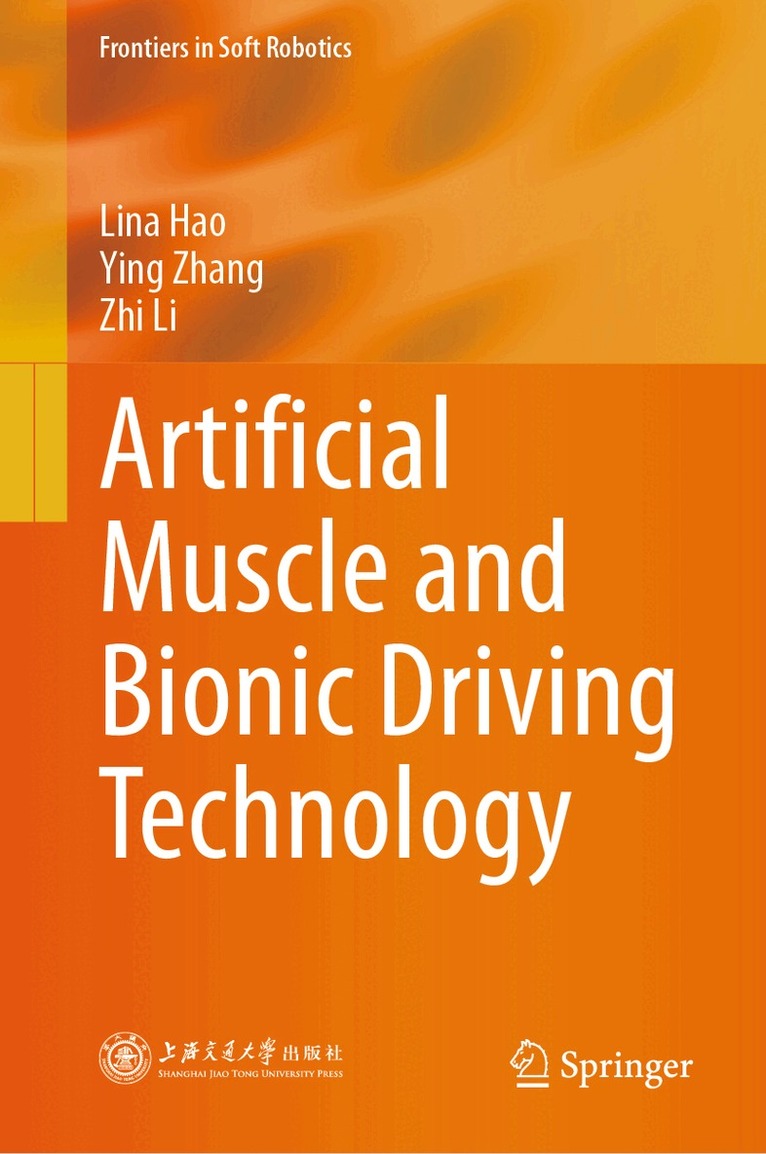
This book provides comprehensive up-to-date overview of the modelling, control, and application problems of artificial muscles and bionic actuators, especially for ionic polymerized metal composite, shape memory alloy, pneumatic artificial muscle, and piezoelectric ceramic actuators. The book consists of seven chapters, putting forward the systematic method of establishing mathematical model, designing the control strategy, and developing the control system. It also includes interesting engineering examples of artificial muscle. This book provides a reference for readers to solve practical engineering problems by using artificial muscle and bionic driving technology.
2 255 kr
Kommande
This book provides a systematic and comprehensive overview of the design, fabrication, motion control, and future development of magnetically actuated soft microrobots. It is composed of six chapters that cover the fundamental principles, material strategies, and control technologies underlying the development of this emerging field. The first two chapters introduce the basic concepts, materials, and fabrication methods of magnetic soft microrobots. Chapters 3 to 5 focus on the locomotion mechanisms, motion control strategies, and cooperative control of multiple soft microrobots, presenting both theoretical analyses and experimental insights. The final chapter discusses the future trends in materials innovation, modeling, control algorithms, and biomedical applications. This book serves as a valuable reference for researchers and engineers working in microrobotics and biomedical engineering, as well as an informative guide for graduate students and educators interested in magnetic soft robotic systems.
2 639 kr
Kommande
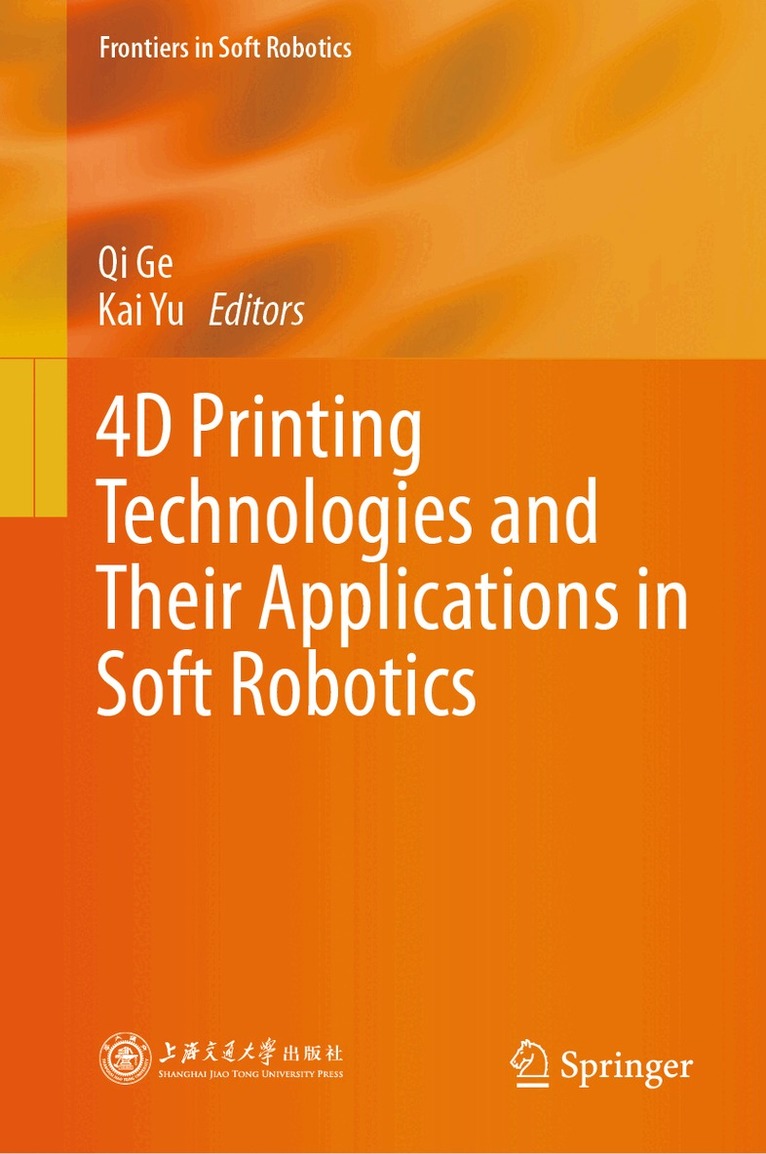
This book offers a systematic review on 4D printing technologies covering from material to design, manufacturing and their applications, and comprehensively presents the state of the art of 4D printing technologies and their applications to soft robots. This book includes 10 chapters. Chapter 1 covers the history of 4D printing, and the key questions and typical examples about applying 4D printing to the field of soft robots. Chapters 2 and 3 introduce the soft active materials and the related 3D printing technologies that are suitable for 4D printing respectively. Chapters 4–8 discuss the typical examples about manufacturing soft robots by different 4D printing technologies. Chapter 9 introduces the recent progress on 3D printing flexible electronics. Chapter 10 outlooks the challenges and directions about the further application of 4D printing technologies to the field of soft robotics. This book benefits the students and researchers from the fields of mechanical engineering, material science, mechanics, robotics, electrical engineering, bioinspired engineering, and other related fields.
2 011 kr
Kommande
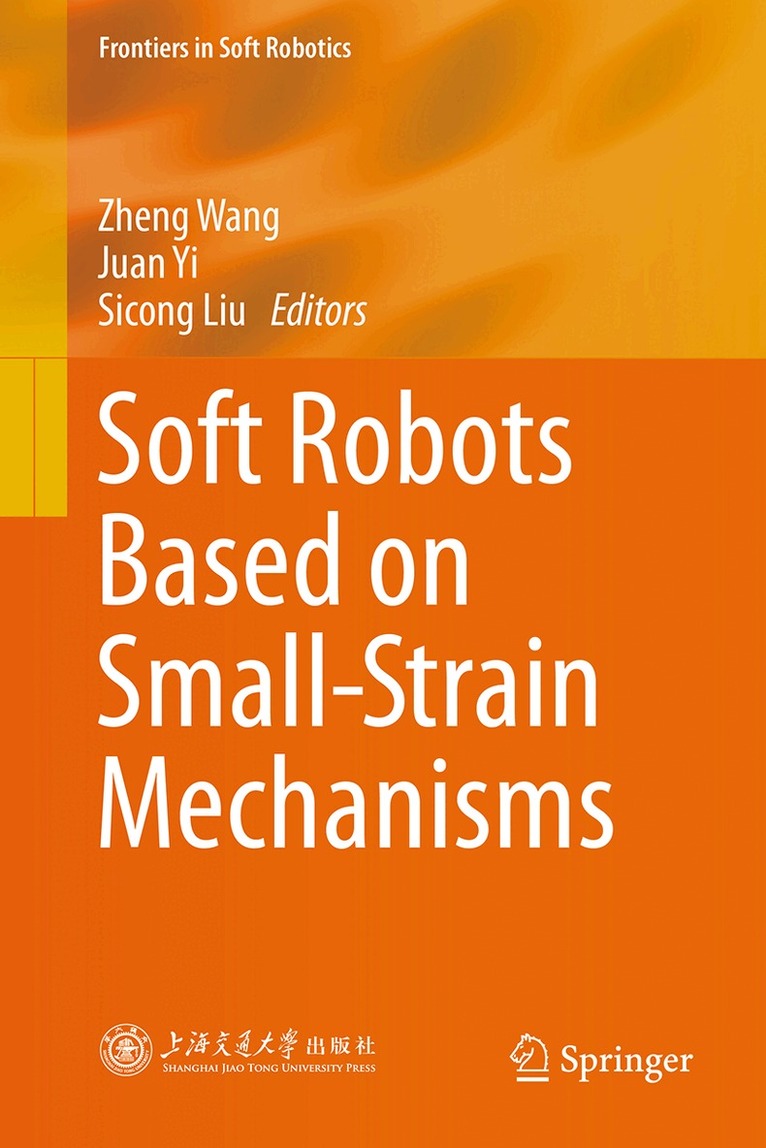
This book describes Soft robotics is considered as one of the most promising frontiers for robotic research and versatile applications. As an interdisciplinary field, soft robotics brings together material science, manufacture, mechatronics and control. This book focuses on actuation, perception, control and applications of soft robots, showing their new functions and behaviors based on unique small-strain mechanisms, to offer readers a wide guidance for interdisciplinary exploration on soft robotics. The book represents the small-strain foldable mechanisms in the first chapter to explain key theories. Methodology covering actuation, perception and control of soft robots based on small-strain mechanisms have been elaborated in Chapter 2-5 to provide new tools for design and modelling of actuators, sensors and controllers. Several excellent cases are following in Chapter 6-10 to review the recent developments on industrial, surgical and healthcare applications. This book aims to give references for students, researchers and engineers from the fields of mechanical engineering, robotics and biomedical engineering.