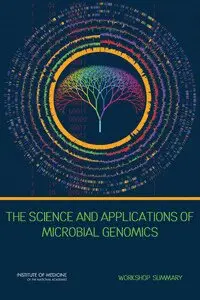
Over the past several decades, new scientific tools and approaches for detecting microbial species have dramatically enhanced our appreciation of the diversity and abundance of the microbiota and its dynamic interactions with the environments within which these microorganisms reside. The first bacterial genome was sequenced in 1995 and took more than 13 months of work to complete. Today, a microorganism's entire genome can be sequenced in a few days. Much as our view of the cosmos was forever altered in the 17th century with the invention of the telescope, these genomic technologies, and the observations derived from them, have fundamentally transformed our appreciation of the microbial world around us. On June 12 and 13, 2012, the Institute of Medicine's (IOM's) Forum on Microbial Threats convened a public workshop in Washington, DC, to discuss the scientific tools and approaches being used for detecting and characterizing microbial species, and the roles of microbial genomics and metagenomics to better understand the culturable and unculturable microbial world around us.Through invited presentations and discussions, participants examined the use of microbial genomics to explore the diversity, evolution, and adaptation of microorganisms in a wide variety of environments; the molecular mechanisms of disease emergence and epidemiology; and the ways that genomic technologies are being applied to disease outbreak trace back and microbial surveillance. Points that were emphasized by many participants included the need to develop robust standardized sampling protocols, the importance of having the appropriate metadata, data analysis and data management challenges, and information sharing in real time. The Science and Applications of Microbial Genomics summarizes this workshop.
The process for translating basic science discoveries into clinical applications has historically involved a linear and lengthy progression from initial discovery to preclinical testing, regulatory evaluation and approval, and, finally, use in clinical practice. The low rate of translation from basic science to clinical application has been a source of frustration for many scientists, clinicians, investors, policy makers, and patients who hoped that investments in research would result in improved products and processes for patients. Some feel that the anticipated deliverables from the Human Genome Project have not yet materialized, and although understanding of human health and disease biology has increased, there has not been a concomitant increase in the number of approved drugs for patients over the past 10 years. Improving the Efficiency and Effectiveness of Genomic Science Translation is the summary of a workshop convened by the Institute of Medicine Roundtable on Translating Genomic-Based Research for Health in December 2012 to explore ways to improve the efficiency and effectiveness of the translation of genomic science to clinical practice.The workshop convened academic researchers, industry representatives, policy makers, and patient advocates to explore obstacles to the translation of research findings to clinical practice and to identify opportunities to support improvement of the early stages of the process for translation of genetic discoveries. This report discusses the realignment of academic incentives, the detection of innovative ways to fund translational research, and the generation or identification of alternative models that accurately reflect human biology or disease to provide opportunities to work across sectors to advance the translation of genomic discoveries.
Many drug developers have examined new strategies for creating efficiencies in their development processes, including the adoption of genomics-based approaches. Genomic data can identify new drug targets for both common and rare diseases, can predict which patients are likely to respond to a specific treatment, and has the potential to significantly reduce the cost of clinical trials by reducing the number of patients that must be enrolled in order to demonstrate safety and efficacy. A key component of the approval of targeted therapeutics is the ability to identify the population of patients who will benefit from treatment, and this has largely hinged on the co-development and co-submission to the FDA of a companion diagnostic test.The co-development process, or the development of the test and drug for the simultaneous submission to FDA, has led to a major alteration in the way that drugs are being developed, with traditionally separate entities-pharmaceutical and diagnostic companies-now working in close collaboration.Refining Processes for the Co-Development of Genome-Based Therapeutics and Companion Diagnostic Tests is the summary of a workshop held by the Roundtable on Translating Genomic-Based Research for Health on February 27, 2013 to examine and discuss challenges and potential solutions for the codevelopment of targeted therapeutics and companion molecular tests for the prediction of drug response. Prior to the workshop, key stakeholders, including laboratory and medical professional societies, were individually asked to provide possible solutions to resolve the concerns raised about co-development of companion diagnostic tests and therapies. Workshop speakers were charged with addressing these solutions in their presentations by providing insight on (1) whether the proposed solutions address the problems described, (2) whether there are other solutions to propose, and (3) what steps could be taken to effectively implement the proposed solutions.
Heritable human genome editing - making changes to the genetic material of eggs, sperm, or any cells that lead to their development, including the cells of early embryos, and establishing a pregnancy - raises not only scientific and medical considerations but also a host of ethical, moral, and societal issues. Human embryos whose genomes have been edited should not be used to create a pregnancy until it is established that precise genomic changes can be made reliably and without introducing undesired changes - criteria that have not yet been met, says Heritable Human Genome Editing.From an international commission of the U.S. National Academy of Medicine, U.S. National Academy of Sciences, and the U.K.'s Royal Society, the report considers potential benefits, harms, and uncertainties associated with genome editing technologies and defines a translational pathway from rigorous preclinical research to initial clinical uses, should a country decide to permit such uses. The report specifies stringent preclinical and clinical requirements for establishing safety and efficacy, and for undertaking long-term monitoring of outcomes. Extensive national and international dialogue is needed before any country decides whether to permit clinical use of this technology, according to the report, which identifies essential elements of national and international scientific governance and oversight.
There is growing enthusiasm in the scientific community about the prospect of mapping and sequencing the human genome, a monumental project that will have far-reaching consequences for medicine, biology, technology, and other fields. But how will such an effort be organized and funded? How will we develop the new technologies that are needed? What new legal, social, and ethical questions will be raised? Mapping and Sequencing the Human Genome is a blueprint for this proposed project. The authors offer a highly readable explanation of the technical aspects of genetic mapping and sequencing, and they recommend specific interim and long-range research goals, organizational strategies, and funding levels. They also outline some of the legal and social questions that might arise and urge their early consideration by policymakers.
Over the past several decades, new scientific tools and approaches for detecting microbial species have dramatically enhanced our appreciation of the diversity and abundance of the microbiota and its dynamic interactions with the environments within which these microorganisms reside. The first bacterial genome was sequenced in 1995 and took more than 13 months of work to complete. Today, a microorganism's entire genome can be sequenced in a few days. Much as our view of the cosmos was forever altered in the 17th century with the invention of the telescope, these genomic technologies, and the observations derived from them, have fundamentally transformed our appreciation of the microbial world around us. On June 12 and 13, 2012, the Institute of Medicine's (IOM's) Forum on Microbial Threats convened a public workshop in Washington, DC, to discuss the scientific tools and approaches being used for detecting and characterizing microbial species, and the roles of microbial genomics and metagenomics to better understand the culturable and unculturable microbial world around us.Through invited presentations and discussions, participants examined the use of microbial genomics to explore the diversity, evolution, and adaptation of microorganisms in a wide variety of environments; the molecular mechanisms of disease emergence and epidemiology; and the ways that genomic technologies are being applied to disease outbreak trace back and microbial surveillance. Points that were emphasized by many participants included the need to develop robust standardized sampling protocols, the importance of having the appropriate metadata, data analysis and data management challenges, and information sharing in real time. The Science and Applications of Microbial Genomics summarizes this workshop.
The process for translating basic science discoveries into clinical applications has historically involved a linear and lengthy progression from initial discovery to preclinical testing, regulatory evaluation and approval, and, finally, use in clinical practice. The low rate of translation from basic science to clinical application has been a source of frustration for many scientists, clinicians, investors, policy makers, and patients who hoped that investments in research would result in improved products and processes for patients. Some feel that the anticipated deliverables from the Human Genome Project have not yet materialized, and although understanding of human health and disease biology has increased, there has not been a concomitant increase in the number of approved drugs for patients over the past 10 years. Improving the Efficiency and Effectiveness of Genomic Science Translation is the summary of a workshop convened by the Institute of Medicine Roundtable on Translating Genomic-Based Research for Health in December 2012 to explore ways to improve the efficiency and effectiveness of the translation of genomic science to clinical practice.The workshop convened academic researchers, industry representatives, policy makers, and patient advocates to explore obstacles to the translation of research findings to clinical practice and to identify opportunities to support improvement of the early stages of the process for translation of genetic discoveries. This report discusses the realignment of academic incentives, the detection of innovative ways to fund translational research, and the generation or identification of alternative models that accurately reflect human biology or disease to provide opportunities to work across sectors to advance the translation of genomic discoveries.
Many drug developers have examined new strategies for creating efficiencies in their development processes, including the adoption of genomics-based approaches. Genomic data can identify new drug targets for both common and rare diseases, can predict which patients are likely to respond to a specific treatment, and has the potential to significantly reduce the cost of clinical trials by reducing the number of patients that must be enrolled in order to demonstrate safety and efficacy. A key component of the approval of targeted therapeutics is the ability to identify the population of patients who will benefit from treatment, and this has largely hinged on the co-development and co-submission to the FDA of a companion diagnostic test.The co-development process, or the development of the test and drug for the simultaneous submission to FDA, has led to a major alteration in the way that drugs are being developed, with traditionally separate entities-pharmaceutical and diagnostic companies-now working in close collaboration.Refining Processes for the Co-Development of Genome-Based Therapeutics and Companion Diagnostic Tests is the summary of a workshop held by the Roundtable on Translating Genomic-Based Research for Health on February 27, 2013 to examine and discuss challenges and potential solutions for the codevelopment of targeted therapeutics and companion molecular tests for the prediction of drug response. Prior to the workshop, key stakeholders, including laboratory and medical professional societies, were individually asked to provide possible solutions to resolve the concerns raised about co-development of companion diagnostic tests and therapies. Workshop speakers were charged with addressing these solutions in their presentations by providing insight on (1) whether the proposed solutions address the problems described, (2) whether there are other solutions to propose, and (3) what steps could be taken to effectively implement the proposed solutions.
Heritable human genome editing - making changes to the genetic material of eggs, sperm, or any cells that lead to their development, including the cells of early embryos, and establishing a pregnancy - raises not only scientific and medical considerations but also a host of ethical, moral, and societal issues. Human embryos whose genomes have been edited should not be used to create a pregnancy until it is established that precise genomic changes can be made reliably and without introducing undesired changes - criteria that have not yet been met, says Heritable Human Genome Editing.From an international commission of the U.S. National Academy of Medicine, U.S. National Academy of Sciences, and the U.K.'s Royal Society, the report considers potential benefits, harms, and uncertainties associated with genome editing technologies and defines a translational pathway from rigorous preclinical research to initial clinical uses, should a country decide to permit such uses. The report specifies stringent preclinical and clinical requirements for establishing safety and efficacy, and for undertaking long-term monitoring of outcomes. Extensive national and international dialogue is needed before any country decides whether to permit clinical use of this technology, according to the report, which identifies essential elements of national and international scientific governance and oversight.
There is growing enthusiasm in the scientific community about the prospect of mapping and sequencing the human genome, a monumental project that will have far-reaching consequences for medicine, biology, technology, and other fields. But how will such an effort be organized and funded? How will we develop the new technologies that are needed? What new legal, social, and ethical questions will be raised? Mapping and Sequencing the Human Genome is a blueprint for this proposed project. The authors offer a highly readable explanation of the technical aspects of genetic mapping and sequencing, and they recommend specific interim and long-range research goals, organizational strategies, and funding levels. They also outline some of the legal and social questions that might arise and urge their early consideration by policymakers.