Georgetown Studies in Intelligence History – serie
Visar alla böcker i serien Georgetown Studies in Intelligence History. Handla med fri frakt och snabb leverans.
14 produkter
14 produkter
Häftad, Engelska, 2025
410 kr
Skickas inom 3-6 vardagar
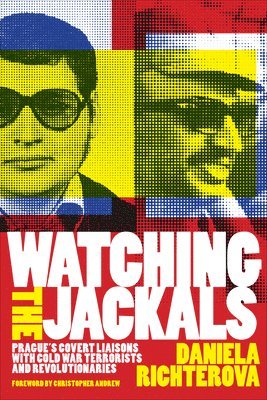
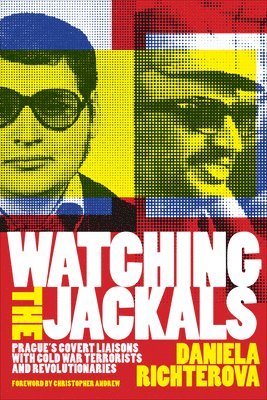
The untold history of Czechoslovakia's complex relations with Middle Eastern terrorists and revolutionaries during the closing decades of the Cold WarIn the 1970s and 1980s, Prague became a favorite destination for the world's most prominent terrorists and revolutionaries. They arrived here to seek refuge, enjoy recreation, or hold secret meetings aimed at securing training, arms, and other forms of support. While some were welcome with open arms, others were closely watched and were eventually ousted.Watching the Jackals is the untold history of Czechoslovakia's complex relations with Middle Eastern terrorists and revolutionaries during the closing decades of the Cold War. Based on recently declassified intelligence files, Richterova unveils the story of Prague's engagement with various factions of the Palestine Liberation Organization, along with some of the era's most infamous terrorists, including Carlos the Jackal, the Munich Olympics massacre commander Abu Daoud, and the Abu Nidal Organization. In this gripping account, Richterova explains why "Cold War Jackals" gravitated toward Prague and how the country's leaders reacted to their visits, and she uncovers the role Czechoslovakia's security and intelligence apparatus – the StB (Státní bezpečnost) played in these, at times, dangerous liaisons.Drawing on interviews and remarkably detailed records from the former Czechoslovakia (now the Czech Republic and the Slovak Republic), Richterova offers readers interested in the intelligence world a fascinating account of how states use their spies to pursue covert policies with violent nonstate actors. The book also introduces new evidence and nuances into old debates about whether the Communist Bloc supported terrorism.
Häftad, Engelska, 2025
457 kr
Skickas
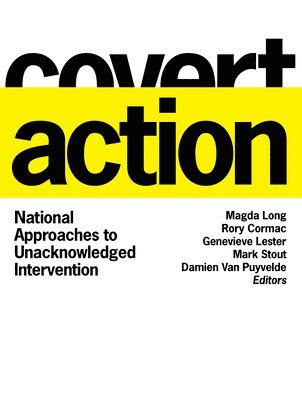
A comparative international perspective challenges conventional narratives about unacknowledged intervention"Covert action" is generally understood as politically motivated and plausibly deniable interference by one state in the affairs of another state. It includes propaganda, political or economic subversion, paramilitary action, and assassinations. Covert action is the most consequential and controversial form of secret statecraft, and it has become a ubiquitous feature of international politics. However, it is often sensationalized or seen through a narrow, US-centric lens.Covert Action challenges this conventional narrative and redefines secret statecraft by offering a groundbreaking comparative international perspective that explores the practice of unacknowledged intervention across twenty countries and a range of eras. Bringing together leading scholars from around the world, this volume moves beyond the American, and wider, anglosphere perspectives to examine covert action practices across states, regime types, and time.This book will be important reading for historians, political scientists, and policymakers, and it provides a foundational study of the hidden mechanisms of international power. It takes a global perspective and thus transforms the understanding of how nations truly interact behind the scenes, revealing covert action as a complex form of international statecraft.
Inbunden, Engelska, 2022
1 480 kr
Skickas inom 5-8 vardagar
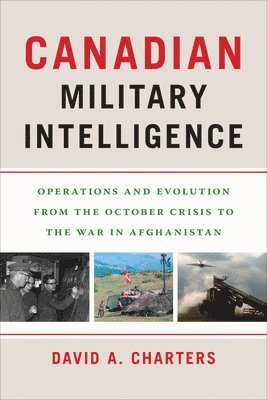
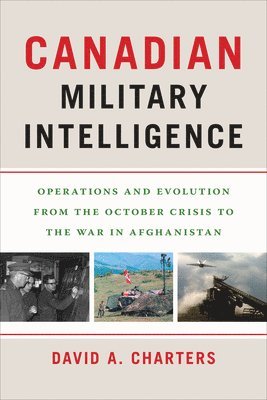
The most comprehensive history of Canadian military intelligence and its influence on key military operationsCanadian intelligence has become increasingly central to the operations of the Canadian Armed Forces (CAF). Canadian Military Intelligence: Operations and Evolution from the October Crisis to the War in Afghanistan is the first comprehensive history that examines the impact of tactical, operational, and strategic intelligence on the Canadian military. Drawing upon a wide range of original documents and interviews with participants in specific operations, author David A. Charters provides an inside perspective on the development of military intelligence since the Second World War. He shows how intelligence influenced key military operations, from domestic internal security to peacekeeping efforts to high-intensity air campaigns—including the October Crisis of 1970, the Oka Crisis, the Gulf War, peacekeeping and enforcement operations in the Balkans, and the war in Afghanistan. He describes how decades of experience, innovation, and increasingly close cooperation with its Five Eyes and NATO allies allowed Canada’s military intelligence to punch above its weight. Its tactical effectiveness and ability to overcome challenges reshaped the outlook of military commanders, and intelligence emerged from the margins to become a central feature of military and defense operations. Canadian Military Intelligence offers lessons from the past and critical implications for future intelligence support with the creation of the Canadian Forces Intelligence Command. This book will be essential to both intelligence history and military history readers and collections.
Häftad, Engelska, 2022
503 kr
Skickas inom 5-8 vardagar
The most comprehensive history of Canadian military intelligence and its influence on key military operationsCanadian intelligence has become increasingly central to the operations of the Canadian Armed Forces (CAF). Canadian Military Intelligence: Operations and Evolution from the October Crisis to the War in Afghanistan is the first comprehensive history that examines the impact of tactical, operational, and strategic intelligence on the Canadian military. Drawing upon a wide range of original documents and interviews with participants in specific operations, author David A. Charters provides an inside perspective on the development of military intelligence since the Second World War. He shows how intelligence influenced key military operations, from domestic internal security to peacekeeping efforts to high-intensity air campaigns—including the October Crisis of 1970, the Oka Crisis, the Gulf War, peacekeeping and enforcement operations in the Balkans, and the war in Afghanistan. He describes how decades of experience, innovation, and increasingly close cooperation with its Five Eyes and NATO allies allowed Canada’s military intelligence to punch above its weight. Its tactical effectiveness and ability to overcome challenges reshaped the outlook of military commanders, and intelligence emerged from the margins to become a central feature of military and defense operations. Canadian Military Intelligence offers lessons from the past and critical implications for future intelligence support with the creation of the Canadian Forces Intelligence Command. This book will be essential to both intelligence history and military history readers and collections.
Inbunden, Engelska, 2024
1 525 kr
Skickas inom 5-8 vardagar
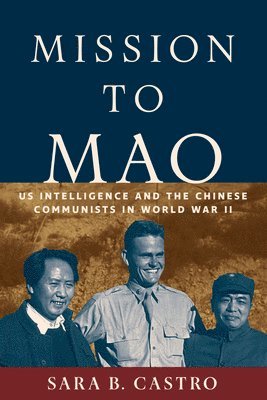
An innovative history of US intelligence officers on the ground and the first official contacts between the United States and the Chinese Communist PartyFrom 1944 to 1947, the United States planted a liaison mission in the headquarters of Chinese Communist forces behind the lines. Nicknamed the "Dixie Mission," for its location in "rebel" territory, it was an interagency delegation that included intelligence officers from the Office of Strategic Services (OSS), the US Army, and the State Department.Mission to Mao is a social history of the OSS officers in the field that reveals the weakness of US intelligence diplomacy in the 1940s. Drawing on over 14,000 unpublished records from five archives as well as white papers and memoirs from the participants, Sara B. Castro demonstrates how the US intelligence officers in China clashed with political appointees and Washington over the direction of the US relationship with the Chinese Communists. Interagency and political conflicts erupted over assessments of Communist capabilities and whether or not the mission would later involve operations with the Communists. Castro shows how potential benefits for the war effort were thwarted by politicization, rivalries, and the biases of US intelligence officials. Mission to Mao is a fresh look at US intelligence in WW II China and takes readers beyond the history of "China Hands" versus American anticommunists, introducing more nuance.
Häftad, Engelska, 2024
518 kr
Skickas inom 5-8 vardagar
An innovative history of US intelligence officers on the ground and the first official contacts between the United States and the Chinese Communist PartyFrom 1944 to 1947, the United States planted a liaison mission in the headquarters of Chinese Communist forces behind the lines. Nicknamed the "Dixie Mission," for its location in "rebel" territory, it was an interagency delegation that included intelligence officers from the Office of Strategic Services (OSS), the US Army, and the State Department.Mission to Mao is a social history of the OSS officers in the field that reveals the weakness of US intelligence diplomacy in the 1940s. Drawing on over 14,000 unpublished records from five archives as well as white papers and memoirs from the participants, Sara B. Castro demonstrates how the US intelligence officers in China clashed with political appointees and Washington over the direction of the US relationship with the Chinese Communists. Interagency and political conflicts erupted over assessments of Communist capabilities and whether or not the mission would later involve operations with the Communists. Castro shows how potential benefits for the war effort were thwarted by politicization, rivalries, and the biases of US intelligence officials. Mission to Mao is a fresh look at US intelligence in WW II China and takes readers beyond the history of "China Hands" versus American anticommunists, introducing more nuance.
Inbunden, Engelska, 2025
1 538 kr
The untold history of Czechoslovakia's complex relations with Middle Eastern terrorists and revolutionaries during the closing decades of the Cold WarIn the 1970s and 1980s, Prague became a favorite destination for the world's most prominent terrorists and revolutionaries. They arrived here to seek refuge, enjoy recreation, or hold secret meetings aimed at securing training, arms, and other forms of support. While some were welcome with open arms, others were closely watched and were eventually ousted.Watching the Jackals is the untold history of Czechoslovakia's complex relations with Middle Eastern terrorists and revolutionaries during the closing decades of the Cold War. Based on recently declassified intelligence files, Richterova unveils the story of Prague's engagement with various factions of the Palestine Liberation Organization, along with some of the era's most infamous terrorists, including Carlos the Jackal, the Munich Olympics massacre commander Abu Daoud, and the Abu Nidal Organization. In this gripping account, Richterova explains why "Cold War Jackals" gravitated toward Prague and how the country's leaders reacted to their visits, and she uncovers the role Czechoslovakia's security and intelligence apparatus – the StB (Státní bezpečnost) played in these, at times, dangerous liaisons.Drawing on interviews and remarkably detailed records from the former Czechoslovakia (now the Czech Republic and the Slovak Republic), Richterova offers readers interested in the intelligence world a fascinating account of how states use their spies to pursue covert policies with violent nonstate actors. The book also introduces new evidence and nuances into old debates about whether the Communist Bloc supported terrorism.
Inbunden, Engelska, 2025
1 450 kr
Skickas
A comparative international perspective challenges conventional narratives about unacknowledged intervention"Covert action" is generally understood as politically motivated and plausibly deniable interference by one state in the affairs of another state. It includes propaganda, political or economic subversion, paramilitary action, and assassinations. Covert action is the most consequential and controversial form of secret statecraft, and it has become a ubiquitous feature of international politics. However, it is often sensationalized or seen through a narrow, US-centric lens.Covert Action challenges this conventional narrative and redefines secret statecraft by offering a groundbreaking comparative international perspective that explores the practice of unacknowledged intervention across twenty countries and a range of eras. Bringing together leading scholars from around the world, this volume moves beyond the American, and wider, anglosphere perspectives to examine covert action practices across states, regime types, and time.This book will be important reading for historians, political scientists, and policymakers, and it provides a foundational study of the hidden mechanisms of international power. It takes a global perspective and thus transforms the understanding of how nations truly interact behind the scenes, revealing covert action as a complex form of international statecraft.
Inbunden, Engelska, 2026
1 525 kr
Skickas inom 5-8 vardagar
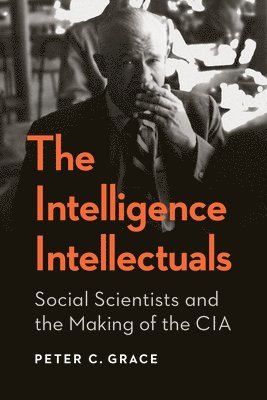
The untold story of how America's brightest academic minds revolutionized intelligence analysis at the CIAIn the early days of the Cold War, the United States faced a crisis in intelligence analysis. A series of intelligence failures in 1949 and 1950, including the failure to warn about the North Korean invasion of South Korea, made it clear that gut instinct and traditional practices were no longer sufficient for intelligence analysis in the nuclear age. The new director of the Central Intelligence Agency, Walter Bedell Smith, had a mandate to reform it.Based on new archival research in declassified documents and the participants' personal papers, The Intelligence Intellectuals reveals the neglected history of how America's brightest academic minds were recruited by the CIA to revolutionize intelligence analysis during this critical period. Peter C. Grace describes how the scientifically sound analysis methods that they introduced significantly helped the United States gain an advantage in the Cold War, and these new analysts legitimized the role of the recently created CIA in the national security community. Grace demonstrates how these professors—such as William Langer from Harvard, Sherman Kent from Yale, and Max Millikan from MIT—developed systematic approaches to intelligence analysis that shaped the CIA's methodology for decades to come.Readers interested in the history of the Cold War and in intelligence, scholars of intelligence studies, Cold War historians, and intelligence practitioners seeking to understand their craft's foundations will all value this insightful history about the place of social science in national security.
Häftad, Engelska, 2026
448 kr
Skickas
The untold story of how America's brightest academic minds revolutionized intelligence analysis at the CIAIn the early days of the Cold War, the United States faced a crisis in intelligence analysis. A series of intelligence failures in 1949 and 1950, including the failure to warn about the North Korean invasion of South Korea, made it clear that gut instinct and traditional practices were no longer sufficient for intelligence analysis in the nuclear age. The new director of the Central Intelligence Agency, Walter Bedell Smith, had a mandate to reform it.Based on new archival research in declassified documents and the participants' personal papers, The Intelligence Intellectuals reveals the neglected history of how America's brightest academic minds were recruited by the CIA to revolutionize intelligence analysis during this critical period. Peter C. Grace describes how the scientifically sound analysis methods that they introduced significantly helped the United States gain an advantage in the Cold War, and these new analysts legitimized the role of the recently created CIA in the national security community. Grace demonstrates how these professors—such as William Langer from Harvard, Sherman Kent from Yale, and Max Millikan from MIT—developed systematic approaches to intelligence analysis that shaped the CIA's methodology for decades to come.Readers interested in the history of the Cold War and in intelligence, scholars of intelligence studies, Cold War historians, and intelligence practitioners seeking to understand their craft's foundations will all value this insightful history about the place of social science in national security.
Inbunden, Engelska, 2026
1 847 kr
Skickas inom 5-8 vardagar
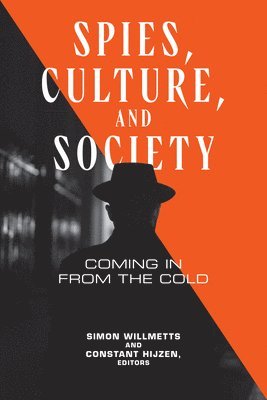
A revealing look at the interrelationship between secret intelligence agencies and the wider societies and cultures they inhabitIntelligence agencies are traditionally understood as cloistered entities. Hidden behind a veil of secrecy, they conduct their activities relatively free from public scrutiny, and their assessments are ideally detached from the cultural and political biases that pervade our fallen world.Today, however, intelligence services have come in from the cold. They feature routinely in our popular culture and our political debates. Our ideas about them, from "deep state" conspiracy theories to popular tropes drawn from spy fiction and cinema, have even influenced the outcome of major elections. Likewise, as John Le Carré once put it, intelligence officers do not sit "like monks in a cell" but are themselves products of the social, political, and cultural domains they inhabit. Spies, Culture, and Society brings together some of the world's leading experts on intelligence and its wider impact to explore different aspects of this reciprocal relationship between spies, culture, and society. The topics covered include the influence of spy films and novels, interactions between spies and journalists, the historical roots of the "deep state" conspiracy theory, Western intelligence and imperialism, and more. Together, these chapters showcase a new way of understanding intelligence agencies as fundamentally integrated into the cultures, societies, and political systems that they seek to analyze and protect.Offering meaningful insights for intelligence studies scholars, Cold War historians, and media scholars, this collection offers a new paradigm for understanding intelligence agencies as fundamentally integrated into the cultures and societies they seek to protect.
Häftad, Engelska, 2026
492 kr
Skickas inom 3-6 vardagar
A revealing look at the interrelationship between secret intelligence agencies and the wider societies and cultures they inhabitIntelligence agencies are traditionally understood as cloistered entities. Hidden behind a veil of secrecy, they conduct their activities relatively free from public scrutiny, and their assessments are ideally detached from the cultural and political biases that pervade our fallen world.Today, however, intelligence services have come in from the cold. They feature routinely in our popular culture and our political debates. Our ideas about them, from "deep state" conspiracy theories to popular tropes drawn from spy fiction and cinema, have even influenced the outcome of major elections. Likewise, as John Le Carré once put it, intelligence officers do not sit "like monks in a cell" but are themselves products of the social, political, and cultural domains they inhabit. Spies, Culture, and Society brings together some of the world's leading experts on intelligence and its wider impact to explore different aspects of this reciprocal relationship between spies, culture, and society. The topics covered include the influence of spy films and novels, interactions between spies and journalists, the historical roots of the "deep state" conspiracy theory, Western intelligence and imperialism, and more. Together, these chapters showcase a new way of understanding intelligence agencies as fundamentally integrated into the cultures, societies, and political systems that they seek to analyze and protect.Offering meaningful insights for intelligence studies scholars, Cold War historians, and media scholars, this collection offers a new paradigm for understanding intelligence agencies as fundamentally integrated into the cultures and societies they seek to protect.
Inbunden, Engelska, 2026
1 356 kr
Kommande
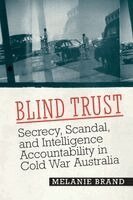
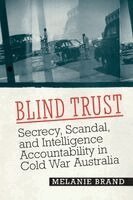
A provocative exploration of the corrosive impact of secrecy on Australian intelligence organizations' effectiveness and operationsSecrecy is central to popular understandings of intelligence and how intelligence services operate. Intelligence agencies generally resist oversight and transparency, arguing that decreases in secrecy come at the cost of intelligence efficacy.In Blind Trust, Melanie Brand challenges this view. Using archival research examining the role, functions, and public perceptions of the Australian Security Intelligence Organization (ASIO), she shows that operating in secrecy did not ensure intelligence efficacy in Cold War Australia. With little oversight from the government, ASIO's products became increasingly irrelevant to policymakers, and politicians lost sight of ASIO's value. With no external guidance or requirement to be accountable for its actions, secrecy allowed ASIO's staff to break the law and become involved in overtly partisan affairs. Finally, excessive secrecy asks for society's blind trust in an intelligence service, and ASIO lost the public's trust during the Cold War because it was able, for a time, to cover up its mistakes and exceed its authority.This groundbreaking history of Australia's domestic spy agency is relevant to the security experiences of other democratic nation-states. Blind Trust will inform students, scholars, and professionals in the fields of intelligence studies, international relations, security studies, and history.
Häftad, Engelska, 2026
507 kr
Kommande
A provocative exploration of the corrosive impact of secrecy on Australian intelligence organizations' effectiveness and operationsSecrecy is central to popular understandings of intelligence and how intelligence services operate. Intelligence agencies generally resist oversight and transparency, arguing that decreases in secrecy come at the cost of intelligence efficacy.In Blind Trust, Melanie Brand challenges this view. Using archival research examining the role, functions, and public perceptions of the Australian Security Intelligence Organization (ASIO), she shows that operating in secrecy did not ensure intelligence efficacy in Cold War Australia. With little oversight from the government, ASIO's products became increasingly irrelevant to policymakers, and politicians lost sight of ASIO's value. With no external guidance or requirement to be accountable for its actions, secrecy allowed ASIO's staff to break the law and become involved in overtly partisan affairs. Finally, excessive secrecy asks for society's blind trust in an intelligence service, and ASIO lost the public's trust during the Cold War because it was able, for a time, to cover up its mistakes and exceed its authority.This groundbreaking history of Australia's domestic spy agency is relevant to the security experiences of other democratic nation-states. Blind Trust will inform students, scholars, and professionals in the fields of intelligence studies, international relations, security studies, and history.