Gingko Art Series - Böcker
Visar alla böcker i serien Gingko Art Series. Handla med fri frakt och snabb leverans.
5 produkter
5 produkter
816 kr
Skickas inom 7-10 vardagar
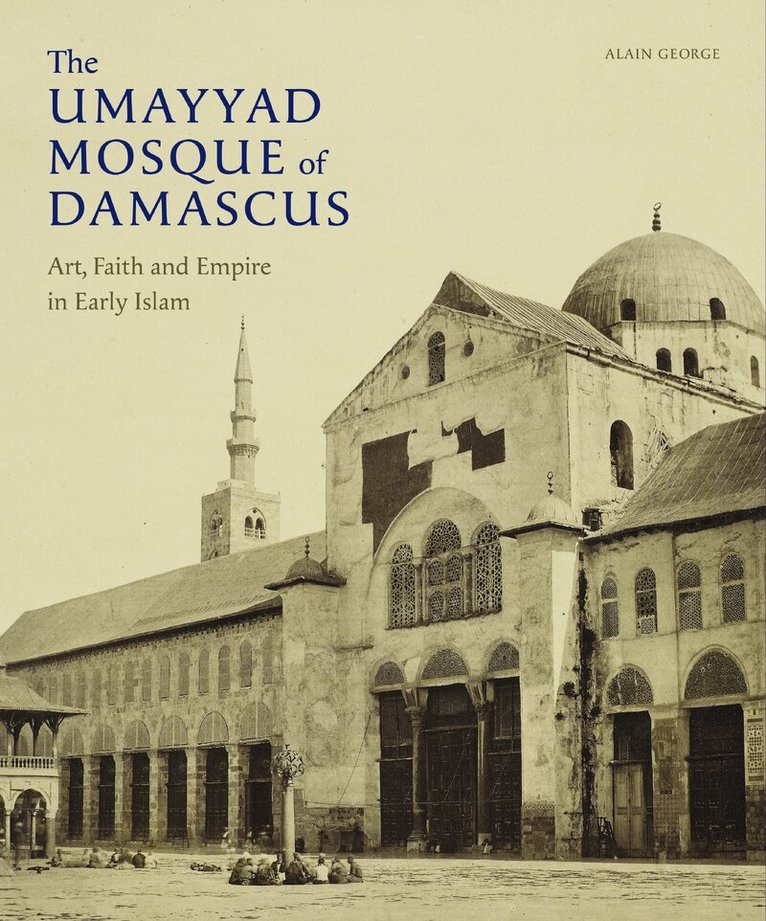
The Great Mosque of Damascus is an iconic monument of world architecture, and the oldest mosque still standing in something close to its original state. This book is the first in-depth study of its foundation by the Umayyad dynasty, just as the first Islamic century was drawing to a close. Towards the end of 705, the Umayyad caliph al-Walid determined to build a new monumental mosque at the heart of his capital Damascus. This required the seizure of a church that had stood there since the forceful closure, centuries earlier, of the Roman temple of Jupiter, the walls of which still stand today. When the Christians refused to cede their building, al-Walid decided to take it by force. This controversial act broke with the consensual politics of the early Islamic empire and triggered a major crisis, the ripples of which were felt as far afield as the Byzantine Empire. Still, events ran their course. Once the rubble of the church was cleared, al-Walid and his supervisors deployed complex logistics to create a building of dazzling opulence and splendour that marked a turning point in mosque architecture. The book anchors the foundation of the Umayyad Mosque in its pre-Islamic past and brings to life the commotion that followed the destruction of the church. Alain George explores the process whereby craftsmen and materials were gathered to build the new mosque, seeks to reconstruct its Umayyad appearance, and investigates the subtle aesthetics that underpinned its stupendous ornament. This beautifully illustrated volume is based upon extensive research on new textual and visual sources, including Umayyad court poems and rare nineteenth-century photographs.
Fruit of Knowledge, Wheel of Learning (Cased Edition)
Essays in Honour of Professors Carole and Robert Hillenbrand
Inbunden, Engelska, 2022
2 501 kr
Skickas inom 7-10 vardagar
Collected essays honoring the work of British professors Carole and Robert Hillenbrand. Carole and Robert Hillenbrand are legendary British professors, both of whom have made immense contributions to the fields of Islamic history and art history, and they are highly respected and beloved by the academic community. For these two volumes, editors Melanie Gibson and Ali Ansari have gathered an eclectic mix of scholarly contributions by colleagues and by some of their most recent students who now occupy positions in universities worldwide. The eleven articles in the volume dedicated to Carole Hillenbrand include research on a range of topics, including the elusive Fatimid caliph al-Zafir, a crusader raid on Mecca, and the Persian bureaucrat Mirza Saleh Shirazi's history of England. In Robert Hillenbrand's volume, the thirteen articles include studies of a rare eighth-century metal dish with Nilotic scenes, Chinese Qur'ans, the process of image-making in both theory and practice, and a shrine in Mosul destroyed by ISIS.
845 kr
Skickas inom 7-10 vardagar
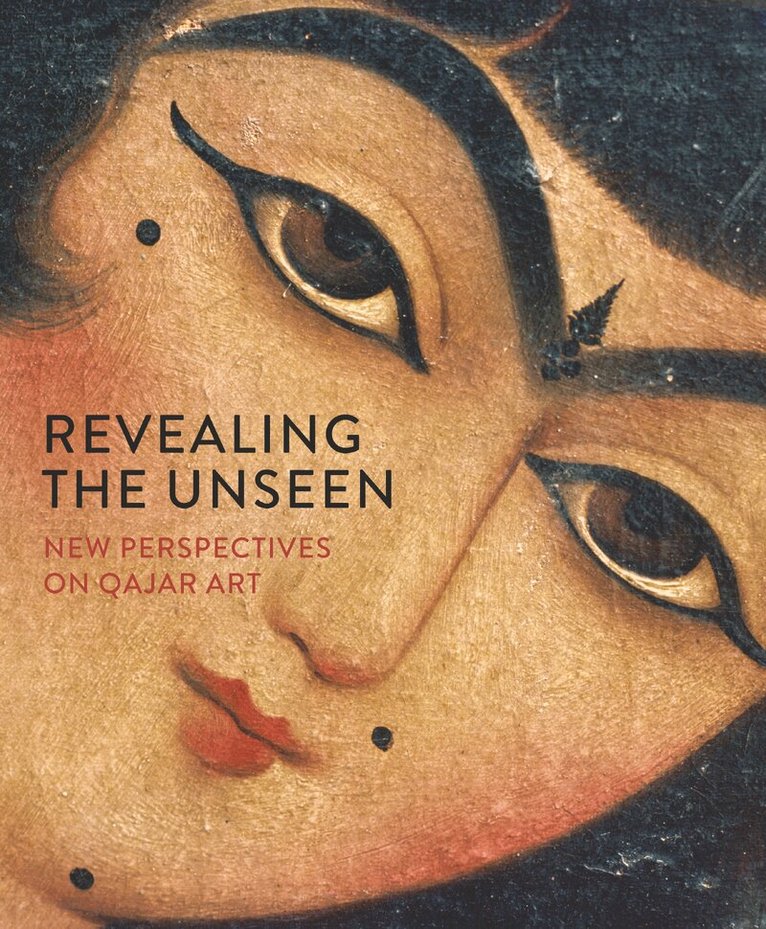
Collected articles on Iranian art from the Qajar dynasty. The thirteen articles in this volume were originally given as presentations at the symposium of the same name organized in June 2018 by the Musee du Louvre and the Musee du Louvre-Lens in conjunction with the exhibition The Empire of Roses: Masterpieces of 19th Century Persian Art. The exhibition explored the art of Iran in the nineteenth and early twentieth centuries, while the nation was under the rule of the Qajar dynasty. The symposium set out to present research on previously unknown and unpublished objects from this rich period of art history. This volume, published with the Louvre Museum in France, is divided into four sections. The first, "Transitions and Transmissions," is dedicated to the arts of painting, illumination, and lithography. The focus of the second section, entitled "The Image Revealed," also considers works on paper, looking at new themes and techniques. "The Material World" examines the use of materials such as textiles, carpets, and armor. The articles in the final section discuss the history of two groups of artifacts acquired by their respective museums.
845 kr
Skickas inom 7-10 vardagar
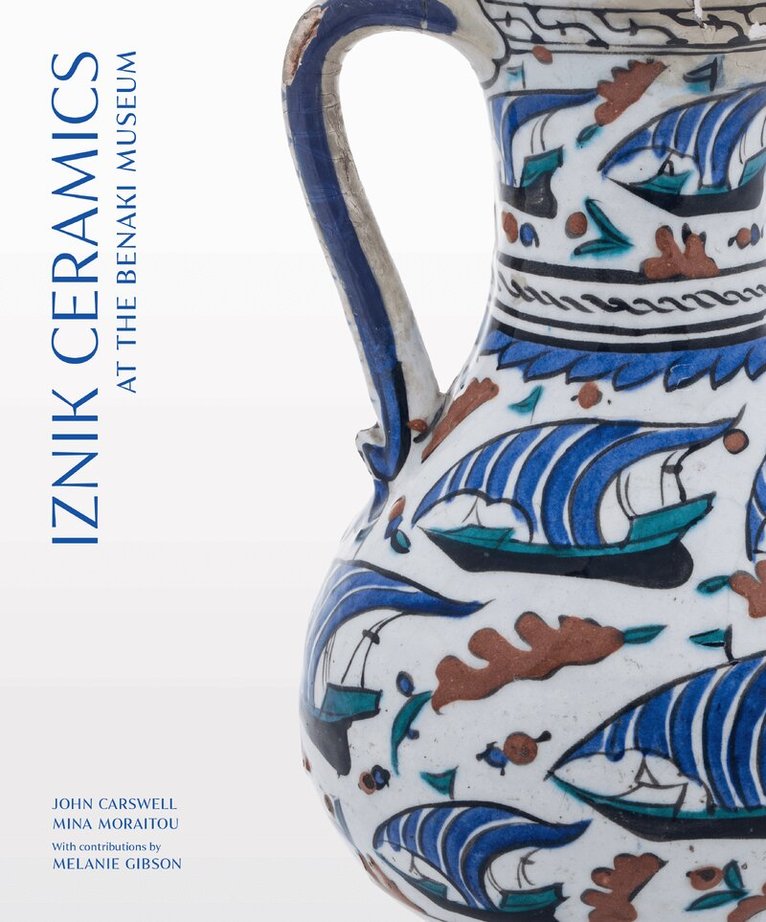
The Benaki Museum of Islamic Art in Athens has a substantial collection of Iznik ceramics (tableware, tiles and sherds). Although well-known to those who visit the museum, this collection has never been fully published. John Carswell first studied the objects in the 1980s and started cataloguing them with a view to publication. The project was revived and guided to fruition by the curator of the museum, Mina Moraitou. She has contributed a chapter on Antonis Benakis and the formation of the Iznik collection as well as working on the catalogue which includes 111 objects, 83 tiles and 143 sherds. All the objects are illustrated in colour, some with line drawings.
984 kr
Skickas inom 7-10 vardagar
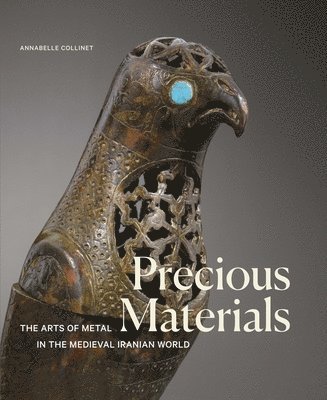
Medieval metalwork is one of the artistic highlights of the Iranian world, as well as of the Departement des Arts de l'Islam at the Louvre in Paris, which holds more than one hundred and fifty objects from this period. A new approach to the study of a historic collection, Precious Material: The Arts of Metal in the Medieval Iranian World is a comprehensive overview of the production of metalin medieval Iran. Although this is one of the most important collections in the world, the objects, some well-known but many more unpublished, have never been studied or published as an ensemble. This volume includes a presentation of the collection through the lens of its centers of manufacture, a full technical analysis, as well as the functions and contexts in which the pieces were used. Each object is fully described and illustrated in color with close-up or X-ray images, and many inscriptions have been translated and are included in the catalog entries