Global Indigenous Issues - Böcker
Visar alla böcker i serien Global Indigenous Issues. Handla med fri frakt och snabb leverans.
7 produkter
7 produkter
Flowers in the Wall
Truth and Reconciliation in Timor-Leste, Indonesia, and Melanesia
Häftad, Engelska, 2018
378 kr
Skickas inom 10-15 vardagar
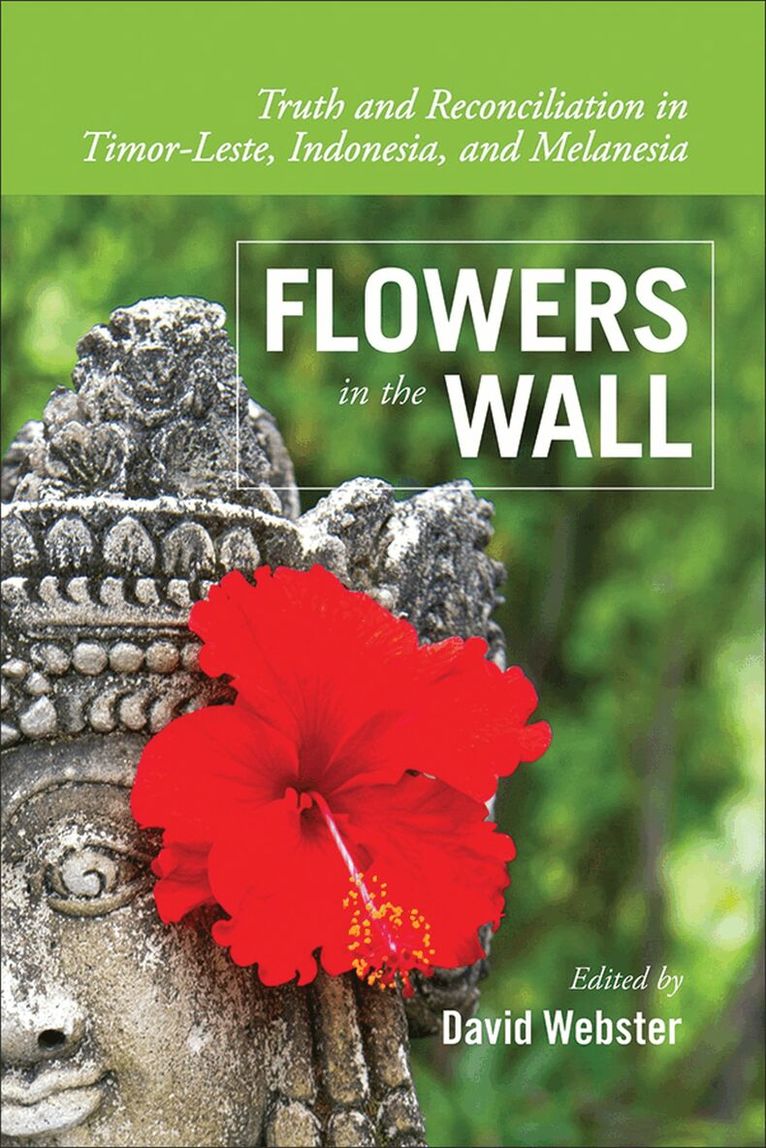
What is the experience of truth and reconciliation? What is the purpose of a truth commission? What lessons can be learned from established truth and reconciliation processes? Flowers in the Wall explores the experience of truth and reconciliation Southeast Asia and the Southwest Pacific, with and without a formal truth commission. Although much has been written about the operational phases of truth commissions, the efforts to establish these commissions and the struggle to put their recommendations into effect are often overlooked. Examining both the pre- and post-truth commission phases, this volume explores a diversity of interconnected scholarship with each chapter forming part of a concise narrative.Well-researched and balanced, this book explores the effectiveness of the truth commission as transnational justice, highlighting its limitations and offering valuable lessons Canadians, and all others, facing similar issues of truth and reconciliation.
1 164 kr
Skickas inom 7-10 vardagar
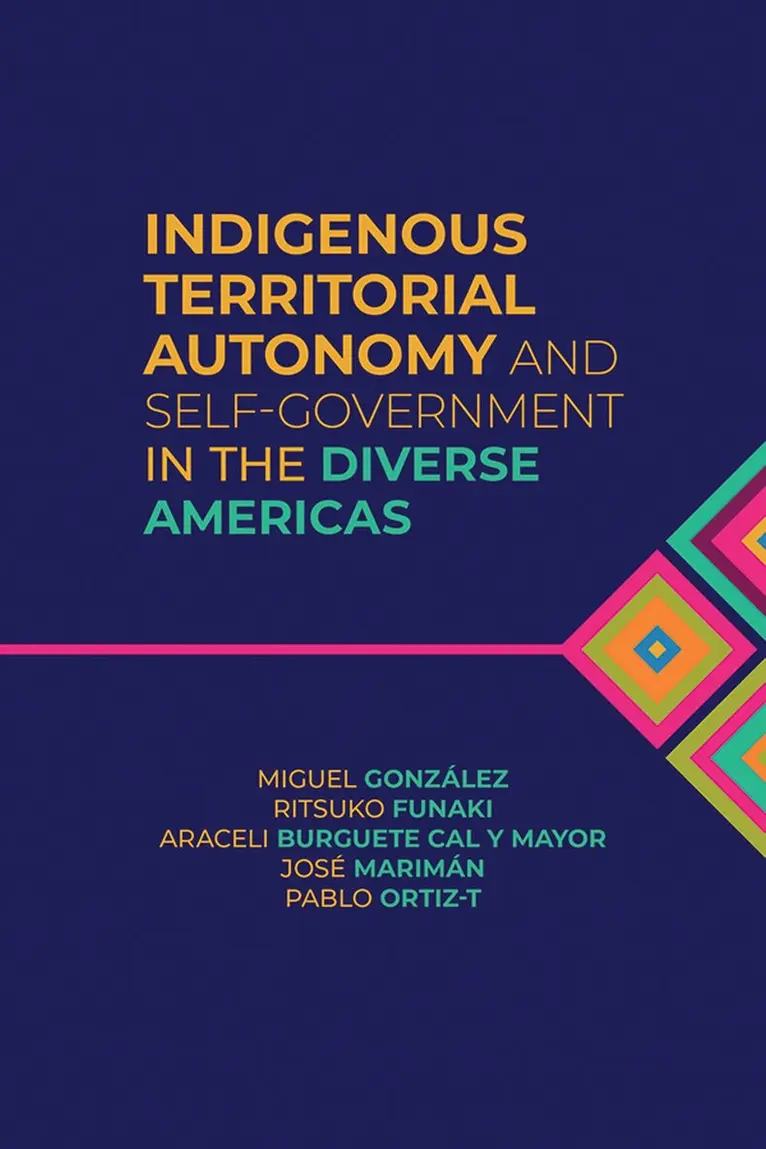
Across the Americas, Indigenous and Afro-descendent peoples have demanded autonomy, self-determination, and self-governance. By exerting their collective rights, they have engaged with domestic and international standards on the rights of Indigenous Peoples, implemented full-fledged mechanisms for autonomous governance, and promoted political and constitutional reform aimed at expanding understandings of multicultural citizenship and the plurinational state. Yet these achievements come in conflict with national governments’ adoption of neoliberal economic and neo-extractive policies which advance their interests over those of Indigenous communities.Available for the first time in English, Indigenous Territorial Autonomy and Self-Government in the Diverse Americas explores current and historical struggles for autonomy within ancestral territories, experiences of self-governance in operation, and presents an overview of achievements, challenges, and threats across three decades. Case studies across Bolivia, Chile, Nicaragua, Peru, Colombia, Mexico, Panama, Ecuador, and Canada provide a detailed discussion of autonomy and self-governance in development and in practice.Paying special attention to the role of Indigenous peoples’ organizations and activism in pursuing sociopolitical transformation, securing rights, and confronting multiple dynamics of dispossession, this book engages with current debates on Indigenous politics, relationships with national governments and economies, and the multicultural and plurinational state. This book will spark critical reflection on political experience and further exploration of the possibilities of the self-determination of peoples through territorial autonomies.
612 kr
Skickas inom 7-10 vardagar
Across the Americas, Indigenous and Afro-descendent peoples have demanded autonomy, self-determination, and self-governance. By exerting their collective rights, they have engaged with domestic and international standards on the rights of Indigenous Peoples, implemented full-fledged mechanisms for autonomous governance, and promoted political and constitutional reform aimed at expanding understandings of multicultural citizenship and the plurinational state. Yet these achievements come in conflict with national governments' adoption of neoliberal economic and neo-extractive policies which advance their interests over those of Indigenous communities.Available for the first time in English, Indigenous Territorial Autonomy and Self-Government in the Diverse Americas explores current and historical struggles for autonomy within ancestral territories, experiences of self-governance in operation, and presents an overview of achievements, challenges, and threats across three decades. Case studies across Bolivia, Chile, Nicaragua, Peru, Colombia, Mexico, Panama, Ecuador, and Canada provide a detailed discussion of autonomy and self-governance in development and in practice.Paying special attention to the role of Indigenous peoples' organizations and activism in pursuing sociopolitical transformation, securing rights, and confronting multiple dynamics of dispossession, this book engages with current debates on Indigenous politics, relationships with national governments and economies, and the multicultural and plurinational state. This book will spark critical reflection on political experience and further exploration of the possibilities of the self-determination of peoples through territorial autonomies.
Doing Democracy Differently
Indigenous Rights and Representation in Canada and Latin America
Inbunden, Engelska, 2024
687 kr
Skickas inom 10-15 vardagar
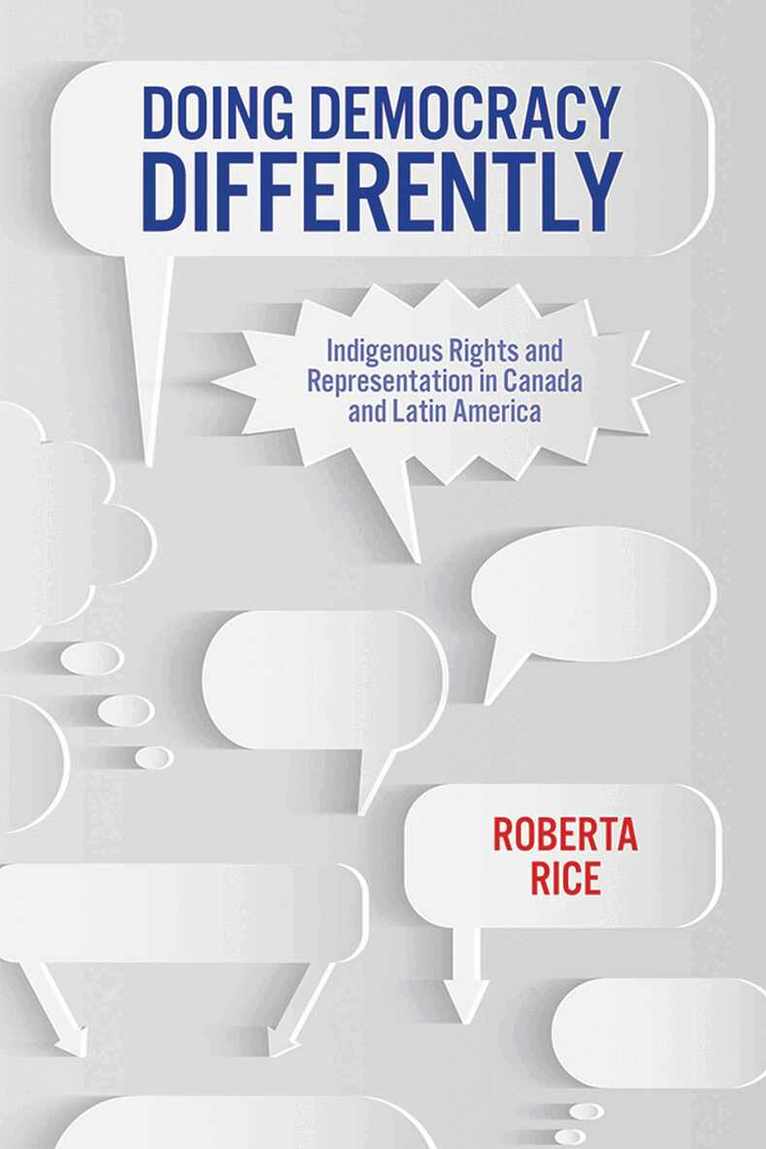
Across North and South America, Indigenous people play a dual political role, building self-governing structures in their own nations and participating in the elections of settler states. Doing Democracy Differently asks how states are responding to demands for Indigenous representation and autonomy and in what ways the ongoing project of decolonization may unsettle the practice of democracy. Based on the structured, focused comparison of four success stories across Northern Canada, Bolivia, and Ecuador, this book provides real-world examples of how Indigenous autonomy and self-determination may be successfully advanced using existing democratic mechanisms. Drawing on thorough original research to identify factors that create distinctive patterns within Indigenous-state relations, it argues that the capacity for democratic innovation lies within the realm of civil society while the possibility for uptake of such innovation is found within the state and its willingness to work with Indigenous and popular actors. Operating at the intersection of Indigenous and Comparative Politics, Doing Democracy Differently takes seriously the role of institutions and the land on which they are built in the creation of democratic transformations in the Americas. This book advances Indigenous rights to autonomy and self-government and speaks to some of the thorniest issues in democratic governance.
Doing Democracy Differently
Indigenous Rights and Representation in Canada and Latin America
Häftad, Engelska, 2024
362 kr
Skickas inom 7-10 vardagar
Across North and South America, Indigenous people play a dual political role, building self-governing structures in their own nations and participating in the elections of settler states. Doing Democracy Differently asks how states are responding to demands for Indigenous representation and autonomy and in what ways the ongoing project of decolonization may unsettle the practice of democracy. Based on the structured, focused comparison of four success stories across Northern Canada, Bolivia, and Ecuador, this book provides real-world examples of how Indigenous autonomy and self-determination may be successfully advanced using existing democratic mechanisms. Drawing on thorough original research to identify factors that create distinctive patterns within Indigenous-state relations, it argues that the capacity for democratic innovation lies within the realm of civil society while the possibility for uptake of such innovation is found within the state and its willingness to work with Indigenous and popular actors. Operating at the intersection of Indigenous and Comparative Politics, Doing Democracy Differently takes seriously the role of institutions and the land on which they are built in the creation of democratic transformations in the Americas. This book advances Indigenous rights to autonomy and self-government and speaks to some of the thorniest issues in democratic governance.
928 kr
Skickas inom 7-10 vardagar
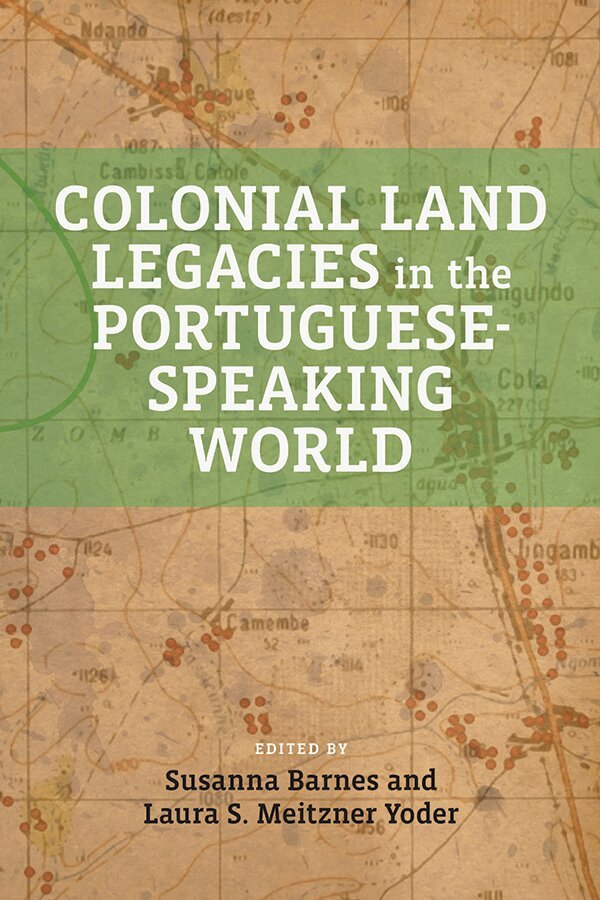
Colonial Land Legacies in the Portuguese-Speaking World presents a comparative exploration of the enduring impacts of Portuguese colonial land governance in Portugal and across five former Portuguese colonies: Brazil, Angola, Mozambique, Flores, and Portuguese Timor. Through ethnographic, historical, and legal analyses, the book investigates how colonial land policies and interventions were not simply implemented and forgotten but have shaped contemporary land access, governance, and socio-economic structures in profound ways. Portuguese colonialism was shaped by shifting political and economic priorities. From trading routes to plantation economies and extractive industries, land became central to Portuguese colonial interests. Colonial Land Legacies in the Portuguese-Speaking World investigates the bureaucratic mechanisms employed by Portuguese authorities to regulate land, highlighting how these systems were frequently manipulated by elites to consolidate power and control over resources. It explores Indigenous-settler entanglements, illustrating how colonial land policies interacted with local governance systems, leading to contested and hybrid forms of land control shaped by both resistance and adaptation. Finally, it focuses on the global capitalist motivations driving land policies, particularly the use of large-scale concessions for plantations, and how these practices continue to shape contemporary land ownership and economic inequalities in post-colonial contexts. Colonial Land Legacies in the Portuguese-Speaking World is a critical and comparative analysis of colonial land governance and its afterlives. It highlights how these legacies continue to shape contemporary struggles over land, making it essential to address them in the pursuit of more equitable land governance. Through its case studies, the book contributes to broader discussions on the relationships between land, power, and colonialism, offering insights into the ongoing challenges of land policy and practice in post-colonial contexts.
481 kr
Skickas inom 7-10 vardagar
Colonial Land Legacies in the Portuguese-Speaking World presents a comparative exploration of the enduring impacts of Portuguese colonial land governance in Portugal and across five former Portuguese colonies: Brazil, Angola, Mozambique, Flores, and Portuguese Timor. Through ethnographic, historical, and legal analyses, the book investigates how colonial land policies and interventions were not simply implemented and forgotten but have shaped contemporary land access, governance, and socio-economic structures in profound ways. Portuguese colonialism was shaped by shifting political and economic priorities. From trading routes to plantation economies and extractive industries, land became central to Portuguese colonial interests. Colonial Land Legacies in the Portuguese-Speaking World investigates the bureaucratic mechanisms employed by Portuguese authorities to regulate land, highlighting how these systems were frequently manipulated by elites to consolidate power and control over resources. It explores Indigenous-settler entanglements, illustrating how colonial land policies interacted with local governance systems, leading to contested and hybrid forms of land control shaped by both resistance and adaptation. Finally, it focuses on the global capitalist motivations driving land policies, particularly the use of large-scale concessions for plantations, and how these practices continue to shape contemporary land ownership and economic inequalities in post-colonial contexts. Colonial Land Legacies in the Portuguese-Speaking World is a critical and comparative analysis of colonial land governance and its afterlives. It highlights how these legacies continue to shape contemporary struggles over land, making it essential to address them in the pursuit of more equitable land governance. Through its case studies, the book contributes to broader discussions on the relationships between land, power, and colonialism, offering insights into the ongoing challenges of land policy and practice in post-colonial contexts.