History of Anthropology – serie
Visar alla böcker i serien History of Anthropology. Handla med fri frakt och snabb leverans.
12 produkter
12 produkter
Häftad, Engelska, 1985
264 kr
Skickas inom 10-15 vardagar
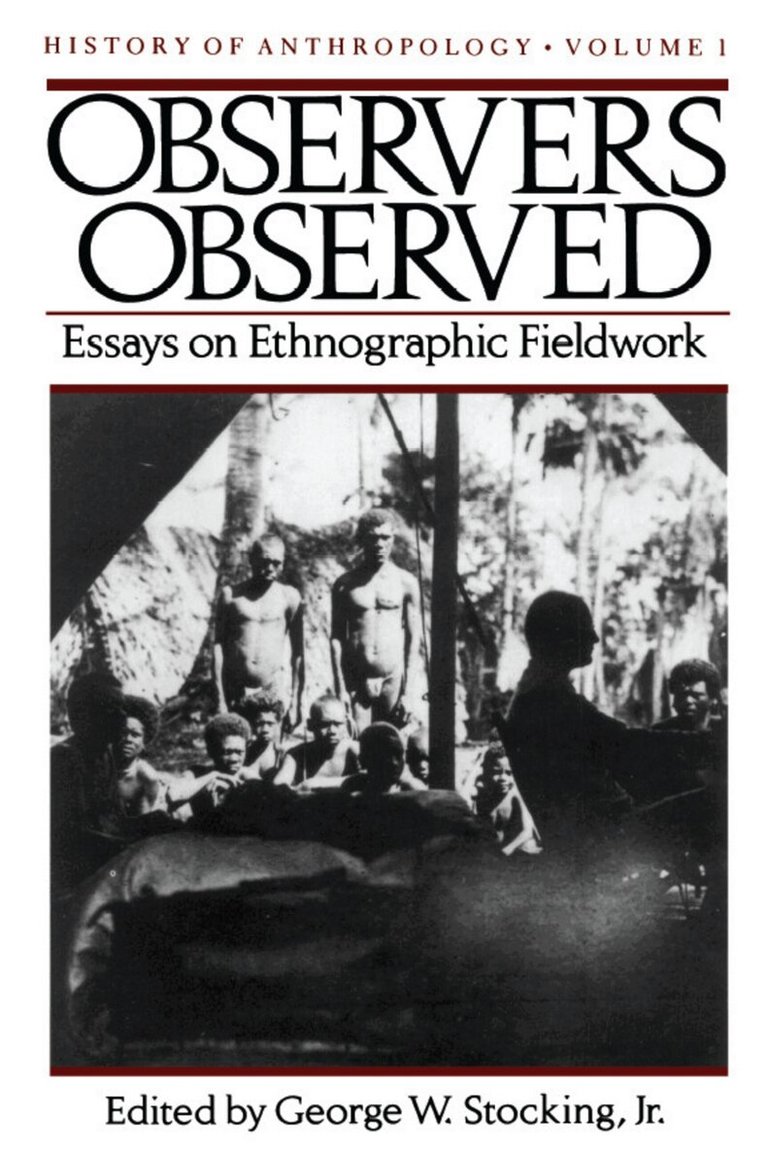
History of Anthropology is a series of annual volumes, each of which treats an important theme in the history of anthropological inquiry. For this initial volume, the editors have chosen to focus on the modern cultural anthropology: intensive fieldwork by “participant observation.” Observers Observed includes essays by a distinguished group of historians and anthropologists covering major episodes in the history of ethnographic fieldwork in the American, British, and French traditions since 1880. As the first work to investigate the development of modern fieldwork in a serious historical way, this collection will be of great interest and value to anthropologist, historians of science and the social sciences, and the general readers interested in the way in which modern anthropologists have perceived and described the cultures of “others.”
Häftad, Engelska, 1988
264 kr
Skickas inom 10-15 vardagar
Häftad, Engelska, 1988
264 kr
Skickas inom 10-15 vardagar
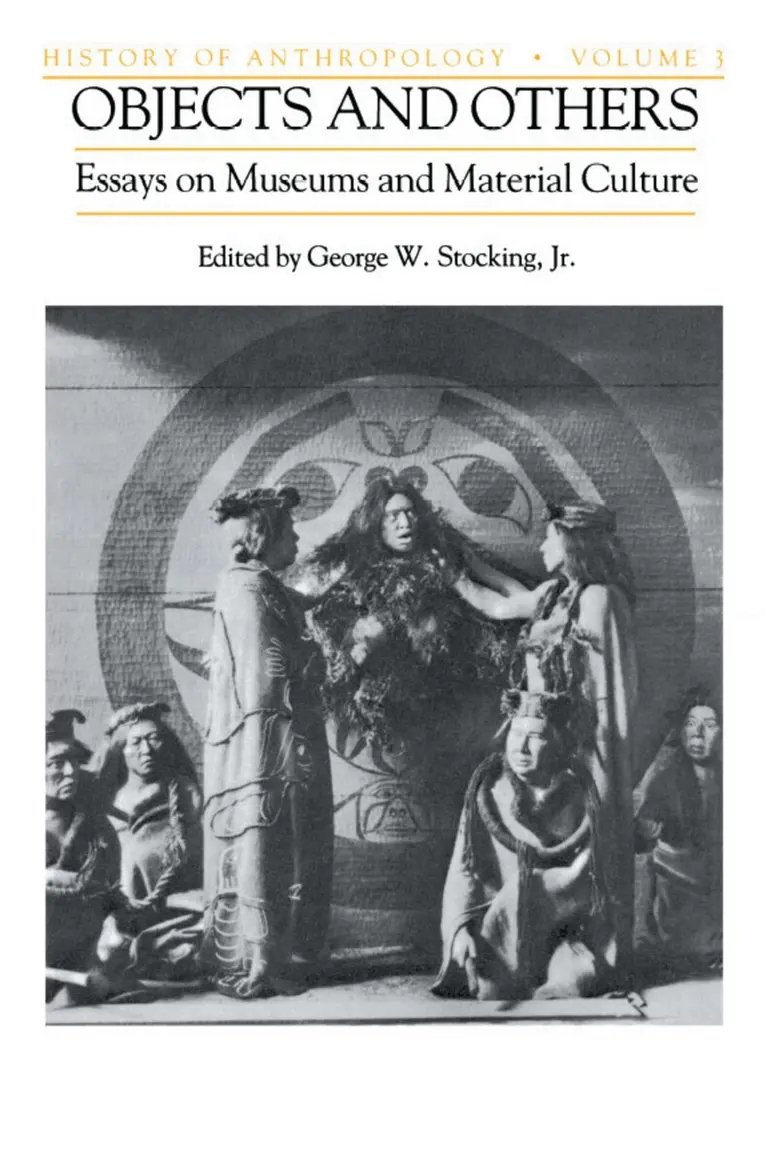
History of Anthropology is a series of annual volumes, inaugurated in 1983, each of which treats an important theme in the history of anthropological inquiry. Objects and Others, the third volume, focuses on a number of questions relating to the history of museums and material culture studies: the interaction of museum arrangement and anthropological theory; the tension between anthropological research and popular education; the contribution of museum ethnography to aesthetic practice; the relationship of humanistic and anthropological culture, and of ethnic artefact and fine art; and, more generally, the representation of culture in material objects. As the first work to cover the development of museum anthropology since the mid-nineteenth century, it will be of great interest and value not only to anthropologist, museologists, and historians of science and the social sciences, but also to those interested in “primitive” art and its reception in the Western world.
Häftad, Engelska, 1988
264 kr
Skickas inom 10-15 vardagar
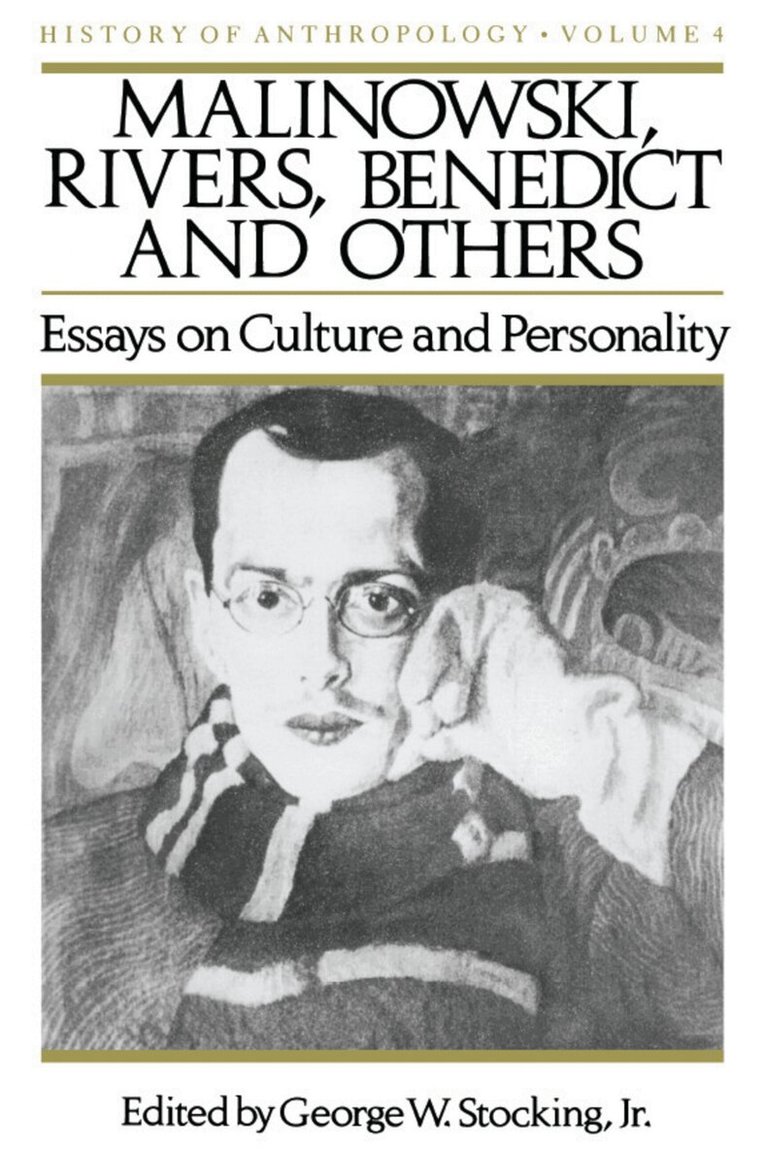
History of Anthropology is a series of annual volumes, inaugurated in 1983, each of which treats a theme of major importance in both the history and current practice of anthropological inquiry. Drawing its title from a poem of W. H. Auden’s, the present volume, Malinowski, Rivers, Benedict and Others focuses on the emergence of anthropological interest in “culture and personality” during the 1920s and 1930s. It also explores the historical, cultural, literary, and biological background of major figures associated with the movement, including Bronislaw Malinowski, Edward Sapir, Abram Kardiner, Ruth Benedict, Margaret Mead, and Gregory Bateson.Born in the aftermath of World War I, flowering in the years before and after World War II, severely attacked in the 1950s and 1960s, “culture and personality” was subsequently reborn as “psychological anthropology.” Whether this foreshadows the emergence of a major anthropological subdiscipline (equivalent to cultural, social, biological, or linguistic anthropology) from the current welter of “adjectival” anthropologies remain to be seen. In the meantime, the essays collected in the volume may encourage a rethinking of the historical roots of many issues of current concern.
Häftad, Engelska, 1990
264 kr
Skickas inom 10-15 vardagar
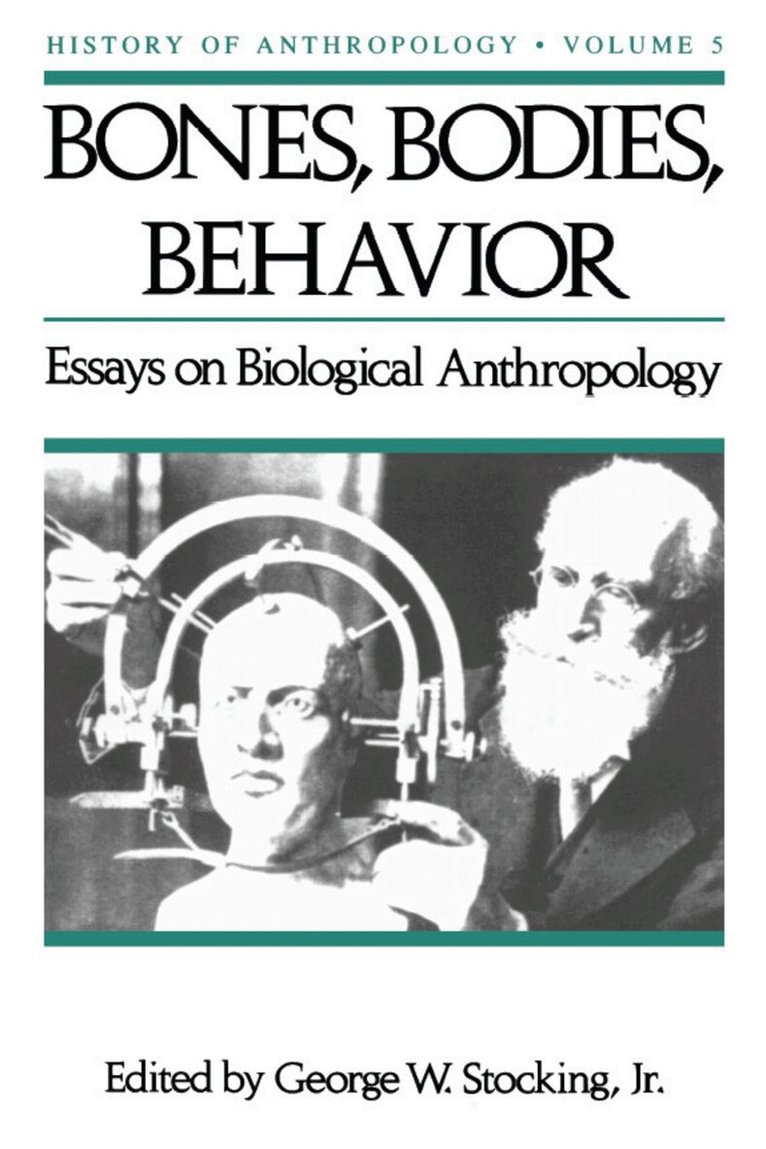
History of Anthropology is a series of annual volumes, inaugurated in 1983, each broadly unified around a theme of major importance to both the history and the present practice of anthropological inquiry. Bones, Bodies, Behavior, the fifth in the series, treats a number of issues relating to the history of biological or physical anthropology: the application of the “race” idea to humankind, the comparison of animals’ minds to those of humans, the evolution of humans from primate forms, and the relation of science to racial ideology.Following an introductory overview of biological anthropology in Western tradition, the seven essays focus on a series of particular historical episodes from 1830 to 1980: the emergence of the race idea in restoration France, the comparative psychological thought of the American ethnologist Lewis Henry Morgan, the archeological background of the forgery of the remains “discovered” at Piltdown in 1912, their impact on paleoanthropology in the interwar period, the background and development of physical anthropology in Nazi Germany, and the attempts of Franx Boas and others to organise a consensus against racialism among British and American scientists in the late 1930s. The volume concludes with a provocative essay on physical anthropology and primate studies in the United States in the years since such a consensus was established by the UNESCO “Statements on Race” of 1950 and 1951. Bringing together the contributions of a physical anthropologist (Frank Spencer), a historical sociologist (Michael Hammond), and a number of historians of science (Elazar Barkan, Claude Blanckaert, Donna Haraway, Robert Proctor, and Marc Swetlitz), this volume will appeal to a wide range of students, scholars, and general readers interested in the place of biological assumptions in the modern anthropological tradition, in the biological bases of human behaviour, in racial ideologies, and in the development of the modern human sciences.
Häftad, Engelska, 1996
272 kr
Skickas inom 10-15 vardagar
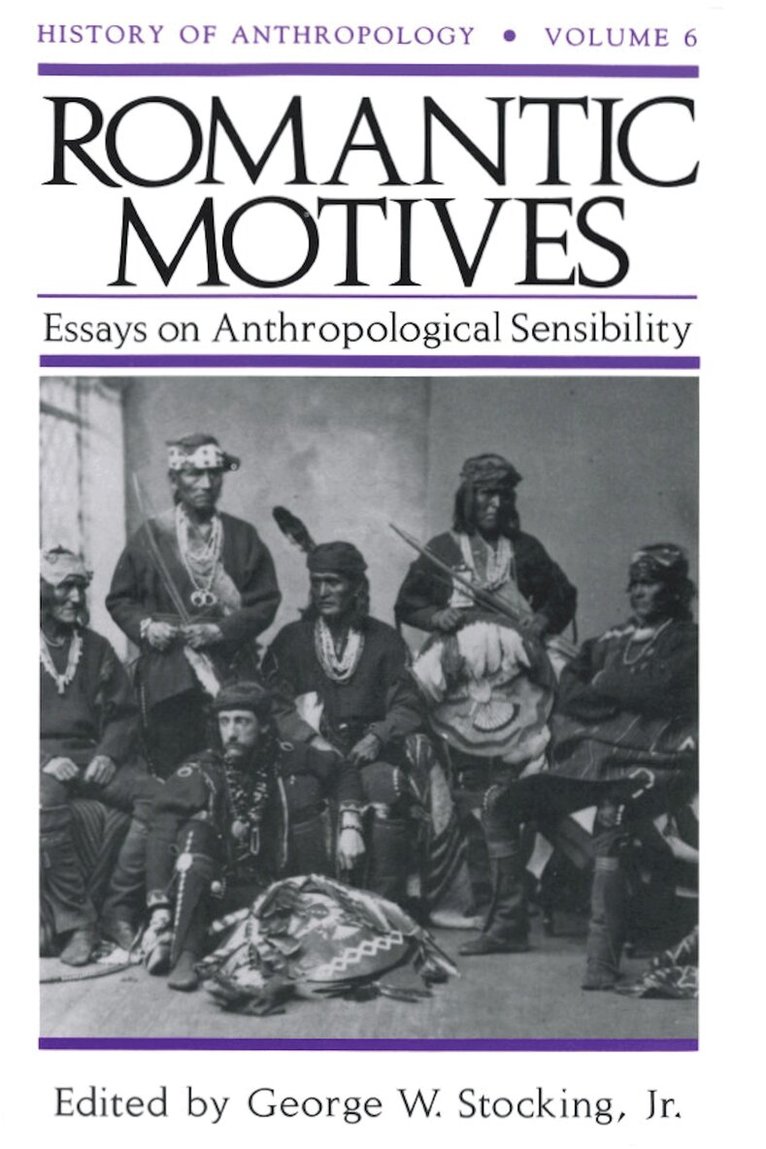
Tracking the Romantic strains in the writings of Rousseau, Herder, Cushing, Sapir, Benedict, Redfield, Mead, Levi-Strauss and others, these essays show Romanticism as a permanent and recurrent tendency within the anthropological tradition.
Häftad, Engelska, 1993
272 kr
Skickas inom 10-15 vardagar
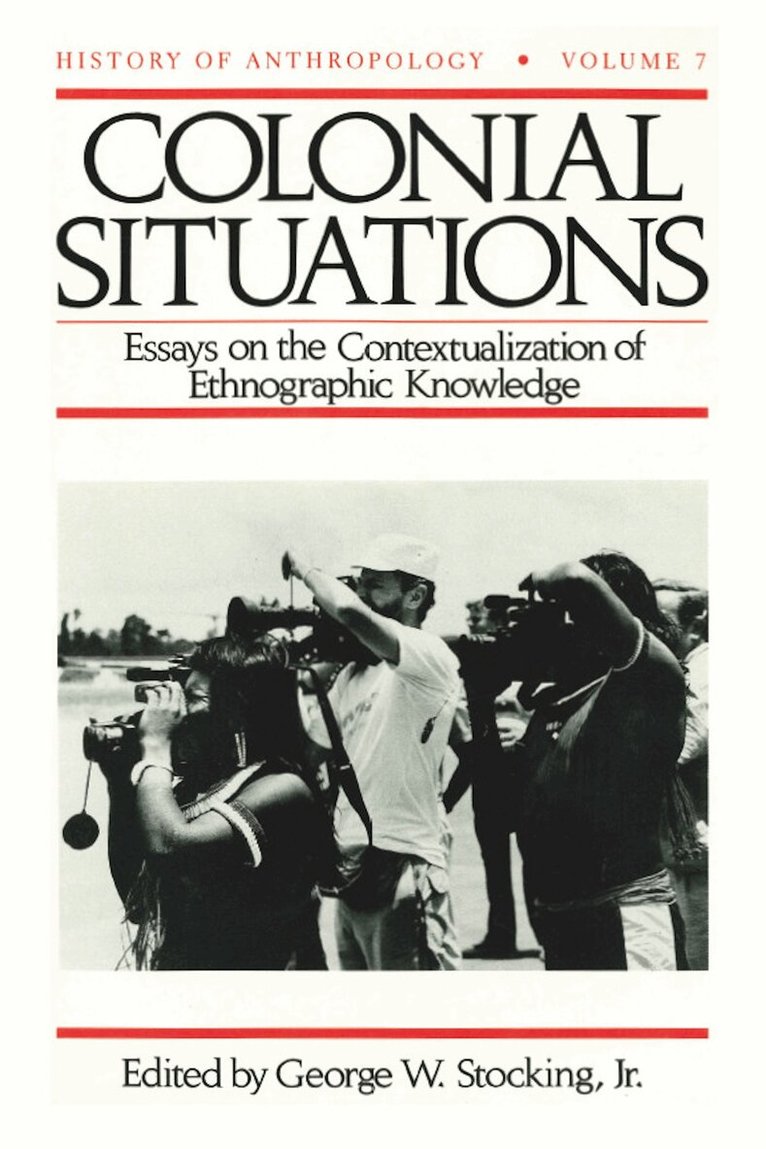
The relation of anthropology to colonialism and imperialism became a burning issue for anthropologists in the mid-1960s. As European colonies in Asia and Africa became independent nations, as the United States engaged in war in South-east Asia and in covert operations in South America, anthropologists questioned their interactions with their subjects and worried about the political consequences of government-supported research. By 1970, some spoke of anthropology as ""the child of Western imperialism"" and as ""scientific colonialism"". Ironically, as the link between anthropology and colonialism became more widely accepted within the discipline, serious interest diminished in examining the history of anthropology in colonial contexts. This volume attempts a critical historical consideration of the varying colonial situations in which (and from which) ethnographic knowledge essential to anthropology has been produced. The essays comment on ethnographic work from the middle of the 19th century to almost the end of the 20th; they cover regions from Oceania through Southeast Asia, the Andaman Islands and Southern Africa, to North and South America. The ""colonial situations"" also range from first contact through to the establishment of colonial power; from District Officer administrations through to white settler regimes; from internal colonialism to international mandates; from early pacification to wars of colonial liberation; from the expropriation of land to the defence of ecology. The motivations and responses of the anthropologists discussed are equally varied: the romantic resistance of Maclay and the complicity of Kubary in early colonialism; Malinowski's salesmanship of academic anthropology; Speck's advocacy of Indian land rights; Schneider's grappling with the ambiguities of rapport; and Turner's facilitation of Kayapo cinematic activism.
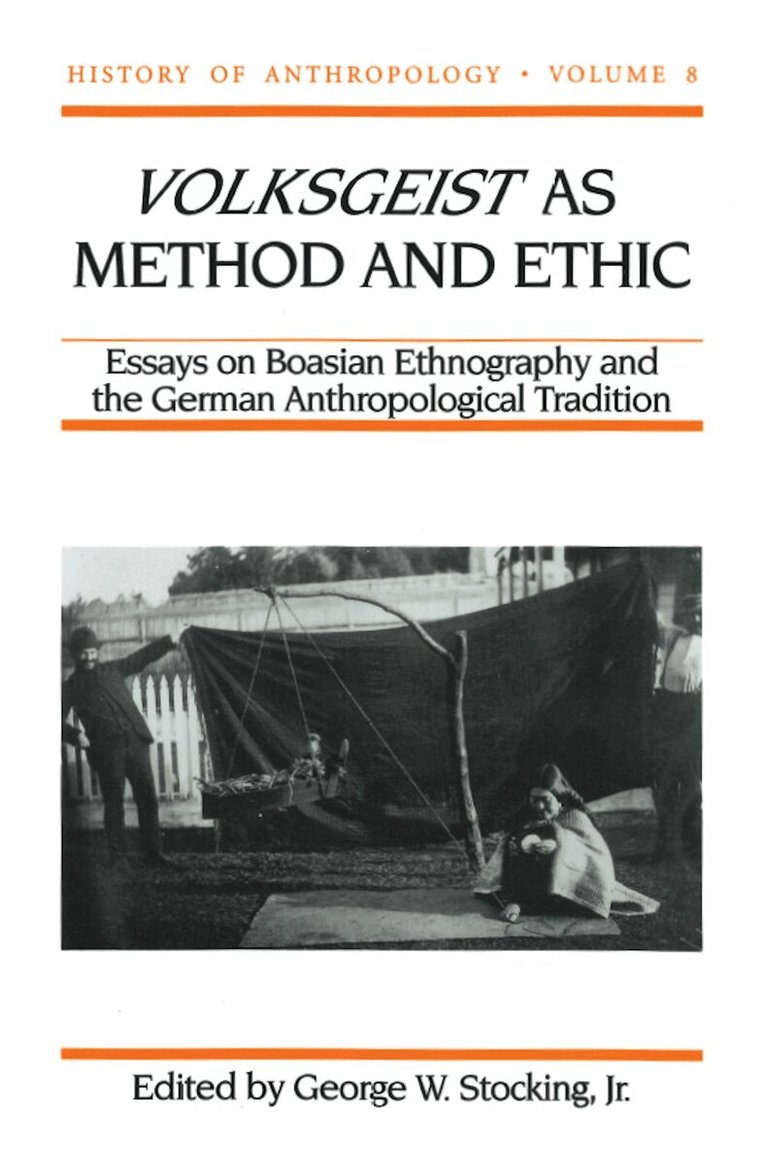
Volksgeist As Method and Ethic
Essays on Boasian Ethnography and the German Anthropological Tradition
Inbunden, Engelska, 1996
467 kr
Skickas inom 10-15 vardagar
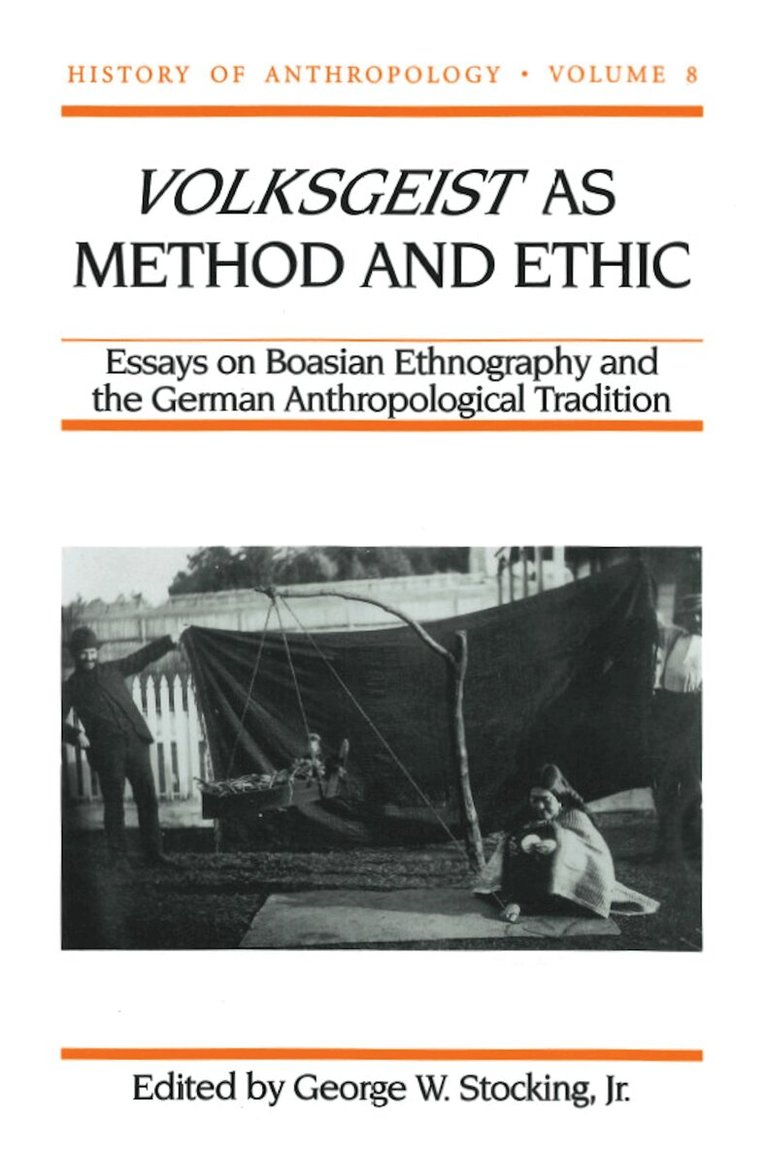
Franz Boas, the major founding figure of anthropology as a discipline in America, came to the United States from Germany in 1886. This volume in the acclaimed History of Anthropology series is the first to explore fully the extent and significance of Boas' roots in the German intellectual tradition and late-19th century German anthropology. Boas' own early essay ""The Study of Geography"", reprinted in this volume, suggests his profound debt to the Herderian tradition of ""Volksgeist"" and ""Nationalcharakter"" - an intellectual lineage Matti Bunzl traces from Wilhelm and Alexander von Humboldt through Ritter, Ratzel, Waitz and Bastian to Boas. Benoit Massin painstakingly reconstructs another powerful influence on Boas, that of Rudolf Virchow, the leading physical anthropologist in Germany in the days before the discipline took its extreme racialist turn in that country. Drawing on letters from Boas' adolescence and early manhood, Julia Liss shows how the intellectual and cultural forces that formed his mature anthropological viewpoint figured clearly in his own ""Bildung"". Shifting the focus from Germany to the United States, essays by Ira Jacknis, Judith Berman and Thomas Buckley treat certain problematic aspects of the ""Volksgeist"" tradition, viewed as an attempt to constitute for each Native American group a permanent archive of cultural material free of contamination by European categories. Suzanne Marchand's essay on the political implications of German Near Eastern archaeology provides a distant counterpoint to the colonial situation of Boasian ethnography in America. Recovering the important but little understood Germanic influences on Boasian ethnography, this volume offers a new perspective on the historical development of American anthropology.
Volksgeist As Method and Ethic
Essays on Boasian Ethnography and the German Anthropological Tradition
Häftad, Engelska, 1998
280 kr
Skickas inom 10-15 vardagar
Franz Boas, the founding figure of anthropology in America, came to the United States from Germany in 1886. This volume in the History of Anthropology series explores the extent and significance of Boas' roots in the German intellectual tradition and late-19th century German anthropology.
Häftad, Engelska, 2015
327 kr
Skickas inom 10-15 vardagar
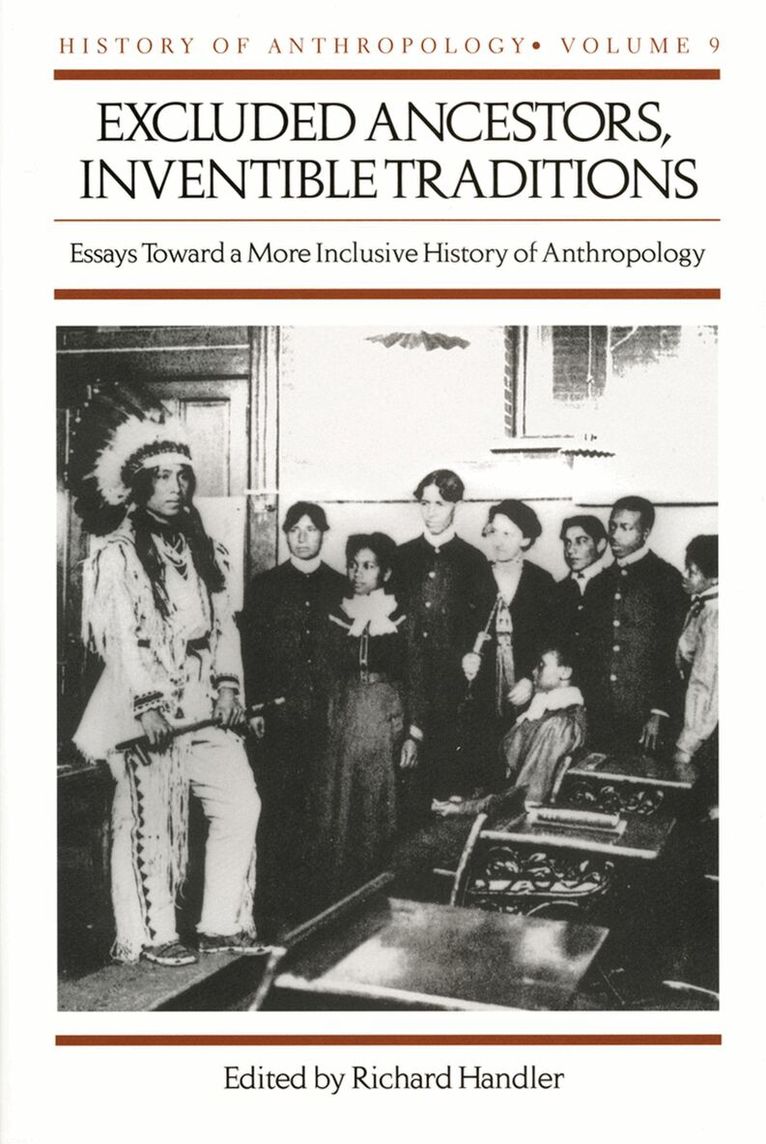
Excluded Ancestors focuses on little-known scholars who contributed significantly to the anthropological work of their time, but whose work has since been marginalized due to categorical boundaries of race, class, gender, citizenship, institutional and disciplinary affiliation, and English-language proficiency.The essays in Excluded Ancestors illustrate varied processes of inclusion and exclusion in the history of anthropology, examining the careers of John William Jackson, the members of the Hampton Folk-Lore Society, Charlotte Gower Chapman, Lucie Varga, Marius Barbeau, and Sol Tax. A final essay analyzes notions of the canon and considers the place of a classic ethnographic area, highland New Guinea, in anthropological canon-formation. Contributors include Peter Pels, Lee Baker, Frances Slaney, Maria Lepowsky, George Stocking, Ronald Stade, and Douglas Dalton.
Inbunden, Engelska, 2004
277 kr
Skickas inom 10-15 vardagar
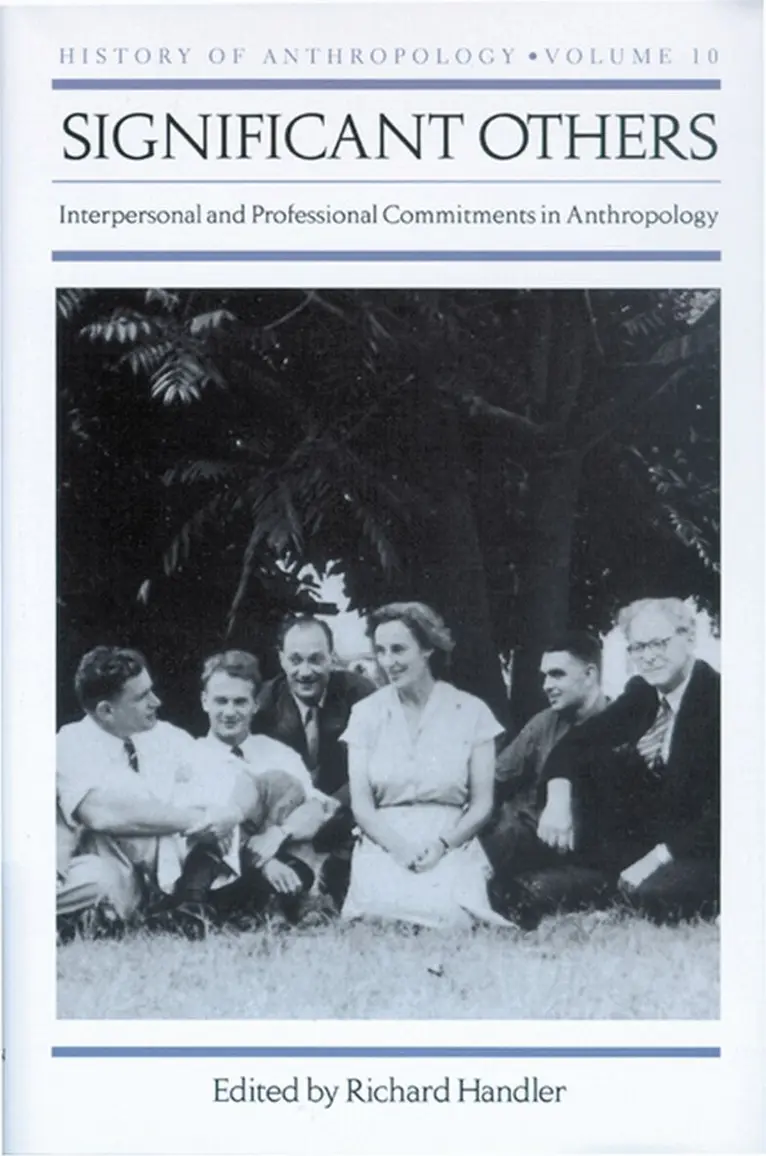
Anthropology is by definition about ""others"", but in this work the phrase refers not to members of observed cultures, but to ""significant others"" - spouses, lovers, and others with whom anthropologists have deep relationships. This work looks at the roles of these spouses and partners of anthropologists, especially their work as they accompanied the anthropologists in the field. Other relationships discussed include those between anthropologists and informants, mentors and students, cohorts and partners, and parents and children. This text closes with a look at gender roles in the field of anthropology.
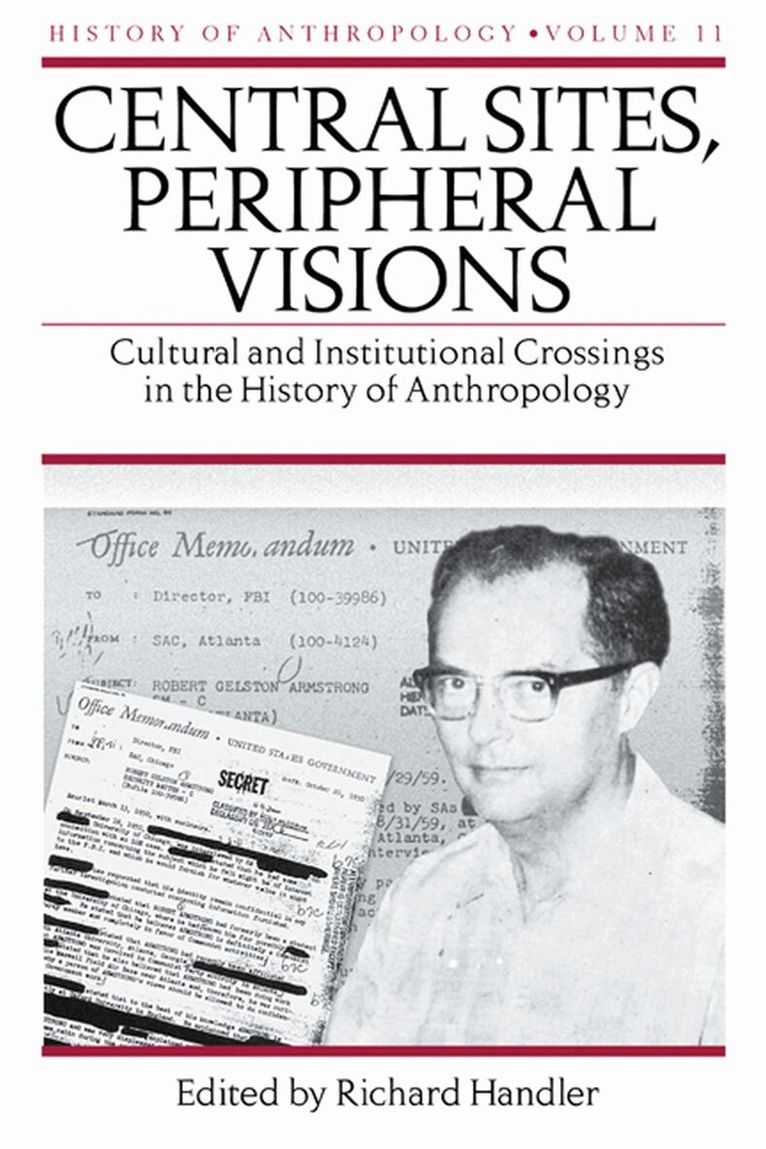
Central Sites, Peripheral Visions
Cultural and Institutional Crossings in the History of Anthropology
Inbunden, Engelska, 2006
277 kr
Skickas inom 10-15 vardagar
Central Sites, Peripheral Visions presents five case studies that explore the dilemmas, moral as well as political, that emerge out of anthropology's unique position as both central and peripheral. From David Koester's analysis of how ethnographic descriptions of Iceland marginalized that country's population, to Kath Weston's account of an offshore penal colony where officials mixed prison work with ethnographic pursuits, from Brad Evans' reflections on the ""bohemianism"" of both the Harlem vogue and American anthropology, to Arthur J. Ray's study of anthropologists who serve as expert witnesses in legal cases, the essays in the eleventh volume of the ""History of Anthropology"" series reflect on anthropology's always problematic status as centrally peripheral, or peripherally central. Finally, George W. Stocking, Jr., in a contribution that is almost a book in its own right, traces the professional trajectory of American anthropologist, Robert Gelston Armstrong, who was unceremoniously expelled from his position at the University of Chicago because of his communist sympathies in the 1950s. By taking up Armstrong's unfinished business decades later, Stocking engages in an extended meditation on the relationship between center and periphery and offers ""a kind of posthumous reparation,"" a page in the history of the discipline for a distant colleague who might otherwise have remained in the footnotes.