Illustrated Handbook of Succulent Plants - Böcker
Visar alla böcker i serien . Handla med fri frakt och snabb leverans.
10 produkter
10 produkter
6 228 kr
Skickas inom 10-15 vardagar
The succulent species of the families of subclass Rosidae are presented by alphabet of families, genera, and species, with comprehensive listings of synonyms added at all levels.
3 172 kr
Skickas inom 10-15 vardagar
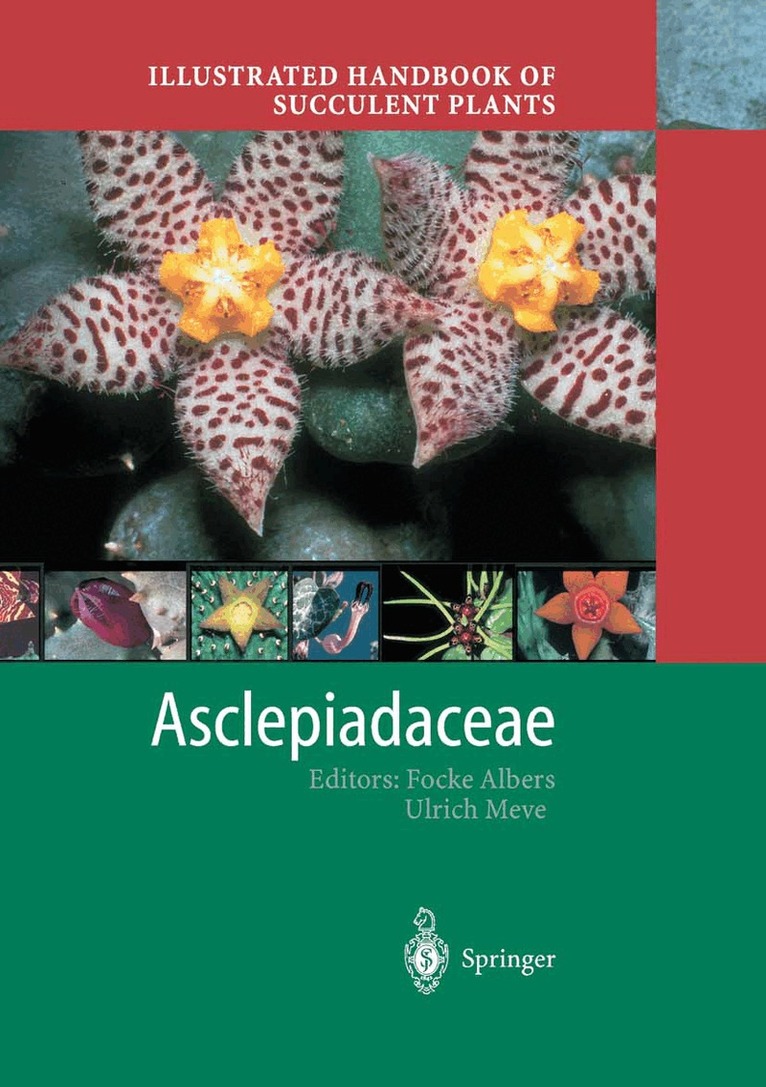
With theconstant flow of plant species that reached Europe inthetimes of the great expeditions th th inthe 18 and 19 century,the demandf for anyf form of cataloguing thesteadily growingdiv- sity became unevitable. Succulent plants always fascinated plant-loving people above average, th and the first handbooks devoted to succulents were publishedin the19 century. Initially, h- ever,interest was focussed on the Cactaceae. It was only in 1954/55 when Herman Jacobsen (1898 - 1978), the former curator of the Botanic Garden of Kiel,madeavailablea first handbook devoted to succulents (excl. Cactaceae),the "Handbuchder sukkulenten Pflanzen". An abridged version of this handbook was publishedby Jacobsen as "Sukkulentenlexikon" in 1970. It included descriptions,synonymies and numerous illustrations. The"Sukkulentenlexikon" represented the long-awaited reference work supportingboth Botanical Gardens as well as amateur or prof- sionalgrowers inthe navigation through succulent plant diversity. AnEnglish edition followedin 1975 as "Succulent Lexicon", and a revised German edition was publishedin 1981.This second edition hadbeen finished by Jacobsen's successor inKiel,Klaus Hesselbarth,who,with regard to the Asclepiadaceae, was supportedby the senior editor of the present publication. Over twentyyears have passed since then, and the knowlegdeof succulent plants has increased permanently. Wesaw monographsoff formerly little-known groups and many revisions and - revisions, which often change the taxonomy withinsingle groups considerably. A large amount of new taxa has been published on one hand, and on the other hand, many taxa have been sunk into synonymy.
3 699 kr
Skickas inom 10-15 vardagar
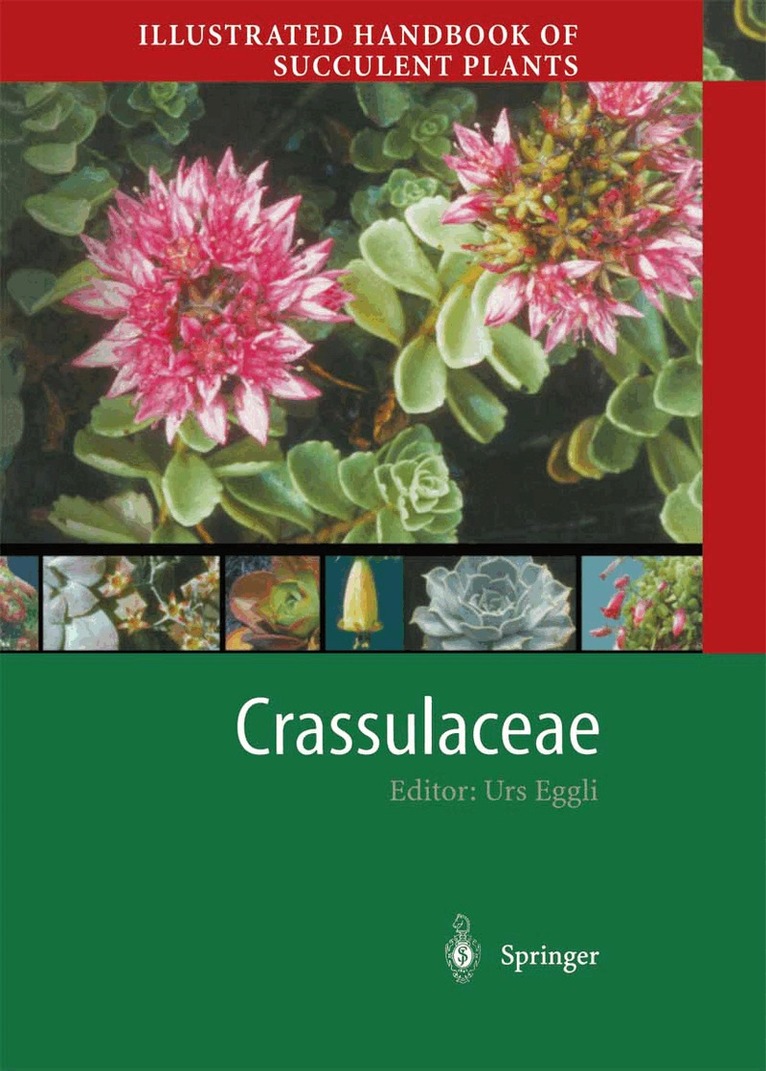
The Illustrated Handbook of Succulent Plants represents the first comprehensive taxonomic treatment of succulents in thirty years. It covers over 9000 taxa of all succulents except Cactaceae. The Crassulaceae (stonecrop family) volume presents the first complete treatment of the family for many decades. The family is a very diverse group, and plants range from tiny insignificant annual herbs to perennial shrubs and trees. Many of the species have attractive flowers. The entire family consists of 33 genera and 23 hybrid genera with a total of 1410 species and 305 infraspecific taxa. The largest genus is Sedum (stonecrop, wallpepper) with 428 species. Other large genera are Aeonium (36), Crassula (195), Dudleya (47), Echeveria (139), Kalanchoe (144), Rhodiola (58), Sempervivum (63), and Tylecodon (46). A key to all genera is included. The descriptions of all accepted taxa are supplemented with typification and distribution data, full synonymy, literature references and 341 colour photos.
3 699 kr
Skickas inom 10-15 vardagar
The history of the project that eventually led to the publication of the present handbook series was outlined in the preface to the Monocotyledons volume, published in the summer of 2001. A short summary of its history will therefore be sufficient: Handbooks devoted to succulent plants (including cacti) have a long-standing tradition. First treatments covering the family Cactaceae were already published in the 19th century, but the first handbook dealing with the so-called 'other succulents', authored by Hermann Jacobsen, was only published in 1954 - 1955, then called "Handbuch der sukkulenten Pflanzen". A revised and - larged English edition was published 1959 and was repeatedly reprinted subsequently. The success of this first handbook led to the publication of the more compact "Sukkulentenle- kon", again authored by Hermann Jacobsen, published 1970 in a German edition and 1975 in an English translation. Subsequent to Hermann Jacobsen's death in August 1978, Klaus Hesselbarth edited the revised German edition, published 1981.First ideas leading to the present "Illustrated Handbook" were developed prior to the 19- congress of the International Organization for Succulent Plant Study (IOS) in Zurich. Gustav Fischer Verlag Jena, publisher not only of Hermann Jacobsen's "Sukkulentenlexikon", but also of the equally reknowned "Kakteenlexikon" by Curt Backeberg, was interested to have new editions of these works prepared. The feeling amongst participants of an ad-hoc meeting during this congress was that the situation presented a unique occassion to produce a set of authoritative volumes embracing all succulent plants.
2 433 kr
Skickas inom 10-15 vardagar
Handbooks devoted to succulent plants (including cacti) have a long-standing tradition, and the demand for updated editions is a good indication of the high degree of interest that exists in this fascinating group of plants. While first handbooks devoted to the family Cactaceae were already published in the 19th cen tury, the first handbook dealing with the so-called 'other' succulents was authored by Hermann Jacobsen and published in 1954 -1955, then called "Handbuch der sukkulenten Pflanzen". A re vised and enlarged English edition was made available in 1959 and was repeatedly reprinted in the following years. A major step towards a compact handbook including short descriptions, full synonymy and hundreds of illustrations was the publication of the first edition of Hermann Jacobsen's celebrated "Sukkulentenlexikon" in 1970, followed by the English edition in 1975, and a revised German ed ition in 1981, finished by Klaus Hesselbarth following Hermann Jacobsen's death in August 1978. The demand for updated compact information on succulent plants has not diminished since then, and contrary to Hermann Jacobsen's opinion (preface to the German edition 1970) that the number of papers dealing with succulent plants was on the decline, the interest in succulent plants was growing, both among hobbyists and among botanists. The results are numerous new taxa in many families, and many monographs of previously little-known groups have been published in the last 30 years. Accordingly, a need for a "New Lexicon" was beginning to be felt, both for 'other' succulents and for cacti.
1 589 kr
Skickas inom 10-15 vardagar
Members of the iceplant family, Aizoaceae, are appreciated by many people and disliked by some. Farmers value the plants for their browsing stock, hobbyists like to grow and flower mainly the "stone plants" of the family, and tourists enjoy the mass flowering of millions of annuals after good rains in the south western part of South Africa. Only taxonomists show some reservation against members of the Aizoaceae because of the size of the family and the confused and entangled systematics of many groups. For all groups of users, this book will offer some improvements. A worldwide web has been knitted among hundreds of interested people resulting in the pro duction of this lexicon. As a consequence of the expanded collaboration over five continents, innumerable new results can be presented here, including many new delimitations of genera as well as new combinations and names of species. All conclusions are based on thousands of days spent on field work, thousands of original literature references inspected, thousands of herbarium sheets studied, thousands of scanning electron microscopic pictures compared, thousands of photographs taken, and thousands of taxonomic decisions made. As a result of all united efforts, an up-to-date survey of the state of the art can be presented, forming the basis for further research in the family and providing a challenge to every reader to add his special knowledge towards an improved second edition.
2 117 kr
Skickas inom 10-15 vardagar
With theconstant flow of plant species that reached Europe inthetimes of the great expeditions th th inthe 18 and 19 century,the demandf for anyf form of cataloguing thesteadily growingdiv- sity became unevitable. Succulent plants always fascinated plant-loving people above average, th and the first handbooks devoted to succulents were publishedin the19 century. Initially, h- ever,interest was focussed on the Cactaceae. It was only in 1954/55 when Herman Jacobsen (1898 - 1978), the former curator of the Botanic Garden of Kiel,madeavailablea first handbook devoted to succulents (excl. Cactaceae),the "Handbuchder sukkulenten Pflanzen". An abridged version of this handbook was publishedby Jacobsen as "Sukkulentenlexikon" in 1970. It included descriptions,synonymies and numerous illustrations. The"Sukkulentenlexikon" represented the long-awaited reference work supportingboth Botanical Gardens as well as amateur or prof- sionalgrowers inthe navigation through succulent plant diversity. AnEnglish edition followedin 1975 as "Succulent Lexicon", and a revised German edition was publishedin 1981.This second edition hadbeen finished by Jacobsen's successor inKiel,Klaus Hesselbarth,who,with regard to the Asclepiadaceae, was supportedby the senior editor of the present publication. Over twentyyears have passed since then, and the knowlegdeof succulent plants has increased permanently. Wesaw monographsoff formerly little-known groups and many revisions and - revisions, which often change the taxonomy withinsingle groups considerably. A large amount of new taxa has been published on one hand, and on the other hand, many taxa have been sunk into synonymy.
3 699 kr
Skickas inom 10-15 vardagar
The present volume covering the Crassulaceae marks the completion of the successful handbook series that presents a complete coverage of the so-called "other" succulents, i.e. of all taxa of suc culent plants with the exception of the Cactaceae. It is with pride that this volume is now put before the public. Together with its predecessors, it is the fruit of a truly international project. Not only does the present volume constitute the first complete synopsis of the large and horticulturally important family Crassulaceae published since the treatment by Berger (1930), but the handbook series as a whole is a landmark in succulent plant literature. The history of the project that eventually led to the publication of the present handbook series was outlined in the Preface to the Monocotyledons Volume, published in the summer of 2001. A short summary of its history will therefore suffice. Handbooks devoted to succulent plants (including cacti) have a long-standing tradition. First treatments covering the family Cactaceae were already published in the 19th century, but the first handbook dealing with the so-called "other succulents", authored by Hermann Jacobsen, was only published in 1954 - 1955, then called "Handbuch der sukkulenten Pflanzen". A revised and en larged English edition was published in 1959 and was repeatedly reprinted subsequently.
Aizoaceae
2017
3 230 kr
Skickas inom 10-15 vardagar
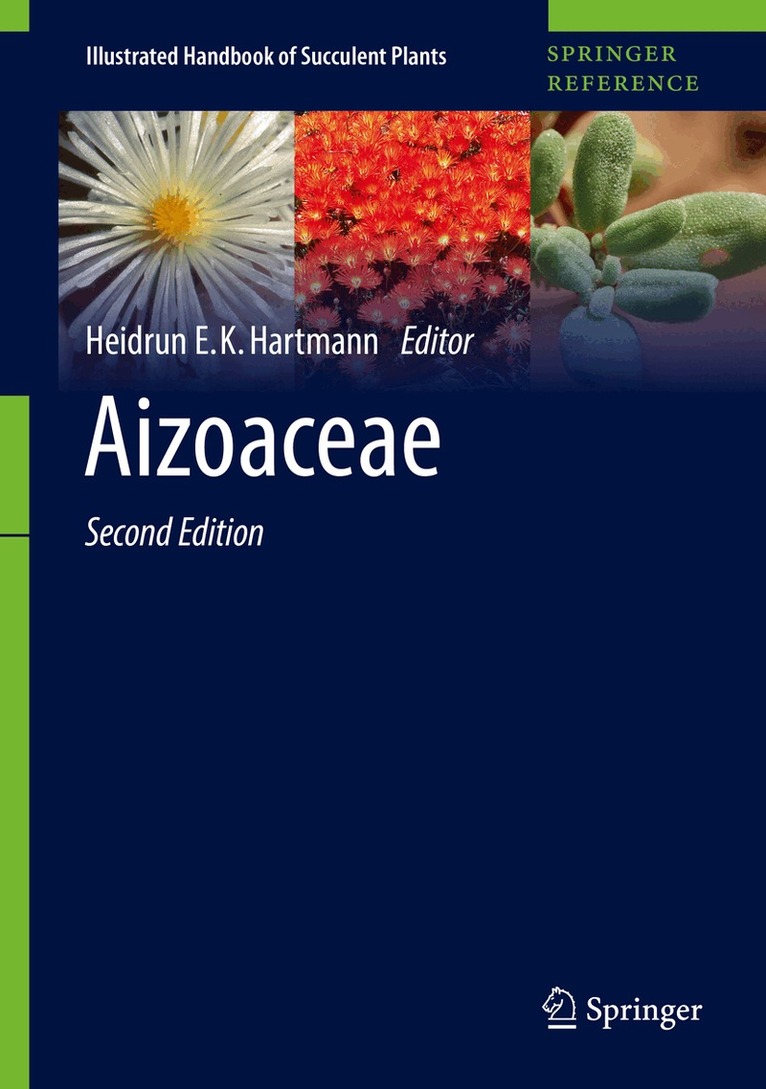
About 15 years after the first edition of the Handbook of Aizoaceae, a wealth of changes can be reported for the family Aizoaceae, and this second edition brings a completely new survey over all taxonomic units from subfamilies down to species and subspecies; each critically examined. Of the presently known 2956 species, 1594 have been accepted and are described here, arranged in 147 genera. Six genera have been newly described since 2001, namely Brianhuntleya, Hammeria, Knersia, Phiambolia, Ruschiella, and Volkeranthus, and only one has been placed newly into synonymy (Caulipsilon). All synonymous genus names are treated with the valid genus names. Preliminary molecular studies are referred to, for which different groups of markers at different levels like species, genera, subgenera, and further ranks have been used. The basic division into four subfamilies is supported by more recent studies, yet with some genera being shifted. Furthermore, the geographical distribution of each genus is shown on one map each: either worldwide, or restricted to Southern Africa. For these latter, the main rainfall seasons are delimited by blue lines in order to offer also parameters for cultivation. This second edition provides a comprehensive list of the latest taxonomy including the updated relevant plant data. Following an introduction to the leaf-succulent family Aizoaceae, including keys to the subfamilies and genera, all genera with keys to the subgenera and succulent species are described in detail.
Monocotyledons
2020
4 984 kr
Skickas inom 10-15 vardagar
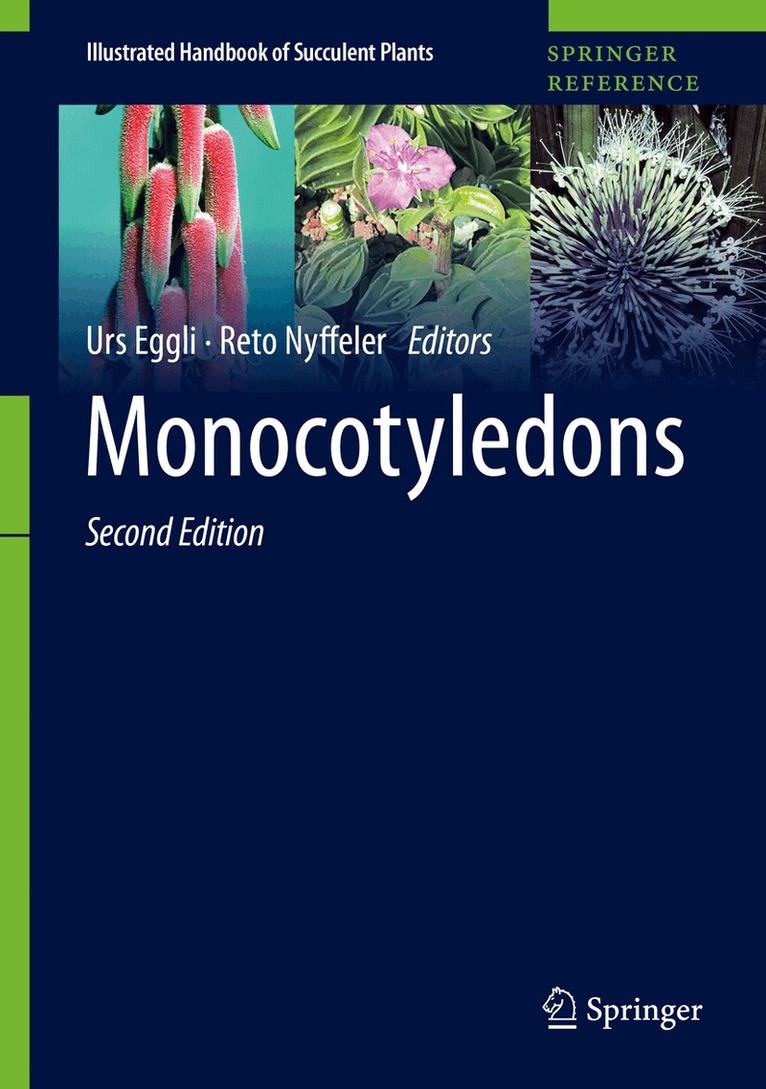
This second edition provides a comprehensive list of the latest taxonomy including the updated relevant plant data. All succulent species of the monocotyledonous plant families and genera are described in detail. This work will be particularly useful to botanists, plant taxonomists and scholars as well as to herbaria and botanic gardens.