• Fri frakt över 249 kr
  • •
  • Snabba leveranser
  • •
  • Billiga böcker
Kundservice

Du är på sajten för privatpersoner.

Företag, bibliotek eller offentlig verksamhet?

Du handlar på classic.bokus.com, där alla dina funktioner finns intakta.
Till classic.bokus.com
Bokus logotyp. Gå till startsidan.
  • Erbjudanden
  • Nyheter
  • Student
  • Topplistor
  • Barn & ungdom
  • Bokus Play
  • E-böcker
  • Pocketböcker
  • Spel & pussel

10% studentrabatt med kod TERM26

Sidfot

Mina sidor

    Hjälp

    • Kundservice
    • Vanliga frågor och svar
    • Frakt och leverans
    • Retur vid ångerrätt
    • Reklamera vara
    • Betalning
    • Köpvillkor
    • Allmänna villkor
    • Information om webbplatsens tillgänglighet

    Om Bokus

    • Om oss
    • Pressrum
    • För studenter
    • För företag
    • För bibliotek och offentlig verksamhet
    • För leverantörer
    • Hållbarhet

    Populärt

    • Aktuella erbjudanden
    • Presentkort
    • Studentlitteratur
    • Nya böcker
    • Topplistor
    • Signerade böcker
    • Engelska böcker

    Inspiration

    • Boktips
    • BookTok
    • Populära bokserier
    • Barnbokskaraktärer
    • Populära författare
    Logotyp för Bokus
    Följ oss på Facebook (extern länk)Följ oss på Instagram (extern länk)Följ oss på YouTube (extern länk)Följ oss på TikTok (extern länk)
    bokus @ CookiesAnpassa cookiesIntegritetspolicyKöpvillkor
    Till Citymail hemsida (extern länk)Till Budbee hemsida (extern länk)Till Postnord hemsida (extern länk)Till Schenker hemsida (extern länk)Till Early Bird hemsida (extern länk)Till Walleys hemsida (extern länk)
    1. Djur och Natur
    2. Naturböcker
    3. Växtböcker

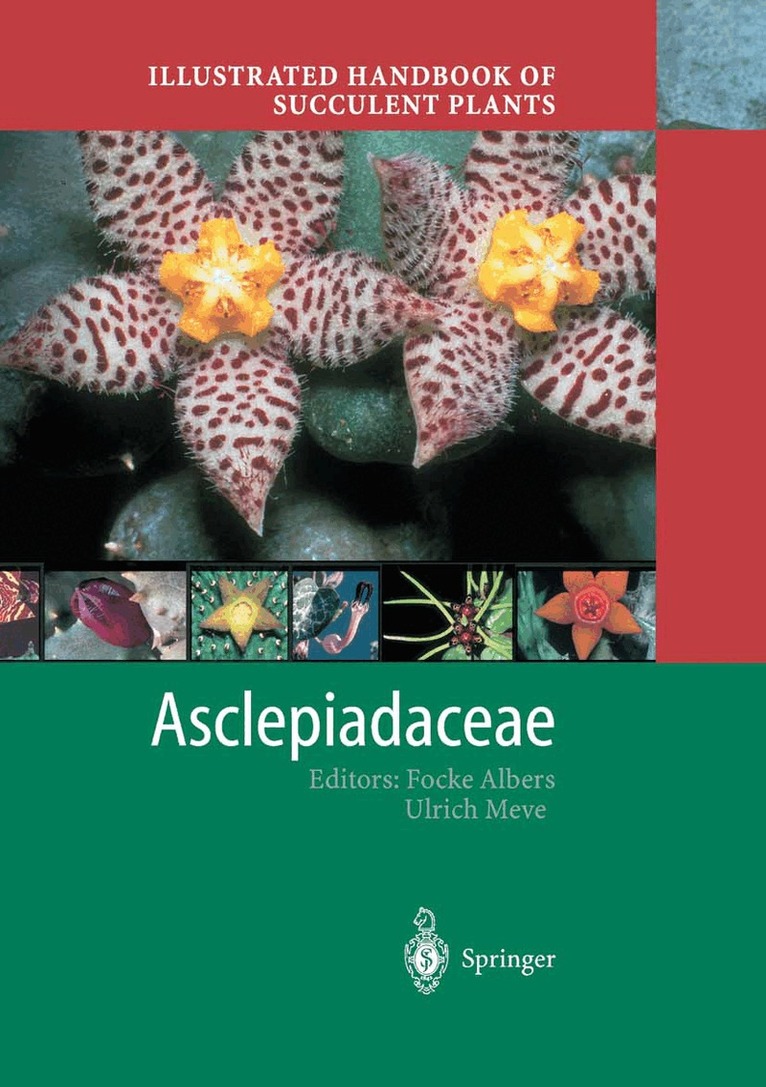
    Illustrated Handbook of Succulent Plants: Asclepiadaceae

    AvFocke Albers,Ulrich Meve

    Häftad, Engelska, 2013

    Del i serien Illustrated Handbook of Succulent Plants

    2 177 kr

    Beställningsvara. Skickas inom 10-15 vardagar. Fri frakt över 249 kr.

    Beskrivning

    With theconstant flow of plant species that reached Europe inthetimes of the great expeditions th th inthe 18 and 19 century,the demandf for anyf form of cataloguing thesteadily growingdiv- sity became unevitable. Succulent plants always fascinated plant-loving people above average, th and the first handbooks devoted to succulents were publishedin the19 century. Initially, h- ever,interest was focussed on the Cactaceae. It was only in 1954/55 when Herman Jacobsen (1898 - 1978), the former curator of the Botanic Garden of Kiel,madeavailablea first handbook devoted to succulents (excl. Cactaceae),the "Handbuchder sukkulenten Pflanzen". An abridged version of this handbook was publishedby Jacobsen as "Sukkulentenlexikon" in 1970. It included descriptions,synonymies and numerous illustrations. The"Sukkulentenlexikon" represented the long-awaited reference work supportingboth Botanical Gardens as well as amateur or prof- sionalgrowers inthe navigation through succulent plant diversity. AnEnglish edition followedin 1975 as "Succulent Lexicon", and a revised German edition was publishedin 1981.This second edition hadbeen finished by Jacobsen's successor inKiel,Klaus Hesselbarth,who,with regard to the Asclepiadaceae, was supportedby the senior editor of the present publication. Over twentyyears have passed since then, and the knowlegdeof succulent plants has increased permanently. Wesaw monographsoff formerly little-known groups and many revisions and - revisions, which often change the taxonomy withinsingle groups considerably. A large amount of new taxa has been published on one hand, and on the other hand, many taxa have been sunk into synonymy.

    Produktinformation

    • Utgivningsdatum:2013-10-03
    • Mått:193 x 270 x 21 mm
    • Vikt:839 g
    • Format:Häftad
    • Språk:Engelska
    • Serie:Illustrated Handbook of Succulent Plants
    • Antal sidor:321
    • Upplaga:2004
    • Förlag:Springer-Verlag Berlin and Heidelberg GmbH & Co. KG
    • ISBN:9783642626289

    Utforska kategorier

    • Växtböcker inom Djur och Natur
    • Botanik inom Naturvetenskap och teknik
    • Biovetenskap inom Naturvetenskap och teknik

    Recensioner i media

    From the reviews: "The volume on the Asclepiadaceae is now the fifth volume ... of the six projected volumes of the Illustrated Handbook of Succulent Plants. Of the five volumes ... these are by far the best series of photographs to have been published ... . For the interested collector ... there is plenty in this book with which to be fascinated. ... this is a very attractive volume and will be of considerable use to many collectors ... ." (Peter V. Bruyns, Plant Systematics and Evolution, Vol. 239 (3-4), 2003) "The six volumes of Illustrated handbook of succulent plants ... treat 'over 9000 taxa of all succulents except Cactaceae' ... . This series is a reference manual for taxonomists and horticultural cognoscenti. It compiles up-to-date information not readily available from other sources ... . This series is invaluable to identify succulents... . In summary, this is an excellent series, a significant contribution to the literature, and a superb production." (Rudolf Schmid, Taxon, Vol. 53, 2003)

    Innehållsförteckning

    • What is a Succulent ?.- How to Use This Handbook.- Scope of Information Presented.- Asclepiadaceae ? family or genus only partially covered.- Absolmsia ? family or genus completely covered (1/0).- Asclepias ? family or genus only partially covered (1/0).- Aspidoglossum ? family or genus completely covered (36/ 0).- Aspidonepsis ? family or genus completely covered  (5/0).- Baynesia ? family or genus completely covered (1/0).- Brachystelma ? family or genus completely covered (122/3).- Caralluma ? family or genus completely covered (53/9).- Ceropegia ? family or genus only partially covered (160/18).- Cibirhiza ? family or genus completely covered (2/0).- Cynanchum ? family or genus only partially covered (57/4).- ×Demia ? family or genus completely covered.- Dischidia ? family or genus only partially covered (23 /1).- Dischidiopsis ? family or genus only partially covered (1/0).- Duvalia ? family or genus completely covered  (18/3).- Duvaliandra ? family or genus completely covered  (1/0).- ×DuvaUaranthus ? family or genus completely covered (1 /0).- Echidnopsis ? family or genus completely covered (32/4).- Edithcolea ? family or genus completely covered (1/0).- Fanninia? family or genus completely covered (1/0).- Fockea ? family or genus completely covered (6/0).- Glossostelma ? family or genus completely covered (12/0).- Hoodia ? family or genus completely covered (14/4).- ×Hoodialluma ? family or genus completely covered.- Hoya ? family or genus only partially covered (55/6).- ×Huernelia ? family or genus completely covered.- Huernia ? family or genus completely covered (67/16).- ×Huernianthus ? family or genus completely covered.- Huerniopsis ? family or genus completely covered (2/0).- Ischnolepis? family or genus completely covered (1/0).- Larryleachia ? family or genus completely covered (5/0).- Lavrania ? family or genus completely covered (1/0).- Madangia ? family or genus completely covered (1/0).- Marsdenia ? family or genus only partially covered (10/0).- Matelea ? family or genus only partially covered (9/0).- Micholitzia ? family or genus completely covered (1/0).- Miraglossum ? family or genus completely covered (7/0).- Notechidnopsis ? family or genus completely covered (2/0).- Odontostelma ? family or genus completely covered (2/0).- Ophionella ? family or genus completely covered (2/ 1).- Orbea ? family or genus completely covered (54/14).- Orbeanthus ? family or genus completely covered (2/0).- ×Orbelia ? family or genus completely covered (1/0).- Pachycarpus ~ family or genus only mentioned; numbers in brackets ;  numbers of species/infraspecific taxa covered family or genus only mentioned; numbers in brackets ;  numbers of species/infraspecific taxa covered.- Pectinaria ? family or genus completely covered (3/3).- Petopentia ? family or genus completely covered (1/0).- Piaranthus ? family or genus completely covered (7/2).- Pseudolithos ? family or genus completely covered (6/0).- Quaqua ? family or genus completely covered (29/0).- Raphionacme ? family or genus completely covered (35/0).- Rhytidocaulon ? family or genus completely covered (10/1).- Riocreuxia ~ family or genus only mentioned; numbers in brackets ;  numbers of species/infraspecific taxa covered family or genus only mentioned; numbers in brackets ;  numbers of species/infraspecific taxa covered.- Sarcorrhiza ? family or genus completely covered (1/0).- Sarcostemma ? family or genus completely covered (15/7).- Schizoglossum ?family or genus completely covered (15/ 11).- Schlechterella ? family or genus completely covered (2/0).- ×Staparesia ? family or genus completely covered (1/0).- Stapeha ? family or genus completely covered (47/7).- Stapehanthus ? family or genus completely covered (8/0).- Stapeliopsis ? family or genus completely covered (6/1).- Stathmostelma ? family or genus completely covered (14/4).- Stenostelma ? family or genus completely covered (4/0).- Stomatostemma, (1 /0).- Tavaresia ? family or genus completely covered (3/0).- Trachycalymma ~ family or genus only mentioned; numbers in brackets ;  numbers of species/infraspecific taxa covered family or genus only mentioned; numbers in brackets; numbers of species/infraspecific taxa covered.- Tridentea ? family or genus completely covered (8/2).- ×Tromostapelia ? family or genus completely covered.- Tromotriche ? family or genus completely covered (11/0).- White-sloanea ? family or genus completely covered (1/0).- ×Whitesloaniopsis ? family or genus completely covered.- Xysmalobium ~ family or genus only mentioned; numbers in brackets ;  numbers of species/infraspecific taxa covered family or genus only mentioned; numbers in brackets ;  numbers of species/infraspecific taxa covered.- References.- Taxonomic Cross-Reference Index.