IMLI Studies in International Maritime Law – serie
Visar alla böcker i serien IMLI Studies in International Maritime Law. Handla med fri frakt och snabb leverans.
19 produkter
19 produkter
Inbunden, Engelska, 2020
2 176 kr
Skickas inom 10-15 vardagar
Interest in autonomous ships has grown exponentially over the past few years. Whereas a few years ago, the prospect of unmanned and autonomous vessels sailing on the seas was considered unrealistic, the debate now centers on when and in what format and pace the development will take place.Law has a key role to play in this development and legal obstacles are often singled out as principal barriers to the rapid introduction of new technologies in shipping. Within a few years, autonomous ships have turned from a non-issue to one of the main regulatory topics being addressed by the International Maritime Organization. However, the regulatory discussion is still in its infancy, and while many new questions have been raised, few answers have been provided to them to date.Increased automation of tasks that have traditionally been undertaken by ships' crews raises interesting legal questions across the whole spectrum of maritime law. The first of its kind, this book explores the issue of autonomous ships from a wide range of legal perspectives, including both private law and public law at international and national level, making available cutting-edge research which will be of significant interest to researchers in maritime law.Chapter 3 of this book is freely available as a downloadable Open Access PDF at http://www.taylorfrancis.com under a Creative Commons Attribution-Non Commercial (CC-BY-NC) 4.0 license.
Inbunden, Engelska, 2021
1 985 kr
Skickas inom 10-15 vardagar
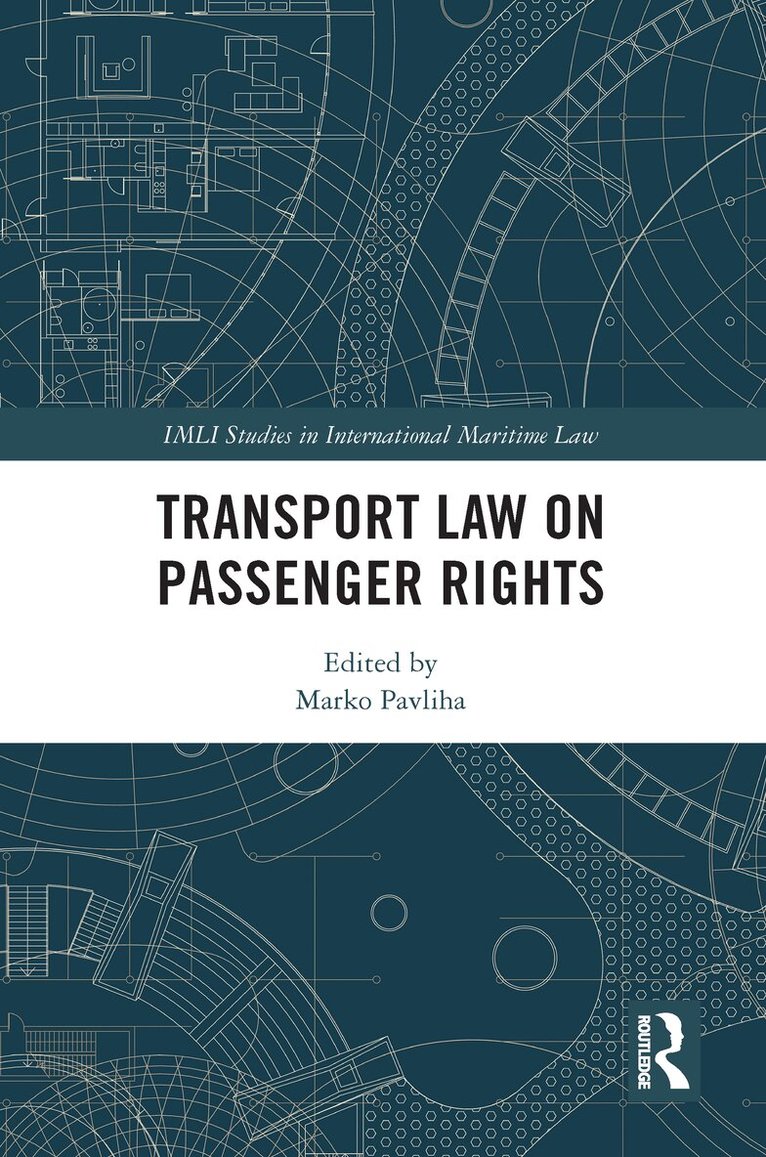
Europe and also the rest of the world has experienced a boom in mobility over the last thirty years. In light of the protection of increasing number of consumers – passengers it is almost logical that during the past few decades, international and European transport law has developed almost to revolutionary extent, especially in the field of private aviation (air) law with the introduction of unlimited liability of carriers for death and injury of passengers and commendable sophisticated rights in case of denied boarding, cancellation of flights and long delays. This book will cast light through a critical prism on the most important characteristics of the international transport law, the EU legislation and jurisprudence regarding passenger rights during the carriage by air, sea, rail and road. One of the ideas which, however, needs further research is that the commendable legal solutions and experience of the EU can serve as an excellent framework for a new holistic international convention on passengers rights in all transport modes.
Häftad, Engelska, 2023
542 kr
Skickas inom 10-15 vardagar
Interest in autonomous ships has grown exponentially over the past few years. Whereas a few years ago, the prospect of unmanned and autonomous vessels sailing on the seas was considered unrealistic, the debate now centers on when and in what format and pace the development will take place.Law has a key role to play in this development and legal obstacles are often singled out as principal barriers to the rapid introduction of new technologies in shipping. Within a few years, autonomous ships have turned from a non-issue to one of the main regulatory topics being addressed by the International Maritime Organization. However, the regulatory discussion is still in its infancy, and while many new questions have been raised, few answers have been provided to them to date.Increased automation of tasks that have traditionally been undertaken by ships' crews raises interesting legal questions across the whole spectrum of maritime law. The first of its kind, this book explores the issue of autonomous ships from a wide range of legal perspectives, including both private law and public law at international and national level, making available cutting-edge research which will be of significant interest to researchers in maritime law.Chapter 3 of this book is freely available as a downloadable Open Access PDF at http://www.taylorfrancis.com under a Creative Commons Attribution-Non Commercial (CC-BY-NC) 4.0 license.
Häftad, Engelska, 2019
606 kr
Skickas inom 10-15 vardagar
This book explores the process of shipbreaking in developing countries, with a particular focus on Bangladesh. In the past, shipbreaking (the disposal of obsolete ships) was a very common industrial activity in many developed countries. However, due to stringent domestic environmental and labour laws it is almost impossible for the increasing number of vessels to be disposed of domestically, and now developing nations including Bangladesh, China, India, Turkey and Pakistan regularly participate in this activity. The shipbreaking yards in these countries are not only detrimental to the marine and coastal environment but also represent significant health hazards to local people and workers. Given the global importance of the issue, an effective legal and institutional framework for a sustainable operation of the shipbreaking industry is desperately needed. Sitting at the intersection of three distinct fields – environmental justice, international environmental law and international maritime law – this book offers an innovative take on the issues surrounding the shipbreaking process. Drawing on the case study of Bangladesh due to its prominence in the shipbreaking industry, the author implements an environmental justice framework to examine the issues of sustainability surrounding shipbreaking, and analyses the relationship between social development, economic development and environmental protection. Maritime perspectives of environmental justice will also be highlighted through a discussion of the International Maritime Organization’s role in the implementation of the Hong Kong Convention in developing countries. This book will be of great interest to scholars of environmental justice, international maritime law and international environmental law.
Inbunden, Engelska, 2009
2 049 kr
Skickas inom 10-15 vardagar
International maritime law is far from inert, everyday international affairs constantly test existing law and, in many occasions, require its development. Serving the Rule of International Maritime Law is thus not limited to a description of the current state of the law, but contains innovative studies on current issues and events that are testing the present state of international maritime law. The book is intended as a Liber Amicorum to Professor David Joseph Attard. It celebrates his career in international law; he played a crucial role in establishing the IMO International Maritime Law Institute in 1988, the main purpose of which is to train lawyers in private and public international maritime law. Over the last twenty years he has continued to teach at the Institute and has played an important role in contributing to the work of international fora concerned with the development of international law.This work represents a close collaboration amongst practitioners and academics involved in the field of international maritime law including IMO Secretary-General Efthimios E. Mitropoulos, Judge Helmut Tuerk, Professor Francis Reynolds Q.C. and Patrick J.S. Griggs CBE. Part I contains general articles in international maritime law, Part II is dedicated to the law of the sea, and Part III is devoted to issues on shipping law. Serving the Rule of International Maritime Law is of great interest to professionals in the shipping industry as well as practitioners, academics and students.
Inbunden, Engelska, 2010
2 049 kr
Skickas inom 10-15 vardagar
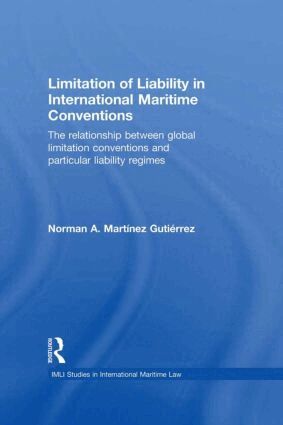
Limitation of liability for maritime claims is a concept of respectable antiquity which is now deeply entrenched in the maritime industry. Under this concept, the shipowner is entitled to limit his liability for maritime claims up to a maximum sum regardless of the actual amount of the claims. The concept of limitation of liability has been adopted by many conventions ranging from those relating to the carriage of goods by sea, carriage of passengers and their luggage by sea, liability and compensation for pollution damage, to liability for the removal of wrecks. Each of these conventions has its own approach to limitation of liability. However, these particular liability regimes share the international arena with global limitation conventions such as the 1976 Convention on Limitation of Liability for Maritime Claims and the 1996 Protocol thereto.This book approaches limitation of liability from an international perspective looking at a number of key conventions including the global limitation conventions, the conventions relating to the carriage of passengers and their luggage by sea (1974 Athens Convention relating to the Carriage of Passengers and Their Luggage by Sea and the 2002 Protocol thereto), conventions relating to liability and compensation for pollution damage (1969 International Convention on Civil Liability for Oil Pollution Damage and the 1992 Protocol thereto, the 1996 International Convention on Liability and Compensation for Damage in Connection with the Carriage of Hazardous and Noxious Substances by Sea and the 2010 Protocol thereto, and the 2001 International Convention on Civil Liability for Bunker Oil Pollution Damage), as well as the 2007 Nairobi International Convention on the Removal of Wrecks. Each chapter of this book sets out to analyze provisions in the conventions which have proved to be controversial and subject to debate by courts and authors, as well as the relationship between the limitation provisions in claim specific liability conventions and in the global limitation conventions. Particular attention is also given to the persons entitled to limit liability, ships in respect of which liability can be limited, claims subject to limitation, claims excepted from limitation, basis of liability (where applicable), loss of the right to limit, and the limits of liability.Limitation of Liability in International Maritime Conventions is of interest to academics and practicing lawyers who wish to understand the intricacies of the law of limitation.
Inbunden, Engelska, 2013
2 049 kr
Skickas inom 10-15 vardagar
The current jurisdictional status of the Mediterranean Sea is remarkable. Nearly 50 per cent of the Mediterranean waters are high seas and therefore beyond the jurisdiction of coastal States. This situation means that there are no points in the Mediterranean Sea where the coasts of two States would be more than 400 nautical miles apart. Such a legal situation generally prevents coastal States from adopting and enforcing their laws on the Mediterranean high seas, in respect of many important fields such as the protection and preservation of the marine environment, as well as the conservation of marine living resources.The jurisdictional landscape of the Adriatic Sea as a sub-sea and sub-region of the Mediterranean, is even more interesting. Croatia has proclaimed an Ecological and Fisheries Protection Zone, Slovenia has proclaimed a Zone of Ecological Protection, while Italy has adopted a framework law for the proclamation of its Zone of Ecological Protection without proclaiming its regime in the Adriatic. It is noteworthy that if all Mediterranean and Adriatic States would proclaim an Exclusive Economic Zone (EEZ), there would not be a single stretch of high seas left in the entire Mediterranean Sea. Both the Adriatic and Mediterranean fall in the category of enclosed or semi-enclosed seas regulated by Part IX of the United Nations Convention on the Law of the Sea (UNCLOS).This book assesses the legal nature of Part IX of UNCLOS and discusses potential benefits of the extension of coastal State jurisdiction (proclamation of EEZs and/or similar sui generis zones), particularly in light of the recent calls towards an integrated and holistic approach to the management of different activities in the Mediterranean Sea. It examines the actual or potential extension of coastal State jurisdiction in the Adriatic Sea, against the background of similar extensions elsewhere in the Mediterranean and against the background of relevant EU policies. It additionally explores whether Part IX of UNCLOS imposes any duties of cooperation in relation to the extension of coastal State jurisdiction in enclosed or semi-enclosed seas, and puts forward practical suggestions as to how the issue of extension of coastal State jurisdiction could be approached in a way which would enhance States existing cooperation and improve the overall governance in the Mediterranean and Adriatic seas. This book will be of interest to policymakers and academics and students of international law, and the law of the sea.
Häftad, Engelska, 2011
632 kr
Skickas inom 10-15 vardagar
International maritime law is far from inert, everyday international affairs constantly test existing law and, in many occasions, require its development. Serving the Rule of International Maritime Law is thus not limited to a description of the current state of the law, but contains innovative studies on current issues and events that are testing the present state of international maritime law. The book is intended as a Liber Amicorum to Professor David Joseph Attard. It celebrates his career in international law; he played a crucial role in establishing the IMO International Maritime Law Institute in 1988, the main purpose of which is to train lawyers in private and public international maritime law. Over the last twenty years he has continued to teach at the Institute and has played an important role in contributing to the work of international fora concerned with the development of international law.This work represents a close collaboration amongst practitioners and academics involved in the field of international maritime law including IMO Secretary-General Efthimios E. Mitropoulos, Judge Helmut Tuerk, Professor Francis Reynolds Q.C. and Patrick J.S. Griggs CBE. Part I contains general articles in international maritime law, Part II is dedicated to the law of the sea, and Part III is devoted to issues on shipping law. Serving the Rule of International Maritime Law is of great interest to professionals in the shipping industry as well as practitioners, academics and students.
Häftad, Engelska, 2012
1 015 kr
Skickas inom 10-15 vardagar
Limitation of liability for maritime claims is a concept of respectable antiquity which is now deeply entrenched in the maritime industry. Under this concept, the shipowner is entitled to limit his liability for maritime claims up to a maximum sum regardless of the actual amount of the claims. The concept of limitation of liability has been adopted by many conventions ranging from those relating to the carriage of goods by sea, carriage of passengers and their luggage by sea, liability and compensation for pollution damage, to liability for the removal of wrecks. Each of these conventions has its own approach to limitation of liability. However, these particular liability regimes share the international arena with global limitation conventions such as the 1976 Convention on Limitation of Liability for Maritime Claims and the 1996 Protocol thereto.This book approaches limitation of liability from an international perspective looking at a number of key conventions including the global limitation conventions, the conventions relating to the carriage of passengers and their luggage by sea (1974 Athens Convention relating to the Carriage of Passengers and Their Luggage by Sea and the 2002 Protocol thereto), conventions relating to liability and compensation for pollution damage (1969 International Convention on Civil Liability for Oil Pollution Damage and the 1992 Protocol thereto, the 1996 International Convention on Liability and Compensation for Damage in Connection with the Carriage of Hazardous and Noxious Substances by Sea and the 2010 Protocol thereto, and the 2001 International Convention on Civil Liability for Bunker Oil Pollution Damage), as well as the 2007 Nairobi International Convention on the Removal of Wrecks. Each chapter of this book sets out to analyze provisions in the conventions which have proved to be controversial and subject to debate by courts and authors, as well as the relationship between the limitation provisions in claim specific liability conventions and in the global limitation conventions. Particular attention is also given to the persons entitled to limit liability, ships in respect of which liability can be limited, claims subject to limitation, claims excepted from limitation, basis of liability (where applicable), loss of the right to limit, and the limits of liability.Limitation of Liability in International Maritime Conventions is of interest to academics and practicing lawyers who wish to understand the intricacies of the law of limitation.
Häftad, Engelska, 2023
542 kr
Skickas inom 10-15 vardagar
Europe and also the rest of the world has experienced a boom in mobility over the last thirty years. In light of the protection of increasing number of consumers – passengers it is almost logical that during the past few decades, international and European transport law has developed almost to revolutionary extent, especially in the field of private aviation (air) law with the introduction of unlimited liability of carriers for death and injury of passengers and commendable sophisticated rights in case of denied boarding, cancellation of flights and long delays. This book will cast light through a critical prism on the most important characteristics of the international transport law, the EU legislation and jurisprudence regarding passenger rights during the carriage by air, sea, rail and road. One of the ideas which, however, needs further research is that the commendable legal solutions and experience of the EU can serve as an excellent framework for a new holistic international convention on passengers rights in all transport modes.
Inbunden, Engelska, 2023
1 857 kr
Skickas inom 10-15 vardagar
Climate change is modifying, in varying measure, the coastal geography of States. The phenomenon is not temporary but is expected to carry on during the 21st century and beyond.A distinctive feature of modern international law is the concept of maritime zones. Each maritime area is subject to an intricate scheme of States’ rights and obligations. Coastal geography is a fundamental component of a long-standing method, developed and agreed upon between States, to establish the outward limits of these areas. A feature of this method is the baseline. In international law it is the only reference line from where the outward limits of maritime zones are measured. There are clear rules on how this is established along a coast. There is a concern amongst a number of States that rising sea water levels as a result of climate change may compel them to shift their baselines inward thus affecting the outward limits of their maritime zones. It is clear that the stability of maritime boundaries is put into question and this may bring about serious political, legal and economic repercussions. This concern may also affect the outcome of dispute settlement procedures before a competent international court or tribunal the purpose of which is to resolve overlapping maritime claims. Key questions emerge. What is the role played by coastal geography in the legal regime determining the outward limits of maritime zones? What are the consequences of changes to coastal geography? To what extent are dispute settlement procedures before a Court or Tribunal immune from this concern? Is international law able to address this? If so, in what way and what are its limits? What can be done to resolve this?
Häftad, Engelska, 2025
594 kr
Skickas inom 10-15 vardagar
Climate change is modifying, in varying measure, the coastal geography of States. The phenomenon is not temporary but is expected to carry on during the 21st century and beyond.A distinctive feature of modern international law is the concept of maritime zones. Each maritime area is subject to an intricate scheme of States’ rights and obligations. Coastal geography is a fundamental component of a long-standing method, developed and agreed upon between States, to establish the outward limits of these areas. A feature of this method is the baseline. In international law it is the only reference line from where the outward limits of maritime zones are measured. There are clear rules on how this is established along a coast. There is a concern amongst a number of States that rising sea water levels as a result of climate change may compel them to shift their baselines inward thus affecting the outward limits of their maritime zones. It is clear that the stability of maritime boundaries is put into question and this may bring about serious political, legal and economic repercussions. This concern may also affect the outcome of dispute settlement procedures before a competent international court or tribunal the purpose of which is to resolve overlapping maritime claims. Key questions emerge. What is the role played by coastal geography in the legal regime determining the outward limits of maritime zones? What are the consequences of changes to coastal geography? To what extent are dispute settlement procedures before a Court or Tribunal immune from this concern? Is international law able to address this? If so, in what way and what are its limits? What can be done to resolve this?
Inbunden, Engelska, 2023
1 661 kr
Skickas
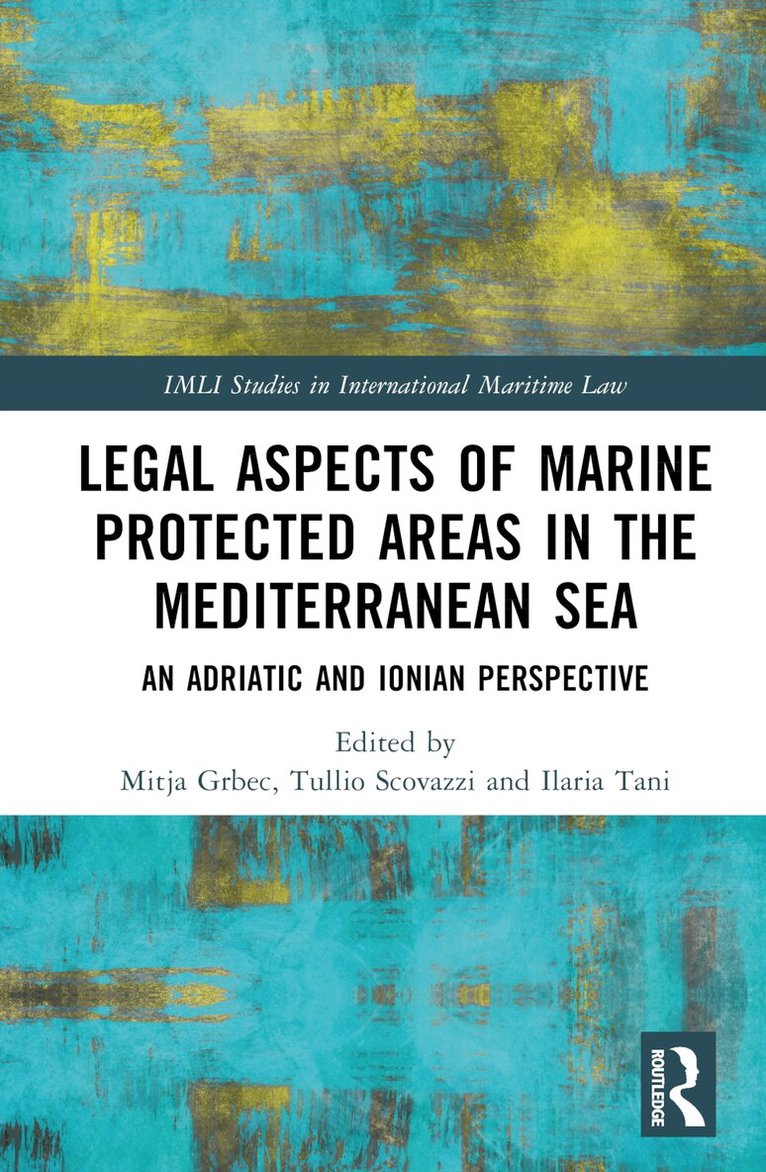
The objective of this book is to provide a comprehensive overview of the legal basis, under international law and the relevant regional legal frameworks, for the establishment and further development of area-based conservation tools in the Mediterranean Sea, with a particular emphasis placed on the transboundary area-based conservation instruments available for the Adriatic and Ionian Seas. Specifically, the aim is to identify and analyze the concepts and functioning of both marine protected areas (MPAs), as traditional area-based tools enabling marine habitat and species conservation, and other effective area-based conservation measures (OECMs), as a more recent addition to the picture. Further, with a view to providing responses to the complex set of challenges raised by the variety of tools and levels of intervention, conclusions and ways forward are provided that identify practical implementation instruments through which a truly transboundary perspective may guide the development of protected marine spaces in the macro-region. An essential consideration in defining the ways forward lies in that the current trend towards the establishment of exclusive economic zones could soon become an incentive towards the adoption of a coherent and coordinated Mediterranean – and Adriatic and Ionian – network of transboundary area-based conservation tools. The book will be of interest to policy makers, practitioners, and academics with an interest in public international law, the law of the sea, and sustainable ocean governance.
Häftad, Engelska, 2025
594 kr
Skickas inom 10-15 vardagar
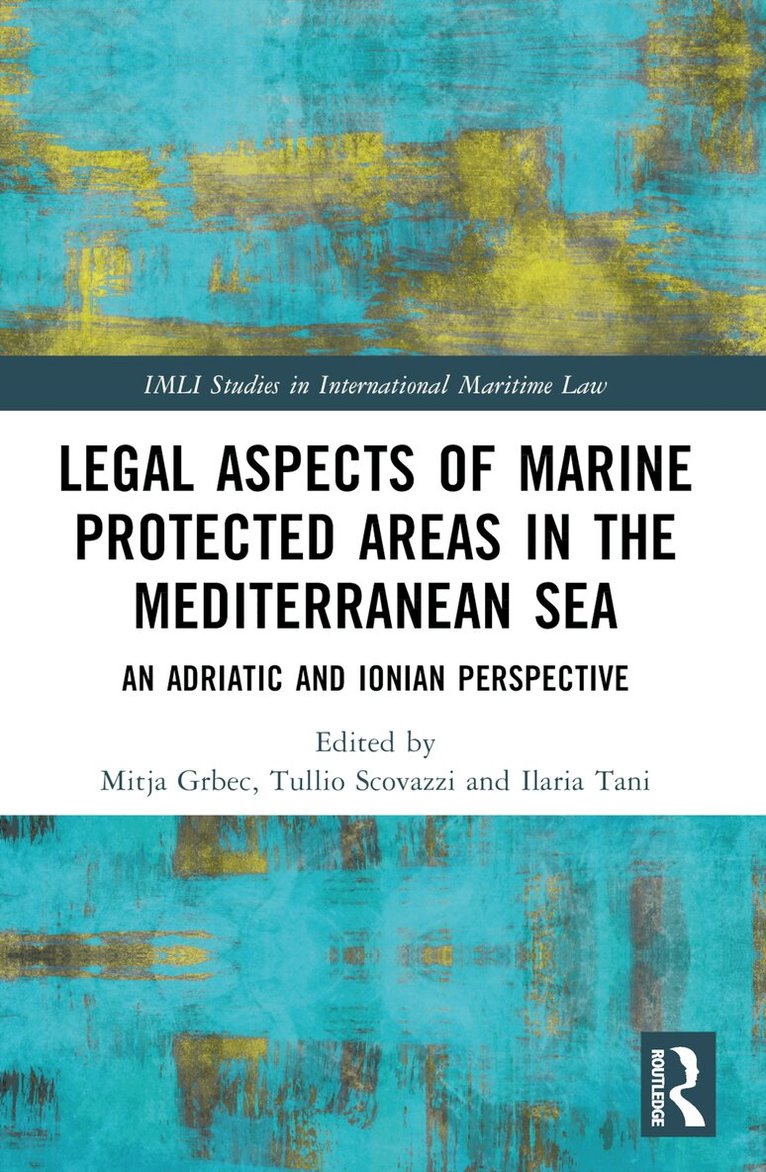
The objective of this book is to provide a comprehensive overview of the legal basis, under international law and the relevant regional legal frameworks, for the establishment and further development of area-based conservation tools in the Mediterranean Sea, with a particular emphasis placed on the transboundary area-based conservation instruments available for the Adriatic and Ionian Seas. Specifically, the aim is to identify and analyze the concepts and functioning of both marine protected areas (MPAs), as traditional area-based tools enabling marine habitat and species conservation, and other effective area-based conservation measures (OECMs), as a more recent addition to the picture. Further, with a view to providing responses to the complex set of challenges raised by the variety of tools and levels of intervention, conclusions and ways forward are provided that identify practical implementation instruments through which a truly transboundary perspective may guide the development of protected marine spaces in the macro-region. An essential consideration in defining the ways forward lies in that the current trend towards the establishment of exclusive economic zones could soon become an incentive towards the adoption of a coherent and coordinated Mediterranean – and Adriatic and Ionian – network of transboundary area-based conservation tools. The book will be of interest to policy makers, practitioners, and academics with an interest in public international law, the law of the sea, and sustainable ocean governance.
Inbunden, Engelska, 2026
2 047 kr
Kommande
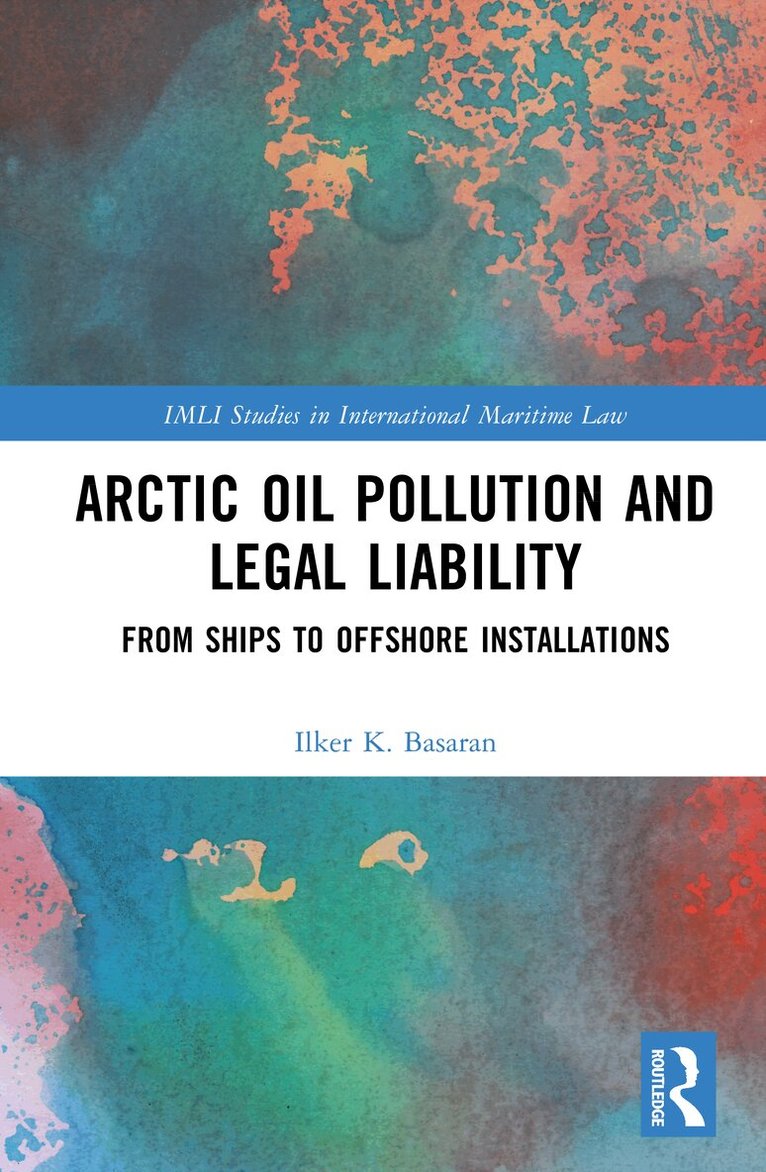
This book provides a comprehensive and critical analysis of the legal liability and compensation frameworks governing accidental oil pollution in the Arctic, addressing both ship-source spills and offshore installations.As climate change transforms the Arctic into an increasingly accessible maritime and hydrocarbon frontier, existing liability regimes face unprecedented stress. Extreme cold, dynamic sea ice, remoteness, and limited response capacity disrupt the evidentiary and operational assumptions on which international and domestic oil pollution systems were built. Drawing on scientific analysis of oil behavior in ice-covered waters, the book demonstrates how Arctic conditions complicate detection, causation, compensation, and enforcement. Through a comparative assessment of the CLC/Fund regime, the U.S. Oil Pollution Act (OPA), and the fragmented offshore liability landscape, it reveals structural gaps in the global legal order. The Arctic emerges as a stress test for liability systems, exposing their conceptual and practical limits in volatile environments.This book will be of interest to researchers and practitioners in maritime law, Arctic governance, environmental law, and energy regulation, as well as policymakers engaged in polar and offshore regulation.
Häftad, Engelska, 2018
632 kr
Skickas inom 10-15 vardagar
This work discusses the rapidly developing European transport policy on sustainable freight and the connected efforts initiated by the European Commission (EC) on greening transport by the means of contract law. Greening transport has been a central goal for the EU for decades. The main problem has been, and still is, that far too much carriage of goods within the EU is performed unimodally: by road carriage alone. This has caused severe problems particularly in central Europe, where both trade and environment is suffering from an ineffective transport industry with growing problems of congestion and pollution. A modal shift in transport from mainly road based to a form of transport in which more environmental friendly modes such as rail, inland waterways and sea born transport are integrated into one transport chain, is hence an objective of the EU. If successful, this model could then be extended to the international transport community. The key question raised in this book is whether the traditional role of contract law is changing to such an extent that the parties involved must take external interests into account. In the case of the EU’s efforts to enhance sustainable carriage of goods within its realm, the author explores whether governmental interference is necessary, or if we can trust that the parties will integrate environmental issues into their contracts because there is a demand for such clauses. The different proposals for an EU regime on multimodal contracts of carriage are discussed in this context.This book will be of great relevance to academics and practitioners with an interest in EU law, transport law, environmental law and maritime law in general.
Inbunden, Engelska, 2015
2 176 kr
Skickas inom 10-15 vardagar
This work discusses the rapidly developing European transport policy on sustainable freight and the connected efforts initiated by the European Commission (EC) on greening transport by the means of contract law. Greening transport has been a central goal for the EU for decades. The main problem has been, and still is, that far too much carriage of goods within the EU is performed unimodally: by road carriage alone. This has caused severe problems particularly in central Europe, where both trade and environment is suffering from an ineffective transport industry with growing problems of congestion and pollution. A modal shift in transport from mainly road based to a form of transport in which more environmental friendly modes such as rail, inland waterways and sea born transport are integrated into one transport chain, is hence an objective of the EU. If successful, this model could then be extended to the international transport community. The key question raised in this book is whether the traditional role of contract law is changing to such an extent that the parties involved must take external interests into account. In the case of the EU’s efforts to enhance sustainable carriage of goods within its realm, the author explores whether governmental interference is necessary, or if we can trust that the parties will integrate environmental issues into their contracts because there is a demand for such clauses. The different proposals for an EU regime on multimodal contracts of carriage are discussed in this context.This book will be of great relevance to academics and practitioners with an interest in EU law, transport law, environmental law and maritime law in general.
Inbunden, Engelska, 2017
1 985 kr
Skickas inom 10-15 vardagar
This book explores the process of shipbreaking in developing countries, with a particular focus on Bangladesh. In the past, shipbreaking (the disposal of obsolete ships) was a very common industrial activity in many developed countries. However, due to stringent domestic environmental and labour laws it is almost impossible for the increasing number of vessels to be disposed of domestically, and now developing nations including Bangladesh, China, India, Turkey and Pakistan regularly participate in this activity. The shipbreaking yards in these countries are not only detrimental to the marine and coastal environment but also represent significant health hazards to local people and workers. Given the global importance of the issue, an effective legal and institutional framework for a sustainable operation of the shipbreaking industry is desperately needed. Sitting at the intersection of three distinct fields – environmental justice, international environmental law and international maritime law – this book offers an innovative take on the issues surrounding the shipbreaking process. Drawing on the case study of Bangladesh due to its prominence in the shipbreaking industry, the author implements an environmental justice framework to examine the issues of sustainability surrounding shipbreaking, and analyses the relationship between social development, economic development and environmental protection. Maritime perspectives of environmental justice will also be highlighted through a discussion of the International Maritime Organization’s role in the implementation of the Hong Kong Convention in developing countries. This book will be of great interest to scholars of environmental justice, international maritime law and international environmental law.
Häftad, Engelska, 2015
632 kr
Skickas inom 10-15 vardagar
The current jurisdictional status of the Mediterranean Sea is remarkable. Nearly 50 per cent of the Mediterranean waters are high seas and therefore beyond the jurisdiction of coastal States. This situation means that there are no points in the Mediterranean Sea where the coasts of two States would be more than 400 nautical miles apart. Such a legal situation generally prevents coastal States from adopting and enforcing their laws on the Mediterranean high seas, in respect of many important fields such as the protection and preservation of the marine environment, as well as the conservation of marine living resources.The jurisdictional landscape of the Adriatic Sea as a sub-sea and sub-region of the Mediterranean, is even more interesting. Croatia has proclaimed an Ecological and Fisheries Protection Zone, Slovenia has proclaimed a Zone of Ecological Protection, while Italy has adopted a framework law for the proclamation of its Zone of Ecological Protection without proclaiming its regime in the Adriatic. It is noteworthy that if all Mediterranean and Adriatic States would proclaim an Exclusive Economic Zone (EEZ), there would not be a single stretch of high seas left in the entire Mediterranean Sea. Both the Adriatic and Mediterranean fall in the category of enclosed or semi-enclosed seas regulated by Part IX of the United Nations Convention on the Law of the Sea (UNCLOS).This book assesses the legal nature of Part IX of UNCLOS and discusses potential benefits of the extension of coastal State jurisdiction (proclamation of EEZs and/or similar sui generis zones), particularly in light of the recent calls towards an integrated and holistic approach to the management of different activities in the Mediterranean Sea. It examines the actual or potential extension of coastal State jurisdiction in the Adriatic Sea, against the background of similar extensions elsewhere in the Mediterranean and against the background of relevant EU policies. It additionally explores whether Part IX of UNCLOS imposes any duties of cooperation in relation to the extension of coastal State jurisdiction in enclosed or semi-enclosed seas, and puts forward practical suggestions as to how the issue of extension of coastal State jurisdiction could be approached in a way which would enhance States existing cooperation and improve the overall governance in the Mediterranean and Adriatic seas. This book will be of interest to policymakers and academics and students of international law, and the law of the sea.