Institute for Nonlinear Science – serie
Visar alla böcker i serien Institute for Nonlinear Science. Handla med fri frakt och snabb leverans.
11 produkter
11 produkter
Inbunden, Engelska, 2006
1 616 kr
Skickas inom 10-15 vardagar
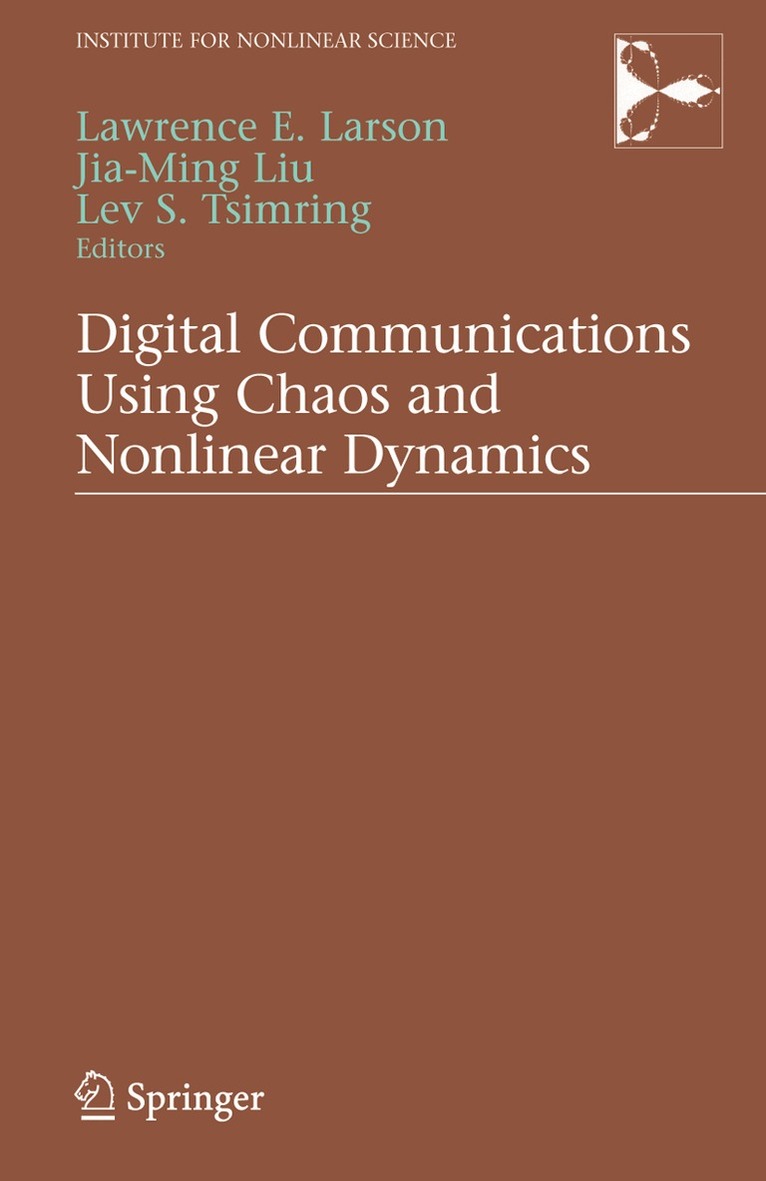
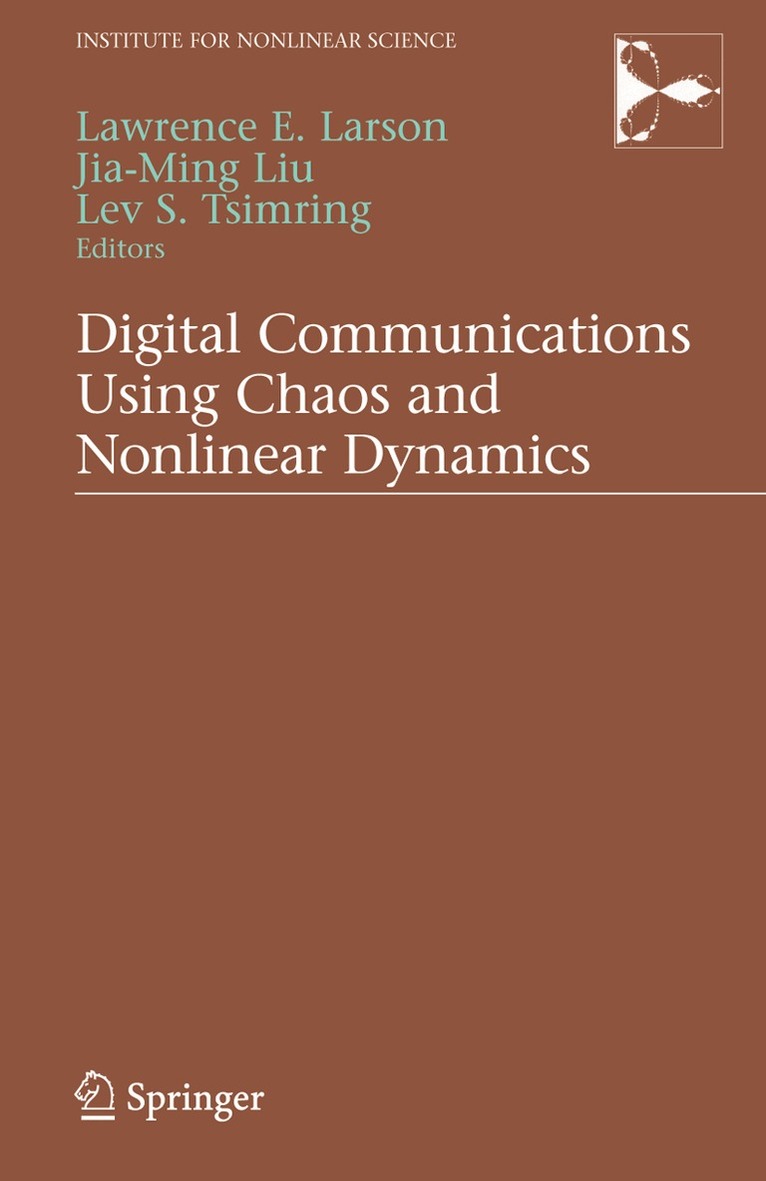
This book provides a summary of the research conducted at UCLA, Stanford University, and UCSD over the last ?ve years in the area of nonlinear dyn- ics and chaos as applied to digital communications. At ?rst blush, the term “chaotic communications” seems like an oxymoron; how could something as precise and deterministic as digital communications be chaotic? But as this book will demonstrate, the application of chaos and nonlinear dynamicstocommunicationsprovidesmanypromisingnewdirectionsinareas of coding, nonlinear optical communications, and ultra-wideband commu- cations. The eleven chapters of the book summarize many of the promising new approaches that have been developed, and point the way to new research directions in this ?eld. Digital communications techniques have been continuously developed and re?ned for the past ?fty years to the point where today they form the heart of a multi-hundred billion dollar per year industry employing hundreds of thousands of people on a worldwide basis. There is a continuing need for transmission and reception of digital signals at higher and higher data rates. There are a variety of physical limits that place an upper limit on these data rates, and so the question naturally arises: are there alternative communi- tion techniques that can overcome some of these limitations? Most digital communications today is carried out using electronic devices that are essentially “linear,” and linear system theory has been used to c- tinually re?ne their performance. In many cases, inherently nonlinear devices are linearized in order to achieve a certain level of linear system performance.
Inbunden, Engelska, 1996
1 079 kr
Skickas inom 10-15 vardagar
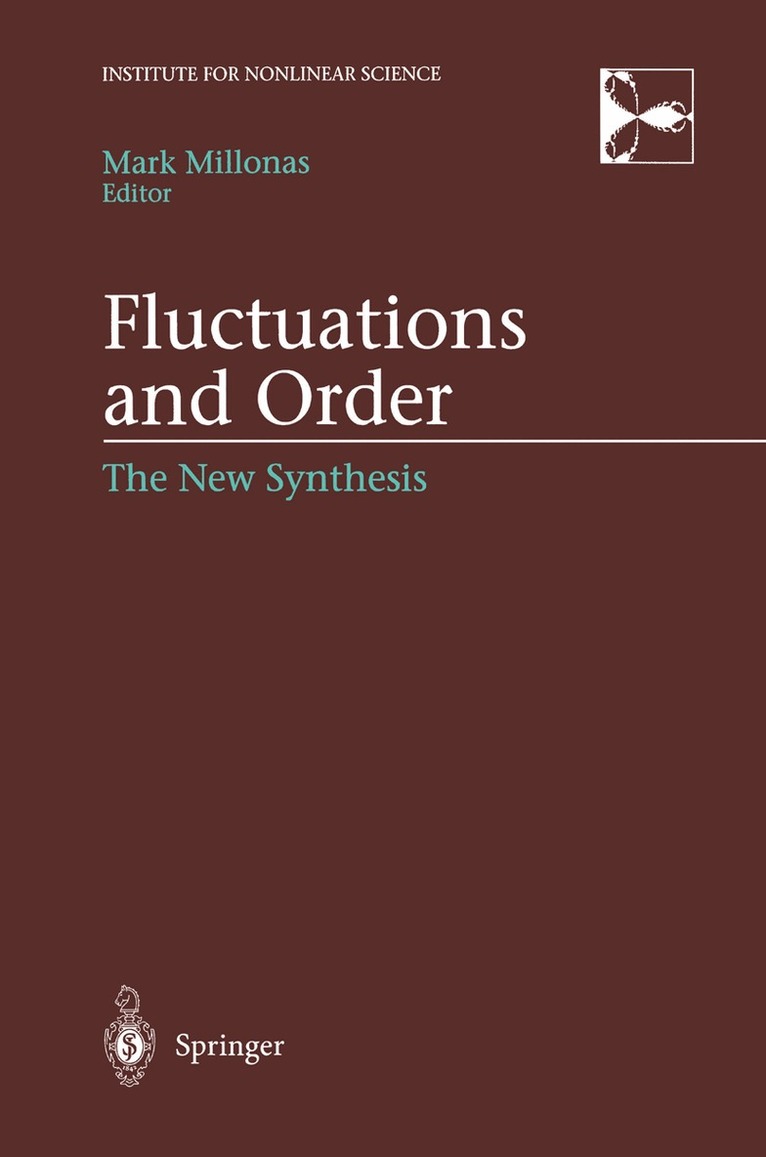
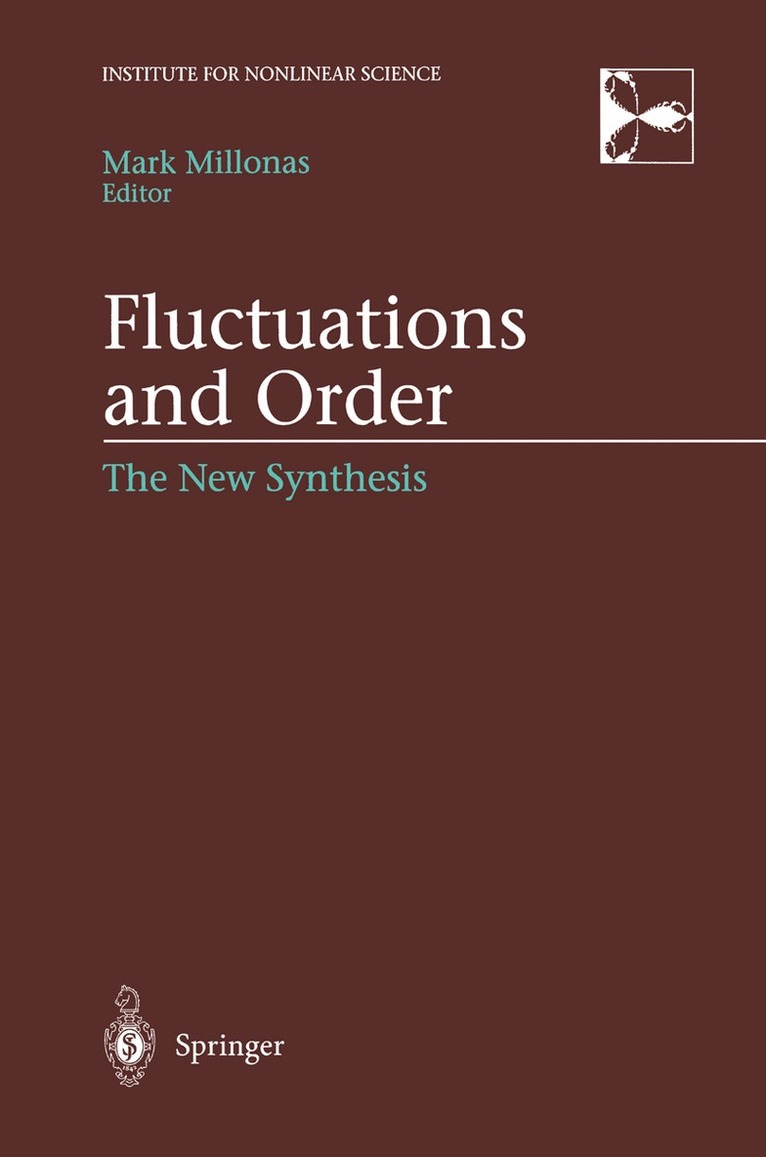
The volume that you have before you is the result of a growing realization that fluctuations in nonequilibrium systems playa much more important role than was 1 first believed. It has become clear that in nonequilibrium systems noise plays an active, one might even say a creative, role in processes involving self-organization, pattern formation, and coherence, as well as in biological information processing, energy transduction, and functionality. Now is not the time for a comprehensive summary of these new ideas, and I am certainly not the person to attempt such a thing. Rather, this short introductory essay (and the book as a whole) is an attempt to describe where we are at present and how the viewpoint that has evolved in the last decade or so differs from those of past decades. Fluctuations arise either because of the coupling of a particular system to an ex ternal unknown or "unknowable" system or because the particular description we are using is only a coarse-grained description which on some level is an approxima tion. We describe the unpredictable and random deviations from our deterministic equations of motion as noise or fluctuations. A nonequilibrium system is one in which there is a net flow of energy. There are, as I see it, four basic levels of sophistication, or paradigms, con cerning fluctuations in nature. At the lowest level of sophistication, there is an implicit assumption that noise is negligible: the deterministic paradigm.
Inbunden, Engelska, 2003
543 kr
Skickas inom 10-15 vardagar
This text describes the statistcal behavior of complex systems and shows how the fractional calculus can be used to model the behavior. The discussion emphasizes physical phenomena whose evolution is best described using the fractional calculus, such as systems with long-range spatial interactions or long-time memory. The book gives general strategies for understanding wave propagation through random media, the nonlinear response of complex materials, and the fluctuations of heat transport in heterogeneous materials.
Häftad, Engelska, 1997
758 kr
Skickas inom 10-15 vardagar
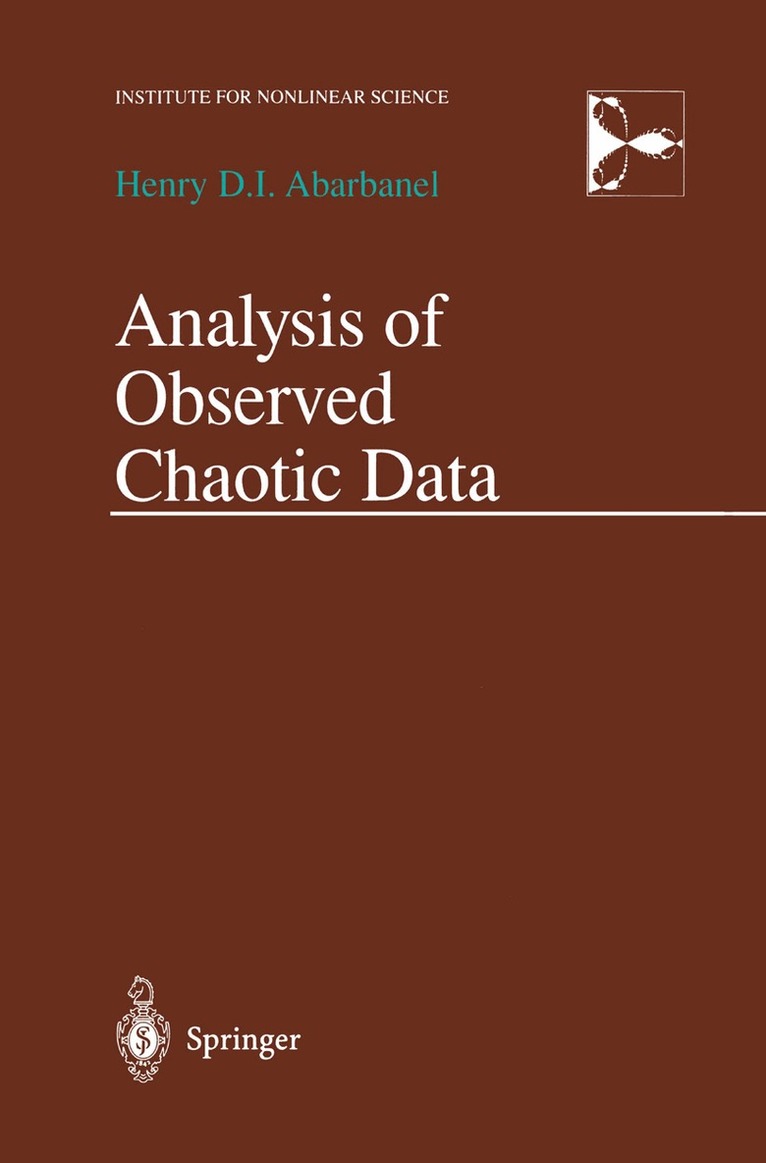
When I encountered the idea of chaotic behavior in deterministic dynami cal systems, it gave me both great pause and great relief. The origin of the great relief was work I had done earlier on renormalization group properties of homogeneous, isotropic fluid turbulence. At the time I worked on that, it was customary to ascribe the apparently stochastic nature of turbulent flows to some kind of stochastic driving of the fluid at large scales. It was simply not imagined that with purely deterministic driving the fluid could be turbulent from its own chaotic motion. I recall a colleague remarking that there was something fundamentally unsettling about requiring a fluid to be driven stochastically to have even the semblance of complex motion in the velocity and pressure fields. I certainly agreed with him, but neither of us were able to provide any other reasonable suggestion for the observed, apparently stochastic motions of the turbulent fluid. So it was with relief that chaos in nonlinear systems, namely, complex evolution, indistinguish able from stochastic motions using standard tools such as Fourier analysis, appeared in my bag of physics notions. It enabled me to have a physi cally reasonable conceptual framework in which to expect deterministic, yet stochastic looking, motions. The great pause came from not knowing what to make of chaos in non linear systems.
Inbunden, Engelska, 2004
727 kr
Skickas inom 5-8 vardagar
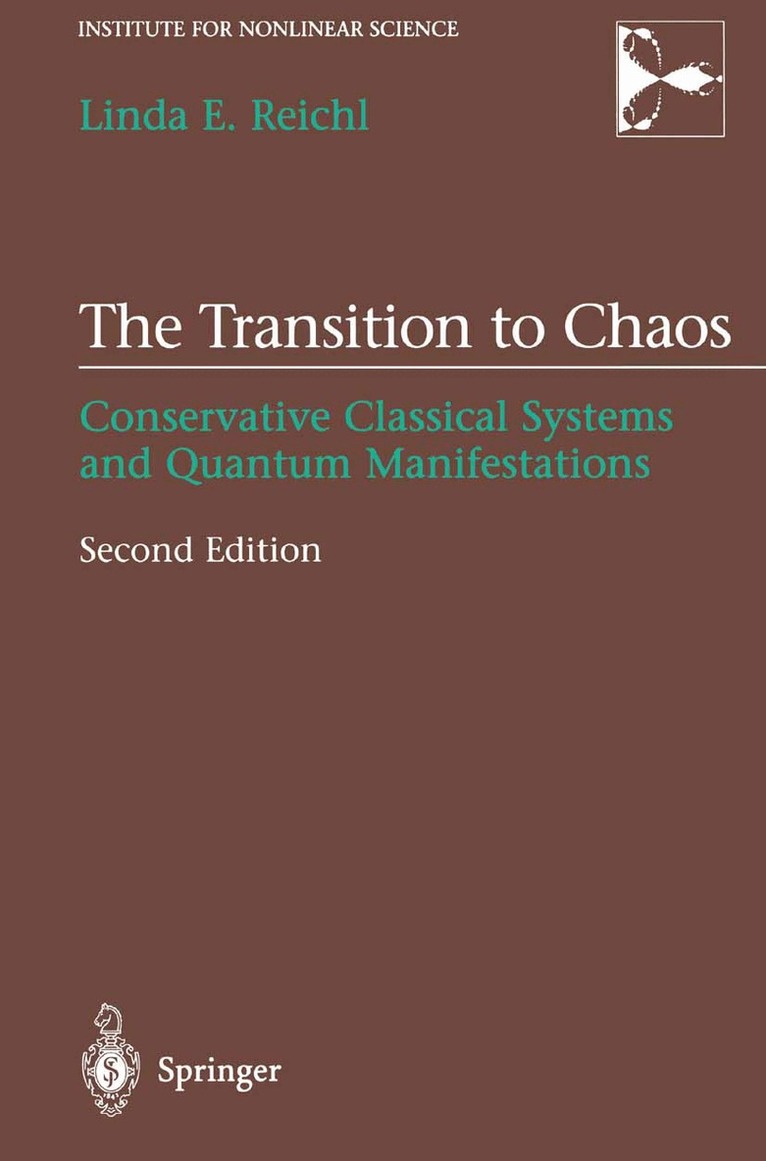
Based on courses given at the universities of Texas in Austin, and California in San Diego, this book deals with the basic mechanisms that determine the dynamic evolution of classical and quantum systems. It presents, in as simple a manner as possible, the basic mechanisms that determine the dynamical evolution of both classical and quantum systems in sufficient generality to include quantum phenomena. The book begins with a discussion of Noether's theorem, integrability, KAM theory, and a definition of chaotic behavior; it continues with a detailed discussion of area-preserving maps, integrable quantum systems, spectral properties, path integrals, and periodically driven systems; and it concludes by showing how to apply the ideas to stochastic systems. The presentation is complete and self-contained; appendices provide much of the needed mathematical background, and there are extensive references to the current literature. Problems at the ends of chapters help students clarify their understanding. In this new edition, the presentation will be brought up to date throughout, and a new chapter on open quantum systems will be added.
Inbunden, Engelska, 1999
1 079 kr
Skickas inom 10-15 vardagar
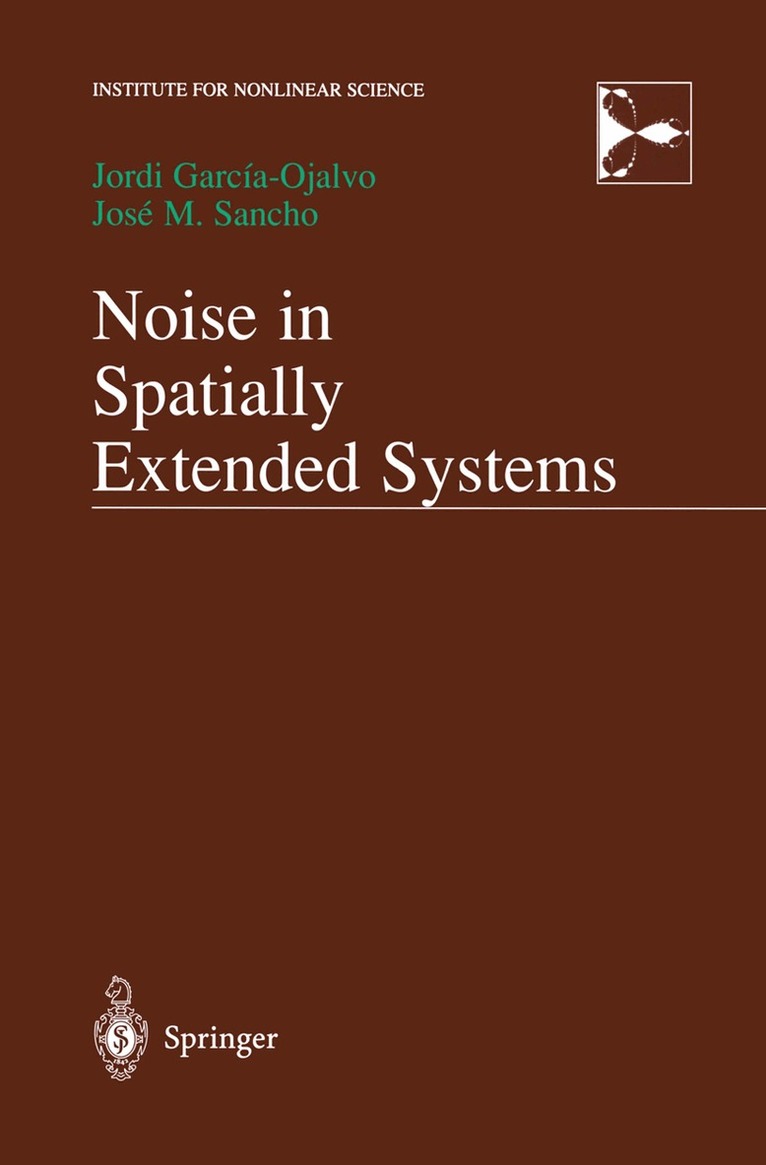
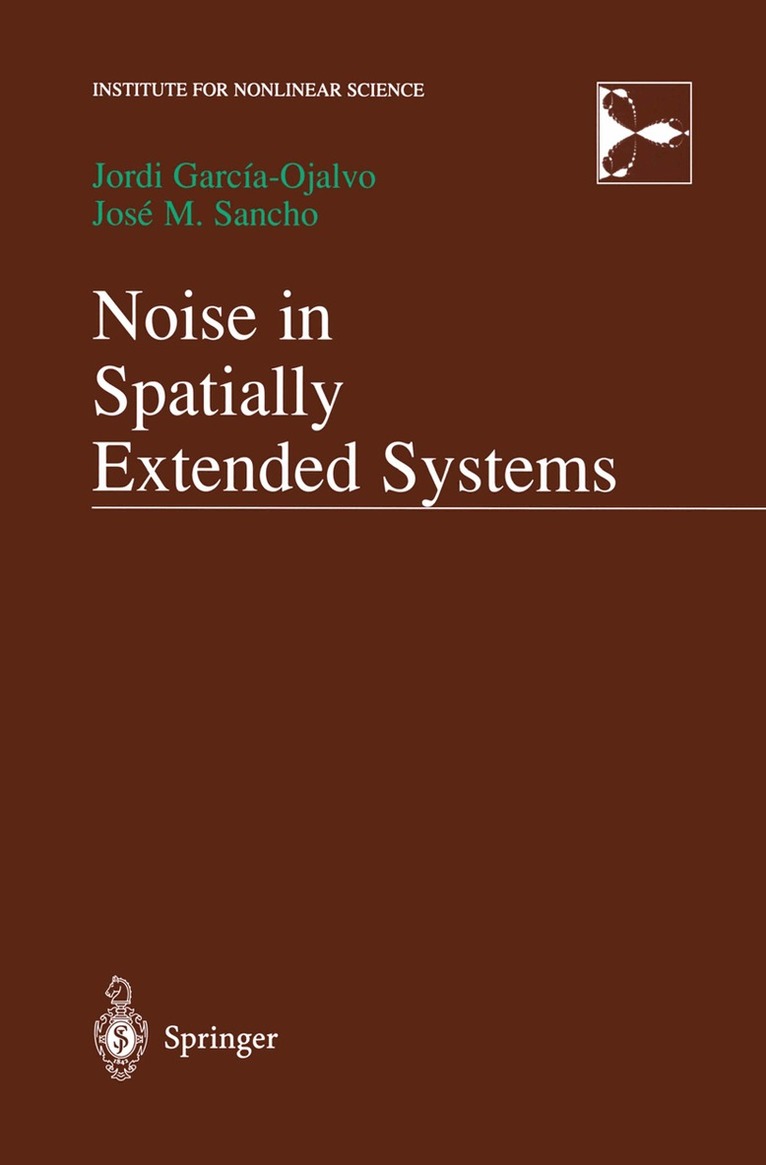
Intended for graduate students and researchers in physics, chemistry, biology, and applied mathematics, this book provides an up-to-date introduction to current research in fluctuations in spatially extended systems. It offers a practical introduction to the theory of stochastic partial differential equations and gives an overview of the effects of external noise on dynamical systems with spatial degrees of freedom. The text begins with a general introduction to noise-induced phenomena in dynamical systems followed by an extensive discussion of analytical and numerical tools needed to get information from stochastic partial differential equations. It then turns to particular problems described by stochastic partial differential equations, covering a wide part of the rich phenomenology of spatially extended systems, such as nonequilibrium phase transitions, domain growth, pattern formation, and front propagation. The only prerequisite is a minimal background knowledge of the Langevin and Fokker-Planck equations.
Häftad, Engelska, 2010
1 597 kr
Skickas inom 5-8 vardagar
This book provides a summary of the research conducted at UCLA, Stanford University, and UCSD over the last ?ve years in the area of nonlinear dyn- ics and chaos as applied to digital communications. At ?rst blush, the term “chaotic communications” seems like an oxymoron; how could something as precise and deterministic as digital communications be chaotic? But as this book will demonstrate, the application of chaos and nonlinear dynamicstocommunicationsprovidesmanypromisingnewdirectionsinareas of coding, nonlinear optical communications, and ultra-wideband commu- cations. The eleven chapters of the book summarize many of the promising new approaches that have been developed, and point the way to new research directions in this ?eld. Digital communications techniques have been continuously developed and re?ned for the past ?fty years to the point where today they form the heart of a multi-hundred billion dollar per year industry employing hundreds of thousands of people on a worldwide basis. There is a continuing need for transmission and reception of digital signals at higher and higher data rates. There are a variety of physical limits that place an upper limit on these data rates, and so the question naturally arises: are there alternative communi- tion techniques that can overcome some of these limitations? Most digital communications today is carried out using electronic devices that are essentially “linear,” and linear system theory has been used to c- tinually re?ne their performance. In many cases, inherently nonlinear devices are linearized in order to achieve a certain level of linear system performance.
Häftad, Engelska, 2011
543 kr
Skickas inom 10-15 vardagar
This text describes the statistcal behavior of complex systems and shows how the fractional calculus can be used to model the behavior. The discussion emphasizes physical phenomena whose evolution is best described using the fractional calculus, such as systems with long-range spatial interactions or long-time memory. The book gives general strategies for understanding wave propagation through random media, the nonlinear response of complex materials, and the fluctuations of heat transport in heterogeneous materials.
Häftad, Engelska, 2012
1 079 kr
Skickas inom 10-15 vardagar
Intended for graduate students and researchers in physics, chemistry, biology, and applied mathematics, this book provides an up-to-date introduction to current research in fluctuations in spatially extended systems. It offers a practical introduction to the theory of stochastic partial differential equations and gives an overview of the effects of external noise on dynamical systems with spatial degrees of freedom. The text begins with a general introduction to noise-induced phenomena in dynamical systems followed by an extensive discussion of analytical and numerical tools needed to get information from stochastic partial differential equations. It then turns to particular problems described by stochastic partial differential equations, covering a wide part of the rich phenomenology of spatially extended systems, such as nonequilibrium phase transitions, domain growth, pattern formation, and front propagation. The only prerequisite is a minimal background knowledge of the Langevin and Fokker-Planck equations.
Häftad, Engelska, 2011
1 079 kr
Skickas inom 10-15 vardagar
In recent years there has been a growth in interest in studying the heart from the perspective of the physical sciences: mechanics, fluid flow, electromechanics. This volume is the result of a workshop held in July 1989 at the Institute for Nonlinear Sciences at the University of California at San Diego that brought together scientists and clinicians with graduate students and postdoctoral fellows who shared an interest in the heart. The chapters were prepared by the invited speakers as didactic reviews of their subjects but also include the structure, mechanical properties, and function of the heart and the myocardium, electrical activity of the heart and myocardium, and mathematical models of heart function.
Häftad, Engelska, 2011
1 079 kr
Skickas inom 10-15 vardagar
The volume that you have before you is the result of a growing realization that fluctuations in nonequilibrium systems playa much more important role than was 1 first believed. It has become clear that in nonequilibrium systems noise plays an active, one might even say a creative, role in processes involving self-organization, pattern formation, and coherence, as well as in biological information processing, energy transduction, and functionality. Now is not the time for a comprehensive summary of these new ideas, and I am certainly not the person to attempt such a thing. Rather, this short introductory essay (and the book as a whole) is an attempt to describe where we are at present and how the viewpoint that has evolved in the last decade or so differs from those of past decades. Fluctuations arise either because of the coupling of a particular system to an ex ternal unknown or "unknowable" system or because the particular description we are using is only a coarse-grained description which on some level is an approxima tion. We describe the unpredictable and random deviations from our deterministic equations of motion as noise or fluctuations. A nonequilibrium system is one in which there is a net flow of energy. There are, as I see it, four basic levels of sophistication, or paradigms, con cerning fluctuations in nature. At the lowest level of sophistication, there is an implicit assumption that noise is negligible: the deterministic paradigm.