Jewish Cultures of the World – serie
Visar alla böcker i serien Jewish Cultures of the World. Handla med fri frakt och snabb leverans.
5 produkter
5 produkter
394 kr
Skickas inom 5-8 vardagar
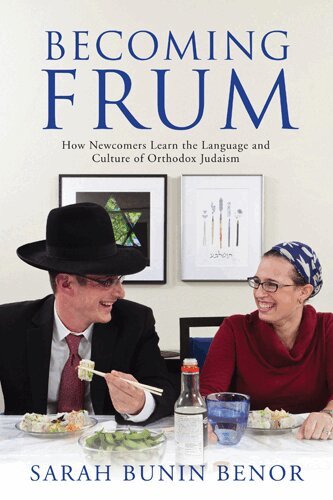
Winner, 2013 Sami Rohr Choice Award for Jewish LiteratureWhen non-Orthodox Jews become frum (religious), they encounter much more than dietary laws and Sabbath prohibitions. They find themselves in the midst of a whole new culture, involving matchmakers, homemade gefilte fish, and Yiddish-influenced grammar. Becoming Frum explains how these newcomers learn Orthodox language and culture through their interactions with community veterans and other newcomers. Some take on as much as they can as quickly as they can, going beyond the norms of those raised in the community. Others maintain aspects of their pre-Orthodox selves, yielding unique combinations, like Matisyahu’s reggae music or Hebrew words and sing-song intonation used with American slang, as in “mamish (really) keepin’ it real.”Sarah Bunin Benor brings insight into the phenomenon of adopting a new identity based on ethnographic and sociolinguistic research among men and women in an American Orthodox community. Her analysis is applicable to other situations of adult language socialization, such as students learning medical jargon or Canadians moving to Australia. Becoming Frum offers a scholarly and accessible look at the linguistic and cultural process of “becoming.”
Becoming Frum
How Newcomers Learn the Language and Culture of Orthodox Judaism
Inbunden, Engelska, 2012
1 391 kr
Skickas inom 5-8 vardagar
Winner, 2013 Sami Rohr Choice Award for Jewish LiteratureWhen non-Orthodox Jews become frum (religious), they encounter much more than dietary laws and Sabbath prohibitions. They find themselves in the midst of a whole new culture, involving matchmakers, homemade gefilte fish, and Yiddish-influenced grammar. Becoming Frum explains how these newcomers learn Orthodox language and culture through their interactions with community veterans and other newcomers. Some take on as much as they can as quickly as they can, going beyond the norms of those raised in the community. Others maintain aspects of their pre-Orthodox selves, yielding unique combinations, like Matisyahu’s reggae music or Hebrew words and sing-song intonation used with American slang, as in “mamish (really) keepin’ it real.”Sarah Bunin Benor brings insight into the phenomenon of adopting a new identity based on ethnographic and sociolinguistic research among men and women in an American Orthodox community. Her analysis is applicable to other situations of adult language socialization, such as students learning medical jargon or Canadians moving to Australia. Becoming Frum offers a scholarly and accessible look at the linguistic and cultural process of “becoming.”
461 kr
Skickas inom 11-20 vardagar
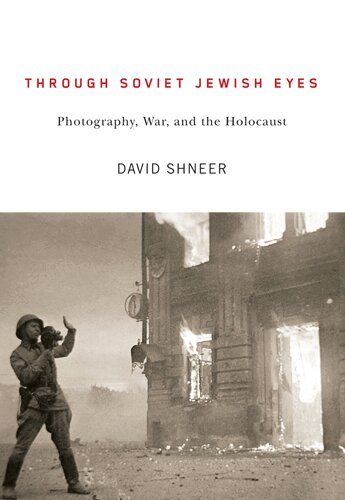
Winner of the 2013 Jordan Schnitzer Book Award in the category of Jews and the ArtsFinalist for the 2011 National Jewish Book Award in the Holocaust categoryMost view the relationship of Jews to the Soviet Union through the lens of repression and silence. Focusing on an elite group of two dozen Soviet-Jewish photographers, including Arkady Shaykhet, Alexander Grinberg, Mark Markov-Grinberg, Evgenii Khaldei, Dmitrii Baltermants, and Max Alpert, Through Soviet Jewish Eyes presents a different picture. These artists participated in a social project they believed in and with which they were emotionally and intellectually invested-they were charged by the Stalinist state to tell the visual story of the unprecedented horror we now call the Holocaust.These wartime photographers were the first liberators to bear witness with cameras to Nazi atrocities, three years before Americans arrived at Buchenwald and Dachau. In this passionate work, David Shneer tells their stories and highlights their work through their very own images-he has amassed never-before-published photographs from families, collectors, and private archives.Through Soviet Jewish Eyes helps us understand why so many Jews flocked to Soviet photography; what their lives and work looked like during the rise of Stalinism, during and then after the war; and why Jews were the ones charged with documenting the Soviet experiment and then its near destruction at the hands of the Nazis.
413 kr
Skickas inom 11-20 vardagar
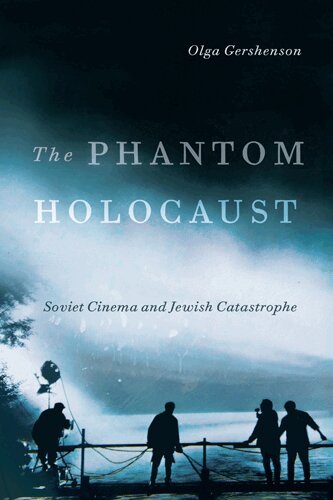
Even people familiar with cinema believe there is no such thing as a Soviet Holocaust film. The Phantom Holocaust tells a different story. The Soviets were actually among the first to portray these events on screens. In 1938, several films exposed Nazi anti-Semitism, and a 1945 movie depicted the mass execution of Jews in Babi Yar. Other significant pictures followed in the 1960s. But the more directly filmmakers engaged with the Holocaust, the more likely their work was to be banned by state censors. Some films were never made while others came out in such limited release that the Holocaust remained a phantom on Soviet screens.Focusing on work by both celebrated and unknown Soviet directors and screenwriters, Olga Gershenson has written the first book about all Soviet narrative films dealing with the Holocaust from 1938 to 1991. In addition to studying the completed films, Gershenson analyzes the projects that were banned at various stages of production. The book draws on archival research and in-depth interviews to tell the sometimes tragic and sometimes triumphant stories of filmmakers who found authentic ways to represent the Holocaust in the face of official silencing. By uncovering little known works, Gershenson makes a significant contribution to the international Holocaust filmography.
1 611 kr
Skickas inom 10-15 vardagar
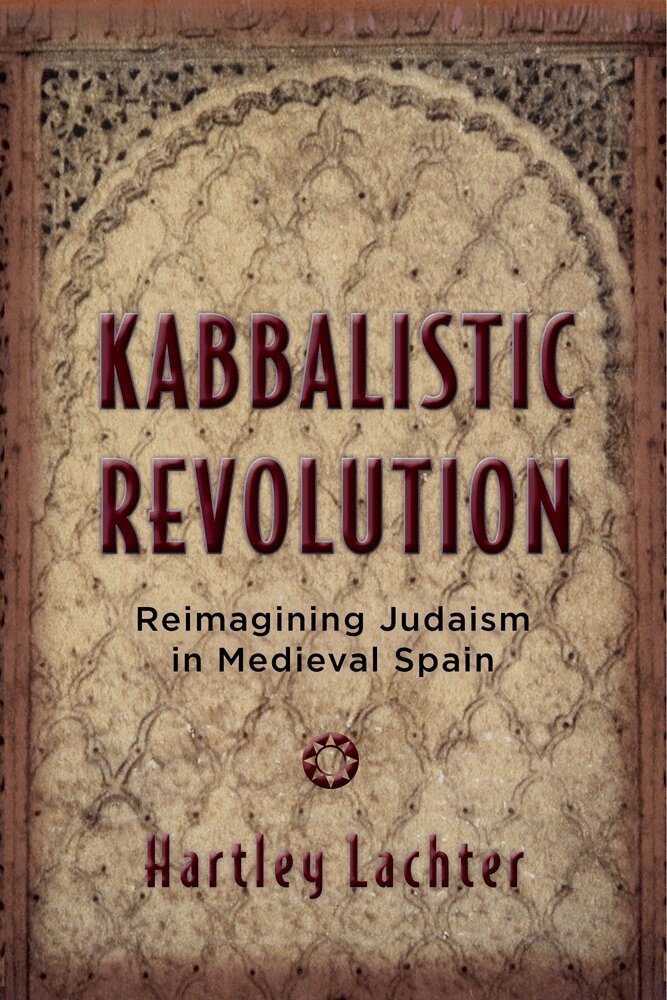
The set of Jewish mystical teachings known as Kabbalah are often imagined as timeless texts, teachings that have been passed down through the millennia. Yet, as this groundbreaking new study shows, Kabbalah flourished in a specific time and place, emerging in response to the social prejudices that Jews faced.Hartley Lachter, a scholar of religion studies, transports us to medieval Spain, a place where anti-Semitic propaganda was on the rise and Jewish political power was on the wane. Kabbalistic Revolution proposes that, given this context, Kabbalah must be understood as a radically empowering political discourse. While the era’s Christian preachers claimed that Jews were blind to the true meaning of scripture and had been abandoned by God, the Kabbalists countered with a doctrine that granted Jews a uniquely privileged relationship with God. Lachter demonstrates how Kabbalah envisioned this increasingly marginalized group at the center of the universe, their mystical practices serving to maintain the harmony of the divine world. For students of Jewish mysticism, Kabbalistic Revolution provides a new approach to the development of medieval Kabbalah. Yet the book’s central questions should appeal to anyone with an interest in the relationships between religious discourses, political struggles, and ethnic pride.