Knowledge Infrastructure and Knowledge Economy – serie
Visar alla böcker i serien Knowledge Infrastructure and Knowledge Economy. Handla med fri frakt och snabb leverans.
8 produkter
8 produkter
Del 2 - Knowledge Infrastructure and Knowledge Economy
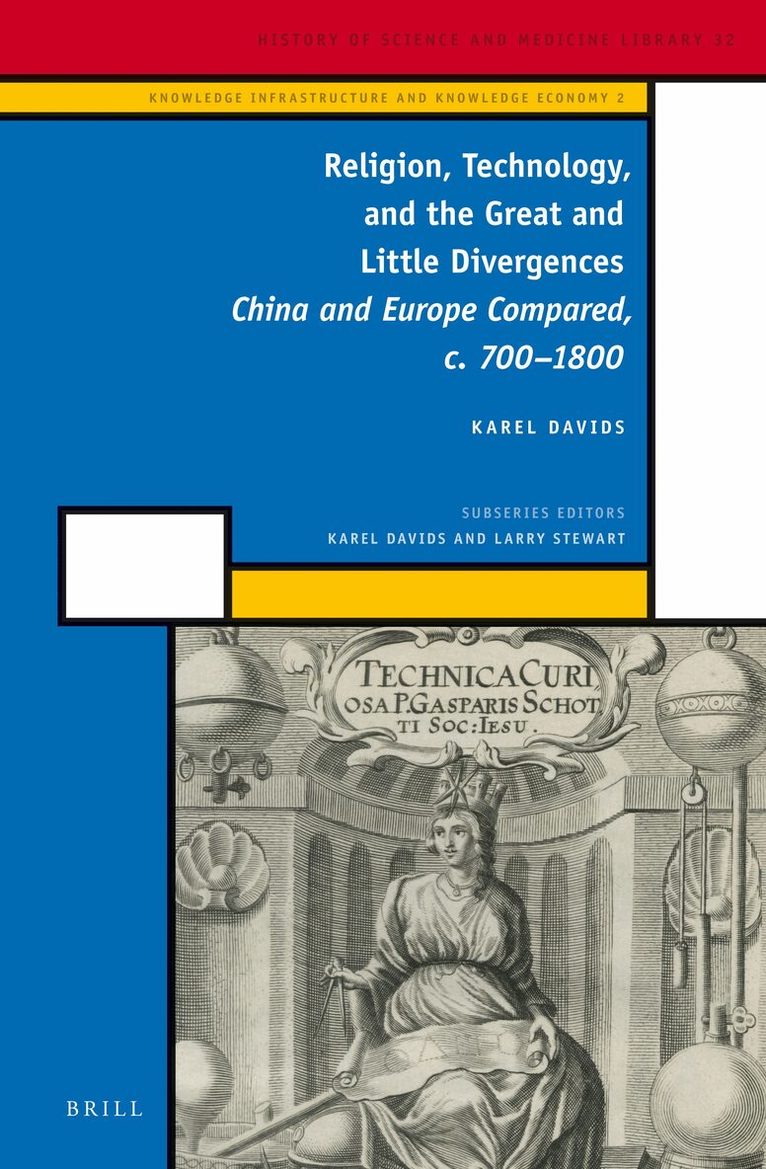
Religion, Technology, and the Great and Little Divergences
China and Europe Compared, c. 700-1800
Inbunden, Engelska, 2012
2 816 kr
Skickas inom 3-6 vardagar
In Religion, Technology, and the Great and Little Divergences Karel Davids offers a new perspective on technological change in China and Europe before the Industrial Revolution. This book makes an innovative contribution to current debates on the origins of the 'Great Divergence' between China and Europe and the ' Little Divergence' within Europe by analysing the relationship between the evolution of technical knowledge and religious contexts. It deals with the question to what extent disparities in the evolution of technical knowledge can be explained by differences in religious environment. It takes a comparative look at the relation between technology and religion in China and Europe between c.700 and 1800 from four angles: visions on the uses of nature, the formation of human capital , the circulation of technical knowledge and technical innovation.
Del 3 - Knowledge Infrastructure and Knowledge Economy
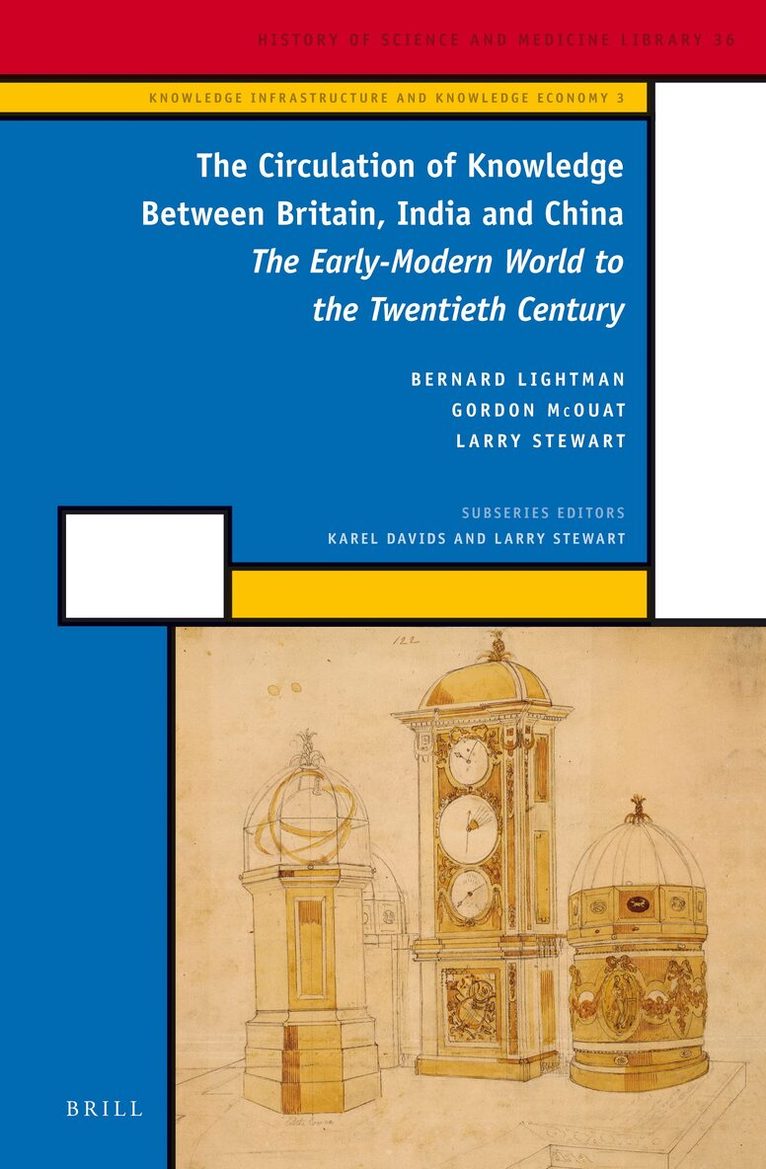
Circulation of Knowledge Between Britain, India and China
The Early-Modern World to the Twentieth Century
Inbunden, Engelska, 2013
2 718 kr
Skickas inom 3-6 vardagar
In The Circulation of Knowledge Between Britain, India and China, twelve scholars examine how knowledge, things and people moved within, and between, the East and the West from the early modern period to the twentieth century. The collection starts by looking at the ways and means that knowledge circulated, first in Europe, but then beyond to India and China. It engages the knowledge and encounters of those Europeans as they moved across the globe. It participates in the attempt to open up more nuanced and balanced trajectories of colonial and post-colonial encounters. By focusing on exchange, translation, and resistance, the authors bring into the spotlight many "bit-players" and things originally relegated to the margins in the development of late modern science. Contributors include Karen Smith, Larry Stewart, Savrithri Preetha Nair, Jan Golinski, Arun Bala, Jonathan Topham, Khyati Nagar, Yang Haiyan, Fa-ti Fan, Grace Yen Shen, Jahnavi Phalkey, Veena Rao, and Sundar Sarukkai.
Del 4 - Knowledge Infrastructure and Knowledge Economy
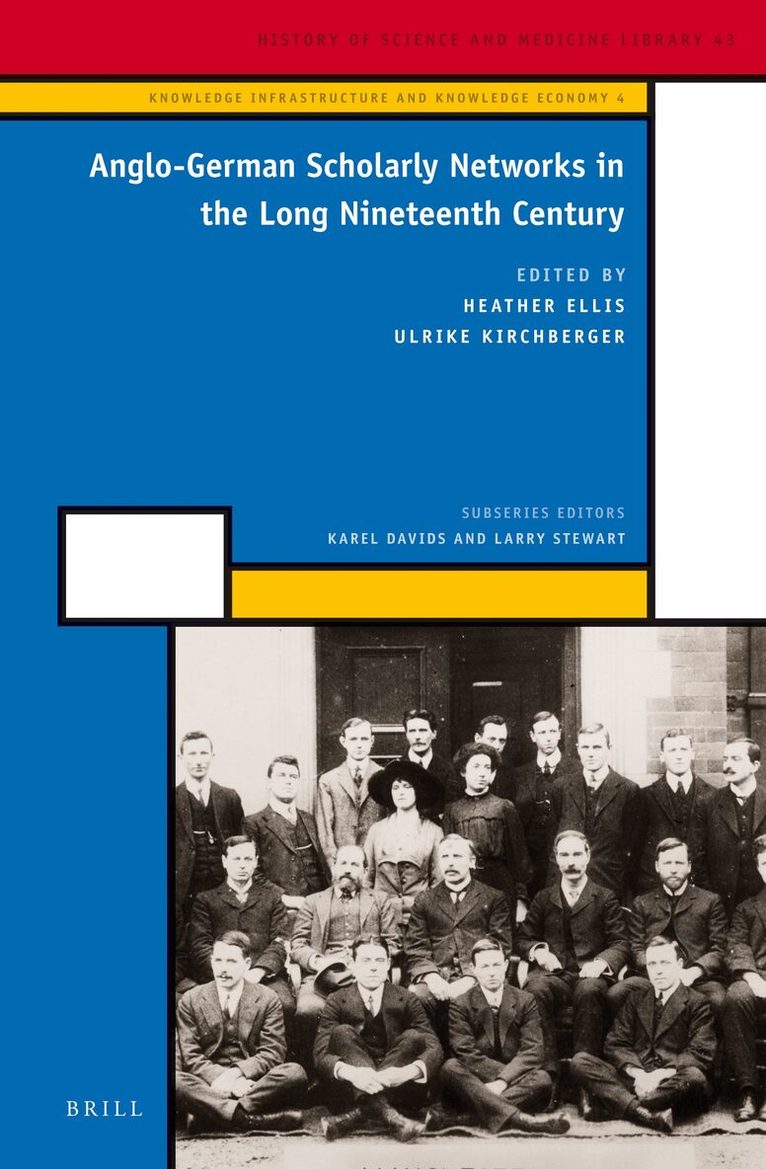
Anglo-German Scholarly Networks in the Long Nineteenth Century
Inbunden, Engelska, 2014
2 558 kr
Skickas inom 3-6 vardagar
Anglo-German Scholarly Networks in the Long Nineteenth Century explores the complex and shifting connections between scientists and scholars in Britain and Germany from the late eighteenth century to the interwar years. Based on the concept of the transnational network in both its informal and institutional dimensions, it deals with the transfer of knowledge and ideas in a variety of fields and disciplines. Furthermore, it examines the role which mutual perceptions and stereotypes played in Anglo-German collaboration. By placing Anglo-German scholarly networks in a wider spatial and temporal context, the volume offers new frames of reference which challenge the long-standing focus on the antagonism and breakdown of relations before and during the First World War.Contributors include Rob Boddice, John Davis, Peter Hoeres, Hilary Howes, Gregor Pelger, Pascal Schillings, Angela Schwarz, Tara Windsor.
Del 5 - Knowledge Infrastructure and Knowledge Economy
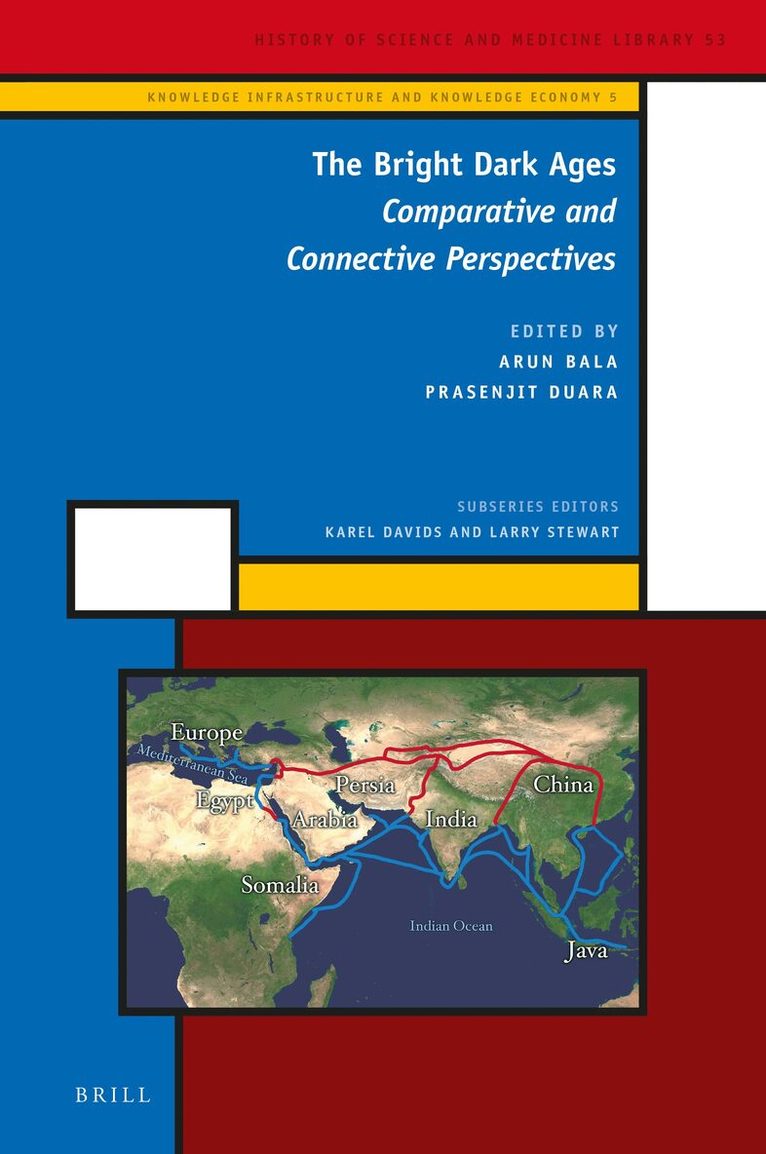
Bright Dark Ages
Comparative and Connective Perspectives
Inbunden, Engelska, 2016
2 639 kr
Skickas inom 3-6 vardagar
The European 'dark ages' in the millennium 500 to 1500 CE was a bright age of scientific achievements in China, India and the Middle East. The contributors to this volume address the implications of this seminal era of Asian science for comparative and connective science studies. Although such studies have generally adopted a binary perspective focusing on one or another of the Asian (Chinese, Indian, Islamic) civilizations, this study brings them together into a single volume within a wider Eurasian perspective. Moreover, by drawing together historical, philosophical, and sociological dimensions into one volume it promotes a richer understanding of how Eurasian connections and comparisons in the millennium preceding the modern era can illuminate the birth and growth of modern science. Contributors are Arun Bala, Andrew Brennan, James Robert Brown, George Gheverghese Joseph, Henrik Lagerlund, Norva Y.S. Lo, Roddam Narasimha, Hyunhee Park, Franklin Thomas Perkins, Hans Pols, Kapil Raj, Sundar Sarukkai, Mohd. Hazim Shah, Geir Sigurðsson and Cecilia Wee.
Del 6 - Knowledge Infrastructure and Knowledge Economy
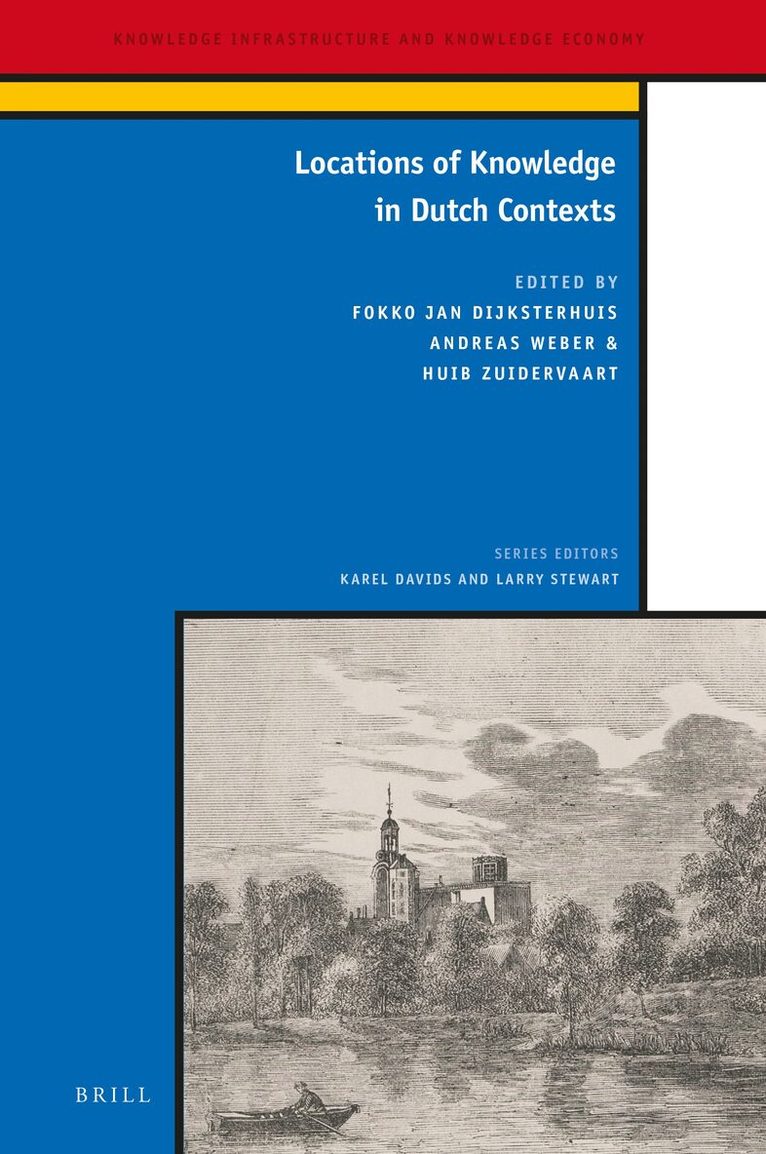
Locations of Knowledge in Dutch Contexts
Inbunden, Engelska, 2019
2 641 kr
Skickas inom 5-8 vardagar
Locations of Knowledge in Dutch Contexts brings together scholars who shed light on the ways locations gave shape to scientific knowledge practices in the Dutch Republic and the Kingdom of the Netherlands. This interdisciplinary volume uses four hundred years of Dutch history as a laboratory to investigate spatialized understandings of the history of knowledge. By conceptualizing locations of knowing as time-specific configurations of actors, artefacts, and activities, contributors to this volume not only examine cities as specific kind of locations, but also analyze the regionally and globally networked and transformative character of locations. Many of the locations which are studied in this volume are still visible until the present day. Contributors are Azadeh Achbari, Fokko Jan Dijksterhuis, Alette Fleischer, Floor Haalboom, Marijn Hollestelle, Dirk van Miert, Ilja Nieuwland, Abel Streefland, Andreas Weber, Martin Weiss, Gerhard Wiesenfeldt, and Huib Zuidervaart.
Del 7 - Knowledge Infrastructure and Knowledge Economy
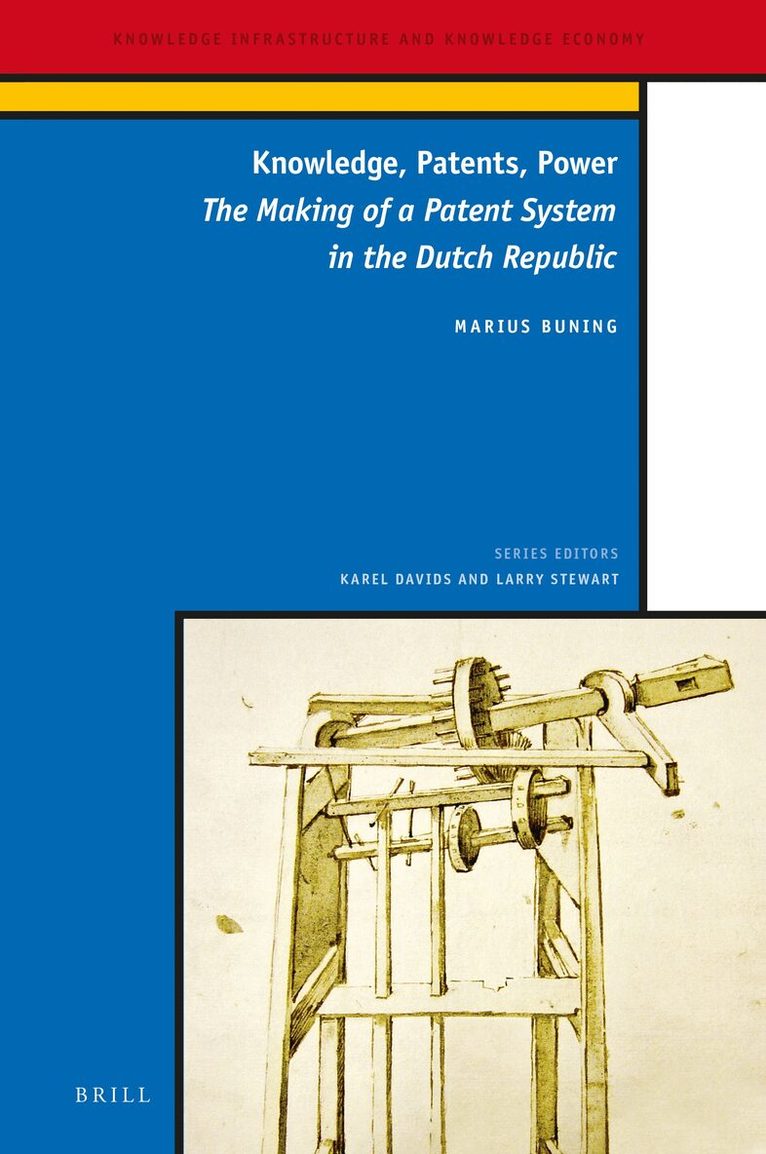
Knowledge, Patents, Power
The Making of a Patent System in the Dutch Republic
Inbunden, Engelska, 2021
2 088 kr
Skickas inom 5-8 vardagar
In Knowledge, Patents, Power, Marius Buning tells the complex story of how the emergence of a Dutch patent regime is related to wider issues concerning governmental control and innovation. Buning analyses the institutional framework in which "innovative knowledge" could develop in the Dutch Republic from a variety of perspectives. This is not only a comprehensive study of patent law and its administrative and legal framework during the first four decades of the Dutch republic, it also opens up new perspectives on a wide range of issues in cultural and political history— from truth claims in early modern science to issues concerning mercantilism and Dutch seventeenth-century processes of state formation.
Del 8 - Knowledge Infrastructure and Knowledge Economy
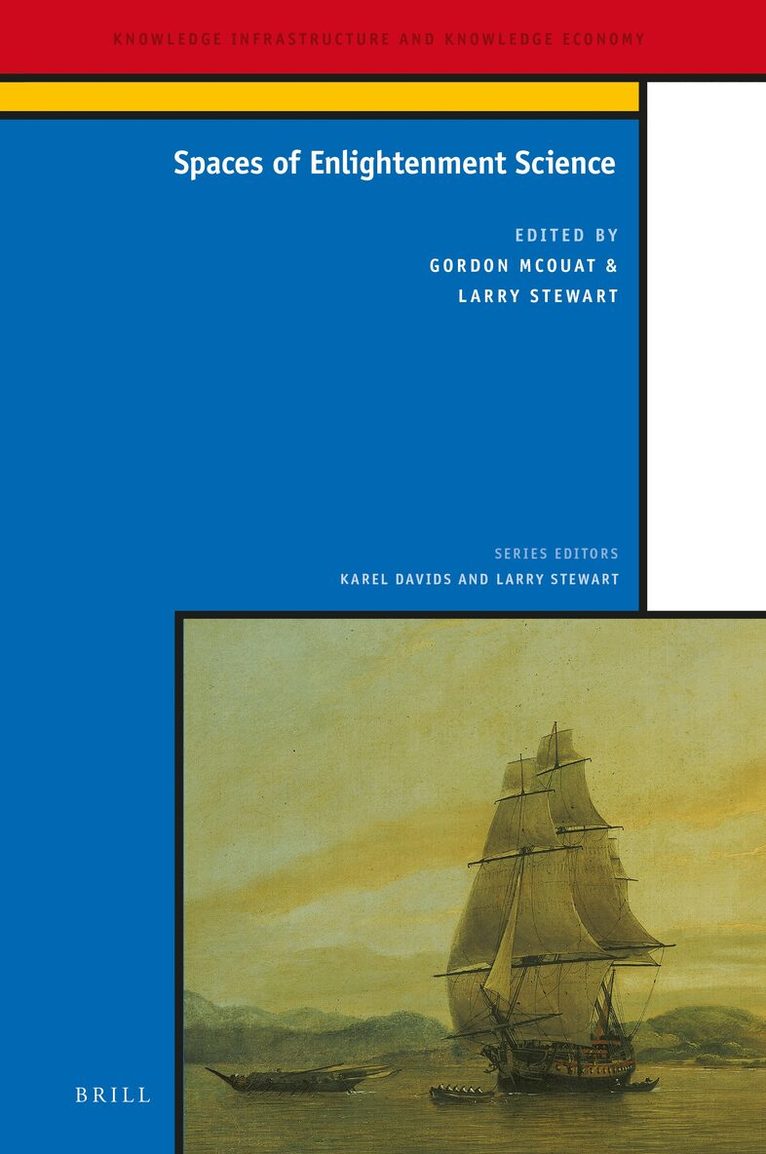
Spaces of Enlightenment Science
Inbunden, Engelska, 2022
1 952 kr
Skickas inom 5-8 vardagar
Where did we do science in the Enlightenment and why? This volume brings together leading historians of Early Modern science to explore the places, spaces, and exchanges of Enlightenment knowledge production. Adding to our understanding of the “geographies of knowledge”, it examines the relationship between “space” and “place”, institutions, “objects”, and “ideas”, showing the ways in which the location of science really matters.Contributors are Robert Iliffe, Victor Boantza, Margaret Carlyle, Jasmine Kilburn-Toppin, Trevor H. Levere, Alice Marples, Gordon McOuat, Larry Stewart, Marie Thébaud-Sorger, and Simon Werrett.
Del 9 - Knowledge Infrastructure and Knowledge Economy
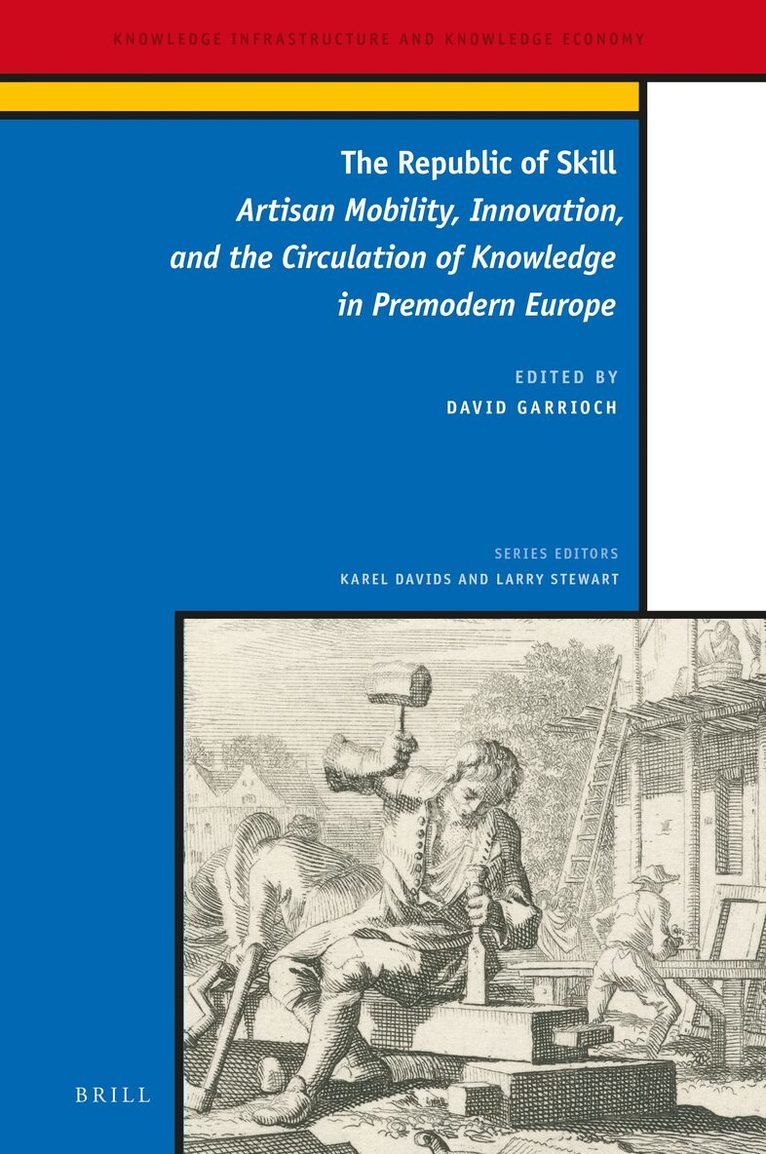
Republic of Skill
Artisan Mobility, Innovation, and the Circulation of Knowledge in Premodern Europe
Inbunden, Engelska, 2022
2 442 kr
Skickas inom 5-8 vardagar
Artisans travelled all over Europe in the pre-modern period, and they were responsible for many technical innovations and new consumer products. This volume moves away from the model of knowledge ‘transfer’ and, drawing on new understandings of artisan work, considers the links between artisan creativity and mobility. Through case studies of different industries, it emphasizes traditions of migration, the experience of moving, and the stimulus provided by new economic and work environments. For both male and female artisans, the weight of these factors varied from one trade to another, and from place to place.