Languages and Information Systems - Böcker
Visar alla böcker i serien Languages and Information Systems. Handla med fri frakt och snabb leverans.
6 produkter
6 produkter
1 533 kr
Skickas inom 10-15 vardagar
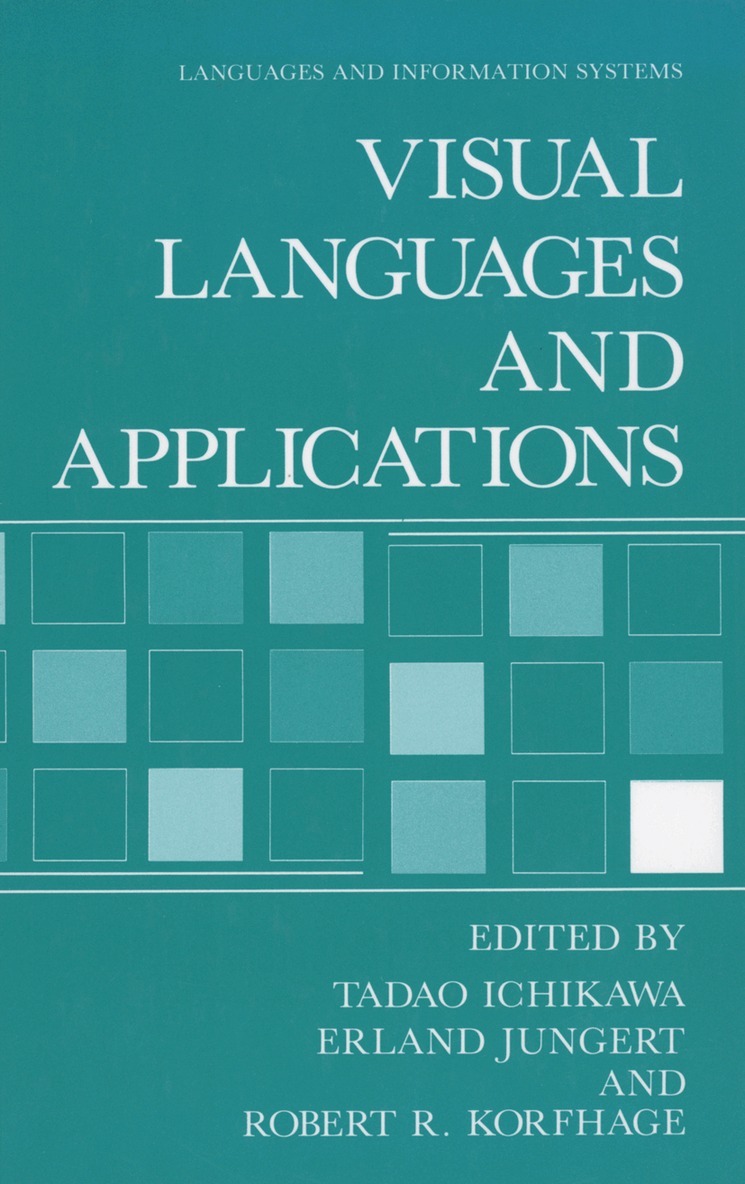
This book is intended as both an introduction to the state-of-the-art in visual languages, as well as an exposition of the frontiers of research in advanced visual languages. It is for computer scientists, computer engi neers, information scientists, application programmers, and technical managers responsible for software development projects who are inter ested in the methodology and manifold applications of visual languages and visual programming. The contents of this book are drawn from invited papers, as well as selected papers from two workshops: the 1985 IEEE Workshop on Lan guages for Automation-Cognitive Aspects in Information Processing, which was held in Mallorca, Spain, June 28-30, 1985; and the 1984 IEEE Workshop on Visual Languages, which was held in Hiroshima, Japan, December 7-9, 1984. Panos Ligomenides and I organized the technical program of LFA '85, and Tadao Ichikawa and I organized the techni cal program of VL '84. Both workshops have now become successful annual events in their own right. The intersecting area of visual languages and visual programming especially has become a fascinating new research area. It is hoped that this book will focus the reader's attention on some of the interesting research issues as well as the potential for future applications. After reading this book, the reader will undoubtedly get an impression that visual languages and the concept of generalized icons can be studied fruitfully from many different perspectives, including computer graphics, formal language theory, educational methodology, cognitive psychology and visual design.
552 kr
Skickas inom 10-15 vardagar
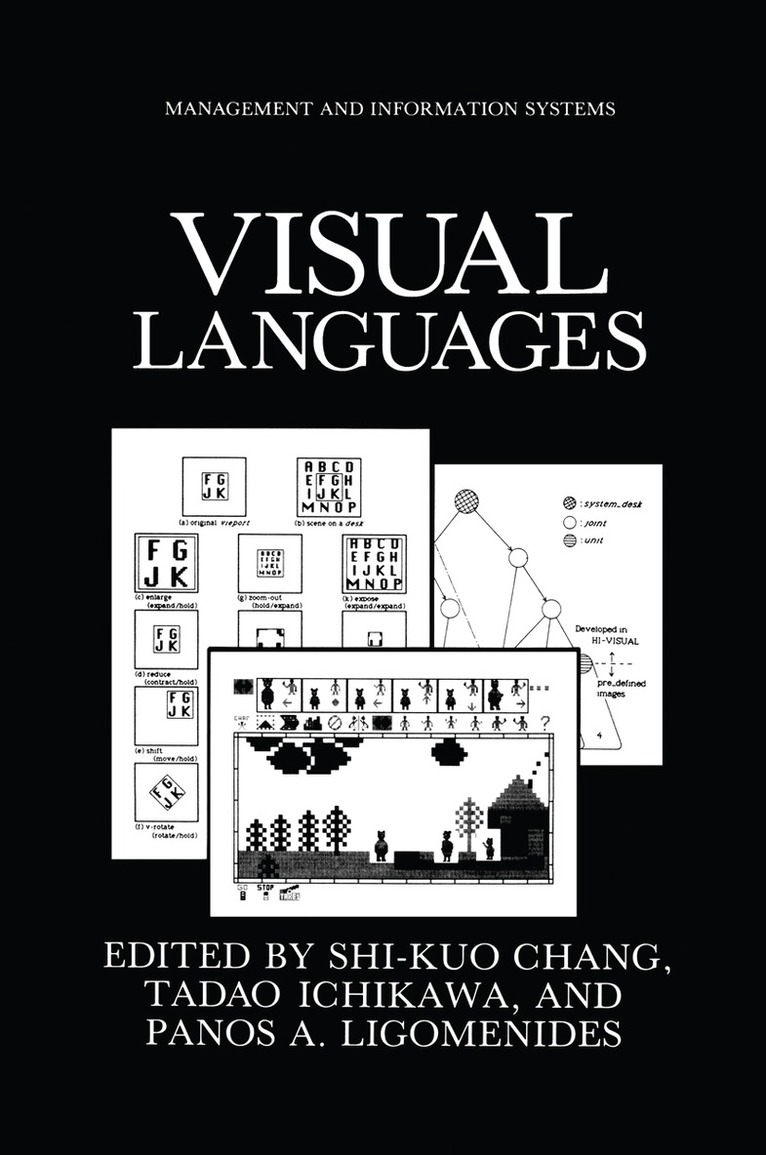
The interface between the user of a computer-based information system and the system itself has been evolving at a rapid rate. The use of a video screen, with its color and graphics capabilities, has been one factor in this evolution. The development of light pens, mice, and other screen image manipulation devices has been another. With these capabilities has come a natural desire to find more effective ways to make use of them. In particular, much work has gone into the development of interface systems that add visual elements such as icons and graphics to text. The desire to use these visual elements effectively in communication between the user and the system has resulted in a healthy competition of ideas and discussion of the principles governing the development and use of such elements. The present volume chronicles some of the more significant ideas that have recently been presented. The first volume in this series on the subject [Visual Languages (Chang, Ichikawa, and Ligomenides, eds. ), Plenum, 1986] covered work done in the early days of the field of visual languages. Here we represent ideas that have grown out of that early work, arranged in six sections: Theory, Design Systems, Visual Programming, Algorithm Animation, Simulation Animation, and Applications. I THEORY Fundamental to the concept of visual languages is the convIctIOn that diagrams and other visual representations can aid understanding and communication of ideas. We begin this volume with a chapter by Fanya S.
1 533 kr
Skickas inom 10-15 vardagar
This book is intended as both an introduction to the state-of-the-art in visual languages, as well as an exposition of the frontiers of research in advanced visual languages. It is for computer scientists, computer engi neers, information scientists, application programmers, and technical managers responsible for software development projects who are inter ested in the methodology and manifold applications of visual languages and visual programming. The contents of this book are drawn from invited papers, as well as selected papers from two workshops: the 1985 IEEE Workshop on Lan guages for Automation-Cognitive Aspects in Information Processing, which was held in Mallorca, Spain, June 28-30, 1985; and the 1984 IEEE Workshop on Visual Languages, which was held in Hiroshima, Japan, December 7-9, 1984. Panos Ligomenides and I organized the technical program of LFA '85, and Tadao Ichikawa and I organized the techni cal program of VL '84. Both workshops have now become successful annual events in their own right. The intersecting area of visual languages and visual programming especially has become a fascinating new research area. It is hoped that this book will focus the reader's attention on some of the interesting research issues as well as the potential for future applications. After reading this book, the reader will undoubtedly get an impression that visual languages and the concept of generalized icons can be studied fruitfully from many different perspectives, including computer graphics, formal language theory, educational methodology, cognitive psychology and visual design.
552 kr
Skickas inom 10-15 vardagar
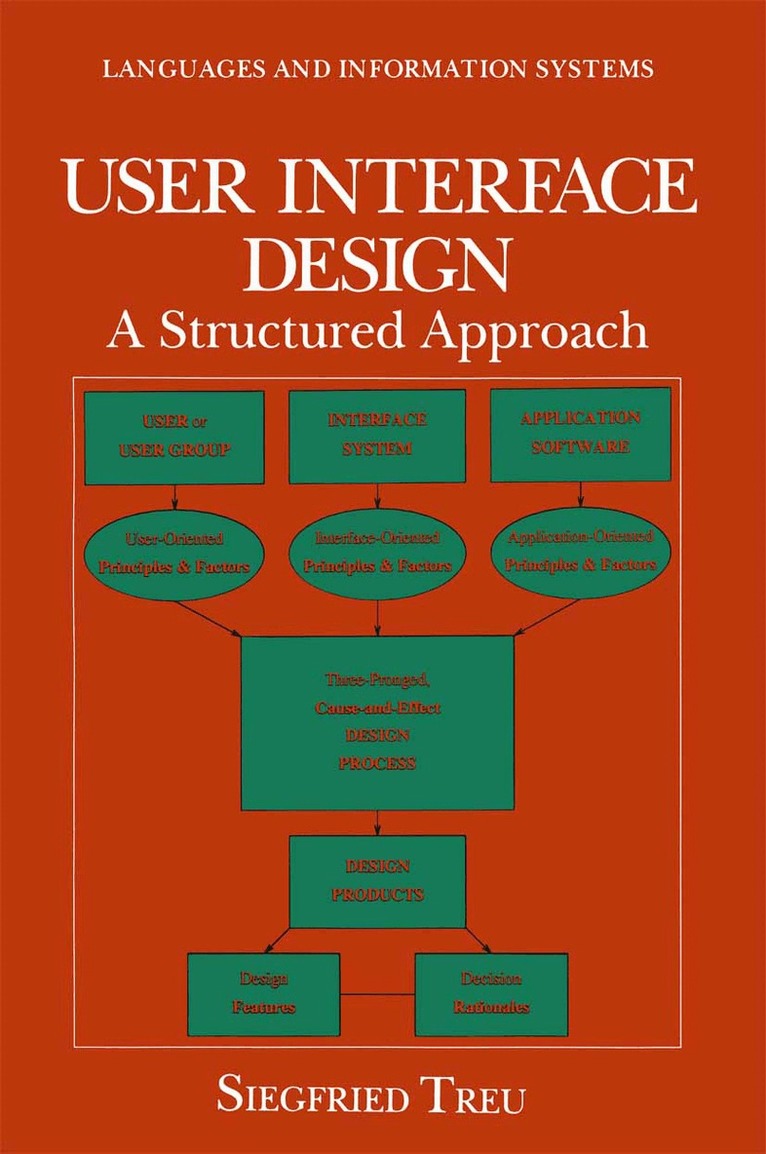
Solidly founded on 25 years of research and teaching, the author integrates the salient features of the subdisciplines of computer science into a comprehensive conceptual framework for the design of human-computer interfaces.
552 kr
Skickas inom 10-15 vardagar
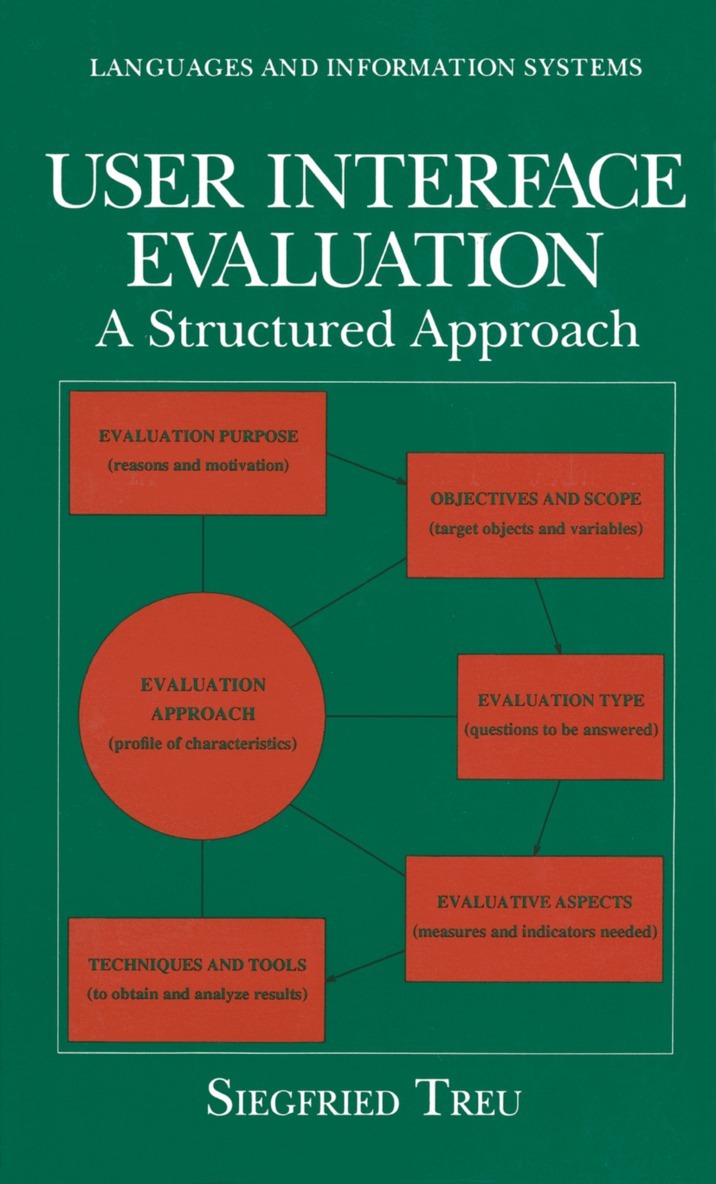
A companion to the author's User Interface Evaluation, this book details a systematic and comprehensive methodology to measure and evaluate new or existing human-computer interfaces. The text will serve both as a reference source, and as a supplement to its sister volume.
521 kr
Skickas inom 10-15 vardagar
Many hardware devices present either results or alternatives selected by computers to users. A few are video display terminals (VDTs), touch-tone telephones, and computer-generated speech systems. In part this book con cerns the impact and implications of such tools. Alternatively this is an attempt to provide material for researchers, students, and managers con cerned with computer interfaces. The subject of computer interfaces is at one level a technical subarea sharing common interests with the broad dis ciplines of computer science, psychology, and bioengineering. However, it is also a topic thrust to the forefront of interest of a wide variety of individuals who confront one of the most striking technological changes that has occurred in human history-the introduction of contact with computing devices as an essential component of many kinds of ordinary transactions. Point of entry sales, travel and entertainment reservations, and library infor mation, are commonly conducted today by interaction with digital calculat ing devices that did not exist in the recent past. The papers in this book present several concerns arising from the widespread use of computing. One involves the future implications of further advances of this technology. This is a twofold issue: (a) the potential conse quences of changing the basic way that information is managed in areas ranging from design, engineering, and management/planning to information access, education, and clerical function; and (b) improvements that could be instituted from further development of the special characteristics of display techniques, technologies, and algorithms.