Languages of the Ancient Near East – serie
Visar alla böcker i serien Languages of the Ancient Near East. Handla med fri frakt och snabb leverans.
15 produkter
15 produkter
968 kr
Skickas inom 7-10 vardagar
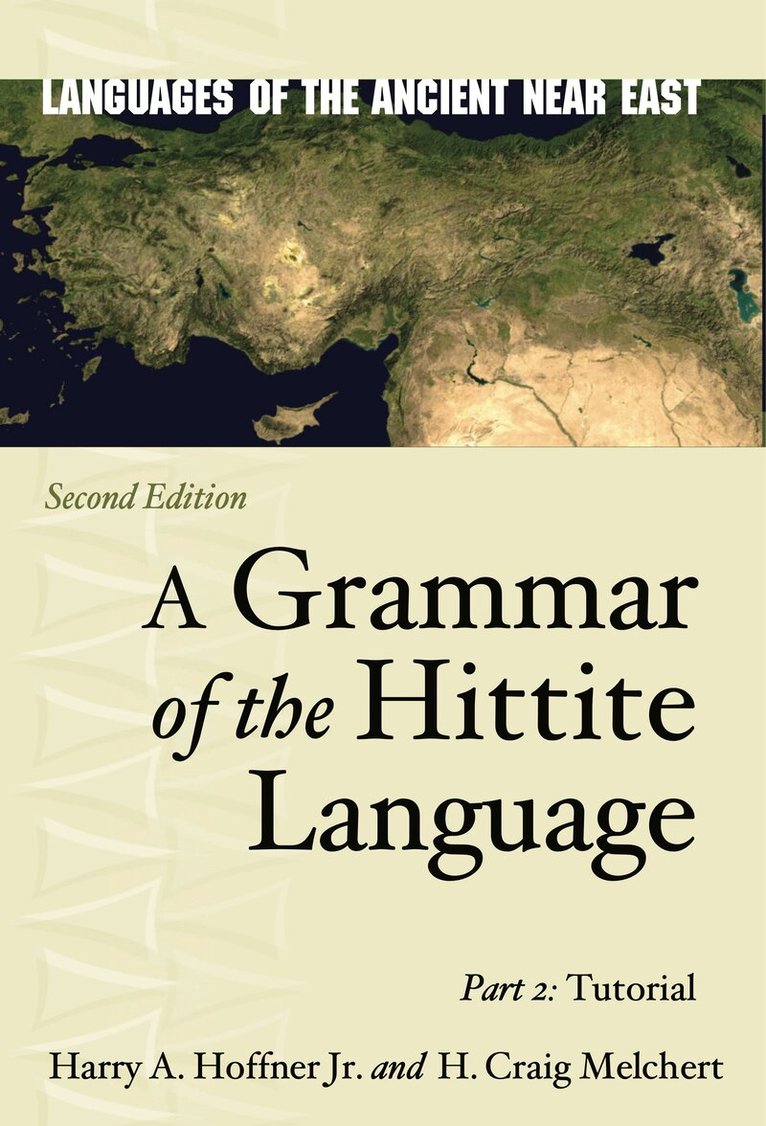
Hoffner and Melchert’s long-awaited work is sure to become both the standard reference grammar and the main teaching tool for the Hittite language. The first volume includes a thorough description of Hittite grammar, grounded in an abundance of textual examples. Moreover, the authors take into account a vast array of studies on all aspects of the Hittite language. In the five decades since the publication of the second edition of Johannes Friedrich’s Hethitisches Elementarbuch (1960), our knowledge of Hittite grammar has become more detailed and nuanced, especially because of the number of new texts available and the growing body of secondary literature. This first volume in the LANE series fills a serious gap and offers a comprehensive reference for decades to come.The second volume is a tutorial that consists of a series of graded lessons with illustrative sentences for the student to translate. The tutorial is keyed to the reference grammar and provides extensive notes.The printed grammar volume is accompanied by a CD-ROM that contains the entire text of the grammar and tutorial in searchable, cross-referenced, and hyperlinked form.
1 433 kr
Skickas inom 5-8 vardagar
In this magnum opus, N. J. C. Kouwenberg presents a thoroughgoing, modern analysis of the Akkadian verbal system, taking into account all of the currently available evidence for the language during the course of the long period of its attestation. The book achieves this goal through two strategies: (1) to describe the Akkadian verbal system, as comprehensively as the data permit; and (2) to reconstruct its prehistory on the basis of internal evidence and reconstruction, comparison with cognate languages, and typological evidence. Akkadian has one of the longest documented histories of any language: data from nearly two-and-one-half millennia are available, even if the stream of data is sometimes interrupted and not always as copious as we would like. During the course of this history, numerous developments took place, illustrating how languages change over time and offering parallels for reconstruction of changes that occurred in poorly documented periods.As a result, this book will be of great interest, in the first place, for all students of Akkadian, both the language and the literature that is documented in that language; and in the second place, for all students of language and linguistics who are interested in the study of how languages are shaped, develop, and change during the course of a long history.
542 kr
Skickas inom 7-10 vardagar
The system that any language uses to express evaluations, judgments, estimations, and non-real situations tends to be complicated and poorly understood, and this has certainly been the case, historically, for Akkadian. In this study, Nathan Wasserman presents the fruit of 15 years of study of the epistemic modal system of Old Babylonian, which represents one of the better-known and best-documented periods of the Akkadian language.As Wasserman notes, the interplay of philology, linguistics, and psychology that are involved in understanding any modal system make coming to conclusions a difficult enterprise. And though many questions remain unanswered, in this clearly organized and presented monograph, he guides the reader through a study of each modal word/particle, its etymology, syntax, and usage, on the basis of an examination of most of the Old Babylonian examples published thus far. He thus arrives at a general view of epistemic modality in Old Babylonian.Wasserman’s monograph is a work that will add significantly to our understanding of Old Babylonian language and the interpretation of texts and will become the benchmark for further study of verbal modality in Akkadian and other Semitic languages.
634 kr
Skickas inom 7-10 vardagar
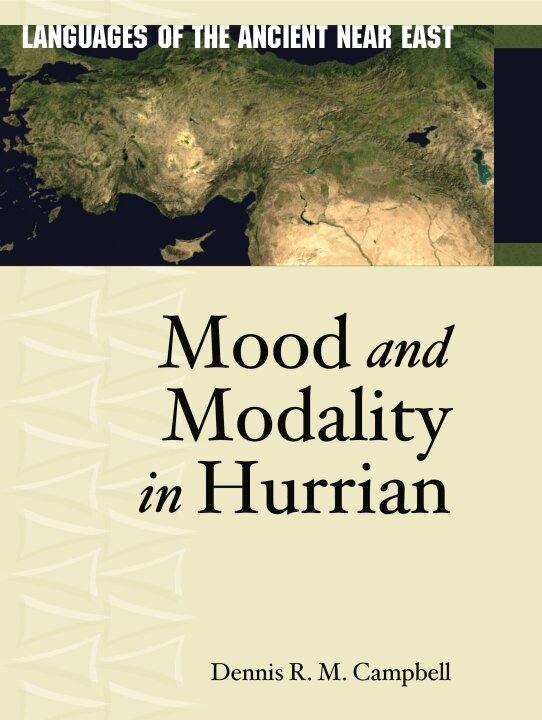
In a long dead language isolate such as Hurrian, grammatical studies are replete with difficulties. The paucity of material and our inability to compare it to modern, well-documented languages typically results in more questions than answers. Many posited answers to these questions lead inevitably to dead ends. Studies in languages such as Hurrian run the risk of either stagnating due to an adherence to the status quo by scholars or fragmenting when no two scholars can (or will) agree on any point. In this book, Campbell has in many ways broken with tradition in an attempt to go beneath the surface and reveal further complexities in Hurrian grammar. This work, the first English-language monograph on Hurrian since 1941, is not a dogmatic treatise meant to counter the status quo but an exploration of the complexities of the Hurrian language from a new perspective. His conclusions may challenge present perceptions, but the hope is that they will in turn inspire challenges, for it is only in this way that our understanding of this wonderful language and the people who spoke it can be furthered.Mood and Modality in Hurrian provides a formal and functional analysis of the Hurrian modal morphemes. Unlike the better-known Semitic and Indo-European languages of the ancient Near East, Hurrian has a rich complement of modal endings. This at-times bewildering variety in form and function of modal morphemes in Hurrian has been a largely unstudied topic. Although it has been touched upon in a number of studies, it has not received a detailed treatment until now.Beyond a philological treatment of a dead language, Campbell also adds to the accumulated knowledge of ergativity. This book explores the interplay between ergativity and modality in Hurrian. Furthermore, Campbell explores the issue of voice in Hurrian and its relation to modality.
746 kr
Skickas inom 7-10 vardagar
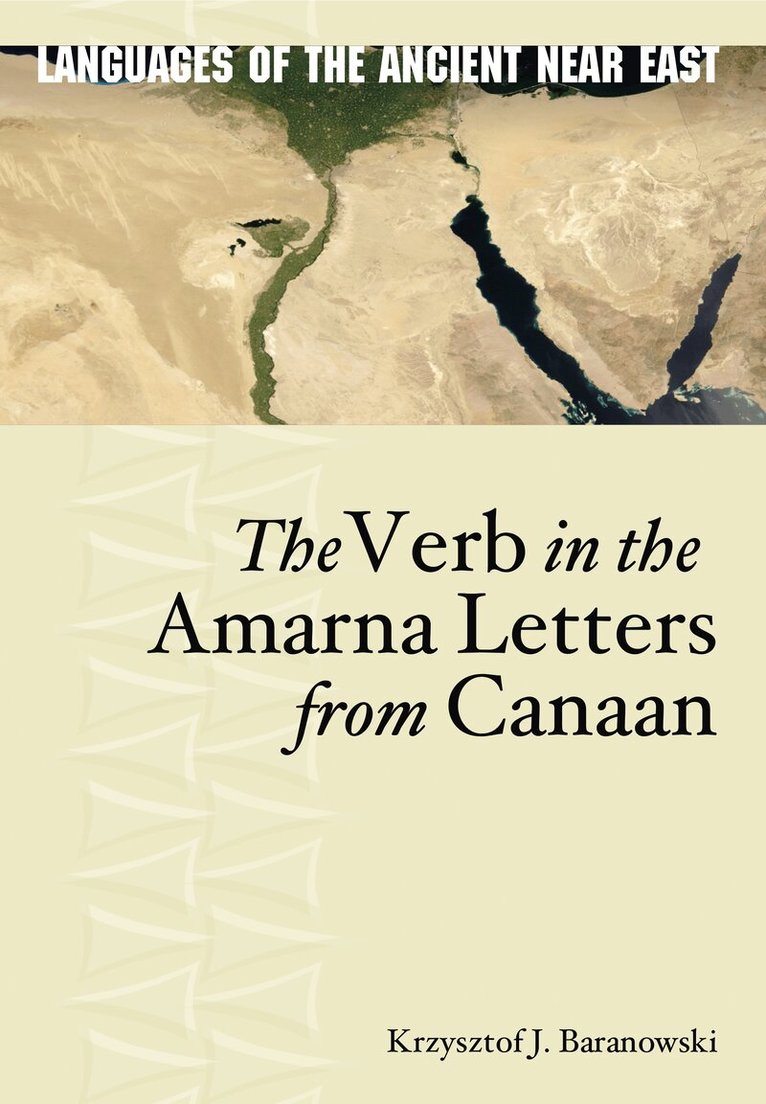
The Amarna letters from Canaan offer us a unique glimpse of the historical and linguistic panorama of the Levant in the middle of the fourteenth century BCE. Their evidence regarding verbs is crucial for the historical and comparative study of the Semitic languages. Proper evaluation of this evidence requires an understanding of its scribal origin and nature. For this reason, The Verb in the Amarna Letters from Canaan addresses the historical circumstances in which the linguistic code of the letters was born and the unique characteristics of this system. The author adduces second-language acquisition as a proper framework for understanding the development of this language by scribes who were educated in centers on the cuneiform periphery. In this way, the book advances a novel interpretation: the letters testify to a scribal interlanguage that was born of the local use of cuneiform and was affected by the fossilization and transfer processes taking place in these language learners.This vision of the linguistic system of the letters as the learners' interlanguage informs the main part of the book, which is devoted to verbal morphology and semantics. The chapter on morphology offers an overview of conjugation patterns and morphemes in terms of paradigms. Employing a variationist approach, it also analyzes the bases on which the verbal forms were constructed. Next, the individual uses of each form are illustrated by numerous examples that provide readers with a basis for discovering alternative interpretations. The systemic view of each form and the various insights that permeate this book provide invaluable data for the historical and comparative study of the West Semitic verbal system, particularly of ancient Hebrew, Ugaritic, and Arabic.
1 128 kr
Skickas inom 5-8 vardagar
A Grammar of the Ancient Egyptian Pyramid Texts is designed as a six-volume study of the earliest comprehensive corpus of ancient Egyptian texts, inscribed in the pyramids of five pharaohs of the Old Kingdom (ca. 2325–2150 BC) and several of their queens. The first volume, devoted to the earliest corpus, that of Unis, is based on a database that allows for detailed analysis of the orthography of the texts and every aspect of their grammar; it includes a complete hieroglyphic lexicon of the texts and a consecutive transcription and translation on facing pages. The grammatical analysis incorporates both the most recent advances in the understanding of Egyptian grammar and a few new interpretations published here for the first time.
Del 10 - Languages of the Ancient Near East
Classical Ethiopic
A Grammar of Gəˁəz
Inbunden, Engelska, 2021
696 kr
Skickas inom 7-10 vardagar
Upon its publication in 2002, Josef Tropper’s Altäthiopisch: Grammatik des Gəˁəz mit Übungstexten und Glossar was quickly recognized as the best modern grammar of Classical Ethiopic in any language. Now Eisenbrauns makes Tropper’s grammar available for the first time in English, in this revised and expanded edition by Josef Tropper and Rebecca Hasselbach-Andee.Gəˁəz literature is diverse and of major importance for the study of early Christianity, Judaism, and the history of eastern Africa. The language of this rich literature, however, has been difficult to access until now. Designed to help language learners acquire competency with the script from the start, Classical Ethiopic provides a comprehensive treatment of Gəˁəz grammar, with detailed chapters on the language’s writing system, phonology, morphology, morphosyntax, and syntax. Numerous example sentences illustrate the grammatical concepts discussed, and each example is presented in Ethiopic script, transliteration, and English translation. The grammar concludes with an appendix presenting sample texts to be used as exercises, an English-Gəˁəz glossary, and an updated bibliography that takes into account the developments that have occurred in the study of Gəˁəz in the nearly two decades since Tropper’s original publication.Appropriate for the classroom and for independent study, Classical Ethiopic is sure to become the standard reference in English for the study of the language.
Del 8 - Languages of the Ancient Near East
Glossary of Old Syrian
Volume 1: ʔ – ḳ
Inbunden, Engelska, 2019
483 kr
Skickas inom 7-10 vardagar
A Glossary of Old Syrian: ʔ – ḳ is the first of two volumes aimed at the completion of a lexicographical index of the Old Syrian linguistical continuum. This glossary gives a picture, or map, of the Old Syrian lexicon as it can be extracted and reconstructed from the available sources, from the (Old Akkadian-)Eblatic through the Old and Middle Babylonian corpora.Old Syrian can be defined most appropriately as a diachronically conservative, geographically pluricentric, and pragmatically multilayered linguistic cluster. Therefore, the present work pays special attention to the distribution of lexical data along diatopic and diastratic criteria. In view of the enormous amount of material and the dispersion of the data, this glossary focuses on the most representative textual corpora of the Old Syrian linguistic landscape. The bibliographical references are kept deliberately succinct and as a rule, restricted to the classic works that may be easily found in every Assyriological or Semitic library, public or private, and that will redirect the users to their sources. Since the Old Syrian lexicography remains uncertain, the leading interpretative opinions are included alongside the most relevant comparative Semitic material. A Glossary of Old Syrian offers a clear picture of the current state of this field and is intended to serve as a reference work in support of future study.
1 433 kr
Skickas inom 5-8 vardagar
This grammar provides a comprehensive overview of Middle Egyptian and illustrates its grammatical features with extensive examples from various sources. Exercises at the end of each chapter, along with a sign list and a hieroglyphic word list, provide the reader with the means to apply and practice the content, enabling this book to be used as both a grammar reference and a textbook.The book’s structure and detailed outline facilitate its use as a reference, making it easy to find information on any particular grammatical feature. At the same time, the extensive content of the forty chapters provides a suitable basis for self-guided study and enables the student to read and understand Egyptian inscriptions and literary texts in hieroglyphic transliteration. Recent developments in the understanding of Egyptian are exemplified in numerous quotations from Egyptian texts, and exercises at the end of each chapter provide further opportunity for considering the grammatical phenomena discussed in the chapter, allowing for both practice and review. For reasons of convenience, the vocabulary necessary for the exercises, along with the words used in the examples, are arranged into a word list at the end of the book. Similar and alternative grammatical constructions are compared, and in addition to the “classical” language of the Middle Kingdom, the book considers both Old Egyptian and Late Egyptian influences.As a hybrid reference and textbook, this volume introduces the reader to the grammatical features of Middle Egyptian and illustrates the means of expression used in ancient Egyptian.
Del 11 - Languages of the Ancient Near East
Ancient Egyptian and Afroasiatic
Rethinking the Origins
Inbunden, Engelska, 2023
1 273 kr
Skickas inom 7-10 vardagar
By challenging assumptions regarding the proximity between Egyptian and Semitic Languages, Ancient Egyptian and Afroasiatic provides a fresh approach to the relationships and similarities between Ancient Egyptian, Semitic, and Afroasiatic languages. This in-depth analysis includes a re-examination of the methodologies deployed in historical linguistics and comparative grammar, a morphological study of Ancient Egyptian, and critical comparisons between Ancient Egyptian and Semitic, as well as careful considerations of environmental factors and archaeological evidence. These contributions offer a reassessment of the Afroasiatic phylum, which is based on the relations between Ancient Egyptian and the other Afroasiatic branches. This volume illustrates the advantages of viewing Ancient Egyptian in its African context.In addition to the editors, the contributors to this collection include Shiferaw Assefa, Michael Avina, Vit Bubenik, Leo Depuydt, Christopher Ehret, Zygmunt Frajzyngier, J. Lafayette Gaston, Tiffany Gleason, John Huehnergard, Andrew Kitchen, Elsa Oréal, Chelsea Sanker, Lameen Souag, Andréas Stauder, Deven N. Vyas, Aren Wilson-Wright, and Jean Winand.
Del 12 - Languages of the Ancient Near East
Motion, Voice, and Mood in the Semitic Verb
Inbunden, Engelska, 2023
984 kr
Skickas inom 7-10 vardagar
This book explores the relationship between the so-called ventive morpheme in Akkadian (-am) and the related suffixes -n and -a in other Semitic languages, including Amarna Canaanite, Ugaritic, Hebrew, and Arabic. Using formal reconstructions of the various morphemes and a functional analysis of their different usages, Ambjörn Sjörs convincingly argues that these endings are cognate morphemes that were formally and functionally related to the ventive morpheme in Akkadian.Sjörs provides a systematic description of non-allative ventive verbs in Old Babylonian, the energic and volitive in Amarna Canaanite, the energic and lengthened prefix conjugation in Ugaritic, the lengthened imperfect consecutive in Biblical Hebrew, and the subjunctive and energic in Classical Arabic. Sjörs explains how these verb forms were used within the framework of grammaticalization theory and demonstrates how the suffixes are historically related.Clearly and persuasively argued, Motion, Voice, and Mood in the Semitic Verb sheds valuable light on the Akkadian ventive and its relationship to the other related morphemes. It will be welcomed by linguists specializing in Akkadian, Amarna Canaanite, Ugaritic, Hebrew, and Arabic.
Del 8 - Languages of the Ancient Near East
Glossary of Old Syrian
Volume 2: l – z
Inbunden, Engelska, 2024
1 105 kr
Skickas inom 7-10 vardagar
A Glossary of Old Syrian: l–z is the second of two volumes that aim to map the lexicon of Old Syrian as it can be extracted and reconstructed from the (Old Akkadian) Eblaite through the Old and Middle Babylonian corpora.Referring to a continuum of dialects spoken in the Syrian-Levantine and Syrian-Mesopotamian regions through the third and second millennia BCE, “Old Syrian” is a diachronically conservative, geographically pluricentric, and pragmatically multilayered linguistic cluster. As such, the Glossary pays special attention to the distribution of lexical data along diachronic, diatopic, and diastratic criteria. Given the extent and widely dispersed nature of this data, entries are supported by the most representative corpora of the Old Syrian linguistic landscape. Each entry is headed by an etymon, a kind of prelinguistic consonantal skeleton, and further information about different lexemes, their roots, and their derivations is provided in subentries. As the lexicography of Old Syrian remains uncertain, the Glossary includes leading interpretative opinions alongside the most relevant Semitic material to corroborate the lexical choices it adopts. Bibliographical references are succinct and restricted, as a rule, to texts easily found in any Assyriological or Semitic library.Intended as a reference work in support of future study, A Glossary of Old Syrian offers a clear view of the state of the field.
938 kr
Skickas inom 7-10 vardagar
Since its publication in 2008, A Grammar of the Hittite Language has been the definitive Hittite reference and teaching tool. This new edition brings Hoffner and Melchert’s essential work up to date, incorporating the dramatic progress achieved in the field over the past fifteen years.Heavily revised and expanded, the second edition recasts the discussion of topics to better serve the linguistically informed reader. A reorganized presentation of the synchronic facts makes them accessible to both Hittitologists and linguists interested in Hittite for historical or typological purposes. Part 1 provides a thorough overview of Hittite grammar that is grounded in abundant textual examples. Part 2 is a tutorial that guides students through a series of graded lessons with illustrative sentences for translation. The tutorial is keyed to the reference grammar and includes extensive updated notes. Taken together with Part 2: Tutorial, which guides students through a series of graded lessons keyed to this reference grammar, the work remains the most comprehensive and detailed Hittite grammar ever produced.
333 kr
Skickas inom 7-10 vardagar
Designed to accompany A Grammar of the Hittite Language, Part 1: Reference Grammar, this tutorial guides language learners through a series of graded lessons with illustrative sentences for translation drawn from actual Hittite texts. The tutorial is keyed to the reference grammar and provides extensive and updated notes, a vocabulary list for each lesson, and a comprehensive glossary.
Del 13 - Languages of the Ancient Near East
Syria, Mesopotamia, and the Comparative Study of Semitic Languages
Proceedings of the 7th and 8th Meetings of the International Association for Comparative Semitics
Inbunden, Engelska, 2026
1 828 kr
Skickas inom 5-8 vardagar
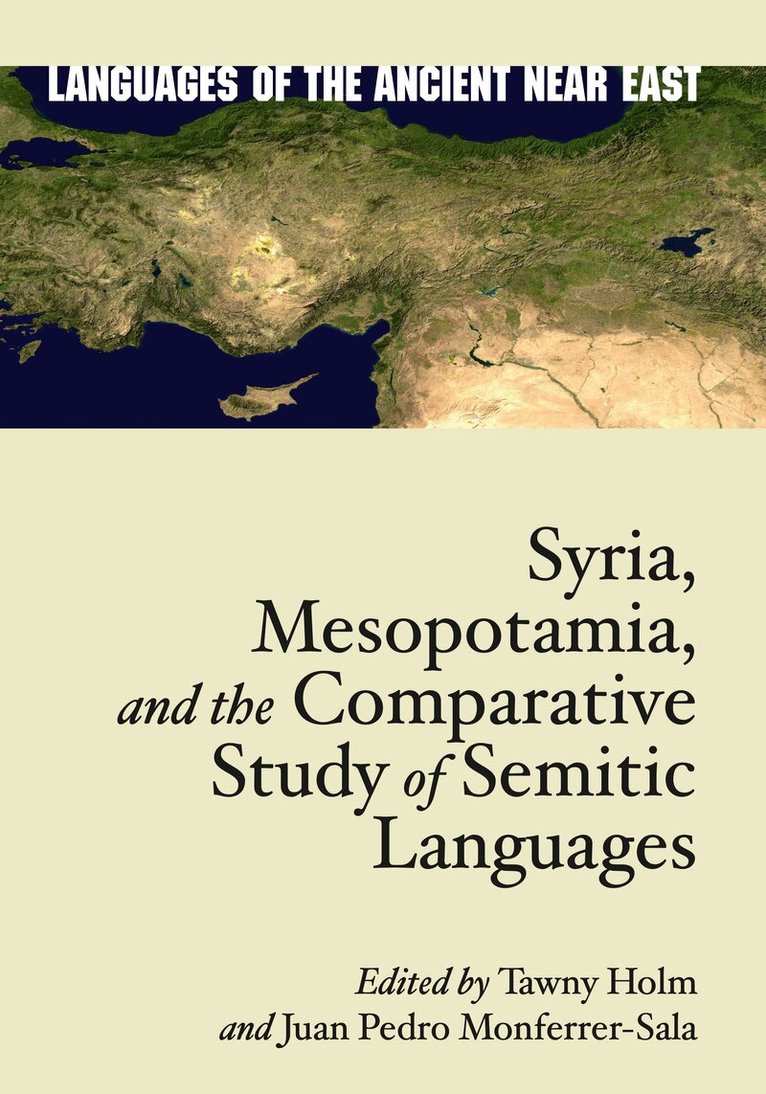
This volume offers a wealth of perspectives on comparative Semitic linguistics emerging from the seventh and eighth meetings of the International Association for Comparative Semitics (IACS): the Madrid symposium (2016) was devoted to the role of Akkadian in the study of Comparative Semitics, and the Córdoba meeting (2019) focused on Syria at the historical crossroads of Semitic languages.The essays in this volume examine a broad variety of issues concerning Akkadian, Arabic, Aramaic, Hebrew, Ugaritic, Phoenician, Ethiopic, Berber, Chadic, and other Semitic and Afroasiatic languages. The contributions to part 1, “Mesopotamia,” focus on Akkadian and its place within the Semitic language family. The chapters cover subjects such as verb tense and aspect, comparative Akkadian-Ugaritic philology, the nature of case marking in Akkadian and Arabic, and Aramaic cognates to Akkadian words. Part 2, “Syria,” consists of chapters that engage with comparative Semitics within the framework of the languages of Syria throughout history, including Aramaic, Punic, Syrian Arabic, Ugaritic, and Akkadian. Part 3, “From al-Andalus to Ethiopia,” features studies on the Semitic languages attested in medieval Spain (Andalusi Arabic), as well as Ethiopian Semitic and Afroasiatic languages in general, including Chadic and Berber. Written by leading linguists and philologists, this volume is bound to attract the attention of a diverse readership: Assyriologists, Arabists, Hebraists, Aramaicists, Semitists, and scholars of African languages (Chadic, Berber), as well as scholars interested in matters of syntax, language contact, and historical linguistics. In addition to the editors, the contributors to this volume are Maria Giulia Amadasi Guzzo, Ilya Arkhipov, Vit Bubenik, Maria Bulakh, Marielle Butters, Philippe Cassuto, Federico Corriente, Zygmunt Frajzyngier, Rebecca Hasselbach-Andee, Olga Kapeliuk, Sergey Loesov, José Martínez Delgado, Gregorio del Olmo Lete, Ahmed Salem Ould Mohamed Baba, Victor Porkhomovsky, Francisco del Río Sánchez, Gonzalo Rubio, Erin Shay, Olga Stolbova, and Wilfred G. E. Watson.