Law and Justice - Böcker
Visar alla böcker i serien Law and Justice. Handla med fri frakt och snabb leverans.
19 produkter
19 produkter
751 kr
Tillfälligt slut
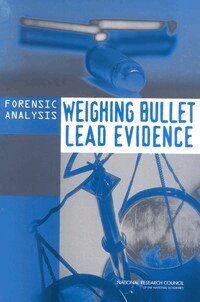
Since the 1960s, testimony by representatives of the Federal Bureau of Investigation in thousands of criminal cases has relied on evidence from Compositional Analysis of Bullet Lead (CABL), a forensic technique that compares the elemental composition of bullets found at a crime scene to the elemental composition of bullets found in a suspecta (TM)s possession. Different from ballistics techniques that compare striations on the barrel of a gun to those on a recovered bullet, CABL is used when no gun is recovered or when bullets are too small or mangled to observe striations. Forensic Analysis: Weighing Bullet Lead Evidence assesses the scientific validity of CABL, finding that the FBI should use a different statistical analysis for the technique and that, given variations in bullet manufacturing processes, expert witnesses should make clear the very limited conclusions that CABL results can support. The report also recommends that the FBI take additional measures to ensure the validity of CABL results, which include improving documentation, publishing details, and improving on training and oversight.
529 kr
Tillfälligt slut
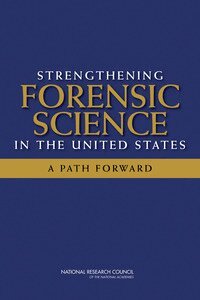
Scores of talented and dedicated people serve the forensic science community, performing vitally important work. However, they are often constrained by lack of adequate resources, sound policies, and national support. It is clear that change and advancements, both systematic and scientific, are needed in a number of forensic science disciplines to ensure the reliability of work, establish enforceable standards, and promote best practices with consistent application. Strengthening Forensic Science in the United States: A Path Forward provides a detailed plan for addressing these needs and suggests the creation of a new government entity, the National Institute of Forensic Science, to establish and enforce standards within the forensic science community. The benefits of improving and regulating the forensic science disciplines are clear: assisting law enforcement officials, enhancing homeland security, and reducing the risk of wrongful conviction and exoneration.Strengthening Forensic Science in the United States gives a full account of what is needed to advance the forensic science disciplines, including upgrading of systems and organizational structures, better training, widespread adoption of uniform and enforceable best practices, and mandatory certification and accreditation programs. While this book provides an essential call-to-action for congress and policy makers, it also serves as a vital tool for law enforcement agencies, criminal prosecutors and attorneys, and forensic science educators.
820 kr
Tillfälligt slut
Scores of talented and dedicated people serve the forensic science community, performing vitally important work. However, they are often constrained by lack of adequate resources, sound policies, and national support. It is clear that change and advancements, both systematic and scientific, are needed in a number of forensic science disciplines to ensure the reliability of work, establish enforceable standards, and promote best practices with consistent application. Strengthening Forensic Science in the United States: A Path Forward provides a detailed plan for addressing these needs and suggests the creation of a new government entity, the National Institute of Forensic Science, to establish and enforce standards within the forensic science community. The benefits of improving and regulating the forensic science disciplines are clear: assisting law enforcement officials, enhancing homeland security, and reducing the risk of wrongful conviction and exoneration.Strengthening Forensic Science in the United States gives a full account of what is needed to advance the forensic science disciplines, including upgrading of systems and organizational structures, better training, widespread adoption of uniform and enforceable best practices, and mandatory certification and accreditation programs. While this book provides an essential call-to-action for congress and policy makers, it also serves as a vital tool for law enforcement agencies, criminal prosecutors and attorneys, and forensic science educators.
861 kr
Skickas inom 11-20 vardagar
The Reference Manual on Scientific Evidence, Third Edition, assists judges in managing cases involving complex scientific and technical evidence by describing the basic tenets of key scientific fields from which legal evidence is typically derived and by providing examples of cases in which that evidence has been used. First published in 1994 by the Federal Judicial Center, the Reference Manual on Scientific Evidence has been relied upon in the legal and academic communities and is often cited by various courts and others. Judges faced with disputes over the admissibility of scientific and technical evidence refer to the manual to help them better understand and evaluate the relevance, reliability and usefulness of the evidence being proffered. The manual is not intended to tell judges what is good science and what is not. Instead, it serves to help judges identify issues on which experts are likely to differ and to guide the inquiry of the court in seeking an informed resolution of the conflict. The core of the manual consists of a series of chapters (reference guides) on various scientific topics, each authored by an expert in that field.The topics have been chosen by an oversight committee because of their complexity and frequency in litigation. Each chapter is intended to provide a general overview of the topic in lay terms, identifying issues that will be useful to judges and others in the legal profession. They are written for a non-technical audience and are not intended as exhaustive presentations of the topic. Rather, the chapters seek to provide judges with the basic information in an area of science, to allow them to have an informed conversation with the experts and attorneys.
704 kr
Tillfälligt slut
The polygraph, often portrayed as a magic mind-reading machine, is still controversial among experts, who continue heated debates about its validity as a lie-detecting device. As the nation takes a fresh look at ways to enhance its security, can the polygraph be considered a useful tool? The Polygraph and Lie Detection puts the polygraph itself to the test, reviewing and analyzing data about its use in criminal investigation, employment screening, and counter-intelligence. The book looks at: * The theory of how the polygraph works and evidence about how deceptiveness?and other psychological conditions?affect the physiological responses that the polygraph measures. * Empirical evidence on the performance of the polygraph and the success of subjects? countermeasures. * The actual use of the polygraph in the arena of national security, including its role in deterring threats to security. The book addresses the difficulties of measuring polygraph accuracy, the usefulness of the technique for aiding interrogation and for deterrence, and includes potential alternatives?such as voice-stress analysis and brain measurement techniques.
356 kr
Tillfälligt slut
Nearly 600,000 people are released from state and federal prisons annually. Whether these individuals will successfully reintegrate into their communities has been identified as a critical measure of the effectiveness of the criminal legal system. However, evaluating the successful reentry of individuals released from prison is a challenging process, particularly given limitations of currently available data and the complex set of factors that shape reentry experiences.The Limits of Recidivism: Measuring Success After Prison finds that the current measures of success for individuals released from prison are inadequate. The use of recidivism rates to evaluate post-release success ignores significant research on how and why individuals cease to commit crimes, as well as the important role of structural factors in shaping post-release outcomes. The emphasis on recidivism as the primary metric to evaluate post-release success also ignores progress in other domains essential to the success of individuals returning to communities, including education, health, family, and employment.In addition, the report highlights the unique and essential insights held by those who have experienced incarceration and proposes that the development and implementation of new measures of post-release success would significantly benefit from active engagement with individuals with this lived experience. Despite significant challenges, the report outlines numerous opportunities to improve the measurement of success among individuals released from prison and the report's recommendations, if implemented, will contribute to policies that increase the health, safety, and security of formerly incarcerated persons and the communities to which they return.
878 kr
Tillfälligt slut
Each year, child protective services receive reports of child abuse and neglect involving six million children, and many more go unreported. The long-term human and fiscal consequences of child abuse and neglect are not relegated to the victims themselves -- they also impact their families, future relationships, and society. In 1993, the National Research Council (NRC) issued the report, Under-standing Child Abuse and Neglect, which provided an overview of the research on child abuse and neglect. New Directions in Child Abuse and Neglect Research updates the 1993 report and provides new recommendations to respond to this public health challenge. According to this report, while there has been great progress in child abuse and neglect research, a coordinated, national research infrastructure with high-level federal support needs to be established and implemented immediately. New Directions in Child Abuse and Neglect Research recommends an actionable framework to guide and support future child abuse and neglect research.This report calls for a comprehensive, multidisciplinary approach to child abuse and neglect research that examines factors related to both children and adults across physical, mental, and behavioral health domains--including those in child welfare, economic support, criminal justice, education, and health care systems--and assesses the needs of a variety of subpopulations. It should also clarify the causal pathways related to child abuse and neglect and, more importantly, assess efforts to interrupt these pathways. New Directions in Child Abuse and Neglect Research identifies four areas to look to in developing a coordinated research enterprise: a national strategic plan, a national surveillance system, a new generation of researchers, and changes in the federal and state programmatic and policy response.
Confronting Commercial Sexual Exploitation and Sex Trafficking of Minors in the United States
Häftad, Engelska, 2013
936 kr
Tillfälligt slut
Every day in the United States, children and adolescents are victims of commercial sexual exploitation and sex trafficking. Despite the serious and long-term consequences for victims as well as their families, communities, and society, efforts to prevent, identify, and respond to these crimes are largely under supported, inefficient, uncoordinated, and unevaluated. Confronting Commercial Sexual Exploitation and Sex Trafficking of Minors in the United States examines commercial sexual exploitation and sex trafficking of U.S. citizens and lawful permanent residents of the United States under age 18. According to this report, efforts to prevent, identify, and respond to these crimes require better collaborative approaches that build upon the capabilities of people and entities from a range of sectors. In addition, such efforts need to confront demand and the individuals who commit and benefit from these crimes.The report recommends increased awareness and understanding, strengthening of the law's response, strengthening of research to advance understanding and to support the development of prevention and intervention strategies, support for multi-sector and interagency collaboration, and creation of a digital information-sharing platform. A nation that is unaware of these problems or disengaged from solutions unwittingly contributes to the ongoing abuse of minors. If acted upon in a coordinated and comprehensive manner, the recommendations of Confronting Commercial Sexual Exploitation and Sex Trafficking of Minors in the United States can help advance and strengthen the nation's emerging efforts to prevent, identify, and respond to commercial sexual exploitation and sex trafficking of minors in the United States.
414 kr
Tillfälligt slut
Over the past four decades, the rate of incarceration in the United States has skyrocketed to unprecedented heights, both historically and in comparison to that of other developed nations. At far higher rates than the general population, those in or entering U.S. jails and prisons are prone to many health problems. This is a problem not just for them, but also for the communities from which they come and to which, in nearly all cases, they will return. Health and Incarceration is the summary of a workshop jointly sponsored by the National Academy of Sciences(NAS) Committee on Law and Justice and the Institute of Medicine(IOM) Board on Health and Select Populations in December 2012. Academics, practitioners, state officials, and nongovernmental organization representatives from the fields of healthcare, prisoner advocacy, and corrections reviewed what is known about these health issues and what appear to be the best opportunities to improve healthcare for those who are now or will be incarcerated. The workshop was designed as a roundtable with brief presentations from 16 experts and time for group discussion.Health and Incarceration reviews what is known about the health of incarcerated individuals, the healthcare they receive, and effects of incarceration on public health. This report identifies opportunities to improve healthcare for these populations and provides a platform for visions of how the world of incarceration health can be a better place.
646 kr
Tillfälligt slut
Because police are the most visible face of government power for most citizens, they are expected to deal effectively with crime and disorder and to be impartial. Producing justice through the fair, and restrained use of their authority. The standards by which the public judges police success have become more exacting and challenging. Fairness and Effectiveness in Policing explores police work in the new century. It replaces myths with research findings and provides recommendations for updated policy and practices to guide it. The book provides answers to the most basic questions: What do police do? It reviews how police work is organized, explores the expanding responsibilities of police, examines the increasing diversity among police employees, and discusses the complex interactions between officers and citizens. It also addresses such topics as community policing, use of force, racial profiling, and evaluates the success of common police techniques, such as focusing on crime ?hot spots.? It goes on to look at the issue of legitimacy?how the public gets information about police work, and how police are viewed by different groups, and how police can gain community trust.Fairness and Effectiveness in Policing will be important to anyone concerned about police work: policy makers, administrators, educators, police supervisors and officers, journalists, and interested citizens.
878 kr
Tillfälligt slut
After decades of stability from the 1920s to the early 1970s, the rate of imprisonment in the United States more than quadrupled during the last four decades. The U.S. penal population of 2.2 million adults is by far the largest in the world. Just under one-quarter of the world's prisoners are held in American prisons. The U.S. rate of incarceration, with nearly 1 out of every 100 adults in prison or jail, is 5 to 10 times higher than the rates in Western Europe and other democracies. The U.S. prison population is largely drawn from the most disadvantaged part of the nation's population: mostly men under age 40, disproportionately minority, and poorly educated. Prisoners often carry additional deficits of drug and alcohol addictions, mental and physical illnesses, and lack of work preparation or experience. The growth of incarceration in the United States during four decades has prompted numerous critiques and a growing body of scientific knowledge about what prompted the rise and what its consequences have been for the people imprisoned, their families and communities, and for U.S. society.The Growth of Incarceration in the United States examines research and analysis of the dramatic rise of incarceration rates and its affects. This study makes the case that the United States has gone far past the point where the numbers of people in prison can be justified by social benefits and has reached a level where these high rates of incarceration themselves constitute a source of injustice and social harm. The Growth of Incarceration in the United States recommends changes in sentencing policy, prison policy, and social policy to reduce the nation's reliance on incarceration. The report also identifies important research questions that must be answered to provide a firmer basis for policy. The study assesses the evidence and its implications for public policy to inform an extensive and thoughtful public debate about and reconsideration of policies.
Confronting Commercial Sexual Exploitation and Sex Trafficking of Minors in the United States
A Guide for Providers of Victim and Support Services
Häftad, Engelska, 2014
181 kr
Tillfälligt slut
Commercial sexual exploitation and sex trafficking of minors in the United States are frequently overlooked, misunderstood, and unaddressed domestic problems. In the past decade, they have received increasing attention from advocates, the media, academics, and policy makers. However, much of this attention has focused internationally. This international focus has overshadowed the reality that commercial sexual exploitation and sex trafficking of minors also occur every day within the United States. Commercial sexual exploitation and sex trafficking of minors not only are illegal activities, but also result in immediate and long-term physical, mental, and emotional harm to victims and survivors. A nation that is unaware of these problems or disengaged from solving them unwittingly contributes to the ongoing abuse of minors and all but ensures that these crimes will remain marginalized and misunderstood.The 2013 Institute of Medicine and the National Research Council report Confronting Commercial Sexual Exploitation and Sex Trafficking of Minors in the United States increases awareness and understanding of the crucial problem of commercial sexual exploitation and sex trafficking of minors in the United States. By examining emerging strategies for preventing and identifying these crimes, for assisting and supporting victims and survivors, and for addressing exploiters and traffickers, that report offers a path forward through recommendations designed to increase awareness and understanding and to support efforts to prevent, identify, and respond to these crimes. Confronting Commercial Sexual Exploitation and Sex Trafficking of Minors in the United States: A Guide for Providers of Victim and Support Services offers a more concise and focused perspective on the problem and emerging solutions for providers of victim and support services for children and adolescents. These service providers include policy makers, leaders, practitioners, organizations, and programs at the local, state, and federal levels.This guide will be a valuable resource for them, and for child welfare and child protective services, other agencies and programs within the state and federal governments (e.g., the U.S. Department of Justice's Office for Victims of Crime), and nongovernmental organizations.
488 kr
Tillfälligt slut
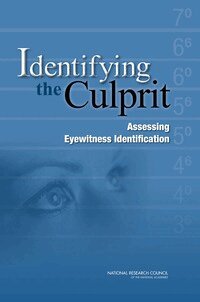
Eyewitnesses play an important role in criminal cases when they can identify culprits. Estimates suggest that tens of thousands of eyewitnesses make identifications in criminal investigations each year. Research on factors that affect the accuracy of eyewitness identification procedures has given us an increasingly clear picture of how identifications are made, and more importantly, an improved understanding of the principled limits on vision and memory that can lead to failure of identification. Factors such as viewing conditions, duress, elevated emotions, and biases influence the visual perception experience. Perceptual experiences are stored by a system of memory that is highly malleable and continuously evolving, neither retaining nor divulging content in an informational vacuum. As such, the fidelity of our memories to actual events may be compromised by many factors at all stages of processing, from encoding to storage and retrieval. Unknown to the individual, memories are forgotten, reconstructed, updated, and distorted.Complicating the process further, policies governing law enforcement procedures for conducting and recording identifications are not standard, and policies and practices to address the issue of misidentification vary widely. These limitations can produce mistaken identifications with significant consequences. What can we do to make certain that eyewitness identification convicts the guilty and exonerates the innocent? Identifying the Culprit makes the case that better data collection and research on eyewitness identification, new law enforcement training protocols, standardized procedures for administering line-ups, and improvements in the handling of eyewitness identification in court can increase the chances that accurate identifications are made. This report explains the science that has emerged during the past 30 years on eyewitness identifications and identifies best practices in eyewitness procedures for the law enforcement community and in the presentation of eyewitness evidence in the courtroom. In order to continue the advancement of eyewitness identification research, the report recommends a focused research agenda.Identifying the Culprit will be an essential resource to assist the law enforcement and legal communities as they seek to understand the value and the limitations of eyewitness identification and make improvements to procedures.
Support for Forensic Science Research
Improving the Scientific Role of the National Institute of Justice
Häftad, Engelska, 2015
542 kr
Tillfälligt slut
Reliable and valid forensic science analytic techniques are critical to a credible, fair, and evidence-based criminal justice system. There is widespread agreement that the scientific foundation of some currently available forensic science methods needs strengthening and that additional, more efficient techniques are urgently needed. These needs can only be met through sustained research programs explicitly designed to ensure and improve the reliability and validity of current methods and to foster the development and use of new and better techniques. This task is challenging due to the broad nature of the field. Concerns have been raised repeatedly about the ability of the criminal justice system to collect and analyze evidence efficiently and to be fair in its verdicts. Although significant progress has been made in some forensic science disciplines, the forensic science community still faces many challenges. Federal leadership, particularly in regard to research and the scientific validation of forensic science methods, is needed to help meet the pressing issues facing state and local jurisdictions.This report reviews the progress made by the National Institute of Justice (NIJ) to advance forensic science research since the 2009 report, Strengthening Forensic Science in the United States: A Path Forward and the 2010 report, Strengthening the National Institute of Justice. Support for Forensic Science Research examines the ways in which NIJ develops its forensic science research priorities and communicates those priorities as well as its findings to the scientific and forensic practitioner communities in order to determine the impact of NIJ forensic science research programs and how that impact can be enhanced.
588 kr
Tillfälligt slut
During the 2016 presidential election, America's election infrastructure was targeted by actors sponsored by the Russian government. Securing the Vote: Protecting American Democracy examines the challenges arising out of the 2016 federal election, assesses current technology and standards for voting, and recommends steps that the federal government, state and local governments, election administrators, and vendors of voting technology should take to improve the security of election infrastructure. In doing so, the report provides a vision of voting that is more secure, accessible, reliable, and verifiable.
Effects of Incarceration and Reentry on Community Health and Well-Being
Proceedings of a Workshop
Häftad, Engelska, 2020
546 kr
Tillfälligt slut
The high rate of incarceration in the United States contributes significantly to the nation's health inequities, extending beyond those who are imprisoned to families, communities, and the entire society. Since the 1970s, there has been a seven-fold increase in incarceration. This increase and the effects of the post-incarceration reentry disproportionately affect low-income families and communities of color. It is critical to examine the criminal justice system through a new lens and explore opportunities for meaningful improvements that will promote health equity in the United States. The National Academies convened a workshop on June 6, 2018 to investigate the connection between incarceration and health inequities to better understand the distributive impact of incarceration on low-income families and communities of color. Topics of discussion focused on the experience of incarceration and reentry, mass incarceration as a public health issue, women's health in jails and prisons, the effects of reentry on the individual and the community, and promising practices and models for reentry. The programs and models that are described in this publication are all Philadelphia-based because Philadelphia has one of the highest rates of incarceration of any major American city. This publication summarizes the presentations and discussions of the workshop.
Impact of Juvenile Justice System Involvement on the Health and Well-Being of Youth, Families, and Communities of Color
Proceedings of a Workshop
Häftad, Engelska, 2022
306 kr
Skickas inom 11-20 vardagar
Involvement with the juvenile justice system can impact young people's physical and mental health and well-being throughout their lives, as well as the health and well-being of their families and communities. Youth of color are more likely to become involved with the juvenile justice system, and suffer worse outcomes in sentencing, during incarceration, and after release. The National Academies of Sciences, Engineering, and Medicine's Roundtable on the Promotion of Health Equity convened a workshop to discuss the impact that juvenile justice system involvement has on the health and well-being of adolescents, families, and communities of color; examine policies that are successful in improving outcomes; and explore what needs to be done to improve all aspects of encounters with the juvenile justice system.The workshop suggested pursuing alternatives to traditional juvenile justice systems that would allow adolescents to stay in their communities rather than in detention, responding to behavioral problems in youth with interventions that promote health and positive development rather than punishment, and tailoring interventions and programming to participants' cultural background and gender identity. This report summarizes the proceedings of the workshop.
588 kr
Tillfälligt slut
The history of the U.S. criminal justice system is marked by racial inequality and sustained by present day policy. Large racial and ethnic disparities exist across the several stages of criminal legal processing, including in arrests, pre-trial detention, and sentencing and incarceration, among others, with Black, Latino, and Native Americans experiencing worse outcomes. The historical legacy of racial exclusion and structural inequalities form the social context for racial inequalities in crime and criminal justice. Racial inequality can drive disparities in crime, victimization, and system involvement.Reducing Racial Inequality in Crime and Justice: Science, Practice, and Policy synthesizes the evidence on community-based solutions, noncriminal policy interventions, and criminal justice reforms, charting a path toward the reduction of racial inequalities by minimizing harm in ways that also improve community safety. Reversing the effects of structural racism and severing the close connections between racial inequality, criminal harms such as violence, and criminal justice involvement will involve fostering local innovation and evaluation, and coordinating local initiatives with state and federal leadership.This report also highlights the challenge of creating an accurate, national picture of racial inequality in crime and justice: there is a lack of consistent, reliable data, as well as data transparency and accountability. While the available data points toward trends that Black, Latino, and Native American individuals are overrepresented in the criminal justice system and given more severe punishments compared to White individuals, opportunities for improving research should be explored to better inform decision-making.
Facial Recognition Technology
Current Capabilities, Future Prospects, and Governance
Häftad, Engelska, 2024
472 kr
Skickas
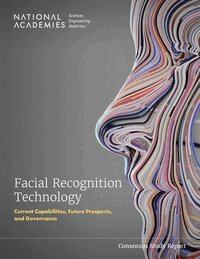
Facial recognition technology is increasingly used for identity verification and identification, from aiding law enforcement investigations to identifying potential security threats at large venues. However, advances in this technology have outpaced laws and regulations, raising significant concerns related to equity, privacy, and civil liberties.This report explores the current capabilities, future possibilities, and necessary governance for facial recognition technology. Facial Recognition Technology discusses legal, societal, and ethical implications of the technology, and recommends ways that federal agencies and others developing and deploying the technology can mitigate potential harms and enact more comprehensive safeguards.