Legitimation Code Theory – serie
Visar alla böcker i serien Legitimation Code Theory. Handla med fri frakt och snabb leverans.
20 produkter
20 produkter
Häftad, Engelska, 2019
551 kr
Skickas inom 10-15 vardagar
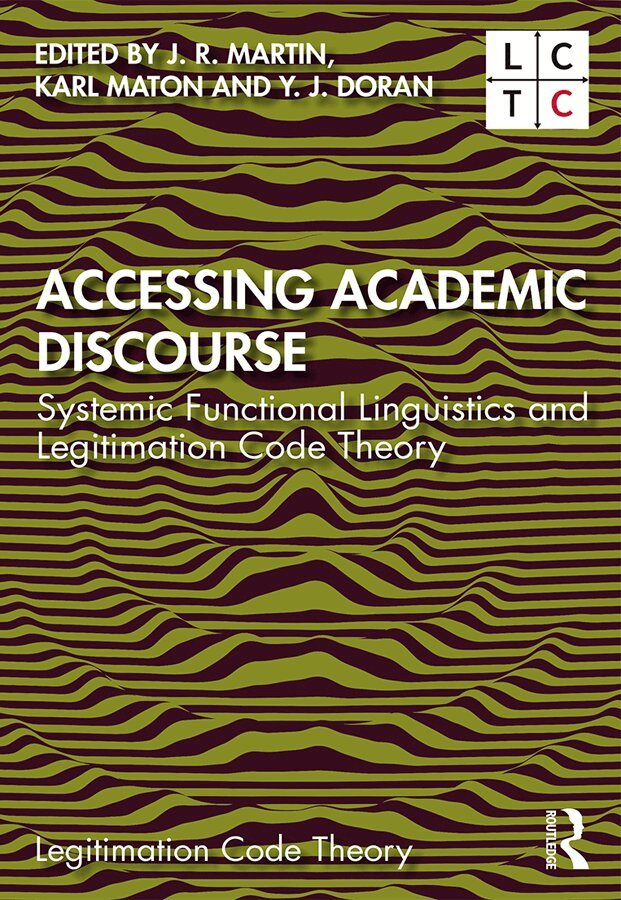
Academic discourse is the gateway not only to educational success but to worlds of imagination, discovery and accumulated wisdom. Understanding the nature of academic discourse and developing ways of helping everyone access, shape and change this knowledge is critical to supporting social justice. Yet education research often ignores the forms taken by knowledge and the language through which they are expressed. This volume comprises cutting-edge work that is bringing together sociological and linguistic approaches to access academic discourse. Systemic functional linguistics (SFL) is a long-established and widely known approach to understanding language. Legitimation Code Theory (LCT) is a younger and rapidly growing approach to exploring and shaping knowledge practices. Now evermore research and practice are using these approaches together. This volume presents new advances from this inter-disciplinary dialogue, focusing on state-of-the-art work in SFL provoked by its productive dialogue with LCT. It showcases work by the leading lights of both approaches, including the foremost scholar of SFL and the creator of LCT. Chapters introduce key ideas from LCT, new conceptual developments in SFL, studies using both approaches, and guidelines for shaping curriculum and pedagogy to support access to academic discourse in classrooms. The book is essential reading for all appliable and educational linguists, as well as scholars and practitioners of education and sociology.
Inbunden, Engelska, 2019
2 117 kr
Skickas inom 10-15 vardagar
Academic discourse is the gateway not only to educational success but to worlds of imagination, discovery and accumulated wisdom. Understanding the nature of academic discourse and developing ways of helping everyone access, shape and change this knowledge is critical to supporting social justice. Yet education research often ignores the forms taken by knowledge and the language through which they are expressed. This volume comprises cutting-edge work that is bringing together sociological and linguistic approaches to access academic discourse. Systemic functional linguistics (SFL) is a long-established and widely known approach to understanding language. Legitimation Code Theory (LCT) is a younger and rapidly growing approach to exploring and shaping knowledge practices. Now evermore research and practice are using these approaches together. This volume presents new advances from this inter-disciplinary dialogue, focusing on state-of-the-art work in SFL provoked by its productive dialogue with LCT. It showcases work by the leading lights of both approaches, including the foremost scholar of SFL and the creator of LCT. Chapters introduce key ideas from LCT, new conceptual developments in SFL, studies using both approaches, and guidelines for shaping curriculum and pedagogy to support access to academic discourse in classrooms. The book is essential reading for all appliable and educational linguists, as well as scholars and practitioners of education and sociology.
Häftad, Engelska, 2021
538 kr
Skickas inom 10-15 vardagar
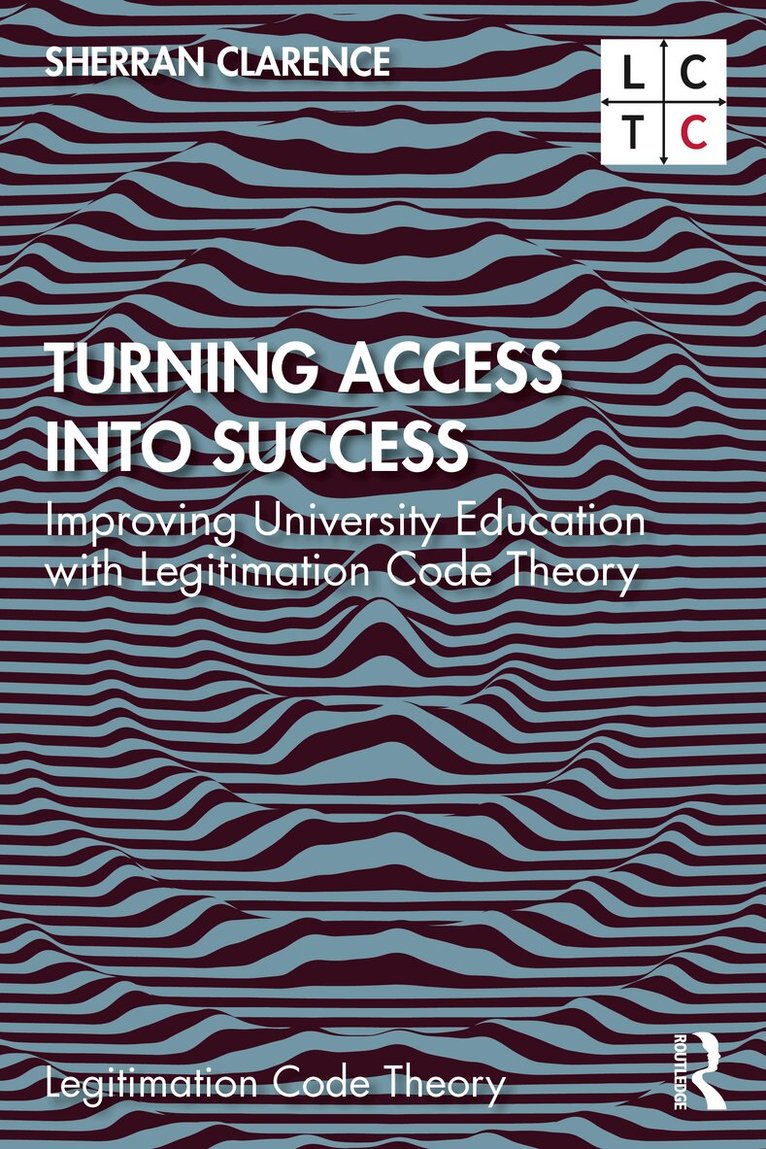
Teaching is crucial for supporting students’ chances of success in higher education, yet often makes limited use of theory to foster contextualized, systemic understandings of access and success. Theorized yet practical ways of empowering university educators are needed to develop their practices and turn access into success for their students. This book harnesses Legitimation Code Theory ‘LCT’ to inspire university educators to understand, reimagine and create socially just teaching and learning practices. Chapters bring this powerful theory to bear on real-world examples of curriculum design, inclusive practices, cumulative learning, assessment practices, and reflection. Each chapter guides the reader through these cutting-edge ideas, illustrates how they can make real differences in practice, and sets out ways of thinking that educators integrate those ideas into practice. The outcomes will help students access the powerful knowledge and ways of knowing they need for success in higher education.
Inbunden, Engelska, 2021
2 117 kr
Skickas inom 10-15 vardagar
Teaching is crucial for supporting students’ chances of success in higher education, yet often makes limited use of theory to foster contextualized, systemic understandings of access and success. Theorized yet practical ways of empowering university educators are needed to develop their practices and turn access into success for their students. This book harnesses Legitimation Code Theory ‘LCT’ to inspire university educators to understand, reimagine and create socially just teaching and learning practices. Chapters bring this powerful theory to bear on real-world examples of curriculum design, inclusive practices, cumulative learning, assessment practices, and reflection. Each chapter guides the reader through these cutting-edge ideas, illustrates how they can make real differences in practice, and sets out ways of thinking that educators integrate those ideas into practice. The outcomes will help students access the powerful knowledge and ways of knowing they need for success in higher education.
Inbunden, Engelska, 2020
2 117 kr
Skickas inom 10-15 vardagar
From pressures to become economically efficient to calls to act as an agent of progressive social change, higher education is facing a series of challenges. There is an urgent need for a rigorous and sophisticated research base to support the informed development of practices. Yet studies of educational practices in higher education remain theoretically underdeveloped and segmented by discipline and country. Building Knowledge in Higher Education illustrates how Legitimation Code Theory is bringing research together from across the disciplinary map and enabling practical change in a rigorously theorized way. The volume addresses both students and educators. Part I explores ways of supporting student achievement from STEM to the arts, from introductory courses to doctoral training, and from using new digital media to reflective writing. Part II focuses on academic staff development in higher education, reaching from curriculum design to pedagogic practices. All chapters focus on issues of contemporary relevance to higher education, showing how Legitimation Code Theory enables these issues to be understood and practices improved. Building Knowledge in Higher Education brings together internationally renowned scholars in higher education studies, academic development, academic literacies, and sociology, with some of the brightest new researchers. The volume significantly extends understandings of teaching and learning in changing higher education contexts and so contributes to educational research and practice. It will be essential reading not only to scholars and students in these fields but also to scholars and educators in higher education more generally.
Häftad, Engelska, 2020
551 kr
Skickas inom 10-15 vardagar
From pressures to become economically efficient to calls to act as an agent of progressive social change, higher education is facing a series of challenges. There is an urgent need for a rigorous and sophisticated research base to support the informed development of practices. Yet studies of educational practices in higher education remain theoretically underdeveloped and segmented by discipline and country. Building Knowledge in Higher Education illustrates how Legitimation Code Theory is bringing research together from across the disciplinary map and enabling practical change in a rigorously theorized way. The volume addresses both students and educators. Part I explores ways of supporting student achievement from STEM to the arts, from introductory courses to doctoral training, and from using new digital media to reflective writing. Part II focuses on academic staff development in higher education, reaching from curriculum design to pedagogic practices. All chapters focus on issues of contemporary relevance to higher education, showing how Legitimation Code Theory enables these issues to be understood and practices improved. Building Knowledge in Higher Education brings together internationally renowned scholars in higher education studies, academic development, academic literacies, and sociology, with some of the brightest new researchers. The volume significantly extends understandings of teaching and learning in changing higher education contexts and so contributes to educational research and practice. It will be essential reading not only to scholars and students in these fields but also to scholars and educators in higher education more generally.
Inbunden, Engelska, 2022
2 179 kr
Skickas inom 10-15 vardagar
This book helps meet an urgent need for theorized, accessible and discipline-sensitive publications to assist science, technology, engineering and mathematics educators. The book introduces Legitimation Code Theory (LCT) and demonstrates how it can be used to improve teaching and learning in tertiary courses across the sciences. LCT provides a suite of tools which science educators can employ in order to help their students grasp difficult and dense concepts. The chapters cover a broad range of subjects, including biology, physics, chemistry and mathematics, as well as different curriculum, pedagogy and assessment practices. This is a crucial resource for any science educator who wants to better understand and improve their teaching.
Häftad, Engelska, 2022
553 kr
Skickas inom 10-15 vardagar
This book helps meet an urgent need for theorized, accessible and discipline-sensitive publications to assist science, technology, engineering and mathematics educators. The book introduces Legitimation Code Theory (LCT) and demonstrates how it can be used to improve teaching and learning in tertiary courses across the sciences. LCT provides a suite of tools which science educators can employ in order to help their students grasp difficult and dense concepts. The chapters cover a broad range of subjects, including biology, physics, chemistry and mathematics, as well as different curriculum, pedagogy and assessment practices. This is a crucial resource for any science educator who wants to better understand and improve their teaching.
Inbunden, Engelska, 2022
801 kr
Skickas inom 10-15 vardagar
Decolonising Knowledge and Knowers contributes to the current struggles for decolonising education in the global South, focusing on the highly illuminating case of South African higher education. Galvanised by #FeesMustFall and #RhodesMustFall student protests, South Africa has seen particularly intense and broad social engagement with debates over decolonising universities. However, much of this debate has been consumed with definitions and meanings. In contrast, Decolonising Knowledge and Knowers shows how conceptual tools, specifically from Legitimation Code Theory, can be enacted in research and teaching to meaningfully work towards productive decolonisation. Each chapter addresses a key issue in contemporary debates in South African higher education and show how practices concerning knowledge and knowers are playing a role, drawing on quantitative and qualitative research, praxis, and interdisciplinary research.
Häftad, Engelska, 2024
279 kr
Skickas inom 10-15 vardagar
Decolonising Knowledge and Knowers contributes to the current struggles for decolonising education in the global South, focusing on the highly illuminating case of South African higher education. Galvanised by #FeesMustFall and #RhodesMustFall student protests, South Africa has seen particularly intense and broad social engagement with debates over decolonising universities. However, much of this debate has been consumed with definitions and meanings. In contrast, Decolonising Knowledge and Knowers shows how conceptual tools, specifically from Legitimation Code Theory, can be enacted in research and teaching to meaningfully work towards productive decolonisation. Each chapter addresses a key issue in contemporary debates in South African higher education and show how practices concerning knowledge and knowers are playing a role, drawing on quantitative and qualitative research, praxis, and interdisciplinary research.
Häftad, Engelska, 2026
452 kr
Kommande
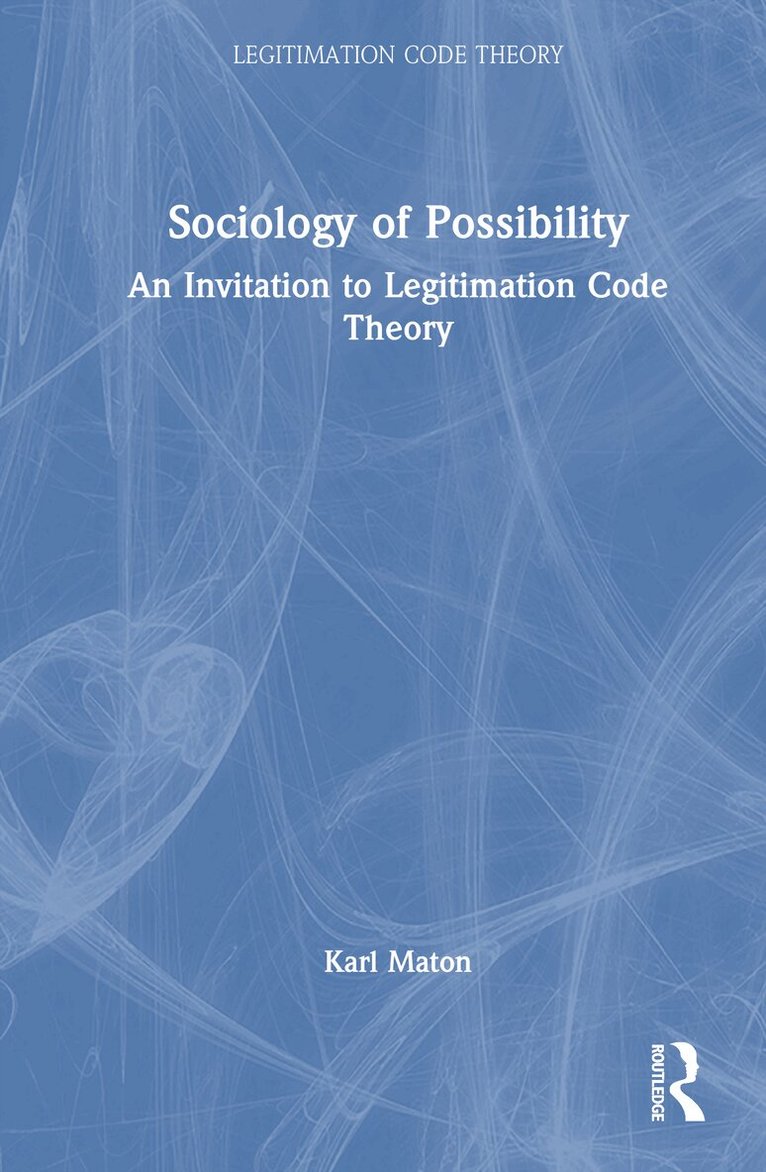
Legitimation Code Theory or ‘LCT’ is having significant impact on research and practice, especially in education. Around the world, scholars and educators are using LCT to reveal the usually hidden ‘rules of the game’ that underlie achievement in social arenas as varied as education, law and media. These ‘legitimation codes’ are then taught and learned or mindfully changed to give access and success to more people. This book is the first ever introduction to LCT, written by its creator and based on thirty years of developing the framework in empirical research. It is the book for learning how to creatively enact this approach in your own work.Sociology of Possibility explains the theoretical toolkit of LCT, how its concepts fit together, the ways of thinking they support, and how the framework opens up more possibilities for research. The book carefully defines LCT tools and draws on empirical studies of a wide range of real-world problems to illustrate how they can help you explain more in your research. It shows how these studies embrace the endless diversity of the social world through a shared conceptual language that supports knowledge-building. Chapters also walk you through using the concepts in ways that embrace both qualitative and quantitative methods, both rich empirical description and sharp theoretical analysis, and in interdisciplinary collaborations with other approaches. Sociology of Possibility will open your eyes to the extraordinary empowering and explanatory potential of this innovative approach. If you are looking for a sophisticated framework that will help you offer solutions to real-world problems, whether as a postgraduate student, teacher trainer, academic developer or educator, this book is where you should begin.
Inbunden, Engelska, 2026
2 163 kr
Kommande
Legitimation Code Theory or ‘LCT’ is having significant impact on research and practice, especially in education. Around the world, scholars and educators are using LCT to reveal the usually hidden ‘rules of the game’ that underlie achievement in social arenas as varied as education, law and media. These ‘legitimation codes’ are then taught and learned or mindfully changed to give access and success to more people. This book is the first ever introduction to LCT, written by its creator and based on thirty years of developing the framework in empirical research. It is the book for learning how to creatively enact this approach in your own work.Sociology of Possibility explains the theoretical toolkit of LCT, how its concepts fit together, the ways of thinking they support, and how the framework opens up more possibilities for research. The book carefully defines LCT tools and draws on empirical studies of a wide range of real-world problems to illustrate how they can help you explain more in your research. It shows how these studies embrace the endless diversity of the social world through a shared conceptual language that supports knowledge-building. Chapters also walk you through using the concepts in ways that embrace both qualitative and quantitative methods, both rich empirical description and sharp theoretical analysis, and in interdisciplinary collaborations with other approaches. Sociology of Possibility will open your eyes to the extraordinary empowering and explanatory potential of this innovative approach. If you are looking for a sophisticated framework that will help you offer solutions to real-world problems, whether as a postgraduate student, teacher trainer, academic developer or educator, this book is where you should begin.
Inbunden, Engelska, 2013
2 185 kr
Skickas inom 10-15 vardagar
We live in ‘knowledge societies’ and work in ‘knowledge economies’, but accounts of social change treat knowledge as homogeneous and neutral. While knowledge should be central to educational research, it focuses on processes of knowing and condemns studies of knowledge as essentialist. This book unfolds a sophisticated theoretical framework for analysing knowledge practices: Legitimation Code Theory or ‘LCT’. By extending and integrating the influential approaches of Pierre Bourdieu and Basil Bernstein, LCT offers a practical means for overcoming knowledge-blindness without succumbing to essentialism or relativism.Through detailed studies of pressing issues in education, the book sets out the multi-dimensional conceptual toolkit of LCT and shows how it can be used in research. Chapters introduce concepts by exploring topics across the disciplinary and institutional maps of education: -how to enable cumulative learning at school and university-the unfounded popularity of ‘student-centred learning’ and constructivism -the rise and demise of British cultural studies in higher education-the positive role of canons -proclaimed ‘revolutions’ in social science -the ‘two cultures’ debate between science and humanities-how to build cumulative knowledge in research-the unpopularity of school Music-how current debates in economics and physics are creating major schisms in those fields.LCT is a rapidly growing approach to the study of education, knowledge and practice, and this landmark book is the first to systematically set out key aspects of this theory. It offers an explanatory framework for empirical research, applicable to a wide range of practices and social fields, and will be essential reading for all serious students and scholars of education and sociology.
Inbunden, Engelska, 2015
2 253 kr
Skickas inom 10-15 vardagar
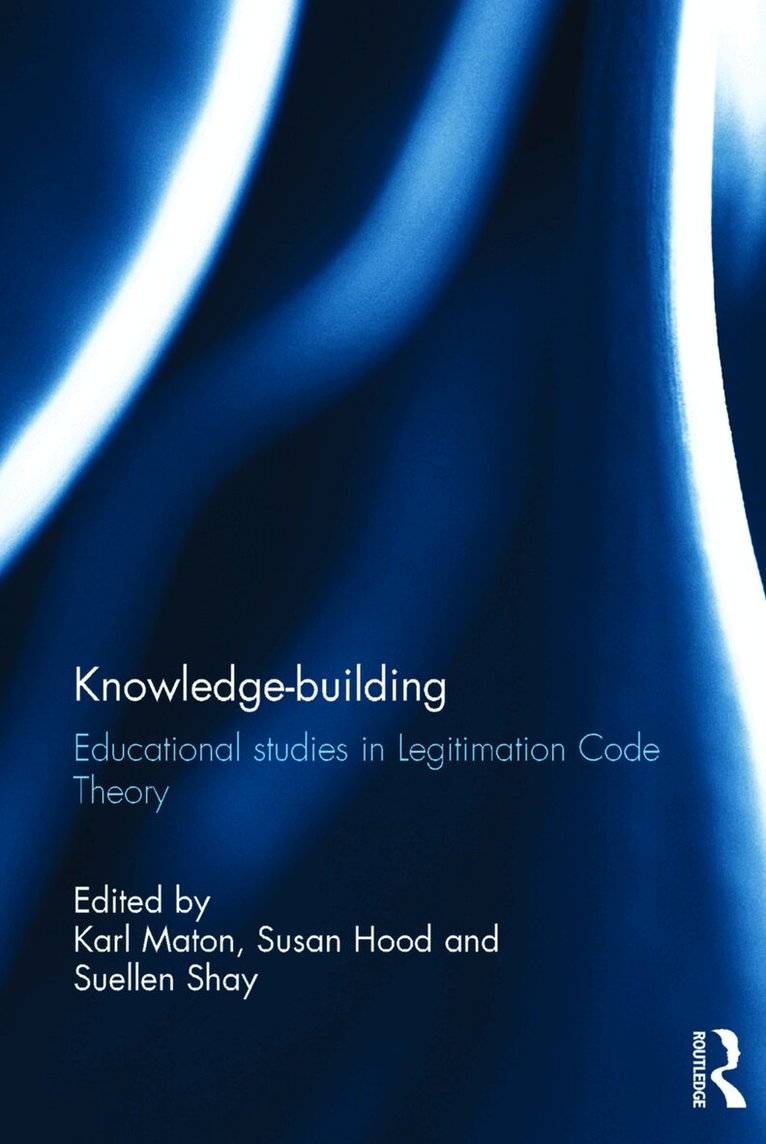
Education and knowledge have never been more important to society, yet research is segmented by approach, methodology or topic. Legitimation Code Theory or ‘LCT’ extends and integrates insights from Pierre Bourdieu and Basil Bernstein to offer a framework for research and practice that overcomes segmentalism. This book shows how LCT can be used to build knowledge about education and society. Comprising original papers by an international and multidisciplinary group of scholars, Knowledge-building offers the first primer in this fast-growing approach. Through case studies of major research projects, Part I provides practical insights into how LCT can be used to build knowledge by:- enabling dialogue between theory and data in qualitative research - bringing together quantitative and qualitative methodologies in mixed-methods research- relating theory and practice in praxis- conducting interdisciplinary studies with systemic functional linguisticsPart II offers a series of studies of pressing issues facing knowledge-building in education and beyond, encompassing: - diverse subject areas, including physics, English, cultural studies, music, and design - educational sites: schooling, vocational education, and higher education- practices of research, curriculum, pedagogy and assessment- both education and informal learning contexts, such as museums and masonic lodgesCarefully sequenced and interrelated, these chapters form a coherent collection that gives a unique insight into one of the most thought-provoking and innovative ways of building knowledge about knowledge-building in education and society to have emerged this century. This book is essential reading for all serious students and scholars of education, sociology and linguistics.
Häftad, Engelska, 2021
551 kr
Skickas inom 10-15 vardagar
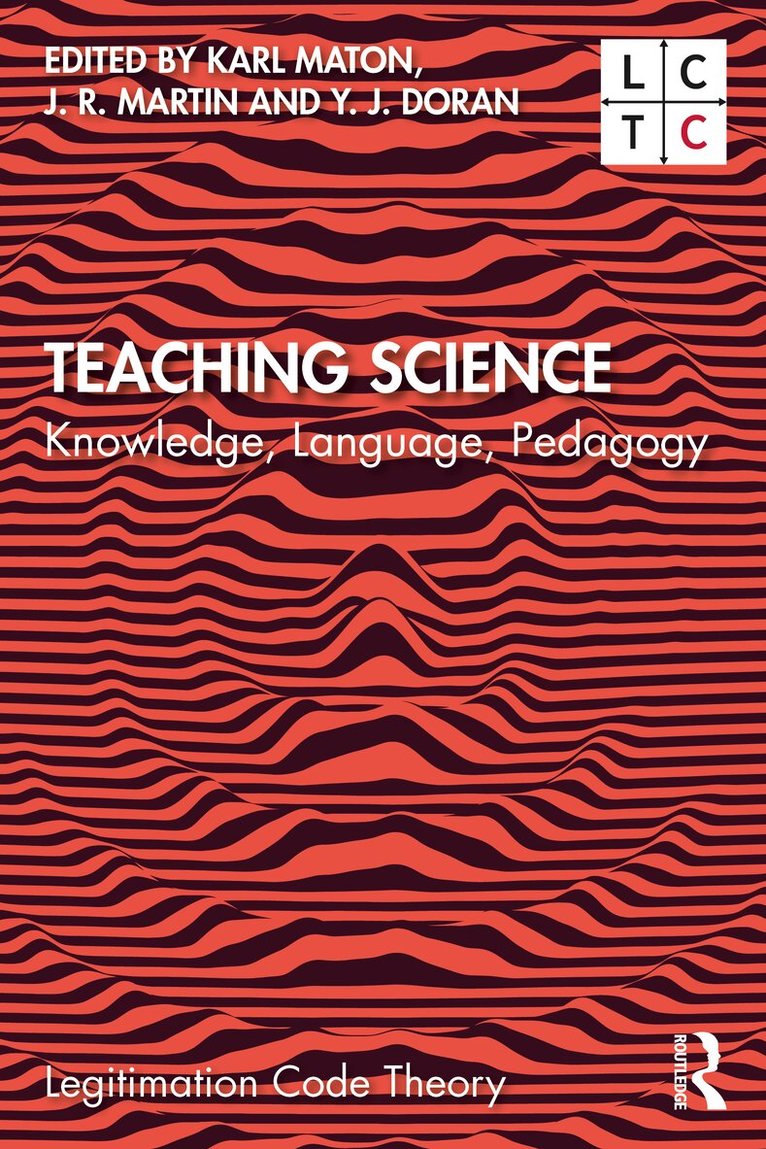
Science has never been more important, yet science education faces serious challenges. At present, science education research only sees half the picture, focusing on how students learn and their changing conceptions. Both teaching practice and what is taught, science knowledge itself, are missing. This book offers new, interdisciplinary ways of thinking about science teaching that foreground the forms taken by science knowledge and the language, imagery and gesture through which they are expressed.This book brings together leading international scholars from Systemic Functional Linguistics, a long-established approach to language, and Legitimation Code Theory, a rapidly growing sociological approach to knowledge practices. It explores how to bring knowledge, language and pedagogy back into the picture of science education but also offers radical innovations that will shape future research.Part I sets out new ways of understanding the role of knowledge in integrating mathematics into science, teaching scientific explanations and using multimedia resources such as animations. Part II provides new concepts for showing the role of language in complex scientific explanations, in how scientific taxonomies are built, and in combining with mathematics and images to create science knowledge. Part III draws on the approaches to explore how more students can access scientific knowledge, how to teach professional reasoning, the role of body language in science teaching, and making mathematics understandable to all learners.Teaching Science offers major leaps forward in understanding knowledge, language and pedagogy that will shape the research agenda far beyond science education.
Inbunden, Engelska, 2021
2 117 kr
Skickas inom 10-15 vardagar
Science has never been more important, yet science education faces serious challenges. At present, science education research only sees half the picture, focusing on how students learn and their changing conceptions. Both teaching practice and what is taught, science knowledge itself, are missing. This book offers new, interdisciplinary ways of thinking about science teaching that foreground the forms taken by science knowledge and the language, imagery and gesture through which they are expressed.This book brings together leading international scholars from Systemic Functional Linguistics, a long-established approach to language, and Legitimation Code Theory, a rapidly growing sociological approach to knowledge practices. It explores how to bring knowledge, language and pedagogy back into the picture of science education but also offers radical innovations that will shape future research.Part I sets out new ways of understanding the role of knowledge in integrating mathematics into science, teaching scientific explanations and using multimedia resources such as animations. Part II provides new concepts for showing the role of language in complex scientific explanations, in how scientific taxonomies are built, and in combining with mathematics and images to create science knowledge. Part III draws on the approaches to explore how more students can access scientific knowledge, how to teach professional reasoning, the role of body language in science teaching, and making mathematics understandable to all learners.Teaching Science offers major leaps forward in understanding knowledge, language and pedagogy that will shape the research agenda far beyond science education.
Häftad, Engelska, 2024
538 kr
Skickas inom 10-15 vardagar
Drawing on Legitimation Code Theory (LCT), this volume reveals the knowledge practices and language of critical reflection in a range of different subjects, making clear how it can be taught and learned.Critical thinking is widely held to be a key attribute required for successfully living, learning and earning in modern societies. Universities now list critical thinking as a key graduate quality and use ‘critical reflection’ as a way of teaching students how to become reflective and ethical professionals. Yet, what ‘critical reflection’ actually involves remains vague in research, teaching practice, and assessment. Studies draw on LCT, a fast-growing framework for revealing the knowledge practices that enable educational success and the individual chapters focus on a diverse range of contexts across the disciplinary map, including education, science, arts, sociology and nursing. The book further connects research and practice by presenting in-depth analyses of critical reflection and providing practical insights into how LCT can be used to design pedagogic interventions.The book offers a rich resource for both scholars and teachers who want to demystify critical reflection and prepare university students for the modern workplace.
Inbunden, Engelska, 2024
2 117 kr
Skickas inom 10-15 vardagar
Drawing on Legitimation Code Theory (LCT), this volume reveals the knowledge practices and language of critical reflection in a range of different subjects, making clear how it can be taught and learned.Critical thinking is widely held to be a key attribute required for successfully living, learning and earning in modern societies. Universities now list critical thinking as a key graduate quality and use ‘critical reflection’ as a way of teaching students how to become reflective and ethical professionals. Yet, what ‘critical reflection’ actually involves remains vague in research, teaching practice, and assessment. Studies draw on LCT, a fast-growing framework for revealing the knowledge practices that enable educational success and the individual chapters focus on a diverse range of contexts across the disciplinary map, including education, science, arts, sociology and nursing. The book further connects research and practice by presenting in-depth analyses of critical reflection and providing practical insights into how LCT can be used to design pedagogic interventions.The book offers a rich resource for both scholars and teachers who want to demystify critical reflection and prepare university students for the modern workplace.
Häftad, Engelska, 2017
728 kr
Skickas inom 10-15 vardagar
Education and knowledge have never been more important to society, yet research is segmented by approach, methodology or topic. Legitimation Code Theory or ‘LCT’ extends and integrates insights from Pierre Bourdieu and Basil Bernstein to offer a framework for research and practice that overcomes segmentalism. This book shows how LCT can be used to build knowledge about education and society. Comprising original papers by an international and multidisciplinary group of scholars, Knowledge-building offers the first primer in this fast-growing approach. Through case studies of major research projects, Part I provides practical insights into how LCT can be used to build knowledge by:- enabling dialogue between theory and data in qualitative research - bringing together quantitative and qualitative methodologies in mixed-methods research- relating theory and practice in praxis- conducting interdisciplinary studies with systemic functional linguisticsPart II offers a series of studies of pressing issues facing knowledge-building in education and beyond, encompassing: - diverse subject areas, including physics, English, cultural studies, music, and design - educational sites: schooling, vocational education, and higher education- practices of research, curriculum, pedagogy and assessment- both education and informal learning contexts, such as museums and masonic lodgesCarefully sequenced and interrelated, these chapters form a coherent collection that gives a unique insight into one of the most thought-provoking and innovative ways of building knowledge about knowledge-building in education and society to have emerged this century. This book is essential reading for all serious students and scholars of education, sociology and linguistics.
Häftad, Engelska, 2015
796 kr
Skickas inom 10-15 vardagar
We live in ‘knowledge societies’ and work in ‘knowledge economies’, but accounts of social change treat knowledge as homogeneous and neutral. While knowledge should be central to educational research, it focuses on processes of knowing and condemns studies of knowledge as essentialist. This book unfolds a sophisticated theoretical framework for analysing knowledge practices: Legitimation Code Theory or ‘LCT’. By extending and integrating the influential approaches of Pierre Bourdieu and Basil Bernstein, LCT offers a practical means for overcoming knowledge-blindness without succumbing to essentialism or relativism.Through detailed studies of pressing issues in education, the book sets out the multi-dimensional conceptual toolkit of LCT and shows how it can be used in research. Chapters introduce concepts by exploring topics across the disciplinary and institutional maps of education: -how to enable cumulative learning at school and university-the unfounded popularity of ‘student-centred learning’ and constructivism -the rise and demise of British cultural studies in higher education-the positive role of canons -proclaimed ‘revolutions’ in social science -the ‘two cultures’ debate between science and humanities-how to build cumulative knowledge in research-the unpopularity of school Music-how current debates in economics and physics are creating major schisms in those fields.LCT is a rapidly growing approach to the study of education, knowledge and practice, and this landmark book is the first to systematically set out key aspects of this theory. It offers an explanatory framework for empirical research, applicable to a wide range of practices and social fields, and will be essential reading for all serious students and scholars of education and sociology.