Library of Ottoman Studies – serie
Visar alla böcker i serien Library of Ottoman Studies. Handla med fri frakt och snabb leverans.
8 produkter
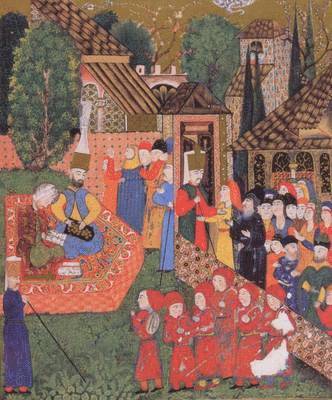
Stolen Boys of the Ottoman Empire
The Child Levy as Public Spectacle and Political Instrument
Av Charles Argo
Inbunden, 2029
1263 kr
Kommande
The infamous Ottoman devsirme-the levy and enslavement of young male subjects from the Christian regions of the empire for palace and military service by the Turks-has been traditionally understood as a mechanism of both elite recruitment and Muslim conversion. Here Charles Argo investigates the …
State Law and Divine Law Under the Ottomans
Encounters Between Shari'a and the Sultan's Law
Inbunden, 2018
1238 kr
Kommande
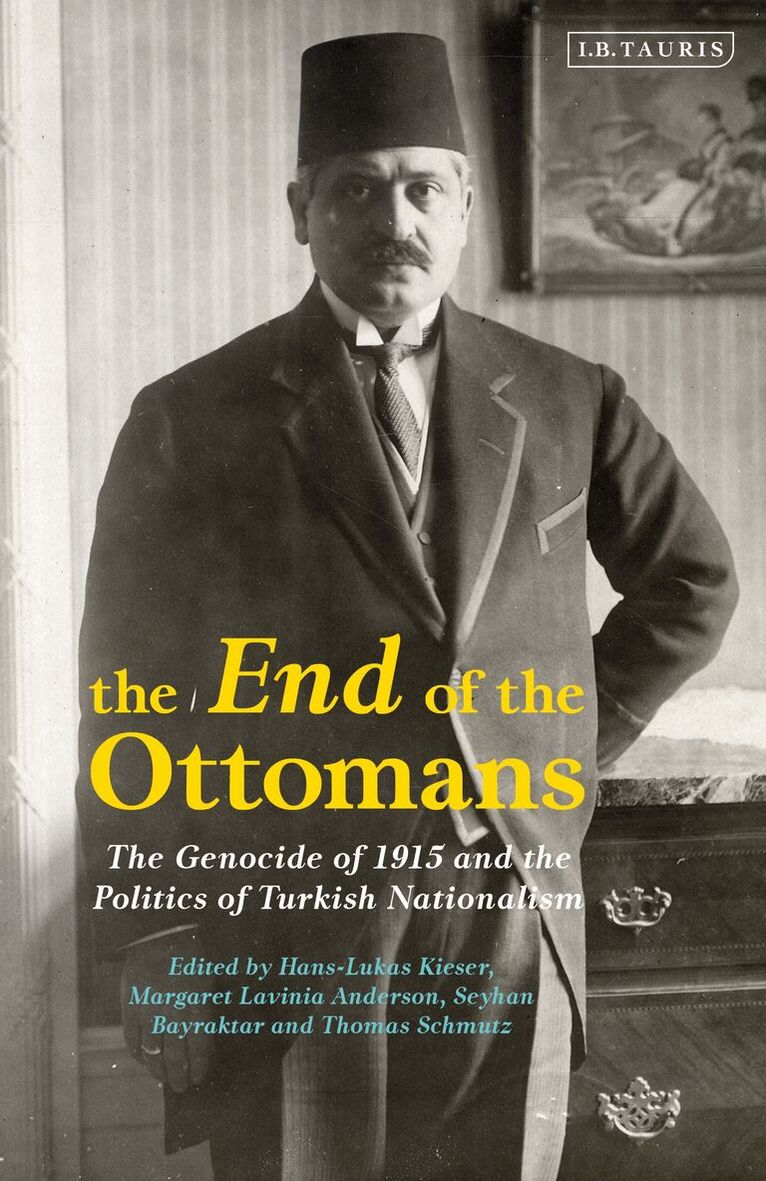
End of the Ottomans
The Genocide of 1915 and the Politics of Turkish Nationalism
Av Hans-Lukas Kieser, Margaret Lavinia Anderson m. fl.
Inbunden, 2019
1603 kr
Lägg i varukorg
In the early part of the twentieth century, as Europe began its descent into the First World War, the Ottoman world – once the largest Empire in the Middle East – began to experience a revolution which would culminate in the new, secular Turkish state. Alongside this, in 1915, as part of an …
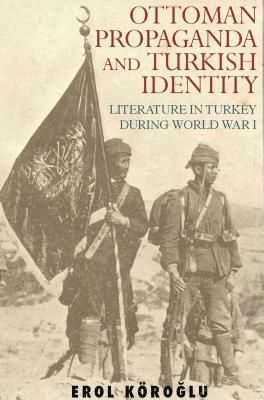
Ottoman Propaganda and Turkish Identity
Literature in Turkey During World War I
Av Erol Koroglu
Inbunden, 2007
2282 kr
Lägg i varukorg
The Great War was the first example of a total war in history, reflected in the cultures and literatures of Europe in the shape of propaganda. What began as civic patriotism developed into a weapon of war, programmed and organized by the state to devastating effect. In almost all countries, writers …
Frontiers of Ottoman Studies: Volume II
Av Colin Imber, Keiko Kiyotaki m. fl.
Inbunden, 2004
2038 kr
Lägg i varukorg
Frontiers of Ottoman Studies provides a comprehensive overview of the surge in research into Ottoman history and culture of the past two decades. The second volume covers Ottoman-European International Relations; Ottoman manuscripts in Europe; Ottoman-European cultural exchange and Christian …
Sultan's Yemen
19th Century Challenges to Ottoman Rule
Inbunden, 2002
2038 kr
Lägg i varukorg
In the 19th century, when the Ottoman Empire restored direct rule over Yemen, the resulting turmoil came to threaten the security of the entire Arabian Peninsula. This book describes the various military campaigns to regain control over Yemen, surveying the increased foreign encroachments by the …
Studies Volume
A History of the Ottoman Campaign in Yemen, 1596-71
Inbunden, 2002
2038 kr
Lägg i varukorg
The military campaign of the Ottomans, when they entered the region of Yemen in the mid-16th century, was chronicled by Qutb al-Din al-Nahrawali, a scholar charged by an Ottoman general to document his army's progress. This book makes this 16th-century Ottoman source document available in English …
Between Two Empires
Ahmet Agaoglu and the New Turkey
Inbunden, 2002
2100 kr
Lägg i varukorg
Ahmet Agaoglu's life and writings reflect huge 20th-century historical events, such as revolutions in Russia in1905 and 1917, in Ottoman Turkey in 1908, World War I, the Turkish War of Independence and the establishment of Azerbaijan. His life is a mirror of the tangled politics in a region where …