Library of Southern Civilization – serie
Visar alla böcker i serien Library of Southern Civilization. Handla med fri frakt och snabb leverans.

19 produkter
19 produkter
Häftad, Engelska, 2006
337 kr
Skickas inom 10-15 vardagar
Born and raised in Greenville, Mississippi, within the shelter of old traditions, aristocratic in the best sense, William Alexander Percy in his lifetime (1885--1942) was brought face to face with the convulsions of a changing world. Lanterns on the Levee is his memorial to the South of his youth and young manhood. In describing life in the Mississippi Delta, Percy bridges the interval between the semifeudal South of the 1800s and the anxious South of the early 1940s. The rare qualities of this classic memoir lie not in what Will Percy did in his life -- although his life was exciting and varied -- but rather in the intimate, honest, and soul-probing record of how he brought himself to contemplate unflinchingly a new and unstable era. The 1973 introduction by Walker Percy -- Will's nephew and adopted son -- recalls the strong character and easy grace of ""the most extraordinary man I have ever known.
Häftad, Engelska, 1968
327 kr
Skickas inom 10-15 vardagar
Solomon Northup was a free man, the son of an emancipated Negro Slave. Until the spring of 1841 he lived a simple, uneventful life with his wife and three children in Upstate New York. Then, suddenly, he fell victim to a series of bizarre events that make this one of the most amazing autobiographies ever written.Northup accepted an offer from two strangers in Saratoga, New York, to catch up with their traveling circus and play in its band. But when the chase ended, Northup had been drugged, beaten, and sold to a slave trader in Washington, D.C. Subsequently, he was shipped to New Orleans, where he was purchased by a planter in the Red River region of Louisiana. For the next twelve years Northup lived as a chattel slave under several masters. He might well have died a slave, except for another set of bizarre circumstances which enabled him to get word to his family and finally regain his freedom.These elements alone -- the kidnapping, enslavement, and rescue -- are sufficient for a sensational story. But Northup provides more. He was a shrewd observer of people and events. His memory was remarkable. He described cultivation of cotton and sugar in the Deep South. He detailed the daily routine and general life of the Negro slave. Indeed, he vividly portrayed the world of slavery -- from the underside.Originally published in 1853, Northup's autobiography is regarded as one of the best accounts of American Negro slavery ever written by a slave. It is reprinted in full here for the first time, as the initial volume in The Library of Southern civilisation.Northup's account has been carefully checked by the editors and has been found to be remarkably accurate. To his own narrative of a long and tragic adventure, Professors Eakin and Logsdon have added significant new details about Northup and the plantation country where he spent most of his time as a slave. Heretofore unknown information about the capture and trial of Northup's kidnappers has been included, adding still another fascinating episode to an already astounding story.
Häftad, Engelska, 1981
327 kr
Skickas inom 10-15 vardagar
In one volume, these essentially unabridged selections from the works of the proslavery apologists are now conveniently accessible to scholars and students of the antebellum South. The Ideology of Slavery includes excerpts by Thomas R. Dew, founder of a new phase of proslavery militancy; William Harper and James Henry Hammond, representatives of the proslavery mainstream; Thornton Stringfellow, the most prominent biblical defender of the peculiar institution; Henry Hughes and Josiah Nott, who brought would-be scientism to the argument; and George Fitzhugh, the most extreme of proslavery writers.The works in this collection portray the development, mature essence, and ultimate fragmentation of the proslavery argument during the era of its greatest importance in the American South. Drew Faust provides a short introduction to each selection, giving information about the author and an account of the origin and publication of the document itself. Faust's introduction to the anthology traces the early historical treatment of proslavery thought and examines the recent resurgence of interest in the ideology of the Old South as a crucial component of powerful relations within that society. She notes the intensification of the proslavery argument between 1830 and 1860, when southern proslavery thought became more systematic and self-conscious, taking on the characteristics of a formal ideology with its resulting social movement. From this intensification came the pragmatic tone and inductive mode that the editor sees as a characteristic of southern proslavery writings from the 1830s onward. The selections, introductory comments, and bibliography of secondary works on the proslavery argument will be of value to readers interested in the history of slavery and of nineteenth-century American thought.
Häftad, Engelska, 1986
365 kr
Skickas inom 10-15 vardagar
Originally published in 1832 and revised in 1851, Swallow Barn, John Pendleton Kennedy's novel of antebellum life on a tidewater Virginia plantation, was described by its author as ""variously and interchangeably partaking of the complexion of a book of travels, a diary, a collection of letters, a drama, and a history."" Swallow Barn has returned from oblivion many times in the past 150 years, in part because it resists categorization and retains its originality. It is a novel that is not a novel, written by a man who was and was not a southerner or even, by his own reckoning, a writer.Swallow Barn began as a series of letters written by a Mark Littleton (Kennedy) to his hometown neighbor, Zachary Huddlestone of Preston Ridge, New York. Littleton, visiting his Virginia relatives at their farm called Swallow Barn, on the James River not far from Richmond, told his friend that he would write a ""full, true and particular account of all my doings, or rather my seeings and thinkings"" while he was among his genial relatives. But Kennedy soon dropped the pose of letter writer and devoted successive chapters to sketches of Virginia country life. In choosing to write about the ""manners"" of his own region, he won not only esteem as an American author but recognition for a way of life toward which an open hostility was developing in the North.Lucinda MacKethan's introduction to this edition considers biographical information and the cultural and literary forces that operated to make Swallow Barn a unique as well as a representative product of its period. MacKethan also discusses Kennedy's design for the novel, the ideological and artistic strategies that governed the choices and changes he made as he created what is now regarded as one of the most important fictional portrayals of plantation society by one intimately involved in that place and time.
Häftad, Engelska, 1987
365 kr
Skickas inom 10-15 vardagar
The Flush Times of Alabama and Mississippi, originally published in 1853, consists of twenty-six sketches and satires drawn from Joseph G. Baldwin's experiences as an attorney on the turbulent Mississippi and Alabama frontiers in the 1830s and 1840s. Like experiences, attempted to depict a lawless and colourful era in American history. Originally from Virginia, the author paints vivid and authentic portraits of shifty lawyers, unlettered judges, and inept prosecutors, as well as serious profiles of respected colleagues such as Seargent S. Prentiss. Even the narrator, we learn, is granted a license to practice law by a circuit judge who asks him ""not a single legal question.""One of the collection's most memorable characters is Ovid Bolus, whom Baldwin describes as a ""natural liar, just as some horses are natural pacers, and some dogs natural setters."" His adventures reflect Baldwin's fascination with the meaning of the law and the legal profession under the conditions that existed on the American frontier.James H. Justus' introduction places this new edition of The Flush Times of Alabama and Mississippi in its historical literary context. According to Justus, Augustus Baldwin Longstreet's Georgia Scenes, published in 1835, is the volume credited as the first to exploit the southern backwoods In the vernacular realism we now call the humor of the Old Southwest. Justus also notes that in the preface to his book, Baldwin indirectly acknowledges his familiarity with earlier writers, and one sketch, ""Simon Suggs, JR.,"" specifically pays homage to Johnson Jones Hooper.The Flush Times of Alabama and Mississippi possesses enormous value for both literary scholars and historians. It remains a classic, not simply because it is sprightly social history, but because it is also an engrossing memoir by a man of uncommon subtlety of mind who projected his own sensibility into the record.
Häftad, Engelska, 1989
327 kr
Skickas inom 10-15 vardagar
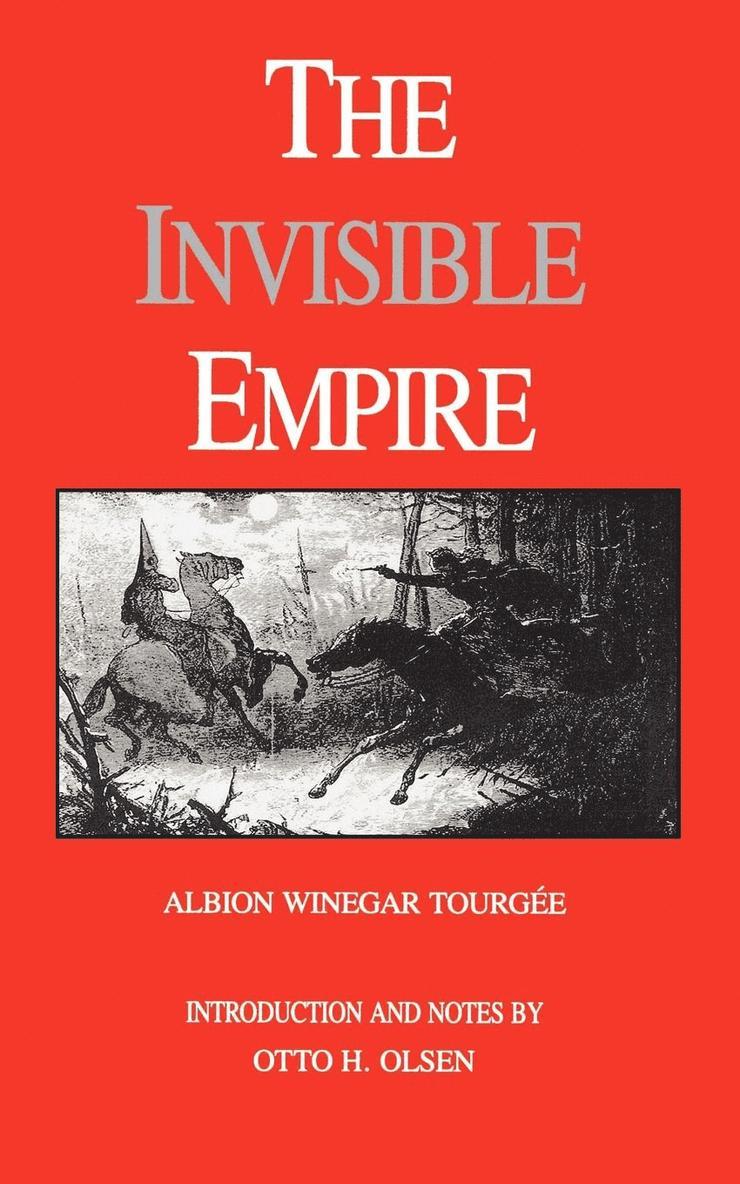
The North Carolina carpetbagger Albion Winegar Tourgée came to the South in 1865 after serving as a Union volunteer during the Civil War. His struggles in the cause of civil rights led him to take part in the political reorganisation of the region. However, in 1879, Tourgée despaired of his efforts in the South and returned to the North. There he published A Fool's Errand, a largely autobiographical novel that depicted a southern society dominated by the Ku Klux Klan and riddled with racism, ignorance, and corrupt policies. Within a year of the release of A Fool's Errand, Tourgée published The Invisible Empire, a nonfiction account of his years in the South intended to buttress the portrait of Reconstruction southern society he had depicted in his novel.The Invisible Empire investigates white supremacy as it emerged from the milieu of slavery, war, politics, and Reconstruction. Tourgée argues that organisations such as the Klan appealed to the mass of white southerners as a means of ameliorating their defeat and ensuring a measure of political control. He describes that Klan as the produce of southern hostility toward ""any and all things"" associated with the uplifting of the black population. Tourgée's efforts in his books and in his life, were aimed at undermining racism and promoting egalitarian and democratic ideals.This reprint of The Invisible Empire brings to light a book that will interest scholars and general readers alike. It is a striking, contemporary look into the mind of the carpetbagger and the genesis of both the Ku Klux Klan and the political structure of the postwar South. Otto H. Olsen's introduction and notes place the work in its proper historical and literary context. His analysis of the documentary evidence supplied by various reliable sources gives Tourgée's narrative a more solid historical basis than it has heretofore had.
Häftad, Engelska, 1992
365 kr
Skickas inom 10-15 vardagar
First published in 1864, Macaria; or, Altars of Sacrifice was the third novel of Augusta Jane Evans, one of the leading women writers of nineteenth-century domestic fiction. A wartime best seller, with more than twenty thousand copies in circulation in the print-starved Confederacy before the war's end, the novel was also extremely well received along the Union front, so much so that some northern officials thought it should be banned. Long out of print and largely unavailable until now, Macaria is a compelling narrative about women and war.In Macaria, Evans charts the journey of two southern women toward ultimate self-realisation through their service in the war-torn Confederacy. Discarding the theme of romantic fulfillment, Evans skillfully crafts a novel about women compelled by the departure and death of so many southern men to find meaning in their own ""single blessedness,"" rather than in marriage.Drew Gilpin Faust, in her perceptive introduction to this edition, places the novel in the context of the concerns of Confederate nationalism and the contributions of women during the Civil War. She provides an ideological and historical framework within which to interpret the novel and introduce it to a new generation of readers. Largely overlooked in the current revival of women's fiction, Augusta Jane Evans is less well known today than she should be. The reissue of this volume will do much to garner Evans a well-deserved place in the existing body of American literature, and especially southern and women's literature.
Häftad, Engelska, 1994
394 kr
Skickas inom 10-15 vardagar
Two months before the Civil War broke out, Emma Holmes made the first entry in a diary that would eventually hold vivid firsthand accounts of several major historical events. Born into an elite South Carolina family, Holmes was in her twenties during the war years. She lived in Charleston during April, 1861, bombardment of Fort Sumter and was visiting there during the 1863 Union shelling of the city. Her description of the Charleston fire of December, 1861, which destroyed her family home and leveled much of the city, is one of the most powerful passages in the diary.Holmes also spent extended periods of time on plantations and visited army camps, which she described in detail. Because of the Charleston fire, her family was uprooted to Camden, South Carolina, where she came face-to-face with Union forces: first Sherman's army, then black troops, and finally the small Reconstruction garrison. In presenting her picture of the wartime South, Holmes discussed numerous northern and southern military figures, the role of women in the war effort, the religious and social life of the day, and the heavy toll that fighting and disease took on the military and civilian population. John F. Marszalek has eliminated extraneous details in order to highlight Holmes's individual insight, the vital heart of the volumn. His new Forward considers this valuable contribution to social history in the context of the current growing popularity of the Civil War and the relatively recent interest in that conflict among women's studies scholars.
Häftad, Engelska, 1995
391 kr
Skickas inom 3-6 vardagar
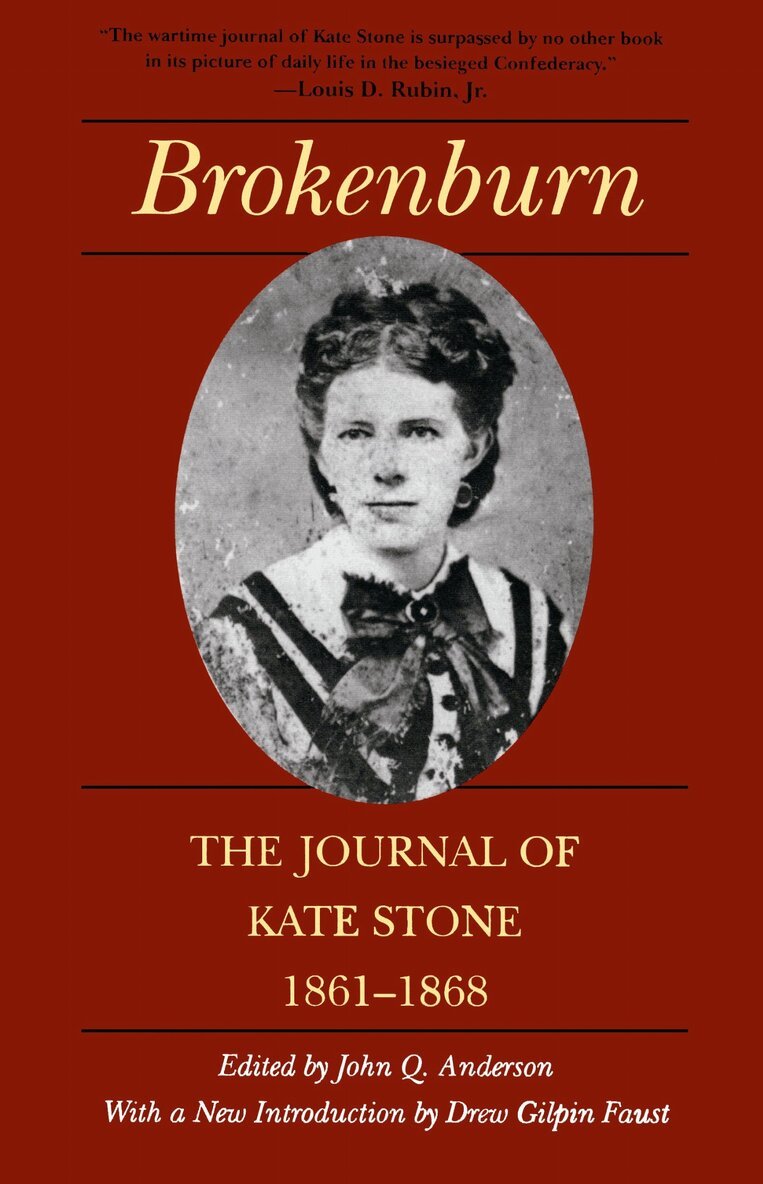
This journal records the Civil War experiences of a sensitive, well-educated, young southern woman. Kate Stone was twenty when the war began, living with her widowed mother, five brothers, and younger sister at Brokenburn, their plantation home in northeastern Louisiana. When Grant moved against Vicksburg, the family fled before the invading armies, eventually found refuge in Texas, and finally returned to a devastated home. Kate began her journal in May, 1861, and made regular entries up to November, 1865. She included briefer sketches in 1867 and 1868. In chronicling her everyday activities, Kate reveals much about a way of life that is no more: books read, plantation management and crops, maintaining slaves in the antebellum period, the attitude and conduct of slaves during the war, the fate of refugees, and civilian morale. Without pretense and with almost photographic clarity, she portrays the South during its darkest hours.
Häftad, Engelska, 1973
365 kr
Skickas inom 10-15 vardagar
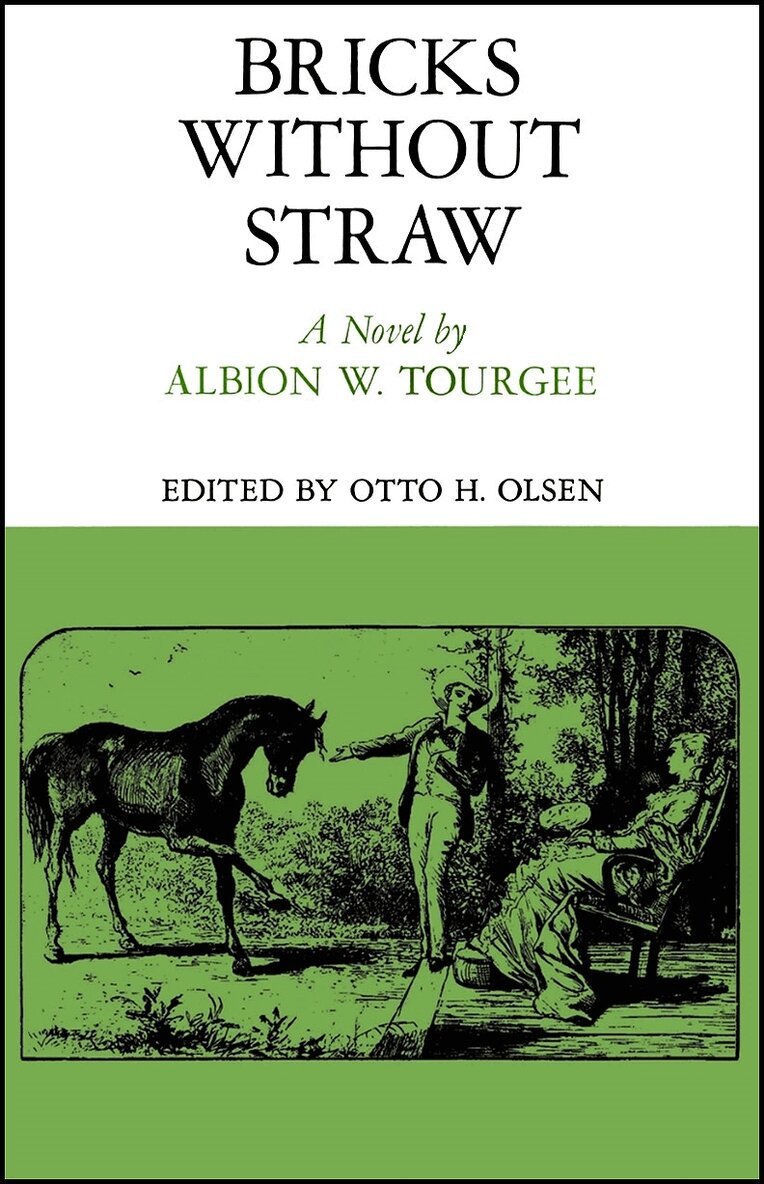
Albion W. Tourgée, a former Union officer from Ohio, came to North Carolina in search of economic opportunity after the collapse of the Confederacy. A young man and a fearless advocate of freedmen's rights, he soon became a radical Republican leader and a prominent figure in local politics.After he quit the South in 1874, Tourgée published a succession of novels and stories which made him famous. Bricks Without Straw, one of his two best-selling novels, is not only a moving story but an important commentary on the Reconstruction process in the South.This new edition of the book remains faithful to the original, which appeared in 1880. In his introduction, Profession Otto H. Olsen gives a comprehensive evaluation of the book and its author, and their impact on the era of Reconstruction.Tourgée was an astute and reliable observer of the Reconstruction scene. In Bricks Without Straw he concentrated on the problems and the continuing dilemma of freed slaves. Led by Nimbus Ware, a ""good enough nigger but might aggravating to the white folk,"" and Eliab Hill, a crippled mulatto preacher, former slaves begin their postwar experience by availing themselves of the educational, economic, and political opportunities of freedom. But as soon as federal protection is withdrawn, their existence becomes precarious in the face of the Ku Klux Klan and resentful southern whites.The novel conveys a true sense of the trials and accomplishments of a severely handicapped black population caught in the oppressive racist environment of the postwar South. But, as Professor Olsen points out, the book's pioneering, and still pertinent, literary achievement is its repudiation of racist stereotypes and its effective portrayal of the essential humanity of the freed black slaves.
Häftad, Engelska, 2002
326 kr
Skickas inom 10-15 vardagar
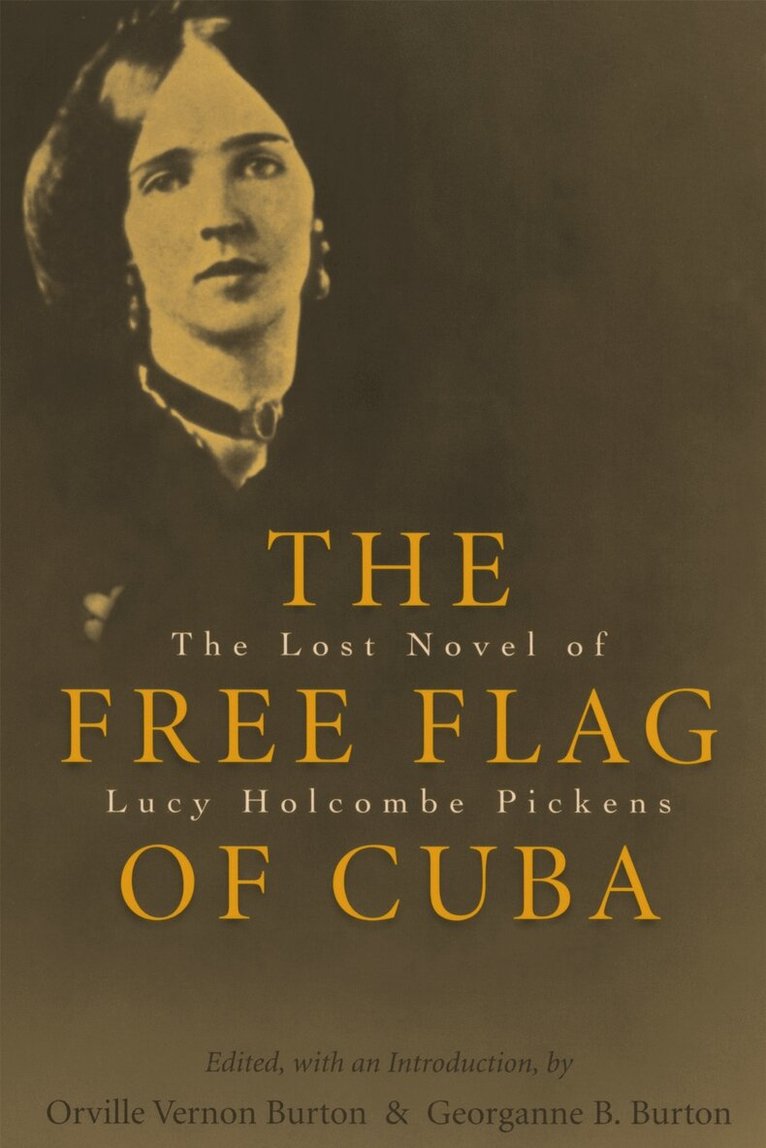
The wife of South Carolina secessionist governor Francis W. Pickens and known as the ""Queen of the Confederacy,"" Lucy Holcombe Pickens (1832-1899) was during her lifetime one of the most famous women in the South. Rumor was that in her youth she published a novel under a pseudonym. Recently discovered as The Free Flag of Cuba; or, The Martyrdom of Lopez: A Tale of the Liberating Expedition of 1851, her 1854 book is a romanticized account of the 1851 filibustering expedition to Cuba by Narciso López. With this new edition, Orville Vernon Burton and Georganne B. Burton resurrect Holcombe's lost work and prove it to be a window on many pressing nineteenth-century issues.A not-so-subtle plea for U.S. support for Cuban independence from Spain, Holcombe's novel vindicates López and his men, who were officially regarded as mercenaries, and declares them to be martyred heroes. The tale clearly reflects the values southern aristocratic women expected in men, even if preserving those values meant death and defeat, a harbinger of ardent support for the Confederacy by women like Lucy. With an illuminating introduction detailing the life of Lucy Petway Holcombe Pickens and the historical context of her novel, this new edition of The Free Flag of Cuba is a welcome glimpse into the mind and value system of the southern belle who would become a southern icon.
Häftad, Engelska, 2006
363 kr
Skickas inom 10-15 vardagar
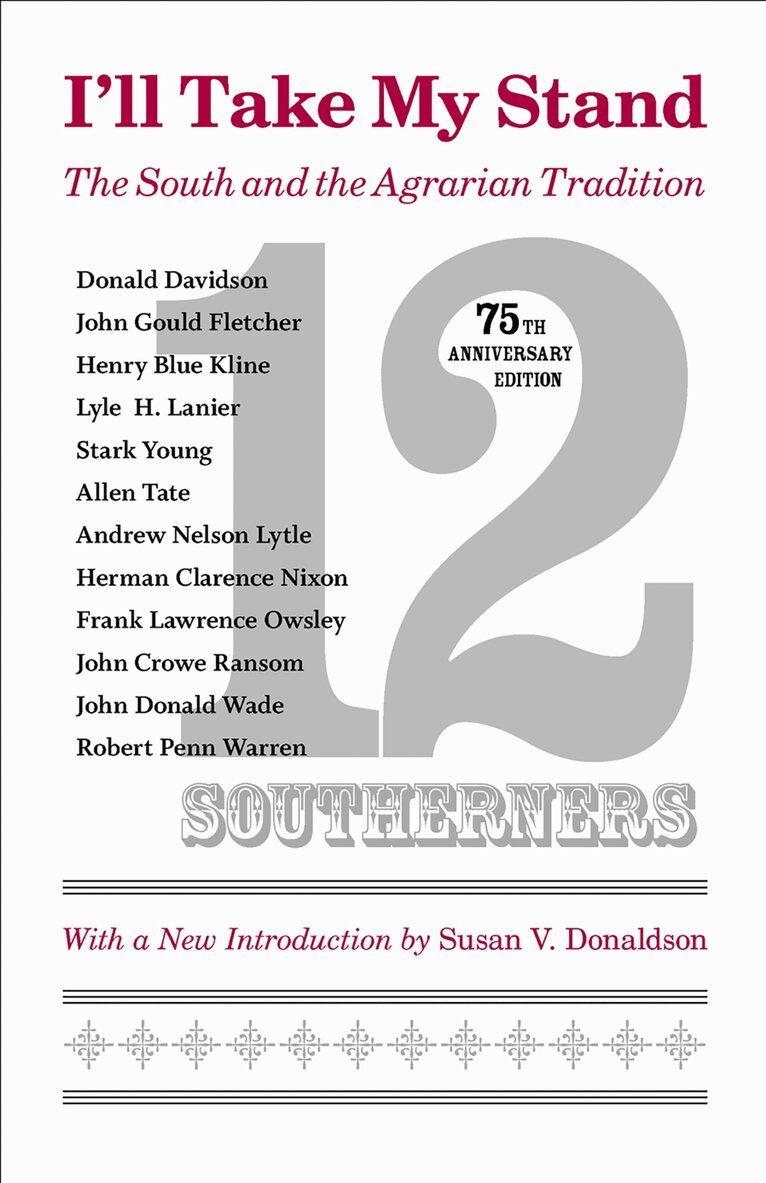
First published in 1930, the essays in this manifesto constitute one of the outstanding cultural documents in the history of the South. In it, twelve southerners-Donald Davidson, John Gould Fletcher, Henry Blue Kline, Lyle H. Lanier, Stark Young, Allen Tate, Andrew Nelson Lytle, Herman Clarence Nixon, Frank Lawrence Owsley, John Crowe Ransom, John Donald Wade, and Robert Penn Warren-defended individualism against the trend of baseless conformity in an increasingly mechanised and dehumanised society. In her new introduction, Susan V. Donaldson shows that the Southern Agrarians might have ultimately failed in their efforts to revive the South they saw as traditional, stable, and unified, but they nonetheless sparked debates and quarrels about history, literature, race, gender, and regional identity that are still being waged today over Confederate flags, monuments, slavery, and public memory.
Häftad, Engelska, 2008
394 kr
Skickas inom 10-15 vardagar
In Peculiar Crossroads, Farrell O'Gorman explains how the radical religiosity of both Flannery O'Connor's and Walker Percy's vision made them so valuable as southern fiction writers and social critics. Via their spiritual and philosophical concerns, O'Gorman asserts, these two unabashedly Catholic authors bequeathed a postmodern South of shopping malls and interstates imbued with as much meaning as Appomattox or Yoknapatawpha. O'Gorman builds his argument with biographical, historical, literary, and theological evidence, examining the writers' work through intriguing pairings, such as O'Connor's Wise Blood with Percy's The Moviegoer, and O'Connor's A Good Man Is Hard to Find with Percy's Lancelot. An impeccable exercise in literary history and criticism, Peculiar Crossroads renders a genuine understanding of the Catholic sensibility of both O'Connor and Percy and their influence among contemporary southern writers.
Häftad, Engelska, 2009
424 kr
Skickas inom 3-6 vardagar
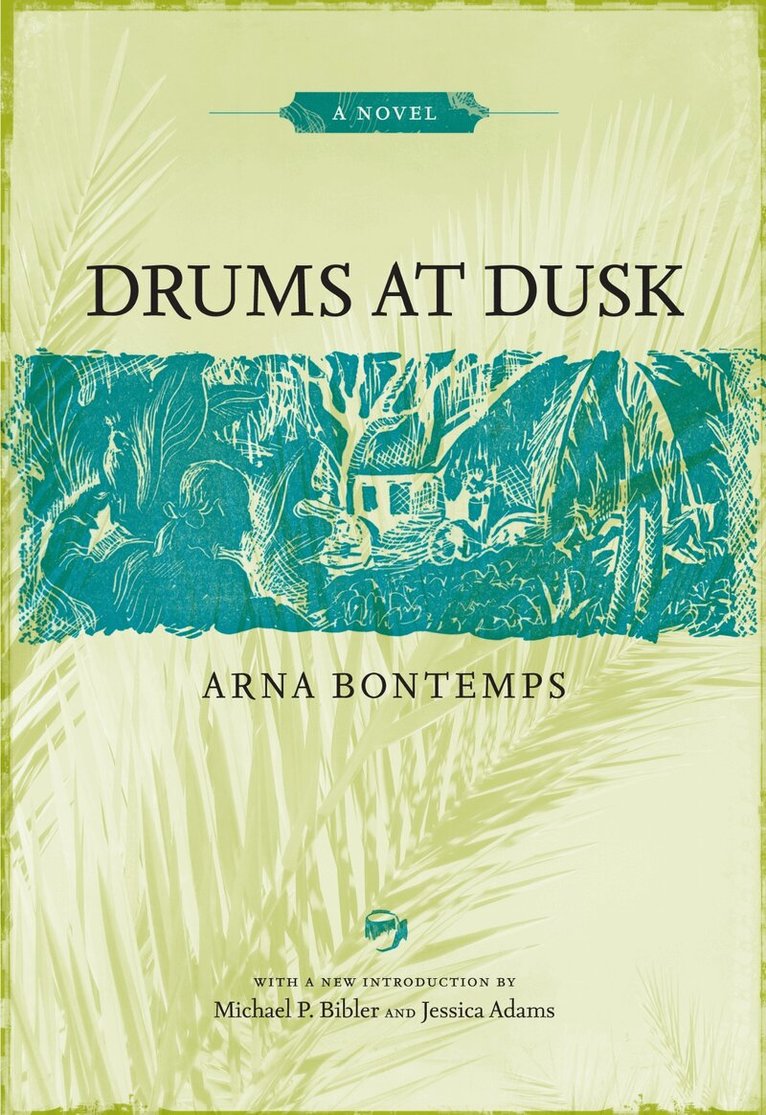
A story of love, violence, and race set at the outbreak of the Haitian Revolution in 1791, African American writer Arna Bontemps's Drums at Dusk immerses readers in the opulent and brutal -- yet also very fragile -- society of France's richest colony, Saint Domingue. First published in 1939, this novel explores the complex web of tensions connecting wealthy plantation owners, poor whites, free people of colour, and the slaves who stunned the colony and the globe by uniting in a carefully planned uprising. The novel's hero, Diron Desautels, a white Creole born in Saint Domingue who belongs to the French antislavery group Société des Amis des Noirs, attempts to spread his message of ""liberty, equality, fraternity"" in a world fraught with conflict.Imaginatively inhabiting a wide spectrum of Haitian voices, including those of white indentured servants, female slaves, and Toussaint L'Ouverture, who later emerged as the revolution's best-known hero, Bontemps's work reflects not only the intricacies of Haitian society on the eve of the revolution, but also a black artist's vision of Haiti in the twentieth century, during the U.S. Marines' occupation and at the brink of war in Europe. A new introduction by Michael P. Bibler and Jessica Adams reveals how Drums at Dusk -- even seventy years after its original publication -- contributes to contemporary studies of the American South as part of the larger plantation region of the Caribbean and inspires a reevaluation of assumptions about revolution, race, and nationalism.
Häftad, Engelska, 2010
278 kr
Skickas inom 10-15 vardagar
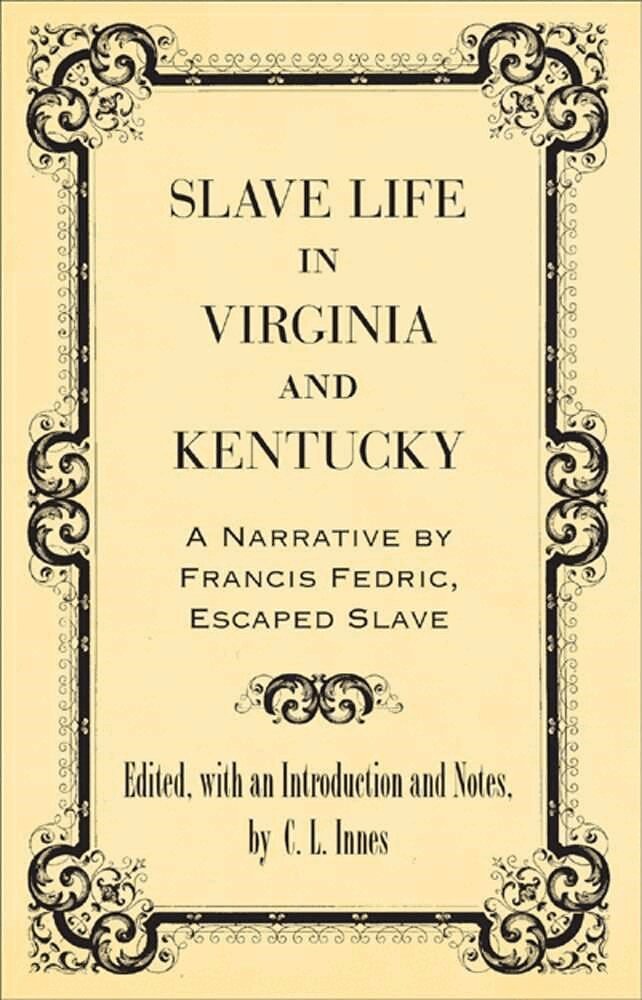
In 1854, faced with the threat of yet another brutal beating, a fifty-year-old slave in Mason County, Kentucky, decided to try again to escape. His first attempt had ended in his near starvation as he hid for nine weeks in a swamp, before hunger compelled him to return to his master. This time the slave sought the help of a neighbor with abolitionist sympathies, and he joined the hundreds of other fugitive slaves fleeing across the Ohio River and north to Canada on the Underground Railroad. After his arrival in Toronto he discarded his master's surname (Parker), renamed himself Francis Fedric, and married an Englishwoman. In 1857, he traveled with his wife to Great Britain, where he lectured on behalf of the antislavery cause and published two versions of his life story. Born in Virginia circa 1805, Francis Fedric was not unlike thousands of other African Americans who escaped slavery in the southern states and sought refuge in Britain. Many of his fellow ex-slaves also joined the abolitionist lecture circuit and published memoirs to support both the cause and themselves. Addressed to a British audience, these memoirs constitute a distinctive subgenre of the slave narrative, and an essential continuation of the narrative tradition established in England by Olaudah Equiano, Ottobah Cugoano, and Mary Prince.The first of Fedric's two memoirs, Life and Sufferings of Francis Fedric, While in Slavery: An Escaped Slave after 51 Years in Bondage (1859), offers a brief but vivid and dramatic twelve-page description of his escape. Slave Life in Virginia and Kentucky; or, Fifty Years of Slavery in the Southern States of America (1863) provides a much more detailed account of life as a slave and of plantation culture in the southern states. Together the two works present a mesmerising and distinct perspective on slavery in the South. Amazingly, these narratives, among the most interesting of the genre, remained out of print for nearly a hundred and fifty years. Collected here for the first time and meticulously edited by C. L. Innes, Slave Life in Virginia and Kentucky: A Narrative by Francis Fedric, Escaped Slave includes a contextual introduction, substantial biographical information on Fedric, and extensive annotations that situate and illuminate his work.Long forgotten and never before published in the United States, Fedric's narratives are certain to take their rightful place alongside the most recognizable accounts in the canon of slave memoirs.
Inbunden, Engelska, 2016
715 kr
Skickas inom 3-6 vardagar
In Surveying the Early Republic, Robert D. Bush contextualises the firsthand account of Andrew Ellicott, the United States Boundary Commissioner appointed by President George Washington in 1796. Ellicott and his Spanish counterparts established the boundary line between the United States and Spanish territory in North America after the United States and Spain signed the Treaty of San Lorenzo, opening the door to navigation of the Mississippi River and the export of American goods from the Spanish-held port of New Orleans. Over the course of this multiyear surveying project (1796-1800), Ellicott found himself entangled in the politics of these frontier lands, including an insurrection by inhabitants who favoured the United States against the existing Spanish regime. He also reported to his superiors on various rumors, plots, and political intrigues as well as on the secret activities of individuals in the pay of Spain, including U.S. Army General James Wilkinson.Regrettably, the widespread acclaim that followed the publication of Ellicott's journal in 1803, a year prior to the commencement of Lewis and Clark's expedition, faded over time. In this first edited and annotated version of that journal, Bush illuminates the commissioner's day-to-day narrative of events in what later became the Mississippi Territory and thus deepens our understanding of early American expansionism. In addition, Ellicott's accounts of personalities, plots, counter-plots, and Indian affairs depict with unparalleled clarity the tumultuous diplomatic experiences faced by President John Adams's administration as it pushed the bounds of America's frontier. Bush's deft treatment of this valuable primary source provides a critical contribution to the study of the history of early America.
Inbunden, Engelska, 2019
444 kr
Skickas inom 5-8 vardagar
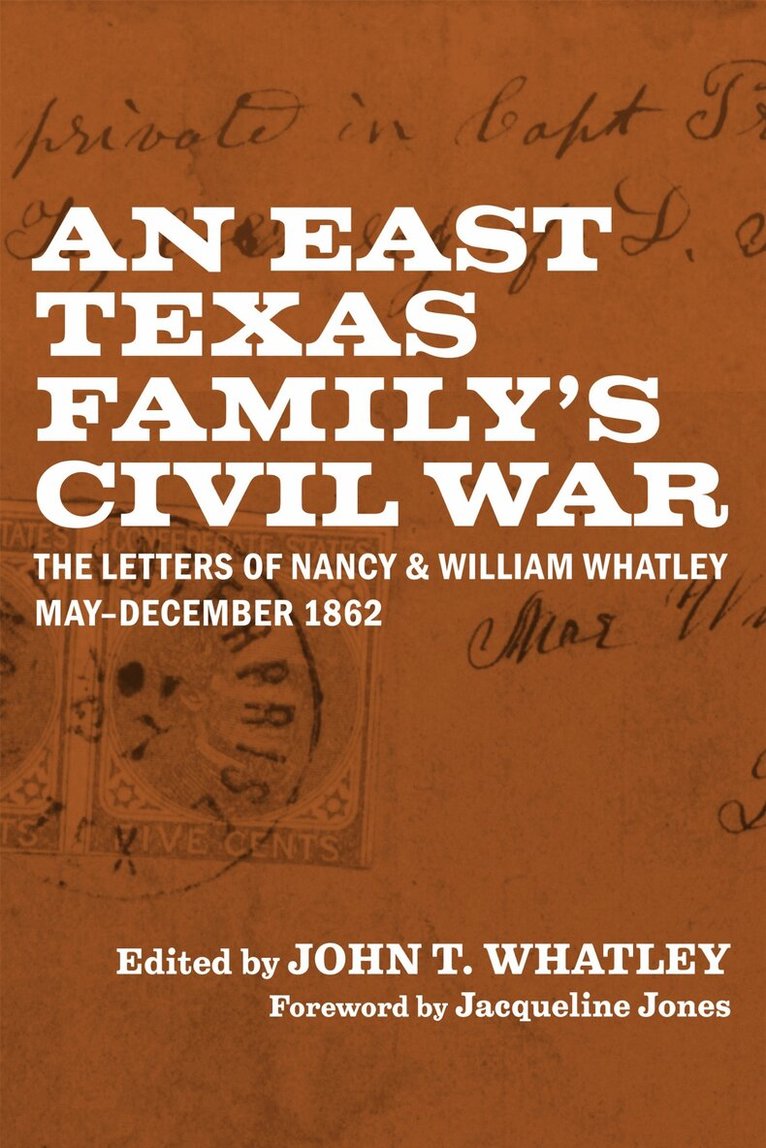
During six months in 1862, William Jefferson Whatley and his wife, Nancy Falkaday Watkins Whatley, exchanged a series of letters that vividly demonstrate the quickly changing roles of women whose husbands left home to fight in the Civil War. When William Whatley enlisted with the Confederate Army in 1862, he left his young wife Nancy in charge of their cotton farm in East Texas, near the village of Caledonia in Rusk County. In letters to her husband, Nancy describes in elaborate detail how she dealt with and felt about her new role, which thrust her into an array of unfamiliar duties, including dealing with increasingly unruly slaves, overseeing the harvest of the cotton crop, and negotiating business transactions with unscrupulous neighbors. At the same time, she carried on her traditional family duties and tended to their four young children during frequent epidemics of measles and diphtheria. Stationed hundreds of miles away, her husband could only offer her advice, sympathy, and shared frustration. In An East Texas Family's Civil War, the Whatleys' great-grandson, John T. Whatley, transcribes and annotates these letters for the first time. Notable for their descriptions of the unraveling of the local slave labor system and accounts of rural southern life, Nancy's letters offer a rare window on the hardships faced by women on the home front taking on unprecedented responsibilities and filling unfamiliar roles.
Inbunden, Engelska, 2022
436 kr
Skickas inom 5-8 vardagar
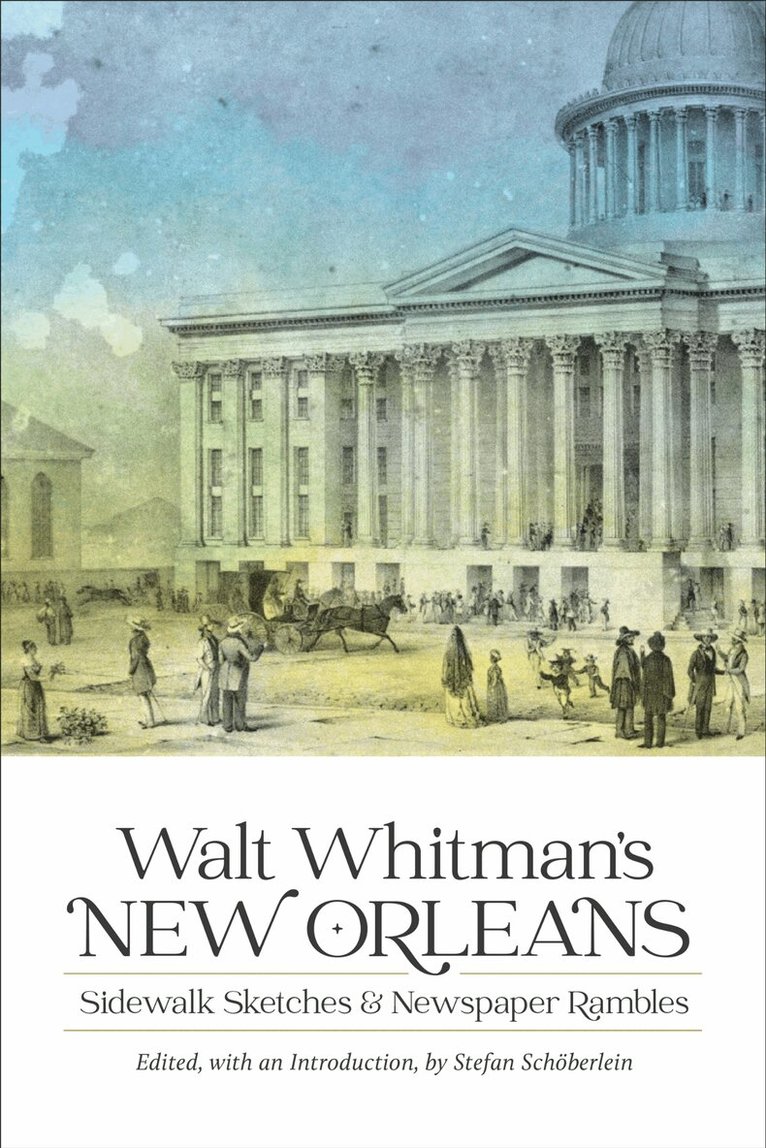
Walt Whitman's short stint in New Orleans during the spring of 1848 was a crucial moment of literary and personal development, with many celebrated poems from Leaves of Grass showing its influence. Walt Whitman's New Orleans is the first book dedicated to republishing his writings about the Crescent City, including numerous previously unknown pieces. Often spending his afternoons strolling through the vibrant city with his brother in tow, the young Whitman translated his impressions into short prose sketches that cataloged curious sights, captured typical characters one might meet on the levee, and joked about the strangeness of urban life. Including the first complete run of a fictional, multipart series titled "Sketches of the Sidewalks and Levee," Walt Whitman's New Orleans pairs his glimpses of the city with historical illustrations, supplementary texts, detailed annotations, and an introduction by editor Stefan Schöberlein that offers new insights on the poet's southern sojourn. Whitmanites, history enthusiasts, and lovers of New Orleans will find much to treasure in these humorous, evocative scenes of antebellum city life.
Häftad, Engelska, 2021
326 kr
Skickas inom 10-15 vardagar
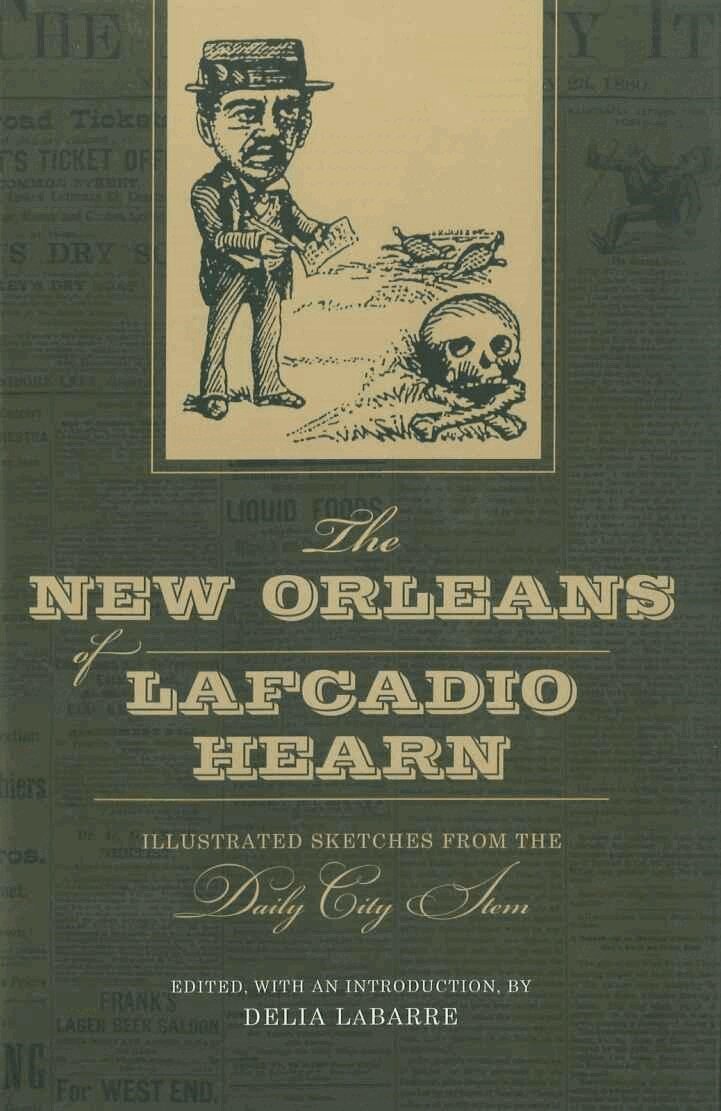
Lafcadio Hearn (1850–1904) was a master satirist who displayed a fiery wit both as a writer and as an artist. For seven months in 1880, he surprised and amused the readers of New Orleans with his wood-block "cartoons" and accompanying articles, which were variously funny, scathing, surreal, political, whimsical, and moral. This delightful book collects in their entirety, for the first time, all of the extant satirical columns and woodcut illustrations published in the Daily City Item—181 columns in all. Hearn displays immense range, illuminating in words and prints the unique culture of New Orleans, including its Creole history, debauched underworld, corrupt politicians, and voudou practitioners. The columns are expertly annotated by Delia LaBarre, who places them in their unique Crescent City context.With virtually no training in art of any kind, Hearn began creating his illustrations partly to boost the circulation of a small daily newspaper in a competitive market. He believed in the power of satirical cartoons to communicate big ideas in small spaces—in particular, to reveal the habits, prejudices, and delusions of the current generation. Blind in his left eye (since a boyhood accident) and severely myopic in his right, Hearn nonetheless painstakingly carved out drawings on wood blocks with a penknife to be printed alongside his articles on the newspaper's letterpress. Hearn developed, from the first of these woodcuts to the last, a unique style that expressed the full range of his wit, from razor-sharp condemnation to tender affection.Hearn had a keen eye for the absurd, along with an extraordinary ability to modulate his criticism and praise in a continuum from cauterizing vitriol to palliative balm, from the heaviest sarcasm to the lightest wit. In the pieces collected here, there can be found a unifying thread: Hearn's love/hate relationship with the virtues and vices of New Orleans, a city that continually amused and amazed him.Born in Greece and raised in Ireland, Lafcadio Hearn immigrated to the United States as a teenager and became a newspaper reporter in Cincinnati, Ohio. When he married a black woman, an act that was illegal at the time, the newspaper fired him and Hearn relocated to New Orleans. In the early 1880s his contributions to national publications (like Harper's Weekly and Scribners Magazine) helped mold the popular image of New Orleans as a colorful place of decadence and hedonism. In 1888, Hearn left New Orleans for Japan, where he took the name Koizumi Yakumo and worked as a teacher, journalist, and writer."And it may come to pass that I shall have stranger things to tell you; for this is a land of magical moons and of witches and of warlocks; and were I to tell you all that I have seen and heard in these years in this enchanted City of Dreams you would verily deem me mad rather than morbid." —Lafcadio Hearn, 1880, describing New Orleans in a letter to a friend.