Meaning Systems – serie
Visar alla böcker i serien Meaning Systems. Handla med fri frakt och snabb leverans.
22 produkter
22 produkter
Inbunden, Engelska, 2013
1 116 kr
Skickas
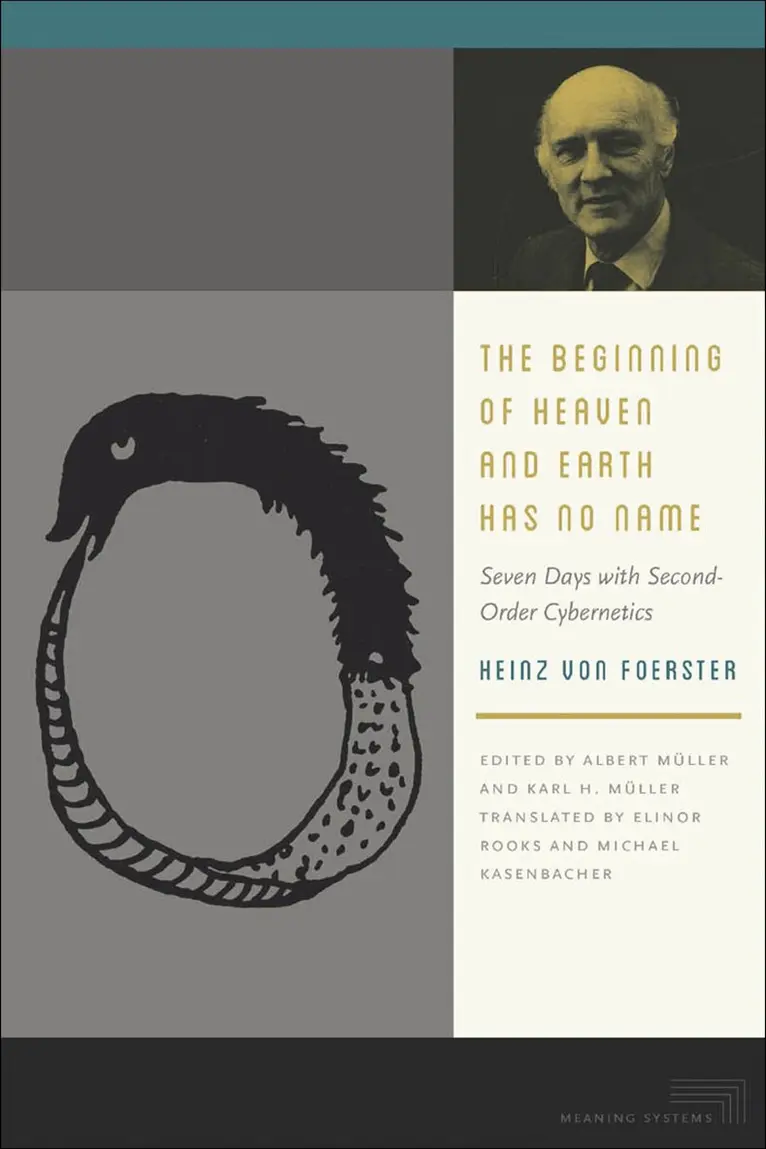
Heinz von Foerster was the inventor of second-order cybernetics, which recognizes the investigator as part of the system he is investigating. The Beginning of Heaven and Earth Has No Name provides an accessible, nonmathematical, and comprehensive overview of von Foerster's cybernetic ideas and of the philosophy latent within them. It distills concepts scattered across the lifework of this scientific polymath and influential interdisciplinarian. At the same time, as a book-length interview, it does justice to von Foerster's élan as a speaker and improviser, his skill as a raconteur.Developed from a week-long conversation between the editors and von Foerster near the end of his life, this work playfully engages von Foerster in developing the difference his notion of second-order cybernetics makes for topics ranging from emergence, life, order, and thermodynamics to observation, recursion, cognition, perception, memory, and communication.The book gives an English-speaking audience a new ease of access to the rich thought and generous spirit of this remarkable and protean thinker.
Häftad, Engelska, 2013
330 kr
Skickas
Heinz von Foerster was the inventor of second-order cybernetics, which recognizes the investigator as part of the system he is investigating. The Beginning of Heaven and Earth Has No Name provides an accessible, nonmathematical, and comprehensive overview of von Foerster's cybernetic ideas and of the philosophy latent within them. It distills concepts scattered across the lifework of this scientific polymath and influential interdisciplinarian. At the same time, as a book-length interview, it does justice to von Foerster's élan as a speaker and improviser, his skill as a raconteur.Developed from a week-long conversation between the editors and von Foerster near the end of his life, this work playfully engages von Foerster in developing the difference his notion of second-order cybernetics makes for topics ranging from emergence, life, order, and thermodynamics to observation, recursion, cognition, perception, memory, and communication.The book gives an English-speaking audience a new ease of access to the rich thought and generous spirit of this remarkable and protean thinker.
Inbunden, Engelska, 2015
1 271 kr
Skickas inom 10-15 vardagar
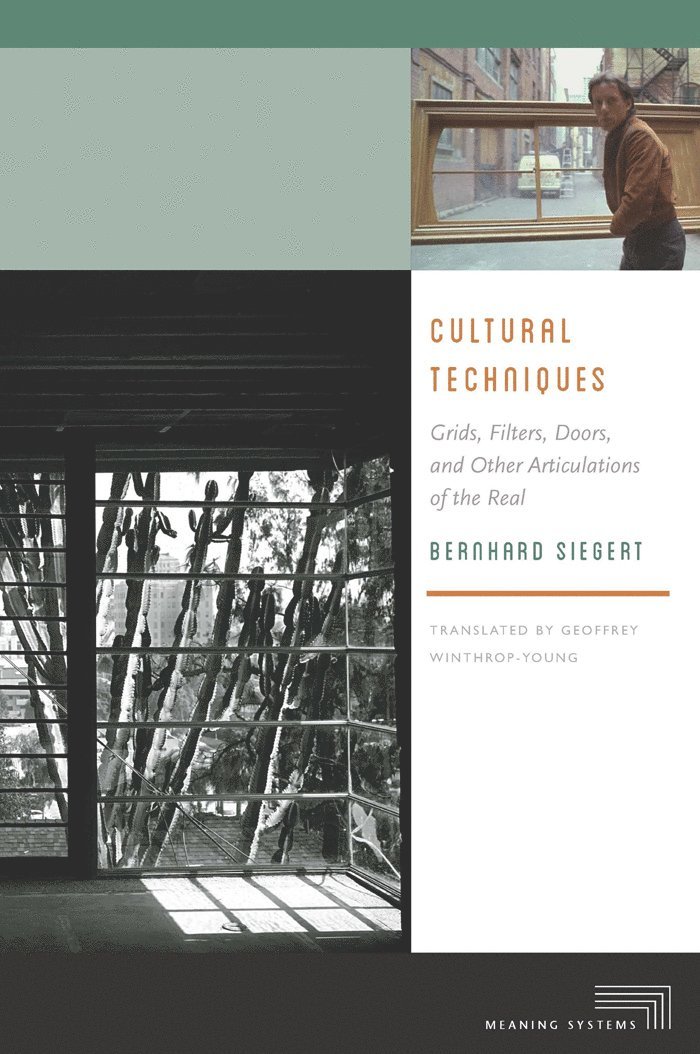
In a crucial shift within posthumanistic media studies, Bernhard Siegert dissolves the concept of media into a network of operations that reproduce, displace, process, and reflect the distinctions fundamental for a given culture. Cultural Techniques aims to forget our traditional understanding of media so as to redefine the concept through something more fundamental than the empiricist study of a medium's individual or collective uses or of its cultural semantics or aesthetics. Rather, Siegert seeks to relocate media and culture on a level where the distinctions between object and performance, matter and form, human and nonhuman, sign and channel, the symbolic and the real are still in the process of becoming. The result is to turn ontology into a domain of all that is meant in German by the word Kultur.Cultural techniques comprise not only self-referential symbolic practices like reading, writing, counting, or image-making. The analysis of artifacts as cultural techniques emphasizes their ontological status as "in-betweens," shifting from firstorder to second-order techniques, from the technical to the artistic, from object to sign, from the natural to the cultural, from the operational to the representational.Cultural Techniques ranges from seafaring, drafting, and eating to the production of the sign-signaldistinction in old and new media, to the reproduction of anthropological difference, to the study of trompe-l'oeils, grids, registers, and doors. Throughout, Siegert addresses fundamental questions of how ontological distinctions can be replaced by chains of operations that process those alleged ontological distinctions within the ontic.Grounding posthumanist theory both historically and technically, this book opens up a crucial dialogue between new German media theory and American postcybernetic discourses.
Häftad, Engelska, 2015
355 kr
Skickas inom 5-8 vardagar
In a crucial shift within posthumanistic media studies, Bernhard Siegert dissolves the concept of media into a network of operations that reproduce, displace, process, and reflect the distinctions fundamental for a given culture. Cultural Techniques aims to forget our traditional understanding of media so as to redefine the concept through something more fundamental than the empiricist study of a medium's individual or collective uses or of its cultural semantics or aesthetics. Rather, Siegert seeks to relocate media and culture on a level where the distinctions between object and performance, matter and form, human and nonhuman, sign and channel, the symbolic and the real are still in the process of becoming. The result is to turn ontology into a domain of all that is meant in German by the word Kultur.Cultural techniques comprise not only self-referential symbolic practices like reading, writing, counting, or image-making. The analysis of artifacts as cultural techniques emphasizes their ontological status as "in-betweens," shifting from firstorder to second-order techniques, from the technical to the artistic, from object to sign, from the natural to the cultural, from the operational to the representational.Cultural Techniques ranges from seafaring, drafting, and eating to the production of the sign-signaldistinction in old and new media, to the reproduction of anthropological difference, to the study of trompe-l'oeils, grids, registers, and doors. Throughout, Siegert addresses fundamental questions of how ontological distinctions can be replaced by chains of operations that process those alleged ontological distinctions within the ontic.Grounding posthumanist theory both historically and technically, this book opens up a crucial dialogue between new German media theory and American postcybernetic discourses.
Inbunden, Engelska, 2015
1 271 kr
Skickas inom 10-15 vardagar
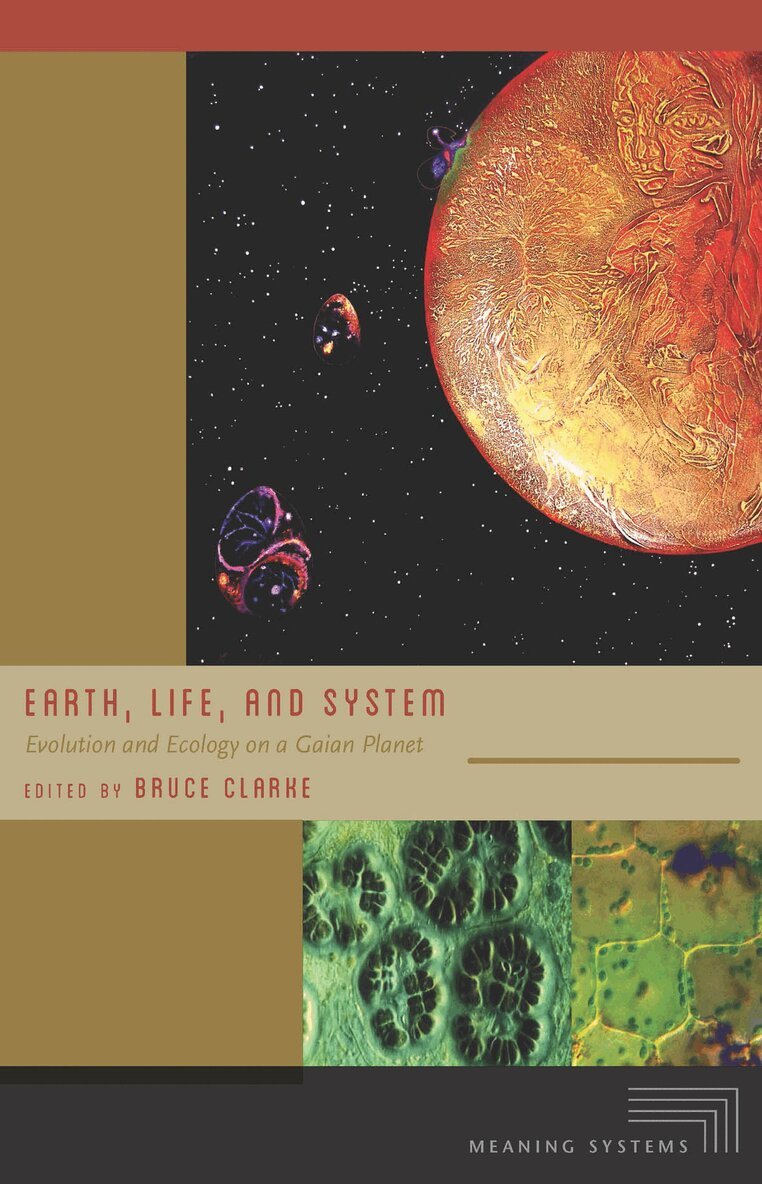
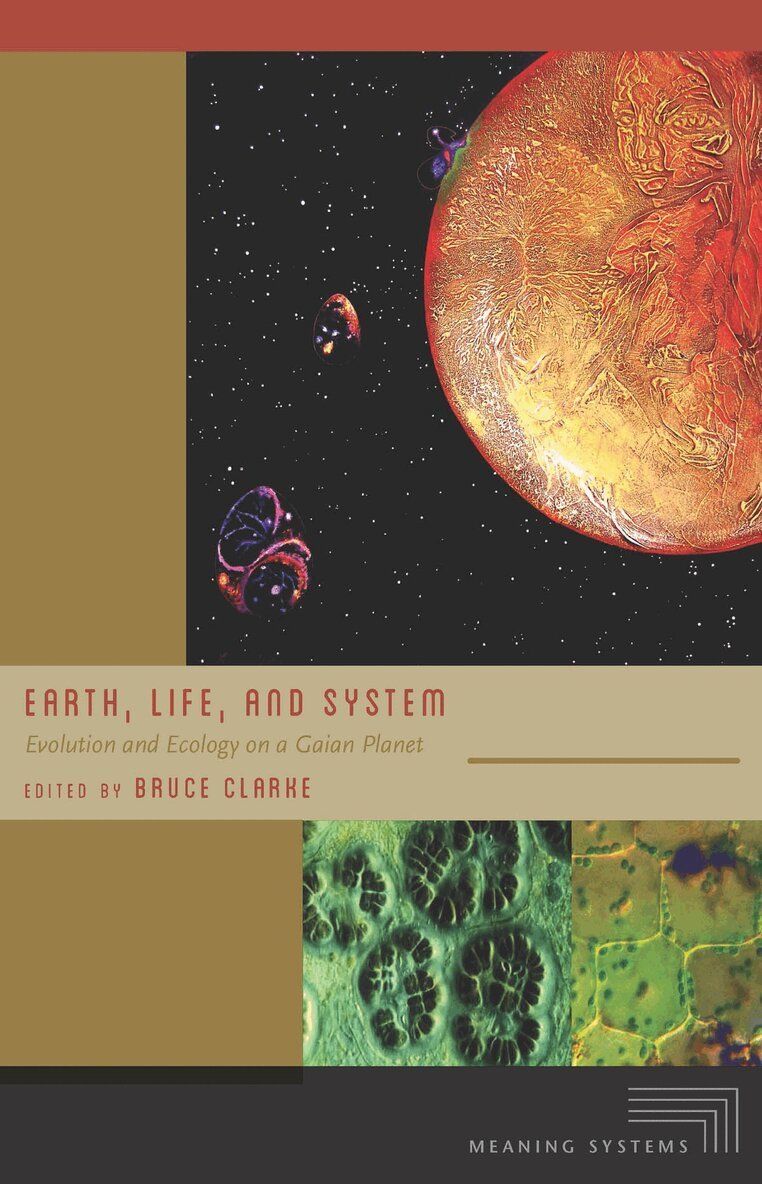
Exploring the broad implications of evolutionary theorist Lynn Margulis's work, this collection brings together specialists across a range of disciplines, from paleontology, molecular biology, evolutionary theory, and geobiology to developmental systems theory, archaeology, history of science, cultural science studies, and literature and science. Addressing the multiple themes that animated Margulis's science, the essays within take up, variously, astrobiology and the origin of life, ecology and symbiosis from the microbial to the planetary scale, the coupled interactions of earthly environments and evolving life in Gaia theory and earth system science, and the connections of these newer scientific ideas to cultural and creative productions.Dorion Sagan acquaints the reader with salient issues in Lynn Margulis's scientific work, the controversies they raised, and the vocabulary necessary to follow the arguments. Sankar Chatterjee synthesizes several strands of current theory for the origin of life on earth. James Strick tells the intertwined origin stories of James Lovelock's Gaia hypothesis and Margulis's serial endosymbiosis theory. Jan Sapp explores the distinct phylogenetic visions of Margulis and Carl Woese. Susan Squier examines the epigenetics of embryologist and developmental biologist C. H. Waddington. Bruce Clarke studies the convergence of ecosystem ecology, systems theory, and science fiction between the 1960s and the 1980s. James Shapiro discusses the genome evolution that results not from random changes but rather from active cell processes. Susan Oyama shows how the concept of development balances an over-emphasis on genetic coding and other deterministic schemas. Christopher Witmore studies the ways in which a concentrated animal feeding operation, or CAFO, mixes up natural resources, animal lives, and human appetites. And Peter Westbroek brings the insights of earth system science toward a new worldview essential for a proper response to global change.
Inbunden, Engelska, 2015
999 kr
Skickas inom 10-15 vardagar
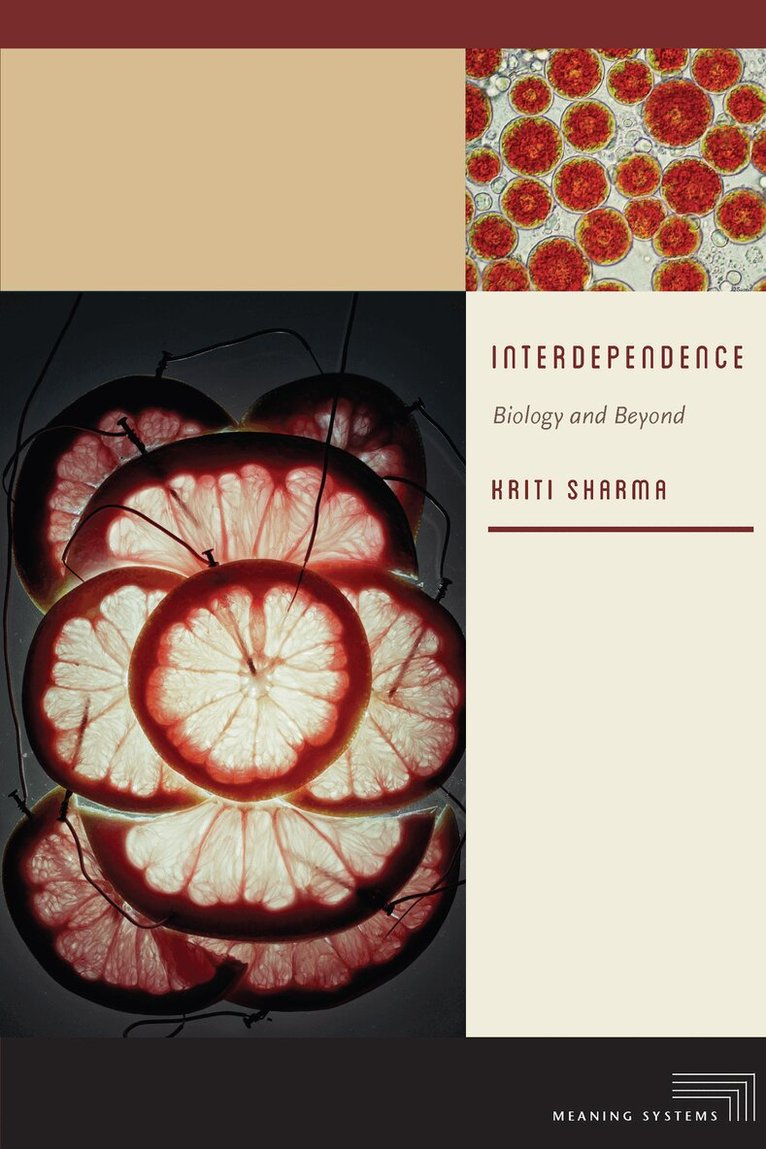
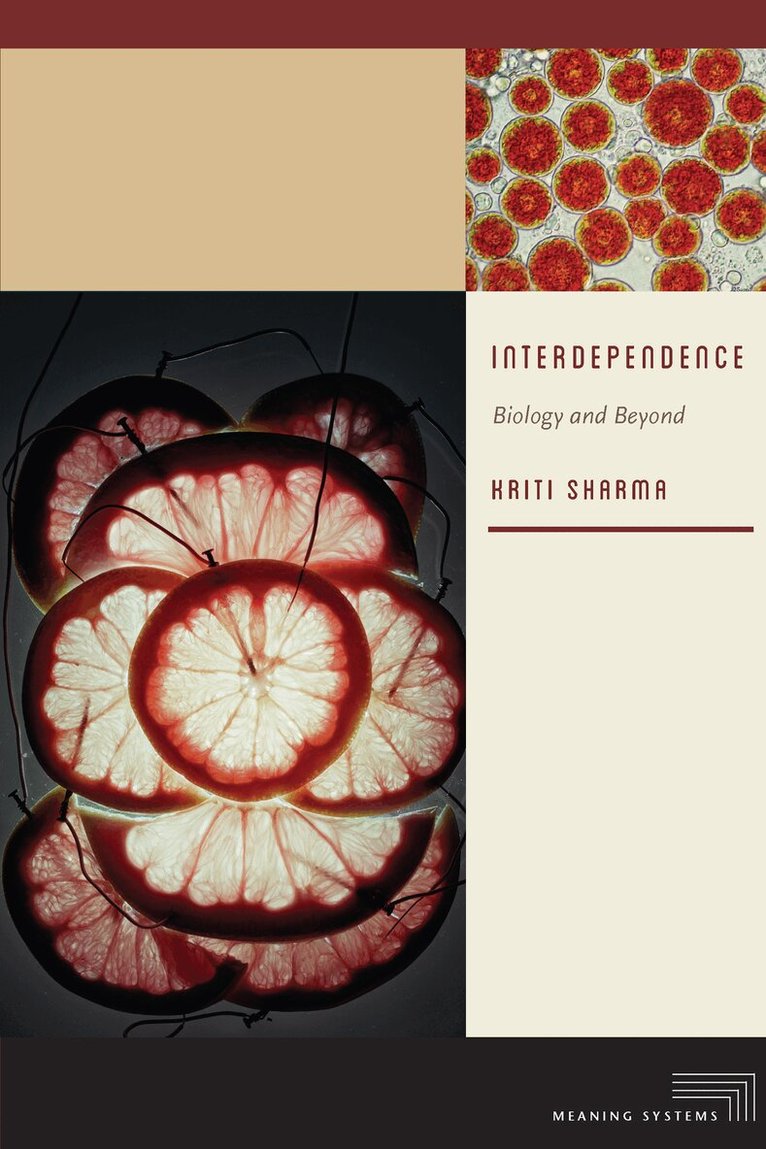
From biology to economics to information theory, the theme of interdependence is in the air, framing our experiences of all sorts of everyday phenomena. Indeed, the network may be the ascendant metaphor of our time. Yet precisely because the language of interdependence has become so commonplace as to be almost banal, we miss some of its most surprising and far-reaching implications.In Interdependence, biologist Kriti Sharma offers a compelling alternative to the popular view that interdependence simply means independent things interacting. Sharma systematically shows how interdependence entails the mutual constitution of one thing by another—how all things come into being only in a system of dependence on others.In a step-by-step account filled with vivid examples, Sharma shows how a coherent view of interdependence can help make sense not only of a range of everyday experiences but also of the most basic functions of living cells. With particular attention to the fundamental biological problem of how cells pick up signals from their surroundings, Sharma shows that only an account which replaces the perspective of "individual cells interacting with external environments" with one centered in interdependent, recursive systems can adequately account for how life works.This book will be of interest to biologists and philosophers, to theorists of science, of systems, and of cybernetics, and to anyone curious about how life works. Clear, concise, and insightful, Interdependence: Biology and Beyond explicitly offers a coherent and practical philosophy of interdependence and will help shape what interdependence comes to mean in the twenty-first century.
Häftad, Engelska, 2015
302 kr
Skickas inom 5-8 vardagar
From biology to economics to information theory, the theme of interdependence is in the air, framing our experiences of all sorts of everyday phenomena. Indeed, the network may be the ascendant metaphor of our time. Yet precisely because the language of interdependence has become so commonplace as to be almost banal, we miss some of its most surprising and far-reaching implications.In Interdependence, biologist Kriti Sharma offers a compelling alternative to the popular view that interdependence simply means independent things interacting. Sharma systematically shows how interdependence entails the mutual constitution of one thing by another—how all things come into being only in a system of dependence on others.In a step-by-step account filled with vivid examples, Sharma shows how a coherent view of interdependence can help make sense not only of a range of everyday experiences but also of the most basic functions of living cells. With particular attention to the fundamental biological problem of how cells pick up signals from their surroundings, Sharma shows that only an account which replaces the perspective of "individual cells interacting with external environments" with one centered in interdependent, recursive systems can adequately account for how life works.This book will be of interest to biologists and philosophers, to theorists of science, of systems, and of cybernetics, and to anyone curious about how life works. Clear, concise, and insightful, Interdependence: Biology and Beyond explicitly offers a coherent and practical philosophy of interdependence and will help shape what interdependence comes to mean in the twenty-first century.
Häftad, Engelska, 2016
484 kr
Skickas inom 10-15 vardagar
This intellectual biography covers the trajectory of Bateson's career, from his anthropological work in Bali alongside his wife, Margaret Mead, to his contributions to family therapy in the United States, and to studies of recursion as a feature of communication patterns in both the human and in the animal world. Layers of feedback with their many differing contexts, highlight the presence of meaning in social relations in contrast to that absence of meaning, purposefully proposed, within information theory. Throughout the human and in the animal world, recursion of feedback accounts for grasp of patterns, their difference, and with ability to communicate, enable transduction of perceptions of difference.Bateson's insistence on feedback and communication re-frames many aspects of culture, psychology, biology, and evolution. His legacy is recognized as an important precursor to the formation of a new science called Biosemiotics.Harries-Jones argues that Bateson turns conventional causality upside down through showing how humanity's perceptions, as with perceptions of all sentient beings, are anticipative. All sentient beings abduct from recursive patterns, rather than relying on linear evidence gathered about time/space movements of objects. Thus circular pattering provides clearer perceptions of the difference between sustainable creativity and current biocide, between our appreciation of nature's aesthetics and time/space 'games of power' which underlie so many social and biological theories.
Inbunden, Engelska, 2017
1 102 kr
Skickas inom 5-8 vardagar
"Google is a champion of cultural democracy, but without culture and without democracy." In this witty and polemical critique the philosopher Barbara Cassin takes aim at Google and our culture of big data. Enlisting her formidable knowledge of the rhetorical tradition, Cassin demolishes the Google myth of a "good" tech company and its "democracy of clicks," laying bare the philosophical poverty and political naiveté that underwrites its founding slogans: "Organize the world's information," and "Don't be evil." For Cassin, this conjunction of globalizing knowledge and moral imperative is frighteningly similar to the way American demagogues justify their own universalizing mission before the world.While sensitive to the possibilities of technology and to Google's playful appeal, Cassin shows what is lost when a narrow worship of information becomes dogma, such that research comes to mean data mining and other languages become provincial "flavors" folded into an impoverished Globish, or global English.
Häftad, Engelska, 2017
332 kr
Skickas inom 5-8 vardagar
"Google is a champion of cultural democracy, but without culture and without democracy." In this witty and polemical critique the philosopher Barbara Cassin takes aim at Google and our culture of big data. Enlisting her formidable knowledge of the rhetorical tradition, Cassin demolishes the Google myth of a "good" tech company and its "democracy of clicks," laying bare the philosophical poverty and political naiveté that underwrites its founding slogans: "Organize the world's information," and "Don't be evil." For Cassin, this conjunction of globalizing knowledge and moral imperative is frighteningly similar to the way American demagogues justify their own universalizing mission before the world.While sensitive to the possibilities of technology and to Google's playful appeal, Cassin shows what is lost when a narrow worship of information becomes dogma, such that research comes to mean data mining and other languages become provincial "flavors" folded into an impoverished Globish, or global English.
Inbunden, Engelska, 2018
1 728 kr
Skickas inom 10-15 vardagar
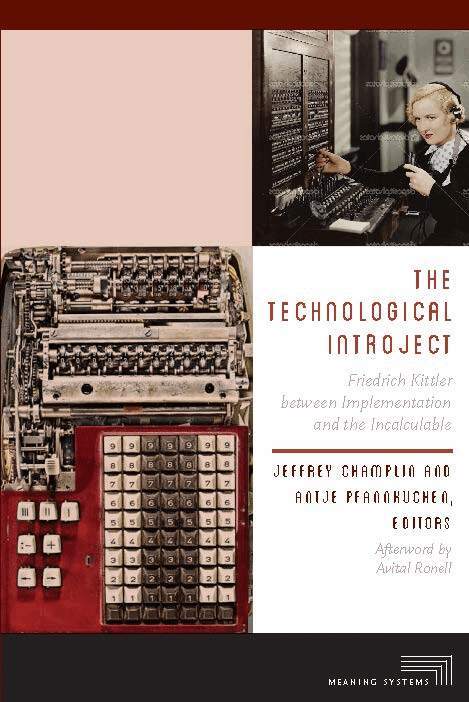
The Technological Introject explores the futures opened up across the humanities and social sciences by the influential media theorist Friedrich Kittler. Joining the German tradition of media studies and systems theory to the Franco-American theoretical tradition marked by poststructuralism, Kittler's work has redrawn the boundaries of disciplines and of scholarly traditions.The contributors position Kittler in relation to Marshall McLuhan, Jacques Derrida, discourse analysis, film theory, and psychoanalysis. Ultimately, the book shows the continuing relevance of the often uncomfortable questions Kittler opened up about the cultural production and its technological entanglements.
Häftad, Engelska, 2018
517 kr
Skickas inom 5-8 vardagar
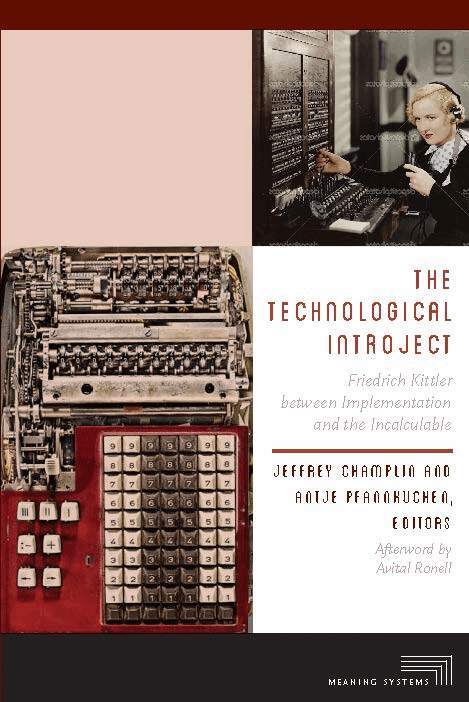
The Technological Introject explores the futures opened up across the humanities and social sciences by the influential media theorist Friedrich Kittler. Joining the German tradition of media studies and systems theory to the Franco-American theoretical tradition marked by poststructuralism, Kittler's work has redrawn the boundaries of disciplines and of scholarly traditions.The contributors position Kittler in relation to Marshall McLuhan, Jacques Derrida, discourse analysis, film theory, and psychoanalysis. Ultimately, the book shows the continuing relevance of the often uncomfortable questions Kittler opened up about the cultural production and its technological entanglements.
Häftad, Engelska, 2018
354 kr
Skickas
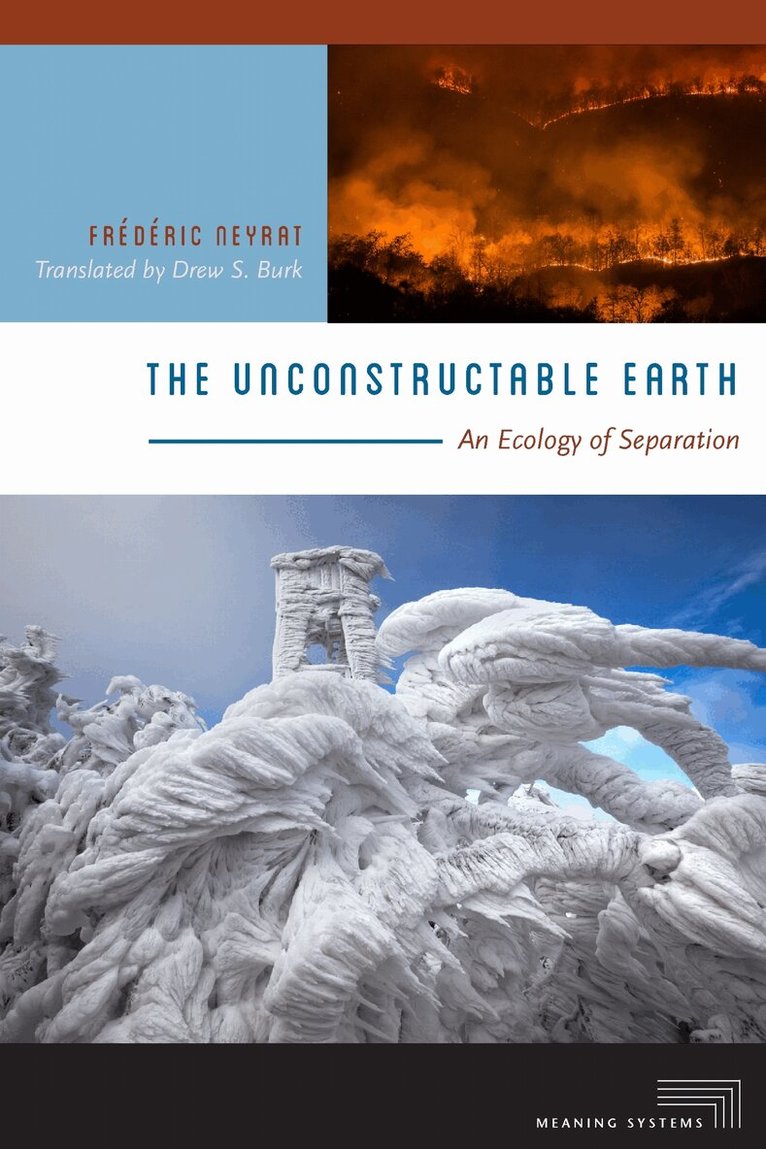
Winner, Grand Prize, French Voices Award for Excellence in Publication and TranslationThe Space Age is over? Not at all! A new planet has appeared: Earth. In the age of the Anthropocene, the Earth is a post-natural planet that can be remade at will, controlled and managed thanks to the prowess of geoengineering. This new imaginary is also accompanied by a new kind of power—geopower—that takes the entire Earth, in its social, biological and geophysical dimensions, as an object of knowledge, intervention, and governmentality. In short, our rising awareness that we have destroyed our planet has simultaneously provided us not with remorse or resolve but with a new fantasy: that the Anthropocene delivers an opportunity to remake our terrestrial environment thanks to the power of technology.Such is the position we find ourselves in, when proposals for reengineering the earth's ecosystems and geosystems are taken as the only politically feasible answer to ecological catastrophe. Yet far from being merely the fruit of geo-capitalism, this new grand narrative of geopower has also been activated by theorists of the constructivist turn—ecomodernist, postenvironmentalist, accelerationist—who have likewise called into question the great divide between nature and culture. With the collapse of this divide, a cyborg, hybrid, flexible nature has been built, an impoverished nature that does not exist without being performed by technologies that proliferate within the space of human needs and capitalist imperatives. Underneath this performative vision resides a hidden anaturalism denying all otherness to nature and the Earth, no longer by externalizing it as a thing to be dominated, but by radically internalizing it as something to be digested. Constructivist ecology thus finds itself in no position to confront the geoconstructivist project, with its claim that there is no nature and its aim to replace Earth with Earth 2.0.Against both positions, Neyrat stakes out the importance of the unconstructable Earth. Against the fusional myth of technology over nature, but without returning to the division between nature and culture, he proposes an "ecology of separation" that acknowledges the wild, subtractive capacity of nature. Against the capitalist, technocratic delusion of earth as a constructible object, but equally against an organicism marked by unacknowledged traces of racism and sexism, Neyrat shows what it means to appreciate Earth as an unsubstitutable becoming: a traject that cannot be replicated in a laboratory. Underway for billions of years, withdrawing into the most distant past and the most inaccessible future, Earth escapes the hubris of all who would remake and master it.This remarkable book, which will be of interest to those across the humanities, natural sciences, and social sciences, from theorists to shapers of policy, recasts the earth as a singular trajectory that invites humans to turn political ecology into a geopolitics.
Inbunden, Engelska, 2018
1 271 kr
Skickas inom 10-15 vardagar
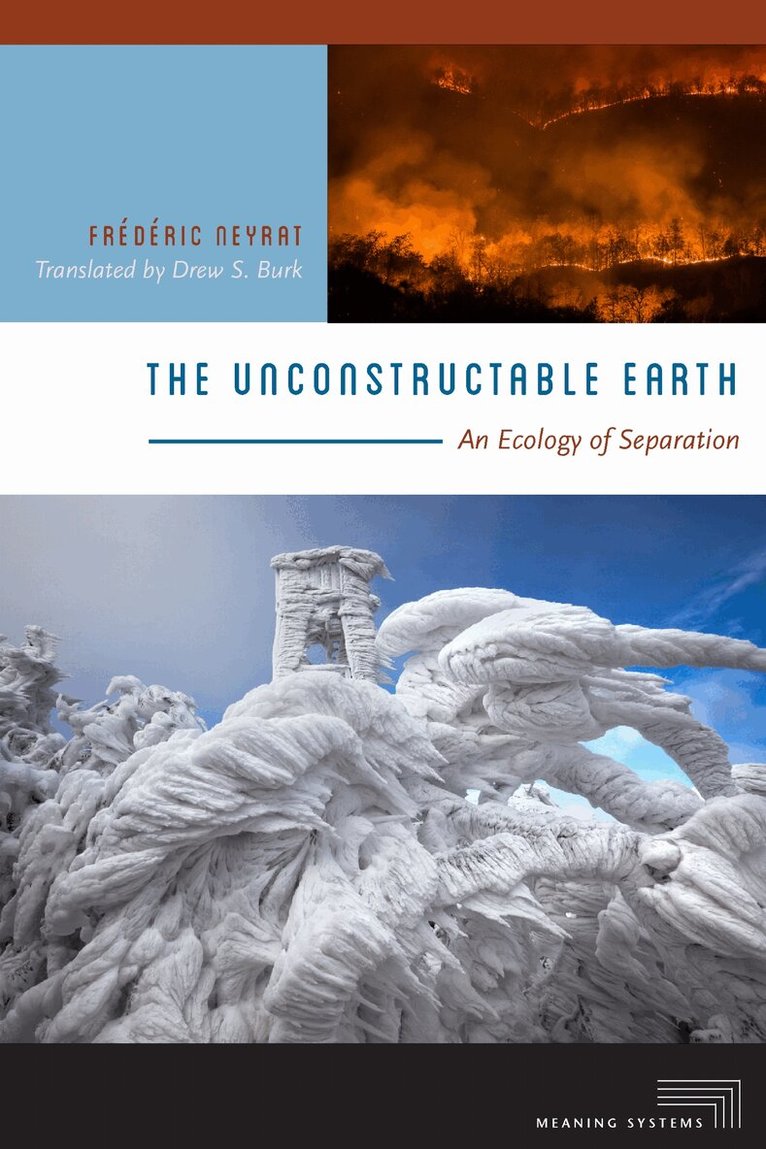
Winner, Grand Prize, French Voices Award for Excellence in Publication and TranslationThe Space Age is over? Not at all! A new planet has appeared: Earth. In the age of the Anthropocene, the Earth is a post-natural planet that can be remade at will, controlled and managed thanks to the prowess of geoengineering. This new imaginary is also accompanied by a new kind of power—geopower—that takes the entire Earth, in its social, biological and geophysical dimensions, as an object of knowledge, intervention, and governmentality. In short, our rising awareness that we have destroyed our planet has simultaneously provided us not with remorse or resolve but with a new fantasy: that the Anthropocene delivers an opportunity to remake our terrestrial environment thanks to the power of technology.Such is the position we find ourselves in, when proposals for reengineering the earth's ecosystems and geosystems are taken as the only politically feasible answer to ecological catastrophe. Yet far from being merely the fruit of geo-capitalism, this new grand narrative of geopower has also been activated by theorists of the constructivist turn—ecomodernist, postenvironmentalist, accelerationist—who have likewise called into question the great divide between nature and culture. With the collapse of this divide, a cyborg, hybrid, flexible nature has been built, an impoverished nature that does not exist without being performed by technologies that proliferate within the space of human needs and capitalist imperatives. Underneath this performative vision resides a hidden anaturalism denying all otherness to nature and the Earth, no longer by externalizing it as a thing to be dominated, but by radically internalizing it as something to be digested. Constructivist ecology thus finds itself in no position to confront the geoconstructivist project, with its claim that there is no nature and its aim to replace Earth with Earth 2.0.Against both positions, Neyrat stakes out the importance of the unconstructable Earth. Against the fusional myth of technology over nature, but without returning to the division between nature and culture, he proposes an "ecology of separation" that acknowledges the wild, subtractive capacity of nature. Against the capitalist, technocratic delusion of earth as a constructible object, but equally against an organicism marked by unacknowledged traces of racism and sexism, Neyrat shows what it means to appreciate Earth as an unsubstitutable becoming: a traject that cannot be replicated in a laboratory. Underway for billions of years, withdrawing into the most distant past and the most inaccessible future, Earth escapes the hubris of all who would remake and master it.This remarkable book, which will be of interest to those across the humanities, natural sciences, and social sciences, from theorists to shapers of policy, recasts the earth as a singular trajectory that invites humans to turn political ecology into a geopolitics.
Häftad, Engelska, 2019
415 kr
Skickas inom 10-15 vardagar
Exterranean concerns the extraction of stuff from the Earth, a process in which matter goes from being sub- to exterranean. By opening up a rich archive of nonmodern texts and images from across Europe, this work offers a bracing riposte to several critical trends in ecological thought. By shifting emphasis from emission to extraction, Usher reorients our perspective away from Earthrise-like globes and shows what is gained by opening the planet to depths within. The book thus maps the material and immaterial connections between the Earth from which we extract, the human and nonhuman agents of extraction, and the extracted matter with which we live daily.Eschewing the self-congratulatory claims of posthumanism, Usher instead elaborates a productive tension between the materially-situated homo of nonmodern humanism and the abstract and aggregated anthropos of the Anthropocene. In dialogue with Michel Serres, Bruno Latour, and other interdisciplinary work in the environmental humanities, Usher shows what premodern material can offer to contemporary theory. Examining textual and visual culture alike, Usher explores works by Ronsard, Montaigne, and Rabelais, early scientific works by Paracelsus and others, as well as objects, engravings, buildings, and the Salt Mines of Wieliczka. Both historicist and speculative in approach, Exterranean lays the groundwork for a comparative ecocriticism that reaches across and untranslates theoretical affordances between periods and languages.
Inbunden, Engelska, 2019
1 448 kr
Skickas inom 10-15 vardagar
Exterranean concerns the extraction of stuff from the Earth, a process in which matter goes from being sub- to exterranean. By opening up a rich archive of nonmodern texts and images from across Europe, this work offers a bracing riposte to several critical trends in ecological thought. By shifting emphasis from emission to extraction, Usher reorients our perspective away from Earthrise-like globes and shows what is gained by opening the planet to depths within. The book thus maps the material and immaterial connections between the Earth from which we extract, the human and nonhuman agents of extraction, and the extracted matter with which we live daily.Eschewing the self-congratulatory claims of posthumanism, Usher instead elaborates a productive tension between the materially-situated homo of nonmodern humanism and the abstract and aggregated anthropos of the Anthropocene. In dialogue with Michel Serres, Bruno Latour, and other interdisciplinary work in the environmental humanities, Usher shows what premodern material can offer to contemporary theory. Examining textual and visual culture alike, Usher explores works by Ronsard, Montaigne, and Rabelais, early scientific works by Paracelsus and others, as well as objects, engravings, buildings, and the Salt Mines of Wieliczka. Both historicist and speculative in approach, Exterranean lays the groundwork for a comparative ecocriticism that reaches across and untranslates theoretical affordances between periods and languages.
Häftad, Engelska, 2020
365 kr
Skickas
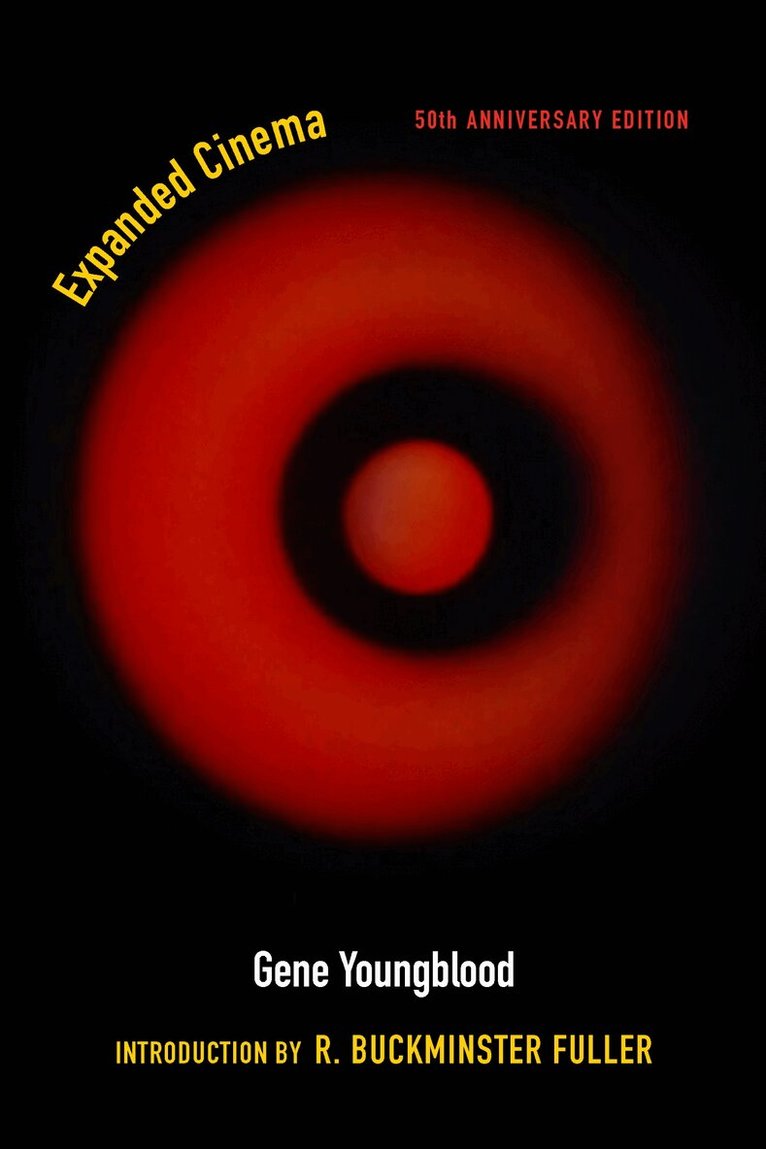
Fiftieth anniversary reissue of the founding media studies book that helped establish media art as a cultural category.First published in 1970, Gene Youngblood's influential Expanded Cinema was the first serious treatment of video, computers, and holography as cinematic technologies. Long considered the bible for media artists, Youngblood's insider account of 1960s counterculture and the birth of cybernetics remains a mainstay reference in today's hypermediated digital world. This fiftieth anniversary edition includes a new Introduction by the author that offers conceptual tools for understanding the sociocultural and sociopolitical realities of our present world.A unique eyewitness account of burgeoning experimental film and the birth of video art in the late 1960s, this far- ranging study traces the evolution of cinematic language to the end of fiction, drama, and realism. Vast in scope, its prescient formulations include "the paleocybernetic age," "intermedia," the "artist as design scientist," the "artist as ecologist," "synaesthetics and kinesthetics," and "the technosphere: man/machine symbiosis." Outstanding works are analyzed in detail. Methods of production are meticulously described, including interviews with artists and technologists of the period, such as Nam June Paik, Jordan Belson, Andy Warhol, Stan Brakhage, Carolee Schneemann, Stan VanDerBeek, Les Levine, and Frank Gillette. An inspiring Introduction by the celebrated polymath and designer R. Buckminster Fuller—a perfectly cut gem of countercultural thinking in itself—places Youngblood's radical observations in comprehensive perspective.Providing an unparalleled historical documentation, Expanded Cinema clarifies a chapter of countercultural history that is still not fully represented in the arthistorical record half a century later. The book will also inspire the current generation of artists working in ever-newer expansions of the cinematic environment and will prove invaluable to all who are concerned with the technologies that are reshaping the nature of human communication.
Inbunden, Engelska, 2020
1 470 kr
Skickas inom 5-8 vardagar
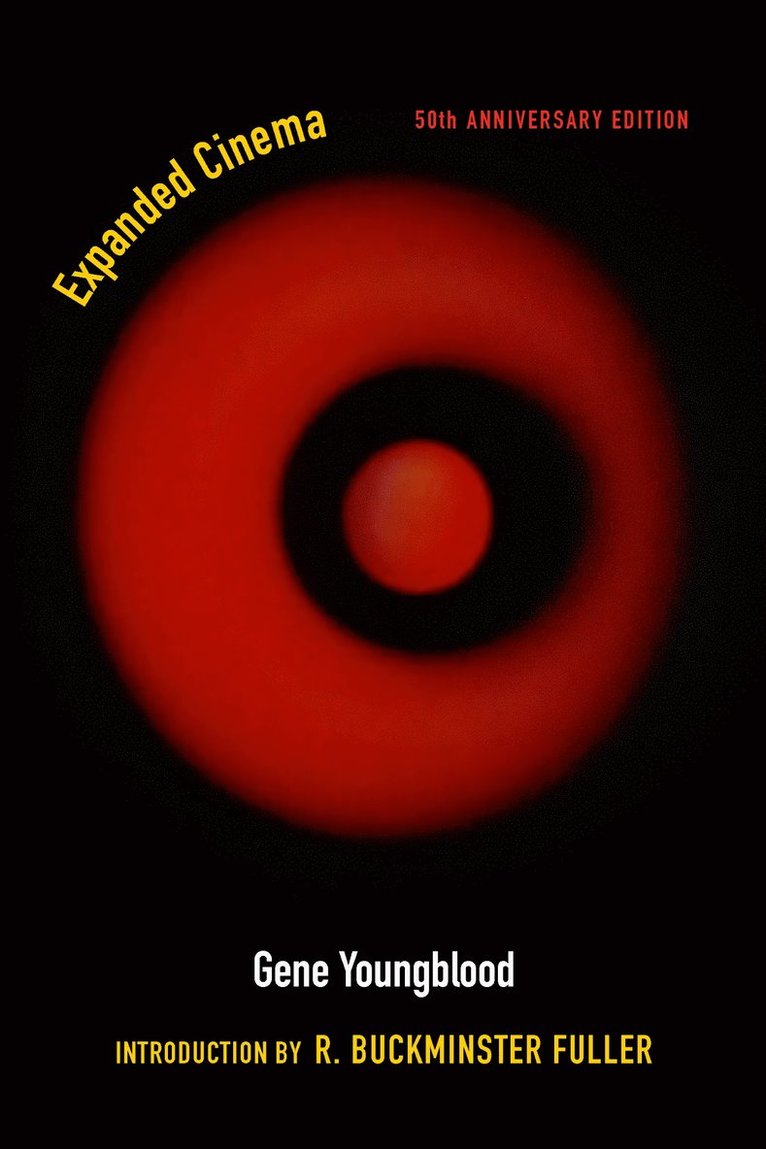
Fiftieth anniversary reissue of the founding media studies book that helped establish media art as a cultural category.First published in 1970, Gene Youngblood's influential Expanded Cinema was the first serious treatment of video, computers, and holography as cinematic technologies. Long considered the bible for media artists, Youngblood's insider account of 1960s counterculture and the birth of cybernetics remains a mainstay reference in today's hypermediated digital world. This fiftieth anniversary edition includes a new Introduction by the author that offers conceptual tools for understanding the sociocultural and sociopolitical realities of our present world.A unique eyewitness account of burgeoning experimental film and the birth of video art in the late 1960s, this far- ranging study traces the evolution of cinematic language to the end of fiction, drama, and realism. Vast in scope, its prescient formulations include "the paleocybernetic age," "intermedia," the "artist as design scientist," the "artist as ecologist," "synaesthetics and kinesthetics," and "the technosphere: man/machine symbiosis." Outstanding works are analyzed in detail. Methods of production are meticulously described, including interviews with artists and technologists of the period, such as Nam June Paik, Jordan Belson, Andy Warhol, Stan Brakhage, Carolee Schneemann, Stan VanDerBeek, Les Levine, and Frank Gillette. An inspiring Introduction by the celebrated polymath and designer R. Buckminster Fuller—a perfectly cut gem of countercultural thinking in itself—places Youngblood's radical observations in comprehensive perspective.Providing an unparalleled historical documentation, Expanded Cinema clarifies a chapter of countercultural history that is still not fully represented in the arthistorical record half a century later. The book will also inspire the current generation of artists working in ever-newer expansions of the cinematic environment and will prove invaluable to all who are concerned with the technologies that are reshaping the nature of human communication.
Inbunden, Engelska, 2025
1 580 kr
Skickas inom 10-15 vardagar
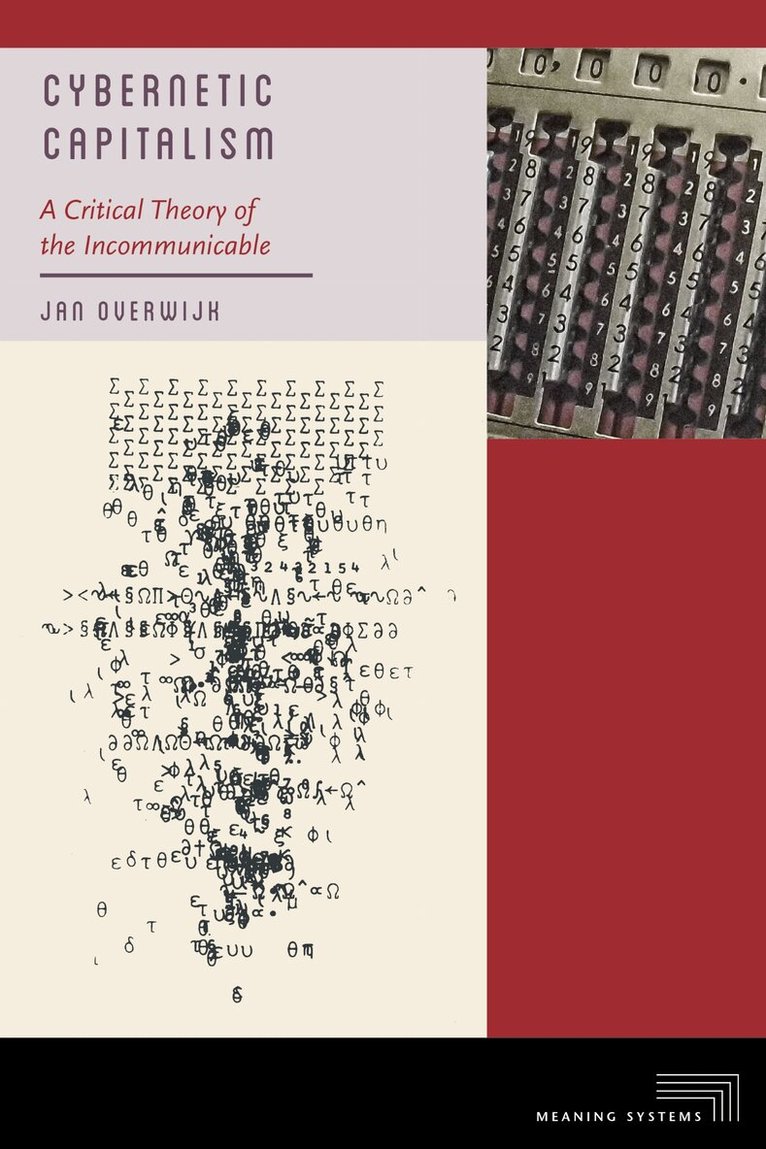
A Conceptual Interrogation of Capital in a Cybernetic Environment Cybernetic Capitalism presents a groundbreaking synthesis of Niklas Luhmann's systems theory and critical theory. Overwijk examines how neoliberal capitalism now thrives on the management of incommunicability rather than the pursuit of total communicability, harnessing ecological complexity as its driving force. Contrary to earlier critiques that highlighted capitalism's push to render all social life fully communicable, the current era encourages market incalculability, profits from user unpredictability, and spurs serviceworkers' creativity.This ecological logic resonates with the extractivist drive of the Anthropocene, reframing our understanding of capitalism as an adaptive, environment-attuned system. Cybernetic Capitalism also exposes how these dynamics intersect with the cultural rise of conspiracy theories and radical-right irrationalism. By illuminating capitalism's paradoxical reliance on both rationalist and irrationalist currents, Overwijk provides a vital new lens for interpreting the complex politics of our time.
Häftad, Engelska, 2025
407 kr
Skickas
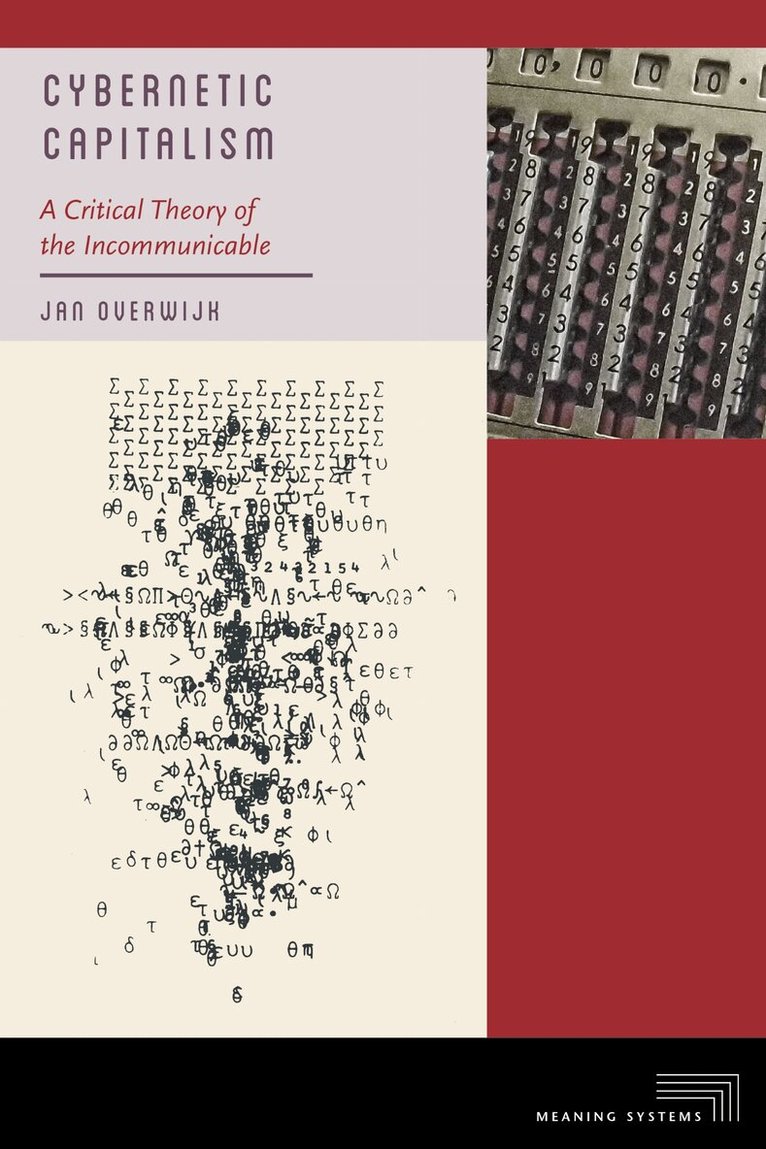
A Conceptual Interrogation of Capital in a Cybernetic Environment Cybernetic Capitalism presents a groundbreaking synthesis of Niklas Luhmann's systems theory and critical theory. Overwijk examines how neoliberal capitalism now thrives on the management of incommunicability rather than the pursuit of total communicability, harnessing ecological complexity as its driving force. Contrary to earlier critiques that highlighted capitalism's push to render all social life fully communicable, the current era encourages market incalculability, profits from user unpredictability, and spurs serviceworkers' creativity.This ecological logic resonates with the extractivist drive of the Anthropocene, reframing our understanding of capitalism as an adaptive, environment-attuned system. Cybernetic Capitalism also exposes how these dynamics intersect with the cultural rise of conspiracy theories and radical-right irrationalism. By illuminating capitalism's paradoxical reliance on both rationalist and irrationalist currents, Overwijk provides a vital new lens for interpreting the complex politics of our time.
Inbunden, Engelska, 2026
1 210 kr
Skickas inom 10-15 vardagar
Once dismissed as "tragedy," the commons have been making a comeback. Amid intensifying social and environmental injustices in neoliberal regimes, scholars and activists have turned to the commons - historically, the shared ownership of land - as a way to express more just ways of living within and against the grasp of capitalism. Resurgent Commons reframes the commons by foregrounding relations of care and socio-ecological reproduction, while questioning anthropocentric formulations that would render the commons a set of available resources and the product of human cooperation. Interdisciplinary in nature, Tola's book troubles universalist accounts of the commons by unearthing its ambivalent role in European colonial histories marked by racial and sexual violence and environmental destruction.As central case studies, the book considers contemporary political projects that enact feminist, anti-racist and more-than-human practices of urban commoning in Rome, a sprawling built environment in the European South that is also a city of ruins. From transfeminist commons to struggles for repairing areas where industrial ruins and recalcitrant natures coexist, to encounters with indigenous perspectives from the Americas, resurgent commons enact forms of life that are at odds with dominant regimes of property and governance. The book shows how a reconsideration of a supposedly obsolete mode of shared ownership can enable new modes of inhabiting the earth.
Häftad, Engelska, 2026
305 kr
Skickas
Once dismissed as "tragedy," the commons have been making a comeback. Amid intensifying social and environmental injustices in neoliberal regimes, scholars and activists have turned to the commons - historically, the shared ownership of land - as a way to express more just ways of living within and against the grasp of capitalism. Resurgent Commons reframes the commons by foregrounding relations of care and socio-ecological reproduction, while questioning anthropocentric formulations that would render the commons a set of available resources and the product of human cooperation. Interdisciplinary in nature, Tola's book troubles universalist accounts of the commons by unearthing its ambivalent role in European colonial histories marked by racial and sexual violence and environmental destruction.As central case studies, the book considers contemporary political projects that enact feminist, anti-racist and more-than-human practices of urban commoning in Rome, a sprawling built environment in the European South that is also a city of ruins. From transfeminist commons to struggles for repairing areas where industrial ruins and recalcitrant natures coexist, to encounters with indigenous perspectives from the Americas, resurgent commons enact forms of life that are at odds with dominant regimes of property and governance. The book shows how a reconsideration of a supposedly obsolete mode of shared ownership can enable new modes of inhabiting the earth.