Methods for Social Inquiry - Böcker
Visar alla böcker i serien Methods for Social Inquiry. Handla med fri frakt och snabb leverans.
14 produkter
14 produkter
322 kr
Skickas inom 7-10 vardagar
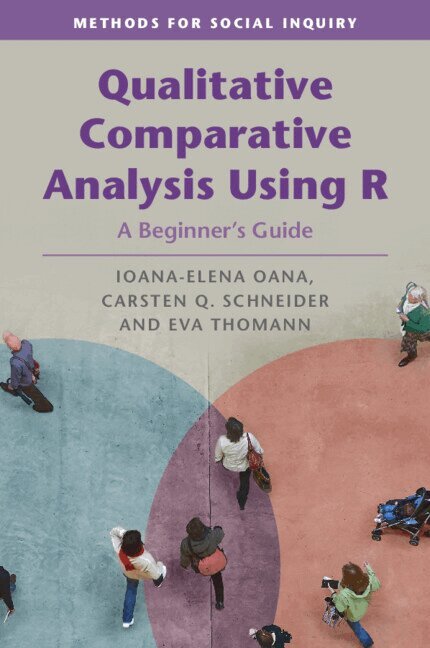
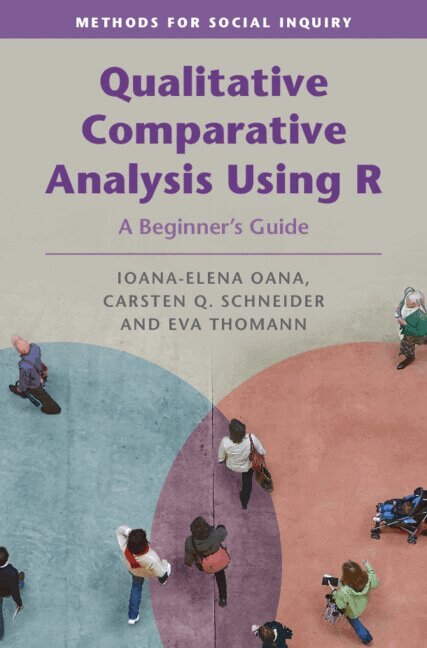
A comprehensive introduction and teaching resource for state-of-the-art Qualitative Comparative Analysis (QCA) using R software. This guide facilitates the efficient teaching, independent learning, and use of QCA with the best available software, reducing the time and effort required when encountering not just the logic of a new method, but also new software. With its applied and practical focus, the book offers a genuinely simple and intuitive resource for implementing the most complete protocol of QCA. To make the lives of students, teachers, researchers, and practitioners as easy as possible, the book includes learning goals, core points, empirical examples, and tips for good practices. The freely available online material provides a rich body of additional resources to aid users in their learning process. Beyond performing core analyses with the R package QCA, the book also facilitates a close integration with the R package SetMethods allowing for a host of additional protocols for building a more solid and well-rounded QCA.
Set-Theoretic Multi-Method Research
A Guide to Combining QCA and Case Studies
Inbunden, Engelska, 2024
929 kr
Skickas inom 7-10 vardagar
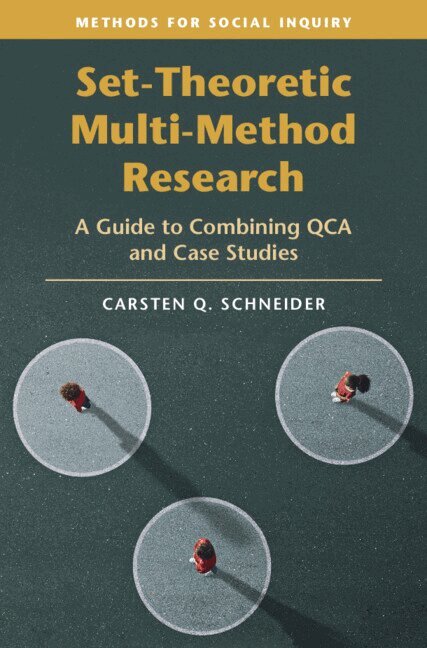
A state-of-the-art comprehensive exposition of combining Qualitative Comparative Analysis (QCA) and case studies, this book facilitates the efficient use and independent learning of this form of SMMR (set-theoretic multi-method research) with the best available software. It will reduce the time and effort required when performing both QCA and case studies within the same research project. This is achieved by spelling out the conceptual principles and practices in SMMR, and by introducing a tailor-made R software package. With an applied and practical focus, this is an intuitive resource for implementing the most complete protocol of SMMR. Features include Learning Goals, Core Points, and Empirical Examples, as well as boxed examples of R codes and the R output it produces. There is also a glossary for key SMMR terms. Additional online material is available, comprising machine-readable datasets and R scripts for replication and independent learning.
297 kr
Skickas inom 7-10 vardagar
A state-of-the-art comprehensive exposition of combining Qualitative Comparative Analysis (QCA) and case studies, this book facilitates the efficient use and independent learning of this form of SMMR (set-theoretic multi-method research) with the best available software. It will reduce the time and effort required when performing both QCA and case studies within the same research project. This is achieved by spelling out the conceptual principles and practices in SMMR, and by introducing a tailor-made R software package. With an applied and practical focus, this is an intuitive resource for implementing the most complete protocol of SMMR. Features include Learning Goals, Core Points, and Empirical Examples, as well as boxed examples of R codes and the R output it produces. There is also a glossary for key SMMR terms. Additional online material is available, comprising machine-readable datasets and R scripts for replication and independent learning.
929 kr
Skickas inom 7-10 vardagar
A user-friendly introductory guide to the empirical study of social networks. Jennifer M. Larson presents the fundamentals of social networks in an intuition-forward way which guides theory-driven research design. Substantial attention is devoted to a framework for developing a network theory that will steer data collection to be maximally informative and minimally frustrating. Other features include: Coverage of a range of practical topics including selecting operationalizations, cutting survey costs, and cleaning data; A tutorial for getting started in analyzing networks in R; Technical sections full of examples, points to hone intuition, and practice problems with solutions. Designing Empirical Social Networks Research will be a valuable tool for advanced undergraduates, Ph.D. students in the social sciences, especially political science, and researchers across the social sciences who are new to the study of networks.
297 kr
Skickas inom 7-10 vardagar
A user-friendly introductory guide to the empirical study of social networks. Jennifer M. Larson presents the fundamentals of social networks in an intuition-forward way which guides theory-driven research design. Substantial attention is devoted to a framework for developing a network theory that will steer data collection to be maximally informative and minimally frustrating. Other features include: Coverage of a range of practical topics including selecting operationalizations, cutting survey costs, and cleaning data; A tutorial for getting started in analyzing networks in R; Technical sections full of examples, points to hone intuition, and practice problems with solutions. Designing Empirical Social Networks Research will be a valuable tool for advanced undergraduates, Ph.D. students in the social sciences, especially political science, and researchers across the social sciences who are new to the study of networks.
The Practice of Multi-Method Research
Mixing Qualitative and Quantitative Methods
Häftad, Engelska, 2026
267 kr
Kommande
Can interviews or a focus group improve the causal inferences drawn from experiments? Can quantitative text analysis help develop workflows as a qualitative scholar? Can we learn from a single case in a way that helps us with a statistical model? There is much to learn from the careful use of all these methodological combinations. The Practice of Multi-Method Research is aimed at practical researchers: from undergraduates preparing for an honors thesis, to graduate students designing a dissertation, through to seasoned scholars considering a new approach for their next set of studies. It offers a hands-on, practical guide to combining research across various methodological traditions: qualitative, machine learning, and quantitative approaches to concepts and measurement, adding quantitative and data-science components to process-tracing designs and to qualitative case studies in general, how qualitative research can strengthen regression-type designs, and how to mix qualitative elements with experiments. .
The Practice of Multi-Method Research
Mixing Qualitative and Quantitative Methods
Inbunden, Engelska, 2026
785 kr
Kommande
Can interviews or a focus group improve the causal inferences drawn from experiments? Can quantitative text analysis help develop workflows as a qualitative scholar? Can we learn from a single case in a way that helps us with a statistical model? There is much to learn from the careful use of all these methodological combinations. The Practice of Multi-Method Research is aimed at practical researchers: from undergraduates preparing for an honors thesis, to graduate students designing a dissertation, through to seasoned scholars considering a new approach for their next set of studies. It offers a hands-on, practical guide to combining research across various methodological traditions: qualitative, machine learning, and quantitative approaches to concepts and measurement, adding quantitative and data-science components to process-tracing designs and to qualitative case studies in general, how qualitative research can strengthen regression-type designs, and how to mix qualitative elements with experiments. .
1 034 kr
Skickas inom 7-10 vardagar
What is a focus group? Why do we use them? When should we use them? When should we not? Focus Groups for the Social Science Researcher provides a step-by-step guide to undertaking focus groups, whether as a stand-alone method or alongside other qualitative or quantitative methods. It recognizes the challenges that focus groups encounter and provides tips to address them. The book highlights three unique, inter-related characteristics of focus groups. First, they are inherently social in form. Second, the data emerge organically through conversation; they are emic in nature. Finally, focus groups generate data at three levels of analysis: the individual, group, and interactive level. The book builds from these three characteristics to explain when focus groups can usefully be employed in different research designs. This is an essential text for students and researchers looking for a concise and accessible introduction to this important approach to data collection.
915 kr
Skickas inom 7-10 vardagar
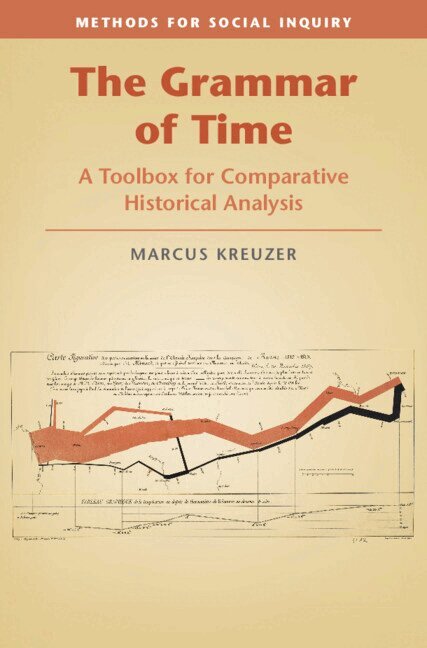
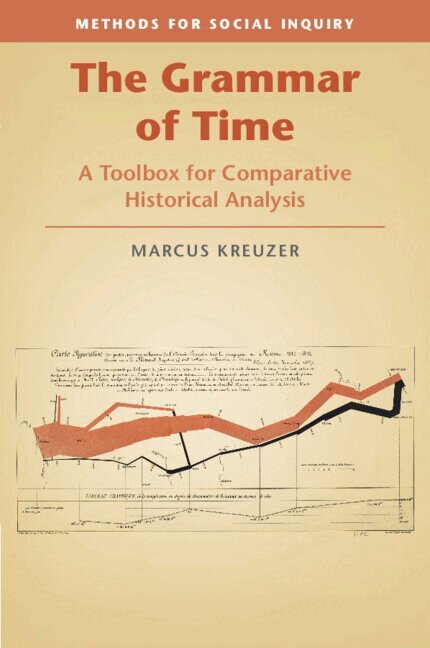
Kreuzer offers guidance to scholars looking to comparative historical analysis (CHA) for the tools to analyze macro-historical questions. Like history, CHA uses the past to formulate research questions, describe social transformations, and generate inductive insights. Like social science, CHA compares those patterns to explicate generalizable and testable theories. It operates in two different worlds-one constantly changing and full of cultural particularities and another static and full of orderly uniformities. CHA draws attention to the ontological constructions of these worlds; how scholars background historical and geographic particularities to create a social reality orderly enough for theorizing, while others foreground those particularities to re-complexify it to generate new inductive insights. CHA engages in ontological triage, dialogue between exploration and confirmation, and conversation in how to translate test results into genuine answers. This book is supplemented by online materials including introductory videos, diagnostic quizzes, advanced exercises, and annotated bibliographies.
926 kr
Skickas inom 7-10 vardagar
Social media has put mass communication in the hands of normal people on an unprecedented scale, and has also given social scientists the tools necessary to listen to the voices of everyday people around the world. This book gives social scientists the skills necessary to leverage that opportunity, and transform social media's vast stream of information into social science data. The book combines the big data techniques of computer science with social science methodology. Intended as a text for advanced undergraduates, graduate students, and researchers in the social sciences, this book provides a methodological pathway for scholars who want to make use of this new and evolving source of data. It provides a framework for building one's own data collection and analysis infrastructure, a toolkit of content analysis, geographic analysis, and network analysis, and meditations on the ethical implications of social media data.
318 kr
Skickas inom 7-10 vardagar
Kreuzer offers guidance to scholars looking to comparative historical analysis (CHA) for the tools to analyze macro-historical questions. Like history, CHA uses the past to formulate research questions, describe social transformations, and generate inductive insights. Like social science, CHA compares those patterns to explicate generalizable and testable theories. It operates in two different worlds-one constantly changing and full of cultural particularities and another static and full of orderly uniformities. CHA draws attention to the ontological constructions of these worlds; how scholars background historical and geographic particularities to create a social reality orderly enough for theorizing, while others foreground those particularities to re-complexify it to generate new inductive insights. CHA engages in ontological triage, dialogue between exploration and confirmation, and conversation in how to translate test results into genuine answers. This book is supplemented by online materials including introductory videos, diagnostic quizzes, advanced exercises, and annotated bibliographies.
309 kr
Skickas inom 7-10 vardagar
Social media has put mass communication in the hands of normal people on an unprecedented scale, and has also given social scientists the tools necessary to listen to the voices of everyday people around the world. This book gives social scientists the skills necessary to leverage that opportunity, and transform social media's vast stream of information into social science data. The book combines the big data techniques of computer science with social science methodology. Intended as a text for advanced undergraduates, graduate students, and researchers in the social sciences, this book provides a methodological pathway for scholars who want to make use of this new and evolving source of data. It provides a framework for building one's own data collection and analysis infrastructure, a toolkit of content analysis, geographic analysis, and network analysis, and meditations on the ethical implications of social media data.
999 kr
Skickas inom 7-10 vardagar
A comprehensive introduction and teaching resource for state-of-the-art Qualitative Comparative Analysis (QCA) using R software. This guide facilitates the efficient teaching, independent learning, and use of QCA with the best available software, reducing the time and effort required when encountering not just the logic of a new method, but also new software. With its applied and practical focus, the book offers a genuinely simple and intuitive resource for implementing the most complete protocol of QCA. To make the lives of students, teachers, researchers, and practitioners as easy as possible, the book includes learning goals, core points, empirical examples, and tips for good practices. The freely available online material provides a rich body of additional resources to aid users in their learning process. Beyond performing core analyses with the R package QCA, the book also facilitates a close integration with the R package SetMethods allowing for a host of additional protocols for building a more solid and well-rounded QCA.
322 kr
Skickas inom 7-10 vardagar
What is a focus group? Why do we use them? When should we use them? When should we not? Focus Groups for the Social Science Researcher provides a step-by-step guide to undertaking focus groups, whether as a stand-alone method or alongside other qualitative or quantitative methods. It recognizes the challenges that focus groups encounter and provides tips to address them. The book highlights three unique, inter-related characteristics of focus groups. First, they are inherently social in form. Second, the data emerge organically through conversation; they are emic in nature. Finally, focus groups generate data at three levels of analysis: the individual, group, and interactive level. The book builds from these three characteristics to explain when focus groups can usefully be employed in different research designs. This is an essential text for students and researchers looking for a concise and accessible introduction to this important approach to data collection.