Modern Cartography Series – Serie
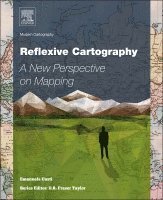
Reflexive Cartography
A New Perspective in Mapping
1 080 kr
Skickas inom 7-10 vardagar
Reflexive Cartography addresses the adaptation of cartography, including its digital forms (GIS, WebGIS, PPGIS), to the changing needs of society, and outlines the experimental context aimed at mapping a topological space. Using rigorous scientific analysis based on statement consistency, relevance of the proposals, and model accessibility, it charts the transition from topographical maps created by state agencies to open mapping produced by citizens.
Adopting semiotic theory to uncover the complex communicative mechanisms of maps and to investigate their ability to produce their own messages and new perspectives, Reflexive Cartography outlines a shift in our way of conceptualizing maps: from a plastic metaphor of reality, as they are generally considered, to solid tools that play the role of agents, assisting citizens as they think and plan their own living place and make sense of the current world.
Applies a range of technologies to theoretical perspectives on mapping to innovatively map the world's geographic diversity Features a multi-disciplinary perspective that weaves together geography, the geosciences, and the social sciences through territorial representation Authored and edited by two of the world's foremost cartographic experts who combine more than 60 years of experience in research and in the classroom Presents more than 60 figures to underscore key conceptsCybercartography in a Reconciliation Community
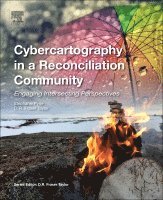
Engaging Intersecting Perspectives
1 324 kr
Skickas inom 7-10 vardagar
Cybercartography in a Reconciliation Community: Engaging Intersecting Perspectives, Volume Eight gathers perspectives on issues related to reconciliation-primarily in a residential / boarding school context-and demonstrates the unifying power of Cybercartography by identifying intersections among different knowledge perspectives. Concerned with understanding approaches toward reconciliation and education, preference is given to reflexivity in research and knowledge dissemination. The positionality aspect of reflexivity is reflected in the chapter contributions concerning various aspects of cybercartographic atlas design and development research, and related activities. In this regard, the book offers theoretical and practical knowledge of collaborative transdisciplinary research through its reflexive assessment of the relationships, processes and knowledge involved in cybercartographic research.
Using, most specifically, the Residential Schools Land Memory Mapping Project for context, Cybercartography in a Reconciliation Community provides a high speed tour through the project's innovative collaborative approach to mapping institutional material and volunteered geographic information. Exploring Cybercartography through the lens of this atlas project provides for a comprehensive understanding of both Cybercartography and transdisciplinary research, while informing the reader of education and reconciliation initiatives in Canada, the U.S., the U.K. and Italy.
Includes a variety of examples of reconciliation work, especially related to residential / boarding schools, and examines common themes in the issues discussed Offers both conceptual and applied dimensions, and provides a good example of a reflexive approach to both research and knowledge dissemination Addresses a modern application for Cybercartography that is of considerable societal importance Provides historiographical accounts of atlas-making processes, multidisciplinary perspectives on research issues and conceptual explorationsLand Reclamation and Restoration Strategies for Sustainable Development
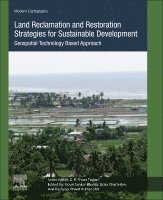
Geospatial Technology Based Approach
1 410 kr
Skickas inom 7-10 vardagar
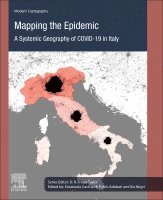
Mapping the Epidemic
A Systemic Geography of COVID-19 in Italy
1 349 kr
Skickas inom 7-10 vardagar
Mapping the Epidemic: A Systemic Geography of COVID-19 in Italy provides a theoretical-methodological framework based on space-time analysis to map and interpret the set of factors that could have contributed to the spread of COVID-19, as well as a reflexive cartographic mapping visualizing the virus's dynamics. After an introduction that constitutes the theoretical anchor of the work carried out both with respect to territorial analysis and the use of reflexive cartography, the book discusses the role played by reflexive cartography in research on the COVID-19 pandemic conducted by an Italian university working group dealing with reticularity and the territorial fragilities that have influenced the spread. The data, subjected to analysis, are translated into reflexive cartography as a tool for restitution and investigation of the territorial dynamics. Each chapter consists of detailed information in which the European context of data analysis is illustrated, to then investigate the Italian territory and focus on the case of Lombardy and, in particular, of Bergamo as the epicenter. The book addresses the theoretical and methodological approaches of mapping the epidemic in Italy and the importance of cartography in the outbreak response, as well as including data accounting for contributing factors such as atmospheric pollution and infection rate, population distribution and major mobility corridors, and measures adopted to contain the outbreak, by implementing mapping at the regional Lombard, national, and European levels.
Mapping the Epidemic: A Systemic Geography of COVID-19 in Italy uses an interdisciplinary approach that highlights the key role of geography and cartography in providing usable data and conclusions on the virus outbreak and will be valuable for researchers and professionals in the fields of geography, GIS, and spatial mapping, as well as statisticians working on mapping outbreaks and epidemiological scientists needing mapping data on the virus.
Details reflexive mapping of the COVID pandemic, giving an interpretation that explains the epidemic's variable complexity and visualizes it Provides a space-time approach, based on a database from the beginning of the Italian emergence to the?decline phase, showing the virus spread intensity and speed in relation to socio-territorial factors Is complementary to studies carried out in the biomedical domain, referring to the results of these studies in an original and innovative way, envisaged through cybercartographyRemote Sensing and GIS in Peri-Urban Research
Perspectives on Global Change, Sustainability and Resilience
1 410 kr
Skickas inom 7-10 vardagar
Remote Sensing and GIS in Peri-Urban Research: Perspectives on Global Change, Sustainability and Resilience, Eleventh Edition provides the most recent methods and techniques, incorporating geoinformatics-based practices to map, evaluate, and model urban landscape attributes and changes. The book provides theory, methodology, and future perspectives of remote sensing and GIS techniques applied to peri-urban modelling, analysis and sustainability through the use of spatio-temporal geospatial datasets. It also includes case studies of real-world data sets, with applicable algorithms, techniques and methods for study.This will be a useful reference for researchers and academics in remote sensing, GIS, and spatial analysis, and environmental or urban scientists wanting to implement remote sensing technologies in their research.
Outlines applications of geospatial technologies for visualization of land use dynamics including spatial information about population distributions, built-up areas and degree of urbanization based on global and local datasetsProvides methodology for identification of peri-urban interfaces using techniques to identify peri-urban space and dynamics using remote sensing and GIS techniquesIncludes worldwide case studies by experts from different countries increasing the understanding of the nature of global peri-urbanization and growthApplications of Geospatial Technology and Modeling for River Basin Management
1 385 kr
Skickas inom 7-10 vardagar
Applications of Geospatial Technology and Modeling for River Basin Management, Volume Twelve covers the use of multi-temporal satellite data for accurate estimations of different watershed features. It includes methods and case studies of the use of geographic information systems (GIS) as a valuable tool for criteria-based spatial analysis to manage natural resources and accurately simulate natural phenomena such as the hydrologic response of a watershed to precipitation and susceptibility to water erosion. The book also provides direction on many types of modelling and mapping techniques in geospatial environments based on river basin management challenges. This book will be a useful guide for academics, researchers, and practitioners involved in the use of geospatial technologies for river basin management, as well as those interested in environmental management and Earth surface geomorphology.
Covers the use of geospatial technologies and modeling for effective management of river basinsIncludes methodology and detailed case studies showing real-world applications at a variety of scalesEmphasizes the importance of integrating geospatial tools in decision-making processes for sustainable water resource managementDevelopments in the Theory and Practice of Cybercartography
Applications and Indigenous Mapping
1 190 kr
Skickas inom 7-10 vardagar
Further Developments in the Theory and Practice of Cybercartography
International Dimensions and Language Mapping
1 837 kr
Skickas inom 7-10 vardagar
Further Developments in the Theory and Practice of Cybercartography, Third Edition, Volume Nine, presents a substantively updated edition of a classic text on cybercartography, presenting new and returning readers alike with the latest advances in the field. The book examines the major elements of cybercartography and embraces an interactive, dynamic, multisensory format with the use of multimedia and multimodal interfaces. Material covering the major elements, key ideas and definitions of cybercartography is newly supplemented by several chapters on two emerging areas of study, including international dimensions and language mapping.
This new edition delves deep into Mexico, Brazil, Denmark, Iran and Kyrgyzstan, demonstrating how insights emerge when cybercartography is applied in different cultural contexts. Meanwhile, other chapters contain case studies by a talented group of linguists who are breaking new ground by applying cybercartography to language mapping, a breakthrough that will provide new ways of understanding the distribution and movement of language and culture.
Highlights the relationship between cybercartography and critical geography Incorporates the latest developments in the field of cybercartography, including International Dimensions and Language Mapping Showcases the legal, ethical and policy implications of mapping local and traditional knowledge