Mosaics - Böcker
Visar alla böcker i serien Mosaics. Handla med fri frakt och snabb leverans.
3 produkter
3 produkter
1 268 kr
Skickas inom 7-10 vardagar
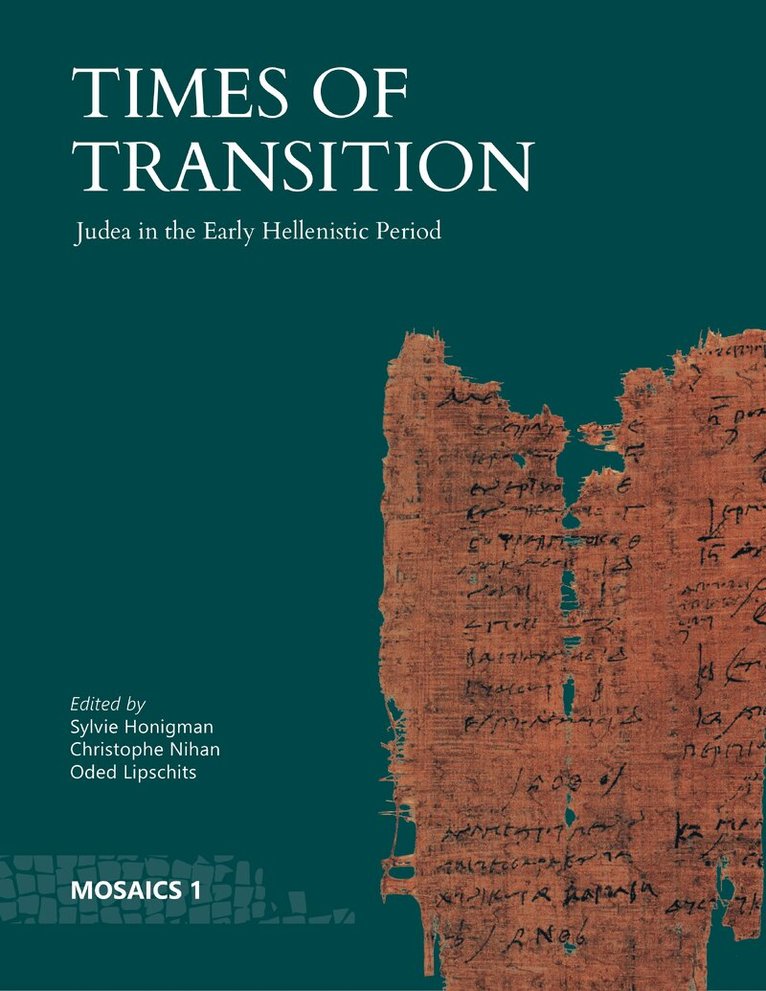
This multidisciplinary study takes a fresh look at Judean history and biblical literature in the late fourth and third centuries BCE. In a major reappraisal of this era, the contributions to this volume depict it as one in which critical changes took place.Until recently, the period from Alexander’s conquest in 332 BCE to the early years of Seleucid domination following Antiochus III’s conquest in 198 BCE was reputed to be poorly documented in material evidence and textual production, buttressing the view that the era from late Persian to Hasmonean times was one of seamless continuity. Biblical scholars believed that no literary activity belonged to the Hellenistic age, and archaeologists were unable to refine their understanding because of a lack of secure chronological markers. However, recent studies are revealing this period as one of major social changes and intense literary activity. Historians have shed new light on the nature of the Hellenistic empires and the relationship between the central power and local entities in ancient imperial settings, and the redating of several biblical texts to the third century BCE challenges the traditional periodization of Judean history.Bringing together Hellenistic history, the archaeology of Judea, and biblical studies, this volume appraises the early Hellenistic period anew as a time of great transition and change and situates Judea within its broader regional and transregional imperial contexts.
Del 2 - Mosaics
Age of Empires
The History and Administration of Judah in the 8th–2nd Centuries BCE in Light of the Storage-Jar Stamp Impressions
Inbunden, Engelska, 2021
319 kr
Skickas inom 7-10 vardagar
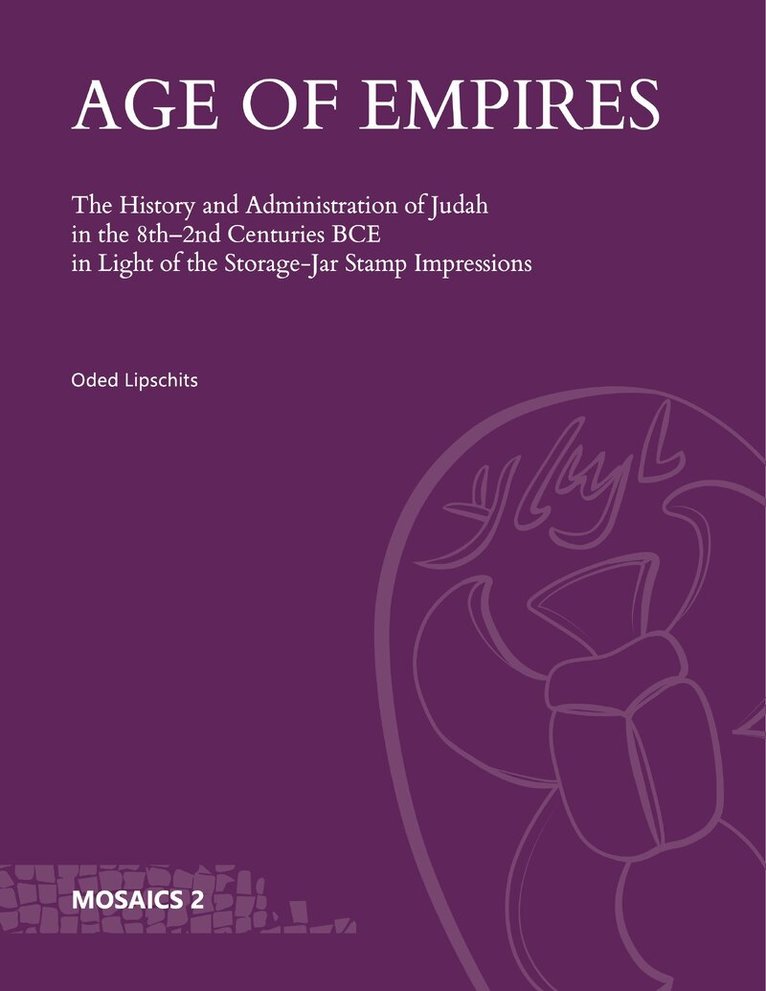
Storage jars of many shapes and sizes were in widespread use in the ancient world, transporting and storing agricultural products such as wine and oil, crucial to agriculture, economy, trade and subsistence. From the late 8th to the 2nd century BCE, the oval storage jars typical of Judah were often stamped or otherwise marked: in the late 8th and early 7th century BCE with lmlk stamp impressions, later in the 7th century with concentric circle incisions or rosette stamp impressions, in the 6th century, after the fall of Jerusalem, with lion stamp impressions, and in the Persian, Ptolemaic and Seleucid periods (late 6th–late 2nd centuries BCE) with yhwd stamp impressions. At the same time, several ad hoc systems of stamp impressions appeared: “private” stamp impressions were used on the eve of Sennacherib’s campaign, mwṣh stamp impressions after the destruction of Jerusalem, and yršlm impressions after the establishment of the Hasmonean state. While administrative systems that stamped storage jars are known elsewhere in the ancient Near East, the phenomenon in Judah is unparalleled in its scale, variety and continuity, spanning a period of some 600 years without interruption.This is the first attempt to consider the phenomenon as a whole and to develop a unified theory that would explain the function of these stamp impressions and shed new light on the history of Judah during six centuries of subjugation to the empires that ruled the region—as a vassal kingdom in the age of the Assyrian, Egyptian, and Babylonian empires and as a province under successive Babylonian, Persian, Ptolemaic, and Seleucid rule.
Del 3 - Mosaics
From Nomadism to Monarchy?
Revisiting the Early Iron Age Southern Levant
Inbunden, Engelska, 2023
934 kr
Skickas inom 7-10 vardagar
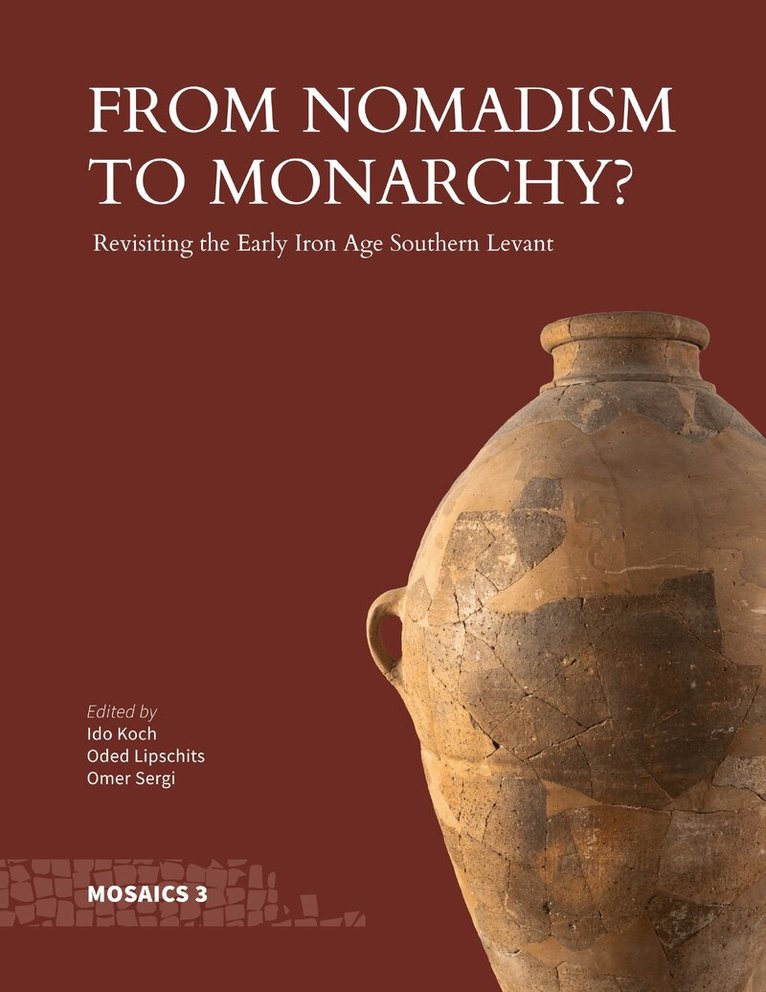
Archaeological exploration in the Central Highlands of the Southern Levant conducted during the 1970s and 1980s dramatically transformed the scholarly understanding of the early Iron Age and led to the publication of From Nomadism to Monarchy: Archaeological and Historical Aspects of Early Israel, by Israel Finkelstein and Nadav Na’aman. This volume explores and reassesses the legacy of that foundational text. Using current theoretical frameworks and taking into account new excavation data and methodologies from the natural sciences, the seventeen essays in this volume examine the archaeology of the Southern Levant during the early Iron Age and the ways in which the period may be reflected in biblical accounts. The variety of methodologies employed and the historical narratives presented within these contributions illuminate the multifaceted nature of contemporary research on this formative period.Building upon Finkelstein and Na’aman’s seminal study, this work provides an essential update. It will be welcomed by ancient historians, scholars of early Israel and the early Iron Age Southern Levant, and biblical scholars. In addition to the editors, the contributors to this volume are Eran Arie, Erez Ben-Yosef, Cynthia Edenburg, Israel Finkelstein, Yuval Gadot, Assaf Kleiman, Gunnar Lehmann, Defna Langgut, Aren M. Maeir, Nadav Na’aman, Thomas Römer, Lidar Sapir-Hen, Katja Soennecken, Dieter Vieweger, Ido Wachtel, and Naama Yahalom-Mack.