New Approaches to Ancient Greek Institutional History – serie
Visar alla böcker i serien New Approaches to Ancient Greek Institutional History. Handla med fri frakt och snabb leverans.
9 produkter
9 produkter
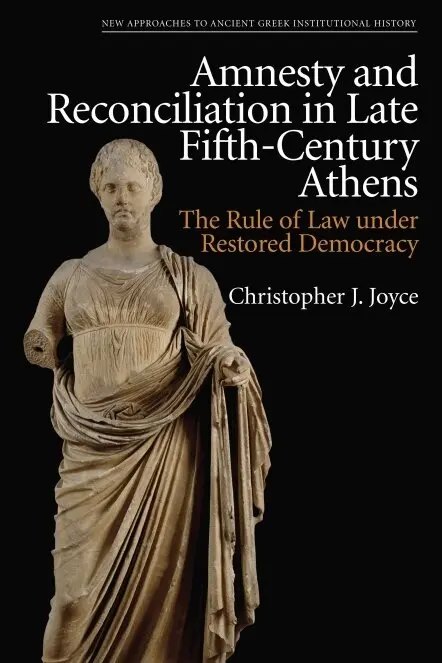
Amnesty and Reconciliation in Late Fifth-Century Athens
The Rule of Law under Restored Democracy
Inbunden, Engelska, 2022
2 085 kr
Skickas inom 3-6 vardagar
The Athenian Reconciliation of 403 BCE was the pinnacle of amnesty agreements in Greek antiquity. It guaranteed lasting peace in a political community torn apart by civil conflict, because it recognised that for society to cohere, vindictive action over crimes which predated the exchange of oaths was legally inadmissible. This study analyses the historical circumstances which led to the fall of democracy at Athens in 404, the civil conflict which followed under the Thirty Tyrants and the restoration of democracy and the rule of law in 403. It analyses afresh the Reconciliation Agreement in the light of New Institutionalist perspectives, showing that the resurrection of democracy was guaranteed by the rule of law and by the strict application of the agreement in the democratic law courts. It offers fresh readings of the clauses of the Agreement and the legal trials which followed in its wake and shows that the Athenian example was the paradigm not only for amnesties in the ancient world but for those since the seventeenth century.
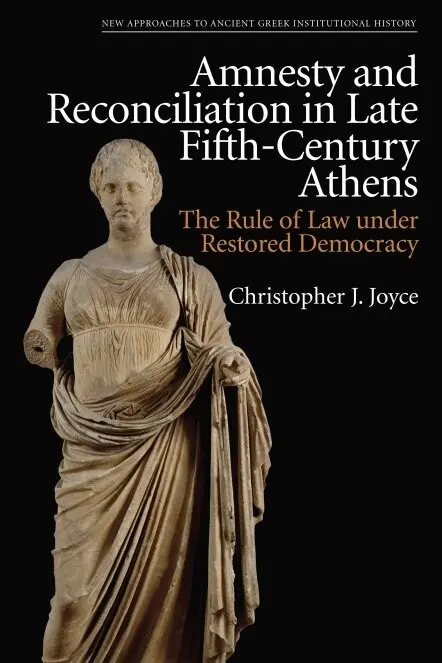
Amnesty and Reconciliation in Late Fifth-Century Athens
The Rule of Law under Restored Democracy
Häftad, Engelska, 2024
569 kr
Skickas inom 3-6 vardagar
The Athenian Reconciliation of 403 BCE was the pinnacle of amnesty agreements in Greek antiquity. It guaranteed lasting peace in a political community torn apart by civil conflict, because it recognised that for society to cohere, vindictive action over crimes which predated the exchange of oaths was legally inadmissible.This study analyses the historical circumstances which led to the fall of democracy at Athens in 404 BCE, the civil conflict which followed under the Thirty Tyrants and the restoration of democracy and the rule of law in 403 BCE. It analyses afresh the Reconciliation Agreement in the light of New Institutionalist perspectives, showing that the resurrection of democracy was guaranteed by the rule of law and by the strict application of the agreement in the democratic law courts. It offers fresh readings of the clauses of the Agreement and the legal trials which followed in its wake and shows that the Athenian example was the paradigm not only for amnesties in the ancient world but for those since the seventeenth century.
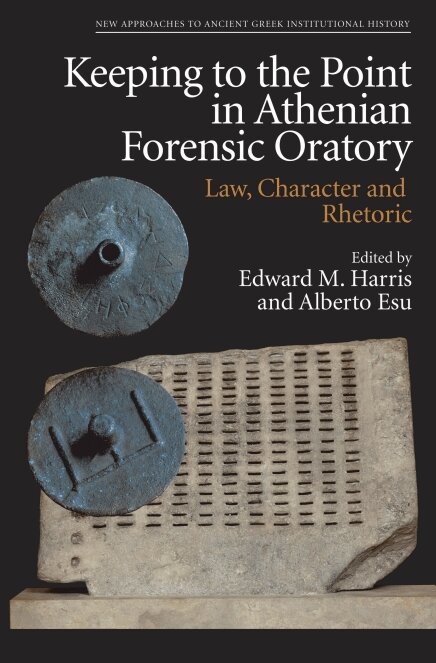
Keeping to the Point in Athenian Forensic Oratory
Law, Character and Rhetoric
Inbunden, Engelska, 2025
1 651 kr
Skickas inom 3-6 vardagar
When a litigant initiated a lawsuit in Classical Athens, he submitted a written plaint to the relevant magistrate. This document contained his name, the name of the defendant, the legal procedure employed, and the specific violations of part of the law. If the magistrate accepted the plaint, the legal charges were read to the court before and after the litigants spoke, and the judges swore in their oath to vote only about the charges in the plaint, that is, whether the defendant had violated a specific law or not. In private suits, litigants took an oath to 'keep to the point', that is, discuss only the legal charges. In public cases litigants were under the same obligation. This volume examines several Athenian court speeches and show that litigants paid close attention to legal relevance in court. Consequently, the essays in this volume make the case for integrated approach to rhetoric and law emphasizing an institutional understanding of Athenian forensic oratory.
274 kr
Kommande
When a litigant initiated a lawsuit in Classical Athens, he submitted a written plaint to the relevant magistrate. This document contained his name, the name of the defendant, the legal procedure employed, and the specific violations of part of the law. If the magistrate accepted the plaint, the legal charges were read to the court before and after the litigants spoke, and the judges swore in their oath to vote only about the charges in the plaint, that is, whether the defendant had violated a specific law or not. In private suits, litigants took an oath to ‘keep to the point’, that is, discuss only the legal charges. In public cases litigants were under the same obligation. This volume examines several Athenian court speeches and show that litigants paid close attention to legal relevance in court. Consequently, the essays in this volume make the case for integrated approach to rhetoric and law emphasizing an institutional understanding of Athenian forensic oratory.
Rediscovering Greek Institutions
New Institutionalist Approaches to Ancient Greek History
Inbunden, Engelska, 2025
2 085 kr
Skickas inom 3-6 vardagar
Rediscovering Greek Institutions offers a fresh perspective on the study of ancient Greek institutions by integrating New Institutionalism-inspired approaches from political science. While traditional scholarship has often focused on constitutional design, formal rules and legal procedures, a shift in recent decades towards sociological and anthropological approaches has overlooked the importance of institutional analysis. This volume bridges this gap, spearheading a new approach which not only considers formal rules and procedures but also the social, ideological, and behavioural factors underpinning institutions. Its wide-ranging chapters demonstrate how a more nuanced and sophisticated understanding of institutions can shed light on the complex political and social life of the Greek polis. Through an interdisciplinary approach to ancient Greek politics which engages with political science, this book redefines institutional analysis as a powerful tool for understanding the diverse motivations behind individual and collective actions in ancient Greece.
1 204 kr
Skickas
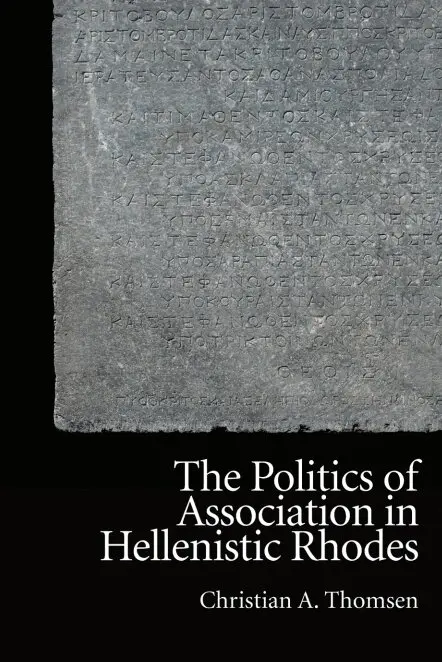
A new perspective on political organisation in Hellenistic Rhodes and the ancient Greek citystateThe first comprehensive study of Rhodes in more than 20 years and one of the few books dedicated to a single Hellenistic city-stateIntroduces the reader to Hellenistic Rhodes, an important, but also remarkably understudied, city-state of the ancient Greek and Roman world Challenges traditional assumptions about political organization in the ancient Greek city-state Documents the existence of an alternative conception of the ancient Greek city-state, which will inspire new approaches to the study of the ancient Greek city-state, politics and society.Christian Thomsen offers a study of political institutions on the island state of Rhodes – an important power in the eastern Mediterranean and the first city of the Hellenistic world. Using Aristotle’s notion of the polis as an ‘association of associations’ as its point of departure, Thomsen provides an analysis of political institutions, taking a broader view of what constitutes an institution than traditional studies of the ancient Greek city-state. Among the institutions surveyed are the family, civic subdivisions such as tribes and demes as well as private associations. He argues that these organisations served as important junctions in the networks of political elites and shaped the political landscape of Hellenistic Rhodes.
511 kr
Skickas inom 3-6 vardagar
Christian Thomsen offers a study of political institutions on the island state of Rhodes an important power in the eastern Mediterranean and the first city of the Hellenistic world. Using Aristotle's notion of the polis as an 'association of associations' as its point of departure, Thomsen provides an analysis of political institutions, taking a broader view of what constitutes an institution than traditional studies of the ancient Greek city-state. Among the institutions surveyed are the family, civic subdivisions such as tribes and demes as well as private associations. He argues that these organisations served as important junctions in the networks of political elites and shaped the political landscape of Hellenistic Rhodes.
1 278 kr
Skickas
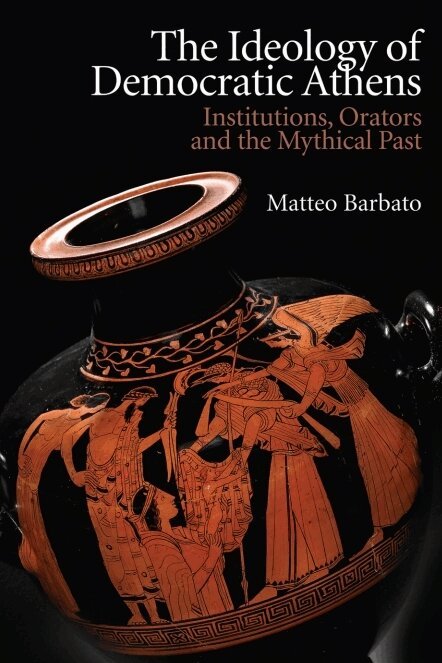
Investigates the construction of democratic ideology in Classical Athens through a study of the social memory of Athens’ mythical pastProposes a novel approach to Athenian democratic ideology that opens new frontiers of investigation in ancient history and the social sciencesThe introduction clearly sets out the aims and methodology of the book and its place within the scholarship in ancient history and the social sciencesFour case studies illuminate the impact of Athenian democratic institutions on ideology, myth, and the use of social memoryOffers a long-awaited new interpretation of the Athenian funeral oration for the war deadOffers clear overviews of Athenian democratic institutions (e.g., Assembly, Council, lawcourts) based on the most recent scholarshipProvides up-to-date overviews of several values in Greek thought (e.g., charis, hybris, eugeneia)The debate on Athenian democratic ideology has long been polarised around two extremes. A Marxist tradition views ideology as a cover-up for Athens’ internal divisions. Another tradition, sometimes referred to as culturalist, interprets it neutrally as the fixed set of ideas shared by the members of the Athenian community. Matteo Barbato addresses this dichotomy by providing a unitary approach to Athenian democratic ideology. Analysing four different myths from the perspective of the New Institutionalism, he demonstrates that Athenian democratic ideology was a fluid set of ideas, values and beliefs shared by the Athenians as a result of a constant ideological practice influenced by the institutions of the democracy. He shows that this process entailed the active participation of both the mass and the elite and enabled the Athenians to produce multiple and compatible ideas about their community and its mythical past.
611 kr
Skickas inom 3-6 vardagar
The debate on Athenian democratic ideology has long been polarised around two extremes. A Marxist tradition views ideology as a cover-up for Athens' internal divisions. Another tradition, sometimes referred to as culturalist, interprets it neutrally as the fixed set of ideas shared by the members of the Athenian community. Matteo Barbato addresses this dichotomy by providing a unitary approach to Athenian democratic ideology. Analysing four different myths from the perspective of the New Institutionalism, he demonstrates that Athenian democratic ideology was a fluid set of ideas, values and beliefs shared by the Athenians as a result of a constant ideological practice influenced by the institutions of the democracy. He shows that this process entailed the active participation of both the mass and the elite and enabled the Athenians to produce multiple and compatible ideas about their community and its mythical past.