New Directions in Civil Engineering - Böcker
Visar alla böcker i serien New Directions in Civil Engineering. Handla med fri frakt och snabb leverans.
14 produkter
14 produkter
627 kr
Skickas inom 10-15 vardagar
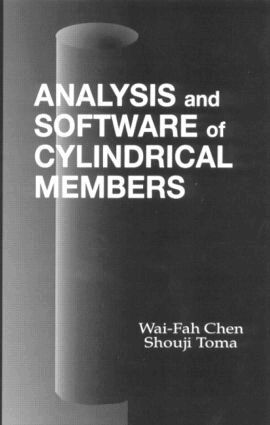
This book provides an in-depth look at the behavior, design, and construction of offshore structures. It describes the behavior of cylindrical members and suggests appropriate software, written by the contributors, to determine everything from loading up to the ultimate load, including post-buckling and cyclic inelasticity.
910 kr
Skickas inom 10-15 vardagar
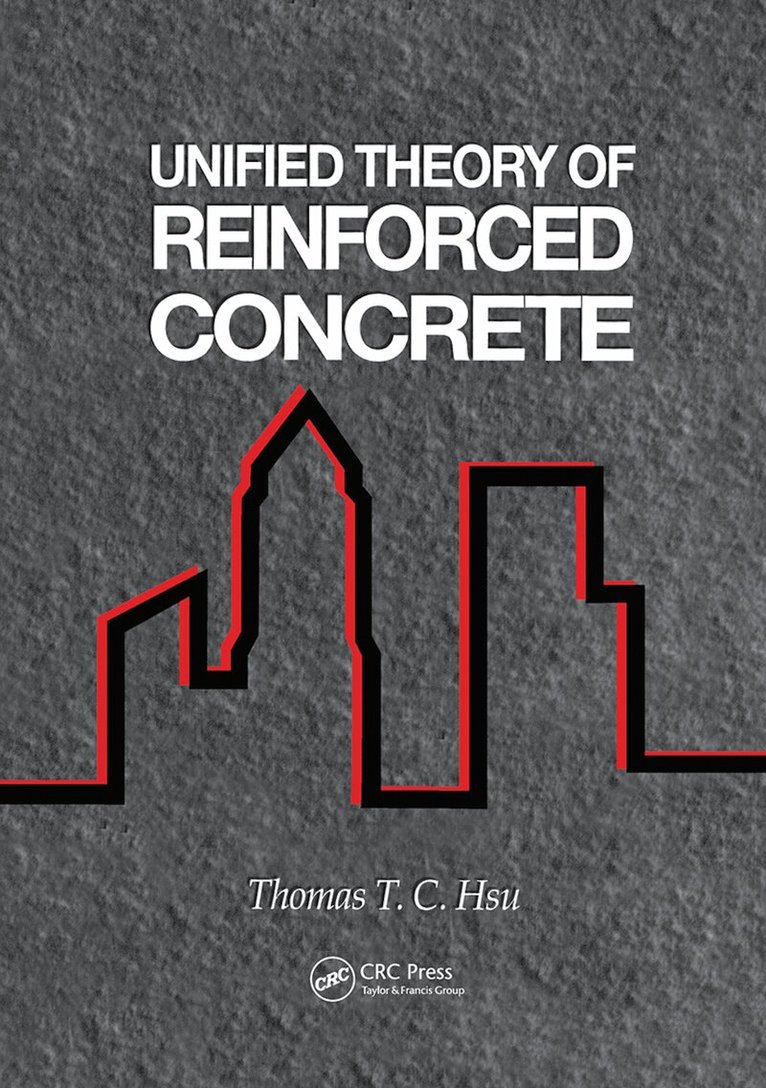
Reinforced concrete structures are subjected to a complex variety of stresses and strains. The four basic actions are bending, axial load, shear, and torsion. Presently, there is no single comprehensive theory for reinforced concrete structural behavior that addresses all of these basic actions and their interactions. Furthermore, there is little consistency among countries around the world in their building codes, especially in the specifications for shear and torsion.Unified Theory of Reinforced Concrete addresses this serious problem by integrating available information with new research data, developing one unified theory of reinforced concrete behavior that embraces and accounts for all four basic actions and their combinations. The theory is presented in a systematic manner, elucidating its five component models from a pedagogical and historical perspective while emphasizing the fundamental principles of equilibrium, compatibility, and the constitutive laws of materials. The significance of relationships between models and their intrinsic consistencies are emphasized. This theory can serve as the foundation on which to build a universal design code that can be adopted internationally. In addition to frames, the book explains the fundamental concept of the design of wall-type and shell-type structures.Unified Theory of Reinforced Concrete will be an important reference for all engineers involved in the design of concrete structures. The book can also serve well as a text for a graduate course in structural engineering.
4 118 kr
Skickas inom 10-15 vardagar
Transportation engineering and transportation planning are two sides of the same coin aiming at the design of an efficient infrastructure and service to meet the growing needs for accessibility and mobility. Many well-designed transport systems that meet these needs are based on a solid understanding of human behavior. Since transportation systems are the backbone connecting the vital parts of a city, in-depth understanding of human nature is essential to the planning, design, and operational analysis of transportation systems.With contributions by transportation experts from around the world, Transportation Systems Planning: Methods and Applications compiles engineering data and methods for solving problems in the planning, design, construction, and operation of various transportation modes into one source. It is the first methodological transportation planning reference that illustrates analytical simulation methods that depict human behavior in a realistic way, and many of its chapters emphasize newly developed and previously unpublished simulation methods. The handbook demonstrates how urban and regional planning, geography, demography, economics, sociology, ecology, psychology, business, operations management, and engineering come together to help us plan for better futures that are human-centered.The text reviews projects from an initial problem statement to final policy action and associated decision-making and examines policies at all levels of government, from the city to the national levels. Unlike many other handbooks which are encyclopedic reviews, Transportation Systems Planning extends far beyond modeling in engineering and economics to present a truly transdisciplinary approach to transportation systems planning.
2 383 kr
Tillfälligt slut
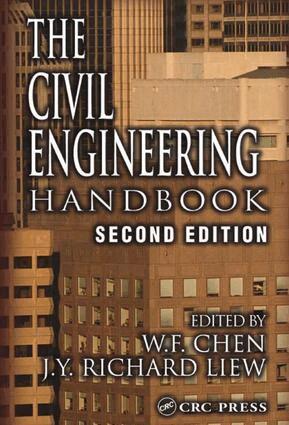
First published in 1995, the award-winning Civil Engineering Handbook soon became known as the field's definitive reference. To retain its standing as a complete, authoritative resource, the editors have incorporated into this edition the many changes in techniques, tools, and materials that over the last seven years have found their way into civil engineering research and practice.The Civil Engineering Handbook, Second Edition is more comprehensive than ever. You'll find new, updated, and expanded coverage in every section. In fact, more than 1/3 of the handbook is new or substantially revised. In particular you'll find increased focus on computing reflecting the rapid advances in computer technology that has revolutionized many aspects of civil engineering.You'll use it as a survey of the field, you'll use it to explore a particular subject, but most of all you'll use The Civil Engineering Handbook to answer the problems, questions, and conundrums you encounter in practice.
3 174 kr
Skickas inom 10-15 vardagar
The increase in the popularity and the number of potential applications of the finite strip method has created a demand for a definitive text/reference on the subject. Fulfilling this demand, The Finite Strip Method provides practicing engineers, researchers, and students with a comprehensive introduction and theoretical development, and a complete treatment of current practical applications of the method.Written by experts who are arguably the world's leading authorities in the field, The Finite Strip Method covers both the classical strip and the newly developed spline strip and computed shape function strip. Applications in structural engineering, with particular focus on practical structures such as slab-beam bridges, box girder bridges, and tall buildings are discussed extensively. Applications in geotechnology are also covered, as are recently formulated applications in nonlinear analysis.The Finite Strip Method is a unique book, supplying much-needed information by well-known and highly regarded authors.
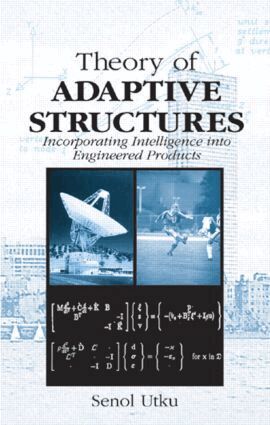
Theory of Adaptive Structures
Incorporating Intelligence into Engineered Products
Inbunden, Engelska, 1998
694 kr
Skickas inom 10-15 vardagar
Theory of Adaptive Structures provides the basic theory for controlling adaptive structures in static and dynamic environments. It synthesizes well-established theories on modern control as well as statics and dynamics of deformable bodies. Discussions concentrate on the discrete parameter adaptive structures dealing with actuator placement, actuator selection, and actuation computation problems - keeping these structures at close proximity of any chosen nominal state with the least energy consumption. An introduction to the distributed parameter adaptive structures is also provided.The book follows that modern trend in research and industry striving to incorporate intelligence into engineered products through microprocessors that are becoming smaller, faster, and cheaper at astounding rates. Not using them in engineered products may become an enormous liability.Resulting from the advances in materials technology on sensors and actuator technologies as well as the availability of very powerful and reliable microprocessors, there is an ever-increasing interest in actively controlling the behavior of engineering systems. Engineers and engineering scientists must revive and broaden their activities to maximize applications for predicting and controlling the behavior of deformable bodies. Topics include:An introduction to adaptive structures Incremental excitation-response relations in static and dynamic cases Active control of response in static case Statically determinate adaptive structures Statically indeterminate adaptive structures Active vibration control for autonomous and non-autonomous cases Active control against wind Active control against seismic loads Distributed parameter adaptive structuresThe technology of adaptive structures has created an environment where the analysis, not the computation, of structural response - du
2 703 kr
Skickas inom 10-15 vardagar
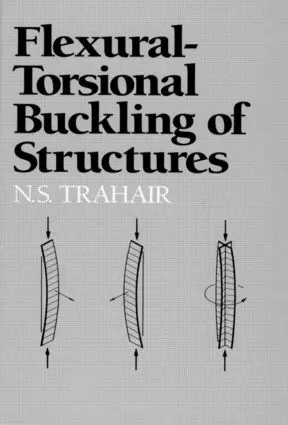
Flexural-Torsional Buckling of Structures provides an up-to-date, comprehensive treatment of flexural-torsional buckling and demonstrates how to design against this mode of failure. The author first explains the fundamentals of this type of buckling behavior and then summarizes results that will be of use to designers and researchers in either equation or graphical form. This approach makes the book an ideal text/reference for students in structural engineering as well as for practicing civil engineers, structural engineers, and constructional steel researchers and designers.The book begins by introducing the modern development of the theory of flexural-torsional buckling through discussions on the general concepts of equilibrium, total potential, virtual work, and buckling. It then continues with in-depth coverage of hand methods for solving buckling problems, the analysis of flexural-torsional buckling using the finite element method, and the buckling of different types of structural elements and frames composed of various elastic materials. Other topics addressed include the design and inelastic buckling of steel members. The book's final chapter considers a collection of special topics.
2 500 kr
Skickas inom 10-15 vardagar
This book provides an in-depth look at the behavior, design, and construction of offshore structures. It describes the behavior of cylindrical members and suggests appropriate software, written by the contributors, to determine everything from loading up to the ultimate load, including post-buckling and cyclic inelasticity.
3 444 kr
Skickas inom 10-15 vardagar
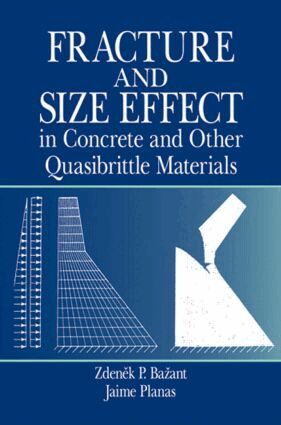
Fracture and Size Effect in Concrete and Other Quasibrittle Materials is the first in-depth text on the application of fracture mechanics to the analysis of failure in concrete structures. The book synthesizes a vast number of recent research results in the literature to provide a comprehensive treatment of the topic that does not give merely the facts - it provides true understanding.The many recent results on quasibrittle fracture and size effect, which were scattered throughout many periodicals, are compiled here in a single volume. This book presents a well-rounded discussion of the theory of size effect and scaling of failure loads in structures. The size effect, which is the most important practical manifestation of fracture behavior, has become a hot topic. It has gained prominence in current research on concrete and quasibrittle materials.The treatment of every subject in Fracture and Size Effect in Concrete and Other Quasibrittle Materials proceeds from simple to complex, from specialized to general, and is as concise as possible using the simplest level of mathematics necessary to treat the subject clearly and accurately. Whether you are an engineering student or a practicing engineer, this book provides you with a clear presentation, including full derivations and examples, from which you can gain real understanding of fracture and size effect in concrete and other quasibrittle materials.
3 444 kr
Skickas inom 10-15 vardagar
Concreting in cold weather requires special knowledge and skills to ensure accelerated hardening and high quality in plain- and reinforced-concrete structures. Cold Weather Concreting familiarizes concrete specialists with the characteristic features of concrete in cold weather, including the effects of frost, methods for hardening in subzero temperatures, and other challenges in cold-weather concreting. Both practical techniques and their underlying theories are covered.The book presents many methods for the thermal treatment of concrete by means of electric current--information previously available only in the Russian literature. It presents unique data in the form of diagrams, drawings, and tables, including a chart of the phase state of concretes of different strengths in the process of freezing at different temperatures, the variation of concrete strains in freezing and thawing, and a diagram of electric fields in concrete when electrodes are placed in front of stirrups.
3 579 kr
Skickas inom 10-15 vardagar
Reinforced concrete structures are subjected to a complex variety of stresses and strains. The four basic actions are bending, axial load, shear, and torsion. Presently, there is no single comprehensive theory for reinforced concrete structural behavior that addresses all of these basic actions and their interactions. Furthermore, there is little consistency among countries around the world in their building codes, especially in the specifications for shear and torsion.Unified Theory of Reinforced Concrete addresses this serious problem by integrating available information with new research data, developing one unified theory of reinforced concrete behavior that embraces and accounts for all four basic actions and their combinations. The theory is presented in a systematic manner, elucidating its five component models from a pedagogical and historical perspective while emphasizing the fundamental principles of equilibrium, compatibility, and the constitutive laws of materials. The significance of relationships between models and their intrinsic consistencies are emphasized. This theory can serve as the foundation on which to build a universal design code that can be adopted internationally. In addition to frames, the book explains the fundamental concept of the design of wall-type and shell-type structures.Unified Theory of Reinforced Concrete will be an important reference for all engineers involved in the design of concrete structures. The book can also serve well as a text for a graduate course in structural engineering.
3 713 kr
Skickas inom 10-15 vardagar
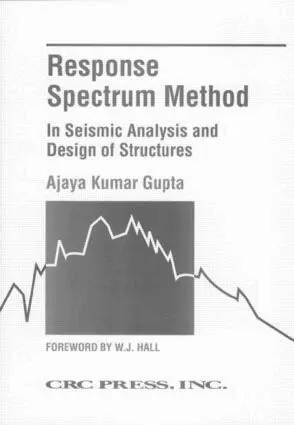
New developments in the response spectrum method have led to calculations in seismic stresses that are more accurate, and usually lower, than those obtained by conventional methods. This new textbook examines the wealth of information on the response spectrum method generated by the latest research and presents the background theory in simplified form.Applications of these methods is essential in the seismic design of critical structures, such as nuclear power plants and petroleum facilities. In new construction, the reduced seismic stresses will result in efficient and economic design. For facilities already built, these more accurate methods can be used where the facility is being reassessed for higher loads and in the calculation of margins.Written by an acknowledged expert in this and related fields, this volume is ideal as a graduate text for courses in structural and earthquake engineering. It is also an excellent reference for civil, structural, mechanical, and earthquake engineers.
3 174 kr
Skickas inom 10-15 vardagar
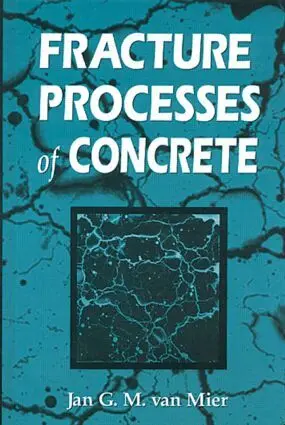
Despite tremendous advances made in fracture mechanics of concrete in recent years, very little information has been available on the nature of fracture processes and on reliable test methods for determining parameters for the different models. Moreover, most texts on this topic discuss numerical modeling but fail to consider experimentation. This book fills these gaps and synthesizes progress in the field in a simple, straightforward manner geared to practical applications.
2 703 kr
Skickas inom 10-15 vardagar
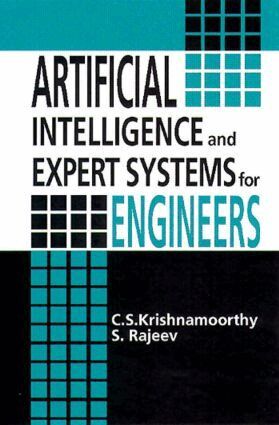
This book provides a comprehensive presentation of artificial intelligence (AI) methodologies and tools valuable for solving a wide spectrum of engineering problems. What's more, it offers these AI tools on an accompanying disk with easy-to-use software.Artificial Intelligence and Expert Systems for Engineers details the AI-based methodologies known as: Knowledge-Based Expert Systems (KBES); Design Synthesis; Design Critiquing; and Case-Based Reasoning. KBES are the most popular AI-based tools and have been successfully applied to planning, diagnosis, classification, monitoring, and design problems. Case studies are provided with problems in engineering design for better understanding of the problem-solving models using the four methodologies in an integrated software environment.Throughout the book, examples are given so that students and engineers can acquire skills in the use of AI-based methodologies for application to practical problems ranging from diagnosis to planning, design, and construction and manufacturing in various disciplines of engineering.Artificial Intelligence and Expert Systems for Engineers is a must-have reference for students, teachers, research scholars, and professionals working in the area of civil engineering design in particular and engineering design in general.