Nextgen Agriculture - Böcker
Visar alla böcker i serien Nextgen Agriculture. Handla med fri frakt och snabb leverans.
15 produkter
15 produkter
468 kr
Skickas inom 10-15 vardagar
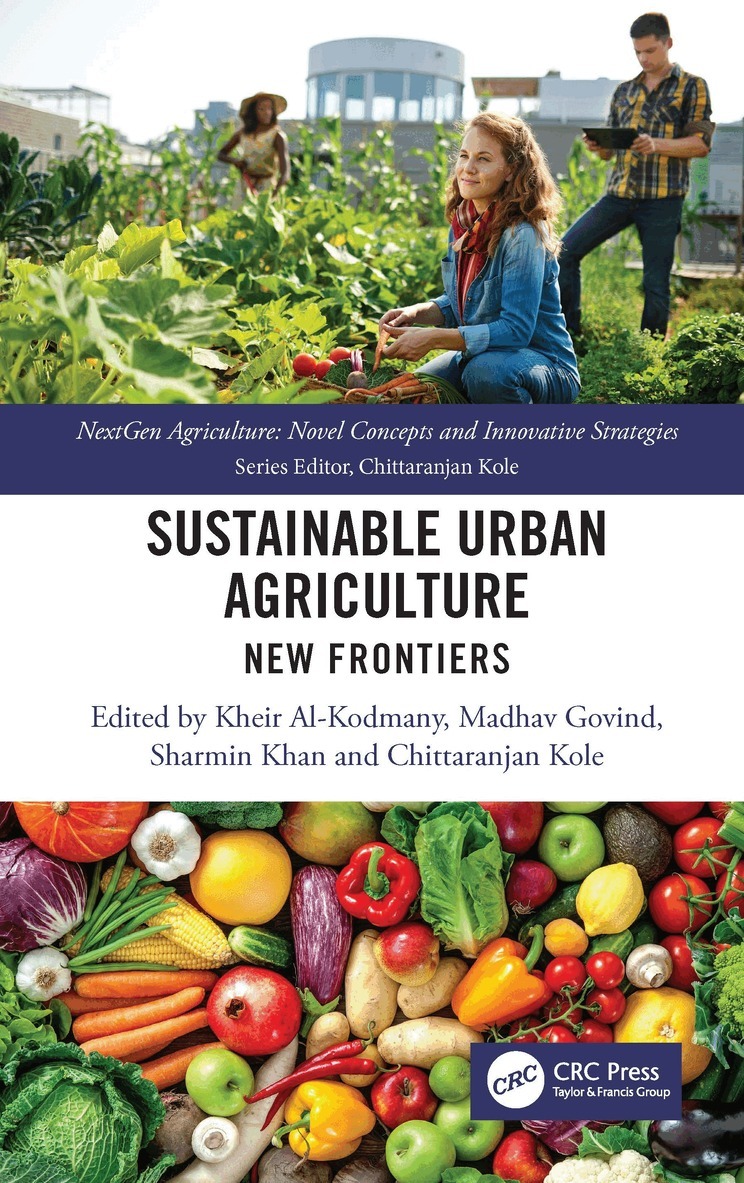
In the vibrant discourse of urbanization and climate change, Sustainable Urban Agriculture: New Frontiers investigates emerging needs, rising challenges, and opportunities to support urban agriculture. Navigating the dynamic interplay of urbanization and environmental challenges, the book introduces two pivotal agendas for urban sustainability—the "green" agenda, focusing on environmental health, and the "brown" agenda, emphasizing human well-being and social justice. The book embraces a global perspective by confronting geographical biases and advocating for context-specific understanding and early interventions in small and medium cities. This transformative journey guides readers through uncharted territories, fostering profound awareness of urban agriculture's role in shaping a sustainable and resilient future in agriculture.FeaturesPresents information on socio-ecological resilience, shaping a sustainable urban futureUnveils practical implications, traversing frontiers where urban cultivation extends beyond crops, cultivating a thriving urban ecosystemDiscusses diverse urban agriculture practices, from traditional methods to cutting-edge technologiesProviding readers with an understanding of the multifaceted layers inherent in urban agriculture, this volume in the NextGen Agriculture: Novel Concepts and Innovative Strategies series is essential for academics, students, practitioners, and experts in urban agriculture and planning, horticulture, landscape architecture, and plant sciences.
1 078 kr
Skickas inom 10-15 vardagar
In the vibrant discourse of urbanization and climate change, Sustainable Urban Agriculture: New Frontiers investigates emerging needs, rising challenges, and opportunities to support urban agriculture. Navigating the dynamic interplay of urbanization and environmental challenges, the book introduces two pivotal agendas for urban sustainability—the "green" agenda, focusing on environmental health, and the "brown" agenda, emphasizing human well-being and social justice. The book embraces a global perspective by confronting geographical biases and advocating for context-specific understanding and early interventions in small and medium cities. This transformative journey guides readers through uncharted territories, fostering profound awareness of urban agriculture's role in shaping a sustainable and resilient future in agriculture.FeaturesPresents information on socio-ecological resilience, shaping a sustainable urban futureUnveils practical implications, traversing frontiers where urban cultivation extends beyond crops, cultivating a thriving urban ecosystemDiscusses diverse urban agriculture practices, from traditional methods to cutting-edge technologiesProviding readers with an understanding of the multifaceted layers inherent in urban agriculture, this volume in the NextGen Agriculture: Novel Concepts and Innovative Strategies series is essential for academics, students, practitioners, and experts in urban agriculture and planning, horticulture, landscape architecture, and plant sciences.
657 kr
Skickas inom 10-15 vardagar
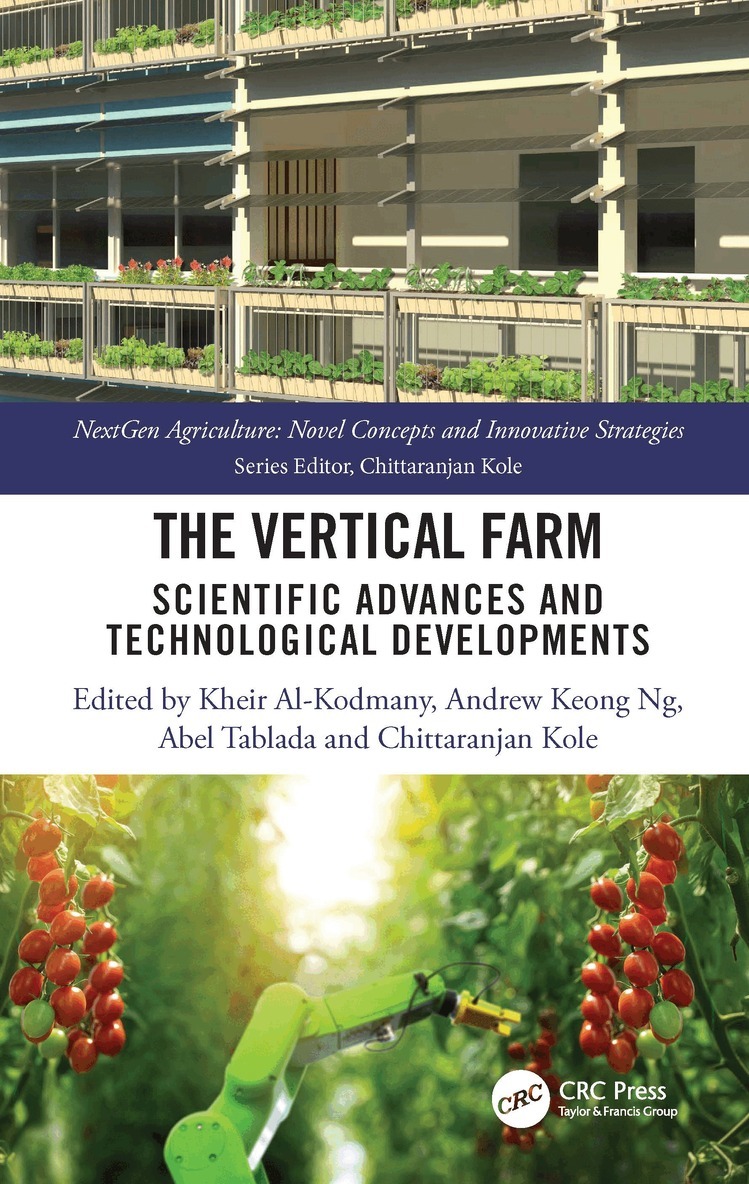
Amid economic uncertainties, fluctuating oil prices, and a rising environmental consciousness, the need for sustainable and efficient food production has become dire. The Vertical Farm: Scientific Advances and Technological Developments systematically navigates the realm of vertical farming (VF), rooted in a robust, scientific foundation. Unveiling the intricate convergence of plant biology, environmental science, and agronomy, it provides a profound understanding of contemporary agriculture. The book spans lighting systems and climate control mechanisms, focusing on sustainability. From small urban initiatives to significant commercial endeavors, real-world case studies showcase VF's adaptability, scalability, and resilience. Addressing multiple challenges, the book explores economic considerations and public perceptions, recognizing their roles in fostering meaningful advancements in agricultural innovation.A volume in the Nextgen Agriculture series, this book is valuable to scientists, practitioners, and students in urban agriculture and planning, horticulture, engineering, landscape architecture, and plant/technology sciences.
2 021 kr
Skickas inom 10-15 vardagar
Amid economic uncertainties, fluctuating oil prices, and a rising environmental consciousness, the need for sustainable and efficient food production has become dire. The Vertical Farm: Scientific Advances and Technological Developments systematically navigates the realm of vertical farming (VF), rooted in a robust, scientific foundation. Unveiling the intricate convergence of plant biology, environmental science, and agronomy, it provides a profound understanding of contemporary agriculture. The book spans lighting systems and climate control mechanisms, focusing on sustainability. From small urban initiatives to significant commercial endeavors, real-world case studies showcase VF's adaptability, scalability, and resilience. Addressing multiple challenges, the book explores economic considerations and public perceptions, recognizing their roles in fostering meaningful advancements in agricultural innovation.A volume in the Nextgen Agriculture series, this book is valuable to scientists, practitioners, and students in urban agriculture and planning, horticulture, engineering, landscape architecture, and plant/technology sciences.
2 356 kr
Skickas inom 10-15 vardagar
This book deliberates on the concept, strategies, tools, and techniques of allele mining in vegetable crops and its application potential in genome elucidation and improvement including studying allele evolution, discovery of superior alleles, discerning new haplotypes, assessment of intra- and interspecific similarity, and studies of gene expression and gene prediction. Available gene pools in global germplasm collections specifically consisting of wild allied species and local landraces for almost all major crops have facilitated allele mining. Development of advanced genomic techniques including PCR-based allele priming and Eco-TILLING based allele mining are being widely used now for mining superior alleles. Allele's discovery has become more relevant now for employing molecular breeding to develop designed crop varieties matching consumer needs and with genome plasticity to adapt the climate change scenarios. All these concepts and strategies along with precise success stories are presented in the chapters dedicated to the major vegetable crops.The first book on the novel strategy of allele mining in vegetable crops for precise breedingPresents genomic strategies for mining superior alleles underlying agronomic traits from genomic resourcesDepicts case studies of PCR-based allele priming and Eco-TILLING based allele miningElaborates on gene discovery and gene prediction in major vegetable cropsThis book will be useful to the students and faculties in various plant science disciplines including genetics, genomics, molecular breeding, agronomy, and bioinformatics; the scientists in seed industries; and, the policymakers and funding agencies interested in crop improvement.
2 356 kr
Skickas inom 10-15 vardagar
This book deliberates on the concept, strategies, tools, and techniques of allele mining in cereal crops and its application potential in genome elucidation and improvement, including studying allele evolution, discovery of superior alleles, discerning new haplotypes, assessment of intra- and interspecific similarity, and studies of gene expression and gene prediction. Available gene pools in global germplasm collections specifically consisting of wild allied species and local landraces for almost all major crops have facilitated allele mining. Development of advanced genomic techniques including PCR-based allele priming and Eco-TILLING-based allele mining are being widely used now for mining superior alleles. Allele's discovery has become more relevant now for employing molecular breeding to develop designed crop varieties matching consumer needs and with genome plasticity to adapt the climate change scenarios. All these concepts and strategies along with precise success stories are presented in the chapters dedicated to the major cereal crops.The first book on the novel strategy of allele mining in cereal crops for precise breedingPresents genomic strategies for mining superior alleles underlying agronomic traits from genomic resourcesDepicts case studies of PCR-based allele priming and Eco-Tilling-based allele miningElaborates on gene discovery and gene prediction in major cereal cropsThis book will be useful to the students and faculties in various plant science disciplines including genetics, genomics, molecular breeding, agronomy, and bioinformatics; the scientists in seed industries; and the policymakers and funding agencies interested in crop improvement.
2 155 kr
Skickas inom 10-15 vardagar
This book deliberates on the concept, strategies, tools, and techniques of allele mining in oilseed crops and its application potential in genome elucidation and improvement, including studying allele evolution, discovery of superior alleles, discerning new haplotypes, assessment of intra- and interspecific similarity, and studies of gene expression and gene prediction. Available gene pools in global germplasm collections, specifically consisting of wild allied species and local landraces for almost all major crops, have facilitated allele mining. The development of advanced genomic techniques, including PCR-based allele priming and Eco-TILLING-based allele mining, is now widely used for mining superior alleles. Allele's discovery has become more relevant now for employing molecular breeding to develop designed crop varieties matching consumer needs and with genome plasticity to adapt to climate change scenarios. All these concepts and strategies, along with precise success stories, are presented in the chapters dedicated to the major oilseed crops.1. This is the first book on the novel strategy of allele mining in oilseed crops for precise breeding.2. This book presents genomic strategies for mining superior alleles underlying agronomic traits from genomic resources.3. This book depicts case studies of PCR-based allele priming and Eco-TILLING based allele mining.4. This book elaborates on gene discovery and gene prediction in major oilseed crops.This book will be useful to students and faculties in various plant science disciplines, including genetics, genomics, molecular breeding, agronomy, and bioinformatics; scientists in seed industries; and policymakers and funding agencies interested in crop improvement.
2 155 kr
Skickas inom 10-15 vardagar
This book deliberates on the concept, strategies, tools, and techniques of allele mining in grain legume crops and its application potential in genome elucidation and improvement, including studying allele evolution, discovery of superior alleles, discerning new haplotypes, assessment of intra- and interspecific similarity, and also studies of gene expression and gene prediction. Available gene pools in global germplasm collections specifically consisting of wild allied species and local landraces for almost all major crops have facilitated allele mining. Development of advanced genomic techniques, including PCR-based allele priming and EcoTILLING-based allele mining, is being widely used now for mining superior alleles. Allele's discovery has become more relevant now for employing molecular breeding to develop designed crop varieties matching consumer needs, and also with genome plasticity to adapt to climate change scenarios. All these concepts and strategies, along with precise success stories, are presented in the chapters dedicated to the major grain legume crops.1. The first book on the novel strategy of allele mining in grain legume crops for precise breeding.2. Presents genomic strategies for mining superior alleles underlying agronomic traits from genomic resources.3. Depicts case studies of PCR-based allele priming and EcoTILLING-based allele mining.4. Elaborates on gene discovery and gene prediction in major grain legume crops.This book will be useful to students and faculties in various plant science disciplines, including genetics, genomics, molecular breeding, agronomy, and bioinformatics; to scientists in seed industries; and also to policymakers and funding agencies interested in crop improvement.
2 356 kr
Skickas inom 10-15 vardagar
This book deliberates on the concept, strategies, tools, and techniques of allele mining in fruit crops and its application potential in genome elucidation and improvement including studying allele evolution, discovery of superior alleles, discerning new haplotypes, assessment of intra- and interspecific similarity, and also studies of gene expression and gene prediction. Available gene pools in global germplasm collections specifically consisting of wild allied species and local landraces for almost all major crops have facilitated allele mining. Advanced genomic techniques have been developed including PCR-based allele priming and Eco-TILLING-based allele mining that are being widely used now for mining superior alleles. Allele discovery has become more relevant now for employing molecular breeding to develop designed crop varieties matching with consumer needs and also with genome plasticity to adapt the climate change scenarios. All these concepts and strategies along with precise success stories are presented over the chapters dedicated to the major fruit crops.The features of this book are as follows:The first book on the novel strategy of allele mining in fruit crops for precise breedingPresents genomic strategies of mining superior alleles underlying agronomic traits from genomic resourcesDepicts case studies of PCR-based allele priming and Eco-TILLING-based allele miningElaborates on gene discovery and gene prediction in major fruit cropsThis book will be useful to students and faculties in various plant science disciplines including genetics, genomics, molecular breeding, agronomy, and bioinformatics; scientists in seed industries; and also policy makers and funding agencies interested in crop improvement.
2 423 kr
Skickas inom 10-15 vardagar
As the global population surges, the challenge of feeding the world becomes increasingly urgent. Meeting this demand requires doubling crop yields and delivering safe, nutritious, and affordable food, but current agricultural practices fall short in combating malnutrition, climate change impacts, and the decline in food diversity.Next-Generation Food Crops for Human Health delves into the advances in genetic and genomic research that are revolutionizing the development of productive, nutrient-dense food crops. It presents insights into tools including high-throughput phenomics, DNA sequencing, and genomic selection, which enable scientists to discover functionally characterized genes and enhance staple crops, such as grains, legumes, fruits, vegetables, and oil crops. By leveraging these technologies, researchers are creating a new generation of foods that optimize essential nutrients, from complex carbohydrates and proteins to vitamins and bioactive compounds.A volume in the Nextgen Agriculture: Novel Concepts and Innovative Strategies series, this book is valuable to graduate and postgraduate students, postdoctoral researchers, and policymakers working toward improving nutritional security worldwide.
2 088 kr
Skickas inom 10-15 vardagar
Tailoring the Tomato Genome for NextGen Agriculture gives a comprehensive view of the modern revolution in tomato breeding—bridging classical genetics with modern molecular and data-driven innovations. Drawing on global germplasm resources from institutions such as the Tomato Genetics Resource Center (UC Davis) and USDA-GRIN, the book highlights how next-generation technologies are reshaping the improvement of one of the world’s most important crops.Eleven expert-authored chapters explore topics including genome editing (CRISPR/Cas), high-throughput phenotyping, genomic and marker-assisted selection, integrated data platforms like Tomato BreedBase, and breeding for fruit quality, abiotic and biotic stress tolerance, and controlled-environment agriculture. Each chapter combines theory, methodology, and real-world application—offering readers both depth and practical insight.Intended for researchers, academics, graduate students, and professionals in plant breeding and biotechnology, this book serves as both a technical reference and a visionary roadmap for sustainable tomato improvement. It illustrates how future tomato breeding will advance global food security, climate resilience, and consumer satisfaction through data-driven, sustainable innovation.
1 551 kr
Skickas inom 10-15 vardagar
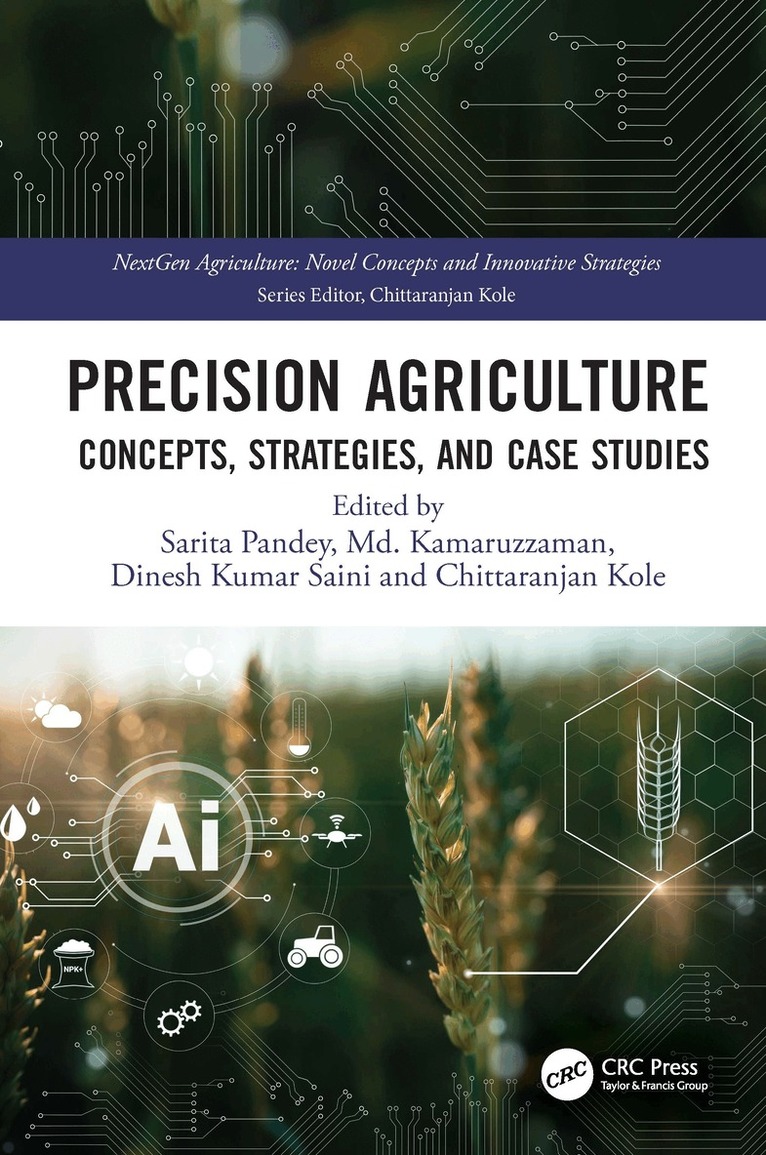
Smart Agriculture: Concepts, Strategies, and Case Studies showcases improvements in agricultural technology, bringing together work from leading experts in the field. It explores techniques and disciplines essential for the widespread adoption of precision agriculture, including artificial intelligence (AI), machine learning, the Internet of Things (IoT), Agriculture 5.0, smart spraying systems, and decision support tools that are transforming modern farming practices.Designed to introduce readers to the vast potential of data-driven agriculture, this book presents information on smart agriculture through practical, real-world applications. It features a diverse range of case studies across various crops and agricultural operations, offering actionable insights into innovative solutions. Highlights include variable-rate orchard spraying for high-density canopies like olives and oranges, image analysis for evaluating apple and grape properties, digital tools for optimizing irrigation, geostatistical modelling of Xylella fastidiosa, UAV-assisted fertilization of olive trees, automated wheat growth monitoring, smart agriculture techniques for peach production, greenhouse data management, digital twins for strawberry cultivation, deep learning for obstacle detection in robotic rice harvesters, and IoT middleware solutions for arable crops and livestock.A book in the NextGen Agriculture: Novel Concepts & Innovative Strategies series, this comprehensive resource is ideal for professional engineers, researchers in agricultural engineering, computer science, machine vision, and remote sensing, as well as technology developers. Graduate students specializing in digital agriculture and precision farming will also find this book invaluable for understanding the transformative power of modern agricultural technologies.
2 621 kr
Kommande
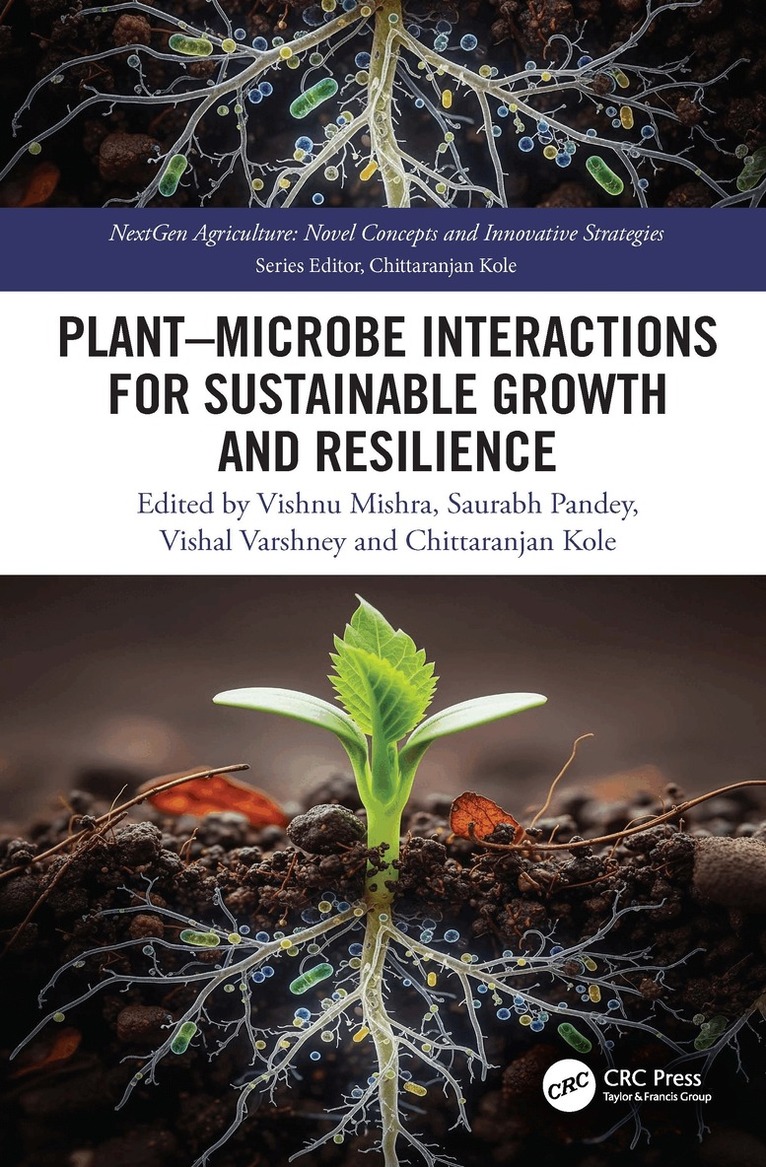
This book reviews dynamic relationships between plants and microbes, highlighting their roles in enhancing crop resilience, growth, and productivity. Integrating research and practical insights, the book provides solutions to pressing agricultural challenges, including soil degradation, pest resistance, and nutrient inefficiency. It discusses plant–microbe interactions; regulation of the host–microbe interaction by small RNA molecules and their mechanisms; and applications of sustainable crop production and climate-resilient agriculture. The book covers a broad spectrum of plant–microbe interactions—from root symbioses to shoot colonization—and provides a holistic understanding of how these interactions impact crop health and productivity, helping readers optimize their strategies for improving crop yields and sustainability.Key Features:Ensures a thorough presentation for understanding plant–microbe dynamics—from basic interactions to molecular mechanisms and practical applicationsOffers a comprehensive exploration of how plant–microbe interactions can revolutionize sustainable agriculturePresents innovative strategies for harnessing natural partnerships to improve crop yields and sustainability
2 040 kr
Kommande
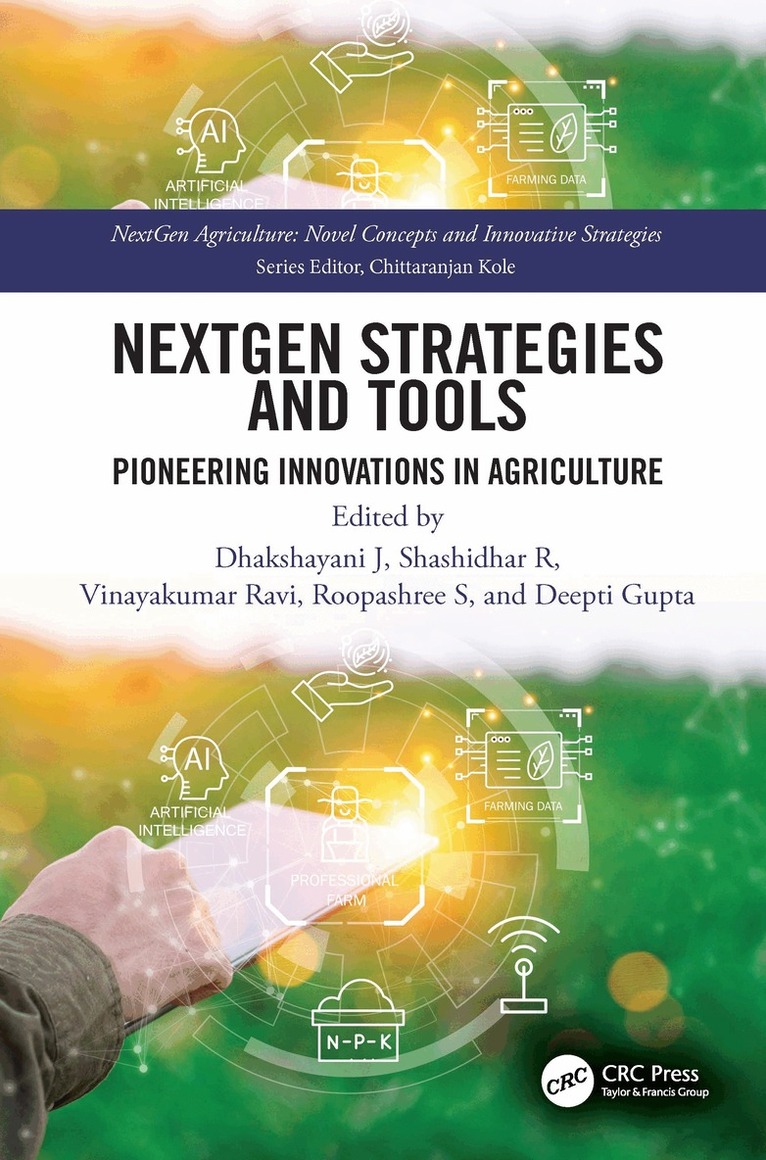
NextGen Strategies and Tools: Pioneering Innovations in Agriculture is a systematic, application-oriented examination of next-generation strategies and technologies that drive innovation in agriculture. The book focuses on integrating Artificial Intelligence (AI), Internet of Things (IoT), deep learning, robotics, and smart sensing technologies to address challenges in sustainability, precision farming, and agricultural productivity.The book presents information on AI-based decision support frameworks, IoT-enabled precision agriculture, smart sensor networks for crop monitoring, and vision-based systems for disease and pest detection. Contributions explore deep learning and computer vision models applied to real-world agricultural scenarios, emphasizing scalability, accuracy, and deployment feasibility in both large-scale and resource-constrained environments. Practical implementations such as Agrobots, Raspberry Pi–based agricultural platforms, and automated fertilizer dispensing systems further demonstrate the applicability of the proposed methods.In addition to technological advancements, the book examines the sustainability and environmental implications of adopting AI and IoT in agriculture. Key considerations such as efficient resource utilization, climate resilience, and environmentally responsible farming practices are discussed to provide a balanced and holistic perspective. By bridging theoretical foundations with practical deployment, the book supports the development of intelligent agricultural ecosystems.As part of the NextGen Agriculture: Novel Concepts and Innovative Strategies series, this book is intended for postgraduate students, researchers, academicians, and professionals in computer science, artificial intelligence, data science, electronics and communication engineering, agricultural engineering, and smart farming technologies. It also serves as a reference for policymakers and practitioners seeking to advance sustainable and intelligent agricultural systems.
1 886 kr
Skickas inom 10-15 vardagar
Genome of an organism is depicted by genetic linkage mapping and physical mapping. Genome mapping stated with genetic linkage mapping and contributed enormously in genome analysis and its improvement. Physical mapping emerged later and is the prelude to structural and functional genomics. Volume One of Principles and Practices of Plant Genomics introduces the historical background of genome mapping, and delineates modern methods in the field. This volume briefly introduces the historical background and overview on genome mapping. Chapters deliberating on different types of molecular markers, their detection, relative merits, shortcomings and applications; types of mapping populations, methods of their generation, applications; basic concepts and schematic depiction of construction of genetic linkage maps; concepts and strategies of mapping genes controlling qualitative and quantitative traits on framework genetic linkage maps; rationale, methodologies and implications of comparative mapping; principles, strategies, and outcome of map-based cloning; overviews on the recent advances on plant genomics and genome initiatives; and finally computer strategies and software.