Oxf Studies in Anthropology of Language – serie
Visar alla böcker i serien Oxf Studies in Anthropology of Language. Handla med fri frakt och snabb leverans.
14 produkter
14 produkter
Inbunden, Engelska, 2016
1 646 kr
Skickas inom 5-8 vardagar
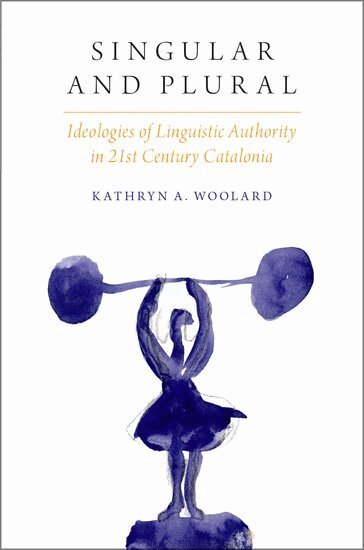
A surging movement for Catalan political independence from Spain has brought renewed urgency to questions about what it means, personally and politically, to speak or not to speak Catalan and to claim Catalan identity. This book develops a framework for analyzing ideologies of linguistic authority and uses it to illuminate the politics of language in Catalonia, where Catalan jostles with Castilian for legitimacy. Kathryn Woolard's longitudinal research across decades of political autonomy contextualizes this ethnographic study of the social meaning of Catalan in the 21st century. Part I lays out the ideologies of linguistic authenticity, anonymity, and naturalism that underpin linguistic authority in the modern western world, and gives an overview of a shift in the ideological grounding of linguistic authority in contemporary Catalonia. Part II examines discourses in the media surrounding three public linguistic controversies: an immigrant president's linguistic competence, a municipal festival, and an international book fair. Part III explores individuals' linguistic practices and views, drawing on classroom ethnographies and interviews with two generations of young people from the same high school. Woolard argues that there is an ongoing shift at both public and personal levels away from the ethnolinguistic authenticity that powered relations in the early transition to political autonomy, and toward new discourses of anonymity, rooted cosmopolitanism, and authenticity understood as a project rather than a matter of origins and essence.
Häftad, Engelska, 2016
753 kr
Skickas inom 5-8 vardagar
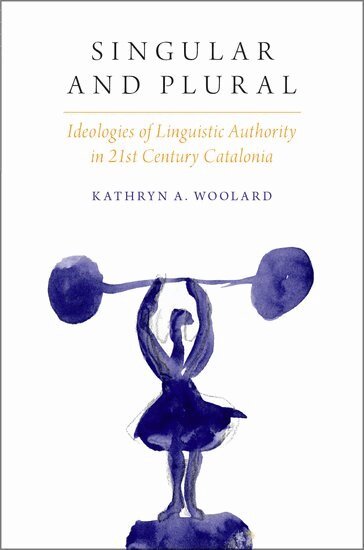
A surging movement for Catalan political independence from Spain has brought renewed urgency to questions about what it means, personally and politically, to speak or not to speak Catalan and to claim Catalan identity. This book develops a framework for analyzing ideologies of linguistic authority and uses it to illuminate the politics of language in Catalonia, where Catalan jostles with Castilian for legitimacy. Kathryn Woolard's longitudinal research across decades of political autonomy contextualizes this ethnographic study of the social meaning of Catalan in the 21st century. Part I lays out the ideologies of linguistic authenticity, anonymity, and naturalism that underpin linguistic authority in the modern western world, and gives an overview of a shift in the ideological grounding of linguistic authority in contemporary Catalonia. Part II examines discourses in the media surrounding three public linguistic controversies: an immigrant president's linguistic competence, a municipal festival, and an international book fair. Part III explores individuals' linguistic practices and views, drawing on classroom ethnographies and interviews with two generations of young people from the same high school. Woolard argues that there is an ongoing shift at both public and personal levels away from the ethnolinguistic authenticity that powered relations in the early transition to political autonomy, and toward new discourses of anonymity, rooted cosmopolitanism, and authenticity understood as a project rather than a matter of origins and essence.
Inbunden, Engelska, 2016
1 706 kr
Skickas inom 5-8 vardagar
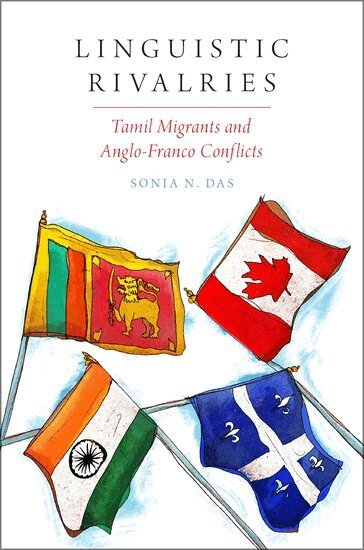
Linguistic Rivalries weaves together anthropological accounts of diaspora, nation, and empire to explore and analyze the multi-faceted processes of globalization characterizing the migration and social integration experiences of Tamil-speaking immigrants and refugees from India and Sri Lanka to Montréal, Québec in the late twentieth and early twenty-first centuries. In Montréal, a city with more trilingual speakers than in any other North American city, Tamil migrants draw on their multilingual repertoires to navigate longstanding linguistic rivalries between anglophone and francophone, and Indian and Sri Lankan nationalist leaders by arguing that Indians speak "Spoken Tamil " and Sri Lankans speak "Written Tamil " as their respective heritage languages. Drawing on ethnographic, archival, and linguistic methods to compare and contrast the communicative practices and language ideologies of Tamil heritage language learning in Hindu temples, Catholic churches, public schools, and community centers, this book demonstrates how processes of sociolinguistic differentiation are mediated by ethnonational, religious, class, racial, and caste hierarchies. Indian Tamils showcase their use of the "cosmopolitan " sounds and scripts of colloquial varieties of Tamil to enhance their geographic and social mobilities, whereas Sri Lankan Tamils, dispossessed of their homes by civil war, instead emphasize the "primordialist " sounds and scripts of a pure "literary " Tamil to rebuild their homeland and launch a "global " critique of racism and environmental destruction from the diaspora. This book uses the ethnographic and archival study of Tamil mobility and immobility to expose the mutual constitution of elite and non-elite global modernities, defined as language ideological projects in which migrants objectify dimensions of time and space through scalar metaphors.
Häftad, Engelska, 2016
633 kr
Skickas inom 5-8 vardagar
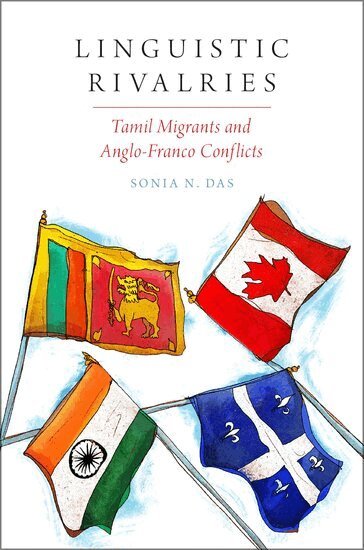
Linguistic Rivalries weaves together anthropological accounts of diaspora, nation, and empire to explore and analyze the multi-faceted processes of globalization characterizing the migration and social integration experiences of Tamil-speaking immigrants and refugees from India and Sri Lanka to Montréal, Québec in the late twentieth and early twenty-first centuries. In Montréal, a city with more trilingual speakers than in any other North American city, Tamil migrants draw on their multilingual repertoires to navigate longstanding linguistic rivalries between anglophone and francophone, and Indian and Sri Lankan nationalist leaders by arguing that Indians speak "Spoken Tamil " and Sri Lankans speak "Written Tamil " as their respective heritage languages. Drawing on ethnographic, archival, and linguistic methods to compare and contrast the communicative practices and language ideologies of Tamil heritage language learning in Hindu temples, Catholic churches, public schools, and community centers, this book demonstrates how processes of sociolinguistic differentiation are mediated by ethnonational, religious, class, racial, and caste hierarchies. Indian Tamils showcase their use of the "cosmopolitan " sounds and scripts of colloquial varieties of Tamil to enhance their geographic and social mobilities, whereas Sri Lankan Tamils, dispossessed of their homes by civil war, instead emphasize the "primordialist " sounds and scripts of a pure "literary " Tamil to rebuild their homeland and launch a "global " critique of racism and environmental destruction from the diaspora. This book uses the ethnographic and archival study of Tamil mobility and immobility to expose the mutual constitution of elite and non-elite global modernities, defined as language ideological projects in which migrants objectify dimensions of time and space through scalar metaphors.
Inbunden, Engelska, 2019
1 234 kr
Skickas inom 5-8 vardagar
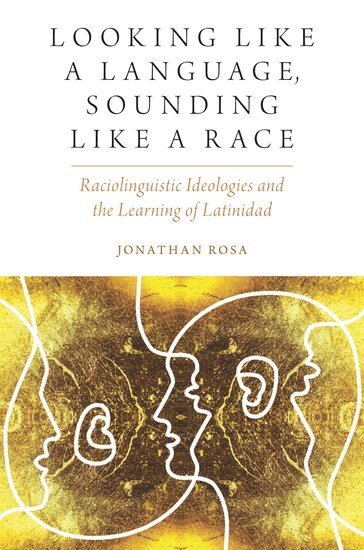
Looking like a Language, Sounding like a Race examines the emergence of linguistic and ethnoracial categories in the context of Latinidad. The book draws from more than twenty-four months of ethnographic and sociolinguistic fieldwork in a Chicago public school, whose student body is more than 90% Mexican and Puerto Rica, to analyze the racialization of language and its relationship to issues of power and national identity. It focuses specifically on youth socialization to U.S. Latinidad as a contemporary site of political anxiety, raciolinguistic transformation, and urban inequity. Jonathan Rosa's account studies the fashioning of Latinidad in Chicago's highly segregated Near Northwest Side; he links public discourse concerning the rising prominence of U.S. Latinidad to the institutional management and experience of raciolinguistic identities there. Anxieties surrounding Latinx identities push administrators to transform 'at risk' Mexican and Puerto Rican students into 'young Latino professionals.' This institutional effort, which requires students to learn to be and, importantly, sound like themselves in highly studied ways, reveals administrators' attempts to navigate a precarious urban terrain in a city grappling with some of the nation's highest youth homicide, dropout, and teen pregnancy rates. Though seemingly well-intentioned, the result for these youths is often an inauthentic, conflicted identity. Rosa explores the ingenuity of his research participants' responses to these forms of marginalization through the contestation of political, ethnoracial, and linguistic borders.
Häftad, Engelska, 2019
426 kr
Skickas inom 5-8 vardagar
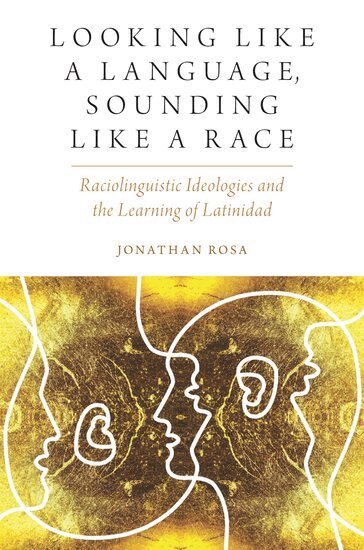
Looking like a Language, Sounding like a Race examines the emergence of linguistic and ethnoracial categories in the context of Latinidad. The book draws from more than twenty-four months of ethnographic and sociolinguistic fieldwork in a Chicago public school, whose student body is more than 90% Mexican and Puerto Rica, to analyze the racialization of language and its relationship to issues of power and national identity. It focuses specifically on youth socialization to U.S. Latinidad as a contemporary site of political anxiety, raciolinguistic transformation, and urban inequity. Jonathan Rosa's account studies the fashioning of Latinidad in Chicago's highly segregated Near Northwest Side; he links public discourse concerning the rising prominence of U.S. Latinidad to the institutional management and experience of raciolinguistic identities there. Anxieties surrounding Latinx identities push administrators to transform 'at risk' Mexican and Puerto Rican students into 'young Latino professionals.' This institutional effort, which requires students to learn to be and, importantly, sound like themselves in highly studied ways, reveals administrators' attempts to navigate a precarious urban terrain in a city grappling with some of the nation's highest youth homicide, dropout, and teen pregnancy rates. Rosa explores the ingenuity of his research participants' responses to these forms of marginalization through the contestation of political, ethnoracial, and linguistic borders.
Inbunden, Engelska, 2017
1 509 kr
Skickas inom 5-8 vardagar
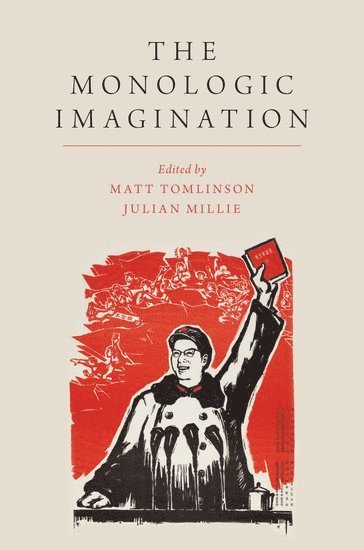
The pioneering and hugely influential work of Mikhail Bakhtin has led scholars in recent decades to see all discourse and social life as inherently "dialogical." No speaker speaks alone, because our words are always partly shaped by our interactions with others, past and future. Moreover, we never fashion ourselves entirely by ourselves, but always do so in concert with others. Bakhtin thus decisively reshaped modern understandings of language and subjectivity. And yet, the contributors to this volume argue that something is potentially overlooked with too close a focus on dialogism: many speakers, especially in charged political and religious contexts, work energetically at crafting monologues, single-voiced statements to which the only expected response is agreement or faithful replication. Drawing on ethnographic case studies from the United States, Iran, Cuba, Indonesia, Algeria, and Papua New Guinea, the authors argue that a focus on "the monologic imagination" gives us new insights into languages' political design and religious force, and deepens our understandings of the necessary interplay between monological and dialogical tendencies.
Häftad, Engelska, 2017
556 kr
Skickas inom 5-8 vardagar
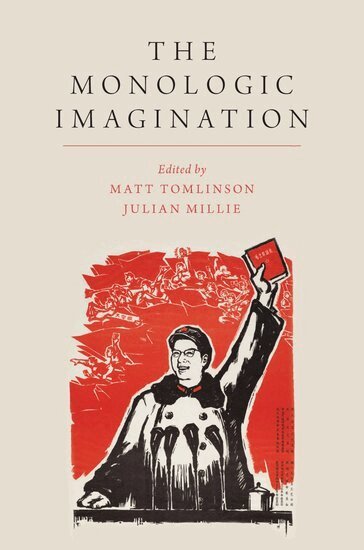
The pioneering and hugely influential work of Mikhail Bakhtin has led scholars in recent decades to see all discourse and social life as inherently "dialogical." No speaker speaks alone, because our words are always partly shaped by our interactions with others, past and future. Moreover, we never fashion ourselves entirely by ourselves, but always do so in concert with others. Bakhtin thus decisively reshaped modern understandings of language and subjectivity. And yet, the contributors to this volume argue that something is potentially overlooked with too close a focus on dialogism: many speakers, especially in charged political and religious contexts, work energetically at crafting monologues, single-voiced statements to which the only expected response is agreement or faithful replication. Drawing on ethnographic case studies from the United States, Iran, Cuba, Indonesia, Algeria, and Papua New Guinea, the authors argue that a focus on "the monologic imagination" gives us new insights into languages' political design and religious force, and deepens our understandings of the necessary interplay between monological and dialogical tendencies.
Inbunden, Engelska, 2019
1 317 kr
Skickas inom 5-8 vardagar
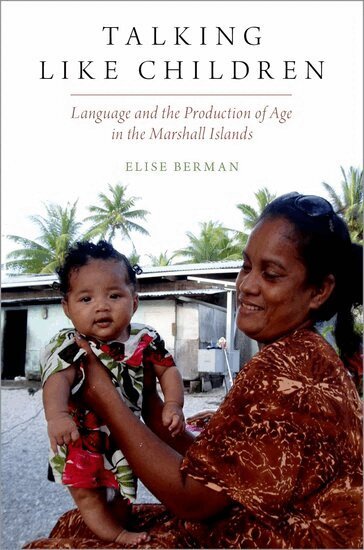
Children in the Marshall Islands do many things that adults do not. They walk around half naked. They carry and eat food in public without offering it to others. They talk about things they see rather than hiding uncomfortable truths. They explicitly refuse to give. Why do they do these things?Many think these behaviors are a natural result of children's innate immaturity. But Elise Berman argues that children are actually taught to do things that adults avoid: to be rude, inappropriate, and immature. Before children learn to be adults, they learn to be different from them. Berman's main theoretical claim therefore is also a novel one: age emerges through interaction and is a social production. In Talking Like Children, Berman analyzes a variety of interactions in the Marshall Islands, all broadly based around exchange: adoption negotiations, efforts to ask for or avoid giving away food, contentious debates about supposed child abuse. In these dramas both large and small, age differences emerge through the decisions people make, the emotions they feel, and the power they gain. Berman's research includes a range of methods -- participant observation, video and audio recordings, interviews, children's drawings -- that yield a significant corpus of data including over 80 hours of recorded naturalistic social interaction. Presented as a series of captivating stories, Talking Like Children is an intimate analysis of speech and interaction that shows what age means. Like gender and race, age differences are both culturally produced and socially important. The differences between Marshallese children and adults give both groups the ability to manipulate social life in distinct but often complementary ways. These differences produce culture itself. Talking Like Children establishes age as a foundational social variable and a central concern of anthropological and linguistic research.
Häftad, Engelska, 2019
330 kr
Skickas inom 5-8 vardagar
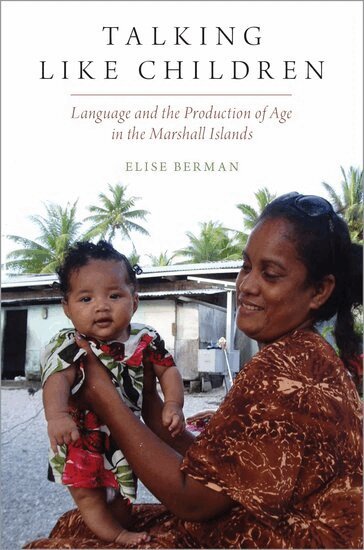
Children in the Marshall Islands do many things that adults do not. They walk around half naked. They carry and eat food in public without offering it to others. They talk about things they see rather than hiding uncomfortable truths. They explicitly refuse to give. Why do they do these things?Many think these behaviors are a natural result of children's innate immaturity. But Elise Berman argues that children are actually taught to do things that adults avoid: to be rude, inappropriate, and immature. Before children learn to be adults, they learn to be different from them. Berman's main theoretical claim therefore is also a novel one: age emerges through interaction and is a social production. In Talking Like Children, Berman analyzes a variety of interactions in the Marshall Islands, all broadly based around exchange: adoption negotiations, efforts to ask for or avoid giving away food, contentious debates about supposed child abuse. In these dramas both large and small, age differences emerge through the decisions people make, the emotions they feel, and the power they gain. Berman's research includes a range of methods -- participant observation, video and audio recordings, interviews, children's drawings -- that yield a significant corpus of data including over 80 hours of recorded naturalistic social interaction. Presented as a series of captivating stories, Talking Like Children is an intimate analysis of speech and interaction that shows what age means. Like gender and race, age differences are both culturally produced and socially important. The differences between Marshallese children and adults give both groups the ability to manipulate social life in distinct but often complementary ways. These differences produce culture itself. Talking Like Children establishes age as a foundational social variable and a central concern of anthropological and linguistic research.
Häftad, Engelska, 2020
461 kr
Skickas inom 5-8 vardagar
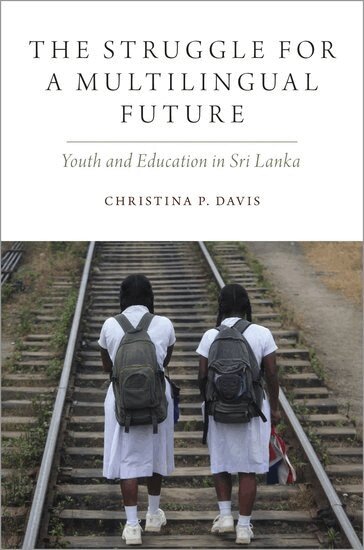
In The Struggle for a Multilingual Future, Christina Davis examines the tension between ethnic conflict and multilingual education policy in the linguistic and social practices of Sri Lankan minority youth. Facing a legacy of post-independence language and education policies that were among the complex causes of the Sri Lankan civil war (1983–2009), the government has recently sought to promote interethnic integration through trilingual language policies in Sinhala, Tamil, and English in state schools.Integrating ethnographic and linguistic research in and around two schools during the last phase of the war, Davis's research shows how, despite the intention of the reforms, practices on the ground reinforce language-based models of ethnicity and sustain ethnic divisions and power inequalities. By engaging with the actual experiences of Tamil and Muslim youth, Davis demonstrates the difficulties of using language policy to ameliorate ethnic conflict if it does not also address how that conflict is produced and reproduced in everyday talk.
Inbunden, Engelska, 2020
1 376 kr
Skickas inom 7-10 vardagar
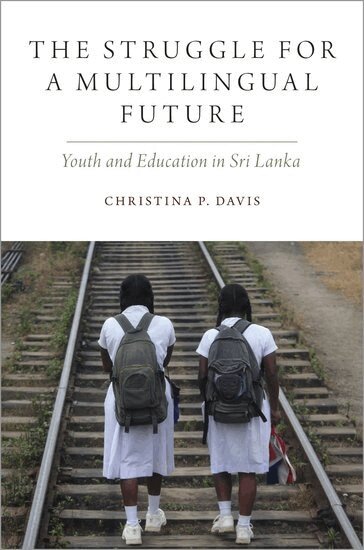
In The Struggle for a Multilingual Future, Christina Davis examines the tension between ethnic conflict and multilingual education policy in the linguistic and social practices of Sri Lankan minority youth. Facing a legacy of post-independence language and education policies that were among the complex causes of the Sri Lankan civil war (1983–2009), the government has recently sought to promote interethnic integration through trilingual language policies in Sinhala, Tamil, and English in state schools.Integrating ethnographic and linguistic research in and around two schools during the last phase of the war, Davis's research shows how, despite the intention of the reforms, practices on the ground reinforce language-based models of ethnicity and sustain ethnic divisions and power inequalities. By engaging with the actual experiences of Tamil and Muslim youth, Davis demonstrates the difficulties of using language policy to ameliorate ethnic conflict if it does not also address how that conflict is produced and reproduced in everyday talk.
Inbunden, Engelska, 2015
1 646 kr
Skickas inom 5-8 vardagar
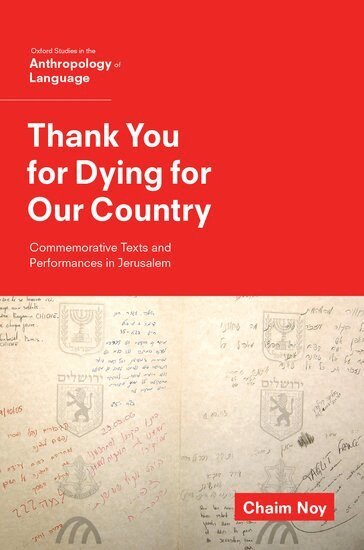
Combining ethnographic, semiotic, and performative approaches, this book examines texts and accompanying acts of writing of national commemoration. The commemorative visitor book is viewed as a mobilized stage, a communication medium, where visitors' public performances are presented, and where acts of participation are authored and composed. The study contextualizes the visitor book within the material and ideological environment where it is positioned and where it functions. The semiotics of commemoration are mirrored in the visitor book, which functions as a participatory platform that becomes an extension of the commemorative spaces in the museum. The study addresses tourists' and visitors' texts, i.e. the commemorative entries in the book, which are succinct dialogical utterances. Through these public performances, individuals and groups of visitors align and affiliate with a larger imagined national community. Reading the entries allows a unique perspective on communication practices and processes, and vividly illustrates such concepts as genre, voice, addressivity, indexicality, and the very acts of writing and reading. The book's many entries tell stories of affirming, but also resisting the narrative tenets of Zionist national identity, and they illustrate the politics of gender and ethnicity in Israel society. The book presents many ethnographic observations and interviews, which were done both with the management of the site (Ammunition Hill National Memorial Site), and with the visitors themselves. The observations shed light on processes and practices involved in writing and reading, and on how visitors decide on what to write and how they collaborate on drafting their entries. The interviews with the site's management also illuminate the commemoration projects, and how museums and exhibitions are staged and managed.
Häftad, Engelska, 2015
633 kr
Skickas inom 5-8 vardagar
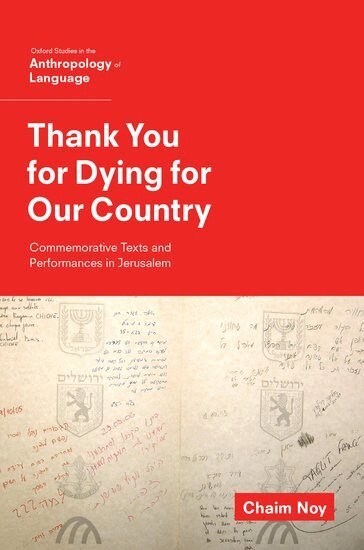
Combining ethnographic, semiotic, and performative approaches, this book examines texts and accompanying acts of writing of national commemoration. The commemorative visitor book is viewed as a mobilized stage, a communication medium, where visitors' public performances are presented, and where acts of participation are authored and composed. The study contextualizes the visitor book within the material and ideological environment where it is positioned and where it functions. The semiotics of commemoration are mirrored in the visitor book, which functions as a participatory platform that becomes an extension of the commemorative spaces in the museum. The study addresses tourists' and visitors' texts, i.e. the commemorative entries in the book, which are succinct dialogical utterances. Through these public performances, individuals and groups of visitors align and affiliate with a larger imagined national community. Reading the entries allows a unique perspective on communication practices and processes, and vividly illustrates such concepts as genre, voice, addressivity, indexicality, and the very acts of writing and reading. The book's many entries tell stories of affirming, but also resisting the narrative tenets of Zionist national identity, and they illustrate the politics of gender and ethnicity in Israel society. The book presents many ethnographic observations and interviews, which were done both with the management of the site (Ammunition Hill National Memorial Site), and with the visitors themselves. The observations shed light on processes and practices involved in writing and reading, and on how visitors decide on what to write and how they collaborate on drafting their entries. The interviews with the site's management also illuminate the commemoration projects, and how museums and exhibitions are staged and managed.