Oxford Chinese Thought - Böcker
Visar alla böcker i serien Oxford Chinese Thought. Handla med fri frakt och snabb leverans.
8 produkter
8 produkter
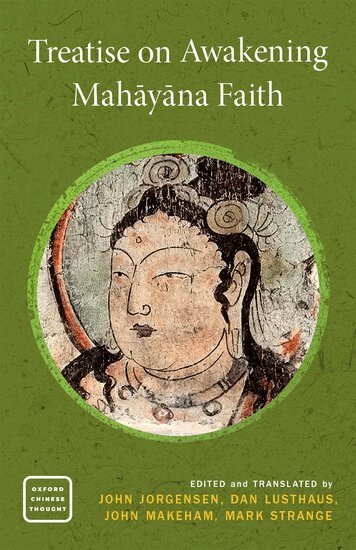
Treatise on Awakening Mahāyāna Faith
Inbunden, Engelska, 2019
1 349 kr
Skickas inom 7-10 vardagar
Dasheng qixin lun, or Treatise on Awakening Mahāyāna Faith has been one of the most important texts of East Asian Buddhism since it first appeared in sixth-century China. It outlines the initial steps a Mahāyāna Buddhist needs to take to reach enlightenment, beginning with the conviction that the Mahāyāna path is correct and worth pursuing. The Treatise addresses many of the doctrines central to various Buddhist teachings in China between the fifth and seventh centuries, attempting to reconcile seemingly contradictory ideas in Buddhist texts introduced from India. It provided a model for later schools to harmonize teachings and sustain the idea that, despite different approaches, there was only one doctrine, or Dharma. It profoundly shaped the doctrines and practices of the major schools of Chinese Buddhism: Chan, Tiantai, Huayan, and to a lesser extent Pure Land.It quickly became a shared resource for East Asian philosophers and students of Buddhist thought. Drawing on the historical and intellectual contexts of Treatise's composition and paying sustained attention to its interpretation in early commentaries, this new annotated translation of the classic, makes its ideas available to English readers like never before. The introduction orients readers to the main topics taken up in the Treatise and gives a comprehensive historical and intellectual grounding to the text. This volume marks a major advance in studies of the Treatise, bringing to light new interpretations and themes of the text.
Treatise on Awakening Mahāyāna Faith
Häftad, Engelska, 2019
325 kr
Skickas inom 5-8 vardagar
Dasheng qixin lun, or Treatise on Awakening Mahāyāna Faith has been one of the most important texts of East Asian Buddhism since it first appeared in sixth-century China. It outlines the initial steps a Mahāyāna Buddhist needs to take to reach enlightenment, beginning with the conviction that the Mahāyāna path is correct and worth pursuing. The Treatise addresses many of the doctrines central to various Buddhist teachings in China between the fifth and seventh centuries, attempting to reconcile seemingly contradictory ideas in Buddhist texts introduced from India. It provided a model for later schools to harmonize teachings and sustain the idea that, despite different approaches, there was only one doctrine, or Dharma. It profoundly shaped the doctrines and practices of the major schools of Chinese Buddhism: Chan, Tiantai, Huayan, and to a lesser extent Pure Land.It quickly became a shared resource for East Asian philosophers and students of Buddhist thought. Drawing on the historical and intellectual contexts of Treatise's composition and paying sustained attention to its interpretation in early commentaries, this new annotated translation of the classic, makes its ideas available to English readers like never before. The introduction orients readers to the main topics taken up in the Treatise and gives a comprehensive historical and intellectual grounding to the text. This volume marks a major advance in studies of the Treatise, bringing to light new interpretations and themes of the text.
1 252 kr
Skickas inom 5-8 vardagar
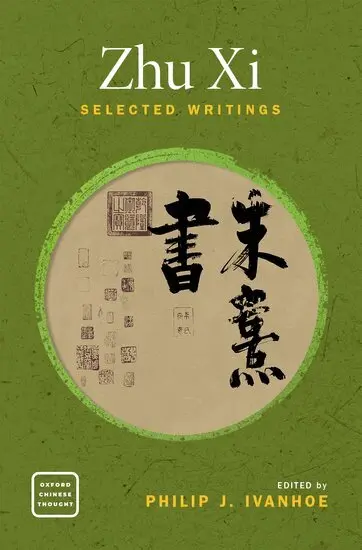
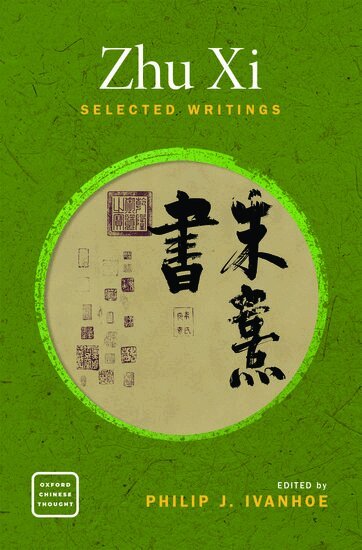
This volume contains nine chapters of translation, by a range of leading scholars, focusing on core themes in the philosophy of Zhu Xi (1130-1200), one of the most influential Chinese thinkers of the later Confucian tradition. It includes an Introduction to Zhu's life and thought, a chronology of important events in his life, and a list of key terms of art.Zhu Xi's philosophy offers the most systematic and comprehensive expression of the Confucian tradition; he sought to explain and show the connections between the classics, relate them to a range of contemporary philosophical issues concerning the metaphysical underpinnings of the tradition, and defend Confucianism against competing traditions such as Daoism and Buddhism. He elevated the Four Books-i.e. the Analects, Mengzi, Great Learning, and Doctrine of the Mean-to a new and preeminent position within the Confucian canon and his edition and interpretation of these four texts was adopted as the basis for the Imperial Examination System, which served as the pathway to officialdom and success in traditional Chinese society. Zhu Xi's interpretation remained the orthodox tradition until the collapse of the Qing dynasty (1644-1911) and exerted a profound and enduring influence on how Confucianism was understood in Korea, Japan, and Vietnam.
733 kr
Skickas inom 3-6 vardagar
This volume contains nine chapters of translation, by a range of leading scholars, focusing on core themes in the philosophy of Zhu Xi (1130-1200), one of the most influential Chinese thinkers of the later Confucian tradition. It includes an Introduction to Zhu's life and thought, a chronology of important events in his life, and a list of key terms of art.Zhu Xi's philosophy offers the most systematic and comprehensive expression of the Confucian tradition; he sought to explain and show the connections between the classics, relate them to a range of contemporary philosophical issues concerning the metaphysical underpinnings of the tradition, and defend Confucianism against competing traditions such as Daoism and Buddhism. He elevated the Four Books-i.e. the Analects, Mengzi, Great Learning, and Doctrine of the Mean-to a new and preeminent position within the Confucian canon and his edition and interpretation of these four texts was adopted as the basis for the Imperial Examination System, which served as the pathway to officialdom and success in traditional Chinese society. Zhu Xi's interpretation remained the orthodox tradition until the collapse of the Qing dynasty (1644-1911) and exerted a profound and enduring influence on how Confucianism was understood in Korea, Japan, and Vietnam.
The Daode jing Commentary of Cheng Xuanying
Daoism, Buddhism, and the Laozi in the Tang Dynasty
Inbunden, Engelska, 2021
1 600 kr
Skickas inom 5-8 vardagar
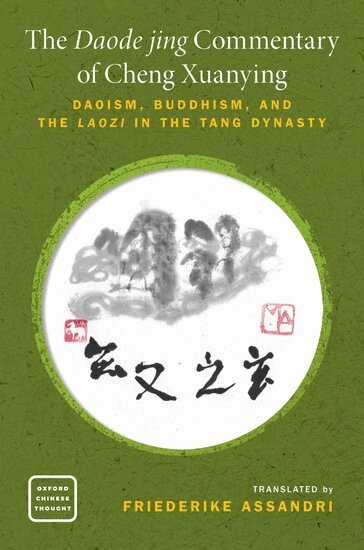
This book presents for the first time in English a complete translation of the Expository Commentary to the Daode jing, written by the Daoist monk Cheng Xuanying in the 7th century CE. This commentary is a quintessential text of Tang dynasty Daoist philosophy and of Chongxuanxue or Twofold Mystery teachings. Cheng Xuanying proposes a reading of the ancient Daode jing that aligns the text with Daoist practices and beliefs and integrates Buddhist concepts and techniques into the exegesis of the Daode jing.Building on the philosophical tradition of Xuanxue authors like Wang Bi, Cheng read the Daode jing in light of Daoist religion. Cheng presents Laozi, the presumed author of the Daode jing, as a bodhisattva-like sage and savior, who wrote the Daode jing to compassionately guide human beings to salvation. Salvation is interpreted as a metaphysical form of immortality, reached by overcoming the dichotomy of being and non-being, and thus also life and death. Cheng's philosophical outlook ties together the ancient text of the Daode jing and contemporary developments in Daoist thought which occurred under the influence of an intense interaction with Buddhist ideas. The commentary is a vivid testimony of the integration of Buddhist thought into an exegesis of the ancient classic of the Daode jing, and thereby also into Chinese philosophy. Friederike Assandri frames this new translation with an extensive introduction, providing crucial context for a new reading of the Daode jing. It includes a biography of Cheng Xuanying, a discussion of the historical and political context of Daoism in early medieval China in the capital Chang'an, and a discussion of Cheng's philosophy in relation to the interaction of Daoism and Buddhism. This commentary is essential reading for students and scholars interested in the history of Chinese philosophy, Daoist thought, and the reception of Buddhism in China.
The Daode jing Commentary of Cheng Xuanying
Daoism, Buddhism, and the Laozi in the Tang Dynasty
Häftad, Engelska, 2022
858 kr
Skickas inom 3-6 vardagar
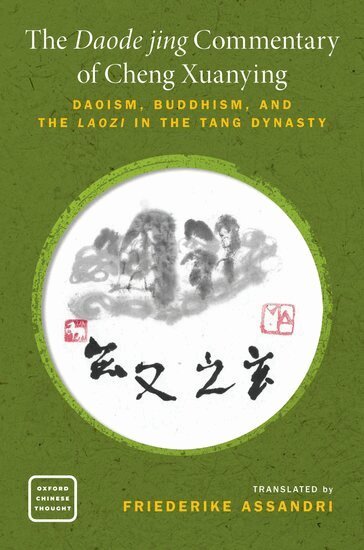
This book presents for the first time in English a complete translation of the Expository Commentary to the Daode jing, written by the Daoist monk Cheng Xuanying in the 7th century CE. This commentary is a quintessential text of Tang dynasty Daoist philosophy and of Chongxuanxue or Twofold Mystery teachings. Cheng Xuanying proposes a reading of the ancient Daode jing that aligns the text with Daoist practices and beliefs and integrates Buddhist concepts and techniques into the exegesis of the Daode jing.Building on the philosophical tradition of Xuanxue authors like Wang Bi, Cheng read the Daode jing in light of Daoist religion. Cheng presents Laozi, the presumed author of the Daode jing, as a bodhisattva-like sage and savior, who wrote the Daode jing to compassionately guide human beings to salvation. Salvation is interpreted as a metaphysical form of immortality, reached by overcoming the dichotomy of being and non-being, and thus also life and death. Cheng's philosophical outlook ties together the ancient text of the Daode jing and contemporary developments in Daoist thought which occurred under the influence of an intense interaction with Buddhist ideas. The commentary is a vivid testimony of the integration of Buddhist thought into an exegesis of the ancient classic of the Daode jing, and thereby also into Chinese philosophy. Friederike Assandri frames this new translation with an extensive introduction, providing crucial context for a new reading of the Daode jing. It includes a biography of Cheng Xuanying, a discussion of the historical and political context of Daoism in early medieval China in the capital Chang'an, and a discussion of Cheng's philosophy in relation to the interaction of Daoism and Buddhism. This commentary is essential reading for students and scholars interested in the history of Chinese philosophy, Daoist thought, and the reception of Buddhism in China.
Explaining and Illustrating the Laozi
A Translation and Analysis of the Earliest Commentaries on the Laozi
Inbunden, Engelska, 2026
850 kr
Kommande
Although the ancient Chinese text Laozi--also known as the Daodejing--is highly popular worldwide, few Anglophone readers are familiar with the history of how the Chinese themselves have interpreted it. This volume aims to introduce students and general readers to the two earliest surviving commentaries on the Laozi, through translations that are approachable for non-specialists and can be read on their own. These two commentaries, the "Jie Lao" (Explaining the Laozi) and "Yu Lao" (Illustrating the Laozi), appear as two chapters in the book Han Feizi, traditionally dated to the 3rd century BCE. They are interesting not only for showing how at least one very early reader understood the Laozi, but also for what they may reveal about the state of the Laozi itself at that time, before it achieved the form of the text that is so famous nowadays. The book also includes original essays that explore the commentaries' relation to the rest of the Han Feizi, compare and contrast them with other Laozi commentaries, and analyze their place in the larger history of Chinese commentarial writing.
Explaining and Illustrating the Laozi
A Translation and Analysis of the Earliest Commentaries on the Laozi
Häftad, Engelska, 2026
255 kr
Kommande
Although the ancient Chinese text Laozi--also known as the Daodejing--is highly popular worldwide, few Anglophone readers are familiar with the history of how the Chinese themselves have interpreted it. This volume aims to introduce students and general readers to the two earliest surviving commentaries on the Laozi, through translations that are approachable for non-specialists and can be read on their own. These two commentaries, the "Jie Lao" (Explaining the Laozi) and "Yu Lao" (Illustrating the Laozi), appear as two chapters in the book Han Feizi, traditionally dated to the 3rd century BCE. They are interesting not only for showing how at least one very early reader understood the Laozi, but also for what they may reveal about the state of the Laozi itself at that time, before it achieved the form of the text that is so famous nowadays. The book also includes original essays that explore the commentaries' relation to the rest of the Han Feizi, compare and contrast them with other Laozi commentaries, and analyze their place in the larger history of Chinese commentarial writing.