Parallel Robots: Theory and Applications – serie
Visar alla böcker i serien Parallel Robots: Theory and Applications. Handla med fri frakt och snabb leverans.
5 produkter
5 produkter
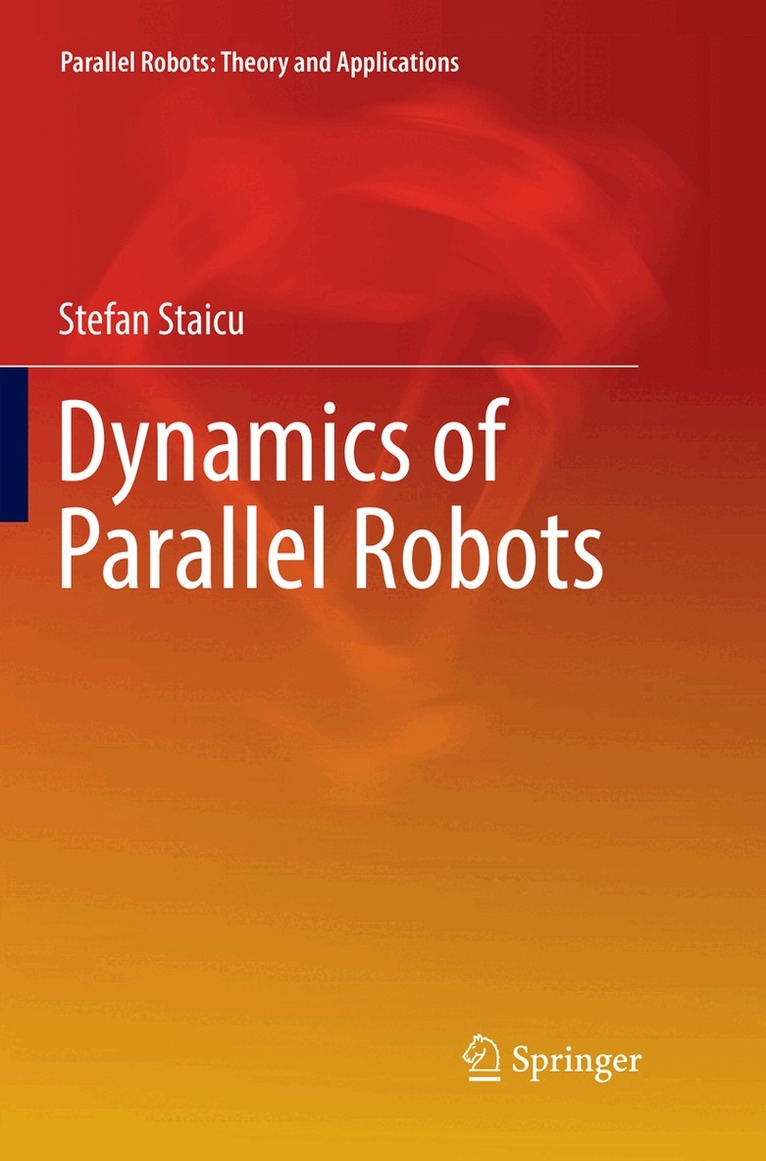
Häftad, Engelska, 2019
1 741 kr
Skickas inom 10-15 vardagar
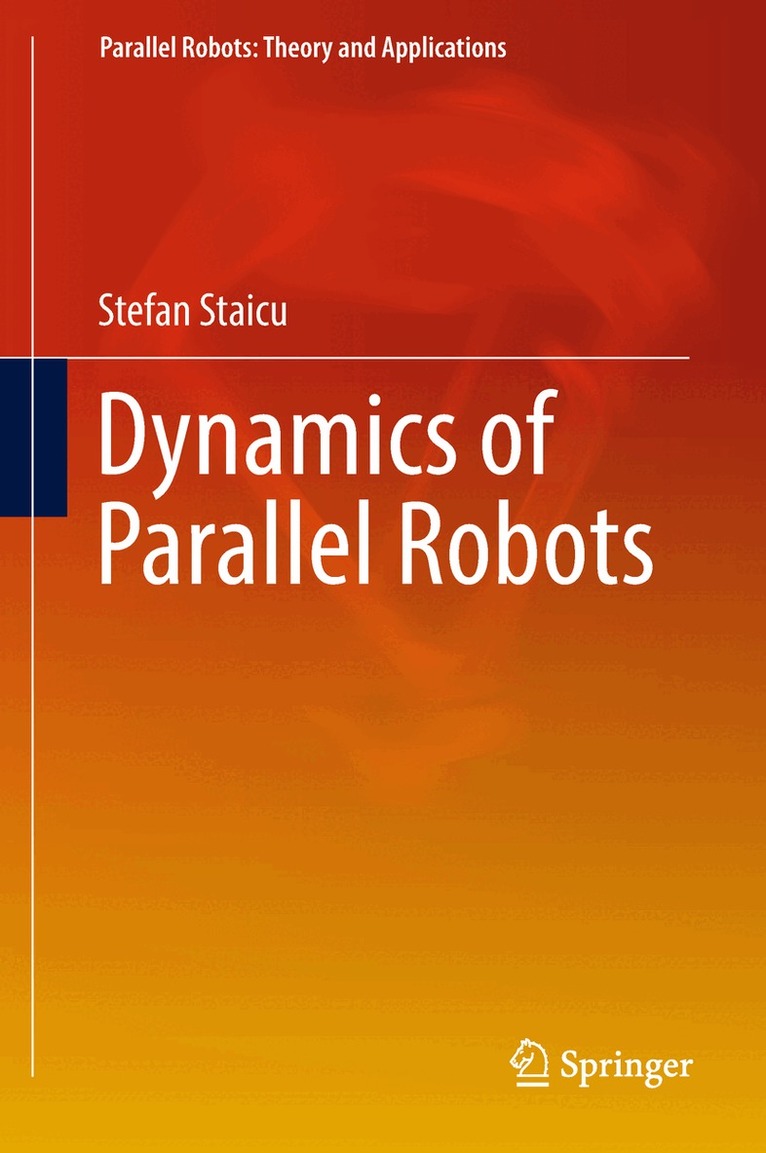
This book establishes recursive relations concerning kinematics and dynamics of constrained robotic systems. It uses matrix modeling to determine the connectivity conditions on the relative velocities and accelerations in order to compare two efficient energetic ways in dynamics modeling: the principle of virtual work, and the formalism of Lagrange's equations. First, a brief fundamental theory is presented on matrix mechanics of the rigid body, which is then developed in the following five chapters treating matrix kinematics of the rigid body, matrix kinematics of the composed motion, kinetics of the rigid body, dynamics of the rigid body, and analytical mechanics. By using a set of successive mobile frames, the geometrical properties and the kinematics of the vector system of velocities and accelerations for each element of the robot are analysed. The dynamics problem is solved in two energetic ways: using an approach based on the principle of virtual work and applying the formalism of Lagrange's equations of the second kind. These are shown to be useful for real-time control of the robot's evolution. Then the recursive matrix method is applied to the kinematics and dynamics analysis of five distinct case studies: planar parallel manipulators, spatial parallel robots, planetary gear trains, mobile wheeled robots and, finally, two-module hybrid parallel robots.
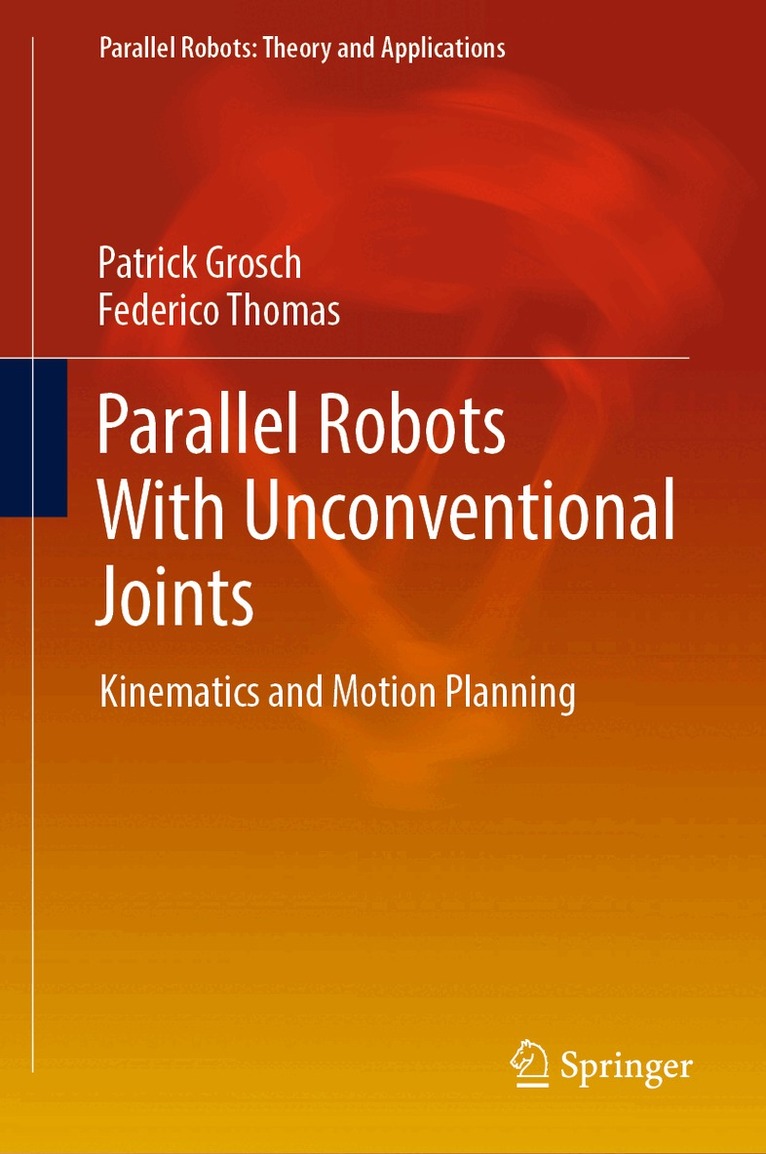
Inbunden, Engelska, 2019
1 091 kr
Skickas inom 10-15 vardagar
This book shows how, through certain geometric transformations, some of the standard joints used in parallel robots can be replaced with lockable or non-holonomic joints. These substitutions allow for reducing the number of legs, and hence the number of actuators needed to control the robot, without losing the robot's ability to bring its mobile platform to the desired configuration. The kinematics of the most representative examples of these new designs are analyzed and their theoretical features verified through simulations and practical implementations.
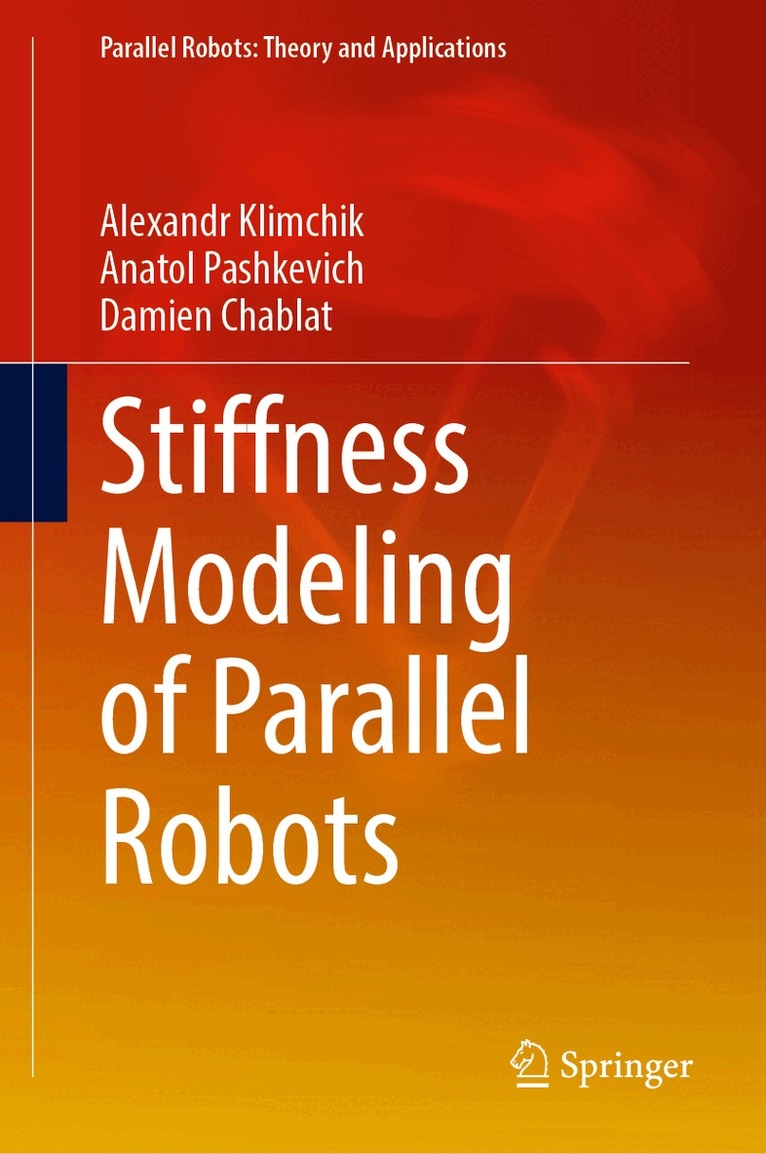
Inbunden, Engelska, 2025
1 633 kr
Skickas inom 10-15 vardagar
The book focuses on the stiffness modeling of serial and parallel manipulators It presents fundamentals and enhancements for Virtual Joint Modelling (VJM), Matrix Structural Analysis (MSA) and Finite Element Analysis (FEA). The described techniques consider complex kinematics with numerous passive joints, different types of loadings, including essential loadings leading to critical changes in the manipulator configurations, linear and non-linear stiffness analysis, conventional and non-linear compliance error compensation and stiffness parameters estimation from virtual experiments. Presented enhancement for the VJM integrates in the stiffness analysis external force/torque applied to the end-point, internal preloading in the joints, and auxiliary forces/torques applied to intermediate points. The proposed technique includes computing an equilibrium configuration corresponding to the external/internal loading and allows obtaining the full-scale non-linear force-deflection relation for any given workspace point. This enables the designer to evaluate critical forces that may provoke non-linear behaviours of the manipulators, such as sudden failure due to elastic instability (buckling). The presented enhancement to the MSA allows users to carry out stiffness analysis for serial underactuated structures and over-constrained ones with multiple closed loops. To increase the model accuracy of the VJM and MSA techniques a dedicated FEA-based stiffness model parameters identification technique is introduced in the book. It is based on the virtual experiments in the CAD/CAE environment and allows the VJM and MSA to achieve accuracy comparable with FEA, but it essentially reduces the computational effort, eliminating repetitive re-meshing through the workspace. All considered stiffness modelling techniques, kinematic particularities and loading conditions are illustrated with practical examples and related analysis.
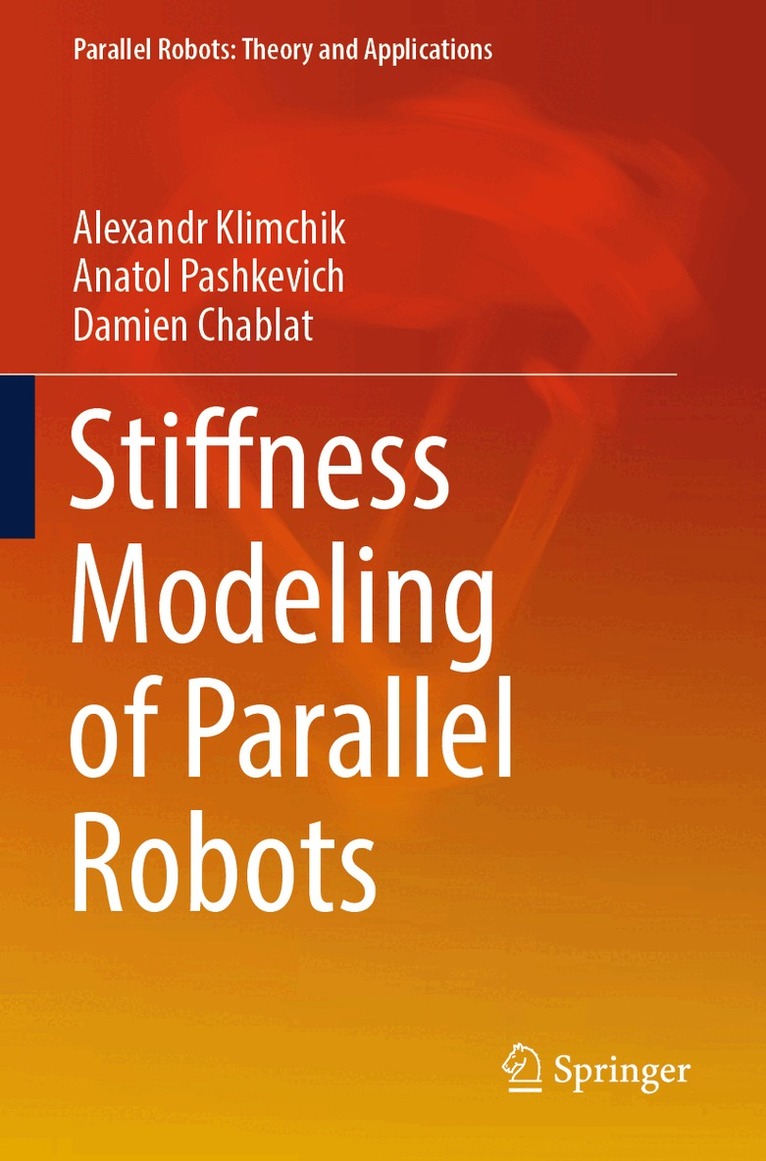
Häftad, Engelska, 2026
1 633 kr
Skickas inom 10-15 vardagar
The book focuses on the stiffness modeling of serial and parallel manipulators It presents fundamentals and enhancements for Virtual Joint Modelling (VJM), Matrix Structural Analysis (MSA) and Finite Element Analysis (FEA). The described techniques consider complex kinematics with numerous passive joints, different types of loadings, including essential loadings leading to critical changes in the manipulator configurations, linear and non-linear stiffness analysis, conventional and non-linear compliance error compensation and stiffness parameters estimation from virtual experiments. Presented enhancement for the VJM integrates in the stiffness analysis external force/torque applied to the end-point, internal preloading in the joints, and auxiliary forces/torques applied to intermediate points. The proposed technique includes computing an equilibrium configuration corresponding to the external/internal loading and allows obtaining the full-scale non-linear force-deflection relation for any given workspace point. This enables the designer to evaluate critical forces that may provoke non-linear behaviours of the manipulators, such as sudden failure due to elastic instability (buckling). The presented enhancement to the MSA allows users to carry out stiffness analysis for serial underactuated structures and over-constrained ones with multiple closed loops. To increase the model accuracy of the VJM and MSA techniques a dedicated FEA-based stiffness model parameters identification technique is introduced in the book. It is based on the virtual experiments in the CAD/CAE environment and allows the VJM and MSA to achieve accuracy comparable with FEA, but it essentially reduces the computational effort, eliminating repetitive re-meshing through the workspace. All considered stiffness modelling techniques, kinematic particularities and loading conditions are illustrated with practical examples and related analysis.
Inbunden, Engelska, 2018
1 741 kr
Skickas inom 10-15 vardagar
This book establishes recursive relations concerning kinematics and dynamics of constrained robotic systems. It uses matrix modeling to determine the connectivity conditions on the relative velocities and accelerations in order to compare two efficient energetic ways in dynamics modeling: the principle of virtual work, and the formalism of Lagrange's equations. First, a brief fundamental theory is presented on matrix mechanics of the rigid body, which is then developed in the following five chapters treating matrix kinematics of the rigid body, matrix kinematics of the composed motion, kinetics of the rigid body, dynamics of the rigid body, and analytical mechanics. By using a set of successive mobile frames, the geometrical properties and the kinematics of the vector system of velocities and accelerations for each element of the robot are analysed. The dynamics problem is solved in two energetic ways: using an approach based on the principle of virtual work and applying the formalism of Lagrange's equations of the second kind. These are shown to be useful for real-time control of the robot's evolution. Then the recursive matrix method is applied to the kinematics and dynamics analysis of five distinct case studies: planar parallel manipulators, spatial parallel robots, planetary gear trains, mobile wheeled robots and, finally, two-module hybrid parallel robots.