Possible Futures - Böcker
Visar alla böcker i serien Possible Futures. Handla med fri frakt och snabb leverans.
10 produkter
10 produkter
921 kr
Skickas inom 10-15 vardagar
Situates the current crisis in the historical trajectory of the capitalist world-system, showing how the crisis was made possible not only by neoliberal financial reforms but by a massive turn away from manufacturing things of value towards seeking profit from financial exchange and credit. Much more basic than the result of a few financial traders cheating the system, this is a potential historical turning point. In original essays, the contributors establish why the system was ripe for crisis of the past, and yet why this meltdown was different. The volume concludes by asking whether as deep as the crisis is, it may contain seeds of a new global economy, what role the US will play, and whether China or other countries will rise to global leadership.Contributors include: Giovanni Arrighi, Gopal Balakrishnan, Manuel Castells, Daniel Chirot, Fernando Coronil, Nancy Fraser, James K. Galbraith, David Harvey, Caglar Keyder, Beverly J. Silver, and Immanuel Wallerstein.The three volumes can purchased individually or as a set.Business as Usual is the first part of a trilogy comprised of the first three books in the Possible Future series. Volume 1: Business as UsualVolume 2: The Deepening CrisisVolume 3: AftermathThe three volumes are linked by a common introduction and can be purchased individually or as a set.
365 kr
Skickas inom 7-10 vardagar
Situates the current crisis in the historical trajectory of the capitalist world-system, showing how the crisis was made possible not only by neoliberal financial reforms but by a massive turn away from manufacturing things of value towards seeking profit from financial exchange and credit. Much more basic than the result of a few financial traders cheating the system, this is a potential historical turning point. In original essays, the contributors establish why the system was ripe for crisis of the past, and yet why this meltdown was different. The volume concludes by asking whether as deep as the crisis is, it may contain seeds of a new global economy, what role the US will play, and whether China or other countries will rise to global leadership.Contributors include: Giovanni Arrighi, Gopal Balakrishnan, Manuel Castells, Daniel Chirot, Fernando Coronil, Nancy Fraser, James K. Galbraith, David Harvey, Caglar Keyder, Beverly J. Silver, and Immanuel Wallerstein.The three volumes can purchased individually or as a set.Business as Usual is the first part of a trilogy comprised of the first three books in the Possible Future series. Volume 1: Business as UsualVolume 2: The Deepening CrisisVolume 3: AftermathThe three volumes are linked by a common introduction and can be purchased individually or as a set.
879 kr
Skickas inom 10-15 vardagar
Response to financial meltdown is entangled with basic challenges to global governance. Environment, global security and ethnicity and nationalism are all global issues today. Focusing on the political and social dimensions of the crisis, contributors examine changes in relationships between the world's richer and poorer countries, efforts to strengthen global institutions, and difficulties facing states trying to create stability for their citizens.Contributors include: William Barnes, Rogers Brubaker, Vincent Della Sala, Nils Gilman, David Held, Mary Kaldor, Adrian Pabst, Ravi Sundaram, Vadim Volkov, Michael Watts, and Kevin Young. The Deepening Crisis is the second part of a trilogy comprised of the first three books in the Possible Future series. Volume 1: Business as UsualVolume 2: The Deepening CrisisVolume 3: AftermathThe three volumes are linked by a common introduction and can be purchased individually or as a set.
375 kr
Skickas inom 7-10 vardagar
Response to financial meltdown is entangled with basic challenges to global governance. Environment, global security and ethnicity and nationalism are all global issues today. Focusing on the political and social dimensions of the crisis, contributors examine changes in relationships between the world's richer and poorer countries, efforts to strengthen global institutions, and difficulties facing states trying to create stability for their citizens.Contributors include: William Barnes, Rogers Brubaker, Vincent Della Sala, Nils Gilman, David Held, Mary Kaldor, Adrian Pabst, Ravi Sundaram, Vadim Volkov, Michael Watts, and Kevin Young. The Deepening Crisis is the second part of a trilogy comprised of the first three books in the Possible Future series. Volume 1: Business as UsualVolume 2: The Deepening CrisisVolume 3: AftermathThe three volumes are linked by a common introduction and can be purchased individually or as a set.
921 kr
Skickas inom 10-15 vardagar
The global financial crisis showed deep problems with mainstream economic predictions, as well as the vulnerability of the world's richest countries and the enormous potential of some poorer ones. China, India, Brazil, and other counties are growing faster than Europe or America and have weathered the crisis better. Is their growth due to following conventional economic guidelines or to strong state leadership and sometimes protectionism? These issues are basic to the question of which countries will grow in comind decades, as well as the likely conflicts over global trade policy, currency standards, and economic cooperation.Contributors include: Ha-Joon Chang, Piotr Dutkiewicz, Alexis Habiyaremye, James K. Galbraith, Grzegorz Gorzelak, Jomo Kwame Sundaram, Manuel Montes, Vladimir Popov, Felice Noelle Rodriguez, Dani Rodrik, Saskia Sassen, Luc Soete, and R. Bin Wong.Aftermath is the third part of a trilogy comprised of the first three books in the Possible Future series. Volume 1: Business as UsualVolume 2: The Deepening CrisisVolume 3: AftermathThe three volumes are linked by a common introduction and can be purchased individually or as a set.
365 kr
Skickas inom 7-10 vardagar
The global financial crisis showed deep problems with mainstream economic predictions, as well as the vulnerability of the world's richest countries and the enormous potential of some poorer ones. China, India, Brazil, and other counties are growing faster than Europe or America and have weathered the crisis better. Is their growth due to following conventional economic guidelines or to strong state leadership and sometimes protectionism? These issues are basic to the question of which countries will grow in comind decades, as well as the likely conflicts over global trade policy, currency standards, and economic cooperation.Contributors include: Ha-Joon Chang, Piotr Dutkiewicz, Alexis Habiyaremye, James K. Galbraith, Grzegorz Gorzelak, Jomo Kwame Sundaram, Manuel Montes, Vladimir Popov, Felice Noelle Rodriguez, Dani Rodrik, Saskia Sassen, Luc Soete, and R. Bin Wong.Aftermath is the third part of a trilogy comprised of the first three books in the Possible Future series. Volume 1: Business as UsualVolume 2: The Deepening CrisisVolume 3: AftermathThe three volumes are linked by a common introduction and can be purchased individually or as a set.
2 211 kr
Skickas inom 7-10 vardagar
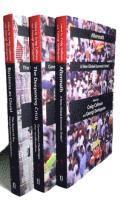
The first three volumes of the series, available for purchase as a set now!The Possible Futures Series gathers together leading social scientists to address the significance of the global economic crisis in aseries of short, accessible books. Each volume takes on the past, present, and future of this crisis suggesting that it has an informativehistory, that the consequences could be much more basic than the stock market declines, and that only fundamental changes -- not fiscal band-aids -- can head off future repetitions.CONTRIBUTORS INCLUDE: Immanuel Wallerstein, David Harvey, Saskia Sassen, James Kenneth Galbraith, Manuel Castells, Nancy Fraser, Rogers Brubaker, David Held, Mary Kaldor, Vadim Volkov, Giovanni Arrighi, Beverly Silver, and Fernando Coronil.Volume I, Business as Usual The Roots of the Global Financial MeltdownEdited by Craig Calhoun and Georgi DerluguianMuch more basic than the result of a few financial traders cheating the system, Business as Usualshows how the current financial crisis was made possible by both neoliberal financial reforms and a massive turning away from manufacturing things of value to make profits from trading financial assets. In original essays, the contributors establish how the Great Recession is related to crises of the past, and yet why this meltdown was different. The volume concludes by asking whether the crisis -- despite its severity -- contains seeds of a new global economy, what role the US will play, and whether China or other countries will rise toglobal leadership. Volume II, The Deepening Crisis Governance Challenges after NeoliberalismEdited by Craig Calhoun and Georgi DerluguianResponse to financial meltdown is entangled with basic challenges toglobal governance. Environment, global security, ethnicity and nationalism are all global issues today. Focusing on the political and social dimensions of the crisis, contributors examine changes in relationships between the world's richer and poorer countries, efforts to strengthen global institutions, and dificulties facing states trying to create stability for their citizens. Volume III, Aftermath A New Global Economic Order?Edited by Craig Calhoun and Georgi DerluguianThe global financial crisis showed deep problems with mainstream economic predictions, as well as the vulnerability of the world's richest countries and the enormous potential of some poorer ones. China,India, Brazil, and other counties are growing faster than Europe or America and have weathered the crisis better. Is their growth due to following conventional economic guidelines or to strong state leadershipand sometimes protectionism? These issues are basic to the question of which countries will grow in comind decades, as well as the likely conflicts over global trade policy, currency standards, and economic cooperation.
719 kr
Skickas inom 10-15 vardagar
In Russia, a group of leading Russian intellectuals and social scientists join with top researchers from around the world to examine the social, political, and economic transformation in Russia. This timely and important book of orginal essays makes clear that neither politics nor economics alone holds the key to Russia's future, presenting critical perspectives on challenges facing Russia, both in its domestic policies and in its international relations. It also explores how global order—or disorder—may develop over the coming decades.Contributors include: Oleg Atkov, Timothy J. Colton, Georgi Derluguian, Mikhail K. Gorshkov, Leonid Grigoriev, Nur Kirabaev, Andrew C. Kuchins, Bobo Lo, Roderic Lyne, Vladimir Popov, Alexander Rahr, Richard Sakwa, Guzel Ulumbekova, Vladimir I. Yakunin, Rustem Zhangozha.
485 kr
Skickas inom 7-10 vardagar
On March 11, 2011, a 9.0 earthquake off Japan's northeast coast triggered a tsunami that killed more than 20,000 people, displaced 600,000, and caused billions of dollars in damage as well as a nuclear meltdown of three reactors at the Fukushima Daiichi nuclear plant. Japan, the world's third largest economy, was already grappling with recovery from both its own economic recession of the 1990s and the global recession following the US-driven financial crisis of 2008 when the disaster hit, changing its fortunes yet again. This small, populous Asian nation—once thought to be a contender for the role of the world's number one power—now faces a world of uncertainty. Japan's economy has shrunk, China has challenged its borders, and it faces perilous demographic adjustments from decreased fertility and an aging populace, with the country's population expected to drop to less than 100 million by 2048. In Japan: The Precarious Future, a group of distinguished scholars of Japanese economics, politics, law, and society examine the various roads that might lie ahead. Will Japan face a continued erosion of global economic and political power, particularly as China's outlook improves exponentially? Or will it find a way to protect its status as an important player in global affairs? Contributors explore issues such as national security, political leadership, manufacturing prowess, diplomacy, population decline, and gender equality in politics and the workforce, all in an effort to chart the possible futures for Japan. Both a roadmap for change and a look at how Japan arrived at its present situation, this collection of thought-provoking analyses will be essential for understanding the current landscape and future prospects of this world power.
1 321 kr
Skickas inom 10-15 vardagar
On March 11, 2011, a 9.0 earthquake off Japan's northeast coast triggered a tsunami that killed more than 20,000 people, displaced 600,000, and caused billions of dollars in damage as well as a nuclear meltdown of three reactors at the Fukushima Daiichi nuclear plant. Japan, the world's third largest economy, was already grappling with recovery from both its own economic recession of the 1990s and the global recession following the US-driven financial crisis of 2008 when the disaster hit, changing its fortunes yet again. This small, populous Asian nation—once thought to be a contender for the role of the world's number one power—now faces a world of uncertainty. Japan's economy has shrunk, China has challenged its borders, and it faces perilous demographic adjustments from decreased fertility and an aging populace, with the country's population expected to drop to less than 100 million by 2048. In Japan: The Precarious Future, a group of distinguished scholars of Japanese economics, politics, law, and society examine the various roads that might lie ahead. Will Japan face a continued erosion of global economic and political power, particularly as China's outlook improves exponentially? Or will it find a way to protect its status as an important player in global affairs? Contributors explore issues such as national security, political leadership, manufacturing prowess, diplomacy, population decline, and gender equality in politics and the workforce, all in an effort to chart the possible futures for Japan. Both a roadmap for change and a look at how Japan arrived at its present situation, this collection of thought-provoking analyses will be essential for understanding the current landscape and future prospects of this world power.