Praeger Series in Presidential Studies – serie
Visar alla böcker i serien Praeger Series in Presidential Studies. Handla med fri frakt och snabb leverans.
5 produkter
5 produkter
Inbunden, Engelska, 2003
1 080 kr
Skickas inom 10-15 vardagar
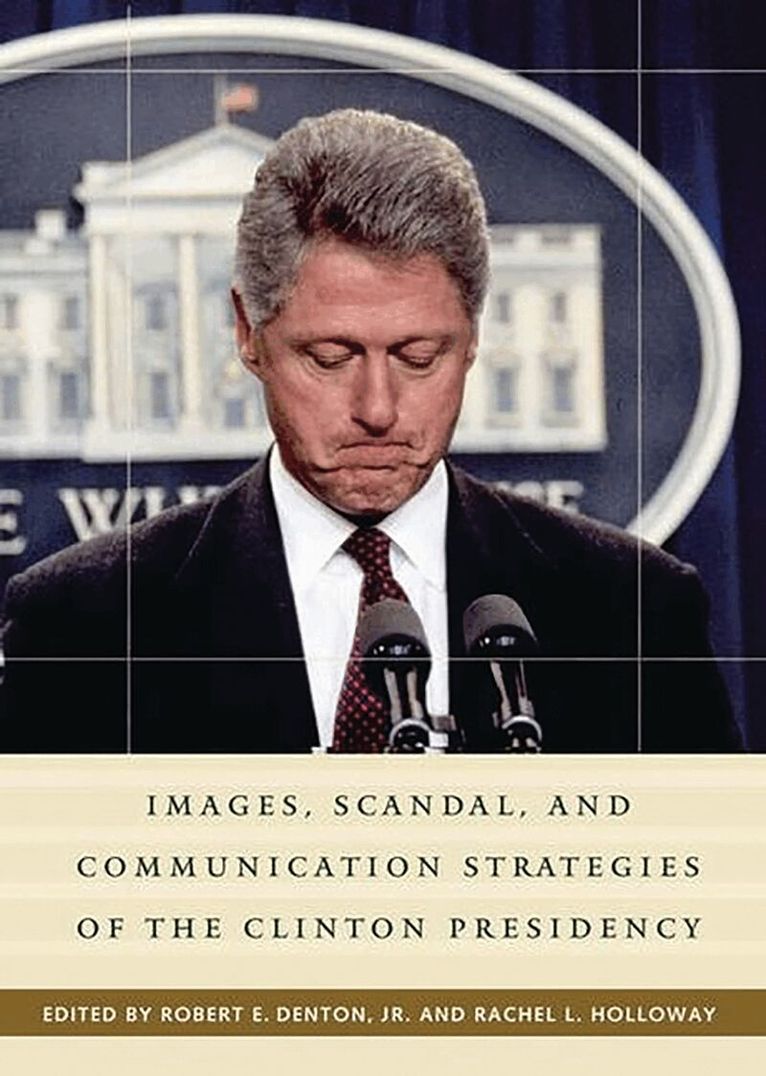
Denton, Holloway, and their contributors present analyses of communication strategies used in the Clinton administration, with a special focus on President Clinton's responses to the Lewinsky scandal and impeachment.Chapters explore the Clinton administration's attempts to control his image through rhetorical and media strategies, his appeal to women voters, the changing image of Hillary Rodham Clinton, and Clinton's discourse on race. The second half of the book focuses on Clinton's responses to the Lewinsky scandal, media coverage and polling during the scandal, and Clinton's impact on the symbolic nature of the American presidency. This book will be of particular interest to scholars, students, and other researchers involved with communication, political science, political sociology, political communication, and scandal.
E-bok
PDF, Engelska, 2000908 kr
Läs direkt efter köp
The vice presidency is the second highest office to which an American can be elected. This office should be an ideal place to launch a campaign to capture the presidency, yet only two incumbent vice presidents have thus far been able to win the ultimate prize. Vance Kincade analyzes this dilemma and offers some answers to why vice presidents have difficulties gaining credibility to pursue the presidency and why Vice Presidents John C. Breckinridge, Richard Nixon, and Hubert Humphrey each failed in their campaigns for the presidency.Kincade's primary focus is on the two vice presidents who ascended to the presidency, Martin Van Buren and George Bush. He explores how these two were able to avoid the dilemma that baffled the others. Was it something in their backgrounds that brought success? Was it serving as vice president under Andrew Jackson and Ronald Reagan that helped turn the trick? Could their successes be seen as fulfilling an historical cycle that found Van Buren and Bush in the right place at the right time? In the last section of this intriguing study, Kincade uses political science models to explain their victories and offers a guide to future vice presidents who attempt to join the exclusive club of vice presidents to reach the presidency. Scholars, students, and the general public interested in American political history and the presidency will find this study of particular value.
E-bok
PDF, Engelska, 2003561 kr
Läs direkt efter köp
Denton, Holloway, and their contributors present analyses of communication strategies used in the Clinton administration, with a special focus on President Clinton's responses to the Lewinsky scandal and impeachment.Chapters explore the Clinton administration's attempts to control his image through rhetorical and media strategies, his appeal to women voters, the changing image of Hillary Rodham Clinton, and Clinton's discourse on race. The second half of the book focuses on Clinton's responses to the Lewinsky scandal, media coverage and polling during the scandal, and Clinton's impact on the symbolic nature of the American presidency. This book will be of particular interest to scholars, students, and other researchers involved with communication, political science, political sociology, political communication, and scandal.
E-bok
PDF, Engelska, 20011 169 kr
Läs direkt efter köp
The end of the 1990s saw increasing criticism of the media's treatment of the scandals in Washington. Critics complained that journalists either had not covered the political crisis well, that they had bungled it, or that they had simply blown it out of proportion. Some went so far as to call the situation Pressgate. As Hayden points out, however, the larger question remained: What was Clinton's overall relationship with the media?Hayden examines presidential-press relationships in the 1990s, focusing first on the 1992 campaign, then on issues and events over Clinton's two terms. He analyzes the press response to the programs of the Clinton era as well as the scandals, the roles of consultants like James Carville, the effectiveness of various press secretaries, and the use of pollsters like Dick Morris. He also examines the fate of the First Amendment in the 1990s and how Clinton responded to freedom of expression concerns. This analysis will be of interest to media specialists as well as the general public concerned with contemporary Washington politics and journalism.
E-bok
PDF, Engelska, 20011 081 kr
Läs direkt efter köp
Both Truman and Eisenhower combined bully pulpit activity with presidentially directed messages voiced by surrogates whose words were as orchestrated by the administration as those delivered by the presidents themselves. A Review of the private strategizing sessions concerning propaganda activity and the actual propaganda disseminated by the Truman and Eisenhower administrations reveals how they both militarized propaganda operations, allowing the president of the United States to serve as the commander-in-chief of propaganda activity. As the presidents minimized congressional control over propaganda operations, they institutionalized propaganda as a presidential tool, expanded the means by which they and their successors could perform the rhetorical presidency, and increased presidential power over the country's Cold War message, naturalizing the Cold War ideology that resonates yet today. Of particular interest to scholars and students of political communication, the modern presidency, and Cold War history.