Research Handbooks on Impact Assessment series - Böcker
Visar alla böcker i serien . Handla med fri frakt och snabb leverans.
11 produkter
11 produkter
3 221 kr
Skickas inom 7-10 vardagar
Regulatory impact assessment (RIA) is the main instrument used by governments and regulators to appraise the likely effects of their policy proposals. This pioneering Handbook provides a comparative and comprehensive account of this tool, situating it in the relevant theoretical traditions and scrutinizing its use across countries, policy sectors and policy instruments.Comprising six parts, university researchers, international consultants and practitioners working in international organizations examine regulatory impact assessment from many perspectives, which include:research traditions in the social sciencesimplementation, regulatory indicators and effectstools and dimensions such as courts and gendersectoral case studies including environment, enterprise and international developmentinternational diffusion in the European Union (EU), Americas, Asia and developing countriesappraisal, training and education.With its wealth of detail and lessons to be learned, the Handbook of Regulatory Impact Assessment will undoubtedly be of great value to practitioners and scholars working in governance, political science and socio-legal studies.Contributors: C. Adelle, A. Alemanno, L. Allio, C. Arndt, F. Blanc, A. Bond, G. Bounds, P.G.H. Carroll, P. Coletti, F. De Francesco, C.A. Dunlop, M. Fazekas, O. Fritsch, F. Gains, J. Howell, S. Jacobs, A. Jordan, J.C. Kamkhaji, M. Karliuk, S.-J. Kim, T.-Y. Kim, C. Kirkpatrick, I. Lianos, D. Macrae, A.C.M. Meuwese, G. Ottimofiore, J.R. Palmer, D. Parker, A. Peci, C.M. Radaelli, A. Renda, D. Russel, L. Schrefler, J.A. Schwartz, W.R. Sheate, J. Torriti, J. Turnpenny, S. van Voorst, E. Vecchione, W.F. West
3 625 kr
Skickas inom 7-10 vardagar
Sustainability assessment refers to any process that directs decision-making towards sustainability. This groundbreaking Handbook presents state of the art thinking and research on the theory and practice of this broad and rapidly evolving field. Emphasizing how traditional impact assessment practices can be improved to contribute to sustainable outcomes, the overall aim is to enhance the effectiveness of sustainability assessment practice.Based on original contributions from world-leading researchers and practitioners, the book examines sustainability assessment in five sections: the first explores the conceptual foundations of sustainability assessment from different perspectives; the second section introduces some of the different scales and decision-contexts to which sustainability assessment can be applied; third, sectoral approaches to sustainability assessment are investigated, focusing in particular on energy as a key area of future focus; the fourth section introduces several tools used within sustainability assessment, including ecosystem services, multi-criteria analysis, systems analysis, and objectives-driven approaches; finally, key aspects of sustainability assessment governance are considered, including managing decision complexity and community engagement.This essential and comprehensive exploration of sustainability, including strengths, weaknesses, opportunities and threats, will be invaluable to students, academics and practitioners.Contributors: C. Adelle, M. Audouin, A. Bond, M. Burns, R. du Toit, A. Diduck, C.G. Duarte, V. Ferretti, T. Fischer, A.L.C.F. Gallardo, K. Gaudreau, D. Geneletti, R. Gibson, W. Grace, J. Gunn, N. Hanley, J. Hartz-Karp, S. Hayes, A. Jordan, L. Lamorgese, D. le Maitre, T.F. Malheiros, A. Morrison-Saunders, J. Nel, B. Noble, P. O'Farrell, M. Partidario, P. Pereira, S. Petrova, J. Pope, F. Retief, D. Russel, L.E. Sánchez, W. Sheate, J. Sinclair, J. Turnpenny, M. Vespa, A. Weaver, S. Weiland
3 633 kr
Skickas inom 7-10 vardagar
This important Handbook is an essential guide to the state-of-the-art concepts, debates and innovative practices in the field of cumulative impact assessment. It helps to strengthen the foundations of this challenging field, identify key issues demanding solutions and summarize recent trends in forward progress, particularly through the use of illustrative case examples.Taking an international and transdisciplinary approach, this Handbook provides readers with frameworks and methodologies currently in use by leading academics, consultants and many others involved in cumulative impact assessment and management. This wide-ranging body of work demonstrates increased application of relevant, cross-disciplinary science to cumulative impact assessment problems, as well as a continued commitment to bridge the theory and practice gap for more effective and efficient assessments. Chapters also address contemporary and often controversial issues across a variety of sectors including agriculture, energy, watershed management, regional land use planning, and transport.This cutting-edge Handbook will be of great interest to academics and students who wish to further develop their understanding of key concepts within the field. It will also be beneficial to practitioners, industry, government officials and the many organizations involved in cumulative impact assessment processes.
3 349 kr
Skickas inom 7-10 vardagar
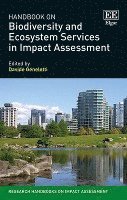
This Handbook presents state-of-the-art methodological guidance and discussion of international practice related to the integration of biodiversity and ecosystem services in impact assessment, featuring contributions from leading researchers and practitioners the world over. Its multidisciplinary approach covers contributions across five continents to broaden the scope of the field both thematically and geographically. A multifaceted variety of case studies provide examples of the use of information on biodiversity and ecosystem services in different types of impact assessment to improve decisions at all levels, from strategic choices to individual projects. In addition to its discussion of how biodiversity and ecosystem services can improve the salience and effectiveness of impact assessment, this Handbook presents a range of applications and possible solutions to challenges in key policy and planning sectors, including urban development, land use, energy, marine areas, infrastructure, agriculture, forestry, health and tourism. This Handbook's combination of cutting-edge literature and methodological guidance supports researchers, practitioners and students in developing and implementing biodiversity and ecosystem services-inclusive impact assessment processes, which can contribute to better decisions about the use of our lands and waters. As such it will appeal not only to scholars of impact assessment but of environmental sciences, environmental engineering, natural sciences, planning and economics as well.Contributors include: C. Albert, A. Antón, M. Ashley, J. Azcarate, B. Balfors, S. Brownlie, L. Bulling, C. Cortinovis, R.T.T. Forman, S. Frank, C. Fürst, D. Geneletti, J. Goldstein, T. Hooper, P. Horwitz, M. Hughes, P. Itkonen, M. Jimenez, M. Karlson, L. Karrasch, C.M. Kennedy, J.M. Kiesecker, J. Köppel, L. Kopperoinen, O. Langmead, D. Maia de Souza, L. Mandle, L. Milà i Canals, U. Mörtberg, D. Newsome, S. Odelius Gordon, M.W. Parkes, K. Pietzsch, F. Pietzsch, A. Rajvanshi, D. Roe, D.A. Rozas Vásquez, M. Ruckelshaus, H. Tallis, L. Tardieu, F. Teillard, J. Treweek, J. Wu, L. Zardo
844 kr
Skickas inom 7-10 vardagar
Regulatory impact assessment (RIA) is the main instrument used by governments and regulators to appraise the likely effects of their policy proposals. This pioneering Handbook provides a comparative and comprehensive account of this tool, situating it in the relevant theoretical traditions and scrutinizing its use across countries, policy sectors and policy instruments.Comprising six parts, university researchers, international consultants and practitioners working in international organizations examine regulatory impact assessment from many perspectives, which include:research traditions in the social sciencesimplementation, regulatory indicators and effectstools and dimensions such as courts and gendersectoral case studies including environment, enterprise and international developmentinternational diffusion in the European Union (EU), Americas, Asia and developing countriesappraisal, training and education.With its wealth of detail and lessons to be learned, the Handbook of Regulatory Impact Assessment will undoubtedly be of great value to practitioners and scholars working in governance, political science and socio-legal studies.Contributors: C. Adelle, A. Alemanno, L. Allio, C. Arndt, F. Blanc, A. Bond, G. Bounds, P.G.H. Carroll, P. Coletti, F. De Francesco, C.A. Dunlop, M. Fazekas, O. Fritsch, F. Gains, J. Howell, S. Jacobs, A. Jordan, J.C. Kamkhaji, M. Karliuk, S.-J. Kim, T.-Y. Kim, C. Kirkpatrick, I. Lianos, D. Macrae, A.C.M. Meuwese, G. Ottimofiore, J.R. Palmer, D. Parker, A. Peci, C.M. Radaelli, A. Renda, D. Russel, L. Schrefler, J.A. Schwartz, W.R. Sheate, J. Torriti, J. Turnpenny, S. van Voorst, E. Vecchione, W.F. West
3 722 kr
Skickas inom 7-10 vardagar
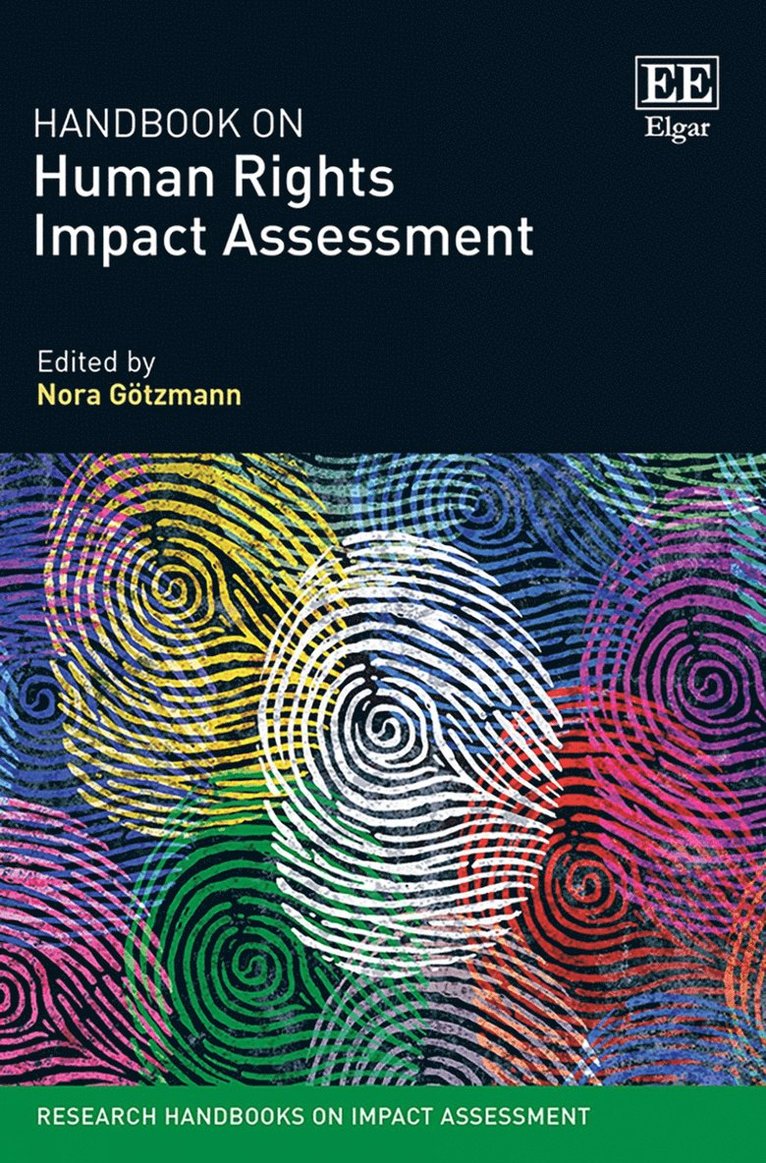
Human rights impact assessment (HRIA) has increasingly gained traction among state, business and civil society actors since the endorsement of the United Nations Guiding Principles on Business and Human Rights by the Human Rights Council in 2011. This timely and insightful Handbook addresses HRIA in the context of business and human rights. Employing state-of-the-art analysis of current practice, the contributors offer a dynamic overview of contemporary approaches to HRIA, looking ahead to its future trajectories. Chapters present key methodological concepts and new theoretical developments, comparing different approaches from project to sector and governance level. Collectively, these critical appraisals shed light on the role that HRIA can play in addressing the adverse human rights impacts of business activities and fostering sustainable development.Featuring extensive analysis of HRIA practice in a range of industrial contexts and global regions, this Handbook provides crucial insight for practitioners working with impact assessment, human rights, and sustainable development, as well as businesses, investors, government actors and multilateral institutions promoting responsible business conduct. Academics and others investigating human rights and impact assessments in business contexts will also benefit from this book's comprehensive analysis of theoretical developments in HRIA research.Contributors include: T. Bansal, S. Baumgartner, C. Brodeur, E. Buergi Bonanomi, R. Cleland, T.M. Collins, K.Y. Cordes, L.F. de Angulo, R. DeWinter-Schmitt, C. Doyle, G. Factor, B. Feiring, A. González Cavazos, N. Götzmann, J. Harrison, R.F. Jørgensen, S. Joyce, J. Loots, C. Lopez, S. McInerney-Lankford, B. Meyersfeld, I. Musselli, K. Salcito, C. Scheper, S. Szoke-Burke, I. Tamir, J.R. Tedaldi, N. ten Oever, D. Utlu, C.B. Veiberg, M. Wachenfeld, S. Walker, E. Wrzoncki, Y. Wyss, S. Zoen
3 816 kr
Skickas inom 7-10 vardagar
This comprehensive Handbook shows how Strategic Environmental Assessment (SEA), an important decision support tool for strategies, policies, plans and programmes, is applied globally. It reflects on SEA practices and the advancements made over the past three decades in the development of SEA. Forty-six expert international contributors discuss the conceptual approaches and applications of SEA in 31 countries, examining numerous sectors, including land-use, transport, energy and water. They also explore how SEA is applied at trans-national, national, regional and local levels, and at a range of decision tiers, including in strategy and policy, as well as in plans and programmes. Analysing how different situations of application are systematically approached, chapters provide a critical insight into the objectives of SEA and the range of methodologies that are available. Taking a forward-thinking approach, the Handbook also identifies key trends and prospects for SEA in addition to addressing issues of SEA effectiveness and theory development.This Handbook will be a valuable resource for academics and students of environmental governance and regulation. It will also be beneficial for impact assessment practitioners, environmental NGOs and policy makers in the fields of environment and sustainability.
3 073 kr
Skickas inom 7-10 vardagar
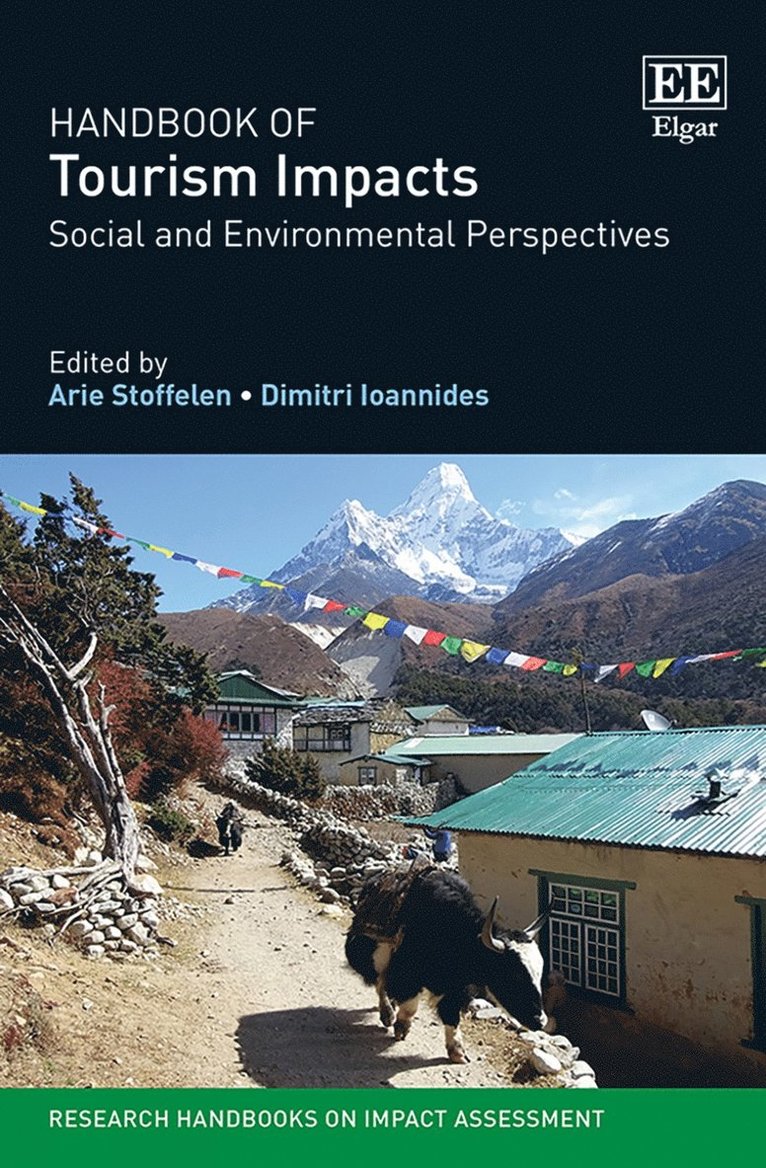
This comprehensive Handbook offers a broad assessment of tourism impacts research. With critical perspectives on social and environmental impacts of the sector it addresses the often-clashing value systems in tourism that underpin both scholarly and policy agendas. Chapters offer reflections on critical issues, including climate change, environmental degradation and COVID-19, analysing their effects on tourism impacts. Top scholars in the field flesh out unique perspectives on tourism, highlighting its impact on communities, workers and Indigenous peoples, as well as the ongoing global and local sustainability issues associated with the prevailing growth-oriented rationale of the industry. Providing a state-of-the-art, integrative approach to the field, the Handbook lays out a social impact assessment approach and draws attention to the relationships between tourism, human rights, development and the environment. Offering innovative insights on the future of the industry, the Handbook of Tourism Impacts is crucial reading for students and scholars of tourism, human geography and planning, as well as other social scientists working on tourism impacts. It also provides useful insights for practitioners and policymakers looking to address and limit the negative impacts of tourism.
3 625 kr
Skickas inom 7-10 vardagar
Reviewing over 50 years of Environmental Impact Assessment (EIA) policy-making and implementation around the world, this thought-provoking Handbook provides a comprehensive overview of the current research surrounding EIA. Presenting new trends in law and policy-making, it highlights best practices in the application of technology to impact prediction and management, procedural efficiency, decision-making and public participation. In addition to explaining the practicalities of the EIA process, chapters delve deep into EIA’s decision-making stages and methods, revealing the causes of, and solutions to, recurrent issues. Contributions from leading scholars analyse case studies from Africa, Asia, Europe, Oceania, and North and South America to provide a truly global picture of EIA implementation. Critically examining the laws, policies and procedures involved in these case studies, this Handbook concludes by highlighting new ideas, trends and methods in the field. With a global scope, the illustrative case studies and critical evaluations will prove a useful resource for students and scholars of environmental and management studies and law. Exploring how to implement best practices, it will prove invaluable to EIA practitioners, including consultants, developers and regulators, offering inspiration and guidance for policy reforms.
3 657 kr
Skickas inom 7-10 vardagar
This Handbook provides a clear overview of how to achieve meaningful public participation in impact assessment (IA). It explores conceptual elements, including the democratic core of public participation in IA, as well as practical challenges, such as data sharing, with diverse perspectives from 39 leading academics and practitioners.Critically examining how different engagement frameworks have evolved over time, this Handbook underlines the ways in which tokenistic approaches and wider planning and approvals structures challenge the implementation of meaningful public participation. Contributing authors discuss the impact of international agreements, legislation and regulatory regimes, and review commonly used professional association frameworks such as the International Association for Public Participation core values for practice. They demonstrate through case studies what meaningful public participation looks like in diverse regional contexts, addressing the intentions of being purposeful, inclusive, transformative and proactive. By emphasising the strength of community engagement, the Handbook argues that public participation in IA can contribute to enhanced democracy and sustainability for all.This visionary Handbook is an indispensable resource for IA public participation practitioners, including industry, consultants, government and non-government organisations as well as participants to IA processes. It will similarly be beneficial to IA researchers, academics, and managers in regulation, public administration and management.
4 452 kr
Skickas inom 7-10 vardagar
This carefully conceived Handbook presents a state-of-the-art discussion of the field of social impact assessment (SIA), highlighting contemporary understandings and emerging issues in this continually evolving area of research and practice. Experienced SIA practitioners from around the world share their learnings and advice on a comprehensive range of issues faced in social performance practice. They explore how SIA has moved far beyond its original role as an ex-ante input into a regulatory environmental licensing process to now serving multiple stakeholders at all stages of the project lifecycle and seeking improved outcomes for host communities. The chapters also reveal how the field and practice of SIA connects with wider discourses, including: business and human rights; environmental, social and governance (ESG) performance; and social licence to operate. Providing an extensive overview of the field of SIA, this incisive Handbook is essential reading for: SIA practitioners; researchers of environmental sociology, environmental psychology, human geography, community psychology, or applied anthropology; and other people with an interest in the social impacts of projects. The Handbook's exploration of how SIA might contribute to better outcomes for communities and projects will also benefit individuals and organizations who commission and review EIAs and SIAs, environmental, social and community NGOs, as well as members of project-affected communities.