Rethinking the Island - Böcker
Visar alla böcker i serien Rethinking the Island. Handla med fri frakt och snabb leverans.
6 produkter
6 produkter
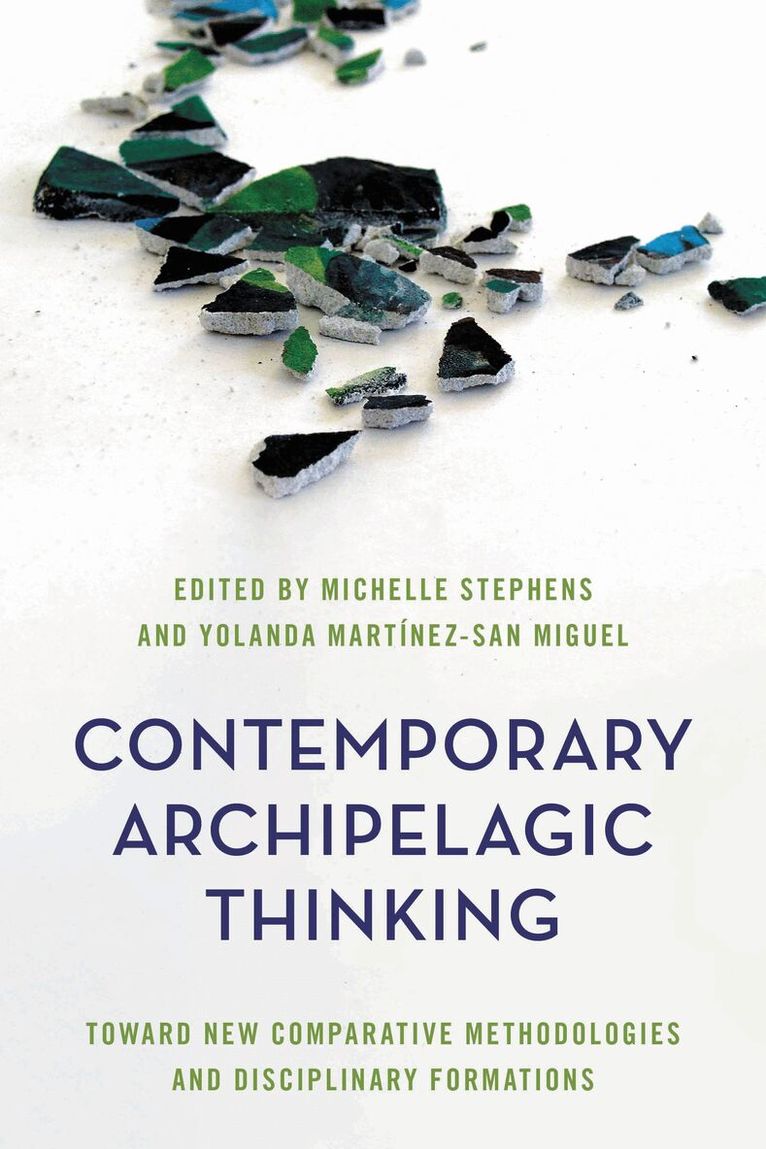
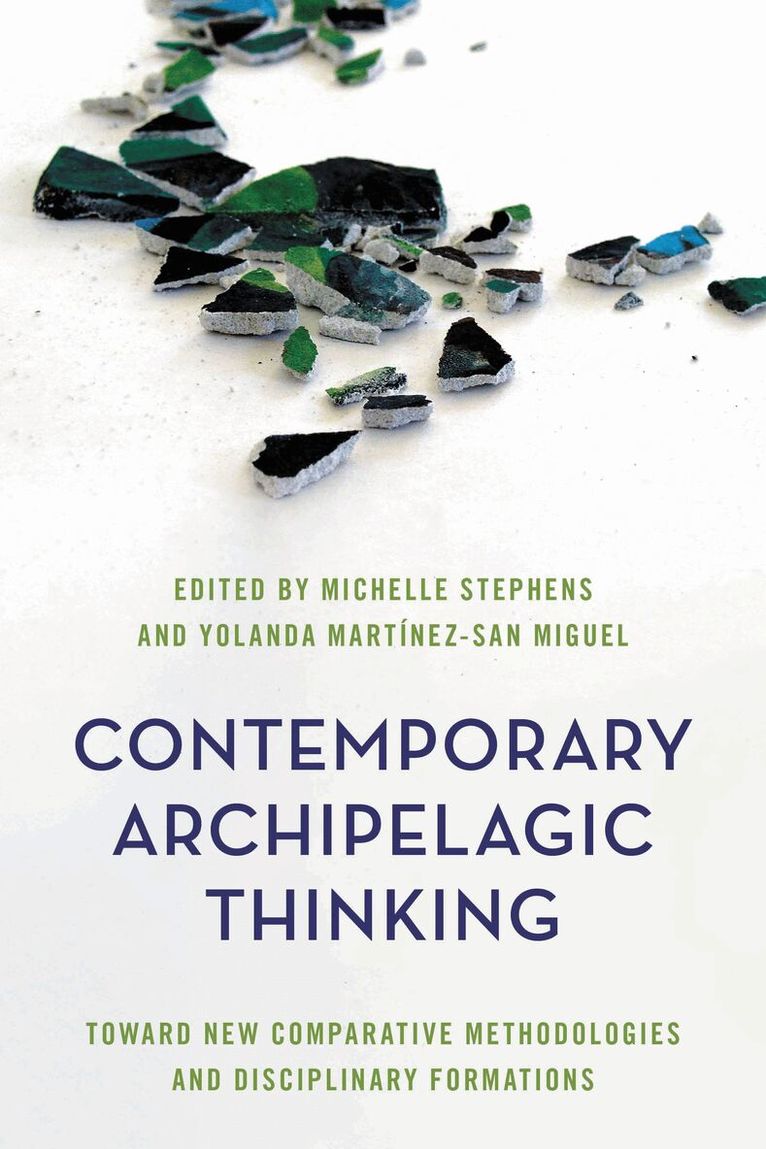
Contemporary Archipelagic Thinking
Toward New Comparative Methodologies and Disciplinary Formations
Häftad, Engelska, 2024
488 kr
Skickas inom 10-15 vardagar
Contemporary Archipelagic Thinking takes as point of departure the insights of Antonio Benítez Rojo, Derek Walcott and Edouard Glissant on how to conceptualize the Caribbean as a space in which networks of islands are constitutive of a particular epistemology or way of thinking. This rich volumetakes questions that have explored the Caribbean and expands them to a global, Anthropocenic framework.This anthology explores the archipelagic as both a specific and a generalizable geo-historical and cultural formation, occurring across various planetary spaces including: the Mediterranean and Aegean Seas, the Caribbean basin, the Malay archipelago, Oceania, and the creole islands of the Indian Ocean. As an alternative geo-formal unit, archipelagoes can interrogate epistemologies, ways of reading and thinking, and methodologies informed implicitly or explicitly by more continental paradigms and perspectives. Keeping in mind the structuring tension between land and water, and between island and mainland relations, the archipelagic focuses on the types of relations that emerge, island to island, when island groups are seen not so much as sites of exploration, identity, sociopolitical formation, and economic and cultural circulation, but also, and rather, as models.The book includes 21 chapters, a series of poems and an Afterword from both senior and junior scholars in American Studies, Archaeology, Biology, Cartography, Digital Mapping, Environmental Studies, Ethnomusicology, Geography, History, Politics, Comparative Literary and Cultural Studies, and Sociology who engage with Archipelago studies. Archipelagic Studies has become a framework with a robust intellectual genealogy.. The particular strength of this handbook is the diversity of fields and theoretical approaches in the Humanities, Social Sciences and Natural Sciences that the included essays engage with. There is an editor's introduction in which they meditate about the specific contributions of the archipelagic framework in interdisciplinary analyses of multi-focal and transnational socio-political and cultural context, and in which they establish a dialogue between archipelagic thinking and network theory, assemblages, systems theory, or the study of islands, oceans and constellations.
1 343 kr
Skickas inom 10-15 vardagar
Inspired by Édouard Glissant’s and Marta Aponte Alsina’s critical-creative work, this book explores how Puerto Rico’s affective archive of Caribbean relations, from the nineteenth century through the twenty-first, has envisioned and embodied decolonization and sovereignty in relation to the archipelagic, the sea, and Caribbean regionalism. The book’s transdisciplinary archive includes historical figures and their legacies; political and activist thought, textuality, and action as performative interventions; and performance and live arts pieces, objects, materialities, and texts as political/activist actions. Affect, Archive, Archipelago begins by delving into the historical-political figures of Ramón Emeterio Betances, Luisa Capetillo, and Pedro Albizu Campos. It then encounters the work of the live arts collective Agua, Sol y Sereno; the political/activist work of Amigxs del MAR, Comuna Caribe, Mujeres que Abrazan la Mar, and Coalición 8M; and Teresa Hernández’s transdisciplinary artistic trajectory. Finally, stemming from the book’s argument and the immediate historical-political-affective context of Puerto Rico’s summer 2019 rebellion (Verano Boricua), the book offers some reflections and proposals for furthering decolonial, sovereign, archipelagic, and reparatory horizons for Puerto Rico
499 kr
Skickas inom 10-15 vardagar
Inspired by Édouard Glissant’s and Marta Aponte Alsina’s critical-creative work, this book explores how Puerto Rico’s affective archive of Caribbean relations, from the nineteenth century through the twenty-first, has envisioned and embodied decolonization and sovereignty in relation to the archipelagic, the sea, and Caribbean regionalism. The book’s transdisciplinary archive includes historical figures and their legacies; political and activist thought, textuality, and action as performative interventions; and performance and live arts pieces, objects, materialities, and texts as political/activist actions. Affect, Archive, Archipelago begins by delving into the historical-political figures of Ramón Emeterio Betances, Luisa Capetillo, and Pedro Albizu Campos. It then encounters the work of the live arts collective Agua, Sol y Sereno; the political/activist work of Amigxs del MAR, Comuna Caribe, Mujeres que Abrazan la Mar, and Coalición 8M; and Teresa Hernández’s transdisciplinary artistic trajectory. Finally, stemming from the book’s argument and the immediate historical-political-affective context of Puerto Rico’s summer 2019 rebellion (Verano Boricua), the book offers some reflections and proposals for furthering decolonial, sovereign, archipelagic, and reparatory horizons for Puerto Rico
1 476 kr
Skickas inom 10-15 vardagar
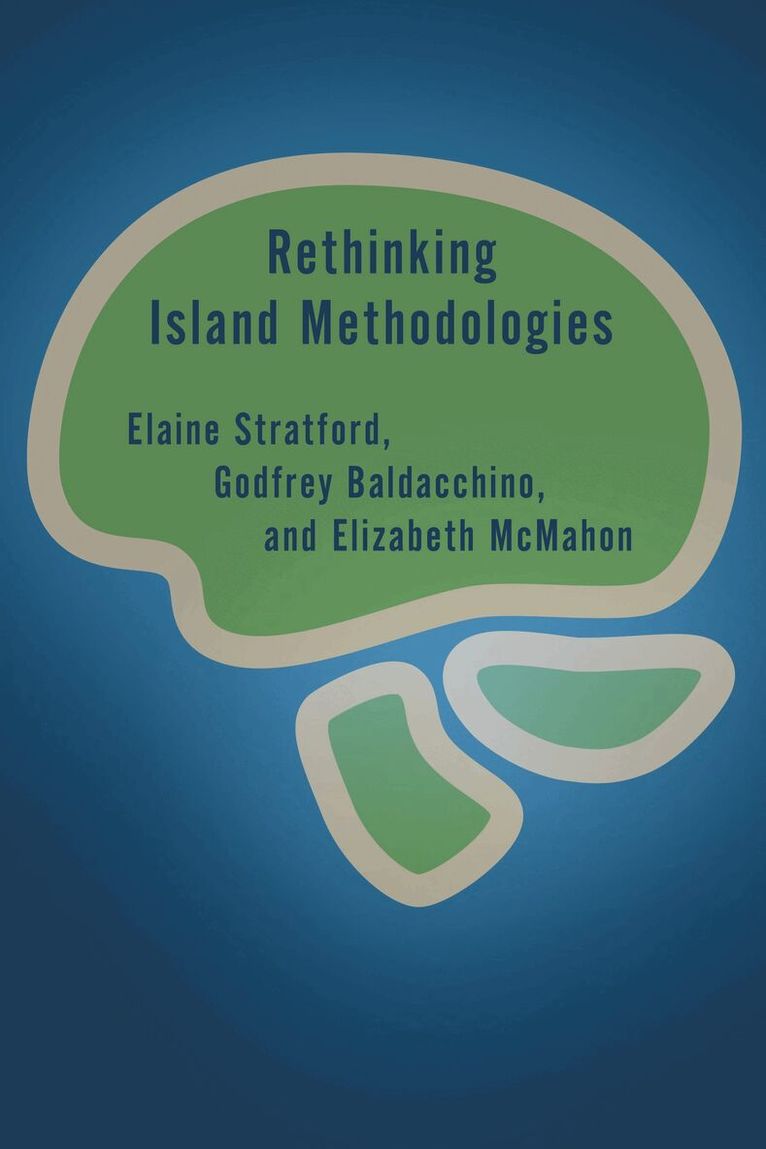
Rounding off the “Rethinking the Island” series, this book shares critical and creative insights on the methodologies and associated practices, protocols, and techniques used by those in island studies and allied fields. It explores why and how islands serve powerful analytical ends. Authored by three scholars who work in and across geography, sociology, and literary studies and incorporating conversations with colleagues from around the world, the work considers significant, interdisciplinary questions shaping the field, including on belonging, boundedness, decolonization, governance, indigeneity, migration, sustainability, and the consequences of climate change. In the process, the authors model what it means to think about and rethink island and archipelagic methodologies and point to emergent innovations in the field.
394 kr
Skickas inom 10-15 vardagar
Rounding off the “Rethinking the Island” series, this book shares critical and creative insights on the methodologies and associated practices, protocols, and techniques used by those in island studies and allied fields. It explores why and how islands serve powerful analytical ends. Authored by three scholars who work in and across geography, sociology, and literary studies and incorporating conversations with colleagues from around the world, the work considers significant, interdisciplinary questions shaping the field, including on belonging, boundedness, decolonization, governance, indigeneity, migration, sustainability, and the consequences of climate change. In the process, the authors model what it means to think about and rethink island and archipelagic methodologies and point to emergent innovations in the field.
Contemporary Archipelagic Thinking
Toward New Comparative Methodologies and Disciplinary Formations
Inbunden, Engelska, 2020
1 703 kr
Skickas inom 10-15 vardagar
Contemporary Archipelagic Thinking takes as point of departure the insights of Antonio Benítez Rojo, Derek Walcott and Edouard Glissant on how to conceptualize the Caribbean as a space in which networks of islands are constitutive of a particular epistemology or way of thinking. This rich volumetakes questions that have explored the Caribbean and expands them to a global, Anthropocenic framework.This anthology explores the archipelagic as both a specific and a generalizable geo-historical and cultural formation, occurring across various planetary spaces including: the Mediterranean and Aegean Seas, the Caribbean basin, the Malay archipelago, Oceania, and the creole islands of the Indian Ocean. As an alternative geo-formal unit, archipelagoes can interrogate epistemologies, ways of reading and thinking, and methodologies informed implicitly or explicitly by more continental paradigms and perspectives. Keeping in mind the structuring tension between land and water, and between island and mainland relations, the archipelagic focuses on the types of relations that emerge, island to island, when island groups are seen not so much as sites of exploration, identity, sociopolitical formation, and economic and cultural circulation, but also, and rather, as models.The book includes 21 chapters, a series of poems and an Afterword from both senior and junior scholars in American Studies, Archaeology, Biology, Cartography, Digital Mapping, Environmental Studies, Ethnomusicology, Geography, History, Politics, Comparative Literary and Cultural Studies, and Sociology who engage with Archipelago studies. Archipelagic Studies has become a framework with a robust intellectual genealogy.. The particular strength of this handbook is the diversity of fields and theoretical approaches in the Humanities, Social Sciences and Natural Sciences that the included essays engage with. There is an editor's introduction in which they meditate about the specific contributions of the archipelagic framework in interdisciplinary analyses of multi-focal and transnational socio-political and cultural context, and in which they establish a dialogue between archipelagic thinking and network theory, assemblages, systems theory, or the study of islands, oceans and constellations.