Routledge/ St. Andrews Syrian Studies Series - Böcker
Visar alla böcker i serien Routledge/ St. Andrews Syrian Studies Series. Handla med fri frakt och snabb leverans.
16 produkter
16 produkter
2 104 kr
Skickas inom 10-15 vardagar
Examining Syrian foreign policy during the Ba’th years from 1963 to 1989, this book traces the alliances of the Levantine country from a historical perspective and in the context of recent political developments. Syrian Foreign Policy analyses the pivotal alliances of Damascus using a theoretical framework based on neoclassical realism, an approach which incorporates domestic factors succh as the role of ideology within a realist perspective. Covering Syria’s relations with Egypt, Iraq, Jordan, Saudi Arabia, Iran and the Soviet Union, it asks the question: what led to the formation of each alliance and what has caused either its break up or its continuation? Belcastro seeks to answer this questions, but also reflects on the country’s foreign policy today and its broader implications for Syria and the whole region.Making use of case studies to build upon a strong theoretical analysis, this book will be useful to students and scholars of Middle Eastern politics, as well as politics and International Relations more generally.
575 kr
Skickas inom 10-15 vardagar
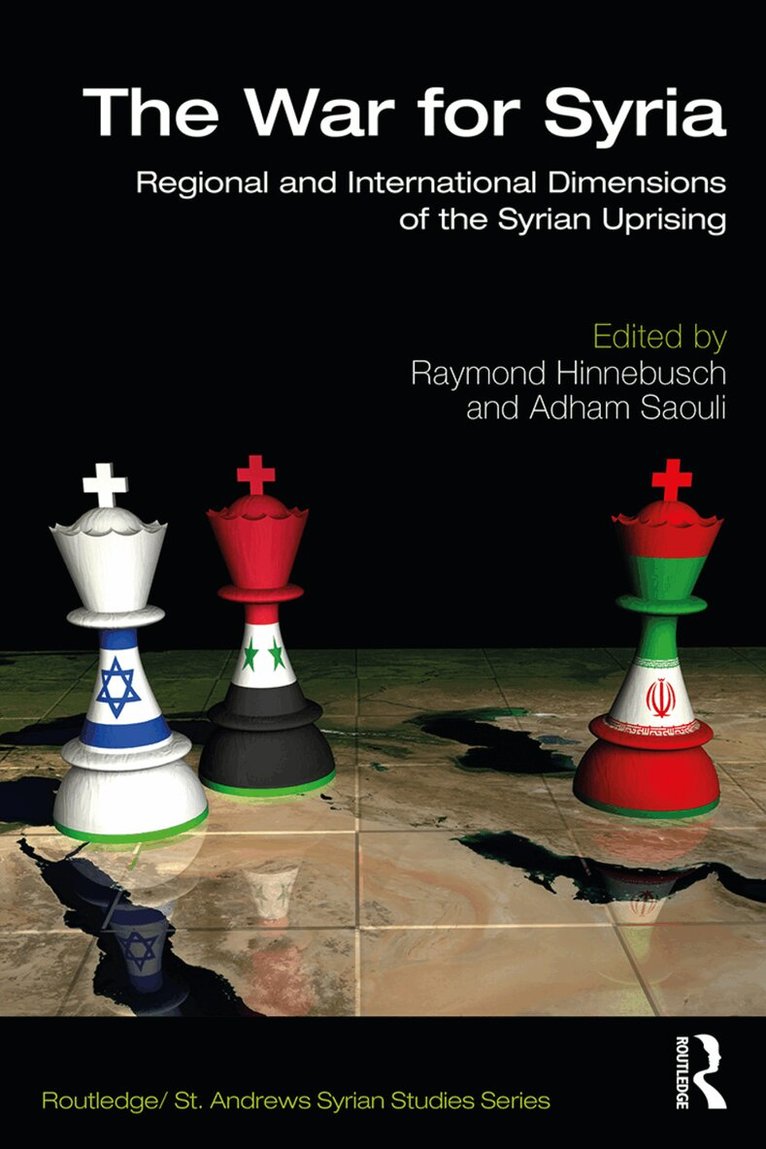
Examining the international dimensions of the Syrian conflict, this book studies external factors relating to the Uprising. It explores the involvement of outside powers and the events’ impact both on regional and international level.Syria was widely perceived to be essential to the regional power balance, hence it was a valued prize to be fought over. The book examines the impact of global and regional powers in propelling the conflict in Syria; looks at the motives and strategies of the key regional and international actors (Hizbollah, Palestinians, Iran, Qatar, Saudi Arabia, US, Russia, EU); and analyses the impact of the Syrian conflict on key relations between regional states (Turkey-Syria, Turkey-Iran, Iraq-Syria). Finally, several chapters treat the impact on Syria of international sanctions and the "Responsibility to Protect" doctrine. This book follows on to The Syrian Uprising: Domestic Origins and Early Trajectory, edited by Raymond Hinnebusch and Omar Imady (2018). Subsequent volumes will examine the later evolution of the conflict.Taking an innovative and interdisciplinary approach that seeks to capture the full complexity of the phenomenon, this book contributes significantly to our understanding of the Syrian conflict and will therefore be a valuable resource for anyone studying Middle Eastern Politics.
2 104 kr
Skickas inom 10-15 vardagar
Examining the international dimensions of the Syrian conflict, this book studies external factors relating to the Uprising. It explores the involvement of outside powers and the events’ impact both on regional and international level.Syria was widely perceived to be essential to the regional power balance, hence it was a valued prize to be fought over. The book examines the impact of global and regional powers in propelling the conflict in Syria; looks at the motives and strategies of the key regional and international actors (Hizbollah, Palestinians, Iran, Qatar, Saudi Arabia, US, Russia, EU); and analyses the impact of the Syrian conflict on key relations between regional states (Turkey-Syria, Turkey-Iran, Iraq-Syria). Finally, several chapters treat the impact on Syria of international sanctions and the "Responsibility to Protect" doctrine. This book follows on to The Syrian Uprising: Domestic Origins and Early Trajectory, edited by Raymond Hinnebusch and Omar Imady (2018). Subsequent volumes will examine the later evolution of the conflict.Taking an innovative and interdisciplinary approach that seeks to capture the full complexity of the phenomenon, this book contributes significantly to our understanding of the Syrian conflict and will therefore be a valuable resource for anyone studying Middle Eastern Politics.
2 104 kr
Skickas inom 10-15 vardagar
Studying a rural village in northern Syria during a period of tremendous social and political change (1940s to 1970s), this book offers a unique perspective on how agrarian transformations in land distribution and its use deeply affected social and political relations among a rural community. Embedding the personal with the local and the global, this work traces the seeds of social, political and economic struggles that are still important and unfolding in Syria forty years on: changes in social relations brought about by land policy and technological modernization, divisions and connections between urban and rural locations, shifts in education and immigration. Thematically, the study is divided into two parts: the first concerns the historical, socio-economic and political changes occurring in Syria from the beginning of the twentieth century, and the second concerns the life histories of particular actors and their perspectives on social changes. This book is the edited and updated version of Khalaf’s original work, including an ‘updating chapter’ which brings invaluable insight about the village and its people at the aftermath of ISIS and the destruction of the war in Syria.Focusing on the village community of Hawi Al-Hawa, this intensely knowledgeable and personal account — a rare combination — brings village life in Syria strikingly close. The volume is an important contribution to the fields of anthropology, social sciences, Syrian and Middle East studies.
575 kr
Skickas inom 10-15 vardagar
Studying a rural village in northern Syria during a period of tremendous social and political change (1940s to 1970s), this book offers a unique perspective on how agrarian transformations in land distribution and its use deeply affected social and political relations among a rural community. Embedding the personal with the local and the global, this work traces the seeds of social, political and economic struggles that are still important and unfolding in Syria forty years on: changes in social relations brought about by land policy and technological modernization, divisions and connections between urban and rural locations, shifts in education and immigration. Thematically, the study is divided into two parts: the first concerns the historical, socio-economic and political changes occurring in Syria from the beginning of the twentieth century, and the second concerns the life histories of particular actors and their perspectives on social changes. This book is the edited and updated version of Khalaf’s original work, including an ‘updating chapter’ which brings invaluable insight about the village and its people at the aftermath of ISIS and the destruction of the war in Syria.Focusing on the village community of Hawi Al-Hawa, this intensely knowledgeable and personal account — a rare combination — brings village life in Syria strikingly close. The volume is an important contribution to the fields of anthropology, social sciences, Syrian and Middle East studies.
662 kr
Skickas inom 10-15 vardagar
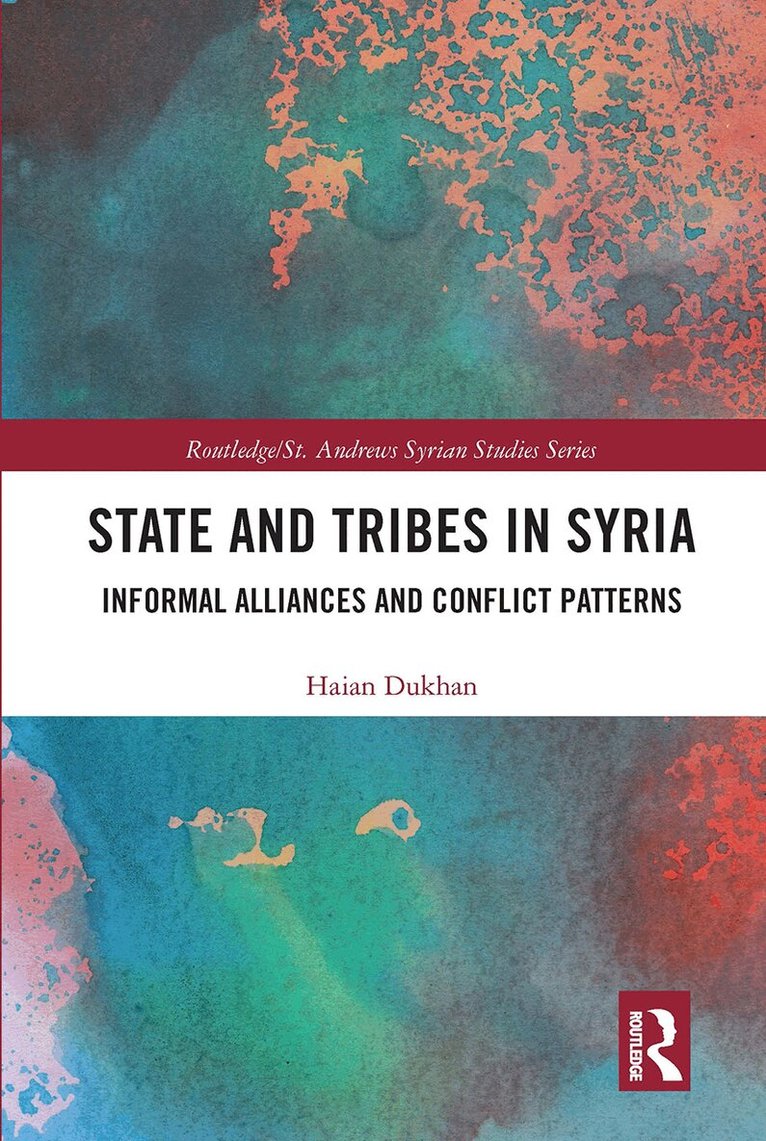
State and Tribes in Syria: Informal Alliances and Conflict Patterns explores the policies of the successive Syrian governments towards the Arab tribes and their reactions to these policies. The book examines the consequences of the relationship between state and tribe since the fall of the Ottoman Empire and its withdrawal from Syria in 1916 until the eruption of the current Syrian civil war. Throughout history and up to the present day, tribalism continues to influence many issues related to governance, conflict and stability in the Middle East and North Africa. The book provides a dissection of a crucial, but neglected axis of the current crisis on the relationship between the state and the tribes. The research draws on data gathered through interviews with members of Syrian tribes, as well as written literature in various languages including English, Arabic and French. The book combines the research focus of political scientists and anthropologists by relating the local patterns (communities and tribal affiliations) to the larger system (state institutions and policies) of which they are a part.State and Tribes in Syria: Informal Alliances and Conflict Patterns advances our knowledge of an under-studied component of the Syrian society: the tribes. Therefore it is a vital resource for students, scholars and policymakers interested in Syrian Studies and Middle Eastern Studies.
643 kr
Skickas inom 10-15 vardagar
Examining Syrian foreign policy during the Ba’th years from 1963 to 1989, this book traces the alliances of the Levantine country from a historical perspective and in the context of recent political developments. Syrian Foreign Policy analyses the pivotal alliances of Damascus using a theoretical framework based on neoclassical realism, an approach which incorporates domestic factors succh as the role of ideology within a realist perspective. Covering Syria’s relations with Egypt, Iraq, Jordan, Saudi Arabia, Iran and the Soviet Union, it asks the question: what led to the formation of each alliance and what has caused either its break up or its continuation? Belcastro seeks to answer this questions, but also reflects on the country’s foreign policy today and its broader implications for Syria and the whole region.Making use of case studies to build upon a strong theoretical analysis, this book will be useful to students and scholars of Middle Eastern politics, as well as politics and International Relations more generally.
616 kr
Skickas inom 10-15 vardagar
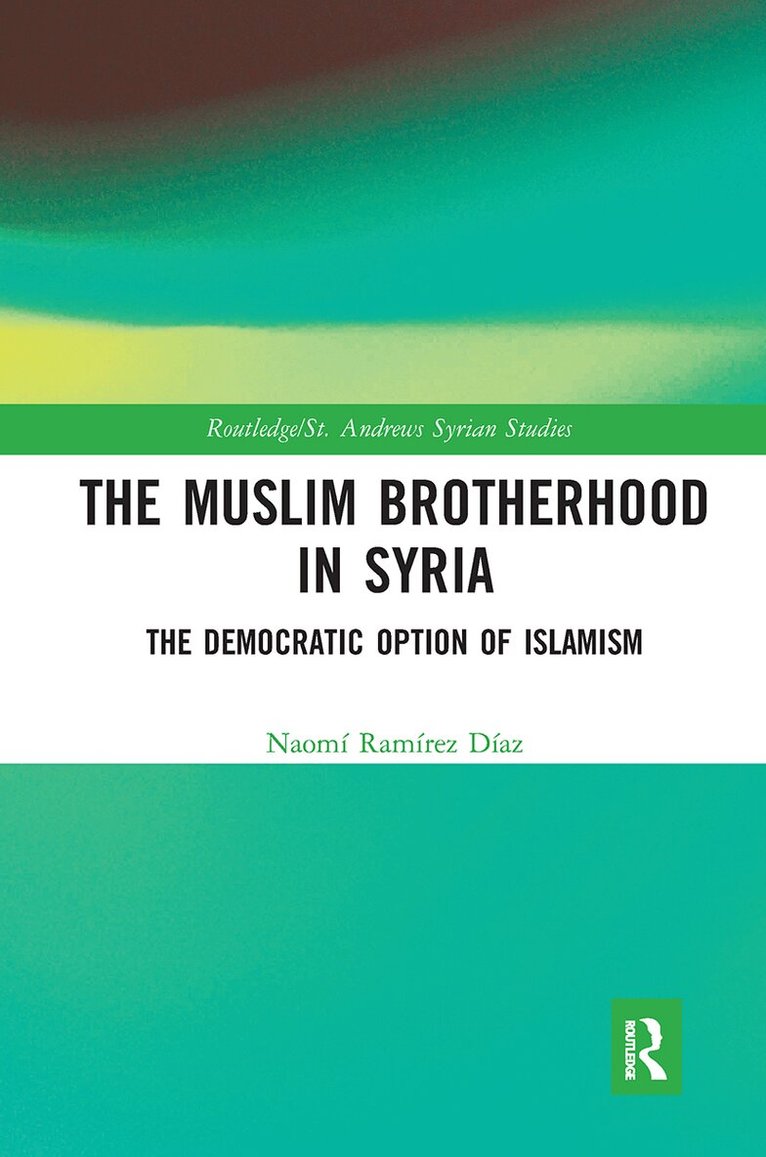
Anyone who follows world events has heard of the Muslim Brotherhood. Usually considered a fundamentalist religious organisation opposed to secular regimes, the so-called Arab Spring began to challenge this conception, and showed the MB’s commitment to democratic principles and elections, albeit with certain difficulties. Until now though, most analysis has focused on the Egyptian branch – the group that gave spiritual birth to the local branches in other countries – with very little having been studied about the Syrian Muslim Brotherhood, especially since the Hama massacre of 1982 and the formal disappearance of the group from Syria.This book provides a deep insight into the Syrian Muslim Brotherhood’s ideological evolution from its inception until present-day. Since Syria has unfortunately become the place where all forms of Islamism converge, understanding the SMB, their ideological evolution, and their potential role as moderating forces, is essential in order to debunk some clichés on the MB in general. Each chapter corresponds to a specific period in the SMB’s timeline, while the final chapter discusses how the endemic gerontocracy of the group calls for an urgent renovation of structures, and stresses the importance of younger generations in renovating the ideology of the SMB.Through the examination of original primary sources written by the SMB themselves, and relevant groups related to them, this book challenges the traditional categories applied to Islamist movements. It will therefore be a key resource for anyone studying Islamist movements, as well as for students and scholars of Middle East and North African Politics.
Actors and Dynamics in the Syrian Conflict's Middle Phase
Between Contentious Politics, Militarization and Regime Resilience
Inbunden, Engelska, 2022
2 113 kr
Skickas inom 10-15 vardagar
This volume covers the "middle" time period of the Syrian uprising, roughly from 2012 when Syria’s peaceful protest began to mutate into a violent insurgency and civil war until roughly 2018 when the conflict took on features of a "frozen conflict". The middle period was important as one of key junctures or turning points when the struggle could have reached rather different outcomes. Non-violent protest failed to drive democratization and turned into violent insurrection but revolution from below also failed as did regime counter-insurgency, leaving protracted civil war the default outcome. Second, the consequences of civil war became evident with six themes: failing statehood coexisted with regime resilience; rebel governance emerged as a viable challenge to the regime; social forces were sharply polarized; external actors exacerbated internal divisions; a predatory war economy emerged; and intense violence led to massive displacement of the population. Taking an innovative and interdisciplinary approach that seeks to capture the full complexity of the phenomenon, this book contributes significantly to our understanding of the Syrian conflict, therefore it will be of interest to academics, students, journalists and policy-makers interested in the Syrian civil war.
Actors and Dynamics in the Syrian Conflict's Middle Phase
Between Contentious Politics, Militarization and Regime Resilience
Häftad, Engelska, 2022
564 kr
Skickas inom 10-15 vardagar
This volume covers the "middle" time period of the Syrian uprising, roughly from 2012 when Syria’s peaceful protest began to mutate into a violent insurgency and civil war until roughly 2018 when the conflict took on features of a "frozen conflict". The middle period was important as one of key junctures or turning points when the struggle could have reached rather different outcomes. Non-violent protest failed to drive democratization and turned into violent insurrection but revolution from below also failed as did regime counter-insurgency, leaving protracted civil war the default outcome. Second, the consequences of civil war became evident with six themes: failing statehood coexisted with regime resilience; rebel governance emerged as a viable challenge to the regime; social forces were sharply polarized; external actors exacerbated internal divisions; a predatory war economy emerged; and intense violence led to massive displacement of the population. Taking an innovative and interdisciplinary approach that seeks to capture the full complexity of the phenomenon, this book contributes significantly to our understanding of the Syrian conflict, therefore it will be of interest to academics, students, journalists and policy-makers interested in the Syrian civil war.
2 176 kr
Skickas inom 10-15 vardagar
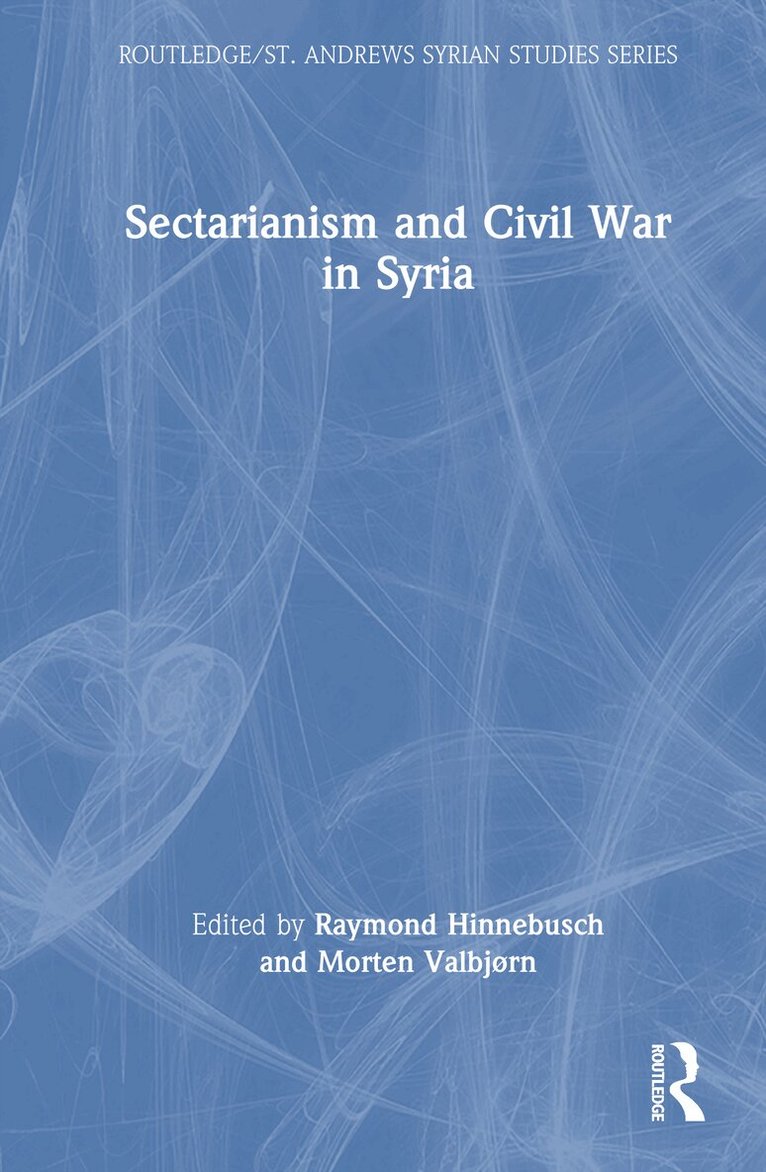
As an epicentre of sectarian conflict before and after the Arab uprising, Syria provides an excellent laboratory for the study of sectarianization. This book compares variance in Syria’s sectarianism over time and across place to expose its causes and its varying impact on Syria’s society and polity.The book begins with an introductory chapter examining key approaches to and debates over sectarianism in Syria, from which a framework of analysis is derived. Subsequent empirical chapters are divided into two sections. Several chapters examine key aspects of sectarianism at the national level, looking at the interaction of sectarianism and state formation over the long term; the internal evolution of sectarianization during the uprising; the impact of the regional power struggle on Syria’s sectarianization; and whether sectarianism was institutionalized by civil war governance in both regime- and opposition-controlled areas. A second set of chapters looks at sectarianism in Syria’s different cities, regions and communities, notably in Damascus, Homs, Hama, Aleppo, Idlib, the Alawi coast, and the Druze and Christian communities. The concluding chapter makes use of the analytical framework to systematically compare the evidence from the empirical cases in order to identify regularities.Providing nuanced insights into the Syrian case whilst informing broader theoretical discussions of sectarianism, this book will appeal to students, researchers and general readers interested in Middle Eastern politics and political science generally.
595 kr
Skickas inom 10-15 vardagar
As an epicentre of sectarian conflict before and after the Arab uprising, Syria provides an excellent laboratory for the study of sectarianization. This book compares variance in Syria’s sectarianism over time and across place to expose its causes and its varying impact on Syria’s society and polity.The book begins with an introductory chapter examining key approaches to and debates over sectarianism in Syria, from which a framework of analysis is derived. Subsequent empirical chapters are divided into two sections. Several chapters examine key aspects of sectarianism at the national level, looking at the interaction of sectarianism and state formation over the long term; the internal evolution of sectarianization during the uprising; the impact of the regional power struggle on Syria’s sectarianization; and whether sectarianism was institutionalized by civil war governance in both regime- and opposition-controlled areas. A second set of chapters looks at sectarianism in Syria’s different cities, regions and communities, notably in Damascus, Homs, Hama, Aleppo, Idlib, the Alawi coast, and the Druze and Christian communities. The concluding chapter makes use of the analytical framework to systematically compare the evidence from the empirical cases in order to identify regularities.Providing nuanced insights into the Syrian case whilst informing broader theoretical discussions of sectarianism, this book will appeal to students, researchers and general readers interested in Middle Eastern politics and political science generally.
2 176 kr
Skickas inom 10-15 vardagar
Most observers did not expect the Arab spring to spread to Syria, for a number of seemingly good reasons. Yet, with amazing rapidity, massive and unprecedented anti-regime mobilization took place, which put the regime very much on the defensive; what began as the Syrian Uprising in March 2011 has evolved into one of the world’s most damaging and protracted conflicts. Despite over six years having passed since the inception of the Syrian Uprising, this phenomenon remains difficult to fully grasp, both in terms of underlying forces and long-term implications.This book presents a snapshot of how the Uprising developed in roughly the first two to three years (2011–2013) and addresses key questions regarding the domestic origins of the Uprising and its early trajectory. Firstly, what were the causes of the conflict, both in terms of structure (contradictions and crisis within the pre-Uprising order) and agency (choices of the actors)? Why did the Uprising not lead to democratization and instead descend into violent civil war with a sectarian dimension? With all 19 chapters addressing an aspect of the Uprising, the book focuses on internal dynamics, whilst a subsequent volume will look at the international dimension of the Uprising. Taking an innovative and interdisciplinary approach that seeks to capture the full complexity of the phenomenon, this book contributes significantly to our understanding of the Syrian conflict, and will therefore be a valuable resource for anyone studying Middle Eastern Politics.
2 176 kr
Skickas inom 10-15 vardagar
State and Tribes in Syria: Informal Alliances and Conflict Patterns explores the policies of the successive Syrian governments towards the Arab tribes and their reactions to these policies. The book examines the consequences of the relationship between state and tribe since the fall of the Ottoman Empire and its withdrawal from Syria in 1916 until the eruption of the current Syrian civil war. Throughout history and up to the present day, tribalism continues to influence many issues related to governance, conflict and stability in the Middle East and North Africa. The book provides a dissection of a crucial, but neglected axis of the current crisis on the relationship between the state and the tribes. The research draws on data gathered through interviews with members of Syrian tribes, as well as written literature in various languages including English, Arabic and French. The book combines the research focus of political scientists and anthropologists by relating the local patterns (communities and tribal affiliations) to the larger system (state institutions and policies) of which they are a part.State and Tribes in Syria: Informal Alliances and Conflict Patterns advances our knowledge of an under-studied component of the Syrian society: the tribes. Therefore it is a vital resource for students, scholars and policymakers interested in Syrian Studies and Middle Eastern Studies.
595 kr
Skickas inom 10-15 vardagar
Most observers did not expect the Arab spring to spread to Syria, for a number of seemingly good reasons. Yet, with amazing rapidity, massive and unprecedented anti-regime mobilization took place, which put the regime very much on the defensive; what began as the Syrian Uprising in March 2011 has evolved into one of the world’s most damaging and protracted conflicts. Despite over six years having passed since the inception of the Syrian Uprising, this phenomenon remains difficult to fully grasp, both in terms of underlying forces and long-term implications.This book presents a snapshot of how the Uprising developed in roughly the first two to three years (2011–2013) and addresses key questions regarding the domestic origins of the Uprising and its early trajectory. Firstly, what were the causes of the conflict, both in terms of structure (contradictions and crisis within the pre-Uprising order) and agency (choices of the actors)? Why did the Uprising not lead to democratization and instead descend into violent civil war with a sectarian dimension? With all 19 chapters addressing an aspect of the Uprising, the book focuses on internal dynamics, whilst a subsequent volume will look at the international dimension of the Uprising. Taking an innovative and interdisciplinary approach that seeks to capture the full complexity of the phenomenon, this book contributes significantly to our understanding of the Syrian conflict, and will therefore be a valuable resource for anyone studying Middle Eastern Politics.
2 104 kr
Skickas inom 10-15 vardagar
Anyone who follows world events has heard of the Muslim Brotherhood. Usually considered a fundamentalist religious organisation opposed to secular regimes, the so-called Arab Spring began to challenge this conception, and showed the MB’s commitment to democratic principles and elections, albeit with certain difficulties. Until now though, most analysis has focused on the Egyptian branch – the group that gave spiritual birth to the local branches in other countries – with very little having been studied about the Syrian Muslim Brotherhood, especially since the Hama massacre of 1982 and the formal disappearance of the group from Syria.This book provides a deep insight into the Syrian Muslim Brotherhood’s ideological evolution from its inception until present-day. Since Syria has unfortunately become the place where all forms of Islamism converge, understanding the SMB, their ideological evolution, and their potential role as moderating forces, is essential in order to debunk some clichés on the MB in general. Each chapter corresponds to a specific period in the SMB’s timeline, while the final chapter discusses how the endemic gerontocracy of the group calls for an urgent renovation of structures, and stresses the importance of younger generations in renovating the ideology of the SMB.Through the examination of original primary sources written by the SMB themselves, and relevant groups related to them, this book challenges the traditional categories applied to Islamist movements. It will therefore be a key resource for anyone studying Islamist movements, as well as for students and scholars of Middle East and North African Politics.