Routledge Studies in Low Carbon Development - Böcker
Visar alla böcker i serien Routledge Studies in Low Carbon Development. Handla med fri frakt och snabb leverans.
10 produkter
10 produkter
724 kr
Skickas inom 10-15 vardagar
This book explores the social implications and challenges of low-carbon development. The argument of the book is that a broad understanding of low-carbon development is essential for mitigating climate change and enabling development in a carbon-constrained world, but there are risks that low-carbon development might come at a price that is both social and economic. These risks need to be carefully assessed and reduced. The main aim of the book is to explore, critically analyse and propose different ways of understanding low-carbon development from a social perspective in both developed and developing countries. The author uses concepts such as low-carbon development, social policy, sustainable development and environmental justice to understand the social implications of low-carbon development projects.The book first elaborates the need to understand the social issues and challenges of low-carbon development in both developed and developing countries. It then discusses five contemporary challenges of low-carbon development: the social consequences of Chinese hydropower dams in the Mekong region; the cost of the transition to renewable energies such as wind energy in Germany; the challenges of carbon offsetting in Brazil; the nexus of fuel-inefficient housing and fuel poverty in England; solar power for refugees in Africa.The book fills a crucial gap for researchers, postgraduates, practitioners and policy-makers in the fields of climate change, development and social policy.Johan Nordensvärd is a Lecturer in Social Policy at the University of Southampton, UK.
2 171 kr
Skickas inom 10-15 vardagar
Global climate change is one of the greatest challenges of our times and in order to tackle this carbon emissions need to be mitigated. China and India have recently become some of the world’s largest greenhouse gas emitters. Transitions to low carbon energy, for reducing emissions that lead to climate change, are therefore an urgent priority for China and India and at a global level.This is the first book focusing on low carbon energy transitions for emerging economies such as China and India, assessing the opportunities and barriers for transitions to renewable and low carbon energy as climate change mitigation options. It uses energy modelling to assess the China’s power sector, the economy of Beijing and rural Indian households that do not have access to electricity. The research evaluates the environmental, technical, socio-economic and policy implications of these low carbon transitions, concluding that they are possible in China and India and they can considerably contribute to climate change mitigation. This interdisciplinary book will be of interest to scholars, students, practitioners and policy-makers working in the fields of energy and development, energy policy, energy studies and modelling, climate policy, climate change mitigation, climate change and development, low carbon development, sustainable development, environment and development and environmental management.
2 171 kr
Skickas inom 10-15 vardagar
This book explores the social implications and challenges of low-carbon development. The argument of the book is that a broad understanding of low-carbon development is essential for mitigating climate change and enabling development in a carbon-constrained world, but there are risks that low-carbon development might come at a price that is both social and economic. These risks need to be carefully assessed and reduced. The main aim of the book is to explore, critically analyse and propose different ways of understanding low-carbon development from a social perspective in both developed and developing countries. The author uses concepts such as low-carbon development, social policy, sustainable development and environmental justice to understand the social implications of low-carbon development projects.The book first elaborates the need to understand the social issues and challenges of low-carbon development in both developed and developing countries. It then discusses five contemporary challenges of low-carbon development: the social consequences of Chinese hydropower dams in the Mekong region; the cost of the transition to renewable energies such as wind energy in Germany; the challenges of carbon offsetting in Brazil; the nexus of fuel-inefficient housing and fuel poverty in England; solar power for refugees in Africa.The book fills a crucial gap for researchers, postgraduates, practitioners and policy-makers in the fields of climate change, development and social policy.Johan Nordensvärd is a Lecturer in Social Policy at the University of Southampton, UK.
2 171 kr
Skickas inom 10-15 vardagar
This book explores the relationship between urban form and greenhouse gas emissions in China, providing new insights for policy, urban planning and management. Drawing on the results of a four-year multidisciplinary research project, the book examines how factors such as urban households’ access to services and jobs, land use mixes and provision of public transport impact on greenhouse gas emissions. The authors analyse data from a wide range of sources including 4677 sample households from four major Chinese cities – Beijing, Shanghai, Wuhan and Xi’an – with diverse locations, urban spatial structures and population sizes. The book explores residents’ attitudes to reducing GHG emissions and advances knowledge relating to three environmental scales – cross-metropolitan, intra-city and neighbourhood level. It also contributes to debates on low carbon policy by revealing the relevance of urban planning parameters at both the macro and micro levels. The book will be of interest to scholars in the areas of urban planning, urban management, environmental sustainability and resource utilisation, as well as urban policy makers and planners who are working toward developing low carbon, sustainable cities of the future.
Political Economy of Low Carbon Transformation
Breaking the habits of capitalism
Häftad, Engelska, 2017
697 kr
Skickas inom 10-15 vardagar
Deep reductions in energy use and carbon emissions will not be possible within political economies that are driven by the capitalist imperatives of growth, commodification and individualization. As such, it has now become necessary to understand the relationship between capitalism and the emergence of high energy habits.Using the examples of home energy, transport and food, The Political Economy of Low Carbon Transformation articulates the relationship between the politics of economic expansion and the formation of high-energy habits at the level of family and household. The book elaborates a theory of habit and how it can contribute to this relationship. It critiques mainstream green economy and green energy prescriptions for low carbon transformation that take economic growth for granted and ignore habits formed in a material world designed and built for high energy use. The book explores the growing number of communities around the world that are engaged in collaborative efforts to reform their community and household habits in ways that are less environmentally intrusive. It assesses their potential to make an impact on national and urban low carbon political agendas. The book is aimed at a large and growing interdisciplinary audience interested in the relationship between political economy, consumption and sustainability.
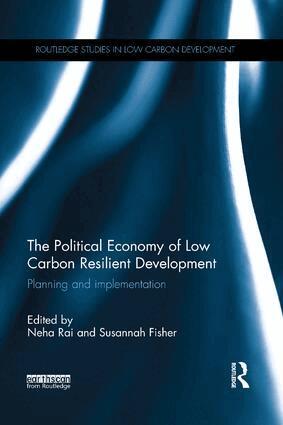
Political Economy of Low Carbon Resilient Development
Planning and implementation
Häftad, Engelska, 2018
670 kr
Skickas inom 10-15 vardagar
Over the last decade, policies and financing decisions aiming to support low carbon resilient development within the least developed countries have been implemented across several regions. Some governments are steered by international frameworks, such as the UN Framework Convention on Climate Change (UNFCCC), while others take their own approach to planning and implementing climate resilient actions. Within these diverse approaches however, there are unspoken assumptions and normative assessments of what the solutions to climate change are, who the most appropriate actors are and who should benefit from these actions. This book examines the political economy dynamics or the underlying values, knowledge, discourses, resources and power relationships behind decisions that support low carbon resilient development in the least developed countries. While much has been written on the politics of climate change, this book will focus on the political economy of national planning and the ways in which the least developed countries are moving from climate resilient planning to implementation. The book will use empirical evidence of low carbon resilient development planning in four countries: Bangladesh, Ethiopia, Rwanda and Nepal. Different approaches to low carbon resilience are critically analysed based on detailed analysis of key policy areas. This book will be of great interest to policy makers, practitioners’ students and scholars of climate change and sustainable development.
670 kr
Skickas inom 10-15 vardagar
This book explores the relationship between urban form and greenhouse gas emissions in China, providing new insights for policy, urban planning and management. Drawing on the results of a four-year multidisciplinary research project, the book examines how factors such as urban households’ access to services and jobs, land use mixes and provision of public transport impact on greenhouse gas emissions. The authors analyse data from a wide range of sources including 4677 sample households from four major Chinese cities – Beijing, Shanghai, Wuhan and Xi’an – with diverse locations, urban spatial structures and population sizes. The book explores residents’ attitudes to reducing GHG emissions and advances knowledge relating to three environmental scales – cross-metropolitan, intra-city and neighbourhood level. It also contributes to debates on low carbon policy by revealing the relevance of urban planning parameters at both the macro and micro levels. The book will be of interest to scholars in the areas of urban planning, urban management, environmental sustainability and resource utilisation, as well as urban policy makers and planners who are working toward developing low carbon, sustainable cities of the future.
670 kr
Skickas inom 10-15 vardagar
Global climate change is one of the greatest challenges of our times and in order to tackle this carbon emissions need to be mitigated. China and India have recently become some of the world’s largest greenhouse gas emitters. Transitions to low carbon energy, for reducing emissions that lead to climate change, are therefore an urgent priority for China and India and at a global level.This is the first book focusing on low carbon energy transitions for emerging economies such as China and India, assessing the opportunities and barriers for transitions to renewable and low carbon energy as climate change mitigation options. It uses energy modelling to assess the China’s power sector, the economy of Beijing and rural Indian households that do not have access to electricity. The research evaluates the environmental, technical, socio-economic and policy implications of these low carbon transitions, concluding that they are possible in China and India and they can considerably contribute to climate change mitigation. This interdisciplinary book will be of interest to scholars, students, practitioners and policy-makers working in the fields of energy and development, energy policy, energy studies and modelling, climate policy, climate change mitigation, climate change and development, low carbon development, sustainable development, environment and development and environmental management.
Political Economy of Low Carbon Transformation
Breaking the habits of capitalism
Inbunden, Engelska, 2016
2 306 kr
Skickas inom 10-15 vardagar
Deep reductions in energy use and carbon emissions will not be possible within political economies that are driven by the capitalist imperatives of growth, commodification and individualization. As such, it has now become necessary to understand the relationship between capitalism and the emergence of high energy habits.Using the examples of home energy, transport and food, The Political Economy of Low Carbon Transformation articulates the relationship between the politics of economic expansion and the formation of high-energy habits at the level of family and household. The book elaborates a theory of habit and how it can contribute to this relationship. It critiques mainstream green economy and green energy prescriptions for low carbon transformation that take economic growth for granted and ignore habits formed in a material world designed and built for high energy use. The book explores the growing number of communities around the world that are engaged in collaborative efforts to reform their community and household habits in ways that are less environmentally intrusive. It assesses their potential to make an impact on national and urban low carbon political agendas. The book is aimed at a large and growing interdisciplinary audience interested in the relationship between political economy, consumption and sustainability.
Political Economy of Low Carbon Resilient Development
Planning and implementation
Inbunden, Engelska, 2016
2 306 kr
Skickas inom 10-15 vardagar
Over the last decade, policies and financing decisions aiming to support low carbon resilient development within the least developed countries have been implemented across several regions. Some governments are steered by international frameworks, such as the UN Framework Convention on Climate Change (UNFCCC), while others take their own approach to planning and implementing climate resilient actions. Within these diverse approaches however, there are unspoken assumptions and normative assessments of what the solutions to climate change are, who the most appropriate actors are and who should benefit from these actions. This book examines the political economy dynamics or the underlying values, knowledge, discourses, resources and power relationships behind decisions that support low carbon resilient development in the least developed countries. While much has been written on the politics of climate change, this book will focus on the political economy of national planning and the ways in which the least developed countries are moving from climate resilient planning to implementation. The book will use empirical evidence of low carbon resilient development planning in four countries: Bangladesh, Ethiopia, Rwanda and Nepal. Different approaches to low carbon resilience are critically analysed based on detailed analysis of key policy areas. This book will be of great interest to policy makers, practitioners’ students and scholars of climate change and sustainable development.