Ray Green - Böcker
Visar alla böcker från författaren Ray Green. Handla med fri frakt och snabb leverans.
14 produkter
14 produkter
579 kr
Skickas inom 10-15 vardagar
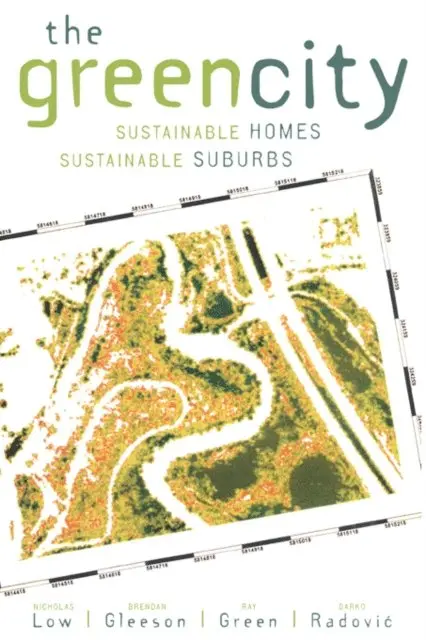
A team of city-building professionals explain in straightforward terms how the idea of ecological sustainability can be embodied in the everyday life of homes, communities and cities to make a better future.The book considers - and answers - three questions: What does the global agenda of sustainable development mean for the urban spaces where most people live, work and move? Can we keep what we love about suburban life and still save the environment? And what new methods of planning and building will be needed in the 21st century? Rejecting both economic and environmental orthodoxy, the book’s essential message is that the sustainable city can be built by a thousand well-directed small changes. It draws on practical case material from around the world and weaves together four critical aspects of urban life: housing, open space, workplaces and transport. A 'photographic essay' of 32 colour plates illustrates the ideas discussed.
2 165 kr
Skickas inom 10-15 vardagar
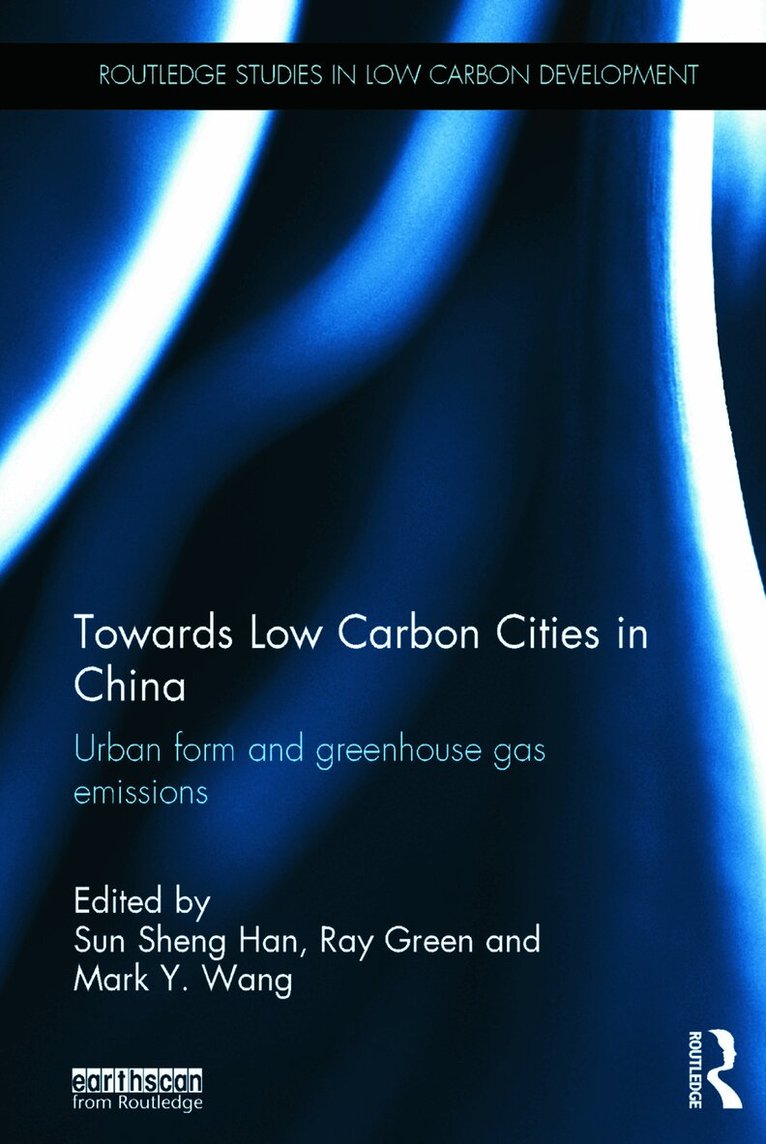
This book explores the relationship between urban form and greenhouse gas emissions in China, providing new insights for policy, urban planning and management. Drawing on the results of a four-year multidisciplinary research project, the book examines how factors such as urban households’ access to services and jobs, land use mixes and provision of public transport impact on greenhouse gas emissions. The authors analyse data from a wide range of sources including 4677 sample households from four major Chinese cities – Beijing, Shanghai, Wuhan and Xi’an – with diverse locations, urban spatial structures and population sizes. The book explores residents’ attitudes to reducing GHG emissions and advances knowledge relating to three environmental scales – cross-metropolitan, intra-city and neighbourhood level. It also contributes to debates on low carbon policy by revealing the relevance of urban planning parameters at both the macro and micro levels. The book will be of interest to scholars in the areas of urban planning, urban management, environmental sustainability and resource utilisation, as well as urban policy makers and planners who are working toward developing low carbon, sustainable cities of the future.
2 098 kr
Skickas inom 10-15 vardagar
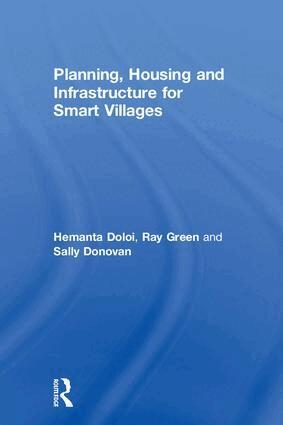
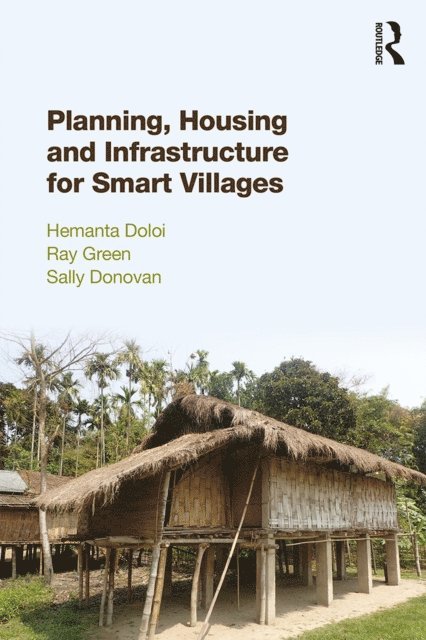
Some 7.3 billion people currently live on the planet. Of these, 3.4 billion live in rural areas. In just a few regions—Latin America, the Middle East and North Africa—less than 50 per cent of poverty is now located in rural areas. But for the rest of the world's regions between 55 per cent and 80 per cent of the poor continue to live in the countryside. Progress is being made, but much of the knowhow needed is not disseminated outside of a small coterie of professionals who work in the area. With urban development attracting a great deal of attention lately, poorer rural areas deserve the same and new knowledge for empowerment of rural communities is urgently needed. This book provides an overview of current thinking and practices that have emerged over the last thirty years for uplifting rural communities in developing economies. Drawing on a body of knowledge across a spectrum of relevant disciplines, this book provides a range of innovative ideas for rural planning, housing and infrastructure development. Governments in many emerging economies, where rural poverty is often most acute, have attempted to improve livelihoods. Approaches and techniques that have been used for urban development are often not applicable to rural communities. Studies show that money allocated for rural development is often not effectively spent due to distance, lack of infrastructure, lack of education, poverty and other factors. Meanwhile, the gap in development between the city and country continues to grow, sometimes leading to social and political instability, in both developing and developed countries. This book seeks to provide a guidebook for meeting such challenges. Through in-depth enquiry of global practices and thinking about rural development, and selected case studies, the authors argue that careful consideration must be given to incorporating issues of resilience, resourcefulness and the involvement of communities at grassroots levels in realising the transformation of rural settlements into Smart Villages.
701 kr
Skickas inom 10-15 vardagar
Some 7.3 billion people currently live on the planet. Of these, 3.4 billion live in rural areas. In just a few regions—Latin America, the Middle East and North Africa—less than 50 per cent of poverty is now located in rural areas. But for the rest of the world's regions between 55 per cent and 80 per cent of the poor continue to live in the countryside. Progress is being made, but much of the knowhow needed is not disseminated outside of a small coterie of professionals who work in the area. With urban development attracting a great deal of attention lately, poorer rural areas deserve the same and new knowledge for empowerment of rural communities is urgently needed. This book provides an overview of current thinking and practices that have emerged over the last thirty years for uplifting rural communities in developing economies. Drawing on a body of knowledge across a spectrum of relevant disciplines, this book provides a range of innovative ideas for rural planning, housing and infrastructure development. Governments in many emerging economies, where rural poverty is often most acute, have attempted to improve livelihoods. Approaches and techniques that have been used for urban development are often not applicable to rural communities. Studies show that money allocated for rural development is often not effectively spent due to distance, lack of infrastructure, lack of education, poverty and other factors. Meanwhile, the gap in development between the city and country continues to grow, sometimes leading to social and political instability, in both developing and developed countries. This book seeks to provide a guidebook for meeting such challenges. Through in-depth enquiry of global practices and thinking about rural development, and selected case studies, the authors argue that careful consideration must be given to incorporating issues of resilience, resourcefulness and the involvement of communities at grassroots levels in realising the transformation of rural settlements into Smart Villages.
188 kr
Skickas inom 5-8 vardagar
188 kr
Skickas inom 5-8 vardagar
188 kr
Skickas inom 5-8 vardagar
2 369 kr
Skickas inom 10-15 vardagar
A team of city-building professionals explain in straightforward terms how the idea of ecological sustainability can be embodied in the everyday life of homes, communities and cities to make a better future.The book considers - and answers - three questions: What does the global agenda of sustainable development mean for the urban spaces where most people live, work and move? Can we keep what we love about suburban life and still save the environment? And what new methods of planning and building will be needed in the 21st century? Rejecting both economic and environmental orthodoxy, the book’s essential message is that the sustainable city can be built by a thousand well-directed small changes. It draws on practical case material from around the world and weaves together four critical aspects of urban life: housing, open space, workplaces and transport. A 'photographic essay' of 32 colour plates illustrates the ideas discussed.
674 kr
Skickas inom 10-15 vardagar
This book explores the relationship between urban form and greenhouse gas emissions in China, providing new insights for policy, urban planning and management. Drawing on the results of a four-year multidisciplinary research project, the book examines how factors such as urban households’ access to services and jobs, land use mixes and provision of public transport impact on greenhouse gas emissions. The authors analyse data from a wide range of sources including 4677 sample households from four major Chinese cities – Beijing, Shanghai, Wuhan and Xi’an – with diverse locations, urban spatial structures and population sizes. The book explores residents’ attitudes to reducing GHG emissions and advances knowledge relating to three environmental scales – cross-metropolitan, intra-city and neighbourhood level. It also contributes to debates on low carbon policy by revealing the relevance of urban planning parameters at both the macro and micro levels. The book will be of interest to scholars in the areas of urban planning, urban management, environmental sustainability and resource utilisation, as well as urban policy makers and planners who are working toward developing low carbon, sustainable cities of the future.
168 kr
Skickas inom 5-8 vardagar
188 kr
Skickas inom 5-8 vardagar
188 kr
Skickas inom 5-8 vardagar
188 kr
Skickas inom 5-8 vardagar
173 kr
Skickas inom 5-8 vardagar