Science Essentials - Böcker
Visar alla böcker i serien Science Essentials. Handla med fri frakt och snabb leverans.
18 produkter
18 produkter
287 kr
Skickas inom 7-10 vardagar
Whether our personality, intelligence, and behavior are more likely to be shaped by our environment or our genetic coding is not simply an idle question for today's researchers. There are tremendous consequences to understanding the crucial role that environment and genes each play. How we raise and educate our children, how we treat various mental diseases or conditions, how we care for our elderly--these are just some of the issues that can be informed by a better understanding of brain development. In The Great Brain Debate, the eminent neuroscience researcher John Dowling looks at these and other important issues. The work that is being done on the connection between the brain and vision, as well as the ways in which our brains help us learn new languages, are particularly revealing. From this groundbreaking new research, Dowling explains startling new insights into how the brain functions and how it can (or cannot) be molded and changed. By studying the brain across the spectrum of our lives, from infancy through adulthood and into old age, Dowling shows the ways in which both nature and nurture play key roles over the course of a human lifetime.
357 kr
Skickas inom 7-10 vardagar
Memory is perhaps the most extraordinary phenomenon in the natural world. Every person's brain holds millions of bits of information in long-term storage. This vast memory store includes our extensive vocabulary and knowledge of language; the tremendous and unique variety of facts we've amassed; all the skills we've learned, from walking and talking to musical and athletic performance; many of the emotions we feel; and the continuous sensations, feelings, and understandings of the world we term consciousness. Without memory there can be no mind as we understand it. Focusing on cutting-edge research in behavioral science and neuroscience, Memory is a primer of our current scientific understanding of the mechanics of memory and learning. Over the past two decades, memory research has accelerated and we have seen an explosion of new knowledge about the brain. For example, there now exists a wide-ranging and successful applied science devoted exclusively to the study of memory that has yielded better procedures for eliciting valid recollections in legal settings and improved the diagnosis and treatment of memory disorders.Everyone fascinated by the scope and power of the human brain will find this book unforgettable.
247 kr
Skickas inom 7-10 vardagar
We know that animals cross miles of water, land, and sky with pinpoint precision on a daily basis. But it is only in recent years that scientists have learned how these astounding feats of navigation are actually accomplished. With colorful and thorough detail, Nature's Compass explores the remarkable methods by which animals find their way both near home and around the globe. Noted biologist James Gould and popular science writer Carol Gould delve into the elegant strategies and fail-safe backup systems, the invisible sensitivities and mysterious forces, and incredible mental abilities used by familiar and rare species, as they investigate a multitude of navigation strategies, from the simple to the astonishing. The Goulds discuss how animals navigate, without instruments and training, at a level far beyond human talents. They explain how animals measure time and show how the fragile monarch butterfly employs an internal clock, calendar, compass, and map to commence and measure the two-thousand-mile annual journey to Mexico--all with a brain that weighs only a few thousandths of an ounce.They look at honey bees and how they rely on the sun and mental maps to locate landmarks such as nests and flowers. And they examine whether long-distance migrants, such as the homing pigeon, depend on a global positioning system to let them know where they are. Ultimately, the authors ask if the disruption of migratory paths through habitat destruction and global warming is affecting and endangering animal species. Providing a comprehensive picture of animal navigation and migration, Nature's Compass decodes the mysteries of this extraordinary aspect of natural behavior.
183 kr
Skickas inom 7-10 vardagar
The Little Book of String Theory offers a short, accessible, and entertaining introduction to one of the most talked-about areas of physics today. String theory has been called the "theory of everything." It seeks to describe all the fundamental forces of nature. It encompasses gravity and quantum mechanics in one unifying theory. But it is unproven and fraught with controversy. After reading this book, you'll be able to draw your own conclusions about string theory. Steve Gubser begins by explaining Einstein's famous equation E = mc2 , quantum mechanics, and black holes. He then gives readers a crash course in string theory and the core ideas behind it. In plain English and with a minimum of mathematics, Gubser covers strings, branes, string dualities, extra dimensions, curved spacetime, quantum fluctuations, symmetry, and supersymmetry. He describes efforts to link string theory to experimental physics and uses analogies that nonscientists can understand. How does Chopin's Fantasie-Impromptu relate to quantum mechanics? What would it be like to fall into a black hole? Why is dancing a waltz similar to contemplating a string duality? Find out in the pages of this book.The Little Book of String Theory is the essential, most up-to-date beginner's guide to this elegant, multidimensional field of physics.
343 kr
Skickas inom 7-10 vardagar
The air we breathe is twenty-one percent oxygen, an amount higher than on any other known world. While we may take our air for granted, Earth was not always an oxygenated planet. How did it become this way? Donald Canfield--one of the world's leading authorities on geochemistry, earth history, and the early oceans--covers this vast history, emphasizing its relationship to the evolution of life and the evolving chemistry of the Earth. Canfield guides readers through the various lines of scientific evidence, considers some of the wrong turns and dead ends along the way, and highlights the scientists and researchers who have made key discoveries in the field. Showing how Earth's atmosphere developed over time, Oxygen takes readers on a remarkable journey through the history of the oxygenation of our planet.
567 kr
Skickas inom 3-6 vardagar
Terrorism is the most clear and present danger we confront today, yet no phenomenon is more poorly understood by policymakers, the media, and the general public. The Faces of Terrorism is the first serious interdisciplinary examination of terrorism in all its facets. What gives rise to it, who are its proponents and how do they think, and how--and why--does it work? Neil Smelser begins by tackling the fundamental problem of defining what exactly terrorism is. He shows why a precise definition has eluded us until now, and he proposes one that takes into account the full complexities of this unconventional and politically charged brand of violence. He explores the root causes and conditions of terrorism, and examines the ideologies that inspire and fuel it throughout the world. Smelser looks closely at the terrorists themselves--their recruitment, their motivations, the groups they form, their intended audiences, and their uses of the media in pursuing their agendas. He studies the target societies as well, unraveling the complicated social and psychological impacts of having to cope with the ever-present threat of a terrorist strike--and responding when one occurs.He explains what it means to live under constant threat of terrorism, and addresses the thorny domestic and foreign policy challenges this poses. Throughout, Smelser draws from the latest findings in sociology, political science, anthropology, economics, psychology, psychiatry, and history. The Faces of Terrorism provides the breadth of scope necessary to understand--and ultimately eliminate--this most pressing global threat.
255 kr
Skickas inom 7-10 vardagar
Ever since Carl Sagan first predicted that extraterrestrial civilizations must number in the millions, the search for life on other planets has gripped our imagination. Is Earth so rare that advanced life forms like us--or even the simplest biological organisms--are unique to the universe? How to Find a Habitable Planet describes how scientists are testing Sagan's prediction, and demonstrates why Earth may not be so rare after all. James Kasting has worked closely with NASA in its mission to detect habitable worlds outside our solar system, and in this book he introduces readers to the advanced methodologies being used in this extraordinary quest. He addresses the compelling questions that planetary scientists grapple with today: What exactly makes a planet habitable? What are the signatures of life astronomers should look for when they scan the heavens for habitable worlds? In providing answers, Kasting explains why Earth has remained habitable despite a substantial rise in solar luminosity over time, and why our neighbors, Venus and Mars, haven't.If other Earth-sized planets endowed with enough water and carbon are out there, he argues, chances are good that some of those planets sustain life. Kasting describes the efforts under way to find them, and predicts that future discoveries will profoundly alter our view of the universe and our place in it. This book is a must-read for anyone who has ever dreamed of finding other planets like ours--and perhaps even life like ours--in the cosmos. In a new afterword, Kasting presents some recent breakthroughs in the search for exoplanets and discusses the challenges facing space programs in the near future.
183 kr
Skickas inom 7-10 vardagar
Dive into a mind-bending exploration of the physics of black holes Black holes, predicted by Albert Einstein's general theory of relativity more than a century ago, have long intrigued scientists and the public with their bizarre and fantastical properties. Although Einstein understood that black holes were mathematical solutions to his equations, he never accepted their physical reality--a viewpoint many shared. This all changed in the 1960s and 1970s, when a deeper conceptual understanding of black holes developed just as new observations revealed the existence of quasars and X-ray binary star systems, whose mysterious properties could be explained by the presence of black holes. Black holes have since been the subject of intense research--and the physics governing how they behave and affect their surroundings is stranger and more mind-bending than any fiction. After introducing the basics of the special and general theories of relativity, this book describes black holes both as astrophysical objects and theoretical "laboratories" in which physicists can test their understanding of gravitational, quantum, and thermal physics.From Schwarzschild black holes to rotating and colliding black holes, and from gravitational radiation to Hawking radiation and information loss, Steven Gubser and Frans Pretorius use creative thought experiments and analogies to explain their subject accessibly. They also describe the decades-long quest to observe the universe in gravitational waves, which recently resulted in the LIGO observatories' detection of the distinctive gravitational wave "chirp" of two colliding black holes--the first direct observation of black holes' existence. The Little Book of Black Holes takes readers deep into the mysterious heart of the subject, offering rare clarity of insight into the physics that makes black holes simple yet destructive manifestations of geometric destiny.
167 kr
Skickas inom 7-10 vardagar
In the first fractions of a second after the Big Bang lingers a question at the heart of our very existence: why does the universe contain matter but almost no antimatter? The laws of physics tell us that equal amounts of matter and antimatter were produced in the early universe--but then something odd happened. Matter won out over antimatter; had it not, the universe today would be dark and barren. But how and when did this occur? In The Mystery of the Missing Antimatter, Helen Quinn and Yossi Nir guide readers into the very heart of this mystery--and along the way offer an exhilarating grand tour of cutting-edge physics.
314 kr
Skickas inom 3-6 vardagar
Heart of Darkness describes the incredible saga of humankind's quest to unravel the deepest secrets of the universe. Over the past thirty years, scientists have learned that two little-understood components--dark matter and dark energy--comprise most of the known cosmos, explain the growth of all cosmic structure, and hold the key to the universe's fate. The story of how evidence for the so-called "Lambda-Cold Dark Matter" model of cosmology has been gathered by generations of scientists throughout the world is told here by one of the pioneers of the field, Jeremiah Ostriker, and his coauthor Simon Mitton. From humankind's early attempts to comprehend Earth's place in the solar system, to astronomers' exploration of the Milky Way galaxy and the realm of the nebulae beyond, to the detection of the primordial fluctuations of energy from which all subsequent structure developed, this book explains the physics and the history of how the current model of our universe arose and has passed every test hurled at it by the skeptics.Throughout this rich story, an essential theme is emphasized: how three aspects of rational inquiry--the application of direct measurement and observation, the introduction of mathematical modeling, and the requirement that hypotheses should be testable and verifiable--guide scientific progress and underpin our modern cosmological paradigm. This monumental puzzle is far from complete, however, as scientists confront the mysteries of the ultimate causes of cosmic structure formation and the real nature and origin of dark matter and dark energy.
191 kr
Skickas inom 7-10 vardagar
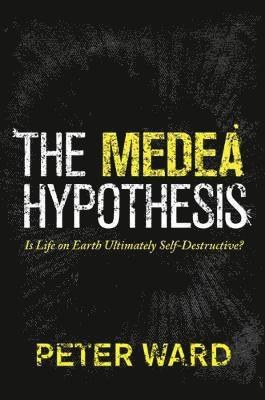
In The Medea Hypothesis, renowned paleontologist Peter Ward proposes a revolutionary and provocative vision of life's relationship with the Earth's biosphere--one that has frightening implications for our future, yet also offers hope. Using the latest discoveries from the geological record, he argues that life might be its own worst enemy. This stands in stark contrast to James Lovelock's Gaia hypothesis--the idea that life sustains habitable conditions on Earth. In answer to Gaia, which draws on the idea of the "good mother" who nurtures life, Ward invokes Medea, the mythical mother who killed her own children. Could life by its very nature threaten its own existence? According to the Medea hypothesis, it does. Ward demonstrates that all but one of the mass extinctions that have struck Earth were caused by life itself. He looks at our planet's history in a new way, revealing an Earth that is witnessing an alarming decline of diversity and biomass--a decline brought on by life's own "biocidal" tendencies. And the Medea hypothesis applies not just to our planet--its dire prognosis extends to all potential life in the universe. Yet life on Earth doesn't have to be lethal.Ward shows why, but warns that our time is running out. Breathtaking in scope, The Medea Hypothesis is certain to arouse fierce debate and radically transform our worldview. It serves as an urgent challenge to all of us to think in new ways if we hope to save ourselves from ourselves.
175 kr
Tillfälligt slut
The air we breathe is twenty-one percent oxygen, an amount higher than on any other known world. While we may take our air for granted, Earth was not always an oxygenated planet. How did it become this way? Donald Canfield--one of the world's leading authorities on geochemistry, earth history, and the early oceans--covers this vast history, emphasizing its relationship to the evolution of life and the evolving chemistry of the Earth. Canfield guides readers through the various lines of scientific evidence, considers some of the wrong turns and dead ends along the way, and highlights the scientists and researchers who have made key discoveries in the field. Showing how Earth's atmosphere developed over time, Oxygen takes readers on a remarkable journey through the history of the oxygenation of our planet.
207 kr
Skickas inom 7-10 vardagar
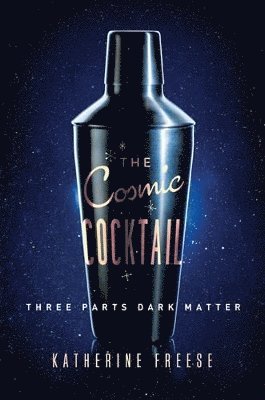
The ordinary atoms that make up the known universe--from our bodies and the air we breathe to the planets and stars--constitute only 5 percent of all matter and energy in the cosmos. The rest is known as dark matter and dark energy, because their precise identities are unknown. The Cosmic Cocktail is the inside story of the epic quest to solve one of the most compelling enigmas of modern science--what is the universe made of?--told by one of today's foremost pioneers in the study of dark matter. Blending cutting-edge science with her own behind-the-scenes insights as a leading researcher in the field, acclaimed theoretical physicist Katherine Freese recounts the hunt for dark matter, from the discoveries of visionary scientists like Fritz Zwicky--the Swiss astronomer who coined the term "dark matter" in 1933--to the deluge of data today from underground laboratories, satellites in space, and the Large Hadron Collider. Theorists contend that dark matter consists of fundamental particles known as WIMPs, or weakly interacting massive particles.Billions of them pass through our bodies every second without us even realizing it, yet their gravitational pull is capable of whirling stars and gas at breakneck speeds around the centers of galaxies, and bending light from distant bright objects. Freese describes the larger-than-life characters and clashing personalities behind the race to identify these elusive particles. Many cosmologists believe we are on the verge of solving the mystery. The Cosmic Cocktail provides the foundation needed to fully fathom this epochal moment in humankind's quest to understand the universe.
183 kr
Skickas inom 7-10 vardagar
For almost four billion years, microbes had the primordial oceans all to themselves. The stewards of Earth, these organisms transformed the chemistry of our planet to make it habitable for plants, animals, and us. Life's Engines takes readers deep into the microscopic world to explore how these marvelous creatures made life on Earth possible--and how human life today would cease to exist without them. Paul Falkowski looks "under the hood" of microbes to find the engines of life, the actual working parts that do the biochemical heavy lifting for every living organism on Earth. With insight and humor, he explains how these miniature engines are built--and how they have been appropriated by and assembled like Lego sets within every creature that walks, swims, or flies. Falkowski shows how evolution works to maintain this core machinery of life, and how we and other animals are veritable conglomerations of microbes. A vibrantly entertaining book about the microbes that support our very existence, Life's Engines will inspire wonder about these elegantly complex nanomachines that have driven life since its origin.It also issues a timely warning about the dangers of tinkering with that machinery to make it more "efficient" at meeting the ever-growing demands of humans in the coming century.
207 kr
Skickas inom 7-10 vardagar
An insider account of how researchers unraveled the mystery of the thawing ArcticIn the 1990s, researchers in the Arctic noticed that floating summer sea ice had begun receding. This was accompanied by shifts in ocean circulation and unexpected changes in weather patterns throughout the world. The Arctic's perennially frozen ground, known as permafrost, was warming, and treeless tundra was being overtaken by shrubs. What was going on? Brave New Arctic is Mark Serreze's riveting firsthand account of how scientists from around the globe came together to find answers.In a sweeping tale of discovery spanning three decades, Serreze describes how puzzlement turned to concern and astonishment as researchers came to understand that the Arctic of old was quickly disappearing--with potentially devastating implications for the entire planet. Serreze is a world-renowned Arctic geographer and climatologist who has conducted fieldwork on ice caps, glaciers, sea ice, and tundra in the Canadian and Alaskan Arctic. In this must-read book, he blends invaluable insights from his own career with those of other pioneering scientists who, together, ushered in an exciting new age of Arctic exploration. Along the way, he accessibly describes the cutting-edge science that led to the alarming conclusion that the Arctic is rapidly thawing due to climate change, that humans are to blame, and that the global consequences are immense.A gripping scientific adventure story, Brave New Arctic shows how the Arctic's extraordinary transformation serves as a harbinger of things to come if we fail to meet the challenge posed by a warming Earth.
207 kr
Skickas inom 7-10 vardagar
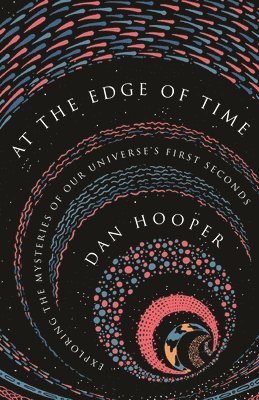
A new look at the first few seconds after the Big Bang—and how research into these moments continues to revolutionize our understanding of our universeScientists in the past few decades have made crucial discoveries about how our cosmos evolved over the past 13.8 billion years. But there remains a critical gap in our knowledge: we still know very little about what happened in the first seconds after the Big Bang. At the Edge of Time focuses on what we have recently learned and are still striving to understand about this most essential and mysterious period of time at the beginning of cosmic history.Delving into the remarkable science of cosmology, Dan Hooper describes many of the extraordinary and perplexing questions that scientists are asking about the origin and nature of our world. Hooper examines how we are using the Large Hadron Collider and other experiments to re-create the conditions of the Big Bang and test promising theories for how and why our universe came to contain so much matter and so little antimatter. We may be poised to finally discover how dark matter was formed during our universe’s first moments, and, with new telescopes, we are also lifting the veil on the era of cosmic inflation, which led to the creation of our world as we know it.Wrestling with the mysteries surrounding the initial moments that followed the Big Bang, At the Edge of Time presents an accessible investigation of our universe and its origin.
151 kr
Skickas inom 7-10 vardagar
An insider account of how scientists unraveled the mystery of the thawing ArcticIn the 1990s, researchers in the Arctic noticed that floating summer sea ice had begun receding. This was accompanied by shifts in ocean circulation and unexpected changes in weather patterns throughout the world. The Arctic's perennially frozen ground, known as permafrost, was warming, and treeless tundra was being overtaken by shrubs. What was going on? Brave New Arctic is Mark Serreze's riveting firsthand account of how scientists from around the globe came together to find answers. In a sweeping tale of discovery spanning three decades, Serreze describes how puzzlement turned to alarm as researchers concluded that the Arctic is rapidly thawing due to climate change—and humans are to blame.
151 kr
Skickas inom 7-10 vardagar
A new look at the first few seconds after the Big Bang—and how research into these moments continues to revolutionize our understanding of our universeScientists in recent decades have made crucial discoveries about how our cosmos evolved over the past 13.8 billion years. But we still know little about what happened in the first seconds after the Big Bang. At the Edge of Time focuses on what we have learned and are striving to understand about this mysterious period at the beginning of cosmic history. Delving into the remarkable science of cosmology, Dan Hooper describes many of the extraordinary questions that scientists are asking about the origin and nature of our world. Hooper examines how the Large Hadron Collider and other experiments re-create the conditions of the Big Bang, how we may finally discover the way dark matter was formed during our universe’s first moments, and how, with new telescopes, we are lifting the veil on the era of cosmic inflation. At the Edge of Time presents an accessible investigation of our universe and its birth.