Small State Studies - Böcker
Visar alla böcker i serien Small State Studies. Handla med fri frakt och snabb leverans.
13 produkter
13 produkter
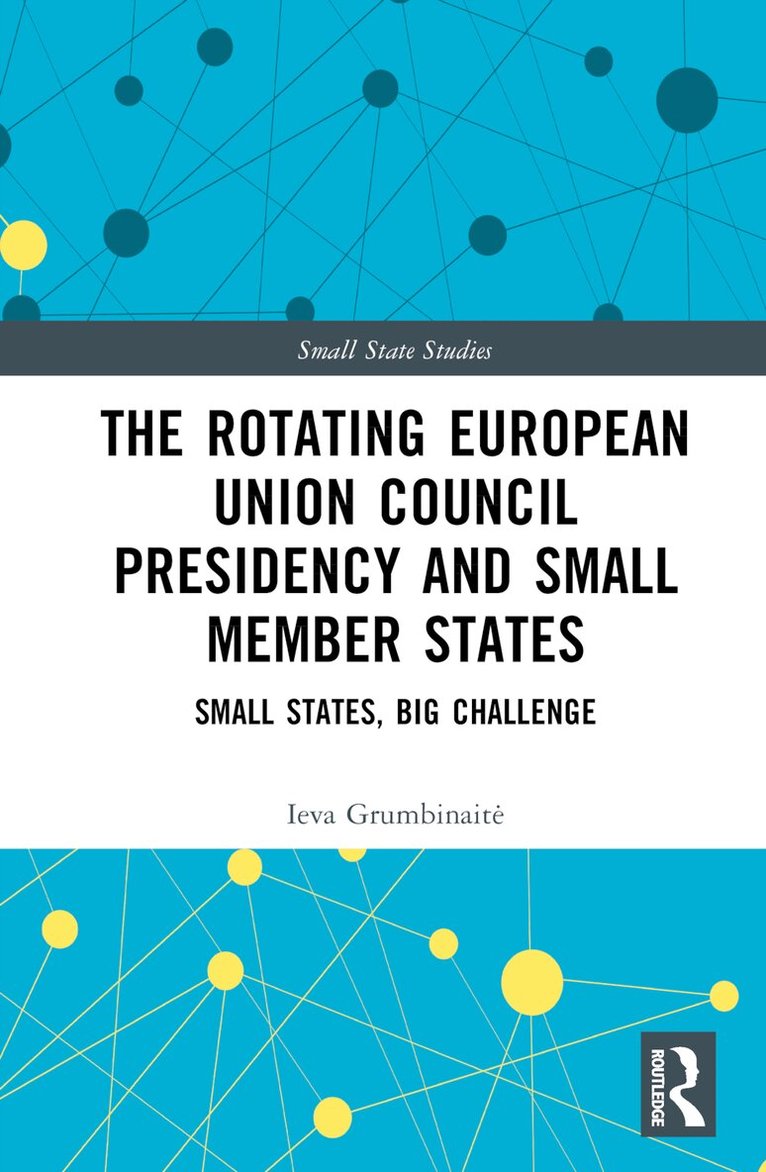
Rotating European Union Council Presidency and Small Member States
Small States, Big Challenge
Inbunden, Engelska, 2023
1 969 kr
Skickas inom 10-15 vardagar
The Rotating European Union Council Presidency and Small Member States explores the opportunities and burdens for small states of holding the rotating presidency of the Council of the European Union.While the functions and the achievements of the Council presidencies have been widely studied on the EU level, this book adopts the inverse and underresearched perspective of looking at the “domestic” impact of the Council presidency on the Member State, specifically small Member States. Combining new institutionalist theoretical approaches under the concept of Europeanisation, and employing both qualitative and quantitative methods, this book explores whether the Council presidency leads to the Europeanisation of national polities and politics. More specifically, the book looks at the impact of the Council presidency on national administrations, ministers and public opinion. It suggests that the Council presidency presents a unique opportunity to (re) engage with EU affairs and institutions for small Member States, especially those holding the position for the first time.This book will be of interest to postgraduate students, researchers and academics of International Relations and European Integration, specifically those interested in small states in the European Union or the rotating European Union Council presidency.
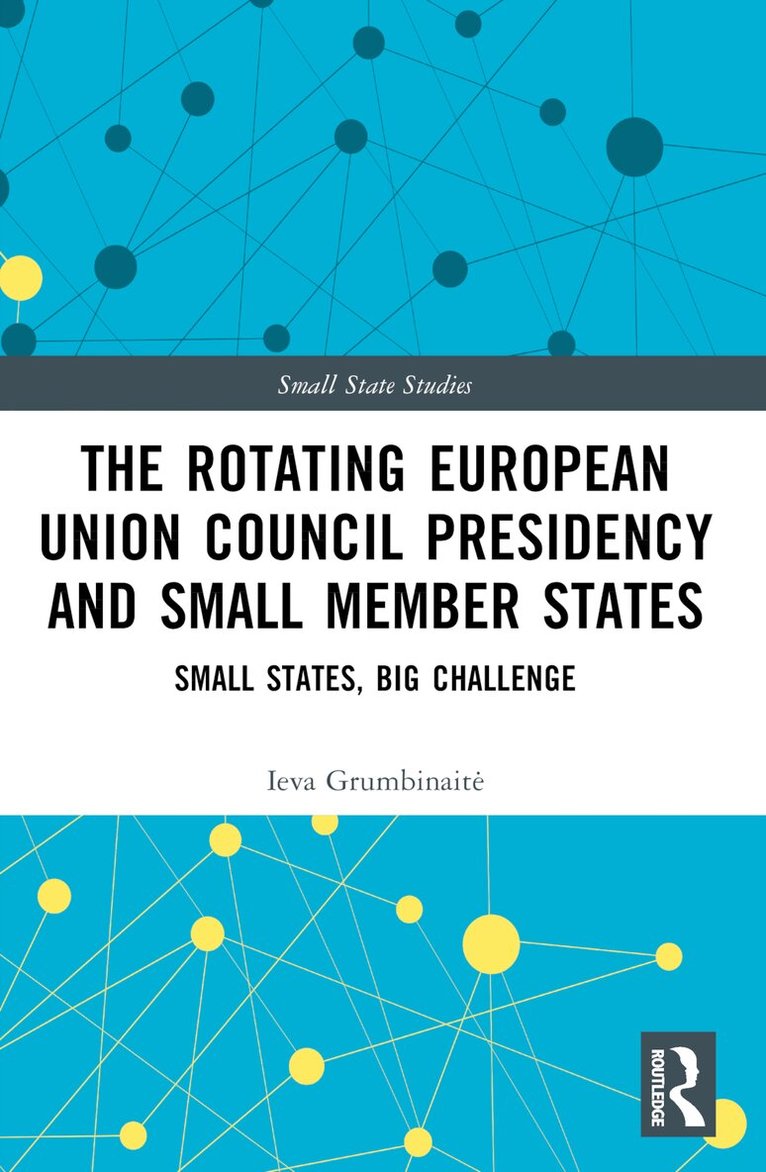
Rotating European Union Council Presidency and Small Member States
Small States, Big Challenge
Häftad, Engelska, 2024
575 kr
Skickas inom 10-15 vardagar
The Rotating European Union Council Presidency and Small Member States explores the opportunities and burdens for small states of holding the rotating presidency of the Council of the European Union.While the functions and the achievements of the Council presidencies have been widely studied on the EU level, this book adopts the inverse and underresearched perspective of looking at the “domestic” impact of the Council presidency on the Member State, specifically small Member States. Combining new institutionalist theoretical approaches under the concept of Europeanisation, and employing both qualitative and quantitative methods, this book explores whether the Council presidency leads to the Europeanisation of national polities and politics. More specifically, the book looks at the impact of the Council presidency on national administrations, ministers and public opinion. It suggests that the Council presidency presents a unique opportunity to (re) engage with EU affairs and institutions for small Member States, especially those holding the position for the first time.This book will be of interest to postgraduate students, researchers and academics of International Relations and European Integration, specifically those interested in small states in the European Union or the rotating European Union Council presidency.
2 037 kr
Skickas inom 10-15 vardagar
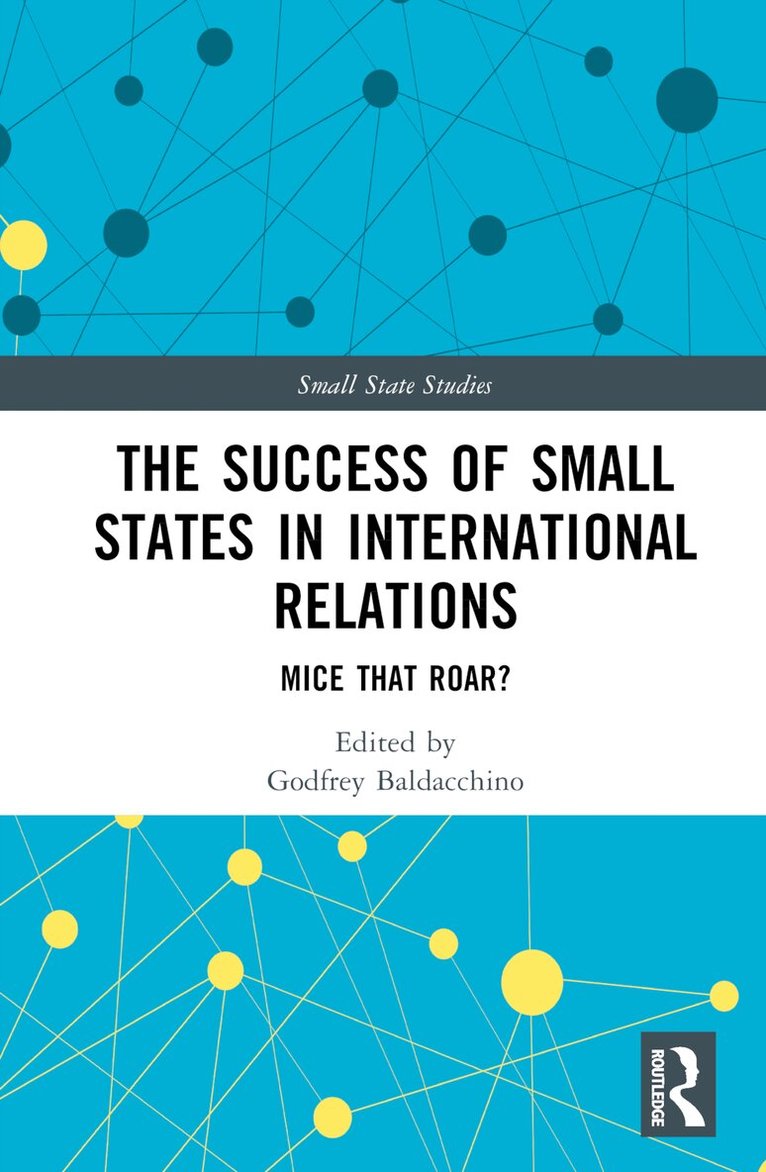
The Success of Small States in International Relations highlights the normality and power of small states in international relations.This book overturns the stereotype that small states, however defined, are weak and are, or ought to be, consigned to the margins of international relations. It argues that small states are not ‘punching above their weight’, or even anomalies – since it is large states which are the anomaly in the global system. The text unpacks the nature and character of small state success, while also looking critically at thirteen episodes in modern history where small states, singly or collectively, emerged victorious in confrontations with larger states. The case studies, globally sourced, are bookended by conceptual and analytic reviews of what these events mean for diplomacy, international relations and small states more generally.This book will appeal to scholars and students of comparative political science and international relations, particularly from small states, as well as policy makers and senior small state government officers.
616 kr
Skickas inom 10-15 vardagar
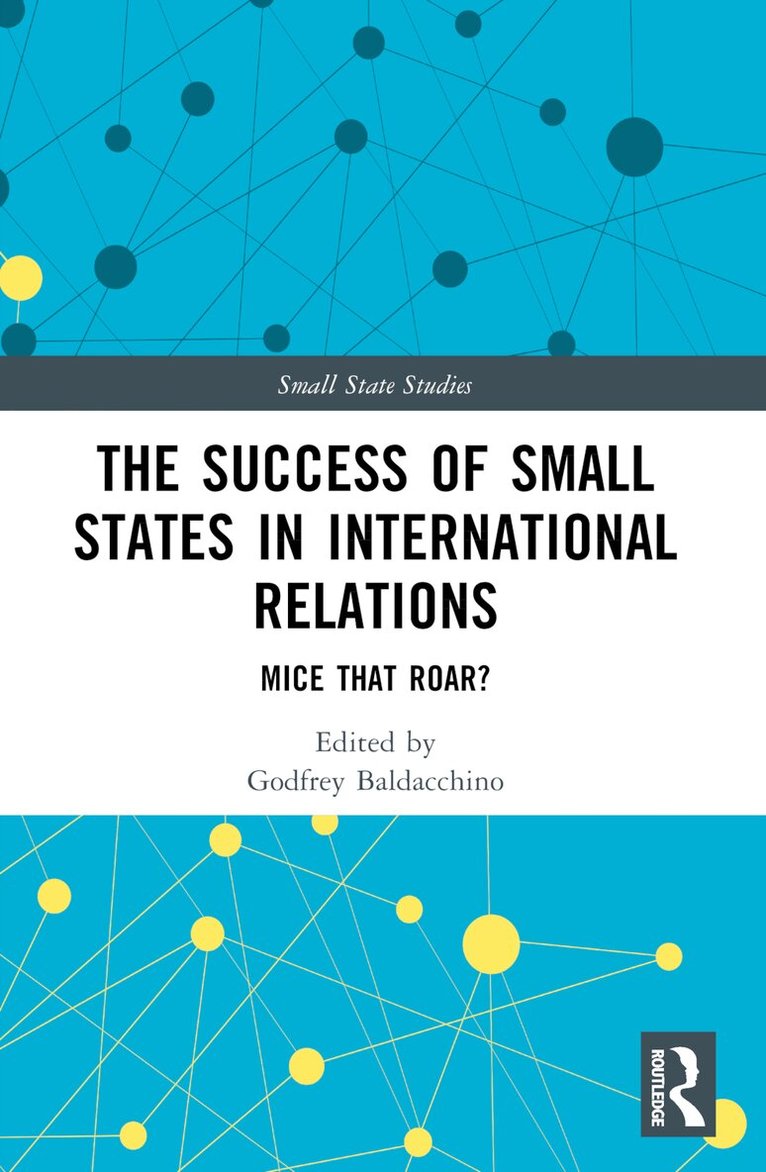
The Success of Small States in International Relations highlights the normality and power of small states in international relations.This book overturns the stereotype that small states, however defined, are weak and are, or ought to be, consigned to the margins of international relations. It argues that small states are not ‘punching above their weight’, or even anomalies – since it is large states which are the anomaly in the global system. The text unpacks the nature and character of small state success, while also looking critically at thirteen episodes in modern history where small states, singly or collectively, emerged victorious in confrontations with larger states. The case studies, globally sourced, are bookended by conceptual and analytic reviews of what these events mean for diplomacy, international relations and small states more generally.This book will appeal to scholars and students of comparative political science and international relations, particularly from small states, as well as policy makers and senior small state government officers.
2 037 kr
Skickas inom 10-15 vardagar
Agency, Security and Governance of Small States examines what seems to be a defining paradox of Small-State Studies: the simultaneous coexistence (and possible co-dependence) of vulnerability and opportunity related to small-state size.This book analyses small states within the framework of this apparent paradox. Traditionally, Small-State Studies has focused on three guiding questions: what constitutes a ‘small state’? What explains small-state influence in global affairs? Are small states truly vulnerable to security threats given the expansion of multilateralism and regionalism throughout the world? This book contends that new questions should be asked which recognise the important shifts in twenty-first century security paradigms, to better understand how some states deploy their smallness as a resource for agency in supranational contexts. By varying historical, geographical, security, and governance contexts, the book embraces a most-different-cases approach. The historical perspective is often neglected in Small-State Studies but contributes to understanding how small states have often, over time, transformed perceived insecurity into agency. By focusing on different world regions, the authors enable the comparative analysis of collective actions, and the creation and implementation of institutions for ‘common sense purposes’ within a geographical region. Of particular contemporary importance, the book includes contributions which contend with hard-security issues alongside other soft-security challenges. The comparison of case studies confirms that hard-security vulnerability and soft-security opportunities seem to be two sides of the same coin, which reinforces the book’s focus on small-state paradoxes, and raises the question of whether smallness can be considered the defining characteristic of governance in these countries.This book will have a broad appeal because of the different world regions it analyses. It will be of interest to postgraduate students, scholars, and researchers of international relations, security, sustainability, governance, development, and political economy, as well as Small-State Studies.The Chapters 4, 8 and 11 of this book are freely available as downloadable Open Access PDFs at http://www.taylorfrancis.com under a Creative Commons Attribution-Non Commercial-No Derivatives (CC-BY-NC-ND) 4.0 license. The publication of Chapter 4 as Open Access has been made possible by the Institute of History at the University of Luxembourg. The publication of Chapter 8 as Open Access has been made possible by Western Sydney University. The publication of Chapter 11 as Open Access has been made possible by the University of Hamburg.
575 kr
Skickas inom 10-15 vardagar
Agency, Security and Governance of Small States examines what seems to be a defining paradox of Small-State Studies: the simultaneous coexistence (and possible co-dependence) of vulnerability and opportunity related to small-state size.This book analyses small states within the framework of this apparent paradox. Traditionally, Small-State Studies has focused on three guiding questions: what constitutes a ‘small state’? What explains small-state influence in global affairs? Are small states truly vulnerable to security threats given the expansion of multilateralism and regionalism throughout the world? This book contends that new questions should be asked which recognise the important shifts in twenty-first century security paradigms, to better understand how some states deploy their smallness as a resource for agency in supranational contexts. By varying historical, geographical, security, and governance contexts, the book embraces a most-different-cases approach. The historical perspective is often neglected in Small-State Studies but contributes to understanding how small states have often, over time, transformed perceived insecurity into agency. By focusing on different world regions, the authors enable the comparative analysis of collective actions, and the creation and implementation of institutions for ‘common sense purposes’ within a geographical region. Of particular contemporary importance, the book includes contributions which contend with hard-security issues alongside other soft-security challenges. The comparison of case studies confirms that hard-security vulnerability and soft-security opportunities seem to be two sides of the same coin, which reinforces the book’s focus on small-state paradoxes, and raises the question of whether smallness can be considered the defining characteristic of governance in these countries.This book will have a broad appeal because of the different world regions it analyses. It will be of interest to postgraduate students, scholars, and researchers of international relations, security, sustainability, governance, development, and political economy, as well as Small-State Studies.The Chapters 4, 8 and 11 of this book are freely available as downloadable Open Access PDFs at http://www.taylorfrancis.com under a Creative Commons Attribution-Non Commercial-No Derivatives (CC-BY-NC-ND) 4.0 license. The publication of Chapter 4 as Open Access has been made possible by the Institute of History at the University of Luxembourg. The publication of Chapter 8 as Open Access has been made possible by Western Sydney University. The publication of Chapter 11 as Open Access has been made possible by the University of Hamburg.
1 901 kr
Skickas inom 10-15 vardagar
Small States in EU Policy-Making analyses how small states try to impact European Union policy-making through a range of strategies.With the last rounds of enlargement and Brexit, the number and weight of small states in the European Union have steadily increased. At the same time, small states face distinct challenges in different institutions, which may impact their strategies. Nonetheless, the existing literature primarily focuses on the Council of the European Union and the European Council and offers few insights into how small states navigate the other institutions. The contributions to this volume examine how small states can wield influence in different institutions, arguing that they do indeed pursue different strategies depending on institutional context. The policy case studies on the EU’s foreign and security policies confirm these findings: small states can have influence in EU policy-making and can create situations where their needs are met. They are most likely to succeed when they build foreign policy coalitions, when they anticipate major economic developments and when they manage to acquire a high level of expertise in a policy area. However, the case studies also show that there is a risk of small states becoming policy-takers in cases where they cannot provide leadership in terms of ideas and expertise and/or fail to build political weight through coalitions.This book will be of interest to academics and practitioners of European politics and the EU in particular, as well as policy-makers and practitioners working on small states.The Open Access version of this book, available at http://www.taylorfrancis.com, has been made available under a Creative Commons Attribution-Non Commercial-No Derivatives (CC-BY-NC-ND) 4.0 license.
629 kr
Skickas inom 10-15 vardagar
Small States in EU Policy-Making analyses how small states try to impact European Union policy-making through a range of strategies.With the last rounds of enlargement and Brexit, the number and weight of small states in the European Union have steadily increased. At the same time, small states face distinct challenges in different institutions, which may impact their strategies. Nonetheless, the existing literature primarily focuses on the Council of the European Union and the European Council and offers few insights into how small states navigate the other institutions. The contributions to this volume examine how small states can wield influence in different institutions, arguing that they do indeed pursue different strategies depending on institutional context. The policy case studies on the EU’s foreign and security policies confirm these findings: small states can have influence in EU policy-making and can create situations where their needs are met. They are most likely to succeed when they build foreign policy coalitions, when they anticipate major economic developments and when they manage to acquire a high level of expertise in a policy area. However, the case studies also show that there is a risk of small states becoming policy-takers in cases where they cannot provide leadership in terms of ideas and expertise and/or fail to build political weight through coalitions.This book will be of interest to academics and practitioners of European politics and the EU in particular, as well as policy-makers and practitioners working on small states.The Open Access version of this book, available at http://www.taylorfrancis.com, has been made available under a Creative Commons Attribution-Non Commercial-No Derivatives (CC-BY-NC-ND) 4.0 license.
1 969 kr
Skickas inom 10-15 vardagar
Challenges and Prospects for the Chagos Archipelago considers the origins, challenges and future of Chagos, bringing together leading experts and academics specialising in differing aspects of the Chagos dispute. In 1965, as part of negotiations leading to Mauritian independence in 1968, the UK government excised the Chagos Archipelago from the colony of Mauritius to form part of a new overseas territory, the British Indian Ocean Territory (BIOT). The UK then set about removing the population of the Chagos Islands in order to allow the United States to construct a military base. As a consequence of the UK’s acquisition of the Chagos Islands and the expulsion of the Chagossian population, there has been wide ranging litigation brought by Mauritius and the Chagossians. This has reached the International Court of Justice, the United Nations General Assembly, the European Court of Human Rights and the UK Supreme Court. This book offers a wide-ranging debate between experts and practitioners, including those of Chagossian and Mauritian heritage, touching upon key developments and offering an inclusive approach that transcends traditional disciplinary silos. Issues such as international and constitutional law, human rights, colonialism and decolonisation, using creative writing to express the experience of banishment, international relations, environmentalism, and globalisation, will be explored as part of a dialogue that sheds new light on the Chagos dispute. Edited by experts on Chagos, the contributors are drawn from across the globe, and all have a distinctive take on what has happened, what it means for the world and the region, and how Chagos will both shape and be shaped by the future. This book will be of great interest to students, academics and researchers from across the humanities and social sciences, including political science, international relations, law, sociology, socio-legal studies, human rights, social anthropology, indigenous rights, history, colonialism, postcolonialism, and cultural studies, as well as practitioners, policymakers and general readers who are interested in Chagos.
675 kr
Kommande
Challenges and Prospects for the Chagos Archipelago considers the origins, challenges and future of Chagos, bringing together leading experts and academics specialising in differing aspects of the Chagos dispute. In 1965, as part of negotiations leading to Mauritian independence in 1968, the UK government excised the Chagos Archipelago from the colony of Mauritius to form part of a new overseas territory, the British Indian Ocean Territory (BIOT). The UK then set about removing the population of the Chagos Islands in order to allow the United States to construct a military base. As a consequence of the UK’s acquisition of the Chagos Islands and the expulsion of the Chagossian population, there has been wide ranging litigation brought by Mauritius and the Chagossians. This has reached the International Court of Justice, the United Nations General Assembly, the European Court of Human Rights and the UK Supreme Court. This book offers a wide-ranging debate between experts and practitioners, including those of Chagossian and Mauritian heritage, touching upon key developments and offering an inclusive approach that transcends traditional disciplinary silos. Issues such as international and constitutional law, human rights, colonialism and decolonisation, using creative writing to express the experience of banishment, international relations, environmentalism, and globalisation, will be explored as part of a dialogue that sheds new light on the Chagos dispute. Edited by experts on Chagos, the contributors are drawn from across the globe, and all have a distinctive take on what has happened, what it means for the world and the region, and how Chagos will both shape and be shaped by the future. This book will be of great interest to students, academics and researchers from across the humanities and social sciences, including political science, international relations, law, sociology, socio-legal studies, human rights, social anthropology, indigenous rights, history, colonialism, postcolonialism, and cultural studies, as well as practitioners, policymakers and general readers who are interested in Chagos.
1 936 kr
Skickas inom 10-15 vardagar
The Constitutional Courts of Small Jurisdictions identifies features and challenges common to the constitutional courts of small state jurisdictions in Europe.The constitutional courts of the following small state jurisdictions are explored: Andorra, Cyprus, Estonia, Liechtenstein, Luxembourg, Malta, Monaco, Montenegro, and San Marino. For each country’s constitutional court, the following matters are examined: the history of the court; its composition; its standing and the types of proceedings; jurisdiction of the court; procedural steps and rules; the nature and effect of the decisions rendered; relations with other courts (CJEU, ECHR, etc.); and current issues and future developments. The book concludes by identifying some common features and challenges that constitutional courts of small states are confronted with, formulating recommendations for other small state jurisdictions across the world.This book will be of great interest and use to practitioners and scholars working in and researching constitutional law in general, and constitutional courts in particular. It will be invaluable for those dealing with small states, as it pays attention to an often forgotten - but important - aspect of the rule of law, and thus also of democracy.
579 kr
Skickas inom 10-15 vardagar
The Constitutional Courts of Small Jurisdictions identifies features and challenges common to the constitutional courts of small state jurisdictions in Europe.The constitutional courts of the following small state jurisdictions are explored: Andorra, Cyprus, Estonia, Liechtenstein, Luxembourg, Malta, Monaco, Montenegro, and San Marino. For each country’s constitutional court, the following matters are examined: the history of the court; its composition; its standing and the types of proceedings; jurisdiction of the court; procedural steps and rules; the nature and effect of the decisions rendered; relations with other courts (CJEU, ECHR, etc.); and current issues and future developments. The book concludes by identifying some common features and challenges that constitutional courts of small states are confronted with, formulating recommendations for other small state jurisdictions across the world.This book will be of great interest and use to practitioners and scholars working in and researching constitutional law in general, and constitutional courts in particular. It will be invaluable for those dealing with small states, as it pays attention to an often forgotten - but important - aspect of the rule of law, and thus also of democracy.
Digital Environment and Small States in Europe
Challenges, Threats, and Opportunities
Inbunden, Engelska, 2025
2 104 kr
Skickas inom 10-15 vardagar
The Digital Environment and Small States in Europe delves into how the digital revolution intersects with global security dynamics and reshapes the geopolitical landscape. It sheds light on the geopolitical complexities inherent in the border regions of the European continent and proposes frameworks to better understand and engage with small state dynamics in international affairs.At the heart of this book is an examination of the transformative power of digitalization and virtualization, particularly pronounced in the context of small states. Traditionally, power was synonymous with territorial control, but in today’s world, influence extends into the virtual realm. Small states, despite their physical limitations, can leverage this virtual extension of territory to their advantage. However, realizing and strategically utilizing these advantages are essential for capitalizing on the opportunities presented. Conversely, small states lacking digital capabilities find themselves increasingly vulnerable in the virtual sphere, facing heightened security threats and challenges. Through a series of theoretical and case study-based chapters, this book offers insights into the strategies employed by small states to navigate these complexities and assert their influence on the global stage. Key themes explored include the impact of digitalization on geopolitical dynamics, the role of cybersecurity in safeguarding national interests, and the emergence of digital diplomacy as a tool for statecraft.The Digital Environment and Small States in Europe will be of great interest to scholars and students of international relations, geopolitics, and political science, as well as security, media, and communication studies. Additionally, policymakers and analysts involved in foreign policy and security affairs may find valuable insights in the book’s exploration of small state strategies and vulnerabilities.