Studies in Digital History and Hermeneutics – serie
Visar alla böcker i serien Studies in Digital History and Hermeneutics. Handla med fri frakt och snabb leverans.
13 produkter
13 produkter
737 kr
Skickas inom 5-8 vardagar
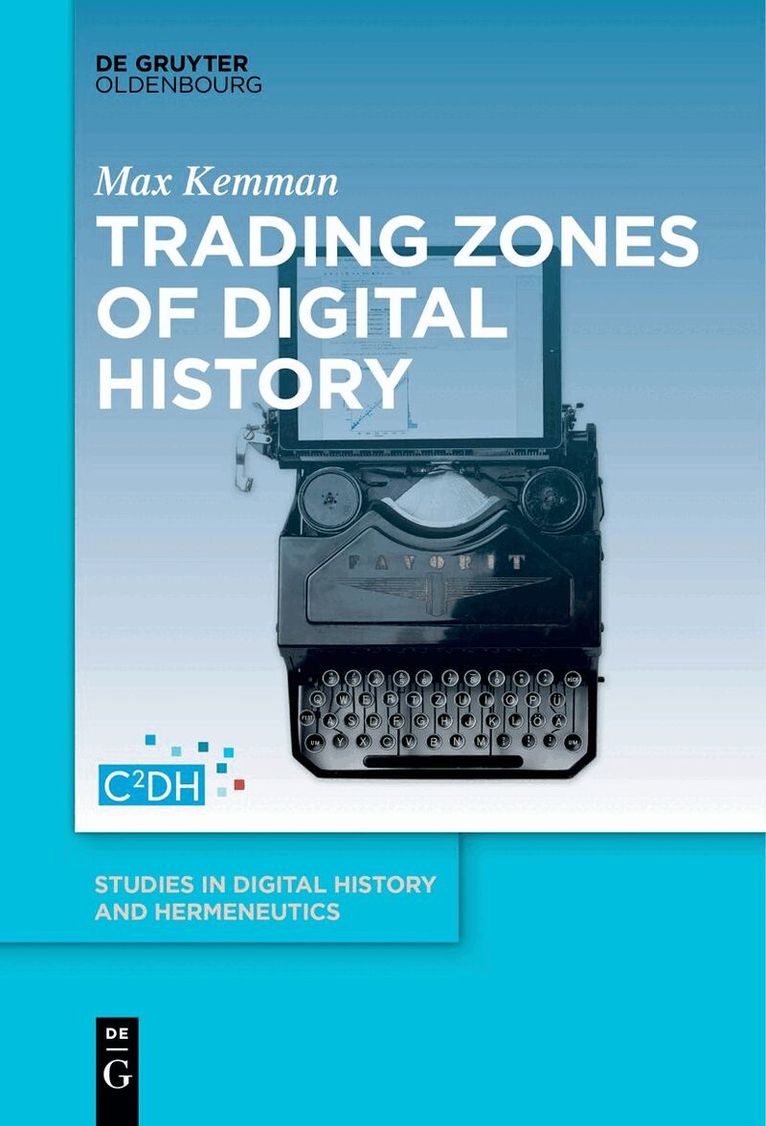
Digital history is commonly argued to be positioned between the traditionally historical and the computational or digital. By studying digital history collaborations and the establishment of the Luxembourg Centre for Contemporary and Digital History, Kemman examines how digital history will impact historical scholarship. His analysis shows that digital history does not occupy a singular position between the digital and the historical. Instead, historians continuously move across this dimension, choosing or finding themselves in different positions as they construct different trading zones through cross-disciplinary engagement, negotiation of research goals and individual interests.
Del 2 - Studies in Digital History and Hermeneutics
Digital History and Hermeneutics
Between Theory and Practice
Inbunden, Engelska, 2022
727 kr
Skickas inom 5-8 vardagar
As a result of rapid advancements in computer science during recent decades, there has been an increased use of digital tools, methodologies and sources in the field of digital humanities. While opening up new opportunities for scholarship, many digital methods and tools now used for humanities research have nevertheless been developed by computer or data sciences and thus require a critical understanding of their mode of operation and functionality.The novel field of digital hermeneutics is meant to provide such a critical and reflexive frame for digital humanities research by acquiring digital literacy and skills. A new knowledge for the assessment of digital data, research infrastructures, analytical tools, and interpretative methods is needed, providing the humanities scholar with the necessary munition for doing critical research. The Doctoral Training Unit "Digital History and Hermeneutics" at the University of Luxembourg applies this analytical frame to 13 PhD projects. By combining a hermeneutic reflection on the new digital practices of humanities scholarship with hands-on experimentation with digital tools and methods, new approaches and opportunities as well as limitations and flaws can be addressed.
Digitised Newspapers – A New Eldorado for Historians?
Reflections on Tools, Methods and Epistemology
Inbunden, Engelska, 2022
727 kr
Skickas inom 5-8 vardagar
The application of digital technologies to historical newspapers has changed the research landscape historians were used to. An Eldorado? Despite undeniable advantages, the new digital affordance of historical newspapers also transforms research practices and confronts historians with new challenges. Drawing on a growing community of practices, the impresso project invited scholars experienced with digitised newspaper collections with the aim of encouraging a discussion on heuristics, source criticism and interpretation of digitized newspapers. This volume provides a snapshot of current research on the subject and offers three perspectives: how digitisation is transforming access to and exploration of historical newspaper collections; how automatic content processing allows for the creation of new layers of information; and, finally, what analyses this enhanced material opens up. ‘impresso - Media Monitoring of the Past’ is an interdisciplinary research project that applies text mining tools to digitised historical newspapers and integrates the resulting data into historical research workflows by means of a newly developed user interface. The question of how best to adapt text mining tools and their use by humanities researchers is at the heart of the impresso enterprise.
Digital Roots
Historicizing Media and Communication Concepts of the Digital Age
Inbunden, Engelska, 2021
727 kr
Skickas inom 5-8 vardagar
As media environments and communication practices evolve over time, so do theoretical concepts. This book analyzes some of the most well-known and fiercely discussed concepts of the digital age from a historical perspective, showing how many of them have pre-digital roots and how they have changed and still are constantly changing in the digital era. Written by leading authors in media and communication studies, the chapters historicize 16 concepts that have become central in the digital media literature, focusing on three main areas. The first part, Technologies and Connections, historicises concepts like network, media convergence, multimedia, interactivity and artificial intelligence. The second one is related to Agency and Politics and explores global governance, datafication, fake news, echo chambers, digital media activism. The last one, Users and Practices, is finally devoted to telepresence, digital loneliness, amateurism, user generated content, fandom and authenticity. The book aims to shed light on how concepts emerge and are co-shaped, circulated, used and reappropriated in different contexts. It argues for the need for a conceptual media and communication history that will reveal new developments without concealing continuities and it demonstrates how the analogue/digital dichotomy is often a misleading one.
727 kr
Skickas inom 5-8 vardagar
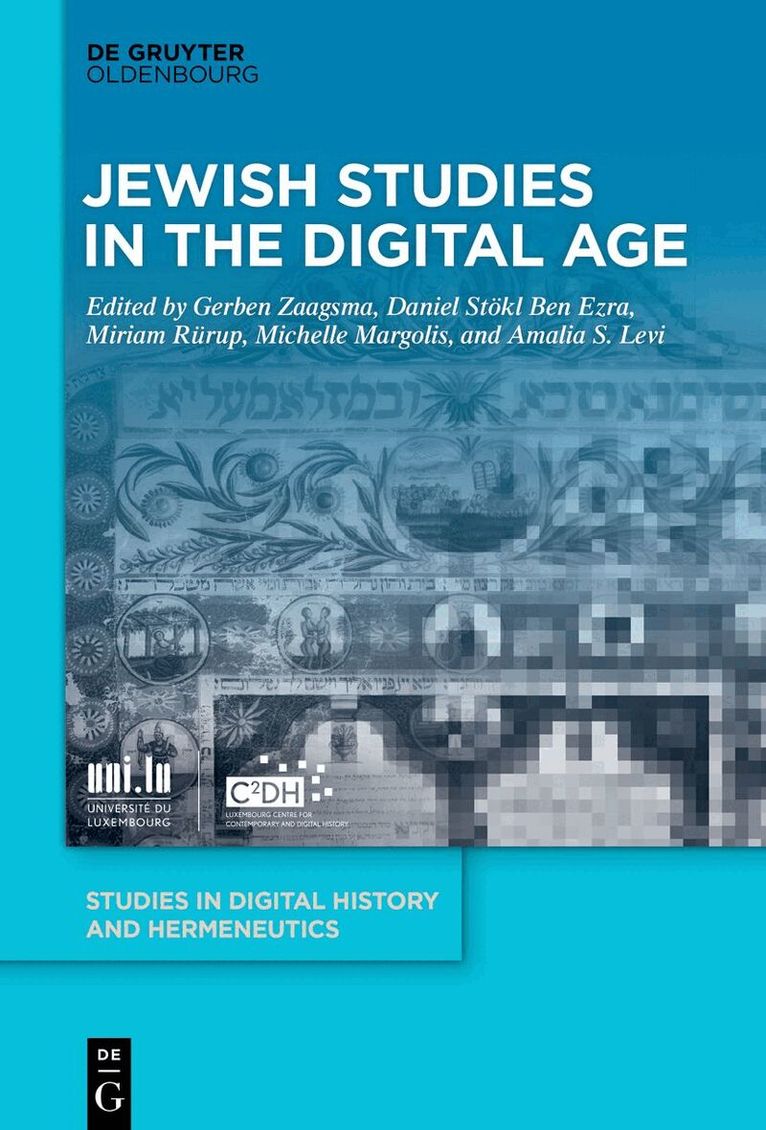
As in all fields and disciplines of the humanities, Jewish Studies scholars find themselves confronted with the rapidly increasing availability of digital resources (data), new technologies to interrogate and analyze them (tools), and the question of how to critically engage with these developments. This volume discusses how the digital turn has affected the field of Jewish Studies. It explores the current state of the art and probes how digital developments can be harnessed to address the specific questions, challenges and problems that Jewish Studies scholars confront. In a field characterised by dispersed sources, and heterogeneous scripts and languages that speak to a multitude of cultures and histories, of abundance as well as loss, what is the promise of Digital Humanities methods--and what are the challenges and pitfalls? The articles in this volume were originally presented at the international conference #DHJewish - Jewish Studies in the Digital Age, which was organised at the Centre for Contemporary and Digital History (C²DH) at University of Luxembourg in January 2021. The first big international conference of its kind, it brought together more than sixty scholars and heritage practitioners to discuss how the digital turn affects the field of Jewish Studies.
850 kr
Skickas inom 3-6 vardagar
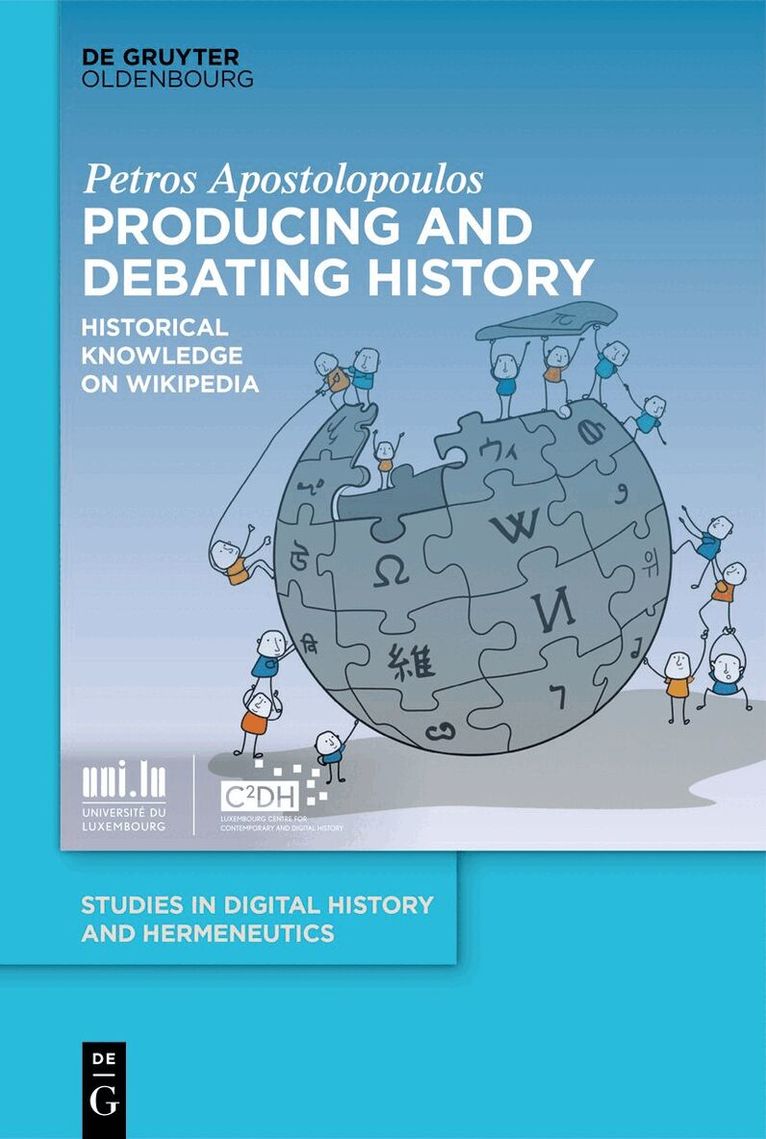
In 2021, the American Historical Association published a study on how the American public perceives and understands the past. Almost half of the respondents argued that they turn to Wikipedia to learn about history and acquire a historical understanding of the past. Wikipedia was ranked higher than other historical activities, such as “Historic site visit,” “Museum visit,” “Genealogy work,” “Social media,” “Podcast/radio program,” “History lecture,” and “History-related video game.” These findings combined with the appropriation of Wikipedia’s corpus by ChatGPT and Wikipedia’s partnership with the most central search engine in the digital world, Google, and other digital assistants, such as Siri and Alexa, make clear how crucial the role of Wikipedia in how the public learns about history and makes sense of the past is. But how is historical knowledge produced on Wikipedia? How do Wikipedia editors engage with historical events of the past and transform the past into historical knowledge? Why do they decide to contribute to the production of history? By placing Wikipedia editors at the center of research inquiry and using multiple methodologies and different kinds of data, this book explores how historical knowledge is produced in one of the most central digital communities of knowledge, Wikipedia.
Del 11 - Studies in Digital History and Hermeneutics
Doing Digital Film History
Concepts, Tools, Practices
Inbunden, Engelska, 2024
633 kr
Skickas inom 3-6 vardagar
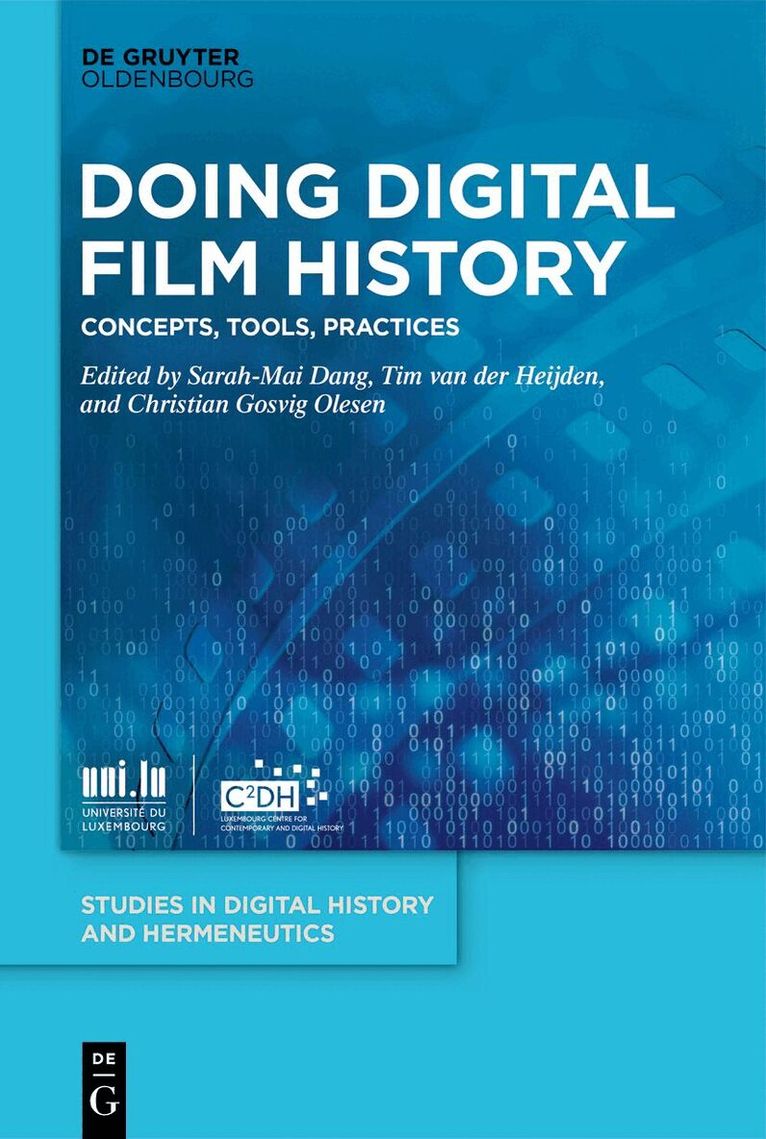
How has the digital turn shaped the practices of film historical research and teaching? While computational approaches have been used by film historians since the 1960s and 1970s, the arrival and use of digital tools and methods in recent decades has fundamentally changed the ways we search, analyze, interpret, present, and so think and write about film history – from digital archival and curatorial practices, data-driven search, and analysis of film historical collections to the visualization and dissemination of film historical materials online. While film historians have increasingly embraced the new possibilities brought by digital technologies, their practical, epistemological, and methodological implications need further exploration. What opportunities does the digitization of film historical sources provide for film historians? What new questions can be raised by using digital methods? What new perspectives emerge from analyzing, interpreting, and visualizing film historical data at the levels of both “close” and “distant” – or “scalable” – reading and viewing? By focusing on the concepts, tools, and practices of digital film historiography, this edited volume aims to contribute to a better understanding and critical reflection on the changes and continuities of doing film history in the digital age.
Del 1 - Studies in Digital History and Hermeneutics
Trading Zones of Digital History
Häftad, Engelska, 2023
210 kr
Skickas inom 5-8 vardagar
Digital history is commonly argued to be positioned between the traditionally historical and the computational or digital. By studying digital history collaborations and the establishment of the Luxembourg Centre for Contemporary and Digital History, Kemman examines how digital history will impact historical scholarship. His analysis shows that digital history does not occupy a singular position between the digital and the historical. Instead, historians continuously move across this dimension, choosing or finding themselves in different positions as they construct different trading zones through cross-disciplinary engagement, negotiation of research goals and individual interests.
850 kr
Skickas inom 3-6 vardagar
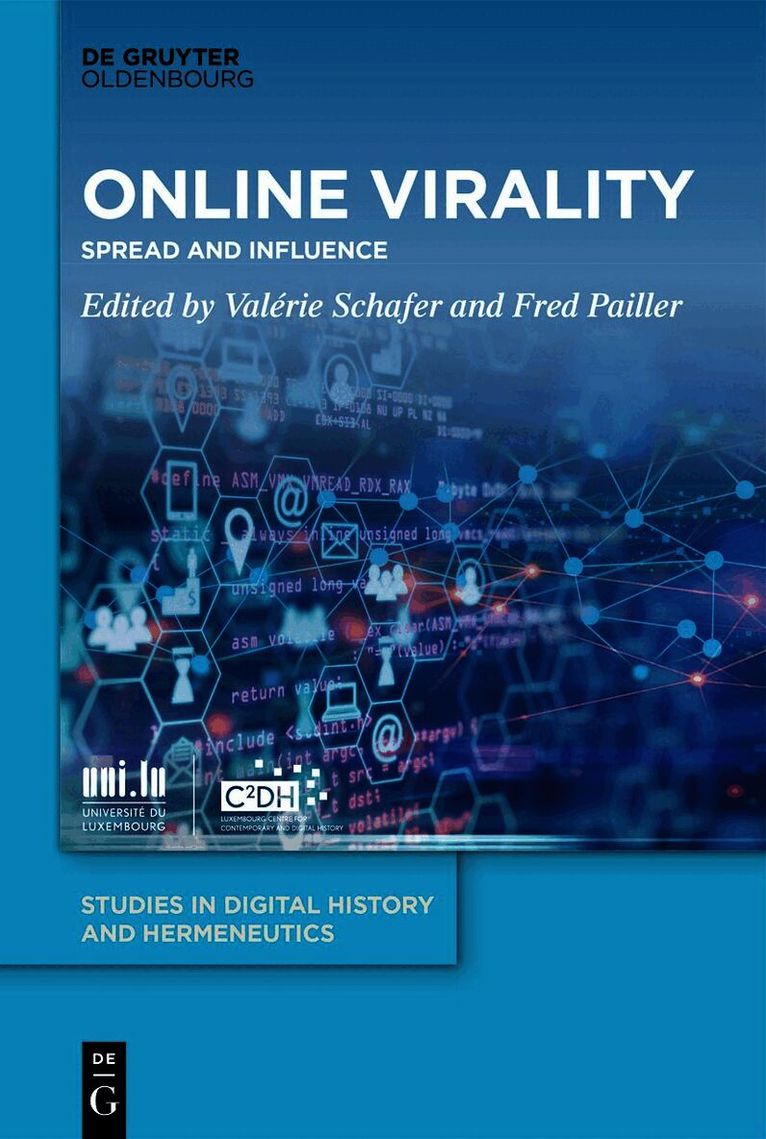
The book Online Virality, edited by Valérie Schafer and Fred Pailler (C2DH, University of Luxembourg), aims to provide a comprehensive examination of online virality. It explores the many ways we can think about this modern phenomenon and analyse the circulation, reception, and evolution of viral born-digital content. Virality and content sharing always intertwine material, infrastructural, visual and discursive elements. This involves various platforms, stakeholders, intermediaries, social groups and communities that are constantly (re)defining themselves. Regulation, curation and content moderation politics, as well as affects and emotions (fears, humour, empathy, hatred…), are also at the core of online virality. The publication offers an interdisciplinary overview on online virality by including different types of scientific inputs, such as precise case studies, various methodological approaches (including close and distant reading, visual studies, discourse analysis, etc.), as well as historical and socio-technical analyses. The book is organised around three main topics: Expressions and Genres; Mobilisations and Engagements; Circulation and Infrastructures. The first part explores the semiotics of virality, the diverse and creative forms of expression, specific genres, the relation to other media, and the affective side of virality, such as using humour or provocation. The second part focuses on the political dimension of memes and viral content and their use in the context of controversy or political and ideological opposition. Finally, the third part delves into the often understudied but essential side of virality, by examining the role of platforms and their curation, in short, the infrastructural dimension of virality. These three parts allow us to question such fundamental notions linked to virality as, among others, circulation, reception, economy of attention, instrumentalisation and affect. This volume brings together authors from various disciplines, including semiotics, history, information and communication sciences, computer science, digital humanities, media studies. In addition, the contributors approach the question via case studies that allow for a perspective that is not exclusively US and European-centred. Some chapters explore virality in Brazil, Chile, while the book also examines a wide variety of platforms (YouTube, Twitter, Instagram, TikTok, video game platforms, etc.).
737 kr
Skickas inom 5-8 vardagar
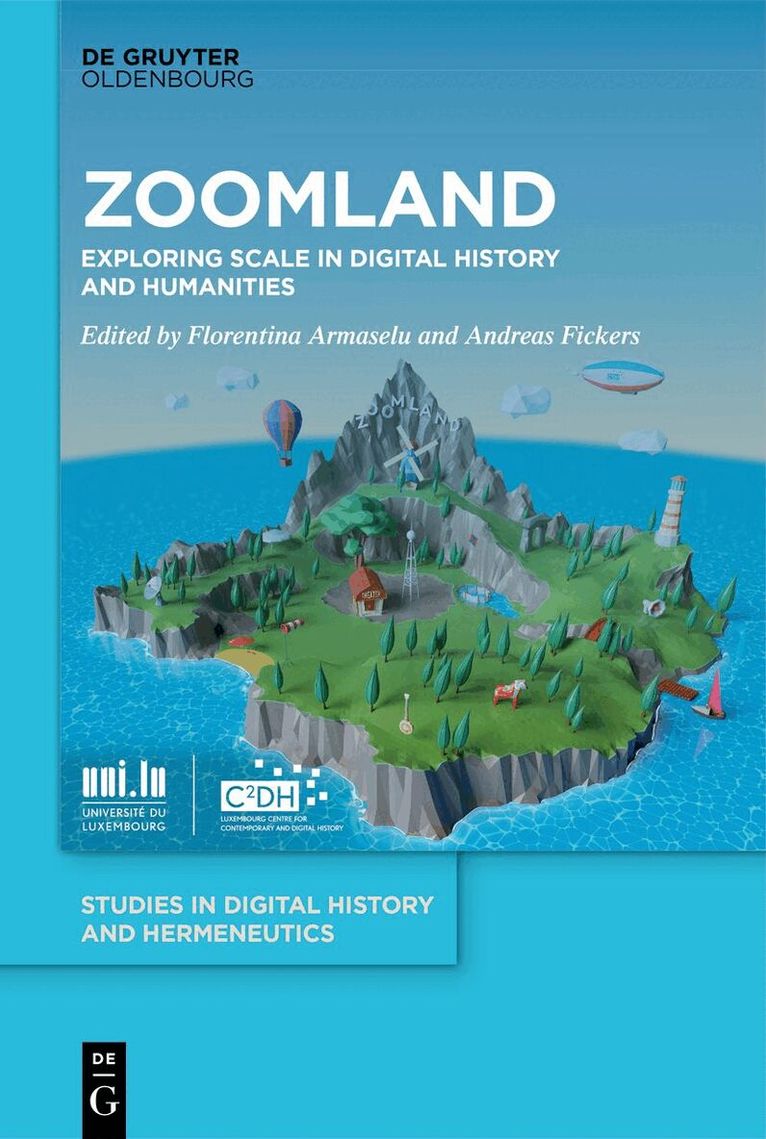
Despite a variety of theoretical and practical undertakings, there is no coherent understanding of the concept of scale in digital history and humanities, and its potential is largely unexplored. A clearer picture of the whole spectrum is needed, from large to small, distant to close, global to local, general to specific, macro to micro, and the in-between levels. The book addresses these issues and sketches out the territory of Zoomland, at scale. Four regions and sixteen chapters are conceptually and symbolically depicted through three perspectives: bird’s eye, overhead, and ground view. The variable-scale representation allows for exploratory paths covering areas such as: theoretical and applicative reflections on scale combining a digital dimension with research in history, media studies, cultural heritage, literature, text analysis, and map modelling; creative use of scale in new digital forms of analysis, data organisation, interfaces, and argumentative or artistic expressions. Zoomland provides a systematic discussion on the epistemological dimensions, hermeneutic methods, empirical tools, and aesthetic logic pertaining to scale and its innovative possibilities residing in humanities-based approaches and digital technologies. Enter the Zoomland game here or watch the teaser!
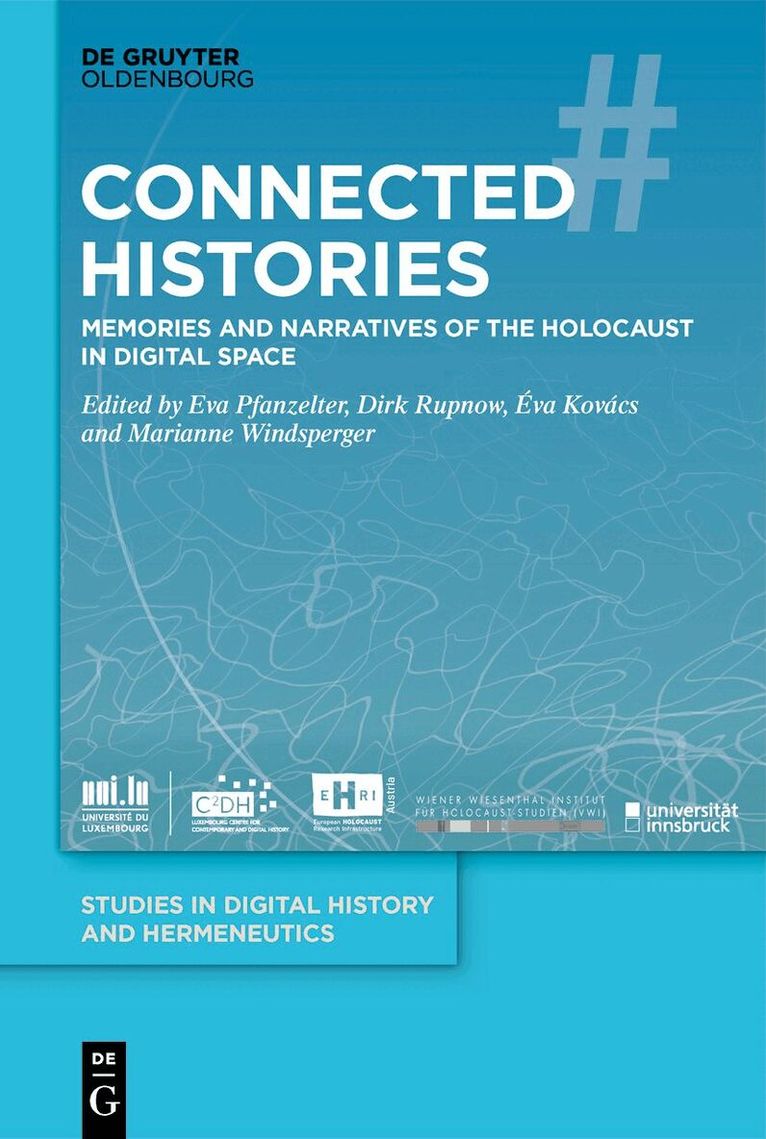
Connected Histories
Memories and Narratives of the Holocaust in Digital Space
Inbunden, Engelska, 2024
850 kr
Skickas inom 3-6 vardagar
The World Wide Web (WWW) and digitisation have become important sites and tools for the history of the Holocaust and its commemoration. Today, some memory institutions use the Internet at a high professional level as a venue for self-presentation and as a forum for the discussion of Holocaust-related topics for potentially international, transcultural and interdisciplinary user groups. At the same time, it is not always the established institutions that utilise the technical possibilities and potential of the Internet to the maximum. Creative and sometimes controversial new forms of storytelling of the Holocaust or more traditional ways of remembering the genocide presented in a new way with digital media often come from people or groups who are not in the realm of influence of the large memorial sites, museums and archives. Such "private" stagings have experienced a particular upswing since the boom of social media. This democratisation of Holocaust memory and history is crucial though it is as yet undecided how much it will ultimately reinforce old structures and cultural, regional or other inequalities or reinvent them. The “Digital space” as an arbitrary and limitless archive for the mediation of the Holocaust spanning from Russia to Brazil is at the centre of the essays collected in this volume. This space is also considered as a forum for negotiation, a meeting place and a battleground for generations and stories and as such offers the opportunity to reconsider the transgenerational transmission of trauma, family histories and communication. Here it becomes evident: there are new societal intentions and decision-making structures that exceed the capabilities of traditional mass media and thrive on the participation of a broad public.
850 kr
Kommande
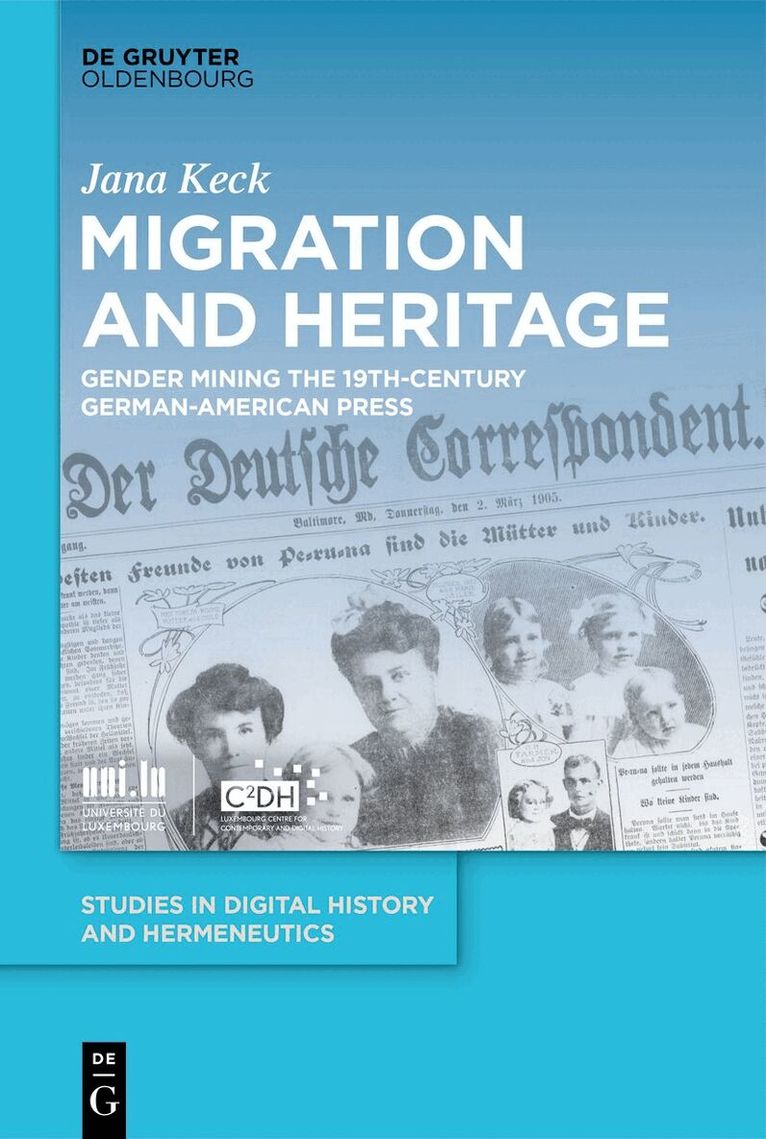
How did women make—and become—the news in the German-American press? This book reexamines the nineteenth-century German-language press as a central medium of migrant communication and a transregional infrastructure of textual circulation. A defining feature of this media landscape was reprinting: articles, fiction, and advertisements were copied, adapted, and redistributed across regional and national boundaries. To analyze how gender operated within this textual ecosystem of exchange, the study develops the concept of Gender Mining—a methodological framework that combines text reuse detection, classification, quantitative analysis, and close reading to trace the (in)visibility of women on and behind the pages. By systematically identifying texts by and about women and tracing their circulation across time and space, it reconstructs women’s roles as editors, publishers, writers, readers, and subjects of marketing strategies. At the same time, it reflects critically on digitization and methodological pluralism in digital history, assessing both their analytical potential and their limitations.
633 kr
Skickas inom 3-6 vardagar
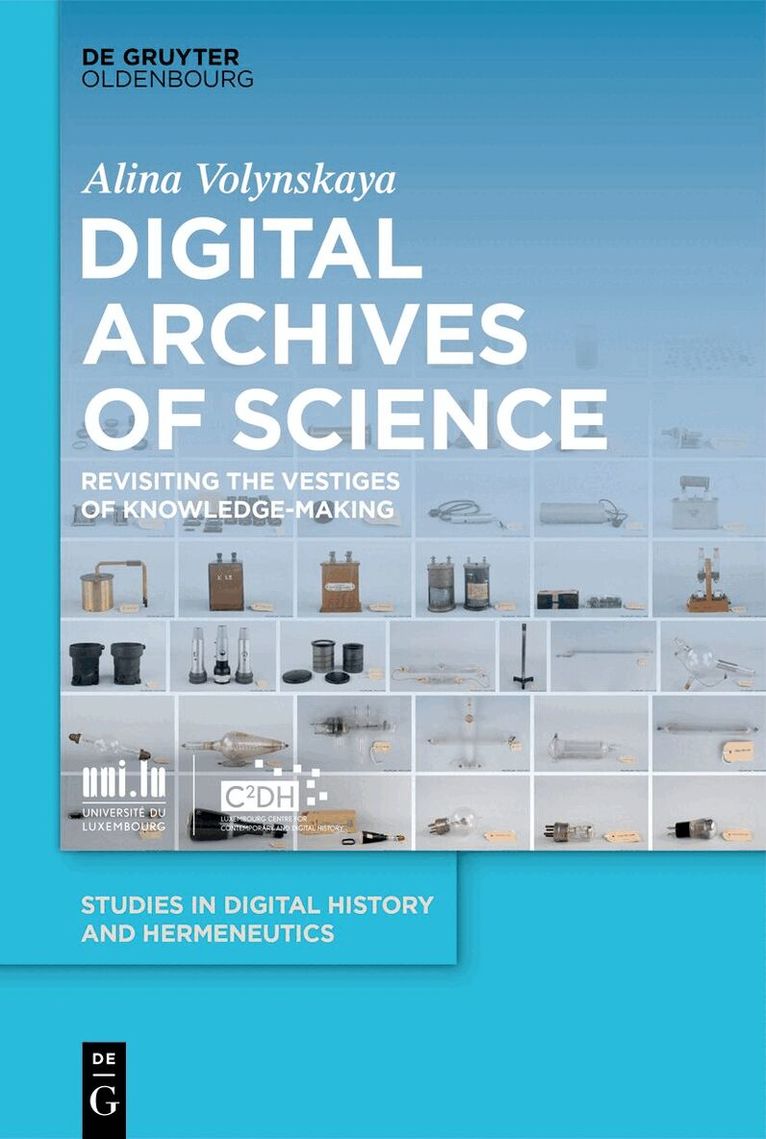
The archive of science preserves the sediments of scientific practices: drafts, protocols of rejected hypotheses and failed experiments, obsolete instruments and other vestiges of knowledge-making. As science becomes increasingly digital, so does its archive – transforming not only how the scientific past is preserved, but how it is interpreted and engaged with. Digital collections clearly differ from the traditional lieux de mémoire. Rather than tangible and authentic objects, they store data – processable, mutable, and dependent on computational infrastructures. How do these infrastructures shape our encounters with the scientific past? What happens to the vestiges of science when they turn into data?Positioned at the intersection of Science Studies, Media Studies, and Digital Humanities, this book critically examines digital archives of science as infrastructures that mediate memory and knowledge. Drawing on a largecorpus of scientifi c collections across disciplines and combining quantitative and qualitative approaches, it explores the boundaries and possibilities introduced by these digital repositories. Ultimately, it asks what it means todo history in and through digital archives.