Studies in Mobile Communication – serie
Visar alla böcker i serien Studies in Mobile Communication. Handla med fri frakt och snabb leverans.
18 produkter
18 produkter
Inbunden, Engelska, 2020
1 210 kr
Skickas inom 5-8 vardagar
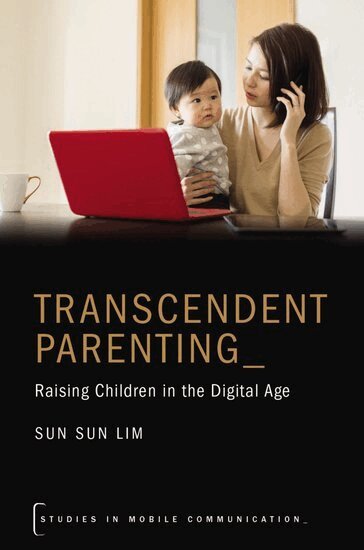
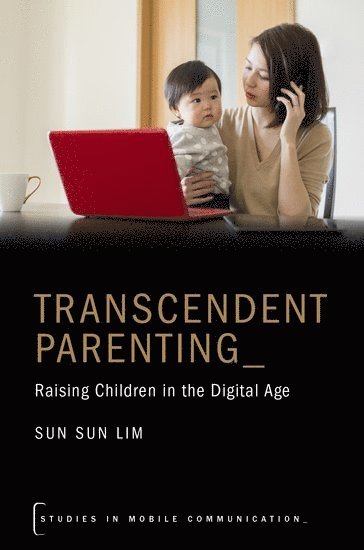
Whether members of the family are headed to school or work, smartphones accompany family members throughout the day. The growing sophistication of mobile communication has unleashed a proliferation of apps, channels, and platforms that link parents to their children and the key institutions in their lives. While parents may feel empowered by their ability to provide their children assistance with a click on their smartphone, they may also feel pressured and overwhelmed by this need to always be on call for their children. This book focuses on the phenomenon of transcendent parenting, where parents actively use technology to go beyond traditional, physical practices of parenting. In drawing on the experiences of intensely digitally-connected families in Singapore to tell a global story, Sun Sun Lim argues how transcendent parenting can embody and convey, intentionally or not, the parenting priorities in these households. Chapters outline how parents exploit mobile connectivity to transcend the physical distance between themselves and their children, the online and offline social interaction environments, and the timelessness of seemingly ceaseless parenting. Transcendent Parenting further explores how mobile communication allows parents to be more involved than ever in their children's lives, leaving readers to question whether or not parents have become too involved as a result. With its clear discussions of the effects of transcendent parenting on parents' wellbeing and children's personal development, Transcendent Parenting will appeal to a broad audience of readers, from scholars, educators and policy makers to parents and young people across the globe.
Inbunden, Engelska, 2019
1 234 kr
Skickas inom 5-8 vardagar
Location, location-awareness, and location data have all become familiar and increasingly significant parts of our everyday mobile-mediated experiences. Cultural Economies of Locative Media examines the ways in which location-based services, such as GPS-enabled mobile smartphones, are socially, culturally, economically, and politically produced just as much as they are technically designed and manufactured. Rowan Wilken explores the complex interrelationships that mutually define new business models and the economic factors that emerge around, and structure, locative media services. Further, he offers readers insight into the diverse social uses, cultures of consumption, and policy implications of location, providing a detailed, critical account of contemporary location-sensitive mobile data. Cultural Economies of Locative Media delves into the ideas, technologies, contexts, and power relationships that define this scholarship, resulting in a rich portrait of locative media in all of its cultural and economic complexity.
Häftad, Engelska, 2019
441 kr
Skickas inom 5-8 vardagar
Location, location-awareness, and location data have all become familiar and increasingly significant parts of our everyday mobile-mediated experiences. Cultural Economies of Locative Media examines the ways in which location-based services, such as GPS-enabled mobile smartphones, are socially, culturally, economically, and politically produced just as much as they are technically designed and manufactured. Rowan Wilken explores the complex interrelationships that mutually define new business models and the economic factors that emerge around, and structure, locative media services. Further, he offers readers insight into the diverse social uses, cultures of consumption, and policy implications of location, providing a detailed, critical account of contemporary location-sensitive mobile data. Cultural Economies of Locative Media delves into the ideas, technologies, contexts, and power relationships that define this scholarship, resulting in a rich portrait of locative media in all of its cultural and economic complexity.
Inbunden, Engelska, 2018
1 271 kr
Skickas inom 5-8 vardagar
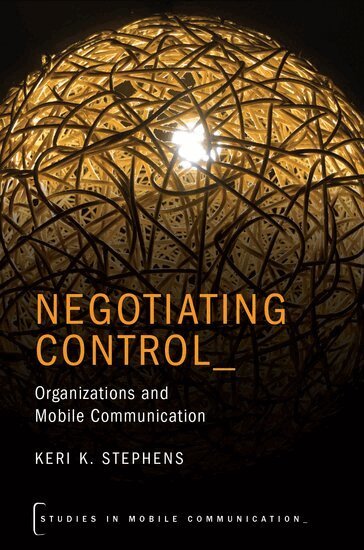
The fast-food worker finds refuge in a bathroom stall to respond to her boyfriend's fifth message in an hour. The human resources manager sees a colleague sending a stream of text messages during a meeting and quickly grabs her mobile to make sure she's also multitasking. These scenarios are common, but unique to the 21st century. Until the early 2000s, workplaces provided most of the computers and portable devices that employees used to perform their jobs and communicate with others. Today, people bring their own mobile devices to work and create new norms for how communication occurs in the workplace. Managers and organizations respond by setting and enforcing new policies that are intended to help them navigate the ever-changing mobile-communication environment. In Negotiating Control: Organizations and Mobile Communication, Keri K. Stephens responds to the struggles of employees, organizations, and even friends and family, as they try to understand new norms for connectedness in the workplace. Drawing on over two decades of her own research and fieldwork, , representing people in over 35 different types of jobs, Stephens claims that though people assume mobile communication is a uniform practice, there are underlying -- and often hidden -- issues of control and power at play, which shape how people are permitted and expected to use mobiles to communicate while working. The accounts Stephens offers reveal the many ways that these portable tools are actually used across work environments today, integrating information, communication, and data, and connecting people in expected and often conflicting ways.
Häftad, Engelska, 2018
475 kr
Skickas inom 5-8 vardagar
The fast-food worker finds refuge in a bathroom stall to respond to her boyfriend's fifth message in an hour. The human resources manager sees a colleague sending a stream of text messages during a meeting and quickly grabs her mobile to make sure she's also multitasking. These scenarios are common, but unique to the 21st century. Until the early 2000s, workplaces provided most of the computers and portable devices that employees used to perform their jobs and communicate with others. Today, people bring their own mobile devices to work and create new norms for how communication occurs in the workplace. Managers and organizations respond by setting and enforcing new policies that are intended to help them navigate the ever-changing mobile-communication environment. In Negotiating Control: Organizations and Mobile Communication, Keri K. Stephens responds to the struggles of employees, organizations, and even friends and family, as they try to understand new norms for connectedness in the workplace. Drawing on over two decades of her own research and fieldwork, , representing people in over 35 different types of jobs, Stephens claims that though people assume mobile communication is a uniform practice, there are underlying -- and often hidden -- issues of control and power at play, which shape how people are permitted and expected to use mobiles to communicate while working. The accounts Stephens offers reveal the many ways that these portable tools are actually used across work environments today, integrating information, communication, and data, and connecting people in expected and often conflicting ways.
Inbunden, Engelska, 2018
1 509 kr
Skickas inom 5-8 vardagar
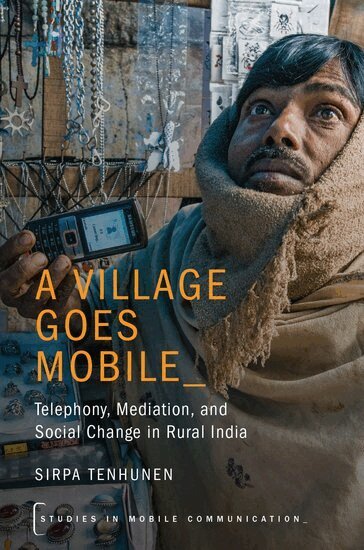
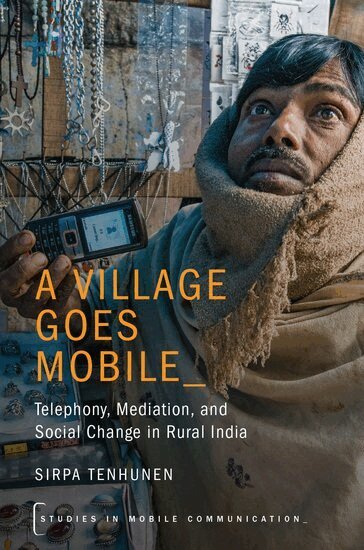
In A Village Goes Mobile, Sirpa Tenhunen examines how the mobile telephone has contributed to social change in rural India. Tenhunen's long-term ethnographic fieldwork in West Bengal began before the village had a phone system in place and continued through the introduction and proliferation of the smartphone. She here analyzes how mobile telephones emerged as multidimensional objects which, in addition to enabling telephone conversations, facilitated status aspirations, internet access, and entertainment practices. She explores how this multifaceted use of mobile phones has affected agency and power dynamics in economic, political, and social relationships, and how these new social constellations relate to culture and development. In eight chapters, Tenhunen asks such questions as: Who benefits from mobile telephony and how? Can people use mobile phones to change their lives, or does phone use merely amplify existing social patterns and power relationships? Can mobile telephony induce development? Going beyond the case of West Bengal, Tenhunen develops a framework to understand how new media mediates social processes within interrelated social spheres and local hierarchies by relating, media-saturated forms of interaction to pre-existing contexts.
Häftad, Engelska, 2018
496 kr
Skickas inom 5-8 vardagar
In A Village Goes Mobile, Sirpa Tenhunen examines how the mobile telephone has contributed to social change in rural India. Tenhunen's long-term ethnographic fieldwork in West Bengal began before the village had a phone system in place and continued through the introduction and proliferation of the smartphone. She here analyzes how mobile telephones emerged as multidimensional objects which, in addition to enabling telephone conversations, facilitated status aspirations, internet access, and entertainment practices. She explores how this multifaceted use of mobile phones has affected agency and power dynamics in economic, political, and social relationships, and how these new social constellations relate to culture and development. In eight chapters, Tenhunen asks such questions as: Who benefits from mobile telephony and how? Can people use mobile phones to change their lives, or does phone use merely amplify existing social patterns and power relationships? Can mobile telephony induce development? Going beyond the case of West Bengal, Tenhunen develops a framework to understand how new media mediates social processes within interrelated social spheres and local hierarchies by relating, media-saturated forms of interaction to pre-existing contexts.
Inbunden, Engelska, 2017
1 509 kr
Skickas inom 5-8 vardagar
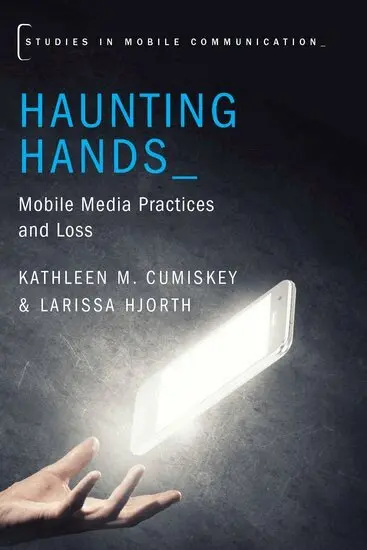
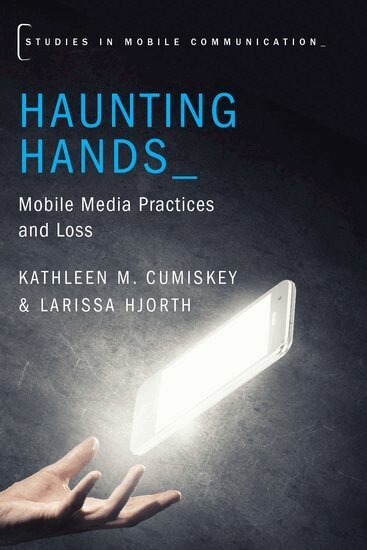
Haunting Hands looks closely at the consequences of digital media's ubiquitous presence in our lives, in particular the representing, sharing, and remembering of loss. From Facebook tribute pages during public disasters to the lingering digital traces on a smartphone of the deceased, the digital is both extending earlier memorial practices and creating new ways in which death and loss manifest themselves. The ubiquity of digital specters is particularly evident in mobile media spanning smartphones, iPads, iPhones, or tablets. Mobile media entangle various forms of social, online and digital media in specific ways that are both intimate and public, and yet the use of mobile media in contexts of loss has been relatively overlooked. Haunting Hands seeks to address this growing and important area by helping us to understand the relationship between life, death, and our digital after-lives.
Häftad, Engelska, 2017
418 kr
Skickas inom 5-8 vardagar
Haunting Hands looks closely at the consequences of digital media's ubiquitous presence in our lives, in particular the representing, sharing, and remembering of loss. From Facebook tribute pages during public disasters to the lingering digital traces on a smartphone of the deceased, the digital is both extending earlier memorial practices and creating new ways in which death and loss manifest themselves. The ubiquity of digital specters is particularly evident in mobile media spanning smartphones, iPads, iPhones, or tablets. Mobile media entangle various forms of social, online and digital media in specific ways that are both intimate and public, and yet the use of mobile media in contexts of loss has been relatively overlooked. Haunting Hands seeks to address this growing and important area by helping us to understand the relationship between life, death, and our digital after-lives.
Häftad, Engelska, 2020
329 kr
Skickas inom 5-8 vardagar
Whether members of the family are headed to school or work, smartphones accompany family members throughout the day. The growing sophistication of mobile communication has unleashed a proliferation of apps, channels, and platforms that link parents to their children and the key institutions in their lives. While parents may feel empowered by their ability to provide their children assistance with a click on their smartphone, they may also feel pressured and overwhelmed by this need to always be on call for their children. This book focuses on the phenomenon of transcendent parenting, where parents actively use technology to go beyond traditional, physical practices of parenting. In drawing on the experiences of intensely digitally-connected families in Singapore to tell a global story, Sun Sun Lim argues how transcendent parenting can embody and convey, intentionally or not, the parenting priorities in these households. Chapters outline how parents exploit mobile connectivity to transcend the physical distance between themselves and their children, the online and offline social interaction environments, and the timelessness of seemingly ceaseless parenting. Transcendent Parenting further explores how mobile communication allows parents to be more involved than ever in their children's lives, leaving readers to question whether or not parents have become too involved as a result. With its clear discussions of the effects of transcendent parenting on parents' wellbeing and children's personal development, Transcendent Parenting will appeal to a broad audience of readers, from scholars, educators and policy makers to parents and young people across the globe.
Inbunden, Engelska, 2020
1 249 kr
Skickas inom 5-8 vardagar
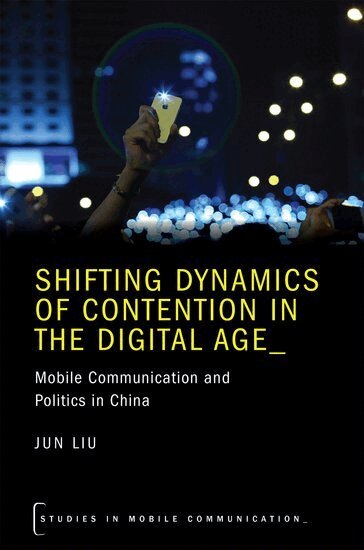
Over the past decades, waves of political contention involving the use of information and communication technologies have swept across the globe. The phenomenon stimulates the scholarship on digital communication technologies and contentious collective action to thrive as an exciting, relevant, but highly fragmentary and contested field with disciplinary boundaries. To advance interdisciplinary understanding, Shifting Dynamics of Contention in the Digital Age outlines a communication-centered framework that articulates the intricate relationship between technology, communication, and contention. It systematically explores the influence of mobile technology on political contention in China, the country with the world's largest number of mobile and internet users. Using first-hand in-depth interview and fieldwork data, Shifting Dynamics of Contention in the Digital Age tracks the strategic choice of mobile phones as repertoires of contention, illustrates the effective mobilization of mobile communication on the basis of its strong and reciprocal social ties, and identifies the communicative practice of forwarding officially alleged "rumors" as a form of everyday resistance. Through this groundbreaking study, Shifting Dynamics of Contention in the Digital Age presents a nuanced portrayal of an emerging dynamics of contention--both its strengths and limitations- through the embedding of mobile communication into Chinese society and politics.
Häftad, Engelska, 2020
358 kr
Skickas inom 5-8 vardagar
Over the past decades, waves of political contention involving the use of information and communication technologies have swept across the globe. The phenomenon stimulates the scholarship on digital communication technologies and contentious collective action to thrive as an exciting, relevant, but highly fragmentary and contested field with disciplinary boundaries. To advance interdisciplinary understanding, Shifting Dynamics of Contention in the Digital Age outlines a communication-centered framework that articulates the intricate relationship between technology, communication, and contention. It systematically explores the influence of mobile technology on political contention in China, the country with the world's largest number of mobile and internet users. Using first-hand in-depth interview and fieldwork data, Shifting Dynamics of Contention in the Digital Age tracks the strategic choice of mobile phones as repertoires of contention, illustrates the effective mobilization of mobile communication on the basis of its strong and reciprocal social ties, and identifies the communicative practice of forwarding officially alleged "rumors" as a form of everyday resistance. Through this groundbreaking study, Shifting Dynamics of Contention in the Digital Age presents a nuanced portrayal of an emerging dynamics of contention--both its strengths and limitations- through the embedding of mobile communication into Chinese society and politics.
Inbunden, Engelska, 2021
1 406 kr
Skickas inom 5-8 vardagar
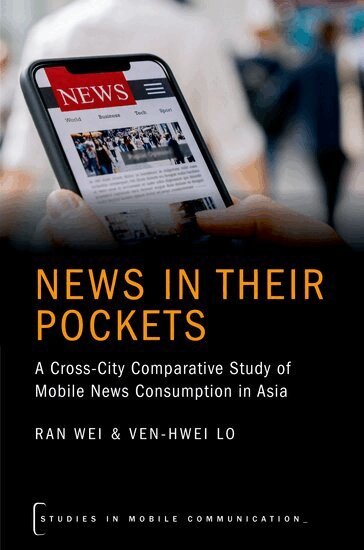
Since the debut of the iPhone in 2007, the mobile phone has become a quick, convenient, and immensely popular gateway for accessing and consuming news. With three billion mobile phone subscribers, Asian countries have led this seismic shift in news consumption. They provide a wide range of opportunities to study how, as mobile technology matures and becomes routinized, mobile news is increasingly subject to societal constraints and impositions of political power that reduce the democratic benefits of such news and call into question the application of these technological innovations within governments and societies.News in Their Pockets explores the societal, technological, and user-related factors behind why and how digital-savvy college students seek news via the mobile phone across Asia's most mobile cities--Shanghai, Hong Kong, Singapore, and Taipei. Situating cross-societal comparative analyses of mobile news consumption in Asia within a digital and global context, this volume outlines the evolution of the mobile phone to its prominence in disseminating news, offers predictors of patterns in mobile news consumption, investigates user needs and expectations, and illustrates future impacts on civic engagement from mobile news consumption. By examining the interplay between game-changing and empowering communication technology and constraining social systems, News in Their Pockets provides the framework necessary for constructive, continuing debates over the promise and peril of digital news and exposes our underlying reasoning behind the adoption of the mobile phone as the all-in-one media of choice to stay socialized, entertained, and informed in the modern digital age.
Häftad, Engelska, 2021
393 kr
Skickas inom 5-8 vardagar
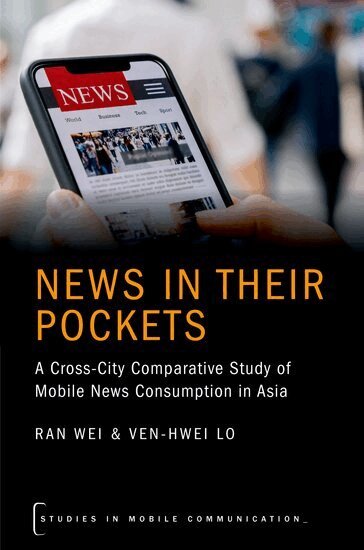
Since the debut of the iPhone in 2007, the mobile phone has become a quick, convenient, and immensely popular gateway for accessing and consuming news. With three billion mobile phone subscribers, Asian countries have led this seismic shift in news consumption. They provide a wide range of opportunities to study how, as mobile technology matures and becomes routinized, mobile news is increasingly subject to societal constraints and impositions of political power that reduce the democratic benefits of such news and call into question the application of these technological innovations within governments and societies.News in Their Pockets explores the societal, technological, and user-related factors behind why and how digital-savvy college students seek news via the mobile phone across Asia's most mobile cities--Shanghai, Hong Kong, Singapore, and Taipei. Situating cross-societal comparative analyses of mobile news consumption in Asia within a digital and global context, this volume outlines the evolution of the mobile phone to its prominence in disseminating news, offers predictors of patterns in mobile news consumption, investigates user needs and expectations, and illustrates future impacts on civic engagement from mobile news consumption. By examining the interplay between game-changing and empowering communication technology and constraining social systems, News in Their Pockets provides the framework necessary for constructive, continuing debates over the promise and peril of digital news and exposes our underlying reasoning behind the adoption of the mobile phone as the all-in-one media of choice to stay socialized, entertained, and informed in the modern digital age.
Inbunden, Engelska, 2022
1 342 kr
Skickas inom 7-10 vardagar
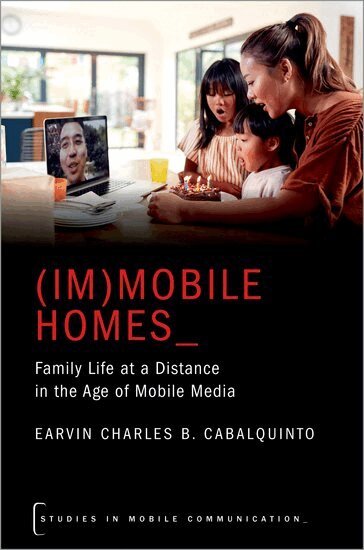
The home has been on the forefront of rapid economic, political, social, and technological transformations for many individuals and families across the world. As a country reliant on the exportation of human labor to sustain its national economy, the Philippines exemplifies a valuable case study of the impacts of a globalized and networked society on the everyday dynamics of a transnational family arrangement. Despite ranking among the heaviest Internet users in the world, Filipino citizens are often left with no choice but to navigate digital and transnational environments orchestrated by the uneven distribution of both national and international resources and opportunities. (Im)mobile Homes investigates the role of smartphones, social media channels, and various mobile applications in forging and sustaining intimate ties among dispersed Filipino family members. Examining the digital lifeworlds of transnational Filipino family in Australia, this volume draws on rich ethnographic study to explore the benefits of digital communication as well as the tensions enabled by the influences of socio-cultural structures, socio-economic conditions, technological affordances, and institutional policies and processes on mobile practices. It portrays the physically distributed yet virtually connected nature of the transnational Filipino family through diverse contexts, such as observing family rituals, performing intimate care, and managing crises, and foregrounds their unique strategies in addressing the interruptions of connecting at a distance. Ultimately, this volume underscores how mobile practices of the transnational Filipino family negotiate the pre-existing and broader structural systems that (re)produce marginalization in a digital and global era. Enriched by moving stories of transnational families, (Im)mobile Homes offers a critical lens towards interrogating the possibilities and politics of a home from afar in the digital era.
Häftad, Engelska, 2022
502 kr
Skickas inom 5-8 vardagar
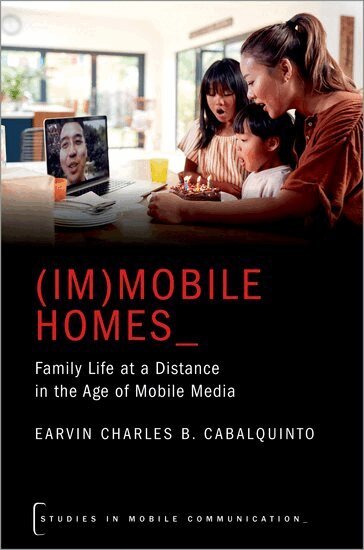
The home has been on the forefront of rapid economic, political, social, and technological transformations for many individuals and families across the world. As a country reliant on the exportation of human labor to sustain its national economy, the Philippines exemplifies a valuable case study of the impacts of a globalized and networked society on the everyday dynamics of a transnational family arrangement. Despite ranking among the heaviest Internet users in the world, Filipino citizens are often left with no choice but to navigate digital and transnational environments orchestrated by the uneven distribution of both national and international resources and opportunities. (Im)mobile Homes investigates the role of smartphones, social media channels, and various mobile applications in forging and sustaining intimate ties among dispersed Filipino family members. Examining the digital lifeworlds of transnational Filipino family in Australia, this volume draws on rich ethnographic study to explore the benefits of digital communication as well as the tensions enabled by the influences of socio-cultural structures, socio-economic conditions, technological affordances, and institutional policies and processes on mobile practices. It portrays the physically distributed yet virtually connected nature of the transnational Filipino family through diverse contexts, such as observing family rituals, performing intimate care, and managing crises, and foregrounds their unique strategies in addressing the interruptions of connecting at a distance. Ultimately, this volume underscores how mobile practices of the transnational Filipino family negotiate the pre-existing and broader structural systems that (re)produce marginalization in a digital and global era. Enriched by moving stories of transnational families, (Im)mobile Homes offers a critical lens towards interrogating the possibilities and politics of a home from afar in the digital era.
Inbunden, Engelska, 2025
1 156 kr
Skickas inom 7-10 vardagar
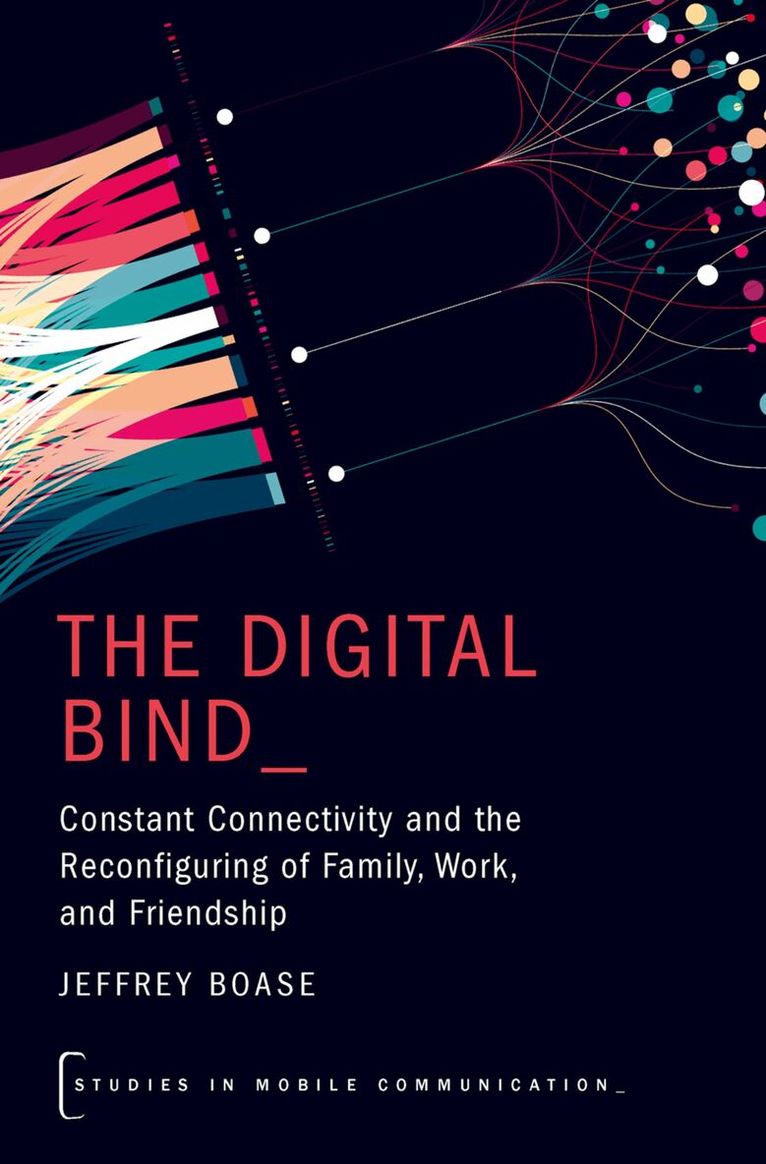
As mobile devices continue to evolve--from basic phones designed solely for calling to more sophisticated smartphones and wearable devices--what remains constant is that the portability of these devices creates new possibilities for social connectivity. By lowering our social dependence on place, mobiles open up the timing of our availability, enabling the technological reality of constant connectivity for much of the world's population. What has constant connectivity meant for social life? How have relationships adapted and changed as mobile devices become more complex?In The Digital Bind, Jeffrey Boase explores the social implications of constant connectivity for family, work, and friendship. Using a new theoretical lens called the "configuration approach," Boase shows how complex technological and social arrangements explain why individuals often draw on a multitude of apps and devices to stay connected. He presents a comprehensive empirical study that reveals three common practices of connection: media situatedness, the division of media, and temporal boundaries. These practices help individuals manage the challenges and opportunities of constant connectivity, while at the same time deeply binding the digital to the social. By combining historical context, theoretical insights, and rigorous empirical research, The Digital Bind offers a comprehensive account of how the apps and devices that we use to navigate contemporary social life have become embedded into our lives and our relationships.
Häftad, Engelska, 2025
368 kr
Skickas inom 5-8 vardagar
As mobile devices continue to evolve--from basic phones designed solely for calling to more sophisticated smartphones and wearable devices--what remains constant is that the portability of these devices creates new possibilities for social connectivity. By lowering our social dependence on place, mobiles open up the timing of our availability, enabling the technological reality of constant connectivity for much of the world's population. What has constant connectivity meant for social life? How have relationships adapted and changed as mobile devices become more complex?In The Digital Bind, Jeffrey Boase explores the social implications of constant connectivity for family, work, and friendship. Using a new theoretical lens called the "configuration approach," Boase shows how complex technological and social arrangements explain why individuals often draw on a multitude of apps and devices to stay connected. He presents a comprehensive empirical study that reveals three common practices of connection: media situatedness, the division of media, and temporal boundaries. These practices help individuals manage the challenges and opportunities of constant connectivity, while at the same time deeply binding the digital to the social. By combining historical context, theoretical insights, and rigorous empirical research, The Digital Bind offers a comprehensive account of how the apps and devices that we use to navigate contemporary social life have become embedded into our lives and our relationships.