SUNY series in Global Environmental Policy – serie
Visar alla böcker i serien SUNY series in Global Environmental Policy. Handla med fri frakt och snabb leverans.
11 produkter
11 produkter
Häftad, Engelska, 2003
360 kr
Skickas
Examines the internal politics of transnational environmental advocacy networks.What is the role played by local organizations in transnational environmental advocacy networks? Global Environmentalism and Local Politics revisits this question by looking at transnational environmental activism in Brazil, Ecuador, and India. Rodrigues investigates the internal politics of these networks, focusing on their internal balance of power, choice of strategies, and distribution of resources among members at the international, national, and local levels. Contrary to existing assumptions, local organizations, rather than international or national non-governmental organizations, are the key players in these networks, while at the same time mere participation in transnational advocacy efforts does not necessarily lead to the empowerment of local organizations. Participation may, for example, impose unanticipated political and technical burdens, and despite their overarching common goal of environmental preservation, network members may have different understandings of what environmentally sustainable development is and how it can be best achieved.
Häftad, Engelska, 2006
442 kr
Skickas inom 5-8 vardagar
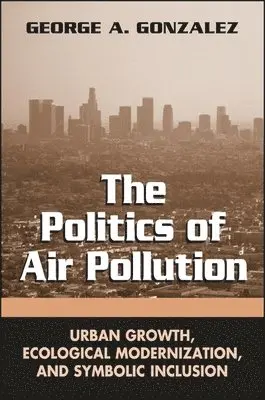
Argues that clean air policy is driven by locally oriented economic elites.Who has been at the political forefront of clean air policy development in the United States? In The Politics of Air Pollution, George A. Gonzalez argues that the answer is neither the federal government, nor environmental groups, but rather locally oriented economic elites in conjunction with state and local governments. These local growth coalitions, composed of mostly large landholders, land developers, and the owners of regional media and utility firms, support clean air policies insofar as they contribute to the creation of a positive investment climate and, in turn, bring about greater profits through increased land values and an expanded local consumer base.
Häftad, Engelska, 2010
557 kr
Skickas inom 3-6 vardagar
Explores how policy actors in the United States and Russia have developed flexible incentive-based instruments for environmental protection.As environmental problems continue to pose a threat to the well-being of people all over the world, achieving pollution control through innovative methods and at a lower cost becomes very attractive. However, cost-effectiveness and technical rationality are often at odds with political goals and policy traditions. Lada V. Kochtcheeva analyzes the introduction of flexible laws and regulations in both air and water quality policies in the United States and the Russian Federation from the 1960s to the present, and highlights the replacement of command and control systems with flexible instruments such as incentive programs, tradable permits, and pollution charges. With its rich comparative institutional analysis, the book contributes to the debate on institutional dynamism, policy innovation, and new modes of regulation, while simultaneously addressing the processes and attributes of good governance.
Inbunden, Engelska, 2005
1 079 kr
Tillfälligt slut
Argues that clean air policy is driven by locally oriented economic elites.Who has been at the political forefront of clean air policy development in the United States? In The Politics of Air Pollution, George A. Gonzalez argues that the answer is neither the federal government, nor environmental groups, but rather locally oriented economic elites in conjunction with state and local governments. These local growth coalitions, composed of mostly large landholders, land developers, and the owners of regional media and utility firms, support clean air policies insofar as they contribute to the creation of a positive investment climate and, in turn, bring about greater profits through increased land values and an expanded local consumer base.
Inbunden, Engelska, 2005
1 079 kr
Tillfälligt slut
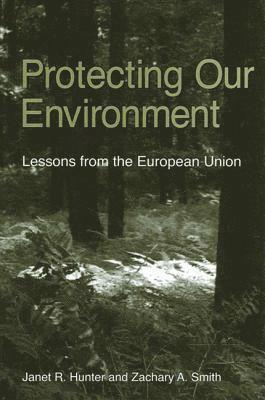
Examines how the European Union has handled environmental protection issues.Significant changes in how the world approaches global environmental problems have occurred since the late 1970s. Countries have become increasingly aware of the "borderless" nature of environmental issues, i.e., that production and consumption in one country can spill over to affect another country's environment. Protecting Our Environment considers the successes that have been achieved in the European Union (EU), as well as issues the Union still faces regarding the protection of the environment in the future. Authors Janet R. Hunter and Zachary A. Smith identify the factors that have allowed the EU to form a successful environmental regime, including the development of the environmental management approach and the principles upon which it is based. They examine in detail the challenges that have been encountered in the implementation of environmental programs, and the solutions that have been developed to address those challenges. Also considered is how economic development and environmental protection have been reconciled within the EU. By analyzing the successful example of the EU, Protecting Our Environment provides a model for a contemporary approach to global environmental problems.
Häftad, Engelska, 2006
377 kr
Tillfälligt slut
Examines how the European Union has handled environmental protection issues.Significant changes in how the world approaches global environmental problems have occurred since the late 1970s. Countries have become increasingly aware of the "borderless" nature of environmental issues, i.e., that production and consumption in one country can spill over to affect another country's environment. Protecting Our Environment considers the successes that have been achieved in the European Union (EU), as well as issues the Union still faces regarding the protection of the environment in the future. Authors Janet R. Hunter and Zachary A. Smith identify the factors that have allowed the EU to form a successful environmental regime, including the development of the environmental management approach and the principles upon which it is based. They examine in detail the challenges that have been encountered in the implementation of environmental programs, and the solutions that have been developed to address those challenges. Also considered is how economic development and environmental protection have been reconciled within the EU. By analyzing the successful example of the EU, Protecting Our Environment provides a model for a contemporary approach to global environmental problems.
Inbunden, Engelska, 2006
1 079 kr
Tillfälligt slut
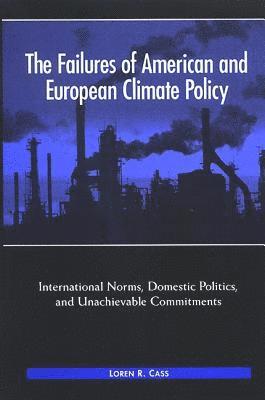
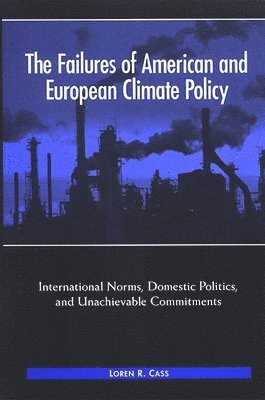
Examines why some nations, but not others, have met their commitments to international climate treaties.In this timely work, Loren R. Cass argues that international norms and normative debates provide the keys to understanding the evolution of both domestic and international responses to the threat of global climate change. Ranging from the early identification and framing of this problem in the mid 1980s through the Kyoto Protocol's entry into force in 2005, Cass focuses on two normative debates that were critical to the development of climate policy-who should bear primary responsibility for reducing global greenhouse gas emissions and what principles would guide these reductions. He examines why some nations, but not others, have met their commitments, and concludes that while many states affirmed the international norms, most did not fully translate them into domestic policy. Cass offers an index to measure the domestic salience of international norms and compare the level of salience across states and within states over time, and uses it to assess the European Union, Germany, the United Kingdom, and the United States.
Häftad, Engelska, 2007
390 kr
Tillfälligt slut
Examines why some nations, but not others, have met their commitments to international climate treaties.In this timely work, Loren R. Cass argues that international norms and normative debates provide the keys to understanding the evolution of both domestic and international responses to the threat of global climate change. Ranging from the early identification and framing of this problem in the mid 1980s through the Kyoto Protocol's entry into force in 2005, Cass focuses on two normative debates that were critical to the development of climate policy-who should bear primary responsibility for reducing global greenhouse gas emissions and what principles would guide these reductions. He examines why some nations, but not others, have met their commitments, and concludes that while many states affirmed the international norms, most did not fully translate them into domestic policy. Cass offers an index to measure the domestic salience of international norms and compare the level of salience across states and within states over time, and uses it to assess the European Union, Germany, the United Kingdom, and the United States.
Inbunden, Engelska, 2008
1 079 kr
Tillfälligt slut
Uses Brazil as a case study of how governments implement environmental policies despite urgent needs for economic development.Environmental policy implementation in developing countries faces a number of institutional obstacles. Using the case of protected areas and tourism development in the state of Bahia in northeastern Brazil, Jose Antonio Puppim de Oliveira explores how economic development interests tend to have a higher priority on most governments' agendas in developing countries. Government agencies often fail to implement environmental protection policies mainly because they lack political support, have insufficient resources, have underdeveloped institutional capacity, and tend to overlook the importance of cooperation at the local level. Puppim de Oliveira explains how this trend may be reversed by decentralizing policy implementation into the hands of development-oriented agencies. To make the process work, central authorities should offer incentives to ensure increased attention to environmental protection objectives in the development process. At the same time, an independent body with oversight authority should be in place to prevent development agencies from neglecting environmental concerns.
Häftad, Engelska, 2009
383 kr
Tillfälligt slut
Uses Brazil as a case study of how governments implement environmental policies despite urgent needs for economic development.Environmental policy implementation in developing countries faces a number of institutional obstacles. Using the case of protected areas and tourism development in the state of Bahia in northeastern Brazil, Jose Antonio Puppim de Oliveira explores how economic development interests tend to have a higher priority on most governments' agendas in developing countries. Government agencies often fail to implement environmental protection policies mainly because they lack political support, have insufficient resources, have underdeveloped institutional capacity, and tend to overlook the importance of cooperation at the local level. Puppim de Oliveira explains how this trend may be reversed by decentralizing policy implementation into the hands of development-oriented agencies. To make the process work, central authorities should offer incentives to ensure increased attention to environmental protection objectives in the development process. At the same time, an independent body with oversight authority should be in place to prevent development agencies from neglecting environmental concerns.
Inbunden, Engelska, 2009
993 kr
Tillfälligt slut
Explores how policy actors in the United States and Russia have developed flexible incentive-based instruments for environmental protection.As environmental problems continue to pose a threat to the well-being of people all over the world, achieving pollution control through innovative methods and at a lower cost becomes very attractive. However, cost-effectiveness and technical rationality are often at odds with political goals and policy traditions. Lada V. Kochtcheeva analyzes the introduction of flexible laws and regulations in both air and water quality policies in the United States and the Russian Federation from the 1960s to the present, and highlights the replacement of command and control systems with flexible instruments such as incentive programs, tradable permits, and pollution charges. With its rich comparative institutional analysis, the book contributes to the debate on institutional dynamism, policy innovation, and new modes of regulation, while simultaneously addressing the processes and attributes of good governance.