The Marcus Cunliffe Lecture Series - Böcker
Visar alla böcker i serien The Marcus Cunliffe Lecture Series. Handla med fri frakt och snabb leverans.
6 produkter
6 produkter
484 kr
Tillfälligt slut
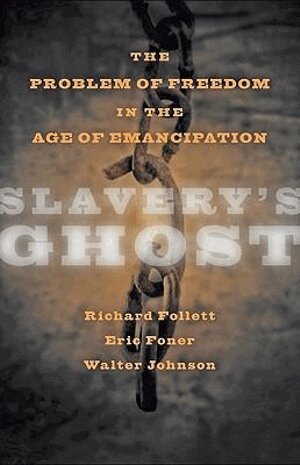
President Abraham Lincoln freed millions of slaves in the South in 1863, rescuing them, as history tells us, from a brutal and inhuman existence and making the promise of freedom and equal rights. This is a moment to celebrate and honor, to be sure, but what of the darker, more troubling side of this story? Slavery's Ghost explores the dire, debilitating, sometimes crushing effects of slavery on race relations in American history. In three conceptually wide-ranging and provocative essays, the authors assess the meaning of freedom for enslaved and free Americans in the decades before and after the Civil War. They ask important and challenging questions: How did slaves and freedpeople respond to the promise and reality of emancipation? How committed were white southerners to the principle of racial subjugation? And in what ways can we best interpret the actions of enslaved and free Americans during slavery and Reconstruction? Collectively, these essays offer fresh approaches to questions of local political power, the determinants of individual choices, and the discourse that shaped and defined the history of black freedom.Written by three prominent historians of the period, Slavery's Ghost forces readers to think critically about the way we study the past, the depth of racial prejudice, and how African Americans won and lost their freedom in nineteenth-century America.
287 kr
Skickas inom 7-10 vardagar
President Abraham Lincoln freed millions of slaves in the South in 1863, rescuing them, as history tells us, from a brutal and inhuman existence and making the promise of freedom and equal rights. This is a moment to celebrate and honor, to be sure, but what of the darker, more troubling side of this story? Slavery's Ghost explores the dire, debilitating, sometimes crushing effects of slavery on race relations in American history. In three conceptually wide-ranging and provocative essays, the authors assess the meaning of freedom for enslaved and free Americans in the decades before and after the Civil War. They ask important and challenging questions: How did slaves and freedpeople respond to the promise and reality of emancipation? How committed were white southerners to the principle of racial subjugation? And in what ways can we best interpret the actions of enslaved and free Americans during slavery and Reconstruction? Collectively, these essays offer fresh approaches to questions of local political power, the determinants of individual choices, and the discourse that shaped and defined the history of black freedom.Written by three prominent historians of the period, Slavery's Ghost forces readers to think critically about the way we study the past, the depth of racial prejudice, and how African Americans won and lost their freedom in nineteenth-century America.
436 kr
Tillfälligt slut
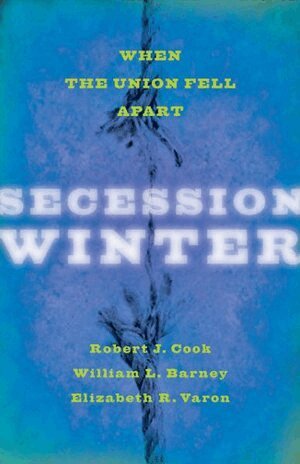
Politicians and opinion leaders on both sides of the Mason-Dixon line struggled to formulate coherent responses to the secession of the deep South states. The Confederate attack on Fort Sumter in mid-April 1861 triggered civil war and the loss of four upper South states from the Union. The essays by three senior historians in "Secession Winter" explore the robust debates that preceded these events. For five months in the winter of 1860-1861, Americans did not know for certain that civil war was upon them. Some hoped for a compromise; others wanted a fight. Many struggled to understand what was happening to their country. Robert J. Cook, William L. Barney, and Elizabeth R. Varon take approaches to this period that combine political, economic, and social-cultural lines of analysis. Rather than focus on whether civil war was inevitable, they look at the political process of secession and find multiple internal divisions-political parties, whites and nonwhites, elites and masses, men and women. Even individual northerners and southerners suffered inner conflicts.The authors include the voices of Unionists and Whig party moderates who had much to lose and upcountry folk who owned no slaves and did not particularly like those who did. Barney contends that white southerners were driven to secede by anxiety and guilt over slavery. Varon takes a new look at Robert E. Lee's decision to join the Confederacy. Cook argues that both northern and southern politicians claimed the rightness of their cause by constructing selective narratives of historical grievances. "Secession Winter" explores the fact of contingency and reminds readers and students that nothing was foreordained.
287 kr
Skickas inom 7-10 vardagar
Politicians and opinion leaders on both sides of the Mason-Dixon line struggled to formulate coherent responses to the secession of the deep South states. The Confederate attack on Fort Sumter in mid-April 1861 triggered civil war and the loss of four upper South states from the Union. The essays by three senior historians in "Secession Winter" explore the robust debates that preceded these events. For five months in the winter of 1860-1861, Americans did not know for certain that civil war was upon them. Some hoped for a compromise; others wanted a fight. Many struggled to understand what was happening to their country. Robert J. Cook, William L. Barney, and Elizabeth R. Varon take approaches to this period that combine political, economic, and social-cultural lines of analysis. Rather than focus on whether civil war was inevitable, they look at the political process of secession and find multiple internal divisions-political parties, whites and nonwhites, elites and masses, men and women. Even individual northerners and southerners suffered inner conflicts.The authors include the voices of Unionists and Whig party moderates who had much to lose and upcountry folk who owned no slaves and did not particularly like those who did. Barney contends that white southerners were driven to secede by anxiety and guilt over slavery. Varon takes a new look at Robert E. Lee's decision to join the Confederacy. Cook argues that both northern and southern politicians claimed the rightness of their cause by constructing selective narratives of historical grievances. "Secession Winter" explores the fact of contingency and reminds readers and students that nothing was foreordained.
580 kr
Skickas inom 11-20 vardagar
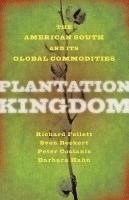
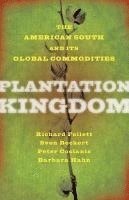
In 1850, America's plantation economy reigned supreme. U.S. cotton dominated world markets, and American rice, sugarcane, and tobacco grew throughout a vast farming empire that stretched from Maryland to Texas. Four million enslaved African Americans toiled the fields, producing global commodities that enriched the most powerful class of slaveholders the world had ever known. But fifty years later-after emancipation demolished the plantation-labor system, Asian competition flooded world markets with cheap raw materials, and free trade eliminated protected markets-America's plantations lay in ruins. Plantation Kingdom traces the rise and fall of America's plantation economy. Written by four renowned historians, the book demonstrates how an international capitalist system rose out of slave labor, indentured servitude, and the mass production of agricultural commodities for world markets. Vast estates continued to exist after emancipation, but tenancy and sharecropping replaced slavery's work gangs across most of the plantation world. Poverty and forced labor haunted the region well into the twentieth century.The book explores the importance of slavery to the Old South, the astounding profitability of plantation agriculture, and the legacy of emancipation. It also examines the place of American producers in world markets and considers the impact of globalization and international competition 150 years ago. Written for scholars and students alike, Plantation Kingdom is an accessible and fascinating study.
208 kr
Tillfälligt slut
In 1850, America's plantation economy reigned supreme. U.S. cotton dominated world markets, and American rice, sugarcane, and tobacco grew throughout a vast farming empire that stretched from Maryland to Texas. Four million enslaved African Americans toiled the fields, producing global commodities that enriched the most powerful class of slaveholders the world had ever known. But fifty years later-after emancipation demolished the plantation-labor system, Asian competition flooded world markets with cheap raw materials, and free trade eliminated protected markets-America's plantations lay in ruins. Plantation Kingdom traces the rise and fall of America's plantation economy. Written by four renowned historians, the book demonstrates how an international capitalist system rose out of slave labor, indentured servitude, and the mass production of agricultural commodities for world markets. Vast estates continued to exist after emancipation, but tenancy and sharecropping replaced slavery's work gangs across most of the plantation world. Poverty and forced labor haunted the region well into the twentieth century.The book explores the importance of slavery to the Old South, the astounding profitability of plantation agriculture, and the legacy of emancipation. It also examines the place of American producers in world markets and considers the impact of globalization and international competition 150 years ago. Written for scholars and students alike, Plantation Kingdom is an accessible and fascinating study.