Themes in Economics – serie
Visar alla böcker i serien Themes in Economics. Handla med fri frakt och snabb leverans.
8 produkter
8 produkter
Inbunden, Engelska, 2018
1 122 kr
Skickas inom 10-15 vardagar
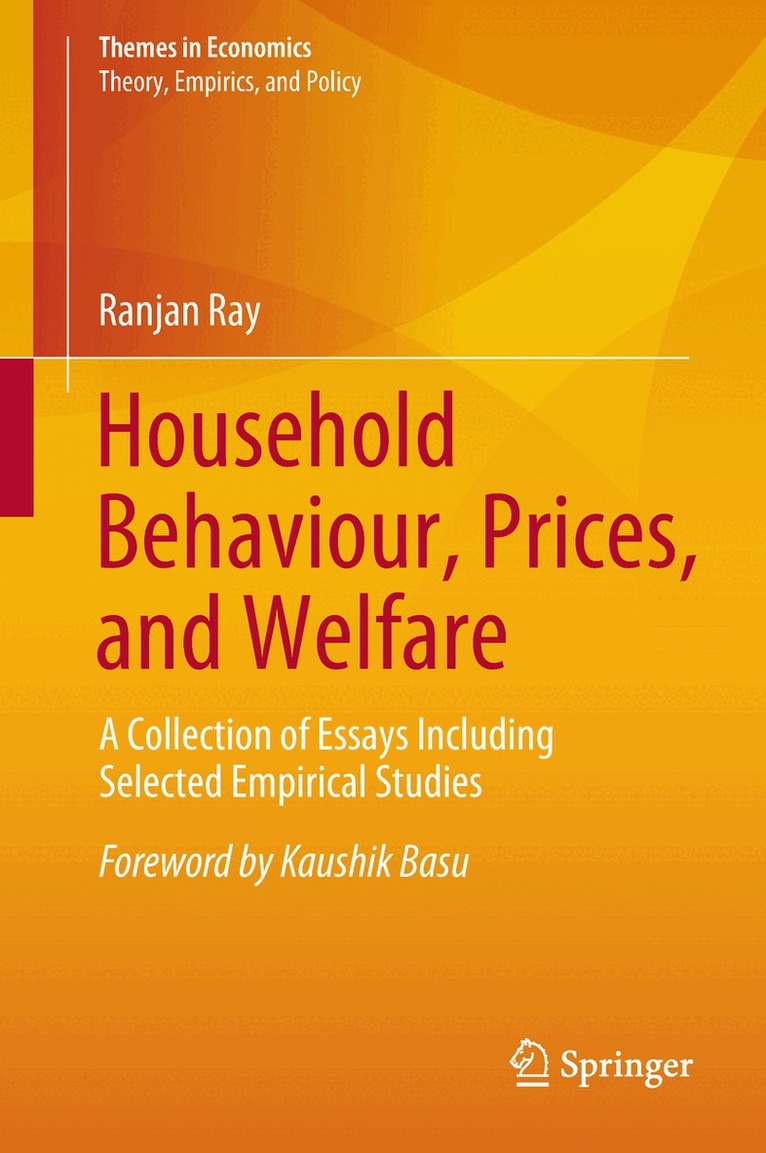
This collection of essays covers a diverse set of topics related to household behavior and welfare. Prices play a key role in several of the essays, particularly the distributional implications of price movements, and the effects of changes in relative prices on inequality and poverty. This book shows the shift in the literature on prices from being an exclusively macro topic featuring the study of inflation and cross-country comparisons to one that is firmly rooted in micro theory-based analysis of household behavior. It also includes recent developments in the poverty measurement literature, documenting the shift from the exclusively money metric and unidimensional poverty measures to multidimensional poverty encompassing a wider view of deprivation. Largely, but not exclusively, focusing on India, the book also features global comparisons of welfare. Intra country spatial comparisons along with cross country comparisons of household behavior and welfare feature in several of theessays in this book. The book also compares the effects of selected public delivery schemes in India on the health of its children. It is a useful resource for researchers and serves as reading material for advanced graduate courses on development in India and elsewhere.
Inbunden, Engelska, 2019
1 090 kr
Skickas inom 10-15 vardagar
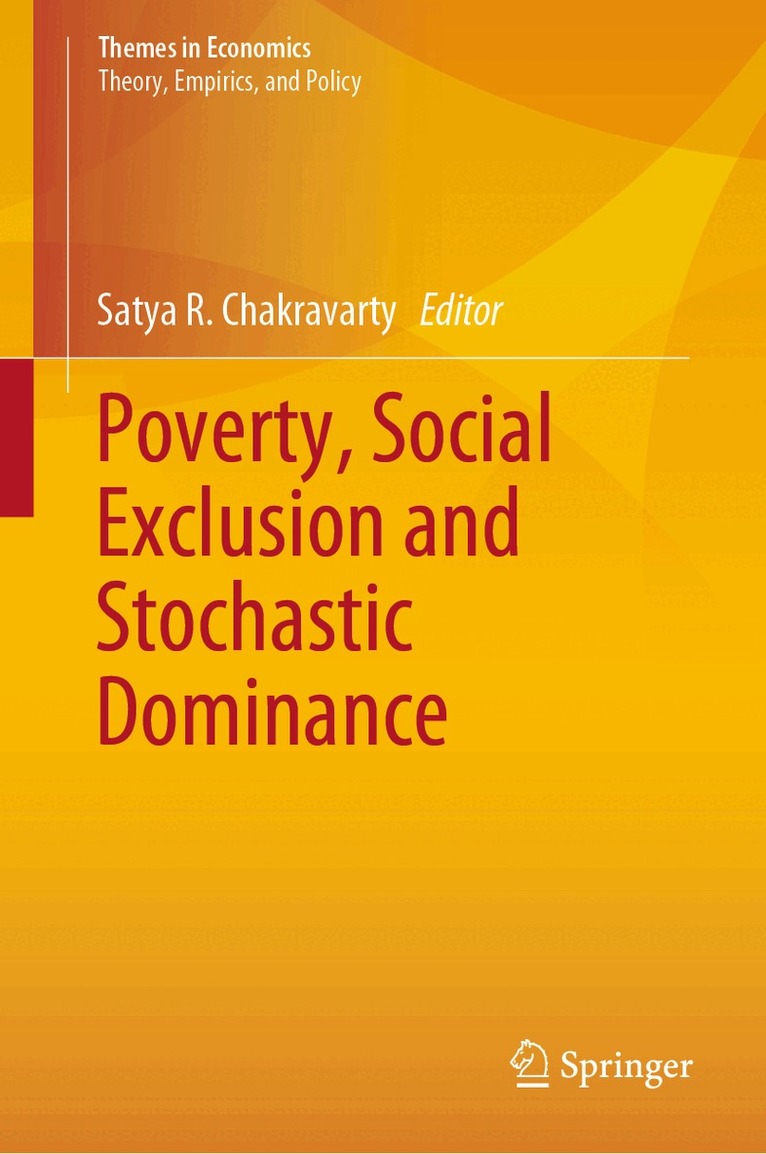
This book honors the memory of Tony Atkinson, who made significant contributions to the rigorous study of income inequality, poverty, and redistribution. These essays presented, covering a span of over 30 years of research and scholarship, have been at the forefront of distributional analysis, and many of them are of prime importance for contemporary developments in the real-valued measurement of poverty and inequality, with particular reference to the concepts of fuzzy poverty assessment, vulnerability, heterogeneity/multidimensionality, unit consistency, sub-group decomposability, and dominance criteria. While all of these articles have been previously published—singly or with co-authorship—in a number of professional journals or distinguished edited volumes, this book is greatly enriched by a substantial introductions by the authors, which place the contributions in context, highlights their inter-connectedness, and relates them to the work of Tony Atkinson and other scholars. This book is of intrinsic value to welfare analysts, as well as being a tribute to a very great scholar by a fellow economist.
Inbunden, Engelska, 2020
1 090 kr
Skickas inom 10-15 vardagar
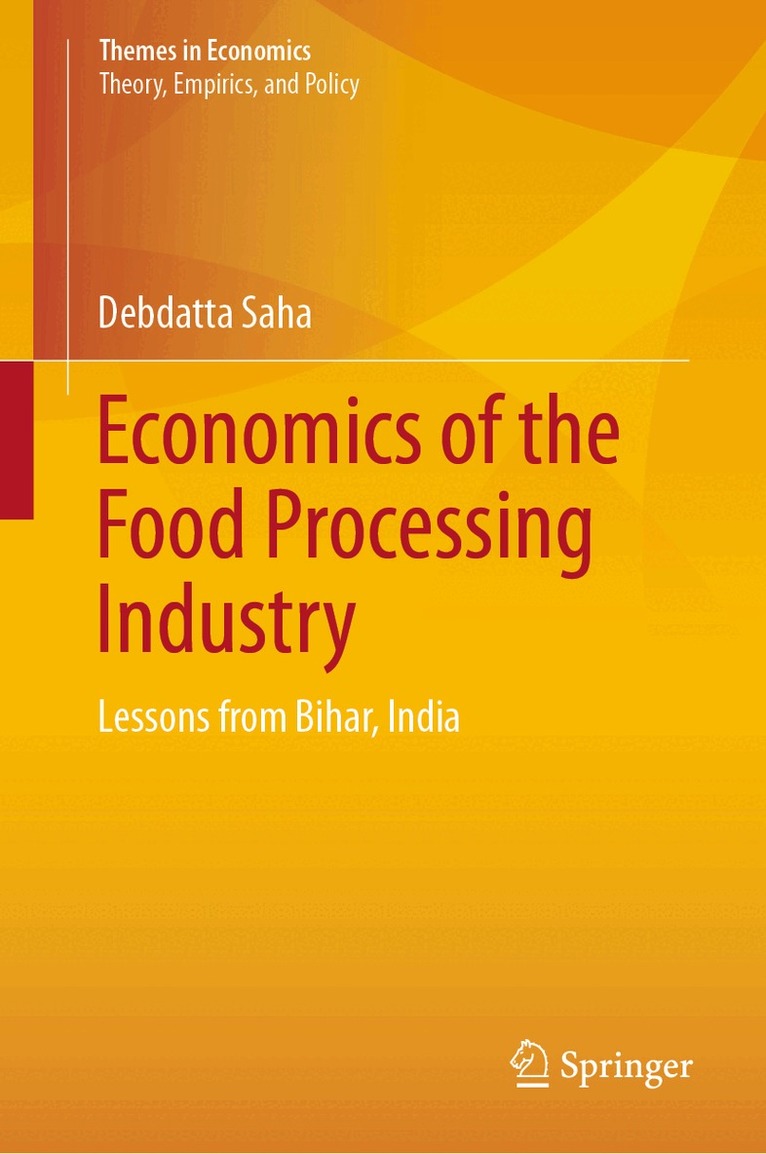
This book presents a wealth of perspectives on studying the manufacturing end of food processing industries, with a special focus on regions with a low industrial base and multiple missing markets, institutional finance being the most prominent example. Positioning food processing within the industrial ecosystem, which includes entrepreneurs, policymakers, business consultants and associations, the study first considers three different trajectories: for developed economies, for national territories like India, and for sub-national regions like Bihar. In turn, it shows how these trajectories intertwine in two dimensions: the region and the sub-sector. Successfully completing food-processing projects in any of these trajectories requires the identification and development of appropriate product networks that link basic processed items with advanced ones through a chain of value addition. Moreover, the supply-side narrative presented here identifies two types of costs: physical and non-physical costs of operation. For trajectories with skewed firm sizes (“missing middle”) and missing markets, which can be found in Bihar, the latter costs matter just as much as the former in terms of entrepreneurship. While efficiency in operations is studied for selected sub-sectors in Bihar’s food processing to assess the main sources of inefficiency in minimizing the physical costs of operations, non-physical costs are studied using the construct of region-based counterfactual thinking (rCFT) and its relationship with the perception of risk for entrepreneurs. rCFT offers a new concept for understanding the mindset of the entrepreneur, in which the regional identity plays a significant role. The empirical content is based on a primary survey of food processing in Bihar. Additional policy questions, such as the choice between spatial collocation of food parks or cluster-based development of unique sub-sectors, are explored through an analysis of the policy network that supports entrepreneurship. Issues arising from the government’s policy choices, particularly vertically targeted industrial policies, can influence industrial outcomes and are particularly relevant for regions like Bihar. While policy evaluation for Bihar’s processed food industry yields insights on policy targeting for decision-makers in the government, examples of parallel narratives from global experiences in comparable regions shed new light on industrial development in processed food, which should be of interest to business practitioners, academic researchers and policymakers alike.
Häftad, Engelska, 2021
1 090 kr
Skickas inom 10-15 vardagar
This book presents a wealth of perspectives on studying the manufacturing end of food processing industries, with a special focus on regions with a low industrial base and multiple missing markets, institutional finance being the most prominent example. Positioning food processing within the industrial ecosystem, which includes entrepreneurs, policymakers, business consultants and associations, the study first considers three different trajectories: for developed economies, for national territories like India, and for sub-national regions like Bihar. In turn, it shows how these trajectories intertwine in two dimensions: the region and the sub-sector. Successfully completing food-processing projects in any of these trajectories requires the identification and development of appropriate product networks that link basic processed items with advanced ones through a chain of value addition. Moreover, the supply-side narrative presented here identifies two types of costs: physical and non-physical costs of operation. For trajectories with skewed firm sizes (“missing middle”) and missing markets, which can be found in Bihar, the latter costs matter just as much as the former in terms of entrepreneurship. While efficiency in operations is studied for selected sub-sectors in Bihar’s food processing to assess the main sources of inefficiency in minimizing the physical costs of operations, non-physical costs are studied using the construct of region-based counterfactual thinking (rCFT) and its relationship with the perception of risk for entrepreneurs. rCFT offers a new concept for understanding the mindset of the entrepreneur, in which the regional identity plays a significant role. The empirical content is based on a primary survey of food processing in Bihar. Additional policy questions, such as the choice between spatial collocation of food parks or cluster-based development of unique sub-sectors, are explored through an analysis of the policy network that supports entrepreneurship. Issues arising from the government’s policy choices, particularly vertically targeted industrial policies, can influence industrial outcomes and are particularly relevant for regions like Bihar. While policy evaluation for Bihar’s processed food industry yields insights on policy targeting for decision-makers in the government, examples of parallel narratives from global experiences in comparable regions shed new light on industrial development in processed food, which should be of interest to business practitioners, academic researchers and policymakers alike.
Inbunden, Engelska, 2020
1 198 kr
Skickas inom 10-15 vardagar
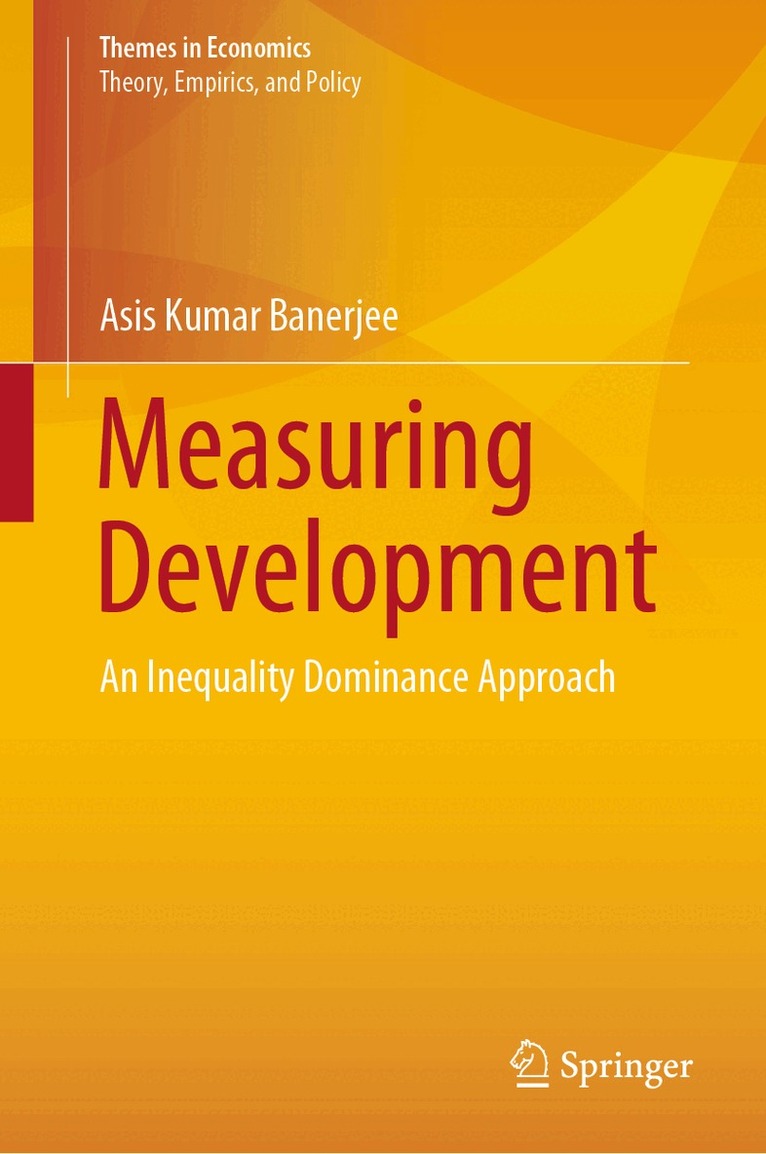
This book discusses how to measure the level of development of an economy, particularly, the task of ranking economies in terms of their development. In this context, development is defined as an increase in people’s level of wellbeing. The book emphasises that wellbeing is a multidimensional concept, and that it is important to ask how equitably the fruits of development are distributed, and as such it focuses on multidimensional, inequality-sensitive development ranking. Rather than using various specific development indices, which would lead to different development rankings for a country, the book proposes a dominance approach, which formulates conditions under which two economies can be ranked unambiguously, making it valid for all reasonable development indices. With the help of illustrative examples using real-world data, it demonstrates that such unambiguous rankings are possible, and that the proposed approach can be used to complement traditional approaches. An invaluable resource for researchers working in the field of development, the book will also appeal to practitioners engaged in measuring development.An excerpt from the book's Foreword:"[This book] is a comprehensive and valuable contribution to the literature on the measurement of inequality and the use of such measurement in the assessment of social welfare. I believe that it will be of much interest to researchers working on measures of inequality and social welfare as well as advanced graduate students who are looking for a solid introduction to this important area of normative economics."- Prof. Prasanta K. Pattanaik, University of California, Riverside, California, U.S.A.
Häftad, Engelska, 2021
1 198 kr
Skickas inom 10-15 vardagar
This book discusses how to measure the level of development of an economy, particularly, the task of ranking economies in terms of their development. In this context, development is defined as an increase in people’s level of wellbeing. The book emphasises that wellbeing is a multidimensional concept, and that it is important to ask how equitably the fruits of development are distributed, and as such it focuses on multidimensional, inequality-sensitive development ranking. Rather than using various specific development indices, which would lead to different development rankings for a country, the book proposes a dominance approach, which formulates conditions under which two economies can be ranked unambiguously, making it valid for all reasonable development indices. With the help of illustrative examples using real-world data, it demonstrates that such unambiguous rankings are possible, and that the proposed approach can be used to complement traditional approaches. An invaluable resource for researchers working in the field of development, the book will also appeal to practitioners engaged in measuring development.An excerpt from the book's Foreword:"[This book] is a comprehensive and valuable contribution to the literature on the measurement of inequality and the use of such measurement in the assessment of social welfare. I believe that it will be of much interest to researchers working on measures of inequality and social welfare as well as advanced graduate students who are looking for a solid introduction to this important area of normative economics."- Prof. Prasanta K. Pattanaik, University of California, Riverside, California, U.S.A.
Inbunden, Engelska, 2021
982 kr
Skickas inom 10-15 vardagar
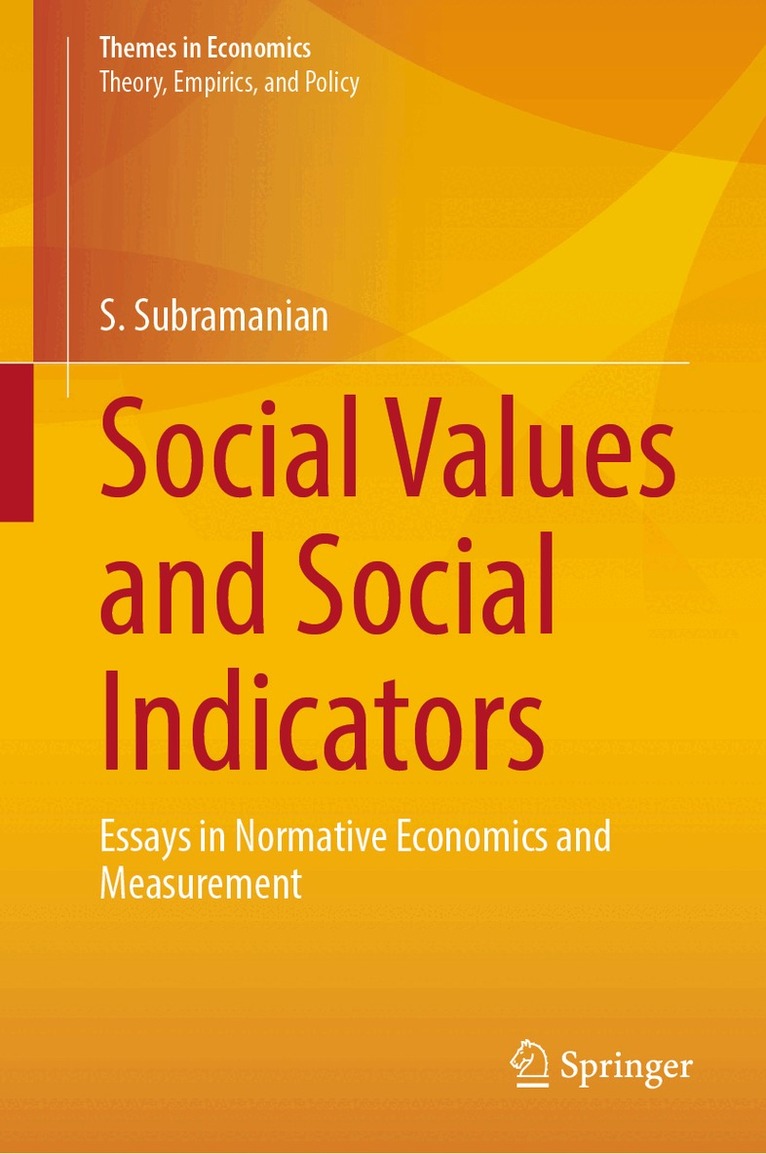
The book is a collection of essays written since 2010, and dealing, in one way or another, with the place of values in economic analysis. The centrality of values in the collection is not surprising, given that the thematic concerns informing the essays in the book relate principally to methodological issues in economic enquiry, to the normatively constrained aggregation of personal preferences into collective choice, and to problems of logical coherence and ethical appeal in the axiom systems underlying the measurement of economic and social phenomena such as poverty, inequality and literacy. While many of the essays are more or less technical in nature, they are all explicitly motivated by considerations that go beyond the formalisms of presentation to an involvement with the role of moral reasoning in economic analysis. In particular, the essays emphasize the importance of ‘ought propositions’ in a science which is all too often regarded as being wholly and exclusively ‘positive’ in its orientation. The book should be of particular interest to researchers, students, and public policy makers.
Häftad, Engelska, 2022
711 kr
Skickas inom 10-15 vardagar
The book is a collection of essays written since 2010, and dealing, in one way or another, with the place of values in economic analysis. The centrality of values in the collection is not surprising, given that the thematic concerns informing the essays in the book relate principally to methodological issues in economic enquiry, to the normatively constrained aggregation of personal preferences into collective choice, and to problems of logical coherence and ethical appeal in the axiom systems underlying the measurement of economic and social phenomena such as poverty, inequality and literacy. While many of the essays are more or less technical in nature, they are all explicitly motivated by considerations that go beyond the formalisms of presentation to an involvement with the role of moral reasoning in economic analysis. In particular, the essays emphasize the importance of ‘ought propositions’ in a science which is all too often regarded as being wholly and exclusively ‘positive’ in its orientation. The book should be of particular interest to researchers, students, and public policy makers.