• Fri frakt över 249 kr
  • •
  • Snabba leveranser
  • •
  • Billiga böcker
Kundservice

Du är på sajten för privatpersoner.

Företag, bibliotek eller offentlig verksamhet?

Du handlar på classic.bokus.com, där alla dina funktioner finns intakta.
Till classic.bokus.com
Bokus logotyp. Gå till startsidan.
  • Erbjudanden
  • Nyheter
  • Student
  • Topplistor
  • Barn & ungdom
  • Bokus Play
  • E-böcker
  • Pocketböcker
  • Spel & pussel

10% rabatt på allt med kod: NYSTART10 →

Sidfot

Mina sidor

    Hjälp

    • Kundservice
    • Vanliga frågor och svar
    • Frakt och leverans
    • Retur vid ångerrätt
    • Reklamera vara
    • Betalning
    • Köpvillkor
    • Allmänna villkor
    • Information om webbplatsens tillgänglighet

    Om Bokus

    • Om oss
    • Pressrum
    • För studenter
    • För företag
    • För bibliotek och offentlig verksamhet
    • För leverantörer
    • Hållbarhet

    Populärt

    • Aktuella erbjudanden
    • Presentkort
    • Studentlitteratur
    • Nya böcker
    • Topplistor
    • Signerade böcker
    • Engelska böcker

    Inspiration

    • Boktips
    • BookTok
    • Populära bokserier
    • Barnbokskaraktärer
    • Populära författare
    Logotyp för Bokus
    Följ oss på Facebook (extern länk)Följ oss på Instagram (extern länk)Följ oss på YouTube (extern länk)Följ oss på TikTok (extern länk)
    bokus @ CookiesAnpassa cookiesIntegritetspolicyKöpvillkor
    Till Citymail hemsida (extern länk)Till Budbee hemsida (extern länk)Till Postnord hemsida (extern länk)Till Schenker hemsida (extern länk)Till Early Bird hemsida (extern länk)Till Walleys hemsida (extern länk)
    1. Ekonomi och Ledarskap
    2. Nationalekonomi
    3. Mikroekonomi

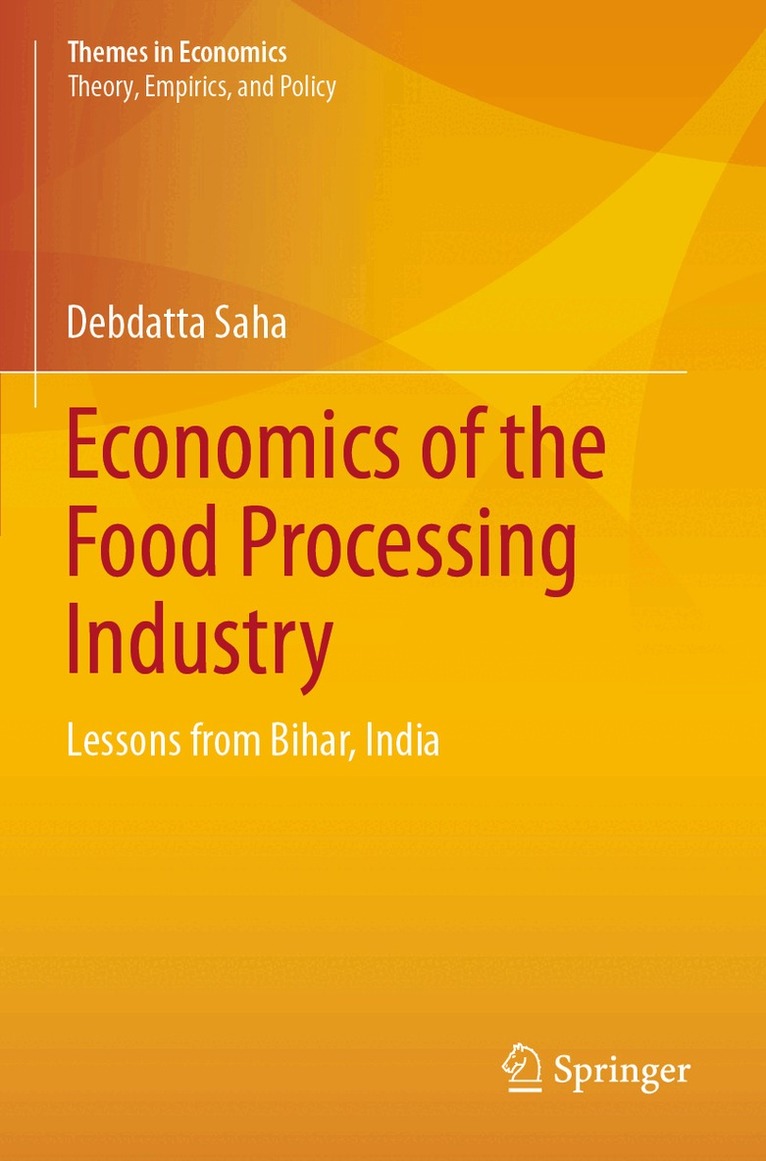
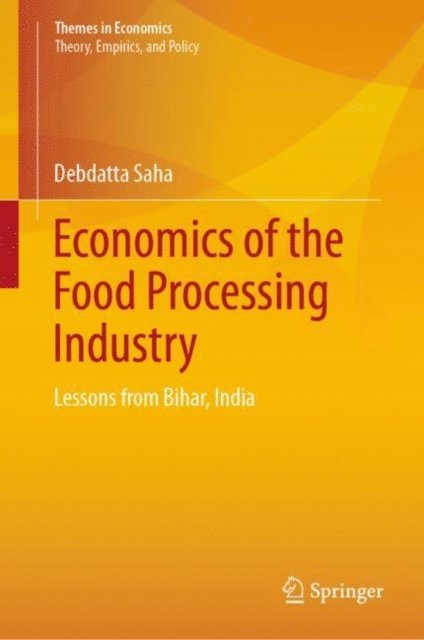
    Economics of the Food Processing Industry

    Lessons from Bihar, India

    AvDebdatta Saha

    Inbunden, Engelska, 2020

    Del i serien Themes in Economics

    1 086 kr

    Beställningsvara. Skickas inom 10-15 vardagar. Fri frakt över 249 kr.

    Fler format och utgåvor

    E-bok

    1 413 kr

    Häftad

    1 086 kr

    Beskrivning

    This book presents a wealth of perspectives on studying the manufacturing end of food processing industries, with a special focus on regions with a low industrial base and multiple missing markets, institutional finance being the most prominent example. Positioning food processing within the industrial ecosystem, which includes entrepreneurs, policymakers, business consultants and associations, the study first considers three different trajectories: for developed economies, for national territories like India, and for sub-national regions like Bihar. In turn, it shows how these trajectories intertwine in two dimensions: the region and the sub-sector. Successfully completing food-processing projects in any of these trajectories requires the identification and development of appropriate product networks that link basic processed items with advanced ones through a chain of value addition. Moreover, the supply-side narrative presented here identifies two types of costs: physical and non-physical costs of operation. For trajectories with skewed firm sizes (“missing middle”) and missing markets, which can be found in Bihar, the latter costs matter just as much as the former in terms of entrepreneurship. While efficiency in operations is studied for selected sub-sectors in Bihar’s food processing to assess the main sources of inefficiency in minimizing the physical costs of operations, non-physical costs are studied using the construct of region-based counterfactual thinking (rCFT) and its relationship with the perception of risk for entrepreneurs. rCFT offers a new concept for understanding the mindset of the entrepreneur, in which the regional identity plays a significant role. The empirical content is based on a primary survey of food processing in Bihar. Additional policy questions, such as the choice between spatial collocation of food parks or cluster-based development of unique sub-sectors, are explored through an analysis of the policy network that supports entrepreneurship. Issues arising from the government’s policy choices, particularly vertically targeted industrial policies, can influence industrial outcomes and are particularly relevant for regions like Bihar. While policy evaluation for Bihar’s processed food industry yields insights on policy targeting for decision-makers in the government, examples of parallel narratives from global experiences in comparable regions shed new light on industrial development in processed food, which should be of interest to business practitioners, academic researchers and policymakers alike.
    Produktinformation

    • Utgivningsdatum:2020-03-15
    • Mått:155 x 235 x 20 mm
    • Vikt:639 g
    • Format:Inbunden
    • Språk:Engelska
    • Serie:Themes in Economics
    • Antal sidor:262
    • Förlag:Springer Verlag, Singapore
    • ISBN:9789811385537

    Utforska kategorier

    • Mikroekonomi inom Ekonomi och Ledarskap
    • Lantbruk, fiske och skogsbruk inom Ekonomi och Ledarskap
    • Agronomi inom Naturvetenskap och teknik

    Mer om författaren

    Debdatta Saha is an Assistant Professor at the Faculty of Economics, South Asian University (SAU), India. Having worked as an economist at a leading public policy think-tank and as a competition regulator in India (Competition Commission of India) prior to her appointment at SAU, she has an abiding interest in issues concerning industrial structure, competition and public policy; industrial policy in particular. Her doctoral research at the Indian Statistical Institute, New Delhi on applied game theory in industrial organization gave her valuable insights into the micro-foundation of market structures and industrial outcomes. She has presented her work on industrial policies on various international platforms, and is currently collaborating with the UN Environment Programme (UNEP) to design lecture modules on Green Industrial Policy. This book is the outcome of her analysis of Bihar’s food processing industry in the context of an IGC-sponsored project (with Barna Ganguli, ADRI, Bihar as co-investigator) that explored the drivers of industrial growth for a state with a low industrial base using a lead sector: food processing.

    Recensioner i media

    “The book is a good source of literature on various theoretical and empirical findings on industrialization in developing countries particularly that of food processing industry. The book will be useful for undergraduate and post graduate students interested in studying region specific industrial policy. The concept of region-based counterfactual thinking introduced in the book provides a useful framework to identify factors affecting the sectoral growth and to arrive at appropriate policy measures.” (Gopal Naik, Indian Economic Review, Vol. 56, 2021)

    Innehållsförteckning

    • Introduction.- Chapter-1: Sub-sectoral snapshots.- Chapter-2: Entrepreneurial Risk Perceptions.- Chapter-3: Policy Analysis.- Chapter-4: Brand Bihar in Food Processing.- Bibliography.