Transcultural Music Studies - Böcker
Visar alla böcker i serien Transcultural Music Studies. Handla med fri frakt och snabb leverans.

9 produkter
9 produkter
1 212 kr
Skickas inom 5-8 vardagar
The process of creating and reflection upon autobiographical memory is an everyday practice that is typical within the human experience. When music becomes integrated into personal memories, an invitation to remember is provided through both purposeful listening activities and incidental engagement with music in the everyday. The result is a metaphorical canon of music that accompanies life experiences. The Lifetime Soundtrack investigates musically motivated autobiographical memories as they relate to the lifetime soundtrack in order to provide further understanding of their occurrence, nuance, emotionality, and function for individuals. Drawing on in-depth discussions with younger and older adults, each chapter reflects on a common theme or aspect of musically motivated memory. People, places, and eras feature frequently, with memories of childhood, family, past romantic relationships, and the major and minor events occurring within them acting as prime sites for memory and music interaction. The book also considers the ways in which musically memory may manifest differently for trained musicians, for whom music represents both leisure and work. Forging a broad foundation in an overlooked area, this study brings together sociological views on the personal use of music and existing ideas on the workings of human memory. At the same time, it aims to fortify the concept of the Lifetime Soundtrack as a sociological concept with broad application in future research. In so doing, the book highlights the significance of music-enhanced reflection as a tool for the composition of meaning within everyday life.
381 kr
Skickas inom 5-8 vardagar
The process of creating and reflection upon autobiographical memory is an everyday practice that is typical within the human experience. When music becomes integrated into personal memories, an invitation to remember is provided through both purposeful listening activities and incidental engagement with music in the everyday. The result is a metaphorical canon of music that accompanies life experiences. The Lifetime Soundtrack investigates musically motivated autobiographical memories as they relate to the lifetime soundtrack in order to provide further understanding of their occurrence, nuance, emotionality, and function for individuals. Drawing on in-depth discussions with younger and older adults, each chapter reflects on a common theme or aspect of musically motivated memory. People, places, and eras feature frequently, with memories of childhood, family, past romantic relationships, and the major and minor events occurring within them acting as prime sites for memory and music interaction. The book also considers the ways in which musically memory may manifest differently for trained musicians, for whom music represents both leisure and work. Forging a broad foundation in an overlooked area, this study brings together sociological views on the personal use of music and existing ideas on the workings of human memory. At the same time, it aims to fortify the concept of the Lifetime Soundtrack as a sociological concept with broad application in future research. In so doing, the book highlights the significance of music-enhanced reflection as a tool for the composition of meaning within everyday life.
1 212 kr
Skickas inom 5-8 vardagar
Provincial Headz: British Hip Hop and Critical Regionalism draws upon spatial practice, material culture, human geography, ethnomusicology and cultural theory in order to present an interdisciplinary counter-narrative to that of hip hop as a strictly urban phenomenon; providing an insight into the relocation of hip hop culture from its inception in New York ghettos to its practices in provincial and rural Britain. Hip hop culture truly arrived in Britain in 1983, a decade after its origin in New York City, and although many important events, artists and recordings that evidence hip hop’s existence in 1980s Britain are well documented, these are almost exclusively urban. Additionally, the narratives embedded in these representations remain too convenient and unchallenged. This book reveals parallel and dialectical experiences of British hip hop pioneers and practitioners dwelling outside the metropolis, discussed under the recurring themes of relocation, territory, consumption, production and identity. These narratives are framed within a rich contextual discourse drawing upon Bhabha, Bourdieu, Foucault, DeLanda and contemporary hip hop scholarship. Shifting hip hop research from urbanism to rurality, the book serves as an introduction to the complexities of its historical narratives in Britain and reveals another hip hop history and how we understand it.
445 kr
Skickas inom 5-8 vardagar
Provincial Headz: British Hip Hop and Critical Regionalism draws upon spatial practice, material culture, human geography, ethnomusicology and cultural theory in order to present an interdisciplinary counter-narrative to that of hip hop as a strictly urban phenomenon; providing an insight into the relocation of hip hop culture from its inception in New York ghettos to its practices in provincial and rural Britain. Hip hop culture truly arrived in Britain in 1983, a decade after its origin in New York City, and although many important events, artists and recordings that evidence hip hop’s existence in 1980s Britain are well documented, these are almost exclusively urban. Additionally, the narratives embedded in these representations remain too convenient and unchallenged. This book reveals parallel and dialectical experiences of British hip hop pioneers and practitioners dwelling outside the metropolis, discussed under the recurring themes of relocation, territory, consumption, production and identity. These narratives are framed within a rich contextual discourse drawing upon Bhabha, Bourdieu, Foucault, DeLanda and contemporary hip hop scholarship. Shifting hip hop research from urbanism to rurality, the book serves as an introduction to the complexities of its historical narratives in Britain and reveals another hip hop history and how we understand it.
1 212 kr
Skickas inom 5-8 vardagar
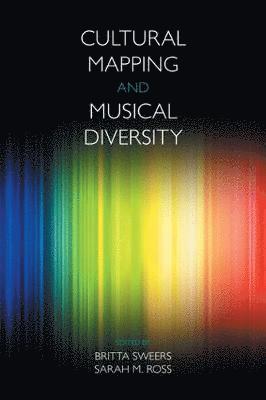
'Cultural mapping' has become a central keyword in the UNESCO strategy to protect natural and world cultural heritage, including music traditions. As a tool to increase the awareness of cultural diversity it transforms the concept of intangible cultural heritage to visible items by establishing multi-dimensional profiles of cultures and communities. Cultural mapping has been used as a resource for a variety of purposes as broad as the analysis of conflict points and peace building, adaptation to climate change, sustainability management, as well as heritage debates and management. Music has been playing a significant role in each of these aspects. As this theme has rarely been explored within ethnomusicology, this collection approaches the topic of cultural mapping from four different thematic perspectives: The book starts out with historical and methodological reflections on cultural mapping in ethnomusicology, followed by an exploration on possible relation between nature/ landscape (and definition of such) and music/ sound. How exactly is landscape interrelated with music - and identified (and vice versa)? The second half focuses more specifically on the UNESCO Intangible Cultural Heritage. The articles not only address the broader political framework, but also thematic and geographic case studies of Intangible Cultural Heritage and music, as well as the pro of UNESCO's endeavours.
445 kr
Skickas inom 5-8 vardagar
'Cultural mapping' has become a central keyword in the UNESCO strategy to protect natural and world cultural heritage, including music traditions. As a tool to increase the awareness of cultural diversity it transforms the concept of intangible cultural heritage to visible items by establishing multi-dimensional profiles of cultures and communities. Cultural mapping has been used as a resource for a variety of purposes as broad as the analysis of conflict points and peace building, adaptation to climate change, sustainability management, as well as heritage debates and management. Music has been playing a significant role in each of these aspects. As this theme has rarely been explored within ethnomusicology, this collection approaches the topic of cultural mapping from four different thematic perspectives: The book starts out with historical and methodological reflections on cultural mapping in ethnomusicology, followed by an exploration on possible relation between nature/ landscape (and definition of such) and music/ sound. How exactly is landscape interrelated with music - and identified (and vice versa)? The second half focuses more specifically on the UNESCO Intangible Cultural Heritage. The articles not only address the broader political framework, but also thematic and geographic case studies of Intangible Cultural Heritage and music, as well as the pro of UNESCO's endeavours.
1 132 kr
Skickas inom 5-8 vardagar
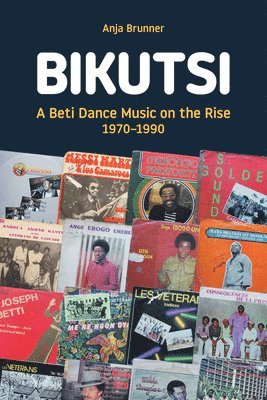
This book offers the first ethnographically informed, in-depth historical study of the Cameroonian popular music genre bikutsi. The thriving dance music in Cameroon’s day-to-day life has its foundation in the specific historical processes of the 1970s and 1980s, which led to the recognition of bikutsi as a distinct genre of Cameroonian dance music. Examining these processes in detail, this book analyses the various factors involved in the rise of a popular music genre within a national music scene. The book begins by tracing the roots of bikutsi in the musical traditions of the ethnic groups of the Beti who live in and around Cameroon’s capital Yaoundé, as well as in the manifold popular dance music practices fashionable in mid-twentieth-century Cameroon. The volume then considers the musical work of successful groups and musicians, framing their musical practices and success within the socio-political circumstances, musical environment, and ambitions of individuals. Offering an explanation for the changes in Cameroon’s musical life, these analyses illustrate the interplay between the innovative ambitions of individual musicians, a specific political situation within the power structure of the post-colonial state, dedicated individuals in media and the music market, and technological changes in recording and disseminating music.
413 kr
Skickas inom 5-8 vardagar
This book offers the first ethnographically informed, in-depth historical study of the Cameroonian popular music genre bikutsi. The thriving dance music in Cameroon’s day-to-day life has its foundation in the specific historical processes of the 1970s and 1980s, which led to the recognition of bikutsi as a distinct genre of Cameroonian dance music. Examining these processes in detail, this book analyses the various factors involved in the rise of a popular music genre within a national music scene. The book begins by tracing the roots of bikutsi in the musical traditions of the ethnic groups of the Beti who live in and around Cameroon’s capital Yaoundé, as well as in the manifold popular dance music practices fashionable in mid-twentieth-century Cameroon. The volume then considers the musical work of successful groups and musicians, framing their musical practices and success within the socio-political circumstances, musical environment, and ambitions of individuals. Offering an explanation for the changes in Cameroon’s musical life, these analyses illustrate the interplay between the innovative ambitions of individual musicians, a specific political situation within the power structure of the post-colonial state, dedicated individuals in media and the music market, and technological changes in recording and disseminating music.
1 212 kr
Skickas inom 5-8 vardagar
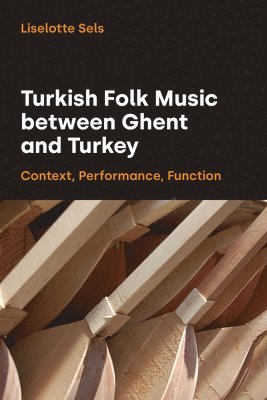
Shaped by the processes of migration, diasporization and cosmopolitanization, musical performance conditions and contexts constantly change, while new musical forms emerge and evolve. The development of Turkish folk music is well-documented and provides rich material for study in the motherland and in the diaspora. This book explores, describes, interprets and links musical, contextual and functional aspects of Turkish folk music in contemporary Turkey and the Turkish diaspora in the Belgian city of Ghent.The Turkish presence in Ghent is particularly interesting in its size (approximately ten per cent of the population) and constitution (mostly originating in the West Anatolian town of Emirdağ). Anchored in detailed ethnographic reality, this book expands our views on what Turkish folk music signifies in the early twenty-first century, and adds to the understanding and appreciation of this multifaceted, topical musical phenomenon.This book’s multi-sited, transnational and comparative outlook is unique, with an added dimension generated by the inclusion of rural and small-town contexts that complement the urban perspective. It makes new contributions to scholarship in this area by including the transcription and analysis of performance styles, the evaluation of Turkish Radio and Television discourses and practices, and the exploration of understudied research contexts of Ghent and Emirdağ.