Tribology in Practice Series - Böcker
Visar alla böcker i serien Tribology in Practice Series. Handla med fri frakt och snabb leverans.
13 produkter
13 produkter
2 063 kr
Skickas inom 7-10 vardagar
Tribology is emerging from the realm of steam engines and crank-case lubricants and becoming key to vital new technologies such as nanotechnology and MEMS. Wear is an integral part of tribology, and an effective understanding and appreciation of wear is essential in order to achieve the reliable and efficient operation of almost any machine or device. Knowledge in the field has increased considerably over recent years, and continues to expand: this book is intended to stimulate its readers to contribute towards the progress of this fascinating subject that relates to most of the known disciplines in physical science. Wear – Materials, Mechanisms and Practice provides the reader with a unique insight into our current understanding of wear, based on the contributions of numerous internationally acclaimed specialists in the field. Offers a comprehensive review of current knowledge in the field of wear.Discusses latest topics in wear mechanism classification.Includes coverage of a wide variety of materials such as metals, polymers, polymer composites, diamonds, and diamond-like films and ceramics.Discusses the chemo-mechanical linkages that control tribology, providing a more complete treatment of the subject than just the conventional mechanical treatments.Illustrated throughout with carefully compiled diagrams that provide a unique insight into the controlling mechanisms of tribology.The state of the art research on wear and the mechanisms of wear featured will be of interest to post-graduate students and lecturers in engineering, materials science and chemistry. The practical applications discussed will appeal to practitioners across virtually all sectors of engineering and industry including electronic, mechanical and electrical, quality and reliability and design.
1 505 kr
Skickas inom 7-10 vardagar
The technology involved in lubrication by nanoparticles is a rapidly developing scientific area and one that has been watched with interest for the past ten years. Nanolubrication offers a solution to many problems associated with traditional lubricants that contain sulphur and phosphorus; and though for some time the production of nanoparticles was restricted by the technologies available, today synthesis methods have been improved to such a level that it is possible to produce large quantities relatively cheaply and efficiently. Nanolubricants develops a new concept of lubrication, based on these nanoparticles, and along with the authors’ own research it synthesises the information available on the topic of nanolubrication from existing literature and presents it in a concise form. Describes the many advantages and potential applications of nanotechnology in the tribological field.Offers a full review of the state-of-the-art as well as much original research that is yet unpublished.Includes sections on boundary lubrication by colloïdal systems, nanolubricants made of metal dichalcogenides, carbon-based nanolubricants, overbased detergent salts, nanolubricants made of metals and boron-based solid nanolubricants and lubrication additives.Authored by highly regarded experts in the field with contributions from leading international academics.Nanolubricants will appeal to postgraduate students, academics and researchers in mechanical engineering, chemical engineering and materials science. It should also be of interest to practising engineers with petroleum companies and mechanical manufacturers.
1 389 kr
Skickas inom 11-20 vardagar
Due to the rise in petroleum prices as well as increasing environmental concerns, there is a need to develop biochemicals and bioproducts that offer realistic alternatives to their traditional counterparts; this book will address the lack of a centralized resource of information on lubricants and greases from renewable sources, and will be useful to a wide audience in industry and academia. It is based on 20 years of research and development at the UNI-NABL Center, and discusses the various types of vegetable oils available, comparing their characteristics, properties and benefits against those of typical petroleum oils as well as discussing common evaluation tests and giving examples and case studies of successful applications of biobased lubricants and greases. Whilst scientific and engineering research data is included, the book is written in an accessible manner and is illustrated throughout. Focuses on an industrial application of lubrication technology undergoing current explosive growth in the global market.Includes a detailed review of the material benefits of plant-based lubricants that include a better viscosity index and lubricity even at extreme temperatures, lower flammability due to higher flash points and lower pour points.Covers the basic chemistry of vegetable oils as well as their profiles for use in lubricants and greases and environmental benefits.Includes examples and case studies of where vegetable-based lubricants have been successfully employed in industry applications.
1 456 kr
Skickas inom 7-10 vardagar
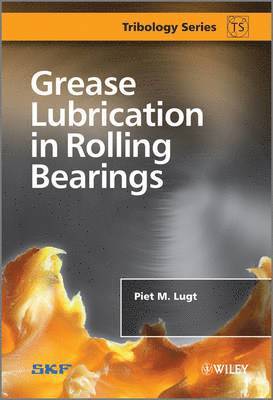
The definitive book on the science of grease lubrication for roller and needle bearings in industrial and vehicle engineering.Grease Lubrication in Rolling Bearings provides an overview of the existing knowledge on the various aspects of grease lubrication (including lubrication systems) and the state of the art models that exist today. The book reviews the physical and chemical aspects of grease lubrication, primarily directed towards lubrication of rolling bearings.The first part of the book covers grease composition, properties and rheology, including thermal and dynamics properties. Later chapters cover the dynamics of greased bearings, including grease life, bearing life, reliability and testing. The final chapter covers lubrications systems – the systems that deliver grease to the components requiring lubrication.Grease Lubrication in Rolling Bearings: Describes the underlying physical and chemical properties of grease.Discusses the effect of load, speed, temperature, bearing geometry, bearing materials and grease type on bearing wear.Covers both bearing and grease performance, including thermo-mechanical ageing and testing methodologies.It is intended for researchers and engineers in the petro-chemical and bearing industry, industries related to this (e.g. wind turbine industry, automotive industry) and for application engineers. It will also be of interest for teaching in post-graduate courses.
1 320 kr
Skickas inom 7-10 vardagar
Comprehensive treatise on gas bearing theory, design and applicationThis book treats the fundamental aspects of gas bearings of different configurations (thrust, radial, circular, conical) and operating principles (externally pressurized, self-acting, hybrid, squeeze), guiding the reader throughout the design process from theoretical modelling, design parameters, numerical formulation, through experimental characterisation and practical design and fabrication.The book devotes a substantial part to the dynamic stability issues (pneumatic hammering, sub-synchronous whirling, active dynamic compensation and control), treating them comprehensively from theoretical and experimental points of view.Key features: Systematic and thorough treatment of the topic.Summarizes relevant previous knowledge with extensive references.Includes numerical modelling and solutions useful for practical application.Thorough treatment of the gas-film dynamics problem including active control.Discusses high-speed bearings and applications. Air Bearings: Theory, Design and Applications is a useful reference for academics, researchers, instructors, and design engineers. The contents will help readers to formulate a gas-bearing problem correctly, set up the basic equations, solve them establishing the static and dynamic characteristics, utilise these to examine the scope of the design space of a given problem, and evaluate practical issues, be they in design, construction or testing.
1 378 kr
Skickas inom 7-10 vardagar
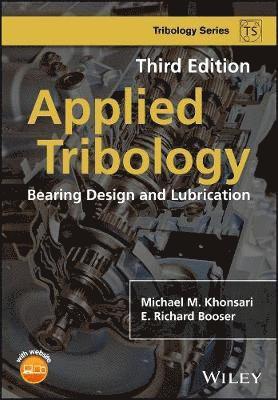
Insightful working knowledge of friction, lubrication, and wear in machinesApplications of tribology are widespread in industries ranging from aerospace, marine and automotive to power, process, petrochemical and construction. With world-renowned expert co-authors from academia and industry, Applied Tribology: Lubrication and Bearing Design, 3rd Edition provides a balance of application and theory with numerous illustrative examples.The book provides clear and up-to-date presentation of working principles of lubrication, friction and wear in vital mechanical components, such as bearings, seals and gears. The third edition has expanded coverage of friction and wear and contact mechanics with updated topics based on new developments in the field.Key features: Includes practical applications, homework problems and state-of-the-art references.Provides presentation of design procedure.Supplies clear and up-to-date information based on the authors’ widely referenced books and over 500 archival papers in this field.Applied Tribology: Lubrication and Bearing Design, 3rd Edition provides a valuable and authoritative resource for mechanical engineering professionals working in a wide range of industries with machinery including turbines, compressors, motors, electrical appliances and electronic components. Senior and graduate students in mechanical engineering will also find it a useful text and reference.
1 456 kr
Skickas inom 7-10 vardagar
A fully updated version of the popular Introduction to Tribology, the second edition of this leading tribology text introduces the major developments in the understanding and interpretation of friction, wear and lubrication. Considerations of friction and wear have been fully revised to include recent analysis and data work, and friction mechanisms have been reappraised in light of current developments. In this edition, the breakthroughs in tribology at the nano- and micro- level as well as recent developments in nanotechnology and magnetic storage technologies are introduced. A new chapter on the emerging field of green tribology and biomimetics is included. Introduces the topic of tribology from a mechanical engineering, mechanics and materials science points of viewNewly updated chapter covers both the underlying theory and the current applications of tribology to industryUpdated write-up on nanotribology and nanotechnology and introduction of a new chapter on green tribology and biomimetics
2 690 kr
Skickas inom 11-20 vardagar
This fully updated Second Edition provides the reader with the solid understanding of tribology which is essential to engineers involved in the design of, and ensuring the reliability of, machine parts and systems. It moves from basic theory to practice, examining tribology from the integrated viewpoint of mechanical engineering, mechanics, and materials science. It offers detailed coverage of the mechanisms of material wear, friction, and all of the major lubrication techniques - liquids, solids, and gases - and examines a wide range of both traditional and state-of-the-art applications.For this edition, the author has included updates on friction, wear and lubrication, as well as completely revised material including the latest breakthroughs in tribology at the nano- and micro- level and a revised introduction to nanotechnology. Also included is a new chapter on the emerging field of green tribology and biomimetics.
Del 6 - Tribology in Practice Series
Guide to Wear Problems and Testing for Industry
Inbunden, Engelska, 2000
1 237 kr
Skickas inom 11-20 vardagar
An important volume in the "Tribology in Practice" Series (TIPS)Guide to Wear Problems and Testing for Industry is unique. It is the first publication to make information on solutions to wear problems and testing readily accessible. Clear and concise, this practical Guide will be an invaluable everyday reference tool for engineers.Engineers in industry will find useful advice on solving problems – based on an understanding of basic wear mechanisms. Ways in which new materials can be tested in laboratories are also examined. This will all help successful application in real situations.For research engineers and scientists in testing laboratories and universities, the Guide to Wear Problems and Testing for Industry provides practical guidance on the selection and operation of appropriate wear test methods for various materials and wear mechanisms. Solution of industrial wear problemsWear tests to simulate practical conditionsSelecting the appropriate wear testExamination of worn servicesRecommended tests, operating conditions, and proceduresA major study, drawing on international experience of industrial wear problems and in-depth testing in research laboratories, was carried out over four years to develop this publication. Support from the UK Department of Trade and Industry helped to fund this massive undertaking. The resulting information will benefit engineers worldwide.The National Physical Laboratory (NPL), UK, have made a major input from their extensive experience of carrying out laboratory wear testing, co-ordinated by Dr. Mark Gee. Neale Consulting Engineers have added their worldwide experience of solving practical wear problems in industry, and have co-ordinated the links between theory and practice.The Tribology in Practice Series aims to be accessible and industry-relevant – bringing the latest developments in tribological research, as well as established ideas and techniques, to bear on real engineering problems.
2 895 kr
Skickas inom 7-10 vardagar
An important volume in the Tribology in Practice Series (TIPS).Rolling Contacts presents a general introduction to the fundamentals of rolling friction with the emphasis on important engineering applications of rolling contacts.Rolling Friction is an age-old engineering problem – with friction and wear related problems resulting in enormous costs to industry world-wide. Rolling Contacts presents the fundamentals of rolling contacts of all types, emphasizing important engineering applications – including rolling bearings, gears, road-tyre and rail-wheel interactions, cam-tappet systems, and roll-forming of materials. Procedures and techniques of analysis developed throughout the book enhance understanding of this complex subject and help to improve the engineer’s ability to design and select rolling contacts for mechanical devices and systems.CONTENTS INCLUDE: Elements of surface contact of solidsFundamentals of rolling motionDynamic characteristics of rolling motionRolling contact bearingRolling contacts in land locomotionMachine elements in rolling contactNon-metallic rolling contacts.Rolling Contacts will be invaluable to practising designers, researchers, and postgraduate students. Engineering degree course students will also benefit from this book’s thorough introduction to rolling contacts commonly used in practice.
Del 2 - Tribology in Practice Series
Handbook of Surface Treatment and Coatings
Inbunden, Engelska, 2003
2 581 kr
Skickas inom 11-20 vardagar
Handbook of Surface Treatments and Coatings brings together in a coherent way, for the first time, as much practical information as possible to help with the selection and appropriate use of surface treatments and coatings in mechanical engineering. The selection methods are based on in-service properties and functions required. In this way, a wealth of knowledge and expertise is made easily accessible to a wide audience, including non-specialists. This is an extremely important title in the “Tribology in Practice Series” (TIPS). In order to design and manufacture improved products which have a competitive edge in the global market, it is important to be able to produce surfaces that do not wear; are more resistant to tarnishing and corrosion; and retain their electrical, optical, or thermal properties over a long period of time. It is also of great benefit to be able to simplify product ranges or maintenance requirements, make mechanisms lighter, reduce noise, and enhance the value of strategically or economically advantageous materials.It is now universally acknowledged that surface treatments and coatings have a prominent role to play in this respect. A number of processes of a mechanical, physical, chemical, or electrochemical nature are used to modify the surface properties of materials, in particular their hardness, distribution of residual stresses, composition and structure, topography, and surface energy. Much information on the subject is difficult to access, being very varied in form and content. CONTENTS INCLUDE: Elements of surface mechanics – parameters of frictional contact. Further parameters and definitions. Principal phenomena or surface transformation and wear. The role of surface treatments. Properties, applications, and implementation of surface treatments and coatings. Importance of surface treatments and coatings in tribology. Classification of surface treatments and coatings. Properties and applications of surface treatments and coatings. Materials for tribological use. Principles of surface treatments and coatings processes. Guidelines for selecting and using surface treatments and coatings.
Del 3 - Tribology in Practice Series
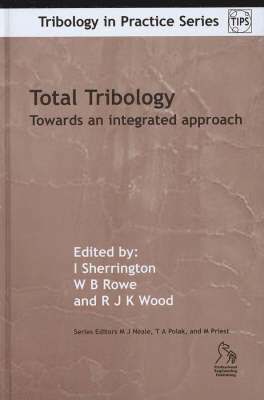
Total Tribology
Towards an Integrated Approach
Inbunden, Engelska, 2002
2 042 kr
Tillfälligt slut
A "Tribology in Practice Series" (TIPS) title.Total Tribology is a term coined to express the practice of considering tribology at all stages of the lifecycle of interface components to reduce the impact of wear and improve the lubrication of machinery. It emphasises that tribology can be applied to improve aspects of machine performance at all stages of their lifecycle from design, through manufacture, usage, and finally, disposal.Viewing the total picture of lubrication and wear offer tremendous opportunities such as reducing the loss of energy due to excessive friction and wear, reducing the overall use of lubricants, extending the useful life of equipment and components, reducing costly down-time of equipment and machinery.Highly respected experts have written specially commissioned chapters to explore and explain the elements of tribology which complement the Total Tribology approach, representing the latest thoughts on tackling wear and lubrication problems.CONTENTS INCLUDE: The possible impact of tribology on future machine designMaterials in tribology – opportunities and challengesTrends in lubricationUse of solid lubricantsThe role of tribology in manufacturing processesPorous ceramic water hydrostatic bearingsDesign of abrasive machining processesOn the lubrication of power plantsTribology in aerospaceFriction prediction and cold starting of diesel engines.
Del 1 - Tribology in Practice Series
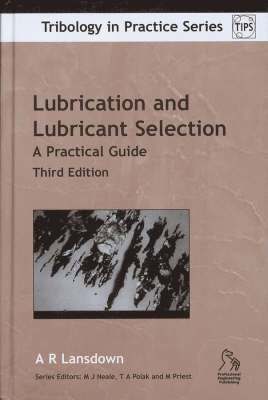
Lubrication and Lubricant Selection
A Practical Guide
Inbunden, Engelska, 2003
2 010 kr
Skickas inom 7-10 vardagar
An important volume in the â??Tribology in Practice Seriesâ?? (TIPS). Thoroughly updated and revised, Lubrication and Lubricant Selection is a much-welcomed third edition of this established and successful title. Since the publication of the earlier editions of this title there have been important developments in some aspects of lubricant technology, notably in automotive engine lubricants: for example significant improvements in their expected service life and in fuel economy. A major cause of these changes has been the increasing international concern for the environmental impact of all sorts of technologies, not least lubricant technology. Greater public anxiety for safety and the environment has resulted in new legislation governing such subjects as product liability and environmental protection. This extended and updated edition of Lubrication and Lubricant Selection presents an accurate picture of the current position, particularly with regard to the rapidly changing technical, testing, specification and regulation situation of engine lubricants. The book provides guidance to lubrication practice in industry, with the emphasis on practical application. Specific guidance is given regarding the appropriate selection of lubricants for a wide range of uses. Factors determining the suitability of a lubricant for a particular purpose are described and explained. COMPLETE CONTENTS: Basic principles of lubrication Choice of lubricant type Lubricating oils Selection of lubricating oil Oil supply systems Oil changing and oil conservation Greases and anti-seizes Dry bearings and solid lubrication Gas bearings Sealing of lubricants Lubricant testing and specifications Lubricant monitoring Lubricant handling and storage Health and safety