Urban Water Series - Böcker
Visar alla böcker i serien Urban Water Series. Handla med fri frakt och snabb leverans.
16 produkter
16 produkter
Data Requirements for Integrated Urban Water Management
Urban Water Series - UNESCO-IHP
Inbunden, Engelska, 2007
1 855 kr
Tillfälligt slut
Integrated urban water management relies on data allowing us to analyse, understand and predict the behaviour of the individual water cycle components and their interactions. The concomitant monitoring of the complex of urban water system elements makes it possible to grasp the entirety of relations among the various components of the urban water cycle and so develop a holistic approach to solving urban water problems.Data Requirements for Integrated Urban Water Managements - issuing from UNESCO's International Hydrological Programme project on this topic - is geared towards improving integrated urban water management by providing guidance on the collection, validation, storage, assessment and utilization of the relevant data. The first part of this volume describes general principles for developing a monitoring programme in support of sustainable urban water management. The second part examines in detail the monitoring of individual water cycle components. Two case studies in the final part illustrating attempts to deliver an integrated monitoring system help demonstrate the fundamental principles of sustainable urban water management elaborated here.
Data Requirements for Integrated Urban Water Management
Urban Water Series - UNESCO-IHP
Häftad, Engelska, 2007
957 kr
Tillfälligt slut
Integrated urban water management relies on data allowing us to analyse, understand and predict the behaviour of the individual water cycle components and their interactions. The concomitant monitoring of the complex of urban water system elements makes it possible to grasp the entirety of relations among the various components of the urban water cycle and so develop a holistic approach to solving urban water problems.Data Requirements for Integrated Urban Water Managements - issuing from UNESCO's International Hydrological Programme project on this topic - is geared towards improving integrated urban water management by providing guidance on the collection, validation, storage, assessment and utilization of the relevant data. The first part of this volume describes general principles for developing a monitoring programme in support of sustainable urban water management. The second part examines in detail the monitoring of individual water cycle components. Two case studies in the final part illustrating attempts to deliver an integrated monitoring system help demonstrate the fundamental principles of sustainable urban water management elaborated here.
1 023 kr
Tillfälligt slut
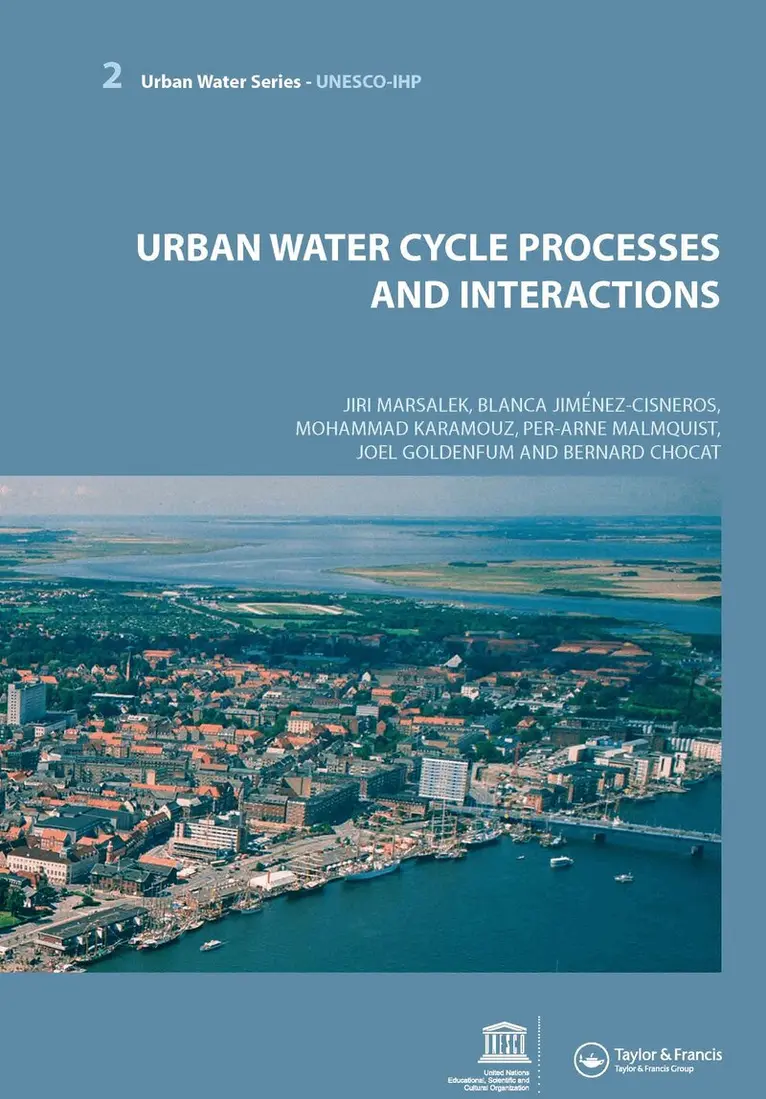
Effective management of urban water should be based on a scientific understanding of the impact of human activity on both the urban hydrological cycle – including its processes and interactions – and the environment itself. Such anthropogenic impacts, which vary broadly in time and space, need to be quantified with respect to local climate, urban development, cultural, environmental and religious practices, and other socio-economic factors.Urban Water Cycle Processes and Interactions represents the fruit of a project by UNESCO’s International Hydrological Programme on this topic. The volume begins by introducing the urban water cycle concept and the need for integrated or total management. It then explores in detail the manifold hydrological components of the cycle, the diverse elements of urban infrastructure and water services, and the various effects of urbanization on the environment – from the atmosphere and surface waters to wetlands, soils and groundwater, as well as biodiversity. A concluding series of recommendations for effective urban water management summarize the important findings set forth here.Urban Water Series - UNESCO-IHP VolumesFollowing from the Sixth Phase of UNESCO’s International Hydrological Programme (2002–2007), the Urban Water Series – UNESCO-IHP addresses fundamental issues related to the role of water in cities and the effects of urbanization on the hydrological cycle and water resources. Focusing on the development of integrated approaches to sustainable urban water management, the Series should inform the work of urban water management practitioners, policy-makers and educators throughout the world.
709 kr
Skickas inom 10-15 vardagar
Effective management of urban water should be based on a scientific understanding of the impact of human activity on both the urban hydrological cycle – including its processes and interactions – and the environment itself. Such anthropogenic impacts, which vary broadly in time and space, need to be quantified with respect to local climate, urban development, cultural, environmental and religious practices, and other socio-economic factors.Urban Water Cycle Processes and Interactions represents the fruit of a project by UNESCO’s International Hydrological Programme on this topic. The volume begins by introducing the urban water cycle concept and the need for integrated or total management. It then explores in detail the manifold hydrological components of the cycle, the diverse elements of urban infrastructure and water services, and the various effects of urbanization on the environment – from the atmosphere and surface waters to wetlands, soils and groundwater, as well as biodiversity. A concluding series of recommendations for effective urban water management summarize the important findings set forth here.Urban Water Series - UNESCO-IHP VolumesFollowing from the Sixth Phase of UNESCO’s International Hydrological Programme (2002–2007), the Urban Water Series – UNESCO-IHP addresses fundamental issues related to the role of water in cities and the effects of urbanization on the hydrological cycle and water resources. Focusing on the development of integrated approaches to sustainable urban water management, the Series should inform the work of urban water management practitioners, policy-makers and educators throughout the world.
1 619 kr
Skickas inom 7-10 vardagar
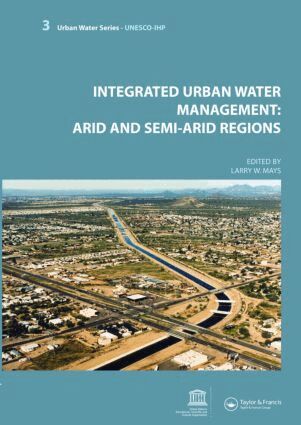
The Integrated Urban Water Management (IUWM) is an emerging approach to managing the entire urban water cycle in an integrated way, which is key to achieving the sustainability of urban water resources and services. The IUWM incorporates: the systematic consideration of the various dimensions of water, including surface and groundwater resources, quality and quantity issues; the implication that while water is a system it is also a component which interacts with other systems; and the interrelationships between water and social and economic development. Integrated Urban Water Management: Arid and Semi-Arid Regions – the outcome of UNESCO’s International Hydrological Programme project on the topic – examines the integrated management of water resources in urban settings, focusing on issues specific to arid and semi-arid regions and on what make them different from other regions. The urban water management system is considered herein as two integrated major entities; water supply management and water excess management. The first six chapters provide an overview of the various aspects of IUWM in arid and semi-arid regions, with emphasis on water supply technologies, such as artificial recharge, water transfers, desalination, and harvesting of rainfall. Water excess management is examined in the context of both the stormwater management system and the floodplain management system. Case studies from developed and developing countries are presented in order to emphasize the various needs and challenges of water management in urban environments in arid and semi-arid regions around the world.
844 kr
Skickas inom 10-15 vardagar
The Integrated Urban Water Management (IUWM) is an emerging approach to managing the entire urban water cycle in an integrated way, which is key to achieving the sustainability of urban water resources and services. The IUWM incorporates: the systematic consideration of the various dimensions of water, including surface and groundwater resources, quality and quantity issues; the implication that while water is a system it is also a component which interacts with other systems; and the interrelationships between water and social and economic development. Integrated Urban Water Management: Arid and Semi-Arid Regions – the outcome of UNESCO’s International Hydrological Programme project on the topic – examines the integrated management of water resources in urban settings, focusing on issues specific to arid and semi-arid regions and on what make them different from other regions. The urban water management system is considered herein as two integrated major entities; water supply management and water excess management. The first six chapters provide an overview of the various aspects of IUWM in arid and semi-arid regions, with emphasis on water supply technologies, such as artificial recharge, water transfers, desalination, and harvesting of rainfall. Water excess management is examined in the context of both the stormwater management system and the floodplain management system. Case studies from developed and developing countries are presented in order to emphasize the various needs and challenges of water management in urban environments in arid and semi-arid regions around the world.
Aquatic Habitats in Sustainable Urban Water Management
Urban Water Series - UNESCO-IHP
Inbunden, Engelska, 2007
1 762 kr
Skickas inom 10-15 vardagar
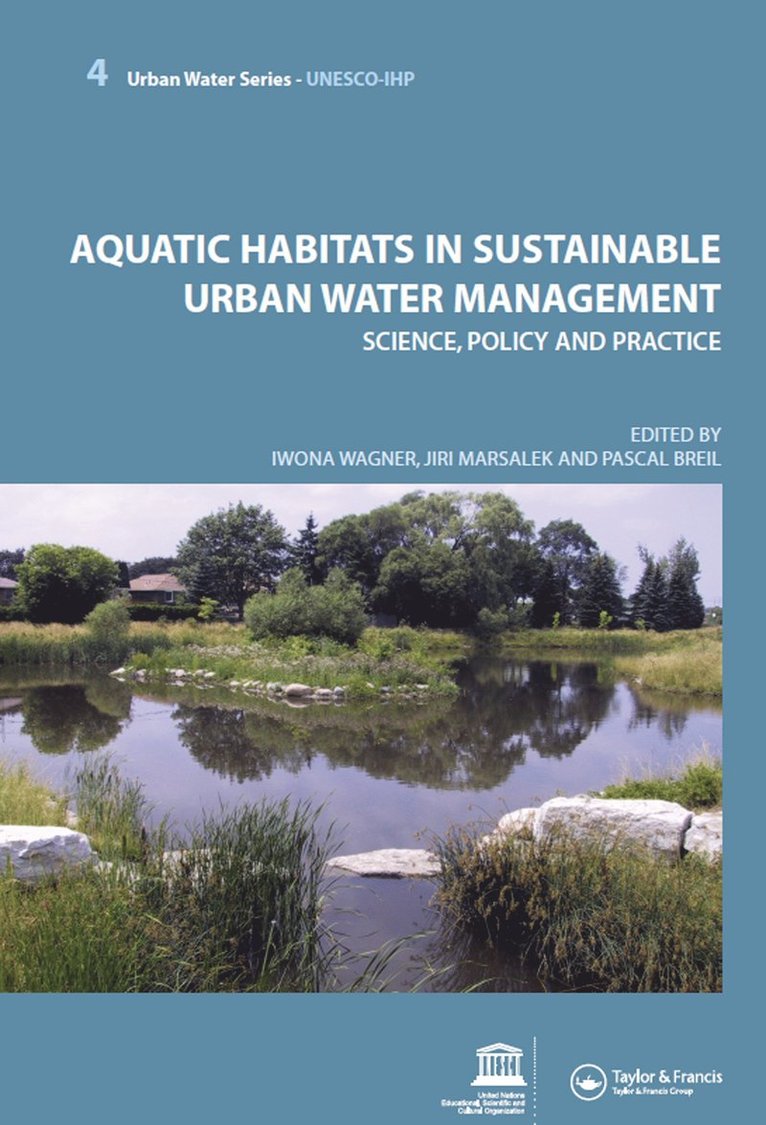
Aquatic habitats supply a wide range of vital ecosystem benefits to cities and their inhabitants. The unsustainable use of aquatic habitats, including inadequate urban water management itself, however, tends to alter and reduce their biodiversity and therewith diminish their ability to provide clean water, protect us from waterborne diseases and pollutants, keep urban areas safe from flooding, and support recreational ecosystem services and even the aesthetic enjoyment of our world. Aquatic Habitats in Sustainable Urban Water Management – the result of collaboration between UNESCO’s International Hydrological Programme and its Man and the Biosphere Programme – aims at improving our understanding of aquatic habitats, related ecosystem goods and services, and conservation and sustainable use – with a special focus on their integration into urban water management. The first part of this volume reviews basic concepts and challenges in urban aquatic habitats, as well as strategies for their management integration. The second part examines technical measures related to habitats management and rehabilitation, along with their incorporation into urban planning and their role in human health. The final part looks at current urban aquatic habitat issues and practical approaches to solving them through the lens of case studies from around the globe.Urban Water Series - UNESCO-IHPFollowing from the Sixth Phase of UNESCO’s International Hydrological Programme (2002–2007), the Urban Water Series – UNESCO-IHP addresses fundamental issues related to the role of water in cities and the effects of urbanization on the hydrological cycle and water resources. Focusing on the development of integrated approaches to sustainable urban water management, the Series should inform the work of urban water management practitioners, policy-makers and educators throughout the world.
Aquatic Habitats in Sustainable Urban Water Management
Urban Water Series - UNESCO-IHP
Häftad, Engelska, 2007
925 kr
Skickas inom 10-15 vardagar
Aquatic habitats supply a wide range of vital ecosystem benefits to cities and their inhabitants. The unsustainable use of aquatic habitats, including inadequate urban water management itself, however, tends to alter and reduce their biodiversity and therewith diminish their ability to provide clean water, protect us from waterborne diseases and pollutants, keep urban areas safe from flooding, and support recreational ecosystem services and even the aesthetic enjoyment of our world. Aquatic Habitats in Sustainable Urban Water Management – the result of collaboration between UNESCO’s International Hydrological Programme and its Man and the Biosphere Programme – aims at improving our understanding of aquatic habitats, related ecosystem goods and services, and conservation and sustainable use – with a special focus on their integration into urban water management. The first part of this volume reviews basic concepts and challenges in urban aquatic habitats, as well as strategies for their management integration. The second part examines technical measures related to habitats management and rehabilitation, along with their incorporation into urban planning and their role in human health. The final part looks at current urban aquatic habitat issues and practical approaches to solving them through the lens of case studies from around the globe.Urban Water Series - UNESCO-IHPFollowing from the Sixth Phase of UNESCO’s International Hydrological Programme (2002–2007), the Urban Water Series – UNESCO-IHP addresses fundamental issues related to the role of water in cities and the effects of urbanization on the hydrological cycle and water resources. Focusing on the development of integrated approaches to sustainable urban water management, the Series should inform the work of urban water management practitioners, policy-makers and educators throughout the world.
1 418 kr
Skickas inom 7-10 vardagar
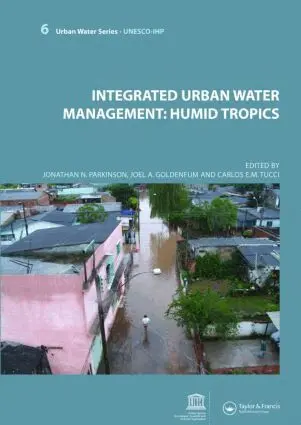
Excess water in the urban environment results in flooding,which causes structural damage, risks to personal safety and disruption to city life. Water is also a major contributory factor for disease transmission as well as being the medium for transport of many pollutants. These problems are of increasing concern due to climate changes and are particularly apparent in the humid tropics. Integrated Urban Water Management in the Humid Tropics – the output of a project by UNESCO’s International Hydrological Programme on the topic – focuses on engineering aspects related to water supply, wastewater and stormwater management in the humid tropics. Flood control is dealt with a specific emphasis on reducing vulnerability to flood disasters in urban areas.The book also addresses environmental health concerns related to the different components of the urban water system and strategies for their control. The volume provides illustrations of different aspects of integrated water management in the urban environment by drawing upon a set of case studies – predominantly from South America.Urban Water Series - UNESCO-IHP, ISSN 1749-0790Following from the Sixth Phase of UNESCO’s International Hydrological Programme (2002–2007), the Urban Water Series – UNESCO-IHP addresses fundamental issues related to the role of water in cities and the effects of urbanization on the hydrological cycle and water resources. Focusing on the development of integrated approaches to sustainable urban water management, the Series should inform the work of urban water management practitioners, policy-makers and educators throughout the world.Series EditorsCedo Maksimovic, Imperial College, London, United KingdomJ. Alberto Tejada-Guibert, International Hydrological Programme, UNESCO, Paris, France
803 kr
Skickas inom 10-15 vardagar
Excess water in the urban environment results in flooding,which causes structural damage, risks to personal safety and disruption to city life. Water is also a major contributory factor for disease transmission as well as being the medium for transport of many pollutants. These problems are of increasing concern due to climate changes and are particularly apparent in the humid tropics. Integrated Urban Water Management in the Humid Tropics – the output of a project by UNESCO’s International Hydrological Programme on the topic – focuses on engineering aspects related to water supply, wastewater and stormwater management in the humid tropics. Flood control is dealt with a specific emphasis on reducing vulnerability to flood disasters in urban areas.The book also addresses environmental health concerns related to the different components of the urban water system and strategies for their control. The volume provides illustrations of different aspects of integrated water management in the urban environment by drawing upon a set of case studies – predominantly from South America.Urban Water Series - UNESCO-IHP, ISSN 1749-0790Following from the Sixth Phase of UNESCO’s International Hydrological Programme (2002–2007), the Urban Water Series – UNESCO-IHP addresses fundamental issues related to the role of water in cities and the effects of urbanization on the hydrological cycle and water resources. Focusing on the development of integrated approaches to sustainable urban water management, the Series should inform the work of urban water management practitioners, policy-makers and educators throughout the world.Series EditorsCedo Maksimovic, Imperial College, London, United KingdomJ. Alberto Tejada-Guibert, International Hydrological Programme, UNESCO, Paris, France
1 897 kr
Skickas inom 10-15 vardagar
The perceptibly changing climate has resulted in more precipitation in a small number of short periods. As most urban water management systems were developed at a time when precipitation was distributed more evenly throughout the year, they cannot deal properly with the new circumstances, and high groundwater levels and excess water are the result. In practice, many urban dwellers are consequently confronted with flooded cellars and inaccessible urban infrastructure. To solve these phenomena in the future, a major part of the urban water programmes for the next few decades consists of restructuring and transformation of the existing urban areas, in which water management is considered as an integral part of urban renewal activities and in which its capacity is compliant with the urban area scale.With an integral approach, this book treats the relation of urbanism and water management in Dutch water cities. It also treats the financial aspects of the adjustment of existing water systems to meet the changes in the urban hydrological cycle. It presents the typology of typical current and future Dutch water cities, their urban function and the ecological and technical aspects. Separate chapters deal with the transformation of the historical city, the consolidation of the inter-war city and the restructuring of the post-war city to meet future conditions. The final chapter presents a comparison of the Dutch situation with South Korean (Seoul), Japanese (Tokyo) and German (Ruhr area) urban areas.
1 393 kr
Tillfälligt slut
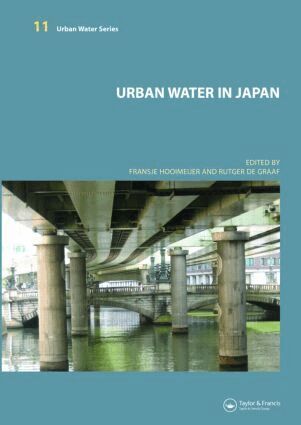
Water control is essential to Japan, as more than half of its invested capital is concentrated in elevations under sea level and the majority of the island nation is exceptionally vulnerable to flooding. To avoid potential crisis, the Japanese have developed exceptionally innovative water management practices. Offering the unique perspective of Dutch engineers, considered the world’s most progressive urban water experts, this volume provide a detailed look at how Japan has developed its modern water system. It looks at the system of Tokyo city, discusses river management practices and urban flood control throughout the country, and considers the impact that these innovations have had on delta regions.
2 291 kr
Skickas inom 7-10 vardagar
Understanding the impacts of urbanization on the urban water cycle and managing the associated health risks demand adequate strategies and measures. Health risks associated with urban water systems and services include the microbiological and chemical contamination of urban waters and outbreak of water-borne diseases, mainly due to poor water and sanitation in urban areas, and the discharge as well as the disposal of inadequately treated, or untreated, industrial and domestic wastewater. Climate change only exacerbates these problems, as alternative scenarios need to be taken into consideration in urban water risk management.Urban Water Security: Managing Risks – the result of a project by UNESCO’s International Hydrological Programme on the topic – addresses issues associated with urban water risks. The first section of the volume describes risks associated with urban water systems and services. The volume then discusses the concept of risk management for urban water systems and explores different approaches to managing and controlling urban water risks. A concluding section presents case studies on managing urban water risks.
979 kr
Skickas inom 10-15 vardagar
Understanding the impacts of urbanization on the urban water cycle and managing the associated health risks demand adequate strategies and measures. Health risks associated with urban water systems and services include the microbiological and chemical contamination of urban waters and outbreak of water-borne diseases, mainly due to poor water and sanitation in urban areas, and the discharge as well as the disposal of inadequately treated, or untreated, industrial and domestic wastewater. Climate change only exacerbates these problems, as alternative scenarios need to be taken into consideration in urban water risk management.Urban Water Security: Managing Risks – the result of a project by UNESCO’s International Hydrological Programme on the topic – addresses issues associated with urban water risks. The first section of the volume describes risks associated with urban water systems and services. The volume then discusses the concept of risk management for urban water systems and explores different approaches to managing and controlling urban water risks. A concluding section presents case studies on managing urban water risks.Urban Water Series - UNESCO-IHP, ISSN 1749-0790Following from the Sixth Phase of UNESCO’s International Hydrological Programme (2002–2007), the Urban Water Series – UNESCO-IHP addresses fundamental issues related to the role of water in cities and the effects of urbanization on the hydrological cycle and water resources. Focusing on the development of integrated approaches to sustainable urban water management, the Series should inform the work of urban water management practitioners, policy-makers and educators throughout the world.
1 393 kr
Tillfälligt slut
Urban water conflicts manifested first in Europe in the 19th century and are observed nowadays in various forms throughout the world; in particular, in developing countries. Main causes of these conflicts are characterized by complex socioeconomic and institutional issues related to urban water management. The debate about public water services versus private water supplies is frequently associated with conflicts over water price and affordability. On the other hand, the issue of centralization versus decentralization of water utilities is also often discussed in the context of institutional aspects of urban water management. These issues are intertwined and, thereby, a critical examination of socioeconomic and institutional aspects of urban water management in a holistic way is important for better understanding water conflicts in urban areas.Urban Water Conflicts – the output of a project by UNESCO’s International Hydrological Programme on “Socioeconomic and Institutional Aspects in Urban Water Management” – presents a collection of essays on socioeconomic and institutional aspects of urban water management, focusing on water and sanitation services. The book examines interdisciplinary approaches to understanding and analyzing conflicts that arise from inadequate urban water management. Conflict analysis is addressed in some essays by taking into account economic, environmental and social dimensions of sustainability. The issue of institutional conflicts between different levels of government is also discussed in some case studies.
817 kr
Skickas inom 10-15 vardagar
Urban water conflicts manifested first in Europe in the 19th century and are observed nowadays in various forms throughout the world; in particular, in developing countries. Main causes of these conflicts are characterized by complex socioeconomic and institutional issues related to urban water management. The debate about public water services versus private water supplies is frequently associated with conflicts over water price and affordability. On the other hand, the issue of centralization versus decentralization of water utilities is also often discussed in the context of institutional aspects of urban water management. These issues are intertwined and, thereby, a critical examination of socioeconomic and institutional aspects of urban water management in a holistic way is important for better understanding water conflicts in urban areas.Urban Water Conflicts – the output of a project by UNESCO’s International Hydrological Programme on “Socioeconomic and Institutional Aspects in Urban Water Management” – presents a collection of essays on socioeconomic and institutional aspects of urban water management, focusing on water and sanitation services. The book examines interdisciplinary approaches to understanding and analyzing conflicts that arise from inadequate urban water management. Conflict analysis is addressed in some essays by taking into account economic, environmental and social dimensions of sustainability. The issue of institutional conflicts between different levels of government is also discussed in some case studies.